Category: AD Agencies

  • Former iStream CEO launches regional video network, Studio Mojo

    Former iStream CEO launches regional video network, Studio Mojo

    MUMBAI: The former CEO of iStream.com, Radhakrishnan Ramachandran has set up Studio Mojo, to tap into the fast-growing regional video entertainment market.

    The online video market is growing at a frenzied pace in India with over 25 OTT platforms with global majors like Netflix and Amazon leading the pack. And many of them are planning an aggressive foray into regional language programming.

    Over the next 4 years, more than a third of the Internet users in India are expected to be from regional languages like Tamil, Telugu, Malayalam, Bengali and Marathi. Until four years back most of the videos consumed digitally in India were in Hinglish. But that is the not the case anymore. The top four languages on platforms today are Tamil and Telugu along with Hindi and English.

    iStream was India’s leading OTT platform in 2011, after raising 5 M USD from marquee VC investor SAIF. Though iStream had to shut down operations in 2013, Ramachandran is making a come back in the OTT space setting up Studio Mojo.

    “ A lot of people have asked me over the past 12 months whether there are plans to relaunch iStream. The product game is over for me. Now it is time to play the content game. Hence Studio Mojo. The goal is to build one of the largest video networks for regional language programming,” says Ramachandran.

    Studio Mojo will persue a multi-prong approach to cater to both long and short format content. The company is working with OTT platforms to create original programming in South Indian languages currently. Plans are to get into other regional languages like Marathi, Bengali, Bhojpuri by end of the year. Studio Mojo will also create short format content for platforms such as YouTube,Facebook, Twitter, and Instagram. Apart from that, it will also be licensing regional language content to Telcos, IPTV players and OTT players in markets such as Middle East and North Africa region and Southeast Asia where there is huge appetite for regional content. 

    “ We call ourselves a network because the objective is not just to create content but also identify talent with whom we will produce content. The idea is not to just work with the top names in the industry. We need to build the whole content ecosystem – spotting talent and giving them opportunities is equally important. If you look at some of the most creative movie industries like Malayalam the best content is being created by young scriptwriters and directors with lot of new faces,” adds Ramachandran. 

    To aid this network, Studio Mojo will set up studios in key markets like Chennai, Hyderabad and Cochin.

    This is Ramachandran’s third video venture after iStream and Pepper Media which is amongst the leading MCN’s (multi-channel network) for YouTube in the country with over 10 million subscribers.

  • Publicis Entertainment launches in India for branded content

    Publicis Entertainment launches in India for branded content

    MUMBAI: Publicis Communications has launched Publicis Entertainment, its new entertainment marketing unit in India. The unit was formally set up in June 2018. Publicis Entertainment will help all of Publicis Communications’ agencies (Leo Burnett India, Leo Burnett Orchard, Publicis Worldwide, Publicis Capital, L&K Saatchi & Saatchi, MSL Group, Indigo Consulting, Publicis Beehive, Digitas, Sapient.Razorfish and Prodigious India) collaborate with big players in the content and entertainment space by leveraging social and digital marketing.

    Publicis Entertainment will look after brand integrations for film and TV series, IP creations, partnerships between brands and clients, and celebrity management. It aims at being a one-stop-advisory for business solutions in the branded entertainment and entertainment marketing space.

    Publicis Entertainment executive director Pranay Anthwal will head the division. He will report to Publicis Communications CEO India Saurabh Varma.

    Speaking about the launch of the new division, Varma says, “Great storytelling is happening around us, even in an attention-deficit economy. We believe this is the biggest opportunity for our brands. We want the stories of our brands to intersect organically with the beautiful human stories already being told in popular culture. And we want to go beyond. Our unique model will unfold over the next 18 months. Pranay brings an incredible amount of expertise and passion to make our ambition a reality.”

    Anthwal is a multiple award-winning branded content and entertainment specialist. His career boasts of stints at Bartle Bogle Hegarty, Starcom Worldwide, The Times of India, Star TV, DHL and Zee Interactive, among others. Pranay has marketed over 150 successful films such as Munnabhai MBBS, Lagey Raho Munnabhai, Viruddh, and Krrish, to name a few. He has worked for key clients – Sony Pictures, Columbia Tristar, Buena Vista, Disney India – in the span of his career.

    Speaking about his new role, Anthwal mentions, “I am happy to be back to the Publicis family. For far too long, branded entertainment and entertainment marketing have been in the cost-per-deal space. This is because not many creative and strategy ad agency majors were involved in this process. So far it has been, and still is, a supply side market model. We hope to play a role where we curate and recommend entertainment industry partnerships from a brand lens, in addition to focusing on brand objectives instead of deal objectives.”

    “Our focus products for the first few years will be entertainment marketing, branded entertainment and co-creation of branded entertainment IPs for our big brands. We hope to move some big investments from the expenditure column to the assets column for some of our key clients,” he added.

    Publicis Entertainment is already associated with key brands such as Fox Star Studios, HDFC Life, and Avon Beauty, among others. For Fox Star, the unit has already conceptualised and created a very successful social and digital campaign for blockbuster film Sanju

  • Laqshya Solutions supports Daikin Innovation to win top honors at FEPE Congress in Sorento, Italy

    Laqshya Solutions supports Daikin Innovation to win top honors at FEPE Congress in Sorento, Italy

    MUMBAI: Daikin Innovation was amongst the Top 8 Global Innovations in the ‘Classic Category’ at the Sorento, Italy FEPE Congress during June 2018. Laqshya Solutions, the OOH arm of the Laqshya Media Group initiated the first ever concept of AC Bus Stand at Delhi. The idea behind this concept was to give the common man on the street some relief from the scorching sun. Two 1- ton ac was placed inside the bus stand covered through a transparent film to easily see the road sight. The passengers could comfortably wait at the bus stand and enjoy their wait in the otherwise unbearable weather.

    The most talked about Campaign made news by being the only campaign from India to be featured as one of the Top 8 campaigns at a global and prestigious platform like FEPE. The innovation was appreciated and applauded for being high on Innovative concept with a purpose. Innovation infused with technology are changing the lives of people. This activity was a perfect example of disruptive marketing and innovative thinking, where the common man did not just experience the brand but, benefitted the same during the most needed time.

    Speaking on the campaign’s success at the Global platform, Mr. Atul Shrivastava, Group CEO, Laqshya Media Group said, “We are very happy that this innovative campaign of ours was one of the Top 8 in the Classic Category at the Sorento, Italy FEPE Congress. It is always a matter of great pride when your campaigns are not just appreciated by your clients but gets recognised at a global platform like FEPE.

  • Brands shouldn’t be mindlessly global or needlessly local: Subhash Kamath, BBH

    Brands shouldn’t be mindlessly global or needlessly local: Subhash Kamath, BBH

    MUMBAI: Born British but adapted to India. That’s the way full service global creative agency Bartle Bogle Hegarty (BBH) functions. You may not know the name but you’ve definitely caught sight of the latest ads of Tinder or Behrouz Biryani.

    The agency’s first ad was for Levi’s and it showed a black sheep going against the herd. It became the agency icon and coined the phrase, “When the world zigs, zag”. It was a challenge to get this ad out, because all jeans ads of the time had people and here you had Levi’s showing off a sheep! But the bet paid off.

    Founded in 1982 by British ad men John Bartle, Nigel Bogle, and John Hegarty, BBH today has offices in London, New York City, Singapore, Shanghai, Mumbai, Stockholm and Los Angeles and employs more than 1000 staff worldwide.

    When BBH took the mandate for Johnnie Walker, the campaign “Keep Walking” boosted brand sales from 13 per cent of the global market when the campaign broke in 2000, to over 20 per cent at the end of 2013 according to IWSR.

    When BBH decided to open its India office in 2008, one of the first hires for the agency was former Bates group CEO Subhash Kamath. He joined the agency with a vision to get rid of hierarchies and corporate silos. Kamath juggles between being an advertising professional and entertaining audiences with his guitar playing skills. BBH recently completed 10 years in the Indian market. In a free flowing conversation with Indiantelevision.com, BBH India CEO and managing partner Subhash Kamath talks about the agency’s journey, his views on creativity in advertising, his passion and much more.

    You’ve been with BBH for a decade now. Do these ten years seem like a lifetime or the beginning of the journey?

    When BBH started its India business in 2008, India was the only country where BBH didn’t bring the expat management and rather wanted a local management. You can’t treat the Indian audience the same way you would treat any other country as there is so much cultural influence here. All of us here have come from bigger agencies and networks and we had the opportunity to work in a different organisation here. We all knew the good and bad about larger networks and would always complain about too much structure and hierarchy. We at BBH wanted to create an organisation without any of that. Despite being a decade old, I still think of BBH as a startup. We like to think of ourselves as a small-big agency where we have big agency thinking in a small agency of nimble size. I honestly don’t ever want to change that and I hope we never grow far too much that we have to change this structure.

    How do you choose your clients?

    We are very choosy about whom we want to work with. While we want to grow, we are very clear that we don’t want to work with every kind of client. We do a lot of soul searching before we decide on a client. It is not out of arrogance but just out of humility because if you decide to work with a wrong client, it may spoil the agency culture.

    So what is great creativity for you?

    Traditional pure creative awards are more about the craft. BBH has been known for the impact that the creative has on business. For me, great creative comes when a client is genuinely interested in building a brand and not just looking out for tactical outcome in the short term.

    Is that why BBH stays away from awards?

    It is not that we stay away from awards but, yes, if you look at the creative awards in India, 90 per cent of the print and OOH work is scam. As a culture, we don’t do scam. We do not believe in putting out work only for awards.

    What’s your ratio between project base v/s retainer clients?

    In recent times, we have seen more work coming in on project basis. But we still have 80 per cent of the business coming in from retainers. We have also diversified our business into design, agile production, content and animation in the recent years and these businesses have more project-based work.

    What’s your male to female ratio in the agency?

    When we started off BBH in India, the male to female ratio was 90:10 but it has come up to a 50:50 ratio now. Our biggest client today is Marico which has over five types of hair oil. We need a female creative person in such a team and can’t have only men making ads for a beauty care product.

    Do you think your clients have changed or evolved over the years?

    I don’t think that clients have changed a lot but there is one disturbing trend at client’s end is that there are too many structural changes in companies on the marketing end. The CMOs, brand managers keep changing every two to three years. These brand managers and CMOs then want to change the agency or campaign thinking that, “We must do something new”. I find this a little disturbing as at the end of it, the brand gets affected because everyone questions what the past person has done. That’s why in India, we don’t see a lot of long running campaigns.

    How do you ensure BBH always comes up with out-of-the-box creatives?

    It is a constant pressure that we take upon us as to how we come up with new innovative campaign ideas and question everything.

    Looking at a larger picture, what do you think about the advertising scenario in India right now? Everyone is always talking about how international concepts and campaigns don’t work here.

    It’s not that international campaigns don’t work here. We launched the international Lee jeans campaign in India, the jeans that built America, and it worked because the consumer wanted to buy American products. When it comes to international brands, I think the globalism of the brands works well in India. Do you buy an Audi or a BMW because of its Indian connection? No! But there are categories when you can’t just borrow an international campaign. McDonald’s and Amazon are great examples for that where they have had to Indianise their brands. Brands need to Indianise the creative whenever necessary but they should neither be mindlessly global nor needlessly local. Brands need to find the right balance.

    How would you explain digital advertising in one sentence?

    An ex-colleague of mine once told me that, “You don’t need digital ideas, you only need ideas for a digital world”.

    You are credited to be one of the few CEOs who are passionate about advertising. So what keeps Subhash Kamath going every day?

    I realised fairly early in life that work isn’t everything. In the initial years of my career, I was too focused on climbing the corporate ladder but realised later that there are other things in life which are equally important. My family is extremely important to me. I am very interested in movies, books, music, travel and food and I make sure I create enough time for these things. You shouldn’t take yourself so seriously in life. People have made it a virtue to work till late in the evening, which is so not right. I used to stay back in the office till late, but not anymore. I encourage people not to come to office on weekends unless there’s an important pitch. I believe if you have other interests in life, it helps you to write better and be a better creative person.

  • DAN India launches proprietary tool ‘DAN Explore’

    DAN India launches proprietary tool ‘DAN Explore’

    MUMBAI: Dentsu Aegis Network’s science team has launched its first proprietary tool ‘DAN Explore’ which captures the trend of changing audience behaviour and understands the nuance of various consumer cohorts across media touchpoints, backed by behavioural triggers and psychographic understanding. 

    Dan Explore will be the first tool in the market which examines the difference in media consumption habits across TV, digital, out of home, mobile and other touchpoints in the consumer’s  journey.  And it will also help marketers combat the challenge to determine when, where and how best to reach their audiences.

    Dentsu Aegis Network South Asia chief data officer Gautam Mehra says, “With data and smartphone prices being more ubiquitous, India has seen a distortion in the traditional path to purchase of the digitised consumer. While traditionally there have been challenges in brands understanding nuances in audience traits of the various subsets of their consumers, the growing needs of clients and brand strategists alike have inspired us to probe further in assuming ways to extracting these rich insights.”

    “The influence of sophisticated techniques like artificial intelligence, on the backbone of heightened processing capabilities has now made deeper understanding of audiences across various touchpoints very real. Through our access of deep rooted APIs with our partners in traditional and new media and our proprietary data sources, we have endeavored to decode audience behaviours across various platforms to capture a unified audience view to solve brand challenges,” he added.

    Commenting on the same, Dentsu Brand Agencies South Asia group executive and strategy officer Narayan Devanathan said, “There have been two ‘fights’ in the communications business one that’s been around for a couple of decades now and the other of more recent making. The first is between media and creative. The separation of these two components has resulted in a gap in how a media planner sees the audience and how a brand planner sees the consumer. The second is between big data and creative. What we seem to have forgotten in all these ‘fights’ is that everything we do is in the interest of best matching consumers and brands. What that requires is a connecting of the dots so that we understand people as people not only as consumers of media or brands. DAN Explore opens up countless ways to connect the dots precisely because it collects all kinds of dots about people and their lives. From passion points to brand and media consumption, from offline to online behavior, from individual to group affinities. In doing so, it does what data is supposed to do in the first place – help explore and find unexpected, inspiring insight.”

    The tool is also integrated with Dentsu’s proprietary data sources like SVG Columbus’ app inventory and M1 Panel.    

    The aim of DAN Explore is to paint a much more detailed and nuanced portrait of consumers than has been available to date. The tool is not only meant to bolster media and communication strategies for the network’s clients but also to inspire creative themes.

  • MediaCom wins Media Network of the Year at Cannes Lions 2018

    MediaCom wins Media Network of the Year at Cannes Lions 2018

    MUMBAI: MediaCom has been named Media Network of the year at the 2018 Cannes Lions Festival.

    The agency’s work for Tesco in the UK landed the Grand Prix for Excellence in Media Planning, while campaigns for P&G’s Gillette in Israel added two Silver Lions and a Bronze Lion. The agency also received eight shortlist nominations, making MediaCom the most decorated media agency in the competition.

    The Grand Prix campaign, Tesco’s Food Love Stories, enabled the retail giant to turn food shopping from a functional to an emotional purchase. While competitors focused on food provenance, Tesco used its first food campaign in three years to celebrate “the food you love to cook for the people you love”.

    The message was spread via paid digital, out of home and radio, with data targeting ensuring the delivery of personalised stories to consumers. Owned media, including point-of-sale, recipe cards, email, print and digital helped spread the word.

    The fully-integrated campaign delivered a 53 per cent improvement in quality scores, making Food Love Stories Tesco’s most effective campaign ever.

    MediaCom worked with BBH London on the campaign with ITV Creative, Global Radio, Facebook and JCDecaux also providing production services.

    MediaCom Israel picked up three Lions for its work with P&G’s Gillette. The Babyface campaign picked up a Silver Lion by encouraging new dads to build strong physical bonds with their children by shaving their scratchy beards, while I Don’t Roll on Shabbos grabbed both Silver and Bronze for enabling members of the country’s Orthodox community to buy and use deodorant on the Jewish day of rest. I Don’t Roll on Shabbos boosted Gillette’s share of the deodorant market from 3 per cent to 15 per cent.

    “This is fantastic news, and I’m hugely proud of the UK team for winning the ultimate prize in our industry. Nor could I be happier for our client, Tesco, who worked in partnership with us to create this memorable campaign,“ said MediaCom Worldwide chairman and CEO Stephen Allan. “Tesco’s Food Love Stories combines great insight with fantastic business results and demonstrates how our Systems Thinking approach can help brands be both creative and effective in the way they invest their marketing budgets. I’m also thrilled by the geographical spread of our shortlisted work. From Vietnam to India, Australia to Belgium and Israel to Russia, we have ensured our clients get the same high quality of service in every market“.

    The result maintains MediaCom’s dominance at global award ceremonies, as it was named Agency Network of the Year by Festival of Media Global earlier this year and topped the Gunn Media 100, published by WARC.

    MediaCom is a member of WPP, the world’s largest marketing communications services group, and part of GroupM, WPP’s consolidated media investment management arm.

  • Neha Kakkar pays Tribute to Friendship with Mindshare, Y-Films & Brooke Bond Red Label’s 6 Pack Band 2.0

    Neha Kakkar pays Tribute to Friendship with Mindshare, Y-Films & Brooke Bond Red Label’s 6 Pack Band 2.0

    MUMBAI: Neha Kakkar, one of the most popular singers of this generation, known for her chartbusters like Chull, Kaala Chashma, London Thumakda and more has now extended support for mental health & disability by cutting a new single with a special needs band. The band created by Mindshare & Yash Raj Film’s youth wing Y-Films, titled Brooke Bond Red Label 6-Pack Band 2.0 comprises 6 differently abled teens with incredible music skills. And the track, ‘The Isspeshal Yaar Song’ celebrates the friends who stand by you in times of need and otherwise.

    Speaking about her collaboration, Neha said, “When I was first introduced to the band, I couldn’t believe the talent that I saw. They are such sweet kids, filled with innocence. In the few hours that I spent with them, all I remember was being happy. I wish our whole world was filled with isspeshal friends like these, then it would certainly be a much better place!”

    Mindshare India, President, Client Leadership, Amin Lakhani added, “The third song in the life of 6 Pack Band 2.0 is a heartening take on friendship. Despite the fact that the society turns a blind eye towards these special kids, especially at the playground, these kids always find a way to make friends. This celebration of true friendship is stupendously encapsulated in Neha Kakkar’s  melodious voice and the sweet moments of fun and fulfillment between our 6 lovely band members. I’m sure this song will give you goosebumps and would encourage everyone to take that first step of friendship towards these truly ‘Isspecial’people!

    Reiterating Brooke Bond Red Label’s commitment to this inclusive initiative, Hindustan Unilever, General Manager, Beverages, Shiva Krishnamurthy said, “With each new song, Brooke Bond Red Label 6-Pack Band 2.0 is highlighting a relevant and significant aspect about the differently abled. This resonates with Brooke Bond Red Label’s credo of celebrating togetherness irrespective of gender, age, ability or disability. Everyone needs friends, so saluting friendships with these talented young people is special for us too.”

    The music video for the song was made special courtesy a trip to the fantastic Imagica Adlabs Amusement Park. The band with their best friends spent a day on rides, attractions and more. From rollercoasters, Gold Rush Express, Tubby Take Off to the newly opened celebrity museum, Snow Park and yummy food to boot, it became the perfect location to celebrate friendship. Adlabs Imagica, Director, Mrs. Pooja Shetty Deora, added, “We are proud to have hosted the kids from the 6 Pack Band 2.0 and their friends during this shoot, it was a lot of fun and learning. We must make space for those that are differently abled to have a society that is fair and equal to all.”

    The music video directed by ace Bollywood choreographer Adil Shaikh is triggered by the insight that often the biggest challenges people with special needs face, are not in the classroom, but on the playground. That of making friends and keeping them. That’s why those who stick it out with them, and stand up for them are isspeshal. So the video features photographs of people with special needs with their best friends from around the world including Singapore, US, UK, Australia and various parts of India. Some of the special needs children, in fact, even just sent in a picture with their pet as they considered them their best friends.

    Head of Y-Films, Ashish Patil said, “We couldn’t have found a better yaar than the supremely talented Neha Kakkar to make this 6 Pack Band 2.0 song even more isspeshal. Neha helped us celebrate those isspeshal friends from across the globe who help make this world a better place!”

    Mindshare & Y-Films ka Brooke Bond Red Label Band 2.0 features Ananya, Anjali, Maitreya, Parth, Prerna & Rishaan. The songs are written by Kumaar and composed by Shameer Tandon who is also the curator of the project. 6-Pack Band 2.0 is conceived & produced by Ashish Patil and this is their 3rd single and music video. The songs are showcased on Y-Films’ YouTube channel and available on all popular music platforms. Their previous collaborations include a launch by Karan Johar and a collaboration with Vishal Dadlani. There are 3 more singles to follow. Hopefully this campaign will help take one step forward in creating greater awareness for mental health & disability and push people to take the effort to make friends with people with special needs.

  • Hypercollective brings up an BBG’s emotional short film on this Father’s Day

    Hypercollective brings up an BBG’s emotional short film on this Father’s Day

    The short film is created by Hyper Collective, an collaborative communication, technology and marketing company headed by KV Sridhar aka Pops.

    Hyper Collective head KV Sridhar Pops said “At the heart of Building Blocks Group are core values of Transparency, Integrity, Growth, Unity, and Excellence. We created a vision and purpose that would reflect exactly that. Your true wealth is not your money. Your true wealth is the happiness and growth of your children. With the context of Father’s Day, the film not only shows a father choosing to empower his daughters. But also where the new India is heading. Progress and change are the long term dreams of not just Building Blocks but all of India.”

    Building Blocks Group chairman and managing director Mallikarjun Reddy says “We are not in the business of selling land, we are in the business of helping people progress. We want to be people’s financial progress partners and the brand philosophy Your True Wealthstems from the same belief system. In a world driven by materialism, we want to emphasise the importance of investing in true wealth and that is your children’s future. This campaign will strengthen our vision as a brand and a company even more. I’m delighted to have Nitesh and Pops’ team create this iconic film for us.”

    The short film is directed by Nitesh Tiwari, one of the biggest film makers in the country. On the film, Nitesh shared, “The story and the message truly moved me, the subject of girl empowerment is very close to my heart and coming from partners like BBG & Pops, I simply couldn’t resist. As a filmmaker, I hope that the message reaches masses and they relate with it.”

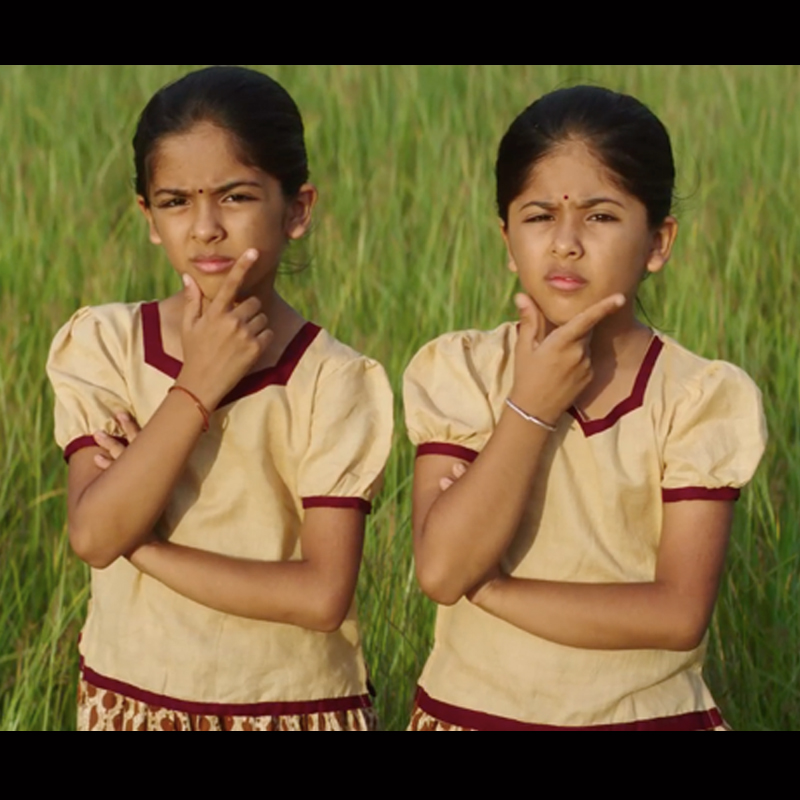
    The short film is all about how a father chooses his daughter’s education over their marriage and decides to empower his daughter.

  • Ad spends to grow by 10.5% to reach Rs 624 billion in India DAN Report

    Ad spends to grow by 10.5% to reach Rs 624 billion in India DAN Report

    MUMBAI: Advertising and digital communications group, Dentsu Aegis Network, has released it its biannual global forecasts, pointing to a more positive 2018 for Asia Pacific advertising expenditure than previously expected. 

    Ad-spend growth will rise from 4.0 per cent in 2017 to hit 4.5 per cent in 2018 – higher than the 4.2 per cent forecast in January 2018 and taking total investment to USD 215.95 billion. Regional events such as the 2018 World Cup that will be held in Russia, 2018 Winter Olympics South Korea, Asian Games in Indonesia and Australian federal election will play an important role in stimulating growth.

    Geographically, Asia Pacific is a major growth region, contributing 41 per cent of the global increase (USD 613.5 billion). Comparatively, North America accounts for 32 per cent, Western Europe accounts for 13 per cent with Latin America at 8 per cent and Eastern Europe 5 per cent.

    Dentsu Aegis Network Asia Pacific CEO Nick Waters says, “The region as a whole displays a positive outlook with increasing growth rates. We are seeing upward revisions in most key markets, with India, the Philippines and Vietnam showing high rates of growth.”

    Spend in China continues to grow at pace, though driven almost entirely by the e-commerce platforms Alibaba, Tencent and Baidu. Digital remains the dominant growth area with a quarter of Asia Pacific advertising spend expected to be delivered through mobile for the first time.

    Digital continues its rapid growth with online video gaining in share. This has been driven largely by the availability of high speed connectivity across the country, it is only set to grow faster. TV with a projected market share of 39.1 per cent continues to lead the media share of pie with Print at 29.3 per cent. 

    Speaking on the Indian context, Dentsu Aegis Network India and Amplifi president of media brands Kartik Iyer mentions, “India’s ad spend is projected to grow at 10.5 per cent as compared to the beginning of the year when the growth was expected to be over 11 per cent. It wouldn’t be a surprise to see some forward thinking brands trying to use Video Instead of TV  in a few test and learn cases.”·

    India advertising spend market is expected to grow in 2018 by 10.5 per cent to reach Rs 624 billion. Though there had been a slow start in Q1-2018, the market was picking up from March-April, fuelled by a stable recovery post demonetisation/GST/RERA buoyed by the State Elections in Meghalaya, Tripura, Nagaland and Karnataka in April. The India South Africa Match in January, Budget announcement in February, lead to continued expansion and growth of regional newspapers and television. Both social and online video will see growth for the next five years as India continues to evolve their internet, mobile, cloud audience.

    In China, advertising market is predicted to grow 6.5 per cent in 2018, up from the previous forecast of 5.4 per cent, to reach RMB 630 billion of global ad investment. Growth will be driven by digital, which is forecast to command 60 per cent of advertising spend and increase by 14.8 per cent. The online giants Baidu, Alibaba and Tencent (BAT) are projected to contribute around 80 per cent of this growth, underlining their dominance of the marketplace. Mobile payments are also one to watch in the coming years as platforms such as WeChat or Alipay make cash obsolete in large parts of the country. 

    The mobile device is steadily becoming our primary point of access to all digital services and content. In 2018, 52.2 per cent of all worldwide online traffic was generated through mobile phones, up from 50.3 per cent in the previous year, according to Statista. People now spend an unprecedented amount of time on their smartphones—more than five hours a day, according to some estimates. This growth in usage is largely driven by the widespread availability of high-quality digital Video. Mobile Video consumption is exploding among all age groups and content categories. 9 in 10 Social media users opt for mobile browsing, with mobile apps accounting for 70 per cent of time spent on Social media.

    Reflecting this, mobile is forecast to represent a quarter of global ad spend 25.2 per cent this year exceeding the previous prediction of 24.8 per cent. With Mobile payments forecast to be more popular in the coming years, Mobile is set to continue on a positive growth trajectory a forecast 18.8 per cent in 2019. 

    Traditional media spend is forecast to decline by -0.5 per cent in 2018 and -0.4 per cent in 2019. Newspapers and magazines are expected to continue their downward trend, with falls of -7.5 per cent and -6.5 per cent respectively. Radio, Out of Home and Cinema spend are expected to show steady growth.

    TV spend is forecast to move back into growth in 2018 following a -0.7 per cent decline in 2017, remaining a major medium in the mix with 35.5 per cent of overall investment. 

    Figure 1: Growth in global ad spend 2017-19 (% y-o-y at current prices)


    2017a

    2018f

    2019f

    GLOBAL

    3.3 (3.1)

    3.9 (3.6)

    3.8

    NORTH AMERICA

    2.5 (2.5)

    3.4 (3.1)

    3.2

    USA

    2.6 (2.6)

    3.4 (3.2)

    3.1

    CANADA

    0.0 (0.0)

    2.3 (1.1)

    5.1

    W. EUROPE

    3.2 (3.3)

    2.9 (2.6)

    2.9

    UK

    4.2 (3.6)

    4.2 (3.8)

    4.7

    GERMANY

    2.3 (2.2)

    2.6 (2.6)

    2.9

    FRANCE

    2.7 (1.7)

    2.5 (2.0)

    2.8

    ITALY

    0.9 (0.9)

    1.4 (1.9)

    1.1

    SPAIN

    2.3 (1.9)

    1.5 (1.4)

    1.2

    C&EE

    8.8 (8.3)

    7.8 (7.4)

    6.6

    RUSSIA

    14.3 (12.9)

    11.7 (10.4)

    8.5

    ASIA PACIFIC

    4.0 (3.5)

    4.5 (4.2)

    4.4

    AUSTRALIA

    2.3 (2.7)

    2.8 (2.9)

    2.4

    CHINA

    6.3 (6.0)

    6.5 (5.4)

    6.0

    INDIA

    8.9 (9.6)

    10.5 (12.5)

    11.1

    JAPAN

    1.6 (1.0)

    1.5 (1.6)

    1.2

    LATIN AMERICA

    8.3 (8.1)

    6.9 (8.8)

    7.3

    BRAZIL

    2.8 (2.1)

    2.3 (5.0)

    2.6


    Figures in brackets show our previous forecasts from Jan 2018

    Figure 2: Growth in global ad spend by media, 2017-19 (% y-o-y at current prices)


    2017a

    2018f

    2019f

    TELEVISION

    -0.7 (-0.9)

    1.2 (0.5)

    1.1

    NEWSPAPERS

    -9.4 (-9.0)

    -7.5 (-7.9)

    -7.4

    MAGAZINES

    -7.6 (-7.2)

    -6.5 (-5.9)

    -6.4

    RADIO

    1.2 (0.5)

    2.0 (1.3)

    1.2

    CINEMA

    6.1 (4.8)

    5.9 (4.6)

    5.2

    OOH

    2.6 (3.0)

    2.2 (2.4)

    2.1

    DIGITAL

    15.2 (15.0)

    12.6 (12.6)

    11.3


    Figures in brackets show our previous forecasts from Jan 2018


  • WPP learns to live without Martin Sorrell

    WPP learns to live without Martin Sorrell

    MUMBAI: British multinational advertising and public relations company WPP has decided to review its policies and codes of conduct and how these can be improved upon. The agency’s chief operating officer Mark Read in a staff memo said that the review will be conducted by leadership teams throughout the group. 

    He did not respond to allegations in reports in the Financial Times and the Wall Street Journal which stated that its former CEO Martin Sorrell resigned in the midst of investigations of having paid company money (some 300 pounds)  for services to a sex worker in a Mayfair brothel. Additionally, there were allegations in the reports that Sir Martin had a bullying nature towards junior employees and was curt with them. 

    Instead Read  stated in the memo that “Although we can’t comment on specific allegations, I feel we should remind ourselves of and reinforce the kind of values we want and need to have within every part of our business: values of fairness, tolerance, kindness and respect.”

    He added: “It should hardly need saying that all WPP working environments must be places where people feel safe and supported. They must also be places where people are able to raise concerns if they want to, and where those concerns are dealt with when they need to be.”

    The memo also mentioned about WPP’s helpline, Right to Speak. Read mentioned that the service was available for everyone across the group that allows them to raise issues without fear of reprisal. The Right to Speak service is independently operated and protects the identity of anyone who would rather not speak directly to their respective line manager or senior official about their concerns. 

    The company also had its annual general meeting with its shareholders on Wednesday, during the course of which a section of shareholders protested against the appointment of WPP chairman Roberto Quarta, the handling of the Sorrell exit and the payouts being planned for him in the form of share awards, as well as the fact that he was not  asked to sign a non-compete agreement when he departed from the agency last month, amidst controversy. 

    WPP chairman Roberto Quarta said that there was no basis to cancel Sorrell’s share awards as the company did not have any proof of misconduct. “The contract required Martin to be treated as having retired unless a definition of gross misconduct would be satisfied, which it could not, and on which the board had clear legal advice.”

    As far as the non-compete clause and the payout were concerned, Quarta stated that the conditions of Sir Martin’s employment contract predated the current board. This despite, it  managed to get him to take cuts in pay and benefits at a time when the agency had put up a stellar performance in 2015. 

    Quarta has also started an investigation within the organisation on how information about allegations against Sorrell leaked into the media.

    Read who is tipped to take over CEO was quoted by the BBC as saying that “Martin was a hard-working and hard-driving chief executive. I don’t recognise the bullying nature of some of the allegations.”

    Sorrell  has denied the allegations which have appeared in the media but decline to say anything more.

    Read meanwhile said he has spent time with group agencies and clients over the last eight weeks, reassuring them of WPP’s health today and going forward. Disclosed he in the note: “There is tremendous positivity and confidence about the future of the business. Let’s stay focused on that, and continuing to build a company we are all proud of.  We all want WPP and its agencies to continue to be home to the world’s best talent, which means creating a positive, supportive and inclusive culture in every office. More importantly, it’s the right thing to do.”