Category: AD Agencies

  • Mondelez India and McCann Worldgroup India win big at The Advertising Club’s EFFIE India Awards 2023

    Mondelez India and McCann Worldgroup India win big at The Advertising Club’s EFFIE India Awards 2023

    Mumbai: The Advertising Club hosted the latest edition of the coveted ‘EFFIE India AWARDS 2023’ with Celebrity Cricket League as the Associate Sponsor, Craving Digital as the Imagination Partner, Diageo India as the Celebration Partner, and Heineken Silver Beer as the Beverage Sponsor. Mondelez India was judged the EFFIE India Client of the Year, while McCann Worldgroup India was named EFFIE India Agency of the Year. The coveted Grand EFFIE was won by Enormous for Jaquar’s campaign ‘Unimaginable Brand Extensions.’

    Announced at a celebratory event at Taj Lands’ End, Mumbai, the awards acknowledged the impact of success through work done by agencies and clients that set new benchmarks in effectiveness in marketing and advertising communication. Setting a new milestone, EFFIE India garnered a record-breaking 1276 entries this year, the highest in its 23-year history, with participation from 79 agencies.

    Speaking at the EFFIEs, The Advertising Club president Rana Barua said, “The EFFIEs stand as a testament to the power of impactful storytelling and strategic brilliance in our industry. My heartfelt gratitude to the advertising fraternity for their unwavering support, making these awards a celebration of creativity and effectiveness. Congratulations to all the winners for crafting campaigns that not only captivate but also leave a lasting impact on our audiences. Your creativity continues to shape the future of our industry. Here’s to another year of pushing boundaries and inspiring innovation in the world of advertising.”

    Elaborating on the awards, EFFIE India chairperson Mitrajit Bhattacharya said, “EFFIE India continues to showcase its unwavering commitment to celebrating excellence in advertising, honouring both exceptional work and the talented individuals behind it. I’d like to extend my gratitude to the esteemed judges who dedicated their time and expertise to assess a remarkable 1276 entries, setting a new record. Their commitment is truly commendable. A heartfelt thank you also goes out to our sponsors, the entire Ad Club managing committee, the EFFIE committee, EFFIE New York, and The Ad Club secretariat for their tireless efforts in making it a resounding celebration of creativity and innovation in the advertising industry.”

    EFFIE India co-chairpeson Pradeep Dwivedi added, “In yet another splendid year of the EFFIE India Awards, what stands out is how agencies and brands continue to put in their hard work. Their meticulous contributions in ideation, flawless execution, and the art of brand-building are truly commendable. EFFIEs has always added and will continue to add a profound insight into the concept of advertising awards. A big congratulations to all the winners and the participants.”

    EFFIE INDIA 2023 RESUTLS CLICK HERE

    EFFIE INDIA 2023 CLIENT OF THE YEAR CLICK HERE

    EFFIE INDIA 2023 AGENCY OF THE YEAR CLICK HERE 
     

  • Sudhir Sitapati’s compelling address takes center stage in AAAI’s Subhas Ghosal Memorial Lecture

    Sudhir Sitapati’s compelling address takes center stage in AAAI’s Subhas Ghosal Memorial Lecture

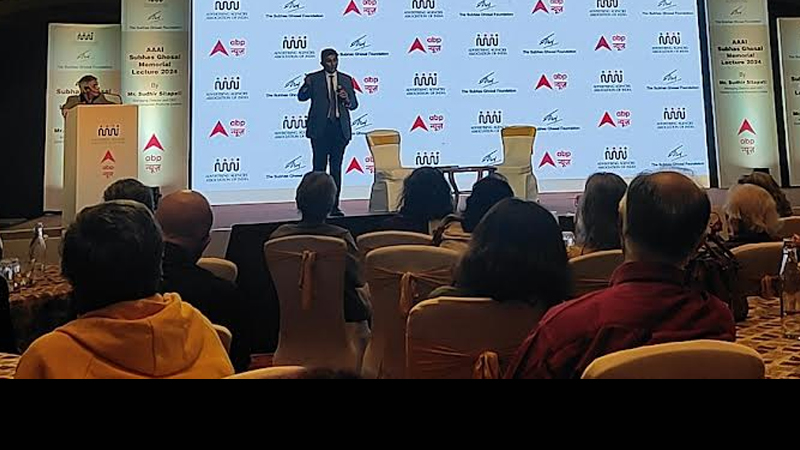
    Mumbai: Godrej Consumer Products CEO Sudhir Sitapati’s compelling address took center stage in AAAI’s Subhas Ghosal Memorial Lecture on Thursday. He shared many insights on building brands in today’s India and also some of his personal experiences.

    The event was held on Thursday, 18 January 2024 at 7:00 pm at ITC Grand Central Parel, Mumbai.

    As a memorial to one of the most influential figures in the history of advertising, Subhash Ghosal, the Subhas Ghosal Foundation was established by a group of senior communication professionals who lived during his era. One of the primary objectives of the foundation is to promote the professional values Ghosal embodied throughout his lifetime.

    Sitapati delivered the Subhas Ghosal Memorial Lecture at the Advertising Agencies Association of India (AAAI) event on Thursday on the topic he titled “Does the advertising industry need a dose of its own medicine?”

    Before that, Sitapati stated that when he joined as the MD and CEO of Godrej Consumer Products (GCPL) two years ago was to “dramatically” increase the company’s ad spends. “Even if it came at the cost of profitability,” he said.

    Sitapati addressed many issues. He said that he considers himself “one of the advertising fraternity” and made some points, calling for increased synergy between agencies and advertisers.

    He stated that Ghosal, the legendary adman who was JWT’s first Indian CEO, would be disappointed that J. Walter Thompson, the agency where he had worked for 50 years, has now been subsumed in VML.

    He also talked on some key reasons as to the decline of advertising in today’s times. He said that Ghosal would blame it on the change of the commission model where agencies would make 15 per cent commission from media owners for the advertisements they bought. “The fortunes of advertising died with the current fee model that leaves no room for investments in people and research and no real incentives for agencies to push the business of the client to the maximum,” he noted.

    He shared that in 1983, in an article titled ‘Advertising a Critique’ Ghosal argued for more spending on advertising and said that the sector contributed to about 0.2 per cent of GDP while in Indonesia it was close to 0.6 per cent. 40 years later advertising now contributes to about 0.5 per cent of Indian GDP.

    On of the main points he notes was that of the FMCG sector. He stated that FMCG is still the largest spender on advertising in India and advertising is in turn its lifeblood. The Indian companies are much more profitable than their global peers. The top five listed FMCG companies spend 15 per cent of their revenues on advertising whereas 10 per cent in the global top 5.

    “FMCG is the bell-weather consumption and compass for most consumer companies. It’s not unfair to therefore assume that advertising has played such an important role in FMCG. It has played perhaps a slightly less, but nonetheless crucial role in consumption in general,” he said.

    Sitapati shared three basic points for folks in advertising: “Spend more time with the CEO, CFO and other non-marketing people, have a unique point of view on how advertising works and advertise it in a line and finally talk more numbers.”

    He said the first step in marketing is to know your target consumer well. “Who the consumer is for the agency depends on what you want. If your objective is to structurally reset the profitability of the sector because the profitability of the sector is not a reset. The consumer is not the brand manager or the marketing head but the CEO. “CEOs are only willing to pay substantial amounts if they see something that drives their share price in the next 12-36 months.”

    He further shared that in today’s post-modern world, we recoil at a definitive answer on how advertising works instead of listing the various ways it could work. “We are more concerned with being never wrong rather than being often right. There may be many roads to advertising heaven, but an agency must choose one of these roads and convince the CEO that their religion is the true one.”

    He said that his own beliefs on advertising were shaped by two epiphanies. “As a brand manager on Surf Excel in the mid tweens I noticed that whenever a measure on our Milward Brown brand tracker called ‘Proven ad recall’ rose then a few weeks later our sales rates went up as well. In other words, all it took for consumers to buy more was to be able to narrate the story of the ad impromptu.

    “I call this principle “Be famous before you get persuasive”. Don’t sell, just be known for what you sell. Once you buy this belief system there are some necessary concomitants – the power of the big idea that helps you stand out, consistency, fewer copies, risk taking etc.,” he noted.

    Sitapati’s second epiphany, he said, was shaped around that same time when he read a book that now seems to be on everyone’s bookshelf – ‘How Brands Grow ‘ by Byron Sharp.

    “His thesis is that brands grow not by heavy users consuming more but by non-users or very light users consuming a bit more. Penetration not consumption drives growth. Penetration is driven by salience, not equity attributes and salience is driven by making your brand mentally available to the maximum number of people. In media terms its reach and not impact that matters,” he said.

    The second advertising principle for Sitapati which is media related has been “It is better to whisper to many than to shout to a few”. “This too has its concomitants – never getting carried away by impact, keep looking at the cheapest media, at consumer cohorts who never see your brand ever and don’t over segment markets.”

    “It’s not just important to have a theory of advertising, it’s equally important to have a proposition that your agency believes in and everybody in the agency repeats at all forums. With just these two principles consistently at play I’ve winged my way through marketing for the last 15 years.”

    He also said that his final suggestion on marketing advertising is for the agency world to speak a little bit more in numbers to brands.

    “We as clients would love it if you had more data at your disposal on how an ad is working than we do. If you came to us and said this isn’t working, pull it off or it’s working you’ve got to spend more money on it. Not based on gut, which you do quite often but based on hard facts. Agencies need an entire department on marketing effectiveness – you’ll have to invest in the databases and in people but I can assure you that whenever a consultant or an external advisor has proprietary data on my brand or company, I take that very seriously.”

    He concluded the session by stating the first line of Ghosal’s book “Making of Advertising”. It stated that, “When I was asked to speak on the subject for this session, “Advertising strategy, how to make it work”, my instant response was what a wonderful opportunity to combine experience and discipline into a presentation from which the speaker was bound to get much more than the audience. This is almost always true, because the speaker tends to take his subject far more seriously that the audience does just like an advertising.”

  • ASCI introduces guidelines to ensure honest environmental claims in advertisements

    ASCI introduces guidelines to ensure honest environmental claims in advertisements

    Mumbai: The Advertising Standards Council of India (ASCI) has issued its guidelines to prevent false pro-environment claims, also known as greenwashing, that has been seen across sectors. These “Guidelines for Advertisements Making Environmental/ Green Claims”, have been in the public domain for consultation since November 16, 2023, and were approved in the recent Board of Governors meeting.

    Effective from 15 February, 2024, these guidelines aim to ensure that environmental claims made by advertisers are reliable, verifiable, and transparent. Consumers are increasingly demanding products and services which minimise harm to, or have a positive effect on, the environment. As a result of a proliferation of products, services and businesses which claim to meet that demand it is imperative for such claims to be reliable and verifiable.

    Greenwashing refers to unsubstantiated, false, deceptive, or misleading environmental claims about products, services, processes, brands or operations as a whole. It is often seen that products make such broad claims although only a very small component or part of the product is green. The ASCI guidelines require advertisements to make specific claims limited to the part of the product or service that actually has the environmental benefit. Advertisements must not claim an environmental benefit that results from a legal obligation if competing products are subject to the same requirements. The guidelines also require that all seals and certifications must be from accredited organizations. Future promises of being green cannot be made unless there are some specific plans to achieve those claims.

    Greenwashing violates Chapter I of the ASCI Code on misleading advertisements. In order not to breach Chapter I of the ASCI code, advertisements must adhere to the following guidelines.

    Guidelines:

    Absolute claims such as but not limited to “environment friendly”, “eco-friendly”, “sustainable”, “planet friendly” that imply that the entire product advertised has no impact or only a positive impact or reduces adverse impact must be capable of being substantiated by robust data and/ or well-recognised and credible accreditations. Such absolute claims cannot be diluted by means of a disclaimer or any other clarificatory mechanism such as a QR code or website link etc.

    Comparative claims such as “greener” or “friendlier” would need evidence that the advertised product or service provides an environmental benefit over that of the advertiser’s previous product or service or competitor products or services and the basis of such comparison is made clear.

    A general environmental claim must be based on the full life cycle of the advertised product or service, unless the advertisement states otherwise, and must make clear the limits of the life cycle. If a general environmental claim cannot be justified, a more limited claim about specific aspects of a product or service might be justifiable. Claims that are based on only part of an advertised product or service’s life cycle must not mislead consumers about the product or service’s total environmental impact.

    –  Unless it is clear from the context, an environmental claim should specify whether it refers to the product, the product’s packaging, a service, or just to a portion of the product, package, or service.

    –  Advertisements must not mislead consumers about the environmental benefit that a product or service offers by highlighting the absence of an environmentally damaging ingredient if that ingredient is not usually found in competing products or services. Similarly, advertisements must not claim an environmental benefit that results from a legal obligation if competing products are subject to the same requirements.

    –  Where such ‘free-of’ claim is necessary to equip the consumers with relevant information, an appropriate disclaimer should be added to indicate the purpose e.g. “XX-Free: (Names of regulation) prohibit the use of (name of prohibited substance/ingredient) in (category of products)”. It would be deceptive to claim that a product is “free-of” a substance if it is free of one substance but includes another that is known to pose a similar or higher environmental risk.

    –  Where the use of Certifications or Seals of Approval create the impression of an environmental claim to consumers, then the advertiser should make clear what attributes of the product or service have been evaluated by the certifier.  The advertiser should ensure that the certifying agency is nationally/internationally accredited by a certifying authority for e.g. agency accredited by the UN council/committee, BIS etc.

    An advertiser shall not use visual elements in an advertisement which results in the advertisement conveying a false impression that the product is less harmful or more beneficial to the environment, when seen as a whole, unless required under law. For example, logos representing a recycling process on packaging and/or in advertising material can significantly influence a consumer’s impression of the environmental impact of a product or service.

    Visual elements for the above purpose shall not include the colour scheme related to nature or environment or images of natural ingredients or natural elements used on the products / packaging / services as a part of its creative brand identity or trademark/trade name unless such elements used are connected directly to any Environmental Claim made on such products / packaging / services to influence a consumer’s impression of the environmental impact of a product, packaging or service. For example, a green coloured packaging with natural ingredients contained in the product will not be considered as contributing to a green claim unless it refers to an environmental claim.

    – Advertisers should refrain from making aspirational claims on the products/ packaging/services about future environmental objectives unless they have developed clear and actionable plans detailing how those objectives will be achieved.

    – For carbon offset claims where the offset does not occur within the next two years, advertisers should clearly and prominently disclose the same. Advertisements should not claim directly or by implication that a carbon offset represents an emission reduction if the reduction, or the activity that caused the reduction, was required by law.

    – For claims pertaining to the product being compostable, biodegradable, recyclable, non-toxic, free-of etc. advertisers should qualify the aspects to which such claims are being attributed, and the extent of the same. All such claims should have competent and reliable scientific evidence to show that:

    a)     The product or the qualified component where applicable will break down within a reasonably short period of time after customary disposal.

    b)    The product is free of elements that can lead to environmental hazards.

    ASCI, CEO and secretary general Manisha Kapoor said, “Consumers today are exercising their preferences for green products, and in many cases, pay a premium for them. It is necessary that consumers have the correct information to make informed choices to support green products. It is also important that organizations that genuinely provide greener products are able to communicate this clearly to consumers. The Government too has expressed their concern on greenwashing or false green claims, and we believe that these guidelines are a significant step towards promoting transparency and accountability in environmental/ green claims made in advertising.”

    Link to Guidelines for Advertisements Making Environmental/ Green Claims

  • MiQ unveils global report on advanced TV advertising

    MiQ unveils global report on advanced TV advertising

    Mumbai: MiQ, the world’s largest independent programmatic media partner for brands and agencies, unveiled its global Advanced TV research report, which surveyed 7,000 consumers and 1,100 decision-makers from brands and agencies across eight countries, including India, the US, UK, Canada, Germany, Australia, China, and Singapore.

    The report reveals that TV viewing habits have become more fragmented globally, with average daily watch time across linear TV and OTT being 2 hours and 53 minutes, and watch time on streaming platforms surpassing linear TV by 22 per cent. Cord trimmers (those who watch OTT and linear), cord cutters (a little linear, mainly OTT), and cord nevers (OTT-only) outnumber those who only watch linear TV three-to-one globally.

    The report highlights the following trends in global TV consumption:

    ●    Consumers subscribe to three streaming services on average
    ●    10 per cent of viewers jump from subscription to subscription based on what they’re watching
    ●    93 per cent of consumers are re-evaluating their subscriptions, and 33 per cent of those are looking at ad-supported platforms.

    With a clear shift towards streaming, marketers need to include connected TV as a key pillar of their advertising strategy. The report also points out that consumers aren’t giving their full attention to just one screen; in fact, 45 per cent of viewers often (or almost always) use a second screen while streaming videos or watching content on TV.

    Viewership insights from India reveal that:

    ●    Attention is split – 56 per cent of consumers use a second screen frequently when streaming videos or watching TV
    ●    Price is more important to consumers than content – 42 per cent of consumers claim that cost is a bigger consideration on streaming platforms than content.
    ●    Ad tolerance is high – 37 per cent of viewers would consider a cheaper ad-supported streaming (AVOD) platform

    Brands and media agencies are optimistic about increasing ad spends on Connected TV with:

    ●    59 per cent of Indian brands and agencies anticipate a rise in their CTV marketing spend over the next 12 to 24 months
    ●    74 per cent of CTV advertisers measure the success of their campaigns through reach/frequency towards the intended target audience

    Commenting on the global report, MiQ global commercial board member and managing director Siddharth Dabhade said, “Consumer and advertiser insights from our report indicate that connected TV advertising is poised for robust growth in India. With the highest ad engagement rate in the world, CTV advertising presents a huge opportunity for brands to make an impact on the biggest screen in the household by taking a data-driven approach to TV planning and activation. Trends like cord-cutting and second-screening are on the rise, which implies that advertisers need to focus on mobile retargeting and competitive conquesting to supplement their CTV strategy.”

    According to the report, only 15 per cent of the respondents who have executed CTV ad campaigns consider themselves a CTV ‘expert’ owing to the cost and creative challenges advertisers face when planning and executing a CTV campaign.

    To gain more insights on CTV advertising in India download the report: https://marketing.wearemiq.com/advanced-tv-report

  • CTV advertising in India to surge at 47 per cent CAGR over next five years: Frodoh World’s Russhabh R Thakkar

    CTV advertising in India to surge at 47 per cent CAGR over next five years: Frodoh World’s Russhabh R Thakkar

    Mumbai: The burgeoning connected TV (CTV) space has not just reshaped our content consumption but has also presented unprecedented opportunities for advertisers. With the rise of streaming platforms and Smart TVs, CTV advertising offers a targeted and immersive way to engage viewers. As consumers increasingly shift towards on-demand, personalised content experiences, advertisers can harness the power of CTV to deliver tailored messages and optimise brand visibility in this dynamic digital landscape.

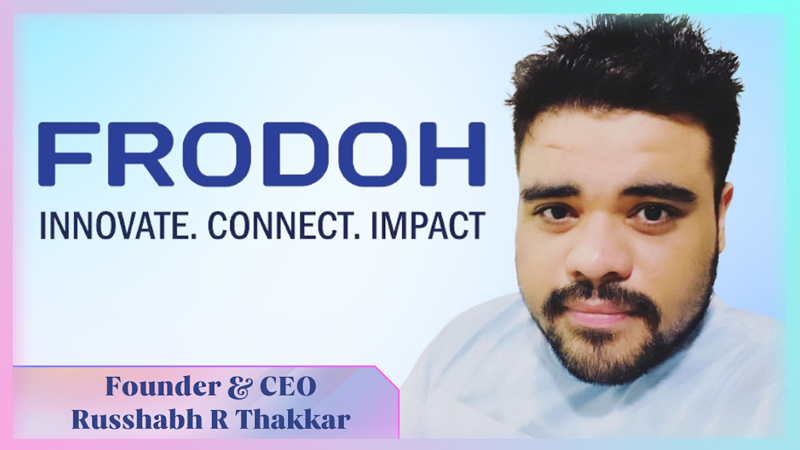
    Indian Television in an interview with Frodoh World founder and CEO Russhabh R Thakkar explored the company’s evolution since its inception, trends in 2024 impacting the CTV space and much more…

    Recognising the immense potential in the intersection of technology and user experience, Russhabh founded Frodoh World, a CTV advertising specialist company, in 2020, to bring groundbreaking ideas to life. As the founder and CEO of Frodoh World, he leads a dynamic team dedicated to revolutionising the way consumers experience and interact with technology. Under his entrepreneurship, Frodoh World is making waves in the connected TV advertising space, seamlessly integrating interactive and engaging digital ads.

    Edited Excerpts:

    On the launch of Frodoh World in 2020, and its evolution since then

    Frodoh World was launched to revolutionise digital advertising by filling a gap in the market, prioritising impactful storytelling and attention-grabbing ads with the ethos of ‘Don’t just get viewed, get noticed,’. We have since evolved by consistently innovating in the latest technology, strategies, adapting to industry trends, and delivering measurable success for clients.

    On the growth and penetration of CTV in India and the trends that will impact the CTV space in 2024

    We have witnessed the remarkable growth and increasing penetration of connected TV in India over the past few years. The evolving landscape has been marked by a surge in consumer adoption, presenting significant opportunities for our platform. Looking ahead to 2024, I anticipate a continued upward trajectory for CTV, driven by innovations in personalised content delivery, immersive advertising experiences, and the seamless integration of data-driven insights, shaping the future trends of the CTV space in India.

    Over the next five years, connected TV advertising is set to grow rapidly in India at a compounded annual growth rate of 47 per cent, and this increase will contribute to the overall TV landscape including the linear segment, making India the third largest market by 2024.

    On Frodoh World setting itself apart in the CTV advertising landscape with its proposition, “Don’t just get viewed, Get noticed”

    Frodoh World stands out in the CTV advertising landscape by consistently adapting to the dynamic tech environment, integrating measurable and trend-forward ad solutions. Our commitment to assessing the impact post-campaigns ensures result validation, addressing client’s business challenges and fostering trust for repeat collaborations. Recognising the fleeting attention span, our approach prioritises engaging ad experiences through context-driven planning, ensuring a distinct and impactful presence in the market.

    On Frodoh World’s demonstration of its commitment to CTV and the results it has achieved for advertisers

    Our dedication to CTV is distinctive in our strategic campaigns, which emphasise impactful messaging through innovative practices like TV to mobile cross-screen device targeting, ensuring precise household reach and action-oriented frequency. Advertisers have experienced substantial outcomes, including heightened engagement, elevated brand awareness and recall scores, and a quantifiable positive influence on their target audience. This underscores our unwavering commitment to providing tangible value to clients.

    On the significant influence or transformative impact of AI in the evolving landscape of CTV and advertising and Frodoh World harnessing AI to enhance its CTV strategies and deliver more effective advertising solutions

    Certainly! AI wields significant influence, and Frodoh strategically harnesses its power to elevate CTV strategies and deliver more effective advertising solutions. By leveraging AI – we optimise content delivery, enhance audience targeting precision, and tailor ad experiences based on real-time insights.

    This not only ensures a more personalised and engaging viewer experience but also maximises the impact and effectiveness of our CTV campaigns, aligning with the evolving demands of the industry and staying at the forefront of innovation.

    On Frodoh World measuring the effectiveness of its CTV advertising strategies, particularly in terms of targeting precision and audience engagement; and a few examples of your notable clients or success stories

    Frodoh World employs a sophisticated methodology to evaluate the effectiveness of our CTV advertising strategies, leveraging over 15,000 unique segments from trusted third-party data sources, we provide a spectrum of targeting options, including online and offline behavioural, interest-based, demographic, geography-based, and custom segments.

    A forthcoming innovation is the industry-first Web-to-TV targeting. A distinctive feature is our integration of scientific campaigns, allowing clients to set up campaigns and deploy the Frodoh pixel on their websites for data collection. This facilitates the development of a retargeting audience pool, enabling us to engage valuable visitors with impactful, non-skippable CTV ads. This proven approach consistently yields tangible results, revitalising brand interest and fostering substantial engagement, showcasing our commitment to delivering effective and measurable outcomes in the dynamic CTV advertising landscape.

    On Frodoh World tailoring its audience solutions to address the unique needs and preferences of diverse sectors within the CTV advertising landscape

    Our commitment to tailoring audience solutions involves ensuring that each client benefits from a personalised and precise approach. We provide a plethora of options for segmenting audiences, ranging from readily available choices to creating custom cohorts, enabling precision targeting with content. This strategy diverges from generic marketing approaches, emphasising a bespoke, one-on-one strategy that resonates with the specific requirements of each sector. Our goal is to move away from a “one-size-fits-all” model, offering clients a tailored and effective solution.

    On Frodoh World’s future plans and specific targets or milestones that the company aims to achieve in the coming years

    Frodoh’s future plans include aspiring to become a formidable contender in the competitive landscape, aiming to rank among the leading CTV platforms. We are focused on substantial growth across priority markets in India, accompanied by a strategic emphasis on building exceptional talent across all facets of the organisation. Our commitment to ongoing innovation is a core element of Frodoh’s strategy, recognising the growing significance of connected TV and anticipating the increasing interest from advertisers eager to explore this platform.

  • Will GenAI be a revolutionary force of change in the CTV space

    Will GenAI be a revolutionary force of change in the CTV space

    Mumbai: The world of television viewing has undergone a significant transformation. From the era of linear television, today we’re undoubtedly on connected screens, where most of our content consumption is online. CTV has emerged as a force to reckon with for both consumers and advertisers. For brands, CTV offers a great opportunity to blend the world of engaging storytelling associated with television advertising with the benefits of programmatic technology that offers advanced targeting, optimization, and measurement.

    AI has always been at the core of programmatic advertising and CTV, enabling anything from predictive targeting to anti-fraud protection.  Now, thanks to the emergence of Generative AI and the availability of the models behind it, we’re looking at another transformative era unlocking even more value for brands and advertisers.

    The Current State of CTV & Rise of OTT

    There’s been a surge in OTT adoption globally, which has significantly contributed to the rise of CTV as viewers opt for better streaming quality and bigger screens, while opting out of expensive cable subscriptions. Although this trend started in the United States, it is estimated that 40% of households in Europe’s biggest markets – UK, Germany, France, Italy and Spain – use CTVs. On an eastward journey, CTV has also become a 4-hour daily ritual in India where on-demand content reigns supreme.

    Globally, the OTT market is burgeoning due to the diverse variety of local and international content these platforms offer. Industry research forecasts the global OTT video market’s revenue is expected to hit US$295Bn, with an expected annual growth rate (CAGR) of 7.29% from 2023 to 2028. Emerging economies like India have also seen a phenomenal growth in OTT video content, both on the back of global OTT players entering the market as well as increased competition among local players offering niche content.

    This shift towards OTT viewing, particularly among younger audiences, has presented a unique opportunity for advertisers to utilize CTV – where OTT content is mostly consumed – for creating highly targeted and engaging ad campaigns. With the viewing audiences spread across OTT apps and through various times of the day, advertisers can craft messages that resonate more effectively with specific demographics. Advertisers on CTV benefit from the enhanced user engagement and attention on OTT content. With many platforms moving to an AVOD model, the CTV advertising market is further expected to grow in the years to come.

    Emergence of GenAI and its Impact on CTV

    Programmatic technology on CTV has leveraged AI technology in many ways since its inception, whether it is to segment and target audiences to maximize engagement, to optimize bid pricing in real time or to identify patterns that are indicative of potential fraud. This “traditional AI” allows programmatic advertising to be super efficient by using sophisticated algorithms that can predict and make their own decisions following a set of rules or predefined goals. Generative AI, however, is different in that it does not need to follow predefined rules and it can instead come up with its own. This is a key difference. Generative AI is based on Large Language Models (LLMs in short) and, unlike “traditional AI”, it can also create new content – text, images and video – based on patterns it learns from the underlying training data. This is what makes it transformative and opens a whole new set of opportunities for increased efficiency and value creation for brands on CTV.

    As with any new transformative technology, there will certainly be an evolution until the full value can be realized, but with so many models becoming readily available and affordable, the industry (and the whole world) is moving very fast. Notably, there are three specific areas where Generative AI can make a material difference on CTV advertising:

    a.    Making sense of unstructured language based information – imagine the transcript of any given TV show, for example – to identify contexts and create new ones just became easier. Thanks to this, the dependency on pre-defined content categorization for campaign targeting or optimization is greatly reduced.

    b.    More engaging and cost effective creatives can be easily unlocked thanks to GenAI. I’d argue that humans will still be needed in the creative process for a long time, but there is no question that the ideation part of the creative process can be enriched by the use of Gen AI tools, and executing new video creatives and variations is today possible at much lower production costs, which also enables much more efficient AB testing to maximize engagement.

    c.    Interpretation of campaign data and communication of value for the brand is another area where I’d expect Gen AI to have a huge impact, sooner rather than later, allowing campaign managers to focus on improvement rather than reporting.

    Even if full automation is still not possible and much human interaction is absolutely necessary, what we can do with AI tools today to personalize creatives, making them more dynamic and engaging, already represents a material leap. Some of this will take time, but imagine how a sports apparel brand can easily create multiple ads featuring a visually captivating video of runners: in a rural or urban setting, featuring a family or a group of friends, in winter or summer with the ads being shown depending on the households targeted, and strategically placed during content most relevant for the target demographic. Or imagine how a food brand in a multi-linguistic country like India can leverage GenAI tools to make vernacular advertising easier and automatically target different regional consumer groups. This not only improves the relevance of ads but also maximizes the effectiveness of ad campaigns, ultimately boosting value for advertisers and revenue for content providers.

    By the same token, GenAI can also be used to identify and preempt contexts to ensure ads are being placed in a brand-safe environment for a particular audience. Imagine tools based on Gen AI that automatically discard showing ads on entertainment content intended for kids or shows that a brand considers too violent.

    Looking to the Future

    GenAI is not just an incremental step forward; it represents a paradigm shift, potentially redefining the CTV landscape and its strong players. Brands leveraging it are already one step ahead of the game. GenAI promises to elevate the CTV experience for viewers and advertisers alike. A promising future, with the intersection of technology and creativity in advertising helping reach new heights.

    The author of the article is mediasmart CEO Noelia Amoedo.

  • Weekend Unwind with: Nu Republic’s Ujjwal Sarin

    Weekend Unwind with: Nu Republic’s Ujjwal Sarin

    Mumbai: With the first weekend of January 2024 upon us, it is time to unwind with the latest Q&A edition of Indiantelevision.com’s Weekend Unwind—a series of informal chats that peek into the minds of business executives through a fun lens in an attempt to get to know the person behind the title a little better.

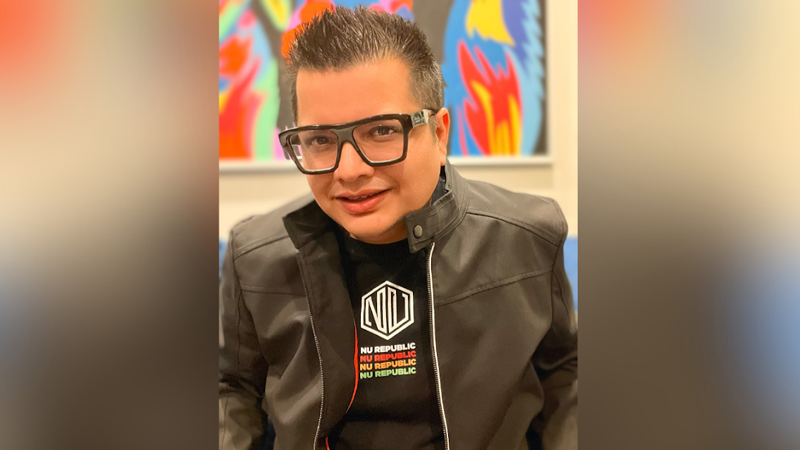
    In this week’s session, we have Nu Republic’s founder Ujjwal Sarin.

    Sarin is a distinguished business leader with a career spanning over 17 years, in managing diverse customer-facing businesses in India. His expertise lies in the strategic management of customer-centric enterprises, product development, global sourcing, sales, branding, and advertising.

    In 2018, Ujjwal founded Nu Republic, an innovative Indian lifestyle brand merging music, fashion, and technology. Renowned for its advanced wireless audio devices like earbuds and speakers, Nu Republic targets forward-thinkers who value both function and style. Under Ujjwal’s leadership, the brand elevates “wear-tech” beyond mere gadgets, gaining global recognition and becoming a favorite among trendsetting individuals.

    So, without further ado, here it goes…

    Your mantra for life

    Art of simplicity is a puzzle of complexity, a quote by Douglas Horton. It actually takes a huge amount of deep thinking, thoughtful process and curation of ideas to make something which looks so simple for the eyes. And so is with life. Keeping things simple is not that simple. It takes lots of complex reflection on a daily basis to simplify life in the long run. And maybe therein lies its beauty.

    A book you are currently reading or plan to read

    Is this anything – Jerry Sienfeld

    Your fitness mantra, especially during the pandemic

    I believe a fit body leads to a fit mind. Walking / Running with my favorite tracks blaring on my Nu Republic® earbuds is my go to fitness mantra.

    Your comfort food

    Irrespective of the state of my hunger, or time of the day, a cheeseburger gets me going.

    A quote or philosophy that keeps you going when the chips are down

    I keep myself in the present as much as possible through this simple quote by Epictetus “We suffer more in imagination than in reality”. Overthinking, anxiety and unnecessary worries are the result of exaggerated imaginations. We often want to predict what the consequences of our actions will be. We can sometimes overthink possibilities within our future and devise scenarios in the hope they will allow us to cope with whatever life will throw at us.

    We lose track of the present, and we embellish the future with our fears and insecurities. Oftentimes, our greatest inner turmoil is not an ailment of actuality, but an unconscious manifestation of our perceived shortcomings.

    Your guilty pleasure

    Ice cream

    The last time you tried something new

    Doing the “Nu” is part of my life. By choosing a life of an entrepreneur, I have signed up to a life of adventure. I am living by the philosophy immortalized by Pink Floyd “all you touch and all you see all your life will ever be”.

    A life lesson you learned the hard way

    Shortcut to success is a long road to nowhere.

    For example, there are classic examples of businesses going down completely because of a shortcut they used to cash in on success. I want to ensure that I choose a path of fulfillment when I visualise success. Overnight success fizzles out in a day. Hard-earned success leaves behind a legacy.

    What gets you excited about life?

    Travel and Music

    What’s on top of your bucket list?

    Making Nu Republic the coolest brand ever is my goal and at the top of my bucket list.

    If you could give one piece of advice to your younger self, what would it be?

    Direction is more important than speed. Some people are going fast nowhere.

    There is a difference between being simply busy and busy in the right direction. Without a sense of direction, you may be constantly busy but ultimately achieve very little. On the other hand, if you prioritize direction over speed, understand that taking the time to plan and set goals can lead to more meaningful and fulfilling outcomes in the long run.

    One thing you would most like to change about the world

    I want to create products in Nu Republic which change the way consumers look at this category. Taking products from mere fashion serving devices to powerful modes of fashion and self expression is my ultimate goal and this change can be felt already.

    An activity that keeps you motivated and charged during tough times

    Music is my go to solution to every problem. It has the power to transport me to a different world, where I can find solace and escape from reality. Whether I’m feeling sad, stressed, or overwhelmed, music has a way of soothing my soul and bringing me inner peace.

    What lifts your spirits when life gets you down?

    As music has the ability to evoke a wide range of emotions. Different genres and melodies can make people feel happy, sad, excited, or relaxed. It often serves as a powerful tool for expressing and processing emotions.

  • Indian advertising economy touches Rs1Tn

    Indian advertising economy touches Rs1Tn

    Mumbai :  The winter update of MAGNA’s “Global Ad Forecast” predicts that global media owners net advertising revenues (NAR) will reach $853bn this year, more than 5.5 per cent above the 2022 level and will grow by more than 7.2 per cent in 2024.

    •  The Asia Pacific advertising economy grew more than 8.2 per cent to $286bn this year powered by India, Pakistan and China. In 2024, APAC advertising revenues will increase more than 6 per cent.

    •  India is now consistently the fastest growing market and leads the ad spend growth globally. India moves into top ten markets and forecast to climb to 8 position by 2028. Indian advertising sales grew over 11.8 per cent in 2023 to Rs 1099bn ($14bn) and is the 11 largest market.

    •  In India, Digital formats contribution to growth is slowing down (more than 14.2 per cent in 2023 Vs more than 25.7 per cent in 2022), however digital remains the largest at Rs 500bn ($6.4bn) with a share of 46 per cent. Linear formats will grow by more than 9.9 per cent with both television and print growing equally at more than 8 per cent. Radio (more than 12.1 per cent) and OOH (more than 29.8 per cent) are seeing a robust recovery though still short of pre- covid revenue.

    •  In 2024, the India advertising market will grow by more than 11.4 per cent. Digital formats will rise more than 13.9 per cent to reach Rs 569bn ($7.2bn), while linear ad sales will increase by more than 9.3 per cent to reach Rs 655bn ($8.3bn).

    MAGNA India SVP, director – intelligence practice Venkatesh S, said: “In 2023H1 advertising spend grew more than 9.6 per cent, accelerated in the second half of 2023 to more than 13.8 per cent. The recovery is driven by festive spending and marquee events like ICC WC and elections. Globally, Traditional media owners’ (TMO) ad revenue growth is slowing down, while in India both Linear (more than 9.9 per cent) and Digital formats ( more than 14.5 per cent) are growing. Traditional formats will still be the largest, at least till 2027, though pure play digital is driving the adex. Non-linear formats (AVOD, Digital Newspaper, Podcasting & DOOH) of TMOs are growing steadily in double digits and contribute 5 per cent to the total revenue of TMOs.”

    India along with China is projected to contribute about half of global GDP growth in 2023 & 2024. After a more than 7.3 per cent expansion in 2022, the IMF in their latest October 2023 update predicts a slight deceleration in economic activity with real GDP growth of more than 6.3 per cent in 2023. The GDP has been revised up by 0.4 per cent from the April 2023 update as economic growth remains robust. India is reliant on its own domestic demand, private consumption, and investment spending for its growth. The overall sentiment is positive and upbeat though the market remains complex with local and global pressures. Large consumer base and aspirations of the young Indians works in its favour.

    Inflation remains vulnerable to rising food and fuel prices. The task of bringing inflation back to target is a priority for the government through macro prudential measures and monetary policy tightening. After more than 6.7 per cent in 2022, inflation though expected to ease down to more than 5.5 per cent in 2023 is still in the upper bracket of the central bank’s desired range.

    The Union Budget’s focus on boosting manufacturing, higher disposable income with lowering of taxes and increased spending on infrastructure augurs well for the adex growth. Advertising spending is growing at a healthy rate of over 11.8 per cent in 2023. Total ad sales are rising from Rs 982bn ($12.5bn) in 2022 to Rs 1099bn ($14bn) in 2023.

    Consumers are increasing their spending, primarily driven by the young working adults who are investing in experiential led categories like travel, auto, and entertainment. Impassable categories like CPG, continue to see higher spending. 2023H2 which includes festive spending, ICC World Cup and government spending before the upcoming national elections early next year is expected to contribute 10-12 per cent incremental growth to adex.

    CPG, auto and fintech are the most dominant sectors contributing to India’s adex growth followed by government, communication, travel, and real estate. Retail including e-commerce, financial services, Media & Entertainment and Apparel will see average growth, Startups who have been the mainstay for all tent poles properties have either cut budgets or moved to performance marketing than brand marketing. With the new retrospective taxation policy on gaming, brands have exercised caution in spending.

    According to TRAI In the last few years, the Government has fostered the digital ecosystem with inimitable assets like Aadhar, UPI & DigiLocker taking the digital public goods to a higher level. Also, driven by rising internet user base and affordable devices, currently 881mn have access to internet as of march 2023. Government has also initiated labs to develop applications using 5G service to ramp up digital business services and this will have a rub off on the digital advertising economy. In 2023, overall digital ad spends will grow over 14.2 per cent to top Rs 500bn ($6.4bn). India takes the lead in mobile growth followed by the US and Brazil according to a report by Adjust and it is a mobile first market. The share of mobile within digital will touch 59 per cent this year. There are 467mn social users in the country and it has been the bellwether for digital growth with more than 19 per cent growth. Total video registers more than 16 per cent growth. It is noteworthy that OTT players display robust growth trends driven by increased CTV subscribers, content choices and local language play. The OTT subscription is estimated to be at 50mn this year. In 2024 total digital growth estimated at more than 13.9 per cent to touch Rs 569bn ($7.2bn).

    Overall Television is growing but Pay TV is facing challenges from Free Dish, FTA channels and OTT in terms of subscriber base. Following the implementation of the amended New Tariff Order (NTO) 3.0 which allowed broadcasters to hike channel access price, subscribers have moved out of Pay TV being a price sensitive market. Despite this, Television is still the largest video medium with over 900 million viewers and daily viewing at 222 mins. In the light of rising consumption of short form content along with web series and availability of TV shows on OTT platforms, the time spent indicates TV is holding onto its audiences. The proposed broadcast bill extending its purview to include OTT, will help eliminate disparities to the advantage of linear television. Also, there remains considerable growth opportunity for TV and advertisers are keen to cover the vast population of live audiences. Television ad revenues in 2023 will grow more than 8.9 per cent to reach an estimated Rs 365bn ($4.6bn). In 2024 TV advertising was estimated to grow more than 9.9 per cent to reach Rs 401bn ($5.1bn).

    Newspaper has risen to be the most credible source of information. With 391mn copies (2021-22) circulated every day and language print taking the lead, the geographical spread and the audience size presents a massive marketing opportunity. The advertising growth is on the back of recovery in volumes; however, yield remains a challenge. In 2023, ad sales revenue will grow over 8.1 per cent to Rs 175bn ($2.2bn). Growth expected to continue in 2024 to drive an increase of over 9 per cent, Rs 187bn ($2.4bn).

    Radio’s road to recovery has been a gradual one. Despite the volumes crossing pre-covid levels, yield has been a struggle though ad rates have flared up slightly. The industry is battling challenges of measurement limitations and audio streaming apps gaining user base. Radio players are offering airtime bundled with off air solutions to make up for the revenue. Government led allowance of news broadcast and increase in Government advertising rates will accelerate ad spends. Overall, advertising revenues are growing by 12.1 per cent to reach Rs 18bn ($229mn), which is 80 per cent of the pre-COVID market size. In 2024, radio estimated to grow over 11 per cent, Rs 20bn ($254mn)

    OOH advertising has consistently grown post the pandemic as audience movement continues to ascend. Rising roadside DOOH screens in metros and state capitals, substantial presence in ambient spaces have added to demand, leading to growth in DOOH spends which contributes 5% to total. In 2023 OOH revenue increased by 26.7 per cent valued at Rs 30bn ($382mn) reaching 90 per cent of the pre-COVID market size. This pace will be sustained for a few more years and in 2024, OOH will exceed 2019 revenues adding over 16% to the size. In-cinema advertising is up sharply as audiences are flocking to cinemas. State-of-the-art technologies like IMAX and Dolby Atmos, has transformed movie-watching into a truly awe-inspiring experience and this has been another reason for audience draw. It will cover 74 per cent of 2019 market size by the end of 2023 with an impressive over 43% growth to reach Rs 8bn ($102mn). In 2024, the growth is estimated to be more than 19%.

    IPG Mediabrands India Chief Investment Officer Hema Malik, commented: “India continues to script its unique narrative in the advertising landscape, boasting robust growth across diverse mediums despite evolving consumer preferences and market dynamics. The promising trajectory across television, digital, radio, and out-of-home channels signifies the dynamic nature of our advertising landscape. I am optimistic about the future as India’s advertising story unfolds, driven by innovation, adaptability, and a burgeoning consumer base.”

  • ASCI fortifies guidelines for qualification of brand extension of restricted categories

    ASCI fortifies guidelines for qualification of brand extension of restricted categories

    Mumbai: The Advertising Standards Council of India (ASCI) has updated its guidelines for ‘Qualification of Brand Extension-products and services’ under the restricted category prohibited from advertising by law. These modifications have been detailed in Chapter III Clause 3.6 (a) of the ASCI code, and specifically target brand extensions associated with restricted categories such as liquor and tobacco.

    While ASCI had in place specific guidelines for brand extension, which were modified a few months back, it was felt necessary to further strengthen these in view of mega-budget celebrity campaigns during high-profile sporting events in India. ASCI’s current guidelines provide for brand extensions to cross certain thresholds of business, investment or distribution criteria for them to be considered genuine extensions. ASCI has now added specific criteria also for advertising spends in relation to turnover of the said extension.

    Key Features of the New Code for Brand Extensions:

    1.    Advertising spends have to be in proportion to sales turnover of extension: ASCI has mandated that the advertising budget for genuine brand extensions of restricted master brands has to be commensurate with the extension’s sales turnover. The proportions for the ad budgets are capped at 200 per cent (ie. not more than 200 per cent) of the turnover in the first two years of launch of the extension, followed by 100 per cent (i.e. not more than 100 per cent) of revenue in the third year, 50 per cent in the fourth year, and 30 per cent thereafter. The advertising budget includes media expenditure across all forms of media in the previous 12 months, payments to celebrities for brand endorsements on an annualised basis, and the annual average money spent on advertising production for the brand extension in the previous three years.

    This measure will ensure a balanced approach to advertising investment in alignment with the extension’s sales performance over time.

    2.    Treatment of Variants under Brand Extension: For clarity, any variants launched under the brand extension will not be considered as a fresh extension. The original date of the first brand extension will apply.

    3.    Certification by Reputed CA Firms: To ensure genuine compliance, all evidence supporting the brand extension’s qualifications for advertising must be certified by a reputed and independent CA firm.

    4.    If a brand extension of a parent brand that is under one of the restricted categories don’t meet the updated qualifications, ASCI will not consider it to be a genuine extension, but a surrogate created to advertise a restricted category. ASCI’s updates will contribute to maintaining the integrity of advertising in India, upholding ethical standards, and protecting consumers from misleading practices.

    Throwing more light on the amendment to the fresh changes to the Brand Extension Guidelines ASCI CEO and secretary general Manisha Kapoor said, “As part of our ongoing commitment to consumer protection and ethical advertising, ASCI has introduced these new additions to the brand extension guidelines. These measures are essential to prevent the misuse of brand extensions as surrogates for advertising in restricted categories. We believe that these guidelines will strengthen the integrity of advertising in the industry.”

  • Thought Blurb Communications launches brand Playseum

    Thought Blurb Communications launches brand Playseum

    Mumbai: Thought Blurb Communications, a Mumbai headquartered, full-function advertising and design agency has successfully completed the branding and designing activities for the launch of Playseum. Playseum is a new age kids play area, launched in Mumbai.

    In the world of children’s imaginative and interactive play, there are very few players in India, and Playseum has dramatically changed it. Since its inception in June 2023, the venture is billed as an interactive playhouse for children where they can learn as they play.

    Thought Blurb Communications has been involved in the entire branding and designing activities. The key challenge was to come up with a brand name. The naming strategy was devised by the agency keeping in mind to combine a place of play and a place to learn. There was conscious efforts to eliminate various words like ‘school’, ‘library’ and ‘academy’, for being too trite or cumbersome, and thus the word ‘museum’ was chosen.

    The core idea formed from there – that the place was to be a museum where the exhibits were playable. That had some legs. It also had the advantage of sounding like an immersive experience. For parents, it would manifest as a place of education and worthwhile of a child spending their time there. For the child, it was a place of play, entertainment, and happiness. Thus, the name was formed: Playseum.

    The idea of interactivity and imagination comes alive in the space graphics by the design team. The logo, identity and overall design theme had to be warm, friendly, and comforting. The logo typography was designed as a series of curves, symbolizing smiles, carefully placed throughout the letters. The letters were intentionally shaped into soft curves to denote safety and comfort. The colour palette chosen also followed a similar thinking. The soft pastels of the logo were punctuated by complementary colours like yellow. Large fields and backgrounds were kept neutral with white, grey, light blue, and purple.

    Every element of the interior has been treated with the same brush as it was with the collaterals, employee uniforms, printed materials and every other customer facing communication.

    Playseum founder Meera Sheth noted, “Branding and designing in today’s times plays an highly important role in any business and specially in anything where kids are involved. Kids love colours and visuals which helps calm them and bring our joy and fun. With Thought Blurb onboard we were able to find a way to build the right strategy. Children can learn from a very early age. But structured education fails to provide this. I have always involved myself with my children’s playtime. You learn a lot by being with them and observing them pick up basic knowledge and skills, as long as they are all part of playtime.”

    Thought Blurb founder & CCO Vinod Kunj added, “This is a unique brand in a unique space. There were really no precedents or examples leading us where we wanted to go. At Thought Blurb, we have made it a point to use our experience in launching new brands into the market to extensive use on this one. We had to establish guide-rails for the entire team to follow as we went about the task. We are proud to have been part of this brand and happy for another successful launch by our agency.”

    The 6,000 sq. ft. facility has over 14 exhibits, and more than 50 activities that help children learn, observe, experience and feel as they absorb the meaning of what their actions are producing.