Category: AD Agencies

  • Dentsu AMP turns up the volume on video creativity

    Dentsu AMP turns up the volume on video creativity

    MUMBAI: Move over film reels, it’s time for feel reels. Dentsu India has launched Dentsu AMP, a next-generation, video-first content engine that fuses AI innovation with human storytelling to help brands create videos faster, sharper, and smarter.

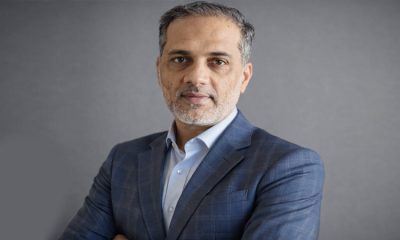
    Leading the charge are Dhruv Abrol and Tarika Gulabani, appointed as managing partners. The duo, who earlier co-led TVA, bring a mix of digital business acumen and entertainment flair from stints at Myntra, Tata Cliq, Sony, and StarPlus. They will report to Dentsu Creative & Media Brands CEO South Asia Amit Wadhwa.

    “Dentsu AMP is built for a world where stories must move as fast as audiences do,” said Wadhwa. “It unites craft, content, and technology to deliver creativity that performs.”

    With over ten in-house studios across India, Dentsu AMP covers everything from video production and motion graphics to sound and 3D design. Its AI backbone powers every stage of production, from ideation and editing to targeting, helping brands scale cinematic campaigns and snappy social content alike.

    Brands such as Aditya Birla Fashion, Flipkart, Myntra, and Groww are already onboard, banking on AMP’s ability to merge creativity, data, and speed.

    “We’re building a modern content engine,” said Abrol and Gulabani. “From high-impact films to daily social posts, AMP helps brands make more content, faster, without losing quality or consistency.”

    Sitting alongside Dentsu Lab and the Dentsu Podcast Network, AMP strengthens the agency’s innovation ecosystem. With expansion plans across major metros, Dentsu is clearly turning up the volume on creativity, where imagination scales, and every frame counts.

  • Hybrid turns five, rewires the future of ad-tech

    Hybrid turns five, rewires the future of ad-tech

    MUMBAI: From a tiny 6 by 6 ft room to powering some of India’s biggest brands, Hybrid India has come a long way in just five years. The Gurgaon-based digital advertising innovator is marking its fifth anniversary with a celebration of creativity, technology, and people power.

    Founded in 2020 by Shreyas Sathe, who set out to redefine advertising during a turbulent time, Hybrid has become one of India’s fastest-growing Adtech players. Its suite of AI-powered solutions, including the Hybrid Platform, VOX (its contextual advertising engine), Hybrid Places, and CTV technologies, has reshaped how brands connect with audiences.

    Today, the company’s 35-plus strong team drives campaigns for marquee names like Havells, Honda, Dabur, Rado, MG Motors, Mondelez, ITC, Group M, Dentsu, and Publicis.

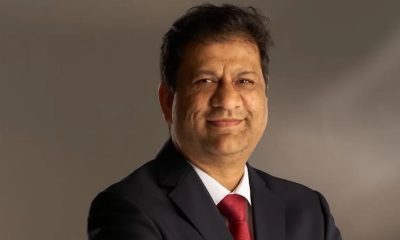
    “Our greatest strength lies in our people,” said Hybrid Insea CEO Shreyas Sathe. “Over the last five years, we’ve built not just a company, but a culture rooted in trust, empowerment, and shared ambition.”

    That ethos is echoed by Hybrid India country head Gandharv Sachdeva, who believes that Hybrid’s collaborative culture is what truly fuels innovation. “From off-site retreats to fun Fridays, we’ve built an environment where people grow both professionally and personally,” he said.

    As Hybrid looks ahead, its focus remains on innovation and sustainable success. With the digital advertising space evolving rapidly, the company is doubling down on its mission to empower brands with smarter, data-driven storytelling.

    Five years on, Hybrid isn’t just building ads, it’s building the future of how India experiences them.


  • Liqvd Asia unveils Aikonic for AI-powered content

    Liqvd Asia unveils Aikonic for AI-powered content

    MUMBAI: Liqvd Asia is turning imagination into intelligence with the launch of Aikonic Studios, a pioneering creative services business putting artificial intelligence at the heart of content production.

    More than just a studio, Aikonic is designed to revolutionise how ideas come to life, merging cutting-edge AI technology with creative craftsmanship. The launch marks the first step in a larger plan to establish AI-powered studios in Mumbai, Delhi-NCR, and Bengaluru, bringing advanced creative capabilities to India’s major media hubs.

    Liqvd Asia creative producer Vishal Chavan said, “Aikonic is a game-changer, blending smart technology with creative flair. It’s a space where innovation meets imagination, unlocking opportunities for storytellers to push boundaries.”

    Creative head Sunil Gangras added, “Today’s content demands flexibility, engagement, and scale. By weaving AI into production, Aikonic enables creators to craft work that resonates deeply and reaches far. This launch is a bold step in making intelligent, AI-driven storytelling the new standard.”

    With visionary talent and an AI-first approach, Aikonic Studios reflects Liqvd Asia’s commitment to leading India’s creative transformation, empowering brands, creators, and agencies to imagine and produce exceptional content in a digital-first world.

  • ANI upgrades field units with TVU one 5G pack for stronger live coverage

    ANI upgrades field units with TVU one 5G pack for stronger live coverage

    MUMBAI: ANI, South Asia’s leading multimedia news agency, has upgraded its field production fleet with TVU Networks’ latest TVU One 5G backpack. Designed for challenging environments, the compact pack houses six 5G modem modules, each paired with a dedicated three-antenna Mimo (multiple-input, multiple-output) array, plus a four-antenna Wi-fi Mimo system totalling 22 antennas.

    This advanced design significantly improves performance in congested urban areas, crowded venues, disaster zones, and weak-signal rural regions, enabling crews to go live from locations where other systems often fail.

    Unlike typical single-antenna printed designs that face near-field interference and self-cancellation when radios are clustered, TVU’s per-modem antenna diversity ensures cleaner rf conditions across carriers and frequency bands. The result is stronger links, higher stability, and more reliable throughput even under demanding conditions.

    At the transport layer, TVU’s ISX (Inverse Statmux) technology bonds and orchestrates traffic across all available connections: 5G, ethernet, and Wi-fi, while dynamically routing packets around congestion and cell-edge dropouts. This ensures ultra-low latency and broadcast-grade stability even in contested spectrum environments.

    “As South Asia’s leading news agency, it is our responsibility to deliver breaking news with speed, reliability and quality,” said ANI CEO Sanjiv Prakash. “By upgrading to TVU’s latest 22-antenna 5G system, our journalists can now go live from places others can’t: faster, more reliably, and with greater consistency.”

    “We engineered TVU One’s RF system to thrive in the harshest real-world conditions,” said TVU Networks CEO Paul Shen. “Its six 5G modules, each with a three-antenna MIMO array, plus a four-antenna Wi-fi Mimo backbone, give it the density and isolation needed to overcome congestion, while ISX technology ensures seamless data flow.”

    The TVU One 5G features a total of 22 antennas, comprising six 5G modem modules with three antennas each and a four-antenna Wi-fi Mimo setup. Despite its advanced hardware, the pack remains lightweight and compact, ensuring mobility without compromising performance. Its antenna diversity and isolation architecture mitigate near-field interference effectively, while ISX technology provides real-time bonding and adaptive path optimisation across carriers and frequency bands. The system’s multi-provider and multi-band agility also guarantees stability across varying infrastructures and international deployments, making it ideal for global field operations.


  • WPP and Google forge $400m AI alliance to turbocharge marketing campaigns

    WPP and Google forge $400m AI alliance to turbocharge marketing campaigns

    CALIFORNIA: WPP and Google have announced a five-year expansion of their partnership that represents nothing short of a full-throated embrace of artificial intelligence as the defining competitive advantage in modern marketing. The creative powerhouse will pour $400m into Google technologies—cloud infrastructure, generative models, cutting-edge AI systems—betting that the combination can compress months of campaign planning, creative development and media buying into days, and unlock growth that conventional efficiency drives could never reach.

    The deal, cemented at Google’s Mountain View headquarters with WPP chief executive Cindy Rose, Google Cloud chief Thomas Kurian, and senior leadership from both organisations gathered around the table, aims to fundamentally revolutionise how brands connect with customers at scale. Rather than simply speeding up existing processes or squeezing more productivity from existing workflows, the partners plan to enable something far more radical: real-time personalisation for millions of people simultaneously, powered by bespoke AI models that learn, adapt and optimise on the fly.

    The ambition is extraordinary. WPP will receive preferred early access to Google’s latest generative models—Veo for video generation, Imagen for image creation, and a suite of others still in development—all integrated directly into WPP Open, the firm’s proprietary AI platform for marketing. The practical impact is already staggering. Campaign-ready creative assets that would traditionally take weeks to produce can now be generated in days. Efficiency gains are reaching 70 per cent. Asset utilisation is accelerating 2.5 times over. For one global retailer pilot, these aren’t abstract metrics: they translated to 98 per cent accuracy in audience targeting and an 80 per cent boost in operational efficiency, freeing entire marketing teams to focus on strategy rather than execution.

    WPP Media, the group’s media planning and buying division, will deploy bespoke audience models powered by Google DeepMind’s AI products through a new solution called Open Intelligence. The promise: build custom audience segments and deploy hyper-targeted campaigns across all channels—including Google Ad Platforms—with unprecedented speed and precision. For a multinational energy company, this looked like developing a custom AI Marketing Agent that automatically generates comprehensive marketing briefs, connects stakeholders to a single point of contact, and draws on a library of best-practice documents, past campaign performance and proven playbooks. The system works in real time, adapting to local challenges across multiple markets.

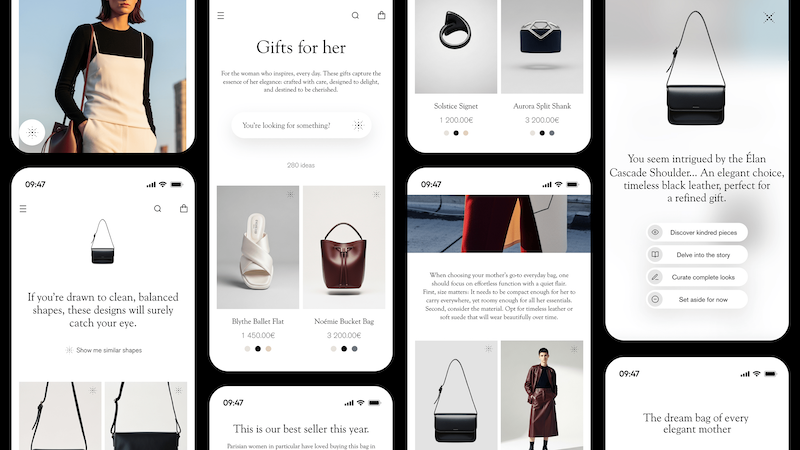
    The partnership extends into the creative layer itself. AKQA, WPP’s design and innovation company, is developing a new generation of AI-powered experiences that transform static websites into intelligent, generative platforms. The live AKQA Generative Store recreates the experience of personalised luxury retail service digitally—dynamically adapting product visuals, messaging and recommendations for each customer in real time. AKQA Generative UI, launching imminently, will instantly generate tailored, on-brand pages for users across enterprise and B2B contexts, with no manual intervention required.

    Privacy and data security thread through the entire architecture. Using InfoSum’s Bunkers technology, now integrated into WPP Open and available on Google Marketplace, WPP can enforce secure data collaboration without physically moving sensitive customer data. This allows brands to harvest deeper, richer insights for AI marketing whilst maintaining ironclad privacy protection—a crucial advantage in an era of tightening data regulation and consumer scrutiny.

    The talent dimension is equally ambitious. WPP’s Creative Technology Apprenticeship programme, which has placed more than 50 early-career technologists across WPP agencies since 2022, will expand dramatically with Google joining as the primary curriculum partner. The goal is audacious: train over 1,000 creative technologists by 2030 in a world-leading curriculum covering creative coding, generative AI and robotics. These apprentices will work on real-world challenges from major clients—L’Oréal, Unilever and others—building the next generation of marketing talent fluent in machine learning, AI prompt engineering and algorithmic thinking.

    Beyond client work, Google AI will also transform WPP’s internal operations. Automated data analysis, intelligent resource allocation and instant access to global insights will flow through WPP’s workflows, accelerating the development of solutions, sharpening team responses and ultimately delivering superior speed and value to clients worldwide. The logic is clear: make the machine fast enough and the organisation responds like an organism, not a bureaucracy.

    There is a feedback loop built into the model that gives WPP an unusual advantage. New solutions are collaborated on, tested and validated first within Google’s own marketing operations—real-world testing grounds where ideas either survive or die quickly. The insights flow back to WPP clients, who receive solutions already battle-tested against the toughest marketing challenges. In a rapidly evolving AI landscape crowded with noise and overpromise, that’s a rare competitive edge.

    Rose called it a redefinition of what’s possible for clients. Kurian framed it as harnessing generative and agentic AI to transform business outcomes. Google global marketing senior vice-president Lorraine Twohill spoke of exploring what marketing and storytelling look like in a new era.

    But beneath the corporate language lies a harder truth: the pace of marketing innovation just accelerated dramatically, and the winners will be those organisations—agencies, brands, technologists—that can think and move at machine speed. Everyone else faces a widening gap between aspiration and execution.

  • Havas hits the accelerator as AI strategy bears fruit

    Havas hits the accelerator as AI strategy bears fruit

    PARIS: Havas is charging into the final quarter of 2025 with a spring in its step. The advertising group posted organic net revenue growth of 3.8 per cent in the third quarter, smashing expectations and vindicating its strategic pivot towards artificial intelligence and data-driven marketing. The surge in top-line performance prompted management to sharpen full-year guidance decisively upwards, signalling confidence that the worst of the economic headwinds facing the sector have passed.

    The results reveal a business in motion. North America blazed a trail with organic growth of 7.4 per cent, driven chiefly by Havas Health’s double-digit expansion and its ability to wring higher budgets out of existing clients—a rare feat in an industry where money typically flows only to new business wins. The Asia-Pacific region bounced back smartly from a tepid second quarter with 8.2 per cent growth, whilst the United Kingdom performed solidly. France, dragged down by a tough comparison with last year’s Olympic Games boost, and Latin America, battered by unfavourable currency moves, were the laggards.

    Havas now expects full-year net revenue organic growth of between 2.5 and 3.0 per cent, up from previous guidance of above 2.0 per cent. More significantly, the group reckons on an adjusted EBIT margin improvement of around 50 basis points to approximately 12.9 per cent—a meaningful lift that suggests operational leverage is kicking in. The nine-month figures show organic growth of 2.8 per cent, buoyed by cross-selling wins amongst the top 30 clients.

    The financial picture is straightforward: Havas is extracting better returns from its existing client base whilst simultaneously expanding its footprint. Operating margin expansion of this magnitude rarely happens by accident. The group has plainly succeeded in persuading clients to spend more on higher-margin services and shifted work into more profitable lines—precisely what a well-functioning agency should accomplish.

    Two strategic moves underscore management’s ambition. The majority acquisition of Tidart, a Spanish digital performance specialist, plugs gaps in Havas’ capabilities across e-commerce and performance marketing. More consequential is the formation of Horizon Global, a joint venture with Horizon Media Holdings worth a combined $20 billion in global billings. Styled as an “AI-native solution,” the venture signals that Havas’ Converged.AI strategy—the group’s bet on helping clients harness artificial intelligence across their marketing ecosystems—is moving from rhetoric into revenue-generating reality.

    Chief executive vYannick Bolloré  spoke of “impressive commercial momentum” and “notable new business wins.” Translation: the market is buying what Havas is selling.

    None of this occurs in a vacuum. Foreign exchange movements clipped 3.9 per cent from reported revenue growth, with the dollar’s recent weakness particularly stinging. Geopolitical tensions, trade pressures and political uncertainties lurk in the background. The group remains cautious about the year ahead, even as it tightens guidance.

    The broader picture for Havas: a global advertising industry grinding through modest growth and relentless margin pressure is being challenged—and beaten—by a group that has successfully positioned itself as a challenger taking share through genuine commercial innovation. Whether that momentum persists through 2026 is the question investors are asking now. For the moment, the trajectory looks encouraging.

  • WPP Media keeps Bayer Consumer Health account in South Asia after global review

    WPP Media keeps Bayer Consumer Health account in South Asia after global review

    MUMBAI: WPP Media has retained the integrated media mandate for Bayer Consumer Health across South Asia, following a global review, with Essencemediacom continuing to lead the business.

    The renewed partnership deepens a long-standing collaboration between the two firms, sharpening its focus on using AI, automation and data-led insights to accelerate brand growth and media efficiency across India, Pakistan, Sri Lanka and Bangladesh. The agency will also strengthen digital and e-commerce integration to drive measurable business outcomes.

    Bayer Consumer Health division country head Sandeep Verma said the partnership had “consistently evolved with the changing consumer and media landscape”. As Bayer expands its regional footprint, Verma said the focus would be on “future-ready media innovations that deepen consumer understanding and strengthen our brands’ role in everyday self-care.”

    WPP Media South Asia president – client solutions Navin Khemka added, “We cherish our longstanding partnership with Bayer Consumer Health. We remain committed to harnessing AI, data and technology to deliver campaigns that strengthen consumer connections and drive growth.”

    WPP Media is the global media collective of WPP, bringing together the group’s platform, people and partners to drive growth in a fast-changing media landscape.

  • Brands take centre stage at Mipcom Cannes 2025

    Brands take centre stage at Mipcom Cannes 2025

    PARIS: Brand money is flooding into television. At Mipcom Cannes  this month, the world’s largest TV market is rolling out the red carpet for corporate storytellers with the first international edition of BrandStorytelling, a summit that has spent a decade building its reputation at Sundance.

    The two half-day event on 13 and 14 October brings together an unlikely crowd: global brands like Ancestry and Indeed, creative agencies including Dentsu and McCann, and heavyweight studios such as Banijay, Fremantle and BBC StoryWorks. Their mission is to turn corporate cash into compelling content—and to do deals that make it happen.

    Rick Parkhill, the producer and media entrepreneur who founded BrandStorytelling, reckons the sector has come of age. “Brands are increasingly behind some of the biggest stories on our screens globally,” he says. The event’s expansion from Park City to the French Riviera suggests he’s onto something.

    Among the speakers are Doug Scott, founder of Unxnown and an alumnus of Endeavour and Ogilvy, and Kim Miller Olko, global chief marketing officer at Toys”R”Us and president of its in-house studio. Representatives from over 20 organisations will take the stage, from the Branded Content Marketing Association to entertainment giants like UTA.

    Mipcom Cannes director Lucy Smith says the “overwhelming response” from the industry confirmed the appetite for a dedicated brand-content forum. The summit promises to unlock new funding streams and co-production opportunities at a time when traditional television budgets are under pressure and brands are hunting for more sophisticated ways to reach audiences.

    The event, sponsored by Fell + Co., Storybones Media and IPG Mediabrands Entertainment is part of Mipcom’s broader embrace of the creator economy. Last year’s market drew over 10,500 delegates from more than 100 countries—a captive audience for anyone peddling the promise of brand-funded programming.

  • Ogilvy’s influence chief calls time after 12 years

    Ogilvy’s influence chief calls time after 12 years

    LONDON: Rahul Titus is leaving WPP after a dozen years, during which he transformed Ogilvy into the world’s largest and most awarded influencer marketing operation. The global head of influence, who also leads influencer strategy for WPP Open X, announced his departure with plans for a trek to Everest Base Camp and some cycling holidays.

    Under Titus’s watch, Ogilvy has grown to employ more than 650 influencer specialists across over 30 markets. The agency has claimed the title of the world’s leading influencer network for seven consecutive years and won the Social & Creator Grand Prix at Cannes Lions for two years running.

    Titus joined Ogilvy as an intern in Bangalore before climbing through the ranks. He took on the role of managing partner and head of influence for Britain and Europe, the Middle East and Africa in September 2017, then became global head of influence in June 2022. His portfolio has included blue-chip clients such as Walgreens Boots Alliance, Bacardi, Mondelez, Mattel, Unilever, British Airways and Vodafone.

    Since November 2021, he has also served as global influence lead for WPP Open X, a bespoke unit that handles celebrity and influencer work for more than 200 Coca-Cola brands across 195 countries. He is a founding board member of the Influencer Marketing Trade Body, established in October 2021 to professionalise the industry.

    Before Ogilvy, Titus spent six months at YMU as director of social talent, where he managed digital-first creators. Earlier, he spent nearly three years at MediaCom, establishing and running its global influencer offering for clients including Shell, Revlon, LVMH and Sony. He began his career in search engine optimisation at Dentsu Aegis Network agencies Carat and iProspect.

    In his farewell message, Titus thanked WPP leaders including Julianna, Laurent, Fiona, Liz, Devika, Karen and Lindsay for their support. He said change was “scary but also exciting” and that he would be “cheering loudly from the sidelines” for his former colleagues.

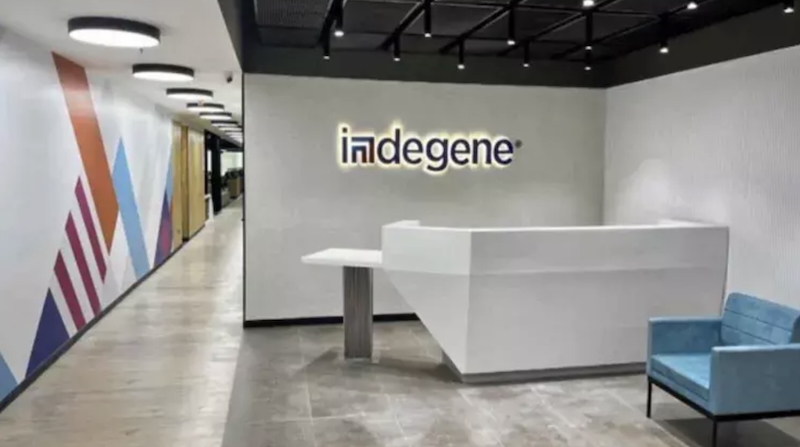
  • Indegene snaps up BioPharm to muscle into AI-powered pharma advertising

    Indegene snaps up BioPharm to muscle into AI-powered pharma advertising

    PENNSYLVANIA: Indegene is buying BioPharm Communications, a specialised marketing agency serving 17 of the world’s top 25 biopharma firms. The acquisition, announced on 1 October, will bolt adtech capabilities onto the Indian company’s commercialisation portfolio and cement its position in data-driven omnichannel marketing for global pharma.

    BioPharm, based in New Hope, Pennsylvania, is part of Omnicom Health Group. It brings 20 years of expertise in omnichannel strategy, media planning and execution, and precision marketing powered by analytics and automation. The deal is being done through ILSL Inc., a subsidiary of Indegene Ltd.

    The timing is strategic. Pharma companies are scrambling to transform their marketing as physicians favour limited engagement and regulatory complexities mount. Traditional healthcare agencies are struggling to keep pace. Meanwhile, companies are juggling mature product portfolios whilst ramping up capabilities for new launches—all whilst trying to boost productivity.

    “BioPharm has built an impressive growth flywheel, with advanced tech capabilities, deep therapeutic expertise, and long-standing client relationships,” said Indegene chairman and chief executive Manish Gupta. “This acquisition reinforces our position as the preferred tech-native commercialisation partner for the life sciences industry.”

    BioPharm president Steve Carickhoff said Indegene was a natural home given its innovation-first, employee-centric culture backed by strong technology platforms and a global delivery model. “Their life sciences-contextualised approach to AI will open up new possibilities. Together, we will push the boundaries of AI-powered pharma marketing worldwide—delivering more personalised, measurable, and patient-focused outcomes.”

    BioPharm operates a proprietary network of more than 3 million healthcare decision-makers, which it uses for precision targeting and addressable media campaigns. Combined with Indegene’s data assets, the acquisition should drive higher media returns on investment and enable more effective automated operations.

    Indegene, listed on the BSE and NSE, describes itself as the tech-native life sciences specialist that orchestrates the path from commercialisation strategy through execution. It works with the world’s top 20 biopharma companies across clinical, medical and commercial functions. Founded 25 years ago, the company is headquartered in Bengaluru.

    Seyfarth Shaw represented Indegene in the transaction.