Category: Marketing

  • Hong Kong storms to third in global competitiveness rankings

    Hong Kong storms to third in global competitiveness rankings

    MUMBAI: Hong Kong has ascended to the third spot in the world’s most competitive economies, according to the World Competitiveness Yearbook 2025 (WCY 2025) published by the Swiss-based International Institute for Management Development (IMD). This marks the second consecutive year the city has climbed two places, reaching its highest ranking since 2019 among the 69 assessed economies.

    The IMD report highlights Hong Kong’s gains across all four key factors of competitiveness: “government efficiency” (second), “business efficiency” (second), “economic performance” (sixth), and “infrastructure” (seventh). This broad-based improvement underscores Hong Kong’s effective strategy in attracting private sector investment.

    Chief executive John Lee affirmed the positive trajectory, stating, “The World Competitiveness Yearbook shows that Hong Kong’s scores in overall terms and in many areas have improved, indicating that the Hong Kong Special Administrative Region (HKSAR) Government’s policy directions are on the right course and that various policies have yielded results.” Hong Kong has consistently ranked among the top 10 globally for over two decades, since the WCY 2003.

    Lee further emphasised the city’s “world-class business environment,” citing the rule of law, independent judiciary, a simple and low-tax regime, efficient markets, a robust financial system, and the free flow of capital, information, goods, and talent as key strengths recognised by the business community.

    Despite global economic uncertainties and geopolitical turbulence, Hong Kong recorded solid year-on-year GDP growth of 3.1 per cent in the first quarter of 2025, with full-year GDP growth anticipated to be between 2 per cent and 3 per cent.

    The city saw a record 145,053 new local companies registered under the Companies Ordinance last year, bringing the total to an unprecedented 1,460,494 by the end of 2024. Additionally, 1,079 new non-Hong Kong companies were registered, pushing that total to an all-time high of 15,126.

    Lee reiterated Hong Kong’s unique “one country, two systems” advantages, positioning it as a “super-connector” and “super value-adder.” He affirmed the government’s commitment to strengthening international exchanges, expanding regional trade, and exploring new markets to foster a vibrant economy and improve livelihoods.

    To further bolster its appeal, the government recently launched new legislation for company re-domiciliation, providing a streamlined mechanism for companies to relocate to Hong Kong. Already, two major insurance companies, AXA Hong Kong and Macau and Manulife (International) Limited, have announced plans to re-domicile under the new regime, pending regulatory approvals.

    Hong Kong is actively pursuing reforms to solidify its standing as an international financial, trade, and shipping hub. The Office for Attracting Strategic Enterprises has successfully drawn over 80 strategic enterprises, projected to bring in HK$50 billion in investments and create more than 20,000 jobs.

    Among the WCY 2025 sub-factors, Hong Kong secured top positions in “tax policy” and “business legislation,” and ranked second in “education,” “international investment,” and “finance.”

    As a top-three global financial centre, Hong Kong’s stock exchange remains a vital indicator of market performance. By May 30, 2025, stock market capitalisation had surged by 24 per cent year-on-year to over $5.2 trillion. The Hong Kong Stock Exchange has also emerged as a leader among major global exchanges in initial public offerings (IPOs), with total funds raised nearing HK$79 billion ($10.12 billion) so far this year.

  • Home is where the heart loan is says LIC HFL in new brand campaign

    Home is where the heart loan is says LIC HFL in new brand campaign

    MUMBAI: Walls you can scribble on. A nail you can hammer in. A door that bears your name. LIC Housing Finance Limited (LIC HFL) is tugging at heartstrings with its new brand campaign, launched on its 36th Foundation Day. Titled “Apna Ghar… toh apna hi hota hai”, the campaign is a love letter to the emotional highs of homeownership, one mortgage at a time.

    The film unfolds like a photo album of real India: a birthday party in a Mumbai chawl, wall scribbles in a Chandigarh flat, DIY home décor in the South, and joyful wall painting in a Bengali household. No dramatic voiceovers, no dream homes from glossy catalogues just simple stories that show how home is more than square footage. It’s where memories are made, walls become storyboards, and every corner says “you”.

    Backed by four decades of housing India’s dreams, LIC HFL’s latest initiative celebrates that universal desi sentiment: “Kuch bhi ho, apna ghar toh apna hota hai.” LIC Housing Finance Limited, managing director & CEO Tribhuwan Adhikari calls it a reaffirmation of the trust LIC HFL has built with families across income groups and geographies over the past 36 years.

    To dial up the emotion, LIC HFL has also launched a Digital Name Plate Generator, a playful interactive feature where users can visualise their name on a front door, delivering a personalised dose of that ‘first-home’ thrill.

    The campaign not only reinforces LIC HFL’s legacy in home financing, but also shows the brand’s evolving digital-first ethos, appealing to next-gen homeowners who want both emotional and financial security under one roof.

    From loan documents to love notes on the fridge, LIC HFL’s message is simple: the joy of a home is worth every EMI.
     

  • What are the Common Myths About the Tax Benefits of NPS?

    What are the Common Myths About the Tax Benefits of NPS?

    The National Pension System (NPS) is a retirement savings instrument that offers attractive tax benefits to encourage people to save for their golden years. However, there are many myths surrounding the actual tax benefits you can avail of with NPS. This confuses and stops people from availing of a financially beneficial offering. In this article, we will bust some common myths about the tax perks of investing in NPS. Understanding the realities will help you make an informed decision about using NPS as a tax-saving tool.

    Myth 1: NPS Tax Benefits are Just Like Other Investments

    NPS offers additional, exclusive tax benefits that most other tax-saving investments do not. Under Section 80C, you can claim a deduction up to ₹1.5 lakhs for NPS contributions, just like other options such as PPF, ELSS, etc. However, NPS offers further deductions:

    ●    Section 80CCD(1B): An extra ₹50,000 deduction, over and above the 80C limit  
    ●    Section 80CCD(2): Up to 14% (new regime) is deductible from employer contributions

    This is a key difference from other tax-saving investments. Under 80CCD(2), employer NPS contributions up to 14% of basic pay become deductible from taxable salary. No other investment gives salaried individuals this triple tax benefit—80C, 80CCD(1B) and 80CCD(2).

    Myth 2: NPS Withdrawals are Fully Taxable

    At age 18, the child’s NPS account transitions to a standard NPS account. At exit (typically age 60), up to 60% of the corpus can be withdrawn tax-free as a lump sum, while at least 40% must be used to purchase an annuity, the income from which is taxable. If the corpus is below ₹2.5 lakh, it can be fully withdrawn tax-free.

    Compare this to PPF, EPF or VPF, where your accumulations and withdrawals are tax-free only until you retire. Post retirement, interest earnings exceeding ₹50,000 per annum are subject to tax. NPS scores over other retirement schemes here by making 60% of the corpus tax-free irrespective of the holding period or quantum withdrawn.

    Myth 3: You Lose Tax Benefits if You Exit Early

    This myth stems from partial knowledge. While an early NPS exit does limit the lump sum withdrawal percentage, it does not take back the tax benefits already availed on contributions. For instance, exiting before 60 years only allows withdrawals up to 20% of the corpus instead of 60%. However, all contributions for which you claimed tax deductions will not be added to your income in the year of withdrawal.

    The taxman may not ask you to return or nullify deductions enjoyed in previous years. The only impact is that your withdrawals get restricted if you exit before the maturity period of 60 years. So, while early exit impacts liquidity, it does not reverse previously claimed NPS tax benefits.

    Myth 4: NPS Benefits Only High-Income Groups

    NPS tax benefits are meant for all individuals who pay income tax, irrespective of their salary brackets. For instance, even fixed-income senior citizens can open an NPS account and reduce their tax outgo by ₹50,000 through section 80CCD(1B) deductions.

    Similarly, employees across MNCs and SMEs – from blue to white collar roles – can claim NPS tax benefits under 80CCD(2) on employer contributions. The only criterion is that you should have some tax liability to offset through these deductions. So while HNIs may gain more in absolute rupee terms, NPS tax advantages are very much relevant for middle-income groups too.

    Myth 5: Lock-in Defeats Flexibility for Tax Planning

    NPS indeed comes with longer lock-in requirements than ELSS, PPF, or ULIPs. However, one must evaluate this from a retirement planning perspective. NPS aims to create a pension corpus and hence, places withdrawal limits. However, this does not make it inflexible.

    NPS allows partial withdrawals of up to 25% of own contributions before maturity for specific expenses like children’s education/marriage, or buying residential property. You can plan your withdrawals for these crucial life goals. Additionally, you can withdraw the entire corpus if you are diagnosed with any specified critical illness.

    So, while NPS discourages random withdrawals, it does account for critical liquidity needs. Partial withdrawals can be used for tax planning while the rest of the corpus remains invested for retirement.

    Conclusion

    NPS is fundamentally meant for retirement planning, not just tax savings. The lock-in period and withdrawal rules promote disciplined long-term investing. At the same time, exclusive tax benefits make NPS very attractive. Instead of getting swayed by superficial myths, evaluate NPS objectively for its dual advantage – tax efficiency coupled with wealth creation for your golden years. Use it strategically along with other tax-saving options to maximise deductions and secure your financial future.

    FAQs

    1. Is it good to invest in NPS for tax benefits?  
    Yes, NPS is great for tax savings. Under Sections 80CCD(1) and 80CCD(1B), you can save up to ₹2 lakh, plus extra deductions for employer contributions under Section 80CCD(2).

    2. Is NPS 100% tax-free?  
    No, NPS is not fully tax-free. After age 60, 60% of your withdrawal is tax-free, but the remaining 40% used for annuity payments is taxed based on your income slab.

    3. Can I claim both 80C and 80CCD?  
    Yes, you can claim both. Section 80CCD(1) is part of the ₹1.5 lakh 80C limit, but Section 80CCD(1B) gives an extra ₹50,000 deduction, and 80CCD(2) covers employer contributions.

    4. Can I exit from NPS after 1 year?  
    Yes, you can exit early, but there are restrictions on how much you can withdraw. Staying longer helps your money grow and keeps your tax benefits intact.

    5. What happens to 40% of the NPS amount after death?  
    If you pass away, your nominee can withdraw the entire NPS corpus, including the 40% annuity portion, as a lump sum, tax-free, or use it to buy an annuity.  
     

  • Zoff Foods stirs up ready-to-cook game with Reliance Retail tie-up

    Zoff Foods stirs up ready-to-cook game with Reliance Retail tie-up

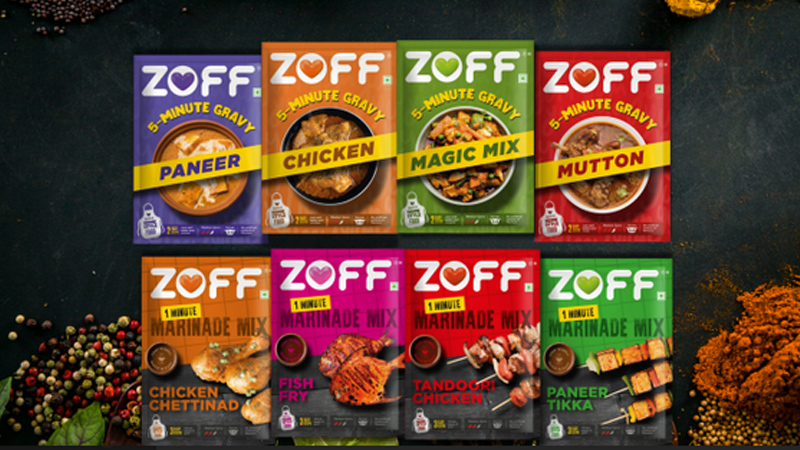
    MUMBAI: Raipur-based spice disruptor Zoff Foods is whipping up a storm in Indian kitchens with the launch of its new Quick Homestyle Food range, marking its entry into the fast-growing ready-to-cook (RTC) segment. The launch comes with a strategic offline retail partnership with Reliance Retail, making the range available pan-India.

    The lineup includes 5-minute Gravies (Rs 150) and 1-minute Marinades (Rs 75), served in both vegetarian and non-vegetarian avatars — from Paneer Tikka to Chicken Chettinad and Magic Mix Gravy to Mutton Curry. The kicker? No preservatives, no prep, and no flavour compromise.

    Zoff’s latest play combines India’s craving for homestyle flavour with the rising demand for convenience. With its eye on becoming a full-stack kitchen solutions brand, the company is positioning itself as a serious player in the RTC space — where taste meets tech, minus the chopping board.

    Talking about the partnership and expansion, ZOFF Foods co-founder Akash Agrawalla stated, “Indian kitchens are celebrated for their rich traditions and the love poured into every meal. At ZOFF Foods, we honour these culinary roots while embracing the evolving needs of today’s home cooks. With our 5-minute gravies and 1-minute marinades, we are introducing a convenient solution for today’s fast-paced lifestyles, without compromising on flavour or quality. Having built our reputation on delivering clean, high-quality whole spices, and this new launch is a natural extension of our promise, with a clear vision: “Ab poora India cook karega.’ We’re bringing authenticity and ease together in every pack. Through our strategic partnerships with Reliance Retail, we are making these innovations more accessible, reaching 400+ stores by July 2025 and helping consumers experience convenience like never before.”

    Ashish Agrawal shared, “Akash and I have always shared a vision to bring innovation to Indian kitchens while staying true to the roots of purity and authenticity. This marks a significant step, not just for us, but for how Indian households can experience flavor, freshness, and convenience in new ways. Our evolving range, from whole spices to ready-to-cook gravies and marinades, reflects our commitment to clean-label, unadulterated food that meets modern needs while honoring our culinary heritage.”

    The range is now available via zofffoods.com, Reliance Retail outlets, and is headed soon to e-commerce and quick commerce shelves.

  • Godrej’s Locks & Architectural Solutions unlocks smarter service with digital-first CRM

    Godrej’s Locks & Architectural Solutions unlocks smarter service with digital-first CRM

    MUMBAI: Godrej Enterprises Group’s Locks & Architectural Solutions division has rolled out a new Service CRM platform that’s set to overhaul after-sales service across India’s rapidly expanding smart home ecosystem. Spanning 80+ divisions, 200+ service centres, and more than 6,500 pin codes, the digital upgrade aims to keep over two lakh customers connected, calm and in control.

    Touted as a game-changer for India’s Rs 6,000 crore locks industry, the Service Cloud unifies support across both smart and traditional locking systems — offering one-touch complaint registration, faster resolutions, and full visibility into service history.

    Godrej Enterprises Group, Locks & Architectural Solutions, business head, Shyam Motwani said, “At Locks & Architectural Solutions, we believe that our responsibility to the customer begins, not ends, at the point of purchase. The Service Cloud is a digital-first initiative designed to simplify and strengthen our service experience, making it more intuitive, efficient, and transparent. This is our commitment to ensuring that every home we secure feels supported, always.”

    The company, which crossed Rs 1,000 crore in FY25 revenue, is eyeing Rs 2,500 crore by FY28. With customer experience increasingly defining market leadership, the CRM is expected to be a key growth lever — not just a digital tool, but a lock-in for loyalty.

  • DSP’s ‘Salute’ gives financial heroes their cinematic due

    DSP’s ‘Salute’ gives financial heroes their cinematic due

    MUMBAI: They aren’t in the limelight, don’t post returns on Linkedin, and won’t show up in trending reels. But they’re the quiet anchors behind financial futures. DSP Mutual Fund’s new short film, Salute, puts the unsung Mutual Fund Distributor (MFD) at the centre of a stirring tribute turning spreadsheets into stories.

    Released in collaboration with long-time creative partner Bandstand Collective and scripted by their in-house agency Tune, the film trades numbers for nuance, emotion, and everyday financial realities. Known for their emotionally intelligent storytelling from the viral “Dancing Uncle is Back” to the subtle strength of “Stranger on the Bench” Bandstand once again proves that finance can be both heartfelt and human.

    Salute follows the lives of MFDs who do more than recommend SIPs. They counsel during market crashes, cheer quiet wins, and ensure dreams from education to retirement stay on track. It’s a nod to the deep trust between an investor and advisor in a world obsessed with DIY and meme-stock bravado.

    “Mutual fund distributors are the real enablers of long-term prosperity. They don’t make noise, but they make a difference,” said DSP Mutual Fund senior VP & head of marketing Abhik Sanyal. “With Salute, we wanted to move beyond metrics and celebrate those who guide people through life’s most crucial money decisions.”

    Backed by DSP’s consistent push to humanise financial communication, Salute marks another step away from the chart-and-graph trope. Instead, it finds power in everyday gestures reminding us that the biggest financial wins often start with quiet conversations.

    Bandstand Collective co-founder and CCO Tuhin added, “Our brief was simple, make people feel something. That’s always been the spirit of our work with DSP. With Salute, we wanted to give voice to the MFDs who are often overlooked but vital to millions of Indian families.”

    With financial storytelling that moves, not just informs, DSP Mutual Fund and Bandstand continue their winning streak of emotionally resonant content that makes you think maybe even rethink how you feel about finance.

  • KDM wins Zee Bharat Ki Udaan Award for powering faith with 1080 charging points at Maha Kumbh

    KDM wins Zee Bharat Ki Udaan Award for powering faith with 1080 charging points at Maha Kumbh

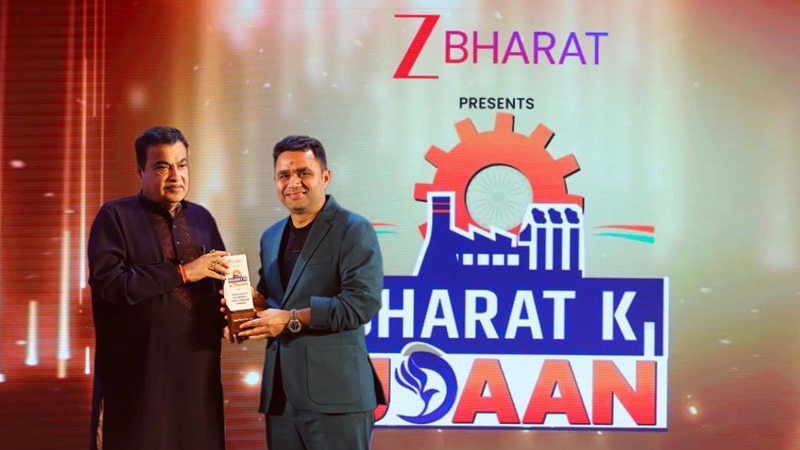
    MUMBAI: In a country where missing a Whatsapp call from family during a spiritual pilgrimage could cause panic, KDM made sure that devotion met innovation. The lifestyle and mobile accessories brand has been conferred with the Zee Bharat Ki Udaan Award for its Bharat Ka Charger Maha Kumbh initiative—recognised for powering up millions of mobile phones at the world’s largest spiritual gathering.

    KDM was felicitated by Union minister of Road Transport and Highways Nitin Gadkari during Zee Bharat’s flagship programme ‘Bharat Ki Udaan’. The award highlighted KDM’s unique contribution at Maha Kumbh 2025, where it installed 1,080 mobile charging stations equipped with its indigenous KDM-T Technology. These stations helped over 23 lakh pilgrims keep their phones and connections alive through the 45-day religious congregation.

    The initiative seamlessly plugged into the government’s vision for a ‘divya and digital’ Maha Kumbh and aligned with the broader Digital India narrative. Beyond the buzzwords, KDM’s solution addressed a pressing need—connectivity for devotees, many from rural areas, who relied on their phones to stay in touch with their loved ones amid the chaos and crowds.

    ‘KDM Bharat Ka Charger’ employs Kinetic Dynamic Mobile Charging Testing Technology (KDM-T Technology), a fully Made-in-India solution designed to prevent overheating, overcharging, and voltage issues—ensuring safety alongside service.

    Acknowledging the honour, KDM founder N D Mali said, “Extremely honoured and privileged to receive the ’Zee Bharat Ki Udaan Award’ from the hands of Shri. Nitin Gadkari ji which is making me feel charged, inspired and motivated to take Bharat Ka Charger campaign ahead… This award motivates us to continue our efforts to charge both mobile and the economy with KDM Bharat Ka Charger”.

    Mali added that the company’s vision—“Har Ghar KDM” by 2030—targets reaching 10 crore households while creating direct and indirect employment for 50,000 women.

  • Smart Retirement Planning: Good Retirement Plans to Consider Now

    Smart Retirement Planning: Good Retirement Plans to Consider Now

    Retirement is a phase when you want to spend quality time with your family and pursue your long-due dreams. However, it requires financial stability as a conventional source of income is not available anymore. Considering this, planning your retirement is necessary. Unfortunately, many people do not plan their retirement, which may cause trouble in future. As you transition from the working years to retirement, financial security is essential. A Best retirement plan helps you live peacefully without worrying about your finances.

    What is Retirement Planning

    Retirement planning is about determining your future financial requirements and making the right choices today in order to fulfil those needs. Retirement planning means selecting good investments, saving every month, and making sure that your savings increase sufficiently to sustain you once you retire.

    Planned retirement involves adopting a long-term strategy and starting early. Numerous individuals shy away from it, believing they have sufficient time. The sooner you begin, however, the greater your funds have the potential to grow with the compounding power.

    Why Should You Start Planning for Retirement Now?

    Starting your retirement planning early is essential for building a secure financial future. Here are a few reasons why it’s important to begin preparing for retirement as soon as possible:

    ●    Security and Stability: A solid retirement plan provides a stable income once you stop working, allowing you to maintain your lifestyle and avoid financial stress.   
    ●    Medical Expenses: As you age, medical expenses tend to rise. A well-structured retirement plan ensures that you are prepared for any healthcare needs without draining your savings.   
    ●    Inflation Protection: Over time, inflation increases the cost of goods and services. Retirement plans that grow over time can help protect your savings against inflation.

    Types of Retirement Plans to Consider

    India offers several good retirement plans, each designed to suit different needs. Let’s look at the most popular ones:

    Immediate Annuity Plans

    Immediate annuity plans allow you to invest a lump sum amount, and in return, you receive regular payouts starting within a year. These plans are better suited for individuals who are close to retirement and need a guaranteed source of income.

    The key benefit of immediate annuity plans is that they provide stable, predictable income throughout retirement. You don’t have to worry about managing investments or market fluctuations.

    Deferred Annuity Plans

    Unlike immediate annuity plans, deferred annuity plans allow the investor to decide when to start receiving annuity payouts. During the accumulation phase, the subscriber makes regular contributions that grow over time. After retirement, these contributions are converted into a stream of income.

    This plan is ideal for individuals who are still a few years away from retirement and want their savings to grow before they begin receiving payouts. The flexibility of deferred annuity plans is appealing to those who want to plan for long-term financial security.

    Senior Citizen Savings Scheme (SCSS)

    The Senior Citizen Savings Scheme (SCSS) is a government-backed savings scheme designed for people aged 60 and above. It offers regular quarterly interest payouts, making it a popular option for seniors who need consistent income after retirement.

    This scheme offers tax benefits and has a minimum investment of ₹1,000, with a maximum of ₹15 lakh. The current interest rate is 8.2% per annum, which is paid quarterly. The initial tenure is five years, with an option for extension for another three years.

    National Pension System (NPS)

    The National Pension System (NPS) is a government-supported retirement plan available for anyone between the ages of 18 and 70. NPS allows you to invest in market-linked instruments such as equities, bonds, and government securities.

    NPS offers tax benefits up to ₹2 lakh a year and provides the flexibility to manage your investments based on your risk appetite. NPS is especially beneficial for individuals who are comfortable with market risks and looking for a retirement plan with higher growth potential.

    Mutual Fund SIPs (Systematic Investment Plans)

    Mutual funds are a popular choice for retirement planning, and the Systematic Investment Plan (SIP) is a great way to invest consistently in mutual funds. SIPs allow you to invest a fixed amount regularly, helping you build wealth over time.

    By investing in a mix of equity, debt, or hybrid funds, you can create a diversified portfolio that grows as the market grows. SIPs are ideal for individuals with a long-term horizon who are looking for capital appreciation and tax benefits under Section 80C (only under the old tax regime).

    Factors to Consider While Choosing a Retirement Plan

    Choosing the right retirement plan is a crucial step towards securing your financial future. Here are a few factors to consider before selecting a retirement plan:

    ●    Risk Tolerance: Some plans, like pension plans and NPS, offer low-risk, stable returns, while others, such as mutual funds and equities, involve higher risks but provide better growth potential. Choose a plan that aligns with your risk appetite.   
    ●    Flexibility: Consider whether the retirement plan offers flexibility in terms of contribution amounts, withdrawal options, and annuity payout schedules. Flexible plans allow you to adapt your strategy as your financial situation changes over time.   
    ●    Tax Benefits: Many retirement plans offer tax savings either at the time of contribution or when you withdraw funds. Ensure that your plan maximises tax efficiency and aligns with your tax goals.   
    ●    Retirement Age: Your retirement age will determine the type of plan that is suitable for you. If you are young and have many years to save, growth-oriented plans like SIPs or NPS are ideal.

    However, if you’re nearing retirement, safer options like annuity plans or SCSS may be more appropriate.

    When thinking about your options for retirement, also consider that there are life insurance products that provide retirement benefits. Most insurers, including Axis Max Life Insurance, provide solutions that allow clients to reap the benefits of life insurance while also comfortably retiring. Most retirement solutions will typically allow you, the client, to make contingent regular payments after you retire, thus financially securing you for your golden years.

    Conclusion

    Good retirement planning is an integral component of a comfortable and secure future. It is important to understand the multitude of options available to you and how your retirement plans will go depending on your individual financial situation, age, and risk tolerance. Though there are options such as pension plans, mutual funds, insurance policies, and government-backed schemes such as SCSS and NPS, you’ll have an easier chance of achieving the financial freedom of your dreams if you start early and save regularly.

    When it comes to retirement, variations in retirement plans are all about, as well as your personal situation, and it is to your benefit to understand each plan and start building your retirement corpus for a future with less worry. The sooner you start, the more you could potentially generate wealth and provide you with the opportunity to spend your golden years in relaxation.   

     

  • Amway stirs up the wellness game with ‘Nutrilite Triple Protect’

    Amway stirs up the wellness game with ‘Nutrilite Triple Protect’

    MUMBAI: Amway India has added extra muscle to its wellness playbook with the launch of Nutrilite Triple Protect, a plant-based dietary supplement designed to support immunity, gut health, and skin vitality — all in one go.

    Infused with three natural heavy-hitters — Acerola cherry (a Vitamin C powerhouse), turmeric (for anti-inflammatory flair), and licorice (to soothe the gut) — this latest offering delivers a triple-action formula minus the fluff. Each serving clocks in with 100 per cent of your recommended daily allowance of Vitamin C, courtesy of acerola cherries plucked from certified organic farms in Brazil — said to contain nearly seven times more Vitamin C than amla.

    Commenting on the launch, Amway India managing director Rajneesh Chopra stated, “As poor nutrition continues to impact over half the nation’s health, the need for clean, plant-based solutions for overall wellbeing has never been greater. Today’s consumers are prioritizing health like never before, with 52 per cent ranking immunity as the top benefit they seek in supplements – underscoring a growing demand for holistic wellness recommendations. 

    Keeping in mind the consumer needs and as part of our strategic business priority of Accelerating Product Innovation Pipeline, we are happy to introduce our latest innovation – Nutrilite Triple Protect by Amway.This one-of-a-kind formulation brings together science-backed ingredients to support immunity, gut and skin-empowering individuals to take a proactive, holistic approach to wellness. With a health-first approach, we at Amway are committed to empowering individuals to take control of their health and wellbeing and focus on enhancing their healthspan—living not just longer, but healthier lives.”

    Backed by 90 years of nutrition science, Triple Protect champions Amway’s seed-to-supplement philosophy, combining bioavailability with sustainability. With 40 mg of turmeric extract (equivalent to 50 times raw turmeric) and 167 mg of licorice extract (equal to six times the raw stuff), the formulation cuts no corners. No artificial colours, flavours, or preservatives — just clean, potent plant power.

    As Indian consumers lean into proactive health and preventive care, Amway is angling to be their supplement of choice. With Triple Protect, the brand isn’t just selling capsules – it’s bottling up nature’s immunity arsenal, ready to take on stress, pollution, and dodgy diets, one serving at a time.

  • Mahesh stays on board with AbhiBus for another blockbuster journey

    Mahesh stays on board with AbhiBus for another blockbuster journey

     MUMBAI: When it comes to bus bookings, Mahesh Babu isn’t just riding shotgun, he’s driving trust. Abhibus, Ixigo’s bus ticketing arm, has renewed its nearly decade-long partnership with Tollywood icon Mahesh Babu, extending one of the longest-standing celebrity-brand collaborations in India’s mobility space. First onboarded in 2016, the superstar continues as the face of AbhiBus in 2025, a partnership built on reliability, relatability, and regional resonance.

    From quirky in-transit ads to heart-tugging tales of homecoming, the duo has delivered some memorable campaigns over the years. This summer, fans can look forward to a new campaign that rides on this legacy while showcasing Abhibus’s evolved customer offerings like the “Filter New Buses” feature and the “AbhiAssured” promise.

    “Mahesh Babu has been more than just a brand ambassador, he’s been a fellow traveller in our journey of growth,” said Abhibus COO, Rohit Sharma. “From 2016 to 2025, his presence has helped us build deeper connections across the South and beyond.”

    Mahesh Babu echoed this sentiment, saying, “My journey with Abhibus has always felt personal. It’s about making travel smoother and safer. Abhibus doesn’t just take you places, it makes sure you get there comfortably.”

    As Abhibus expands across new markets, Mahesh Babu remains its most familiar co-passenger, a constant in a changing travel landscape, reminding Indian commuters that the ride can be just as memorable as the destination.