Category: Marketing

  • EV91 revs up Delhi streets with electric fleet and gender-first last-mile delivery push

    EV91 revs up Delhi streets with electric fleet and gender-first last-mile delivery push

    MUMBAI: Delhi just got a jolt of clean energy, with wheels that mean business. Ev91technologies, one of India’s fastest-scaling electric mobility startups, officially rolled out its flagship electric two-wheeler operations fleet in the capital on 23 June 2025, setting its sights on both sustainable transport and urban employment equity.

    The new centre in Delhi-NCR comes equipped with tools for real-time diagnostics, battery testing, servicing, and spare part replacements. The facility aims to offer dependable post-sales support for the startup’s growing fleet of electric vehicles and their delivery partners.

    “Delhi is a crucial market for the EV transition, and this new centre is designed to support our customers with fast, reliable, and professional service. Our aim is to not only provide exceptional vehicles but also ensure an effortless post-sales experience that builds long-term trust”, said Ev91technologies founder & CEO Arun Kumar.

    The leadership team—including Manoj Kumar (COO), Lalith Kumar (CBO), and Umesh S K (CFO)—brings a unified vision of cleaner roads and wider access to electric mobility across India. Their strategy includes not just asset deployment but creating livelihoods powered by green tech.

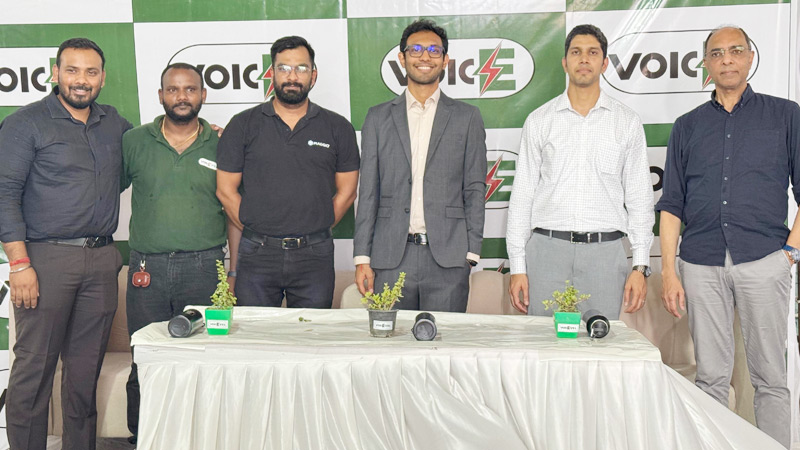
    Industry partners present at the launch included Vaibhav Sarda from Stride, Rishabh Deo from Gogoro, Jyotir Jain from BizDateUp, and Partha Pratim from MotoVolt—signalling strong cross-sector alignment in finance, mobility, and startup innovation.

    In a bold social impact move, EV91 is partnering with Zepto, Big Basket, Flipkart Minutes, and Apollo to provide two-wheelers on a rental model to gig workers unable to afford their own vehicles. The result? A scalable solution that helps riders earn while pushing India’s EV transition forward.

    Women riders are firmly in focus too. EV91 is already collaborating with Rapido Pink to promote women-led fleet operations. The company plans to scale up to over 5,000 vehicles in the coming months, with 1,000 earmarked for female riders.

    “Our commitment remains clear — to create dignified, green, and scalable employment for underserved women across urban India”, said Kumar.

    From buzz to business, EV91Technologies appears to be wiring its growth model not just with batteries and bytes, but with purpose. Delhi, clearly, is only the first stop.

  • “Brands don’t really push the LBTQIA conversation beyond a tokenistic approach”- Dot Media’s Danny Advani

    “Brands don’t really push the LBTQIA conversation beyond a tokenistic approach”- Dot Media’s Danny Advani

    June is Pride Month – a time when rainbows pop up across corporate India, from brand logos to Instagram grids. But behind the hashtags and the colourful symbolism, a tougher question lurks: is this genuine progress or just another seasonal PR parade?

    Over the years, India Inc. has inched forward in recognising sexual diversity. But is it truly embracing the LGBTQIA+ community, or simply ticking the inclusion box for 30 days a year? To explore this, Indiantelevision.com turned to leaders in the advertising and marketing fraternity.

    In the second part of our Executive Dossier series, Indiantelevision.com’s Rohin Ramesh had an email interaction with Danny Advani, head of business strategy at Dot Media. Previously, where Mihir’s take on Indian brands during Pride Month felt like a rainbow with a silver lining — cautiously optimistic, yet hopeful — Advani’s perspective is the thundercloud that follows. In a sharp contrast to the celebratory tone often seen in June, he lays it bare: we’ve barely scratched the surface. For him, the truth is uncomfortable — most brands are still dancing around the idea of inclusion, not walking the talk. His take sparks a necessary debate: are brands truly evolving, or are we still mistaking seasonal signaling for sustained support?

    Advani isn’t buying into the optimism. His perspective acts as a stark counterpoint — a reminder that beyond the sparkle of Pride-themed campaigns, the reality remains largely cosmetic. For him, the issue isn’t that brands are doing too little during Pride Month; it’s that they’re doing so only during Pride Month.

    The tension between these viewpoints opens up a much-needed dialogue: Is India’s brand ecosystem truly evolving in its understanding and representation of LGBTQIA+ identities, or are we still stuck in a cycle of rainbow-washing, safe tokenism, and corporate convenience?

    Excerpts from the interaction  follow.

    On brands evolving from symbolic gestures during pride month to sustained representation in product design, hiring policies, partnerships and campaigns that sparked conversation vs those that felt like rainbow-washing.

    In the Indian brand landscape, I personally haven’t come across any brand that really pushes the boundaries of the LBTQIA conversation beyond a tokenistic approach during the pride month? Where does the association disappear after June? Do we see more open conversations around them? Not yet! Are we ready as a country, not yet! Of course some brands are inclusive in conversations but is it an always on approach? Don’t think so!

    On creative, PR, and digital agencies working to ensure LGBTQ+ stories are told authentically, with lived experience and not just layered filters.

    My response remains the same above. But yes, there are agencies and organisations that do put in the effort for representation and create a safe space and welcoming environment for the community. Parmesh Sahani has been integral in doing this for Godrej now for years and I think we need more of these flag bearers to help open the archaic mindset of most organisations.

    On Indian brands showing up for the queer community throughout the year, or only when it trends.

    Let me switch my gay spotlight on and say ‘Oh honey, don’t even get me started”. Brands don’t care, most of them, they don’t care about Mothers Day, Fathers Day let alone pride. It is a trend that they ride the wave hoping they get to see the golden pot aka ROI across the rainbow.

    But I must say, some brands have at least made some inclusions in their choices of talents being used, be it as a face for commercials, or product shoots but there seems to be some movement in the positive direction.

    On the data about LGBTQ+ inclusion driving brand loyalty, especially among Gen Z and millennial consumers.

    I am not even sure if there’s a substantial data pool in the Indian landscape, but globally brands like Levis, Skittles, etc have seen proof of success in being an inclusive brand. I remember reading a paper that says skittles saw an engagement spike of 20-25 per cent during their pride campaign and as per Nielsen research paper “LGBTQ+-inclusive ads saw 23 per cent higher brand recall among Gen Z, and were 2x more likely to lead to purchase intent”. Even Close Up as a brand in India has been inclusive in their campaigns in the past and not necessarily for Pride but even during Valentines.

    On brands showing solidarity without falling into legal or cultural backlash traps, given the legal grey areas around same-sex marriage in India.

    No one is asking any brand to endorse or fight for the rights of the community by showcasing any strong statements but just have the appetite to showcase and accept the community first for who they are and stop questioning their choices. I remember an incident when X used to be Twitter and a certain Top TIer Bank had rolled out a campaign and a service for same sex couples to have a joint holder account. But when my friend applied for it, she was denied and it became a Twitter War. Pinkwashing isn’t cool!

    On the LGBT market being a big enough market in India to be targeted for products specially designed for them.

    Can’t remember any digital film, television commercial that showcased anything outside a heteronormative lens. The Indian ecosystem is too fragile and lacks awareness of anything outside the biological gender to accept or even have a conversation that could be in the benefit of the community.

    On the LGBT market being a big enough market in India to be targeted for products specially designed for them.

    Take a page from the new age fashion brands and I ain’t talking about the e-commerce giants. Brands in the fashion space today are aware of the choices that the community needs so instead they are keeping it unisex. It’s not necessarily defined by biological gender but by the design and the collection that is inclusive for all.

    On where the right attitude towards the LGBTQ+ community in an organisation truly begins — leadership, middle management, or peers.

    Oh, the chicken and the egg question! Let’s be honest, it all has to work in tandem with each other. The management can set the groundwork and help create an environment that is inclusive, but the middle management and the peers are equally responsible for you to feel it’s a safe space to work. You cannot have your leadership valuing your contributions while your peers and middle management try to tear you apart with ignorant remarks or homophobic slurs. It seems like a lot to ask but you need the majority in an organisation doing the right to silence the wrong. 
     

  • Blunt and loud: Go5 launches edgy new audio brand for India’s Gen Z

    Blunt and loud: Go5 launches edgy new audio brand for India’s Gen Z

    MUMBAI: Go5 Incorporation, the force behind TecSox and Deal99.in, has just dropped its boldest bet yet — Blunt, a new audio brand that’s unapologetically built for India’s Gen Z. Ditching dull tech and overpriced polish, Blunt speaks to creators, hustlers, gamers, and style-conscious college-goers looking for gear with guts.

    Launched with wireless neckbands, TWS earbuds, wired earphones, and Bluetooth speakers, Blunt blends punchy sound with underground design — think matte blacks, LED trims, industrial accents and attitude-heavy branding. Built-in quick charge, long battery life, and deep bass come as standard.

    Go5 Incorporation founder & promoter, Puneet Gulati said, “We saw a cultural gap where most affordable audio products were either plain functional or overpriced lifestyle gear. Blunt was born to challenge that. It’s gritty, raw, and real just like its audience.”

    The brand leans heavily into subcultures – from streetwear and indie music to gaming and hip-hop — making it as much a cultural statement as a tech offering. It’s tech that flexes.

    Backed by Go5’s success with TecSox — which sells over a million units with a sub-2 per cent return rate — Blunt enters the market with scale and street cred.

    In short, Blunt isn’t just about what you hear. It’s about how loud you live.

  • Startupbootcamp India charges up climate tech with new pre-accelerator for energy startups

    Startupbootcamp India charges up climate tech with new pre-accelerator for energy startups

    MUMBAI: Climate tech is having a startup moment, and Startupbootcamp India (SBC India) is making sure the power surge is real. The new joint venture between Startupbootcamp Australia and BRK Ventures launched its first pre-accelerator programme for clean energy startups on 23 June 2025, with a full charge of ambition and international firepower.

    The three-month programme kicks off in August and targets early-stage founders working across six high-impact domains: AI-driven energy systems, smart grids, renewable integration, next-gen storage, green hydrogen, decarbonisation, and blockchain-enabled decentralised markets.

    Only 12 startups will be selected from over 300 expected applications. Startups at the idea, MVP, or pre-revenue stage can apply until 31 July.

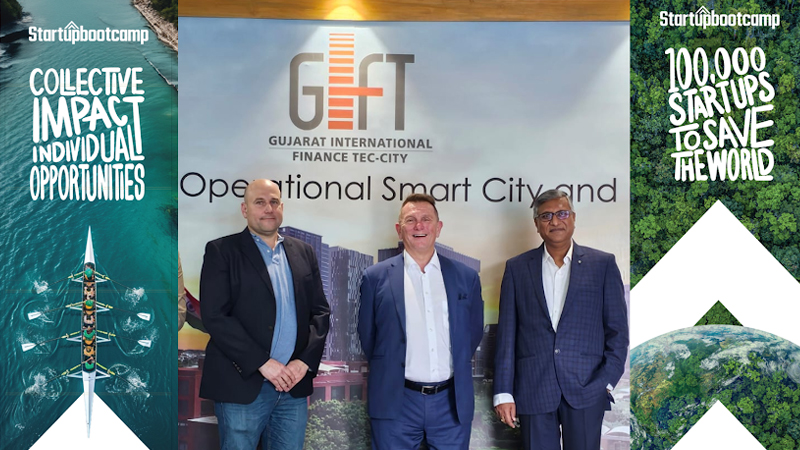
    “We’re excited to partner with BRK Ventures to launch Startupbootcamp India and support the next wave of climate tech innovation. India has the talent, urgency, and scale to drive impactful climate solutions that resonate both locally and globally. By backing early-stage founders in energy transition sectors, we aim to foster commercially viable ventures that accelerate decarbonisation and create meaningful international collaboration opportunities”, said Startupbootcamp Australia CEO Trevor Townsend.

    “India’s energy transition needs a 360 degrees approach to battle several problems like increasing pollution in large cities, flooding, climate change affecting agricultural produce and much more. We are keen to be a partner in finding solutions that can help India emerge as a powerful $35 trillion economy by 2047. Our belief is to support climate tech focused startups in their very early days with strategic partnerships like SBC Australia to position Indian startups solving India and global climate change problems”, added BRK Ventures managing partner Kamal Bansal.

    SBC India will culminate the programme with a showcase day in November 2025, inviting marquee VCs and investors to evaluate the cohort for early-stage capital and collaboration. The programme is designed to support founders with access to industry experts, market linkages, and global mentorship networks tailored to climate-tech startups.

    With backing from partners like Shell, Microsoft, AWS, Mitsubishi, and Bosch, Startupbootcamp Australia brings global experience to India’s growing clean-tech landscape. BRK Ventures, meanwhile, adds local knowledge and pre-revenue capital muscle to plug early-stage funding gaps.

    With tools, traction, and talent on tap, SBC India’s first run promises to energise India’s net-zero mission and fuel the country’s push toward climate resilience and inclusive growth.

  • Planning a Home Loan? Here’s How an EMI Calculator Can Help You

    Planning a Home Loan? Here’s How an EMI Calculator Can Help You

    Buying a home tends to be the single biggest financial commitment most people ever take on. Because property prices are high, many buyers rely on a home loan to cover the purchase cost. That choice brings a long repayment journey that should be planned carefully and assessed with precision. A home loan calculator lets you work out your future instalments before you apply, so you can organise your budget with clarity and confidence.

    What is a home loan EMI calculator?

    A home loan calculator is an online tool that estimates your equated monthly instalments. You can open it at any hour on a bank website, a fintech platform, or a real estate portal. Once you supply three basic details—the loan amount, the loan tenure, and the interest rate offered by your lender—the calculator shows the monthly repayment you can expect.

    Manual number crunching involves complex formulas and invites mistakes, yet the calculator produces accurate figures in seconds. Seeing reliable results early helps you compare offers, adjust expectations, and design a repayment plan that will last for the entire loan period.

    Features of a home loan EMI calculator

    A home loan calculator comes with various useful features that make it an essential part of the home loan planning process. These practical features are listed below:

    ●    Real-time results: Change the loan amount, tenure, or interest rate, and the EMI changes instantly. You can explore many scenarios in just a few minutes.

    ●    User-friendly interface: Most calculators are arranged in a straightforward layout. Enter your data, press one button, and read the output. No advanced finance knowledge is needed.

    ●    Customisation options: The tool lets you fine-tune the loan amount, repayment tenure, and interest rate. Even small adjustments show how your EMI and total repayment might shift.

    ●    Detailed information: Some versions supply an amortisation table, breaking each month or year into principal repayment and interest repayment. The schedule offers a transparent view of how your loan will shrink over time.

    ●    Constant accessibility: Because the tool stays online, you can use it whenever you wish. It works on laptops, desktops, tablets, and phones, and it remains free for unlimited use.

    How to use a home loan EMI calculator

    Using a home loan calculator is simpler than it sounds. Think of it as an online form that asks a few small questions and then does all the heavy lifting for you. Here’s a quick step-by-step guide to help you figure out how to use a home loan EMI calculator:

    1.    Type in the loan amount

    Enter the loan amount into the home loan calculator tool. Your loan amount is the amount of money you plan on borrowing from the bank. For instance, if you are buying a home worth Rs. 40 lakhs and making a down payment of Rs. 10 lakhs, then your home loan amount will be Rs. 30 lakhs. Since home loan EMI calculators are flexible, you can run multiple simulations with different loan amounts to see how your estimated EMIs change. 

    2.    Choose the ideal loan tenure

    Next, you have to enter the tenure of your home loan. Home loan tenure is the time period during which you plan to repay the loan to the lender. Lenders typically offer varied loan tenures ranging from 10 to 30 years, based on the loan amount and your eligibility.

    Most calculators come with sliders to help you customise the loan tenure option. You can slide it until the monthly figure in your mind feels comfortable. Remember that stretching the tenure down to the shorter end makes each instalment higher but saves you interest in the long run, while moving it to the far end eases the monthly load but adds interest.

    3.    Input the home loan interest rate

    The home loan calculator software calculates your EMIs based on the applicable rate of interest. So, you need to provide the home loan interest rate offered by the lender. Keep in mind that home loan interest rates are different from lender to lender. Lenders offer home loan interest rates depending on your credit score. So, If your credit report is good and your income is stable, you can usually negotiate a lower interest rate in order to have lower EMIs.

    4.    Press the ‘Calculate’ button

    After filling in all the details needed on the home loan EMI calculator, press the ‘Calculate’ button. The calculator will immediately show you your EMI amount, the total interest you will pay, and the total repayment amount over the loan period. Some calculators also print a month-by-month repayment table so you can see exactly how your balance falls with every payment. With that one click, you have a clear picture of your future cash flow before you even fill out the loan application.

    Why you should use a home loan EMI calculator

    Choosing a loan without crunching the numbers first is a bit like setting off on a road trip without checking the fuel gauge; you might get there, but the journey can become stressful. A quick session with a home loan calculator puts you back in the driver’s seat and makes planning far easier.

    ●    Compare different permutations: By tweaking the loan amount, tenure, and interest rate, you can see dozens of repayment scenarios in seconds. Watching the EMI rise or fall on-screen helps you zero in on the mix that feels right for your income and comfort level.

    ●    Create an effective budget: Once the calculator shows your likely EMI, you can map out the rest of your monthly spending with confidence. It becomes simpler to set aside money for groceries and utilities, build an emergency fund, and still reserve something for savings or future goals.

    ●    Save time: Longhand calculations eat up hours and still risk slip-ups. The calculator returns precise figures in a flash, letting you make clear, informed choices and move on to the fun part—finding the perfect home.

    Besides using the calculator, gather all the home loan documents required before approaching a lender. Typical home loan documents required include identity proof, address proof, proof of income, employment verification, property papers, and recent bank statements. Submitting complete and correct paperwork speeds up approval and may improve the terms you receive.

    Conclusion

    Checking your home loan EMI estimate before you sign anything is just as crucial as gathering the home loan documents required by the bank. Five minutes with an online calculator lets you see, in plain numbers, how the loan will sit in your monthly budget. If the EMI feels heavy, you can tweak the down payment, tenure, or interest rate until the figure matches your comfort zone. That little preview can save years of stress and keep your dream home truly affordable. 
     

  • The role of marketing in the evolution of corporate transport-as-a-service (TaaS) platforms in India

    The role of marketing in the evolution of corporate transport-as-a-service (TaaS) platforms in India

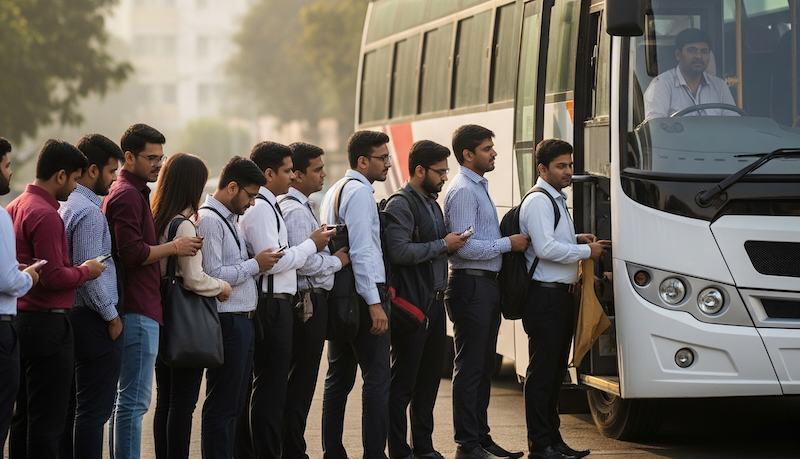
    MUMBAI: India is at a pivotal moment in rethinking how businesses move people. As companies continue to grow in a post-pandemic, sustainability-focused era, safe and efficient employee transport is more critical than ever. AI-powered transport-as-a-service (TaaS) platforms—once seen as futuristic—are now driving tangible efficiencies and smarter mobility.

    In a landscape long dominated by legacy systems and fragmented vendors, successful adoption increasingly depends on strategic marketing that builds trust and drives behaviour change. As more companies shift to integrated, tech-enabled solutions, India’s employee transportation market is poised to reach $13.2 billion by 2030—propelled by the expansion of GCCs, rising focus on employee well-being, and environmental accountability. 

    However, the concept of TaaS is still relatively new to many businesses, especially those in tier 2 and tier 3 cities. And with TaaS providers rapidly growing in India, standing out now hinges on strategic marketing—not just tech. So how does marketing drive all this? Rather than flashy promotion, the focus has pivoted to education, translating AI-driven, real-time transport orchestration into boardroom value. Marketing teams are now playing a crucial role in educating decision-makers about the cost, environmental, safety and operational benefits of transitioning from legacy transport models to digital-first, on-demand solutions. 

    Targeted content campaigns, engaging webinars, whitepapers, industry events, data-driven campaigns, and fact-based storytelling have become prime levers for TaaS marketers to successfully communicate the advantages of reduced overheads, improved route optimization, and enhanced employee satisfaction.  

    Powerful sources such as Google India’s Think with Google: B2B Playbook indicate that Indian business buyers digitally explore solutions to the extent of around 80% prior to going into contact with vendors. This makes online reputation, transparent data, and customer reviews critical marketing touchpoints. In response, thought leadership marketing—via blogs, LinkedIn articles, and panel discussions—has emerged as a strategic lever, positioning TaaS not just as a logistics solution, but as a vital pillar of future-ready enterprise strategy. 

    Arjun BhojrajIn an ESG-conscious corporate world, sustainability has become a major buying criterion. Indian TaaS platforms have leveraged this through savvy green marketing. Campaigns emphasizing electric vehicle (EV) adoption, carbon footprint reduction, and alignment with India’s net-zero goals have resonated strongly with large enterprises under pressure to showcase sustainability metrics. 

    Perhaps most fascinating is the shift in how trust and value are built. Marketing’s function today is to encourage internal adoption within client organizations, offering toolkits and change management processes to facility teams and HR rather than simply selling a service, but inducing behaviour change through tailored communication, including ROI calculators and demo videos. Trust is further reinforced through robust safety protocols, comprehensive driver background checks, vehicle health monitoring systems, and transparent ESG impact reports and sustainability dashboards playing a pivotal role in accelerating adoption.

    A critical dimension in the evolution of corporate TaaS platforms is monetisation. TaaS platforms often operate on a hybrid model, combining subscription-based pricing with usage-linked fees. Several research from PwC and Bain & Co. reveals a trend toward transparent, outcome-driven pricing, with additional layers for advanced analytics, ESG reporting, and premium support. Strategic marketing plays a role here too—by clearly communicating the ROI, cost-saving benefits, and long-term value of these offerings, platforms are able to position themselves not just as transport providers but as strategic mobility partners. 

    As India accelerates its push toward digitization, green mobility, and human-centric workplaces, the role of smart transport marketing becomes increasingly critical. Marketing is no longer a peripheral function—it is a strategic force that drives awareness, builds trust, fosters engagement, and accelerates adoption.

    By aligning brand narratives with operational excellence and measurable socio-environmental impact, marketing ensures that TaaS platforms aren’t just selected—they’re embraced and advocated for by forward-thinking Indian enterprises.

    (This comment piece has been penned by Routematic chief business officer Arjun Bhojraj. The views expressed in it are entirely the author’s and indiantelevision.com need not subscribe to them)

  • Biocon raises Rs 4,500 crore via QIP, its first equity fundraise since 2004 IPO

    Biocon raises Rs 4,500 crore via QIP, its first equity fundraise since 2004 IPO

    MUMBAI: If the stock market had a hall of fame for patience, Biocon would deserve a shiny plaque. After two decades since its IPO debut in 2004, the Bengaluru-based biopharma giant returned to the equity markets, raising Rs 4,500 crore through a qualified institutions placement (QIP) that closed on 19 June 2025.

    The fundraise saw 13,63,63,635 equity shares priced at Rs 330 each (face value Rs 5, including a premium of Rs 325), and attracted a swarm of top-tier investors. The final orderbook featured heavyweights like SBI Mutual Fund, ICICI Prudential Mutual Fund, HDFC Life Insurance, Nippon India Mutual Fund, Mirae Asset, Aditya Birla Mutual Fund, Franklin Templeton, SBI General Insurance, Norway’s Government Pension Fund Global, and Blackrock.

    “The strong response to our QIP reflects deep investor conviction in Biocon’s differentiated strategy and consistent execution”, said MD & CEO Siddharth Mittal. “This capital raise further strengthens our balance sheet, enabling us to invest in innovation, expand global access to lifesaving biopharmaceuticals, and advance our purpose of delivering affordable healthcare solutions”.

    Biocon plans to channel the proceeds towards multiple priorities: acquiring outstanding optionally convertible debentures issued by Biocon Biologics Ltd to Goldman Sachs’ India AIFs, repaying and prepaying select financial instruments and borrowings, and covering other corporate obligations.

    This marks Biocon’s first equity fundraise in 21 years, and it didn’t disappoint. Backed by a diverse mix of domestic mutual funds, insurance firms and foreign institutional investors, the transaction not only widened the company’s investor base but also reinforced trust in its long-term business vision.

    With shareholder approval secured via postal ballot on 4 June 2025, the QIP positions Biocon for its next growth sprint. Post-issue, the promoter and promoter group’s shareholding stands at 54.45 per cent.

    Kotak Mahindra Capital, BofA Securities India and Goldman Sachs India served as book running lead managers. Legal counsel included JSA Advocates & Solicitors for Biocon, and Cyril Amarchand Mangaldas and Linklaters Singapore for the lead managers.

  • “Increasingly Indian brands are recognising that embracing the LGBT community has to be an ongoing process” – Insight Cosmetics Mihir Jain

    “Increasingly Indian brands are recognising that embracing the LGBT community has to be an ongoing process” – Insight Cosmetics Mihir Jain

    June is Pride Month – a time when rainbows pop up across corporate India, from brand logos to Instagram grids. But behind the hashtags and the colourful symbolism, a tougher question lurks: is this genuine progress or just another seasonal PR parade?

    Over the years, India Inc. has inched forward in recognising sexual diversity. But is it truly embracing the LGBTQIA+ community, or simply ticking the inclusion box for 30 days a year? To explore this, Indiantelevision.com turned to leaders in the advertising and marketing fraternity.

    The result? A split screen. Some argue meaningful strides have been made; others insist we’re barely past square one.

    In the first of two interviews in our Executive Dossier series, Rohin Ramesh sits down with Mihir Jain, sales and marketing director at Insight Cosmetics — a homegrown beauty brand that belongs to the first category who points out that a lot of progress has been made. He believes Pride isn’t a campaign, but a compass. For Jain, inclusion runs through everything: who gets cast in ad films, how transgender and non-binary employees are supported at work, and what it means to be truly representative in an industry long dominated by narrow norms.

    He also unpacks how shifts in law — from the Transgender Persons (Protection of Rights) Act, 2019, to the Supreme Court’s evolving take on queer partnerships — are nudging brands to think broader and better.

    Is Indian marketing still stuck in a heteronormative bubble? Is LGBTQIA+ storytelling breaking into Tier II and III markets? And what do Gen Z and Alpha really expect from brand narratives?

    For companies like Insight, Pride isn’t just a parade — it’s a promise.

    Excerpts from the conversation follow.

    On brands evolving from symbolic gestures during pride month to sustained representation in product design, hiring policies, partnerships and campaigns that sparked conversation vs those that felt like rainbow-washing.

    The evolution of Pride marketing has shifted from token gestures to more deliberate, long-term inclusion strategies. Brands are increasingly embedding LGBTQIA+ representation into product design, hiring policies, and year-round collaborations. At Insight Cosmetics, we’re taking conscious steps in that direction by collaborating with LGBTQIA+ influencers and gradually opening our platform to ensure everyone feels seen. The distinction lies in consistency; representation must extend beyond a single month and into the everyday DNA of the brand. Activations that really ring true are those that stem from authenticity, not perceived as “rainbow-washing.” In order to really make a difference, though, inclusion must be an enduring and considered brand commitment.

    On creative, PR, and digital agencies working to ensure LGBTQ+ stories are told authentically, with lived experience and not just layered filters.

    Ad agencies, PR agencies, and digital agencies are becoming the go-to facilitators of authentic LGBTQIA+ narratives. The shift these days is towards co-creation alongside the community, not for them. Lived experience narratives have emotional depth and cultural richness that cannot be matched by any design filter. At Insight Cosmetics, we ensure our partnerships with LGBTQIA+ creators are real, respectful, and rooted in their own stories, not just filtered narratives. This model of partnership values unique voices without losing sincerity and inclusivity in content. In this way, agencies and brands collectively drive storytelling that captures the actual diversity and authenticity of queer experience.

    On Indian brands showing up for the queer community throughout the year, or only when it trends.

    Although Pride month tends to be a catalyst for visibility, true inclusion cannot be time-sensitive. More and more Indian brands increasingly understand that embracing the queer community has to be an ongoing process. At Insight Cosmetics, we’re working to make our platform inclusive throughout the year  not just when it trends, but as a continuous commitment. At every level of partnership to policy formation within our organization, we labor throughout the year to make representation a core value. The goal is to make LGBTQIA+ visibility the norm in brand space, not only when it’s trendy, but as a continuous commitment to values and advocacy of diversity.

    On the data about LGBTQ+ inclusion driving brand loyalty, especially among Gen Z and millennial consumers.

    Today’s consumers, especially Gen Z and millennials, expect brands to take a strong position on inclusion. Numbers show that this segment compensates brands that express a genuine commitment to LGBTQIA+ rights with more engagement and loyalty. Performative action is readily called out and dissected. At Insight Cosmetics, we see this reflected in how engaged and supportive our audience is when we partner with LGBTQIA+ creators in meaningful ways. These collaborations not only validate our values but also enhance customer trust. Inclusion is no longer a choice for brands; it is a key driver of loyalty and relevance for a socially conscious consumer marketplace.

    On brands showing solidarity without falling into legal or cultural backlash traps, given the legal grey areas around same-sex marriage in India.

    In a litigious landscape where homosexual marriage is still a gray area, brands have to walk with courage and cultural care. The discourse has to be on validating identities, not commodifying stories. At Insight Cosmetics, we aim to create a safe, inclusive space through representation and collaboration, while being mindful of cultural context and the lived realities of the LGBTQIA+ community. By keeping an eye on lived experience and avoiding tokenism, brands can demonstrate authenticity.

    On facilities being provided within the organisation for cross dressers and transgenders and lesbian, for instance transgender toilets.

    Workplace inclusivity begins with transparent and inclusive hiring processes. At Insight Cosmetics, we’re committed to building a safe and inclusive work environment for all individuals, regardless of gender identity or sexual orientation. Our hiring is open and welcoming to transgender, non-binary, and LGBTQIA+ individuals.

    On brands ensuring they’re not misrepresenting queer identities in Tier II and Tier III towns, since majority LGBTQIA+ marketing in India remain urban-centric.

    It’s true that a lot of LGBTQIA+ marketing in India focuses on urban audiences. To avoid alienating or misrepresenting queer identities in Tier II and III towns, brands need to engage with local voices, use relatable storytelling, and avoid stereotypes. At Insight Cosmetics, we’re mindful of representation across geographies and are working toward more inclusive content that resonates beyond metros, while staying respectful of different lived experiences.

    On the representation of the LGBT community in ad films being around their sexual preferences or as stereotypes only.

    While earlier ad films often reduced LGBTQIA+ representation to stereotypes, spoofs, or tokenism, we’re now seeing a welcome shift. More brands are portraying queer individuals as real people with full identities, beyond just their sexual orientation. At Insight Cosmetics, we believe in telling authentic, respectful stories where everyone is seen as human first, not as a label or trend.

    On marketers rethinking the idea of the ‘Indian family’ in their narratives, post the 2022 Supreme Court ruling recognising cohabiting same-sex couples.

    The 2022 Supreme Court ruling was a landmark moment, encouraging marketers to slowly expand their definition of the ‘Indian family.’ While the heteronormative lens remains dominant, we are seeing more brands beginning to embrace diverse family structures in their narratives reflecting evolving social realities and the importance of inclusivity.

    On the LGBT market being a big enough market in India to be targeted for products specially designed for them.

    The LGBTQIA+ community in India is a growing and influential market, with increasing visibility and purchasing power. While many products are designed to be inclusive for all, there is potential for offerings tailored to specific needs like gender-neutral cosmetics, skincare for diverse skin types, and products that celebrate individuality. At Insight Cosmetics, we focus on creating versatile products that resonate with everyone, including the LGBTQIA+ community.

    On where the right attitude towards the LGBTQ+ community in an organisation truly begins — leadership, middle management, or peers.

    The right attitude towards the LGBTQIA+ community begins at the leadership level, as inclusive values need to be modeled from the top down. That said, middle management and peers play a crucial role in carrying those values into day-to-day interactions and creating a truly supportive environment.

    On your plans for pride month

    For pride month, we’re excited to do an Instagram influencer campaign featuring a prominent gay influencer. He will be doing a get ready with me video showcase makeup skills and sharing his personal journey of coming out and navigating societal challenges. Through this authentic storytelling, we aim to celebrate individuality and foster greater acceptance.
  • RN Valves & Faucets aims Rs 500 cr mark by 2028, opens floodgates for South India expansion

    RN Valves & Faucets aims Rs 500 cr mark by 2028, opens floodgates for South India expansion

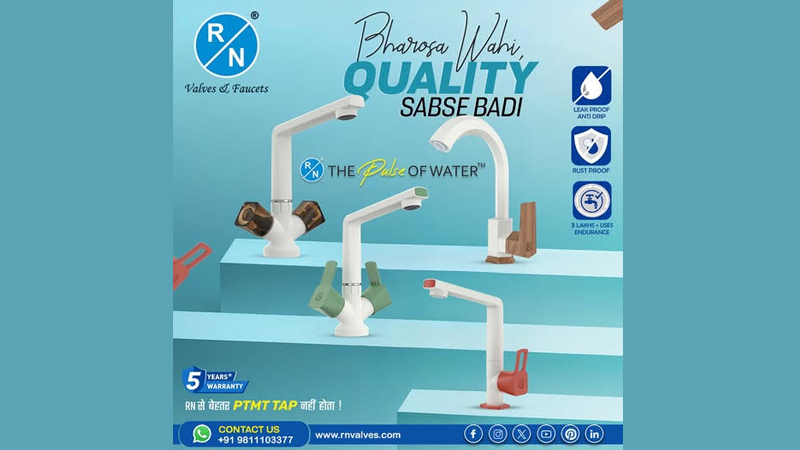
    MUMBAI: RN Valves & Faucets has turned on the tap to full flow with an ambitious expansion drive that kicks off in south India, setting the stage for national dominance. The company, already a household name in the sanitaryware and fittings space, announced its bold plans in June 2025 to scale operations across the country with its sights firmly set on becoming a Rs 500 crore enterprise by 2028.

    The move is more than just a regional push—it’s a full-blown transformation. RN’s revamped internal structure has set the plumbing in motion for a growth blueprint powered by operational upgrades and strong leadership. Executive assistant to the MD Rajeev Jain, who brings over 24 years of experience, including 14 working alongside top brass, is steering the company’s alignment with the 2028 growth vision.

    “We are growing, not just in numbers but in depth”, said Jain. “Our entry into south India is the beginning. Next, we move into Rajasthan, Uttar Pradesh, Madhya Pradesh, and the far east. This is a company built on trust and transformation”.

    Backing this structural overhaul is senior HR manager Nidhi Singh, whose reforms in KRA transparency and employee engagement have played a central role in fortifying RN’s internal machinery. The company’s HR reboot under her watch reflects a sharp pivot toward people-driven growth.

    Joining the leadership is Dipgal Singh Gusain, an industry veteran from Dabur, who now heads operations. He is set to oversee moulding, assembly, production planning, and dispatch functions. Gusain’s arrival signals a renewed focus on innovation and seamless interdepartmental collaboration—key to meeting the firm’s pan-India targets.

    To anchor its southern thrust, RN Valves & Faucets will host a high-profile dealer meet in Hyderabad this July, underscoring its commitment to building regionally attuned partnerships. With over 4,800 dealers and more than 7,000 SKUs already in play, the company is primed for scale.

    From touchless solutions to premium PTMT and CP fittings, the company has earned credibility with precision-led engineering and homegrown excellence. Its long-standing market mantra, ‘RN ka Naam, Quality ka Kaam’, continues to resonate across showrooms and supply chains alike.

    As India’s housing and construction boom continues, RN Valves & Faucets is tightening every nut and bolt in preparation—not just to stay afloat, but to lead the current. From South India to the northeast, the company isn’t just expanding—it’s re-plumbing the map.

  • Lucien Laviscount returns as face of Tommy Hilfiger SS25 watch line

    Lucien Laviscount returns as face of Tommy Hilfiger SS25 watch line

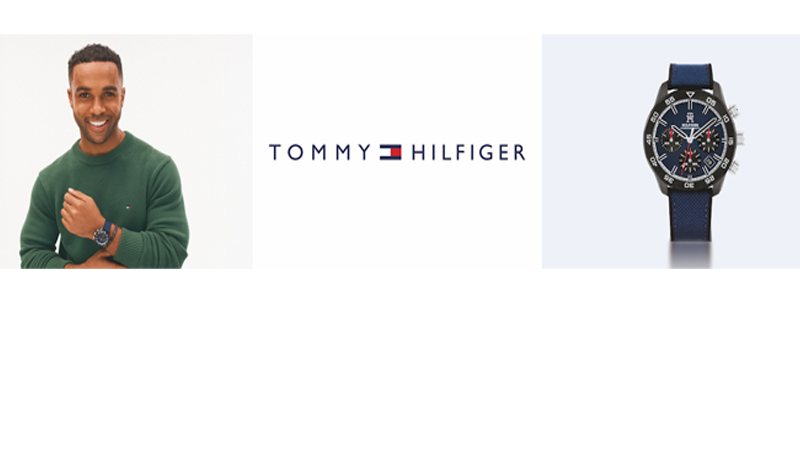
    MUMBAI: Tick, style, tock. Tommy Hilfiger is giving timepieces a dose of star power and this one comes with a British accent and signature smirk. Actor and Tommy Family brand ambassador Lucien Laviscount is once again the face of Tommy Hilfiger’s Spring Summer 2025 watch campaign. Following his Fall 2024 debut, Laviscount continues to bring “effortless cool and natural charisma” to the brand’s evolving vision of American classic-meets-modern swag.

    “It’s chic, elegant and hits all the right notes,” Laviscount said, waxing lyrical on the collection. “That’s pure Tommy through and through.” He’s not wrong.

    The SS25 men’s lineup hits the fast lane with the Bank, a motorsport-inspired model featuring a red aluminium pusher guard and an integrated silicone strap for peak performance. It’s style with speed on the wrist. Meanwhile, the TH85 Carbon Chronograph leans into the luxe lane with enamel dials, sub-dials, monograms, and Cordura straps that scream sport-meets-slick.

    Not to be outdone, the women’s range plays with poise and punch. From tank-shaped silhouettes with sculpted metal bracelets and sunray dials, to crystal-dotted “boyfriend watches” with sport-luxe vibes, these watches are all about timelessness with a wink.

    The SS25 collection is available across India via Titan World, Helios, Shoppers Stop, Lifestyle, Tommy Hilfiger stores and other premium outlets. And of course, it’s all over Instagram.

    Whether you’re racing against deadlines or fashionably late to everything, these timepieces make every second count with Lucien Laviscount, quite literally, in your corner.