Category: Marketing

  • Understanding Principal and Interest Breakdown with a Fixed Deposit Calculator

    Understanding Principal and Interest Breakdown with a Fixed Deposit Calculator

    For many years, fixed deposits (FDs) have been a trustworthy method for building your savings safely and sustainably. FDs provide guaranteed returns and do not require any market knowledge or risk-taking. However, understanding how much of your maturity amount is your deposit and how much is earned as interest is crucial for making a better-informed financial decision. Your maturity amount can look significantly more appealing when using a fixed deposit calculator, as it not only displays the current total returns but also breaks down the principal and interest very clearly.

    What Is a Fixed Deposit Calculator?

    A fixed deposit calculator is an online tool available on the websites of almost all banking and financial institutions. It requests some basic investment-related information, such as the amount you’re depositing, the interest rate, and the duration of the deposit. After entering this information, it quickly presents you with a breakdown of how much your final maturity is, how much interest you earned, and what share of that amount is in your total deposit.

    Why Principal and Interest Breakdown Matters

    Breaking down your fixed deposit into its components, such as principal and interest earned, is important for financial tracking and planning, and here’s why.

    1. Clarity on Actual Earnings

    Generally, when you deposit in an FD, it is easy to focus on your final maturity amount, but unless you break it down into interest earned, you, as an investor, have no idea how much your money earns. A fixed deposit calculator clearly shows you this. It separates your original investment from the interest, allowing you to see the actual growth.

    2. Better Goal Planning

    If you are saving for a specific goal, like a tuition fee or a gadget purchase, knowing the breakdown helps you judge whether the interest alone will cover your need, or whether you will have to dip into your principal. This way, the fixed deposit calculator allows you to set more precise financial targets and timelines.

    3. Tax Estimation

    Interest earned from fixed deposits is taxable. Understanding how much of your maturity amount is interest allows you to calculate your tax liability in advance. With the help of a fixed deposit calculator, you can plan your investments in a way that either keeps your earnings under the taxable limit or prepares you for tax-saving alternatives.

    4. Evaluation of Interest Rate Impact

    Even a small change in the interest rate can affect your earnings. The breakdown lets you see this difference in numbers. By adjusting the rate in the fixed deposit calculator, you can directly observe how your interest income changes. This helps in making smarter decisions about when and where to invest.

    5. Comparing Bank Offers More Effectively

    Many banks offer different rates and terms. Just looking at maturity value can be misleading if you don’t know what part of it is earned interest. The breakdown helps you compare the true earning potential of different offers. When you use a fixed deposit calculator, you can input various rates and tenures to find the best value for your deposit.

    6. Planning for Reinvestment

    If you plan to reinvest your FD amount, knowing how much of it is interest helps you decide whether to roll over only the interest or the full amount. A fixed deposit calculator provides you with this clarity in advance, which is essential for effective reinvestment planning and efficient cash flow management.

    How the Fixed Deposit Calculator Helps You Plan

    To use a fixed deposit calculator, you typically need to first enter your deposit amount. Next, you need to select the FD tenure (either in months or years). Then, you need to put in the interest rate offered by your bank. Finally, you need to select the interest payout frequency. This can be either monthly, quarterly, annually, or cumulatively at maturity. 

    Once you provide this data, the calculator gives you a summary that includes the total amount at maturity and the interest earned over the deposit tenure. It also shows your original investment (principal), to help you understand how much that amount has grown.

    Making the Most of This Tool

    1. Always check if the calculator allows for senior citizen rates, if applicable

    2. Compare results from different tenures and rates to find the best fit

    3. Save the breakdown or note it for use during tax filing or reinvestment

    4. Recalculate periodically if you are not investing immediately and want the most up-to-date figures

    Final Thoughts

    Using a fixed deposit calculator is not just about knowing how much you’ll get back—it’s about understanding exactly how your money is working for you. The detailed breakdown between your principal and interest ensures that you make every investment with full knowledge and control. It helps with tax planning, making smarter comparisons, and developing long-term financial strategies.

  • Fabelle crafts personalised Rakhi chocolates using AI for siblings

    Fabelle crafts personalised Rakhi chocolates using AI for siblings

    MUMBAI: Why gift socks or a last-minute card, when you can gift nostalgia, inside jokes, and a sprinkle of AI wrapped in chocolate? This Raksha Bandhan, Fabelle Exquisite Chocolates, the luxury brand from ITC Ltd., is out to rescue brothers from the tyranny of generic gifting. Enter #WorthTheOne, a personalised chocolate experience that blends tech, taste, and tender sibling chaos into one deliciously curated box.

    Every year, brothers scramble for something anything that says “I care” without screaming “I forgot.” But Fabelle’s new offering changes the game by transforming the bond between siblings into an edible, handcrafted, AI-curated keepsake.

    Here’s how it works: head to the worththeone.com website and take a fun, slightly nosey sibling compatibility test. Based on your answers covering everything from who’s the overachiever to who hogs the remote, an AI engine analyses your emotional dynamics, quirks, rivalries, and affections. This data is then used to customise a box of luxury truffles that reflect your sibling equation.

    And this isn’t your average Rakhi chocolate box. Each #WorthTheOne box features 20 bespoke truffles in five unique flavours, all handcrafted by ITC’s Master Chocolatiers using cocoa sourced from across the globe. From the nostalgia-drenched Saffron Rasmalai Truffle to the exotic Ruby Hazelnut Gianduja, every flavour represents a different layer of the sibling bond sweet, spicy, dramatic, and heartwarming.

    “No two boxes are the same,” says ITC Foods vice president and head of marketing for chocolates, coffee and confectionary Anuj Bansal. “This is not just a gift; it’s an experience. We’re using AI to convert memories, quirks, and emotional textures into something luxurious, handcrafted, and deeply personal.”

    Even the packaging gets the personalised treatment. Every box comes tailored with the sibling’s names and relationship traits subtly worked into the design. The result? A gift that doesn’t just sit on a shelf, it tells a story.

    Fabelle has consistently positioned itself at the intersection of craft, luxury, and emotion. With #WorthTheOne, it’s doubling down on its philosophy by bringing storytelling and technology into the confectionary fold.

    From the moment the AI curates the flavours to the time the first bite takes you back to a shared childhood prank, #WorthTheOne is built to make your sibling say, “Okay, fine, you’re my favourite this year.”

    As Rakhi traditions get a gourmet upgrade, Fabelle proves once again that chocolate isn’t just sweet, it’s smart, stylish, and deeply sentimental.

  • Boult from the blue as Goboult reboots with bold new brand play

    Boult from the blue as Goboult reboots with bold new brand play

    MUMBAI: Fasten your seatbelts, Goboult is here, and it’s not just screwing around. India’s fastest-growing wearables brand, formerly known as Boult, has hit refresh with a full-throttle rebrand, new name, new logo, and a supercharged strategy to match. Now called Goboult, the company is revving up its ambitions, targeting Rs 1,000 crore in revenue by FY26 after clocking Rs 800 crore in FY25 nearly double what it pulled in two years ago.

    The new identity reflects more than a cosmetic makeover. It signals a decisive leap towards premiumisation, international expansion, and a tech-forward future built on speed, style, and substance. The name “Goboult” isn’t just a tagline, it’s a mindset. The “Go” symbolises agility, boldness, and forward motion, qualities baked into the company’s DNA.

    And that story carries into the new logo: a screwhead (think resilience and precision) fused with an arrow (aka momentum and transformation). Together, they represent Goboult’s ambition to be the personal tech brand for a generation that doesn’t wait.

    “We’re not just changing our name, we’re changing the way we operate,” said Goboult co-founder Varun Gupta. “Goboult is about thinking bigger and moving faster. It’s a personal milestone for me, a project I built with heart and hustle. We’re not following trends, we’re setting them.”

    The rebranding is backed by a Rs 25 crore investment in R&D and design innovation. That includes building AI-first capabilities, integrating smarter software into wearables, and doubling down on user-centric design. Engineering and design teams are being scaled up as the brand sharpens its focus on next-gen personal tech.

    A significant pivot is also underway in distribution. Goboult plans to expand its retail footprint from 3,000 to over 30,000 outlets across India in the next 18 months. That’s 10X growth in general trade, modern retail, and experiential formats expected to drastically shift the revenue mix, making offline sales a key driver.

    On the product side, Goboult is stepping into the Rs 2,000 plus ASP segment with a focus on style-conscious, tech-savvy offerings: wearables, audio gear, and smart personal devices. The aim is clear be the brand that bridges fashion, function, and futuristic tech.

    Also in the pipeline: global expansion. Goboult is preparing for launches in the US, Europe, Southeast Asia, and East Asia starting next year. The new identity is crafted to resonate with global audiences, positioning the brand as a serious contender in the personal tech space beyond India.

    The company is also exploring design-first collaborations and pop culture-infused partnerships. A recent limited-edition tie-up with Mustang was just the beginning of a trend that aligns the brand with bold, Gen Z sensibilities.

    Goboult co-founder Tarun Gupta summed it up: “We’re building for scale and experience across product, packaging, and retail. Everything is aligned toward our Rs 2,000 crore vision by 2030. This is more than a rebrand, it’s a blueprint for global leadership.”

    With IPO ambitions down the line and a pulse on what Gen Z wants next, Goboult is racing ahead to become India’s most aspirational personal tech brand, one that doesn’t just follow trends, but leads the charge.

    The screw’s tight, the arrow’s loaded Goboult isn’t slowing down anytime soon.

  • Ad Tech Today is back with its second edition of EMERGE

    Ad Tech Today is back with its second edition of EMERGE

    MUMBAI: Ad Tech Today is back with its second edition of EMERGE. After the grand success in Mumbai last year, EMERGE 2025 is all set to take place on 07 August at Welcomhotel by ITC Hotels, Delhi (Gurugram).Gurugram will play host to one of India’s most refreshing marketing events — EMERGE 2025, a celebration of independent thinking, bold creativity, and innovation across digital, media, and tech.

    Presented by Adtech Today, EMERGE 2025 is where leaders from agencies, brands, and platforms come together to decode what’s really driving growth today. With Kargo as Premium AdTech Partner, Trackier as Managing Partner, Annimmoov as Creative Partner, Wingreens as Gifting Partner, and Treize Communications as PR Partner, the event promises ideas worth spotlighting and conversations worth joining.

    The day-long event will feature bold panel discussions, each curated around future-ready themes. A session on Short-form Content & Commerce will be there on short-form content’s growing influence. Niti Kumar (Starcom) will moderate a conversation featuring Nikita Malhotra (Woodland), Naresh Gupta (Bang in the Middle), Nisha Khatri (Libas), Sindhu Biswal (Buzzlab), Megha Marwah (White Rivers Media), and Neha Kant (Clovia)  diving into how creators, commerce, and content converge.

    The panel “Thriving Independently: Adapting to Tech, Media Shifts & Competing with Giants” will be moderated by Mimi Deb (Madison Media Plus). Panelists include Sajit Gopal (Domino’s), Sini Magon (Grapes), Sumon Chakrabarti (Buffalo Soldiers), Sonal Shrivastav (Kenstar), Tufayl Merchant (Howl), and Vishnu Sharma (Efficiency Worldwide) decoding how independent agencies and new-age marketers are collaborating and competing at scale.

    Another session will be on The Future of Performance Marketing, which will be moderated by Kumar Awanish (Cheil India). This panel will explore the evolving dynamics of performance-driven marketing. Panelists include Chirag Jagwani (Fixderma), Shweta Srivastava (Dr. Reddy’s), Dr. Ashish Bajaj (Narayana Health), Sachin Vashishtha (Paisabazaar), Vikram Singh (ITC Hotels), and Rahul Pant (Trackier) offering practical and strategic insights for marketers.

    The panel “Unfiltered: What It Really Takes to Run an Independent Agency Today” brings together honest perspectives from both agency and brand leaders. Moderated by Dr. Kushal Sanghvi, the session features Nasheet Shadani(Nash8), Anadi Sah (Tgthr.), Pratik Lalwani (CrayWings), Shubh Bajaj (Lyxel & Flamingo) and Manas Gulati (ARM Worldwide), who share raw insights into the indie agency journey.

    EMERGE 2025 will also throw Spotlight on Visionaries with a new segment called The Founder’s Spotlight, that will recognize bold, rising entrepreneurs from across marketing and media. Adding depth to this showcase is a review panel of seasoned leaders Ishank Joshi (Mobavenue), and Gandharv Sachdev (Hybrid) and Karanbir Bhatia (Yugo Capital) who will share their perspectives on leadership, innovation, and the future of independent growth.

    Keynotes That Cut Through

    In a hard-hitting keynote, Nabajit Nath, Sales Director – India at Kargo, will address “Ad Fraud 2.0: The Growing Threat of MFA in India”. Also on stage, Srikanth Rayaprolu ,CEO of Adtech Today will deliver a forward-looking keynote: “Eastward Bound: Strategic Expansion for Independent Agencies in ME & SEA.”

    An integral part of the event, The EMERGE Awards will look to honor excellence across independent agencies, publishers, and tech platforms. With categories spanning display, video, influencer, and data-led campaigns, these awards are curated to spotlight outstanding digital work.

    Chaired by Dr. Kushal Sanghvi and K.V. Sridhar (Pops), with select editorial oversight, the awards ensure that credibility, creativity, and impact stay at the heart of every recognition.

  • Generali Group and Central Bank of India unveil new brand identity for joint venture

    Generali Group and Central Bank of India unveil new brand identity for joint venture

    MUMBAI: Generali Group and the Central Bank of India announced a revamped brand identity for their life and general insurance joint venture, now unified under the name Generali Central. This strategic rebranding introduces new names for the individual businesses: Generali Central Life Insurance Company Ltd for the life insurance arm and Generali Central Insurance Company Ltd for the general insurance business. The updated brand, along with a new logo, aims to further solidify Generali’s ‘Lifetime Partner’ proposition in India.

    The shareholding structure of the joint venture remains unchanged, with Generali Group holding a 74 per cent stake and the Central Bank of India retaining up to 26 per cent.

    The new Generali Central brand identity signifies the powerful convergence of Generali Group’s global expertise and the Central Bank of India’s long-standing trusted heritage. This collaboration is dedicated to protecting what customers value most: their families, health, assets, and future.

    Generali Asia regional officer, Rob Leonardi emphasised India’s strategic importance: “India has long been a strategic market for Generali and our joint venture with the Central Bank of India reflects the potential we see today and for the future. The synergies between our two organisations are clear and I have every confidence that we’ll be able to deliver on our joint vision to provide accessible solutions that reflect the real needs of Indian families and businesses across the country. This collaboration supports us in fulfilling our Lifetime Partner ambition in the country, as we lay the groundwork for future innovation and growth.”

    Generali Central Life Insurance Company Ltd MD and CEO, Alok Rungta highlighted the transformative potential, “With our new brand identity, Generali Central Life Insurance marks a defining moment in our journey to becoming a future-ready, customer-first life insurer. Our strategic partnership with Central Bank of India unlocks transformative potential to reshape the landscape of protection and insurance in India. By combining Generali Group’s global heritage and insurance expertise across 50+ countries with the Central Bank of India’s deep-rooted trust and expansive network of over 4,500 branches, we are poised to democratise access to life insurance like never before. Our joint focus is clear: to deepen protection in underserved and rural segments through innovative, accessible, and inclusive products. This new identity reflects our shared commitment to transparency, sustainability, and disciplined execution—anchored in strong governance and a purpose-driven approach.”

    Generali Central Insurance Company Ltd MD and CEO, Anup Rau underscored the synergistic alliance: “Our new brand identity reflects the powerful synergy between two iconic institutions—Generali Group, with nearly 200 years of global insurance expertise, and the Central Bank of India, with over a century of deep-rooted presence in India’s financial and geographical landscape. This is more than a collaboration; it’s a strategic alliance aimed at redefining general insurance in India. By harnessing the Bank’s extensive branch network and community trust, we are uniquely positioned to bridge the protection gap, enhance insurance awareness, and deliver comprehensive, customer-centric solutions. This transformation is not just visual—it’s a reaffirmation of our purpose: to be a Lifetime Partner, empowering individuals with confidence and security at every stage of life.”
     

  • Wendy’s India turns 5 with roast battles, raves and burger cakes

    Wendy’s India turns 5 with roast battles, raves and burger cakes

    MUMBAI: She came. She served. She slayed. Wendy’s India has hit the five-year milestone, and she’s not marking it with a quiet cake-cutting behind the counter. Instead, the fast-food maverick is unleashing a month-long birthday blowout that’s part rave, part roast, and all-out rebellion against boring brand bashes. In just five years, Wendy’s India has grown to over 200 outlets and now it’s throwing a birthday party that’s stretching across four cities, filling timelines, and even setting the streets on fire (figuratively, of course).

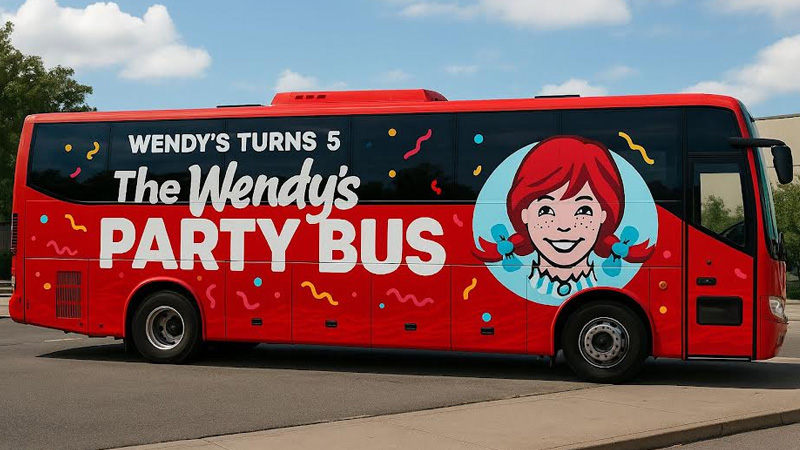
    At the heart of the celebration is the Wendy’s Party Bus, rolling through Mumbai on 8 August. Think strobe-lit interiors, DJ decks, unlimited burgers, and Wendy herself riding shotgun. “The party doesn’t come to Wendy’s Wendy’s is the party,” says Rebel Foods CMO Nishant Kedia.

    For Bangalore, the bash takes a cheeky turn with ‘The Roast’ on August 14, an in-store comedy special hosted by firecracker comic Banti Banerjee. “No burger, no brand is safe. We’re serving punchlines with pickles,” jokes the campaign team. Tickets drop soon on Bookmyshow.

    Meanwhile, digital platforms are exploding with creator collabs that channel Wendy’s signature sass:

    ●   Darshan Magdum’s parody anthem is the earworm you didn’t know you needed.

    ●   Lakshita & Gurpreet attempt a GTA-style Wendy’s heist.

    ●   AI duo Manki x Dogesh Bhai spiral into a ketchup-fuelled crisis.

    ●   And Chordinary’s musical ode to Wendy will make you weirdly emotional about beef patties.

    If that’s not trippy enough, wait till you see The Burger Cake, a hyperrealistic confection that looks exactly like a Wendy’s meal. It’s a feast and a fakeout in one slice.

    To top it all off, a mockumentary is in the works, a behind-the-pigtails film that tells Wendy’s story in her own words: unfiltered, unapologetic, and slightly unhinged.

    The headline act? The Wendy Raves in Delhi, Pune, Hyderabad, and Bangalore from 22–24 August . These DJ-fuelled, burger-powered parties will feature bold bites, booming beats, and brand integrations with Coke and Veeba. “Our food raves harder than most people,” the team quips.

    On the digital front, Wendy’s Instagram is going full chaos mode savage roast replies, surprise drops, and enough Gen Z energy to crash the algorithm. “We’re not just selling food; we’re selling a vibe,” says Kedia. “Wendy’s has always been bold, irreverent, and in sync with the culture. This campaign is how we turn up the volume.”

    With flame-grilled formats, meme-ready madness, and zero chill, Wendy’s India is showing the QSR space how to age boldly. Five never looked this fierce.

  • House of Bindu’s new film celebrates legacy of Bindu Fizz Jeera Masala as it readies for Pan India launch

    House of Bindu’s new film celebrates legacy of Bindu Fizz Jeera Masala as it readies for Pan India launch

    MUMBAI: House of Bindu announced the launch of its new corporate film, which celebrates the vision of its founder, Sathya Shankar, the impact it has had on the society and other stakeholders, and their successful business journey towards becoming a Rs 800-crore enterprise today nurturing a dream to be a pan-India food and beverage company.

    Rooted in the entrepreneurial vision of Sathya Shankar, SG Corporates has evolved from humble beginnings in 1987 to a diversified FMCG powerhouse. From starting as an auto rickshaw driver to launching Bindu Mineral Water in 2000, the brand’s journey mirrors India’s own consumer evolution—where trust, tradition, and taste drive loyalty.

    By setting up his first plant in the town of Puttur, in southern Karnataka, in 2000, Mr Sathya Shankar, the Chairman and Managing Director of SG Corporates, aspired to create jobs for the local community and improve their lives.

    “We are one of the first brands to introduce ethnic flavours where there are far too many foreign flavours,” says Megha Shankar, director-marketing and strategy, SG Corporates which has House of Bindu as the FMCG arm. The company started with Bindu Fizz Jeera Masala, which has become the most loved carbonated ethnic beverage in the South. The brand now includes a range of beverages with ethnic flavours and fruit-based drinks in its portfolio.”

    Building on this success, House of Bindu is now targeting the national market, with a high-impact rollout across Uttar Pradesh, Bihar, West Bengal, Maharashtra, Gujarat, Rajasthan, Punjab, and the Delhi-NCR region. House of Bindu has set itself an ambitious revenue goal of Rs 1,000 crore over the next 3 years, by leveraging more than 5 lakh retailers. “We are now set to expand nationwide, introducing our much-loved Bindu Fizz Jeera Masala to a wider audience while staying true to our roots. Our focus is bridging tradition with innovation to make the brand relevant for today’s Gen Z and millennial consumers”, Megha added.

    The company has two more production units in Sangareddy, Telangana, and a state-of-the-art manufacturing unit in Visakhapatnam to cater to its nation-wide customer base, and a digital-first approach is important to raise awareness about the brand’s legacy.

    PivotRoots co-founder & CCO, Hetal Khalsa, maker of the film mentioned, “We are excited to collaborate with Bindu and bring its legacy to a larger audience through strategic storytelling and digital innovation. Our goal is to reshape perceptions, deepen consumer engagement, and position Bindu not just as a beverage but as an essential part of everyday moments across India and this film is the 1st step towards that.”

    Having started with just 15 employees, who continue to work even today, they now have 2,500 direct employees, and 7,000 to 8,000 indirect employees. The positive impact that the company has had on the local community, especially by providing equal opportunities for women, has enabled it to strengthen its brand and position in the beverage market, and will continue to be critical in its national growth journey.”

  • Maruti clocks Rs 4,943 crore Q1 profit on strong sales and margins

    Maruti clocks Rs 4,943 crore Q1 profit on strong sales and margins

    MUMBAI: India’s favourite carmaker isn’t just fuelling roads, it’s firing up the financials too. Maruti Suzuki India cruised through the first quarter of FY26 with a consolidated net profit of Rs 37,924 million, accelerating past last year’s Rs 37,597 million.

    Total consolidated income hit Rs 404,934 million in the quarter ended 30 June 2025, driven by Rs 386,052 million in revenue from operations marking a healthy bump from Rs 357,794 million a year ago. Other income also revved up to Rs 18,882 million from Rs 10,605 million.

    The company’s consolidated profit before tax reached Rs 49,435 million, with a tax outgo of Rs 11,511 million. What truly put Maruti in overdrive was its tight grip on costs. Material consumption stood at Rs 219,368 million, while purchases of stock-in-trade clocked in at Rs 57,038 million. A modest Rs 2,794 million gain from inventory changes also helped balance the books.

    Employee costs rose to Rs 20,483 million, and depreciation nudged up to Rs 15,560 million, but overall expense discipline kept total costs at Rs 355,854 million leaving room for a tidy operating margin.

    While the company didn’t pull any handbrakes this quarter, its joint ventures and associates chipped in too, contributing Rs 296 million and Rs 59 million respectively.

    On a standalone basis, the picture looked equally polished. Standalone profit came in at Rs 37,117 million, up from Rs 36,499 million a year ago, with revenue from operations at Rs 384,136 million. The basic and diluted earnings per share stood at Rs 118.06.

    Maruti’s quarterly detour into comprehensive income saw a gain of Rs 3,465 million from re-measurements and fair value adjustments despite a minor speed bump from actuarial losses on pension liabilities.

    For a company with Rs 960,827 million in other equity and a paid-up capital of just Rs 1,572 million, Maruti continues to steer shareholder value with turbocharged confidence. If Q1 is any indicator, the full-year drive promises more pit stops of profit.

  • Dabur dishes out growth with a healthy Q1 dose of profits

    Dabur dishes out growth with a healthy Q1 dose of profits

    MUMBAI: Dabur’s Q1 results are proof that nature’s remedies still pack a punch on the balance sheet. The homegrown FMCG major reported a consolidated net profit of Rs 508 crore for the quarter ended 30 June 2025, registering a robust year-on-year jump from Rs 494 crore in Q1 last year and Rs 313 crore in the preceding quarter.

    Riding on a wave of resilient demand and smart cost management, Dabur clocked Rs 3,405 crore in consolidated revenue from operations up from Rs 3,349 crore in the same period last year and a sharp rise from Rs 2,830 crore in the March quarter.

    The company’s profit before tax stood at Rs 663 crore, up from Rs 642 crore in Q1FY25 and Rs 412 crore in Q4FY25. Total expenses were contained at Rs 2,886 crore for the June quarter. Of this, Rs 1,424 crore went into raw materials, Rs 344 crore into stock-in-trade, and Rs 338 crore into employee benefits.

    Advertising and publicity remained a priority with Rs 394 crore spent, even as other operating costs totalled Rs 202 crore. Dabur’s focus on product innovation and brand-building clearly continues at pace.

    From a segmental perspective, the Consumer Care division led the pack, raking in Rs 2,705 crore in revenue, followed by the Foods segment at Rs 621 crore. Retail and other businesses brought in Rs 26 crore and Rs 44 crore respectively. Segment profit from Consumer Care alone stood at Rs 644 crore.

    On the balance sheet, Dabur reported total consolidated assets of Rs 17,244 crore, with liabilities at Rs 5,493 crore. Debt remained in check, with the debt-to-equity ratio at 0.13 and current ratio at 1.74. Net worth stood at Rs 11,230 crore.

    Meanwhile, the company continues to back its global playbook, with subsidiaries ranging from Dabur Egypt and Naturelle LLC to Dermoviva in the US and Namaste Laboratories. The international business continues to be a strategic growth engine.

    In terms of shareholder return, Dabur’s basic and diluted earnings per share for Q1 stood at Rs 2.90, a notable jump from Rs 1.81 in Q4FY25.

    With the monsoon season known to fuel demand for healthcare and personal care items, Dabur’s green shoots are likely to blossom further in the quarters ahead.

  • Swiggy feels the pinch as losses deepen despite revenue rise

    Swiggy feels the pinch as losses deepen despite revenue rise

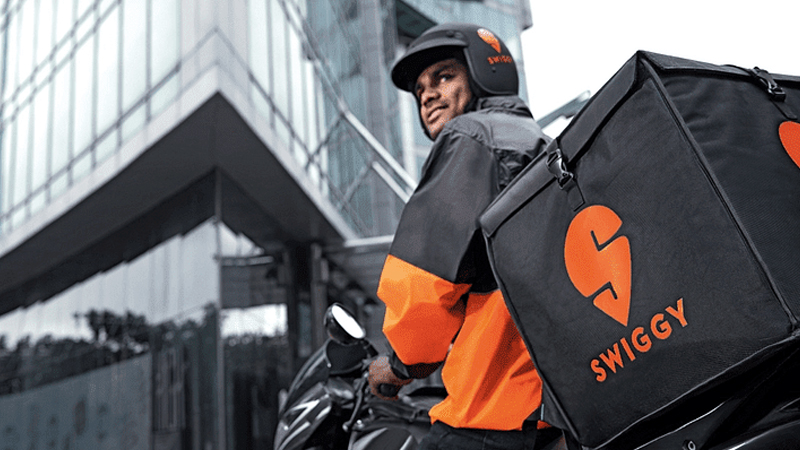
    MUMBAI: Swiggy may be whipping up record revenues, but it’s still nursing a sizeable financial hangover. The food delivery giant reported a consolidated net loss of Rs 1,197 crore for the quarter ended 30 June 2025, widening from Rs 611 crore in the same quarter last year even as its operating revenue jumped 54 per cent year-on-year to Rs 4,961 crore.

    This comes just a quarter after its IPO, which fetched fresh proceeds of Rs 4,359 crore. The company, now publicly listed on both NSE and BSE, seems to be in no mood to tighten the purse strings yet.

    Swiggy’s quick commerce and supply chain businesses were the biggest revenue drivers this quarter, clocking Rs 806 crore and Rs 2,259 crore respectively. Its core food delivery vertical followed at Rs 1,799 crore. However, not all lines were profitable in fact, far from it. Quick commerce alone posted a loss of Rs 797 crore, and the supply chain and distribution business added another Rs 47 crore to the red. Platform Innovations, including experiments like Swiggy Sports, Genie and Minis, lost Rs 52 crore.

    Even the bright spot food delivery wasn’t enough to offset expenses across the board. Swiggy spent Rs 1,036 crore on advertising and promotions, Rs 1,313 crore on delivery and related charges, and Rs 816 crore on other operating costs. Employee expenses stood at Rs 686 crore, while depreciation and amortisation costs rose to Rs 288 crore.

    Total expenses for the quarter reached Rs 6,244 crore more than Rs 1,280 crore higher than total income, which came in at Rs 5,048 crore (including Rs 87 crore in other income). No tax was recorded for the quarter.

    Swiggy also booked an additional Rs 1 crore loss from its associate company and reported Rs 2 crore in other comprehensive loss, resulting in a total comprehensive loss of Rs 1,199 crore for the quarter.

    The company’s paid-up share capital stood at Rs 230 crore. Earnings per share for the quarter came in at a negative Rs 5.04.

    Swiggy’s consolidated results include wholly owned subsidiaries like Scootsy Logistics, Supr Infotech, Lynks Logistics, and Swiggy Sports, along with the Swiggy Employee Stock Option Trust and associate Loyal Hospitality.

    While the company continues to spend big across verticals, investors and analysts will be watching closely to see if Swiggy’s scale can eventually serve up a path to profitability or if it’s still biting off more than it can chew.