Category: Marketing

  • Zodiac Clothing posts Rs 862.8 crore loss in June quarter

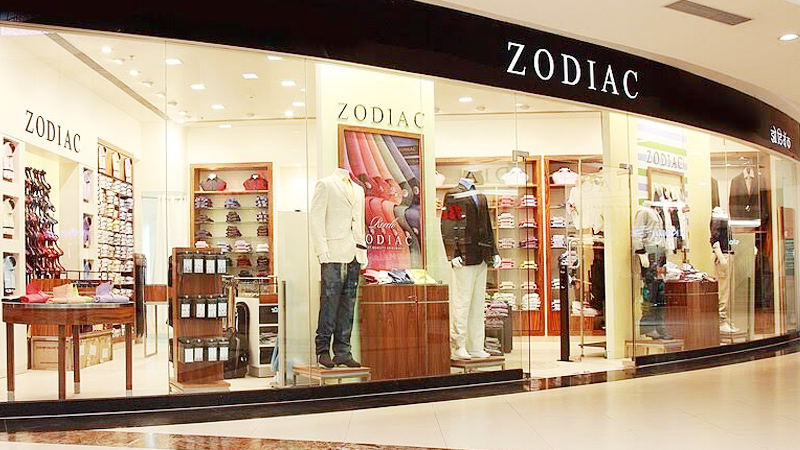
    Zodiac Clothing posts Rs 862.8 crore loss in June quarter

    MUMBAI: Zodiac’s stars aren’t exactly aligned this season. Zodiac Clothing Company Limited stitched up higher revenues in Q1 FY26 but couldn’t keep the red off its books, posting a consolidated net loss of Rs 862.77 crore for the quarter ended 30 June 2025. That’s deeper than the Rs 764.20 crore loss in the March quarter, though slightly better than the Rs 942.34 crore loss a year earlier.

    Revenue from operations edged up to Rs 3,902.78 crore from Rs 3,769.68 crore in Q1 FY25, boosted by steady sales momentum. Other income, however, more than halved year-on-year to Rs 224.75 crore from Rs 598.27 crore. Total income came in at Rs 4,127.53 crore, down from Rs 4,367.95 crore last year.

    Expenses remained the fashion faux pas surging to Rs 4,971.89 crore. Raw material costs alone stood at Rs 1,408.38 crore, with employee benefits at Rs 1,170.24 crore, depreciation at Rs 534.91 crore, and finance costs climbing to Rs 237.89 crore. Other expenses, including marketing and overheads, were a hefty Rs 1,633.45 crore.

    Margins told their own style story. Inventory changes shaved off Rs 61.57 crore from costs this quarter compared to a Rs 368.02 crore inventory drawdown last year. Still, the operating runway was too tight to avoid losses.

    The company’s tax expense swung to Rs 18.41 crore from a credit of Rs 30.79 crore in March, leaving a bottom line firmly in negative territory. Basic and diluted earnings per share came in at a loss of Rs 3.32, against a Rs 3.63 loss per share last year.

    On the balance sheet, equity capital held steady at Rs 2,599.37 crore, with other equity at Rs 15,366.02 crore. Comprehensive losses for the quarter stood at Rs 947.87 crore, factoring in an Rs 85.10 crore hit from other comprehensive income items, including swings in investment valuations and currency movements.

    For now, Zodiac may have pulled in sales, but with costs outpacing the catwalk, the label’s financials are still very much in last season’s colours.

  • Fashion house in the red as ABFRL posts Rs 233.7 crore quarterly loss

    Fashion house in the red as ABFRL posts Rs 233.7 crore quarterly loss

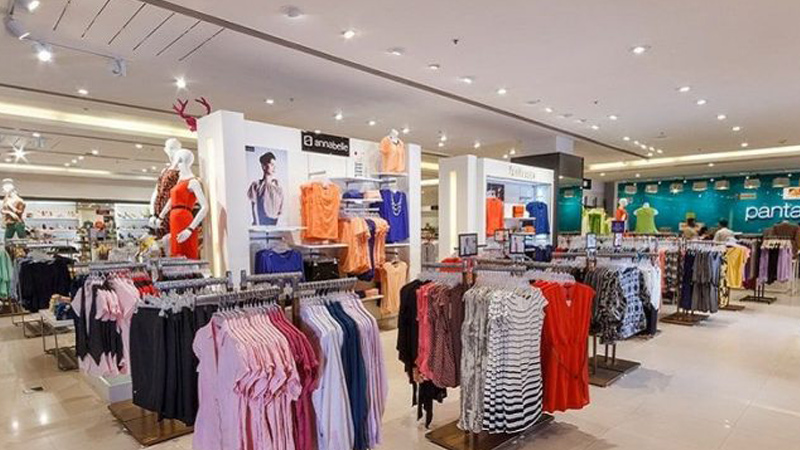
    MUMBAI: Loss is the new black and ABFRL is wearing it this quarter. Aditya Birla Fashion & Retail Ltd (ABFRL) has stitched together a tough start to FY26, posting a consolidated net loss of Rs 233.73 crore for the quarter ended 30 June 2025 deeper than the Rs 144.18 crore loss in the March quarter and the Rs 237.86 crore red ink from the same period last year.

    Revenue from continuing operations inched up 9.4 per cent year-on-year to Rs 1,831.46 crore, with the Pantaloons arm contributing Rs 1,094.13 crore and the Ethnic & Others segment adding Rs 754.57 crore. But rising costs from Rs 742.49 crore worth of stock-in-trade purchases last quarter to Rs 449.90 crore this time and finance charges of Rs 113.36 crore kept the bottom line under pressure.

    The quarter also included discontinued operations from the recently demerged Madura Fashion & Lifestyle unit, which brought in Rs 1,877.50 crore in revenue and Rs 140.61 crore profit after tax. Even with this boost, the overall loss for continuing and discontinued operations stood at Rs 212.81 crore.

    Operating margins from continuing business slipped into the negative at -0.26 per cent compared to 2.84 per cent in Q1 FY25, while net profit margin was -4.30 per cent. Total expenses surged to Rs 2,148.75 crore, with depreciation and amortisation costs rising to Rs 303.14 crore and rent expense hitting Rs 55.74 crore.

    On the balance sheet, ABFRL’s total assets stood at Rs 16,696.52 crore, with segment liabilities at Rs 9,628.52 crore. Net worth came in at Rs 8,239.51 crore. The company’s debt service coverage ratio remained negative at -3.52 times, signalling ongoing financial strain.

    Earnings per share from continuing operations came in at a loss of Rs 1.74, versus a Rs 0.49 loss a year ago. The Ethnic & Others segment, despite revenue growth, recorded a Rs 178.82 crore loss for the quarter, while Pantaloons barely broke even with Rs 3.67 crore in profit.

    While ABFRL continues to face cost headwinds and margin pressure, it is banking on its mass-market and ethnic portfolios to ride out the turbulence. For now, though, this quarter’s fashion statement is all about survival chic.
     

  • Hindi cinema royalty’s and fintech mogul’s bid to shake up India’s spirits trade

    Hindi cinema royalty’s and fintech mogul’s bid to shake up India’s spirits trade

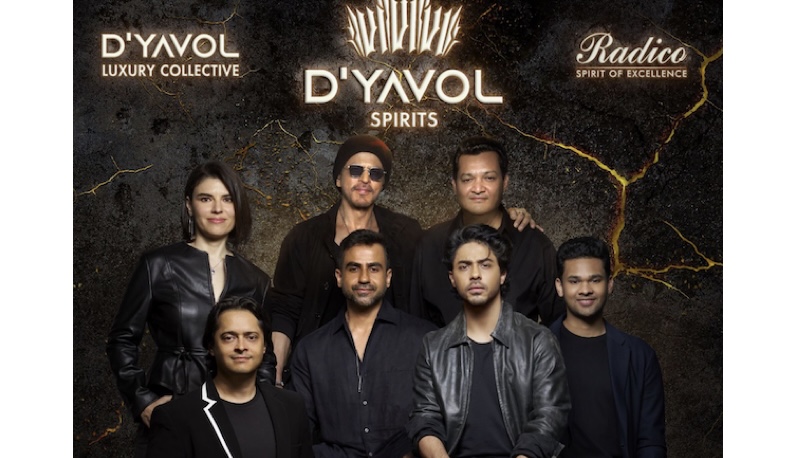
    MUMBAI: India’s premium spirits market has attracted an unlikely trio: Hindi cinema superstar Shah Rukh Khan, Zerodha co-founder Nikhil Kamath, and established liquor manufacturer Radico Khaitan. Their joint venture, D’yavol Spirits, promises to blur the lines between celebrity endorsement and serious entrepreneurship in India’s rapidly premiumising alcohol sector.

    The partnership announced on  12 August brings together  SRK’s  global star power,  Kamath’s disruptive business instincts, and Radico Khaitan’s manufacturing prowess. The venture will launch with a luxury tequila, targeting both domestic consumers and international markets with what the partners describe as “bottled-in-origin” products carrying “rich regional provenance.”

    The collaboration reflects India’s evolving relationship with premium alcohol. Domestic consumption has shifted dramatically upmarket as disposable incomes rise and social attitudes liberalise. Premium spirits now command growing shelf space in urban markets, whilst younger consumers increasingly view expensive liquor as lifestyle statements rather than mere intoxicants.

    For Radico Khaitan, the partnership represents a calculated bet on celebrity-backed brands. The Uttar Pradesh-based company has built a portfolio around traditional Indian spirits like whisky and rum, but faces intensifying competition from international brands and craft distilleries. Abhishek Khaitan, the company’s managing director, frames the venture as combining “proven expertise in blending, marketing and distribution” with celebrity charisma.

    SRK’s involvement extends beyond typical endorsement deals. His son Aryan Khan co-founded D’yavol  Luxury Collective, which already produces award-winning spirits in smaller quantities. The family’s deeper engagement suggests genuine entrepreneurial ambition rather than mere brand licensing.

    More intriguing is Kamath’s participation. The Zerodha co-founder has emerged as one of India’s most prominent fintech entrepreneurs, building a discount brokerage that democratised stock trading for millions of Indians. His pivot into premium alcohol signals confidence in India’s luxury consumption trends.

    “Tomorrow’s best brands will be built on history, culture, and craftsmanship,”  Kamath said, positioning D’yavol as an “Indian brand with the intent and ability to compete anywhere in the world.”

    Such ambitions face considerable hurdles. India’s alcohol market remains heavily regulated, with individual states controlling distribution and taxation. Export opportunities exist but require navigating complex international regulations and established brand loyalties.

    Moreover, celebrity-backed spirit brands have mixed track records globally. Whilst some achieve genuine commercial success, others struggle once initial publicity fades. The key lies in building authentic brand narratives beyond celebrity association.

    D’yavol’s emphasis on “cultural resonance” and “globally-sourced bottled-in-origin products” suggests awareness of these challenges. The brand promises to combine international production standards with Indian creative vision, potentially appealing to both domestic premium consumers and diaspora markets.

    The timing appears favourable. India’s premium spirits segment is growing rapidly, driven by urbanisation and generational change. Meanwhile, Indian brands are gaining international recognition across categories from fashion to technology.

    Whether D’yavol can translate celebrity star power and entrepreneurial expertise into sustained commercial success remains uncertain. The spirits industry demands patience, consistency, and deep market understanding—qualities that don’t always align with celebrity timelines or disruptive business models.

    For now, the partnership represents another data point in India’s premiumisation story. As domestic consumers develop more sophisticated tastes and global ambitions, expect more unlikely collaborations between entertainment, technology, and traditional industries.

    The proof, as always in the spirits trade, will be in the drinking.
  • Sabyasachi clicks with Tata CLiQ Luxury for first digital jewellery boutique

    Sabyasachi clicks with Tata CLiQ Luxury for first digital jewellery boutique

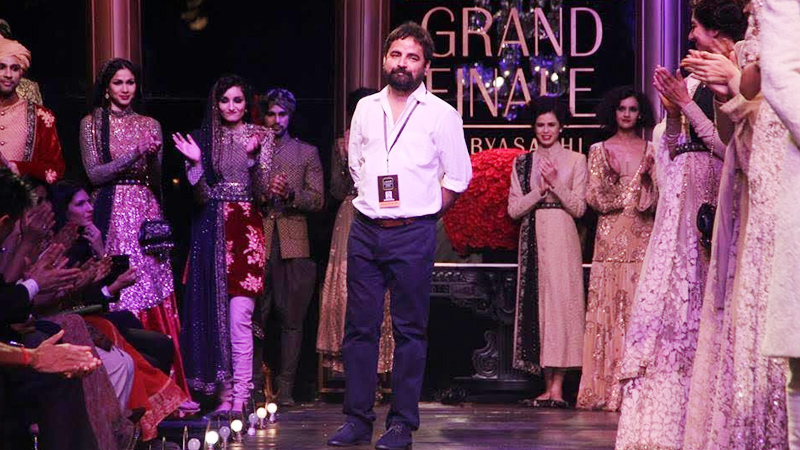
    MUMBAI: When couture royalty meets digital luxury, the sparkle goes online. In a move that marries Calcutta craftsmanship with cutting-edge e-commerce, Sabyasachi Calcutta has teamed up with Tata CLiq Luxury to launch its first-ever digital jewellery boutique in India, going live on 21 August 2025.

    The online store will showcase the largest selection of Sabyasachi Fine Jewellery ever available on a digital platform all crafted in 18 carat gold and brimming with the house’s hallmark blend of heritage and modernity. From the regal Royal Bengal Heritage Gold Collection, flaunting the Bengal Tiger insignia and the signature mangalsutra, to the VVS-VS EF diamond-studded Royal Bengal Diamond Collection, each piece wears its opulence lightly.

    Pearl lovers can swoon over the Royal Bengal Pearl Series featuring natural, cultured, and South Sea pearls, while nature takes centre stage in the Sunderbans Collection, inspired by flora and fauna. Contemporary icons include the lacquer-accented Tiger Stripe and Shalimar collections, alongside the dazzling Tiger Eye group. The line-up spans earrings, pendants, bracelets, and rings everyday elegance with a luxury twist.

    The partnership promises a personalised shopping experience, with trained experts guiding buyers through their perfect pick whether it’s a wedding heirloom, a statement gift, or a piece of self-indulgence.

    For Tata CLiq Luxury, it’s a strategic gem. “We’re bringing one of India’s most iconic brands to discerning consumers nationwide, including Tier 2 and Tier 3 cities,” said Tata CLiq CEO Gopal Asthana. “It’s about redefining fine jewellery for the digital era.”

    Sabyasachi Mukherjee himself calls the collection “refined, rooted, timeless” and grounded in value, not just aspiration. Sabyasachi CEO Manish Chopra adds that the online launch bridges the gap between atelier and living room, letting a new generation experience the brand’s integrity and craftsmanship firsthand.

    With this debut, luxury is no longer just on the high street, it’s in your browser, ready to be delivered with all the sparkle, soul, and story Sabyasachi is known for.

  • Godrej Industries Q1 profit rises to Rs 725 cr on strong consolidated gains

    Godrej Industries Q1 profit rises to Rs 725 cr on strong consolidated gains

    MUMBAI: Godrej Industries’ June quarter numbers read like a mixed-genre script, a drama of losses on the standalone front, but a blockbuster on the consolidated stage. For Q1 FY26, the conglomerate clocked a consolidated net profit of Rs 725.35 crore, up from Rs 640.86 crore in the year-ago quarter and a sharp leap from Rs 416.13 crore in Q4 FY25. The earnings ride was powered by total income of Rs 5,718.97 crore, a 9 per cent rise year-on-year, buoyed by its FMCG, agri-business, chemicals, and real estate subsidiaries.

    Segmental muscle showed in the expense sheet too cost of materials consumed stood at Rs 2,420.69 crore, while purchases of stock-in-trade rose to Rs 143.79 crore. Inventory changes delivered a significant positive swing at Rs 3,349.68 crore (credit), compared with Rs 2,011.01 crore last year, cushioning the operating line.

    Finance costs came in at Rs 113.53 crore, with depreciation at Rs 576.29 crore. Profit before tax surged to Rs 1,058.56 crore from Rs 872.61 crore in Q1 FY25.

    However, on a standalone basis, it was a different story,  the company posted a net loss of Rs 29.98 crore, reversing from a Rs 105.26 crore profit a year earlier, hurt by higher input costs and flat revenue growth (Rs 1,018.29 crore versus Rs 986.45 crore in Q1 FY25).

    Margins on the consolidated level held strong, with operating margin at 8.90 per cent and net profit margin at 16.26 per cent, an improvement from last year’s 15.09 per cent. Earnings per share stood at Rs 10.37, more than double the Rs 5.44 posted in the March quarter.

    With a net worth of Rs 10,137.54 crore and debt-equity ratios steady (gross at 6.42), Godrej Industries appears well positioned for its next growth leg, even if the standalone arm needs a few scenes rewritten.

  • R K Swamy’s ad spend pays off with Q1 profit leap to Rs 287 lakh

    R K Swamy’s ad spend pays off with Q1 profit leap to Rs 287 lakh

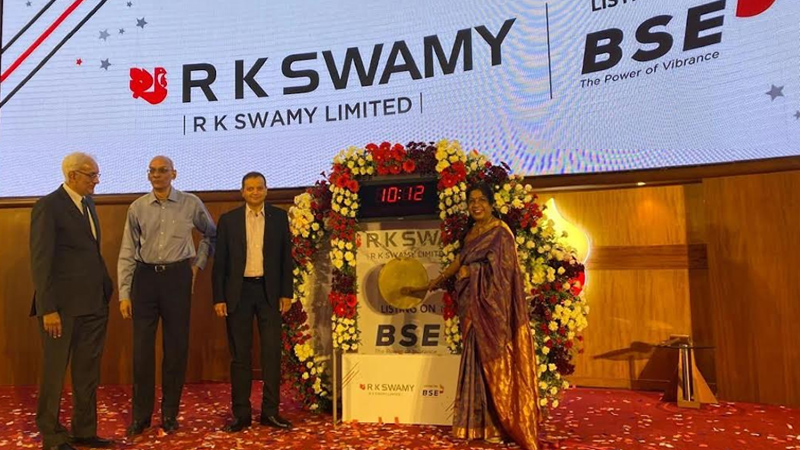
    MUMBAI: R K Swamy seems to have found the right script for Q1, a plot with steady revenues, tighter expenses, and a profit scene worth watching. The integrated marketing services player posted a consolidated net profit of Rs 287.46 lakh for the quarter ended 30 June 2025, up from Rs 217.93 lakh in the year-ago period. Revenue from operations stood at Rs 7,756.79 lakh, with total income touching Rs 8,024.81 lakh, powered by Rs 268.02 lakh in other income.

    Operational expenses rose to Rs 2,494.25 lakh from Rs 2,173.20 lakh, while employee costs were slightly higher at Rs 3,182.71 lakh. Other expenses climbed to Rs 1,468.53 lakh. EBITDA came in at Rs 879.32 lakh, well ahead of the Rs 703.22 lakh posted last year, though below the March quarter’s Rs 1,972.21 lakh.

    Finance costs and depreciation stood at Rs 85.45 lakh and Rs 433.52 lakh respectively, leading to a profit before tax of Rs 360.35 lakh. Total tax expenses were Rs 72.89 lakh.

    The quarter also saw Rs 5,400 lakh of IPO proceeds fully deployed for working capital, while Rs 3,626.22 lakh earmarked for general corporate purposes has also been utilised. However, Rs 5,458.43 lakh remains unutilised including Rs 1,098.50 lakh for a planned DVCP Studio, Rs 2,838.20 lakh for IT infrastructure across R K Swamy and its subsidiaries Hansa Research and Hansa Customer Equity, and Rs 1,521.73 lakh for new CEC and CATI facilities.

    On a standalone basis, profit for the quarter was Rs 134.16 lakh versus Rs 35.18 lakh last year, with revenue from operations at Rs 3,283.06 lakh.

    While adland has seen its fair share of headwinds, R K Swamy’s Q1 suggests the company is positioning itself for a year of expansion with big-ticket infrastructure investments waiting in the wings to take centre stage.
     

  • Google’s quick move to boost brand sales with Commerce Media Suite

    Google’s quick move to boost brand sales with Commerce Media Suite

    MUMBAI: When it comes to India’s shopping habits, “add to cart” is now often followed by “arrives in 10 minutes” and Google is making sure brands don’t miss the ride. The tech giant has launched its Commerce Media Suite, an AI-powered solution designed to help brands and merchants tap into the surging quick commerce and e-commerce markets. The suite works through Google Ads, letting advertisers reach high-intent shoppers across Search, Shopping, Youtube, Display, Discover, and Gmail, directing them straight to product listings on marketplaces like Blinkit, Swiggy, Zepto, and Myntra.

    The timing is no accident with the festive season around the corner, competition for eyeballs (and wallets) is fierce. “Today, consumers demand immediacy and convenience, clearly demonstrated by the rise of quick commerce,” said Google India director for omni-channel businesses Bhaskar Ramesh. “Commerce Media Suite opens fresh pathways for discovery across Google and Youtube, driving stronger results for brands during peak demand seasons.”

    Early adopters are already seeing gains worth bragging about. ITC Aashirvaad Select clocked a 4x return on ad spend on Blinkit, while Renee Cosmetics reported an 11.5 per cent bump in sales and a 48 per cent drop in cost per order.

    For Blinkit, the solution is a match made in delivery heaven. “Google’s Commerce Media Suite offers brands a significant opportunity to cut through the noise and connect with the modern consumer,” said Blinkit director of ad monetisation and pricing Anish Acharya calling it a “game-changer” ahead of the festive rush.

    Beyond just reach, brands get Google AI-driven performance, first-party marketplace data, product-level measurement, and self-service transparency effectively marrying campaign spend to actual sales impact.

    Or as Renee Cosmetics head of eCommerce Jitendra Rawal put it: “It’s allowed us to efficiently connect with customers looking for our products and significantly drive incremental sales.”

    With India’s quick commerce sector in overdrive, Google’s latest play might just help brands click with customers in more ways than one.


  • Libas set to launch 11 news stores on one single day this Independence Day

    Libas set to launch 11 news stores on one single day this Independence Day

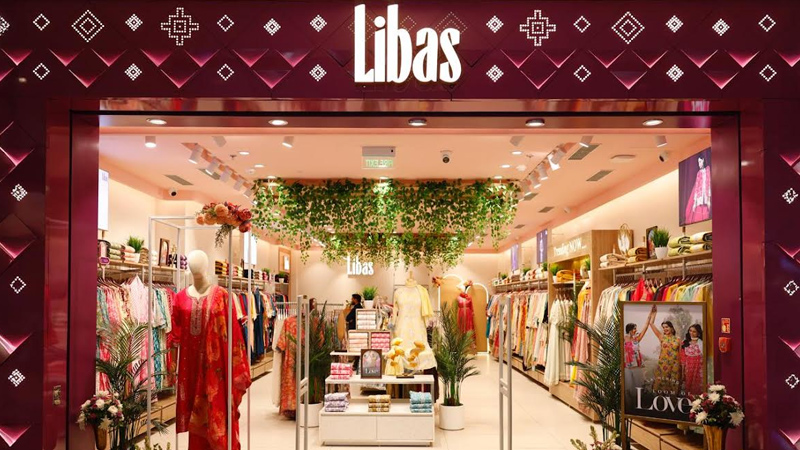
    MUMBAI: Libas is set to make retail history by launching 11 new stores in a single day across India on August 15. The expansion reflects the brand’s deeper push into India’s dynamic offline market and marks a significant step towards its goal of opening 100+ stores by the end of 2025.

    From design to sourcing to customer experience, Libas has always stayed true to its core philosophy – “Made in India. Made for India.” The upcoming store launches are an extension of this belief, celebrating the diversity, individuality, and aspirations of modern Indian women across geographies.

    Each store location has been selected with strategic intent, from the bustling neighbourhoods of Jasola and Rohini in Delhi-NCR to the high-footfall zones of Phoenix Palassio in Lucknow and MG Road in Kochi. These markets represent strong consumer demand and digital engagement for the brand.

    The 11 new store locations include Jasola, Rohini, and Gaur City in Delhi-NCR; Lucknow; Indore; Kochi; Amritsar; Udaipur; Bel Road and Sarjapur in Bengaluru; and Mumbai.

    Libas founder & CEO Sidhant Keshwani said, “This expansion marks a decisive step in our growth trajectory as we strengthen our presence across the country. By foraying into these high-impact markets, we are strategically taking Libas closer to the modern Indian women who have shaped and inspired us. The 11 steps closer campaign is a tribute to India’s fashion-forward women across regions. As we scale across Tier 1 and Tier 2 cities, we’re committed to creating spaces that reflect local aesthetics while delivering a consistent Libas experience. Every store is an opportunity to engage meaningfully, to listen, and to co-create fashion experiences that appeal to our target audience.”

  • Lux posts Rs 23.9 cr Q1 profit as revenue slips to Rs 613.6 cr

    Lux posts Rs 23.9 cr Q1 profit as revenue slips to Rs 613.6 cr

    MUMBAI: Lux Industries may be in the business of keeping India snug, but its June quarter performance proved it can hold its own even when topline shrinks. The Kolkata-headquartered innerwear giant reported a standalone net profit of Rs 3.92 crore for the quarter ended 30 June 2025, down from Rs 48.17 crore in the March quarter but only moderately lower than the Rs 34.56 crore booked a year earlier.

    Revenue from operations stood at Rs 604.49 crore (including Rs 3.34 crore in other operating income), a drop from Rs 819.14 crore in the preceding quarter but up from Rs 535.3 crore in Q1 FY25. Total income came in at Rs 613.55 crore.

    The quarter saw cost of materials consumed jump to Rs 423.09 crore, while subcontracting and jobbing expenses held high at Rs 188.52 crore. A sharp Rs 199.44 crore reduction in inventories helped cushion the impact on margins. Other expenses fell sequentially to Rs 106.28 crore from Rs 139.38 crore, with employee costs at Rs 42.20 crore.

    Finance costs edged up to Rs 6.23 crore, while depreciation stood at Rs 7.09 crore. The company’s total expenses were Rs 582.40 crore, leading to a profit before tax of Rs 31.15 crore.

    Tax outgo for the quarter was Rs 7.23 crore, translating to an earnings per share (EPS) of Rs 7.95 well below March’s Rs 16.02 but reflecting stability given the seasonality in the hosiery and innerwear business.

    With a paid-up equity capital of Rs 6.26 crore and reserves of Rs 1,740.36 crore, Lux remains comfortably capitalised. For the full year ended March 2025, the company had clocked Rs 2,565.69 crore in revenue and Rs 166.09 crore in net profit.

    Lux’s Q1 may not have been a blockbuster, but in an industry often pulled and stretched by raw material prices, seasonality, and consumer sentiment, the numbers suggest a company keeping its fit just right.

  • Philips partners with Snitch to ‘Steam It Up’

    Philips partners with Snitch to ‘Steam It Up’

    MUMBAI: Showcasing an exciting blend of innovation and style, Philips home appliances, from the house of Versuni India has announced a retail partnership with Snitch, a popular men’s fashion brand, and launched “Steam It Up” — an exceptional in-store experience blending modern fashion with smart garment care. The collaboration aims to engage the audience across 12 Snitch stores in Bangalore, Mumbai, Delhi-NCR, Jaipur, and Ahmedabad.

    As the official Garment Care Partner for Snitch, Philips home appliances brings its innovation-led STH5000 Garment Steamer range into the lifestyle space. Known for its vibrant colors, sleek design and travel-friendly body, the garment steamer is designed for today’s fashion-forward generation— aligning perfectly with the high-energy, expressive aesthetics that define Snitch.

    Extending an engaging and value-added customer experience, the activation makes Snitch’s walk-in customers experience Philips’ latest range of handheld garment steamers—a product designed to make daily fashion care easier, quicker, and more effective.

    The campaign kicks off with a pan India activation across Snitch stores, including select in-store setups where customers can design Snitch outfit looks, steam them up with the Philips STH5000 garment steamer, and post their styled photos on social media to participate in an exciting daily contest. Every day, one lucky winner will receive a Philips garment steamer and Snitch’s exclusive fragrance set.

    “We wanted to create an experience that seamlessly weaves garment care into the fashion narrative. The Philips garment steamer is the perfect everyday solution for your garment care needs. This partnership with Snitch is a celebration of individuality, functionality and style—values that deeply resonate with today’s Gen Z audience,” said Versuni India CMO Pooja Baid.

    Philips home appliances and Snitch are working together to create a unified consumer experience – covering everything from high-tempo fashion to effective garment care. This is the beginning of a long-term strategic partnership that will engage a new-age consumer relating to style, utility, and lifestyle. It combines the legacy retail expertise of Philips with the new-age content driven retail expertise that Snitch offers.

    “At Snitch, we’re always looking to create engaging in-store experiences that go beyond shopping. This collaboration with Philips brings together two brands focused on smart, stylish everyday living. It’s our way of adding a little more ease, energy, and excitement to our customers’ fashion journey,” said Snitch founding member and CMO Chetan Siyal.