MUMBAI: Desserts don’t usually make the city stop and stare, but this one jiggles its way into the spotlight. La Chérie, Pune’s cult-favourite cheesecake label, has floated into Mumbai with its now-iconic “Dancing Cloud” Japanese cheesecake, a dessert so airy it’s redefining indulgence.
Unlike the dense, sugar-heavy cheesecakes most Mumbaikars know, La Chérie’s version is souffle-light, made in small daily batches, and entirely preservative-free. The texture is the star delicate, cloud-soft, and melt-in-the-mouth with no gelatin, agar, compound chocolate, or artificial stabilisers sneaking in. A quiet rebellion against hyper-processed sweets, it focuses on freshness, technique, and purity.
The range caters to every mood: a Mini Dancing Cloud at Rs 299, a Chocolate variant at Rs 359 for solo indulgence, or the Big Dancing Cloud Whole Cheesecake at Rs 899 for celebrations. Available via Swiggy and Zomato, the cakes are crafted to be enjoyed warm or chilled, depending on preference.
The timing couldn’t be more perfect. With Japanese flavours gaining ground in Mumbai from matcha menus to omakase dining La Chérie taps straight into the city’s evolving palate. What started as a quiet cult in Pune is now shaping Mumbai’s premium dessert scene, proving that sometimes the lightest creations leave the heaviest mark.
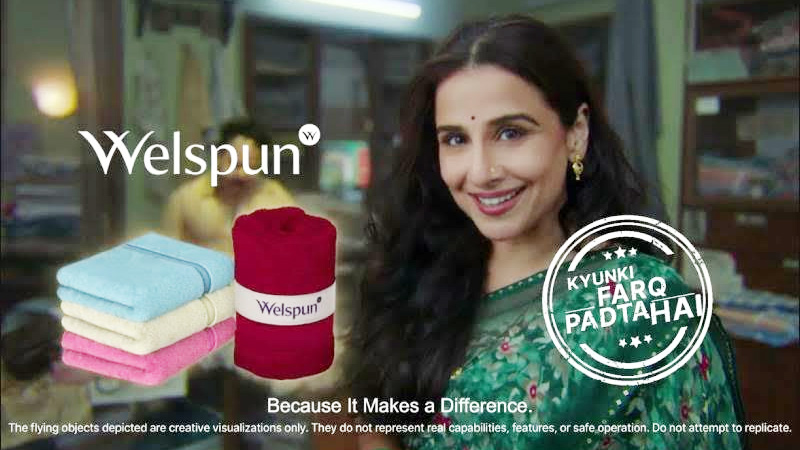
MUMBAI: When towels turn terrifying and bedsheets get a supernatural twist, you know Vidya Balan is up to something spooky but stylish. Welspun Living Limited (WLL), the global home textile giant, has roped in the National Award-winning actor for its new campaign Kyunki Farq Padta Hai, proving that when it comes to linen, quality really can be a matter of life and afterlife.
Conceptualised by Atom network, the campaign rolls out with two witty short films, one showcasing Welspun’s Quikdry Towels, the other its Purekot Bedsheets. Both films play with horror-comedy tropes, where ghostly nudges push clueless characters towards smarter choices. Think jump-scares, but with punchlines, as the campaign flips the familiar “kya farq padta hai” on its head to remind us, yes, it does matter.
Welspun Living MD & CEO Dipali Goenka summed it up: “Every homemaker knows that what we bring into our homes is about trust, care, and durability. Kyunki Farq Padta Hai is our way of showing how small differences in quality can transform everyday life.” Balan, meanwhile, brings her signature blend of gravitas and humour, saying: “There’s a difference between ordinary and better, random and reliable and that’s the story we’re telling with drama, comedy, and truth.”
Rolling out across TV, digital, print, outdoor and social platforms, the campaign is targeting millions of urban and semi-urban households. With cultural quirks, a dash of nostalgia, and Vidya’s star power, Welspun’s latest isn’t just another product push, it’s a playful reminder that in home linen, the right fabric doesn’t just cover you, it comforts you.
MUMBAI: Ease My Trip has announced a sweeping boardroom reshuffle. The online travel agency’s board, meeting on 29 August, cleared the elevation of Nishant Pitti from whole time director to chairman-cum-managing director for a five-year term, subject to shareholder approval. Nishant, who co-founded the company, will now steer the business with expanded authority as it eyes growth in a competitive market.
Alongside, the board appointed Vikas Bansal as whole time director, also for five years, signalling a fresh push to strengthen management bandwidth. Bansal’s induction marks a key addition to the leadership bench as the company looks to broaden its strategic play beyond flight and hotel bookings.
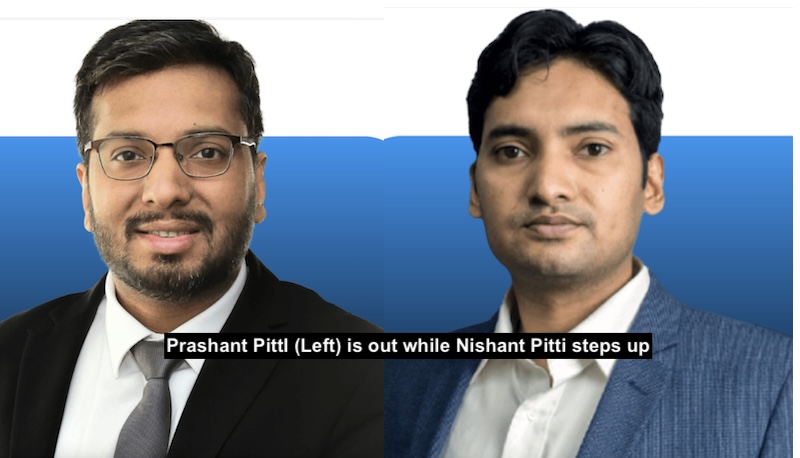
The shuffle also saw a notable exit. Prashant Pitti, another co-founder, resigned as managing director with immediate effect. His departure trims the Pitti family’s active leadership presence, leaving Nishant firmly at the helm.
The moves, cleared under SEBI’s listing norms, underline a generational shift in Ease My Trip’s governance and a sharper delineation of roles at a time when India’s online travel sector is recovering momentum post-pandemic and intensifying its battle for market share.
MUMBAI: Sneakerheads, meet your new style captain Kriti Sanon. Campus Activewear, one of India’s biggest sports and athleisure footwear brands, has signed on the National Award-winning actress as the face of its women’s category, a move that cements the brand’s ambitions to step up its game in the fast-growing segment.
For Campus, women’s sports and athleisure is no sidekick, it’s become one of the biggest growth drivers over the past year, fuelling the brand’s rise in India’s sneaker story. Now, with Kriti Sanon, an engineering graduate turned Bollywood star and entrepreneur fronting the campaign, the brand is tying its laces for the next lap: making sneakers bolder, trend-forward, and uncompromisingly comfortable for women who juggle multiple roles.
Nikhil Aggarwal, CEO and Whole Time Director of Campus Activewear, called the women’s portfolio “one of the most significant growth engines,” noting that Kriti’s ambition and versatility make her the perfect match. Kriti, meanwhile, says she’s drawn to Campus’ belief that style should reflect who you are “designing footwear as versatile as the roles women play.”
With athleisure booming and Campus eyeing bigger strides, Kriti’s arrival signals more than just another celebrity face on a billboard. It’s a sneaker statement: India’s women are not just walking in style, they’re sprinting ahead.
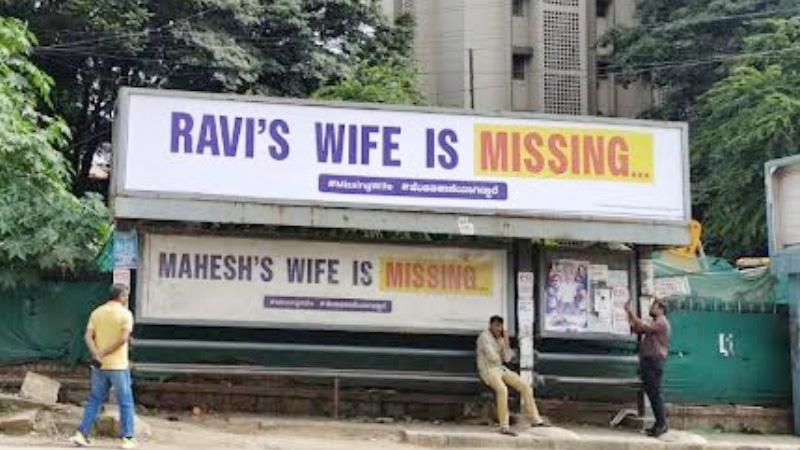
MUMBAI: Bengaluru is having a missing persons crisis on hoardings, not in homes. Over the past few days, the city has been plastered with giant posters screaming, “Atul’s wife is missing”, “Senthil’s wife is missing”, “Ravi’s wife is missing” and the list keeps growing. The stark black-and-white designs, with no logos, hashtags or explanations, have thrown the city into a frenzy. Commuters stuck at signals, social media scrollers, and even seasoned ad-watchers are scratching their heads. What started as a handful of sightings has snowballed into a full-blown urban mystery, with new “missing wives” appearing every passing day.
Famed photographer Atul Kasbekar joined the fun on Instagram, posting the hoarding with a tongue-in-cheek plea for help and a “suitable reward.” Influencers including Eshwar Go, Haripriaa Kulkarni, and Sariflog have also jumped into the conversation, their posts amplifying the intrigue to thousands of followers.
From Koramangala to MG Road, speculation is rife: is this a cheeky ad campaign, a guerrilla social message, or a true-blue whodunnit? While Instagram threads and WhatsApp forwards are brimming with theories, nobody has cracked the code just yet.
For now, Bengaluru’s skyline is dominated by the mysterious “missing wives” and the only thing multiplying faster than the hoardings is the curiosity. One thing’s for sure: until the reveal, the city won’t be missing this story.
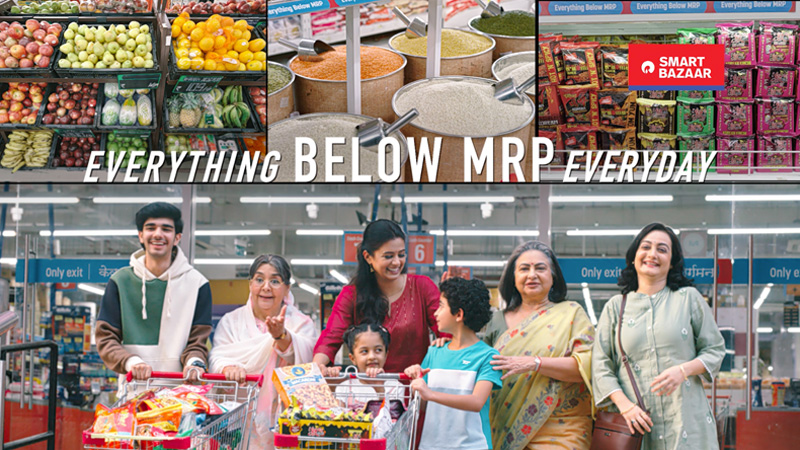
MUMBAI: Smart Bazaar has teamed up with McCann Worldgroup India to roll out a fresh brand campaign that captures a cultural shift sweeping through Indian homes, the move from ‘making do’ to ‘living well’.
The films spotlight how everyday spaces such as kitchens, bathrooms, living rooms, are being reimagined with more intention, reflecting dignity, pride and a desire for quality. At the centre of this change are women, the everyday architects of aspiration, turning homes into reflections of both dreams and needs.
“This is not just about retail, it’s about enabling aspiration,” said Reliance Retail, CMO, Surabhi Sen. “Consumers today want both savings and quality, and Smart Bazaar bridges that gap, turning everyday upgrades into everyday reality.”
McCann Worldgroup’s CEO and CCO Prasoon Joshi added, “India is at a cultural inflection point. Living well is no longer a luxury, it’s dignity and joy. With Smart Bazaar, we tapped into a truth quietly redefining daily life.”
The campaign, featuring films like Masterchef, Twinning, Twins and Shepreneur, positions Smart Bazaar not merely as a store but as a cultural enabler, making quality living accessible to all.
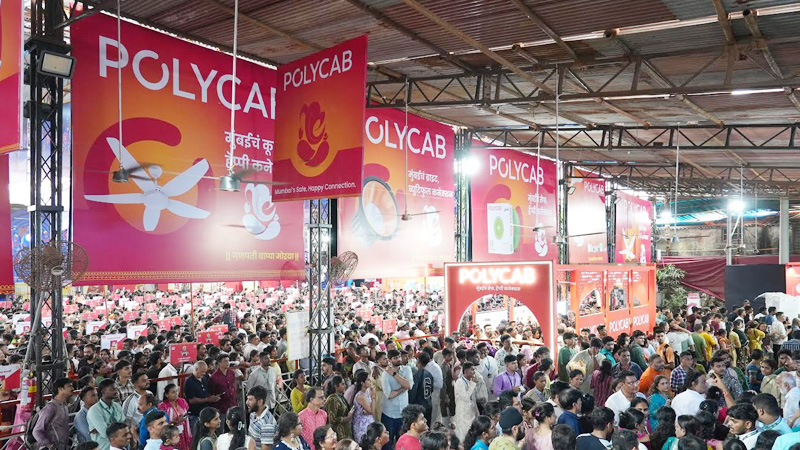
MUMBAI: Powering devotion with a human touch, Polycab is lighting up Mumbai’s ganesh utsav with installations that go well beyond wires and cables.
This year, the brand has shifted gears from product promotions to people-first gestures, creating comfort zones, safety watch towers and breezy walkways at two of the city’s biggest festive hotspots, Lalbaugcha Raja and Juhu Beach.
At Lalbaugcha Raja, where queues stretch for hours, Polycab has turned a regular bus stop into a “comfort zone” with mobile charging points and sheltered spaces offering respite from the city’s muggy weather. Devotees also find an experiential walkway with Polycab fans for a refreshing darshan route, and even a dedicated rest zone for Mumbai police personnel keeping the crowds in order.
Meanwhile at Juhu Beach, a prime immersion site, Polycab’s branded safety watchtowers are helping authorities monitor the massive gatherings, adding an extra layer of security to the celebrations.
“Ganesh Chaturthi is about unity and devotion. With these installations, we want to offer comfort and care to communities, going beyond products to build meaningful connections,” said Polycab India Ltd, senior vice president, brand & marcom, Shwetal Basu.
The initiative doesn’t stop in Mumbai. Pune is set to see branded gates and banners at major pandals, while Hyderabad’s Khairatabad ganesh pandal will feature a Polycab-branded police booth with water and charging facilities, along with a striking LED arch for devotees.
From Puri’s rath yatra to ganesh utsav in Mumbai, Polycab has been steadily building a reputation for festive connections powered by care, not cables.
MUMBAI: JSW MG and Cheil X are back with a laughter-fuelled second phase of their ‘EV sahi hai’ campaign, this time plugging into the star power of Varun Sharma and Pulkit Samrat of Fukrey fame.
Shot against the scenic backdrops of Dehradun and Rishikesh, the new films tackle two of India’s biggest EV myths: the lack of charging stations and dreaded range anxiety, all with the duo’s signature banter and tongue-in-cheek charm.
The first film plays out like a cheeky guessing game about India’s quirky town names, cleverly tying them back to the country’s 29,000 plus charging stations. The message? No matter how offbeat the location, you’re never too far from a plug point.
The second film flips the focus to road trips, with Pulkit confidently cruising in his EV while Varun plays the sceptic, questioning whether it can survive the long haul to Goa. By the end, humour disarms doubt, leaving viewers with one simple conclusion: EV Sahi Hai.
“Humour is at the heart of this phase, because what better way to bust myths than with a laugh?” said JSW MG Motor India, head of marketing, Udit Malhotra adding that celebrity voices would help the campaign reach “people from all walks of life.”
Cheil X, national creative director, Amit Nandwani called it a conscious attempt to move beyond “just presenting facts” and instead “debunk myths in a fun and engaging manner”.
Meanwhile, Cheil X Delhi, vice president and head of operations, Kanika, said the duo’s infectious energy makes them the “perfect pair to keep the message light yet impactful.”
MUMBAI: When Shah Rukh Khan and Jagapathi Babu lock horns, you expect fireworks this time, the spark came from a plate of biryani and a bottle of Thums Up. Thums Up, Coca-cola India’s billion-dollar blockbuster, has dropped its latest campaign, “Biryani Ek Nahi, Do Haath Se Khaate Hai”, directed by Karthik Subbaraj and fronted by Bollywood royalty SRK alongside Telugu powerhouse Jagapathi Babu. The TVC starts with a tense face-off that quickly dissolves into a toofani moment once biryani and the fizzy cola arrive, elevating the meal into a cultural ritual.
Over the last three years, Thums Up has steadily claimed biryani as its gastronomic soulmate turning what was once an instinctive pairing into what the brand calls a “social currency.” From the Toofani Biryani Hunt in 2023 to today’s cinematic campaign, the message has stayed consistent: biryani isn’t meant to be rushed. Keep aside the spoon, silence the phone, and savour every grain with one hand on the biryani and the other wrapped around a chilled Thums Up.
With SRK quipping about the endless Hyderabadi vs Lucknowi vs Kolkata biryani debates (“but what’s undisputed is the way we enjoy it”), and Jagapathi Babu emphasising biryani as a tradition best enjoyed slow, the campaign doubles down on indulgence over interruption. Backed by Coca-cola India’s integrated roll-out across TV, digital, social and on-ground activations, the campaign will also hand fans exclusive biryani vouchers, extending the ritual from screen to plate.
As Coca-Cola category head India and Southwest Asia for sparkling flavours Sumeli Chatterjee puts it, Thums Up isn’t just adding fizz to biryani; it’s turning the meal into a “moment people want to share, repeat and make their own.” And with star power, spice, and a thunderous taste, the toofani pairing looks set to remain India’s most flavourful ritual.
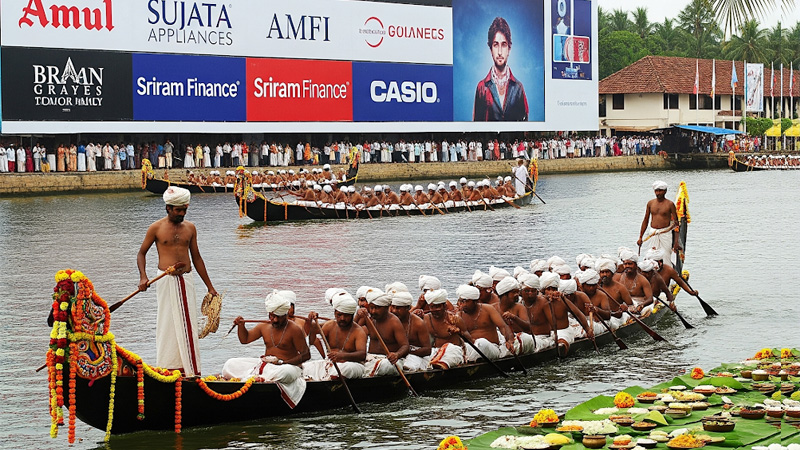
MUMBAI: It’s that time of the year when Kerala’s air carries the aroma of Onam Sandhyas, floors burst into bloom with colourful pookalams, and Punnamada and other famous lakes in Kerala ripple under the oars of Vallam Kali racers as the cheers of the crowd echo across the water. In 2025, brands are lining up to tap into this very sentiment, weaving campaigns that range from heart-tugging reunion tales to playful takes on how the festival is evolving in an age of technological advancement.
Diving headfirst into the festive spirit was Amul, with an ad film featuring the iconic Amul girl in a cream kasavu saree, rocking a pair of sunglasses as she balances on the edge of a long racing boat and performs the viral ‘aura farming’ step to traditional Kerala tunes. Staying true to its knack for seizing every cultural moment that resonates with Indian audiences, the dairy giant recreated the viral boat-dance originally started by 11-year-old Indonesian Internet sensation Rayyan Arkan Dikha.
On a similar vein, Parle-G also released a campaign film zeroing in on what the festival actually means to Malayalam households. The story follows a family returning to Kerala from the US after 16 years. While the daughter is eager to embrace the festivities, the father feels disheartened by how traditions have evolved with time.
For instance, the once-famous Poopara ground, known for its Onam celebrations, has turned into a bus stand; a pookkalam has been replaced by ready-made carpets; and the mango tree which was once used to tie a swing has been cut down because no one has the time to clear away the dry leaves. To him, it is both alarming and disheartening to see the festival lose its soul, with rituals altered in the name of convenience.
In a heartening twist, the daughter recreates his childhood memories by bringing home a Pulikali troupe, tug-of-war games and other vibrant touches of authenticity, reminding him that the essence of Onam lies in togetherness and shared joy. The film closes with the brand’s message: ‘Jo auron ki khushi mein paye apni khushi, Parle-G, G Maane Genius’.
Here’s a look at some of the other campaigns that stood out this Onam:
Association of Mutual Funds in India ( AMFI )
Through its Mutual Funds Sahi Hai campaign, AMFI has rolled out festive-themed billboards, digital displays and social media posts in both English and Malayalam, with taglines like “Staying invested can take you places.”
At Cochin International Airport, Homecoming travellers are greeted by a life-sized 3D boat installation set against an LED backdrop. Passengers can hop aboard, pick a dream destination, from the Eiffel Tower to the Statue of Unity, and capture moments that symbolise how long-term investing can take you places.
But the celebrations don’t stop there. The mutual fund self-regulatory body has also anchored itself at the legendary Nehru Trophy Boat Race in Alappuzha, where over 75 snake boats slice through the waters before nearly a lakh spectators. The message? Just like the rowers’ endurance and rhythm, consistent investing builds momentum towards long-term goals.
Peter England
The apparel brand has launched a new Onam campaign aimed at Kerala’s Gen Z consumers, featuring traditional festive elements fused with the contemporary culture of today’s youth. The brand has roped in homegrown rapper Imbachi to headline the campaign with a specially created anthem.
The track combines the rhythm of Kerala’s ‘chenda melam’ with the beats of hip hop, offering a fresh sound that reflects the cultural roots of Kerala.
The campaign also sets the tone for Peter England’s long-term retail strategy, leveraging pop culture, music and Gen-Z influencers to strengthen engagement with India’s new-age consumers.
Sujata Appliances
Sujata Appliances’ Onam campaign shines a light on an old-age home, conveying that the festival’s spirit extends beyond biological family ties. The film follows an elderly woman abandoned by her own family who, instead of celebrating alone, brings together residents of the home and children from an orphanage. By preparing a traditional sadya and sharing it with them, she transforms what could have been a solitary occasion into one filled with joy and warmth. The campaign delivers a clear message: Onam is not only about kinship by blood, but about spreading love, embracing others, and forging new bonds of togetherness.
South Indian Bank
The bank has unveiled its Onam campaign film, written and produced by Aiswarya Suresh and directed by Brijith BKV of First Picture Show Co. Captured in a PoV format, the story follows a family reunion for Onam, bringing to the fore the campaign’s central theme: the best returns come from investing in relationships.
The film opens with a young Malayali woman returning home after years away, surprising her family just in time for the festival. She quickly becomes the heart of the celebration: from decorating a floral rangoli to dressing in traditional Thalappoli attire and joining the grand Onam feast. Subtly interwoven is the role of South Indian Bank’s mobile app, emphasising the brand’s message that while technology enables convenience, true wealth lies in the bonds that bring people together.
Casio Watches India’s Onam campaign depicts the warmth of new beginnings within families. In the film, a mother-in-law welcomes her daughter-in-law on her first Onam, gifting her a Casio LTP-SN5YSR-5A watch to mark the occasion. What may appear to be a simple gesture carries a deeper meaning, symbolising acceptance into a new family and creating a sense of belonging. In a touching moment, the mother-in-law gently remarks that it is her “daughter’s first Onam,” not her daughter-in-law’s, making her feel truly at home. The campaign also showcases a model designed specifically in India for Indian consumers, underlining Casio’s effort to create products that are culturally relevant to its audience.
Shriram Finance
The brand’s Onam campaign draws on Kerala’s association with gold, not merely as a symbol of wealth, but as a treasure chest of memories, traditions, and aspirations. Built around the thought ‘May your Onam be of Gold’, the film extends the metaphor to our loved ones, portraying them as life’s true riches. Familiar faces from Malayalam cinema and television bring a sense of warmth and relatability, while Vineeth Sreenivasan’s soulful composition lifts the narrative with melody and emotion, wrapping the story in festive spirit.