Category: Marketing

  • Reppro schools the field with NTU India comms mandate

    Reppro schools the field with NTU India comms mandate

    MUMBAI: Talk about a class act Nottingham Trent University (NTU) has picked The Reppro as its communications partner in India, giving the agency a fresh addition to its growing education portfolio. The remit covers Public Relations, Social Media, and Digital Marketing, all aimed at making NTU a go-to choice for Indian students and institutions.

    India has emerged as a hotbed for global universities, with the number of Indian students heading to the UK skyrocketing by nearly 274 per cent since 2019. NTU, one of Britain’s top-ranked institutions, brings plenty to the table: teaching excellence, strong industry links, and an employability-first approach. With students from over 160 countries and ties with 300-plus universities worldwide, it blends academic prestige with real-world career outcomes.

    The Reppro will craft an integrated communications strategy to boost NTU’s visibility in India, highlighting its global reputation and practical support for students from visas and funding to employability guidance. NTU senior regional manager Anna Audhali said: “India continues to be pivotal for Nottingham Trent University’s global outlook. Through this partnership, we hope to share NTU’s values and opportunities more widely, and strengthen connections with Indian students, families, and academic partners.”

    For The Reppro, it’s a chance to put the spotlight on NTU’s strengths. The Reppro founder Amit Gupta noted: “As more Indian students seek world-class education with real-world relevance, our focus is to further raise NTU’s visibility in India and highlight the opportunities it offers.”

    NTU has the credentials to back it up: its research has twice been honoured with the Queen’s Anniversary Prize (2015, 2021), with 83 per cent of its research rated world-leading or internationally excellent in REF 2021. Add to that being crowned ‘University of the Year’ five times in six years, and the message is clear NTU isn’t just teaching, it’s thriving.

  • Deep shades of Glitz as Asian Paints, Deepika reimagine luxe walls

    Deep shades of Glitz as Asian Paints, Deepika reimagine luxe walls

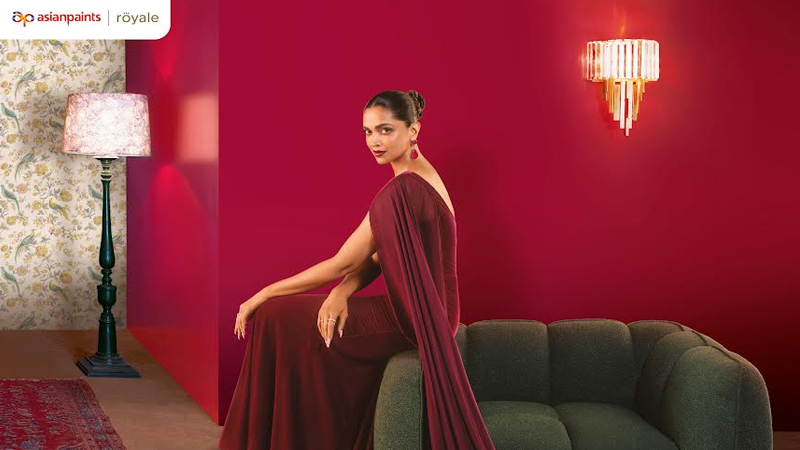
    MUMBAI: Walls are talking and they’re doing it in style. Asian Paints has unveiled a bold new chapter for its luxury brand Royale Glitz, taking it beyond high-end wall finishes to the realm of full-blown décor inspiration. At the centre of this glossy makeover is none other than Deepika Padukone, making her much-awaited return as brand ambassador, lending her effortless grace to a campaign that paints luxury in fresh colours.

    Royale Glitz now positions itself not as the finishing touch but as the starting point of design stories. With curated textures, statement wallpapers, and a “Glitz Up Your Décor” guidebook packed with QR-linked demos, the campaign shows how a single wall can spark the reinvention of entire living spaces. “It’s about creating emotionally charged spaces that reflect who you are,” said Asian Paints MD & CEO Amit Syngle. “A single wall can bring alive the entire space.”

    Padukone embodies this shift, gliding through a home where walls are canvases of memory, mood, and meaning. With a super-smooth Crème Finish, Teflon Surface Protector, and an 8-year warranty, Royale Glitz mixes artistry with performance, offering homeowners both beauty and durability. Mccann Worldgroup India CEO & CCO Prasoon Joshi  described the film as “an artistic journey every frame as elegant and fluid as the product itself.” For Asian Paints, the message is clear: walls are no longer silent backdrops, they’re storytellers of personal expression.

  • Rural India, local disruptors, small packs drive FMCG growth: Worldpanel

    Rural India, local disruptors, small packs drive FMCG growth: Worldpanel

    MUMBAI: Once a luxury, now a lifestyle. Premiumisation in India is no longer the preserve of posh metros and plush wallets, it’s trickling down to rural towns, reshaping FMCG, and even spilling over into housing, cars and gadgets.

    That’s the big takeaway from Worldpanel India’s latest report, which reveals that premium brands now account for 15 per cent of FMCG volumes across everyday categories like detergents, soaps, toothpaste, tea, biscuits and skincare. And while the trend slowed briefly in 2024, the long-term trajectory is clear: India wants more “premium” and it wants it on its own terms.

    Once seen as laggards in this space, rural households are now powering premium growth. Their share of super-premium volumes has jumped from 30 per cent in 2021 to 42 per cent in 2025, and affordable premium products now see over half their demand from villages.

    It isn’t just multinational giants raking it in. Homegrown disruptors like Burhani liquid dishwash in Madhya Pradesh, AVT gold cup tea in Tamil Nadu, and Meera shikakai shampoo in Karnataka and Odisha are winning hearts by marrying premium positioning with natural, health-focused credentials.

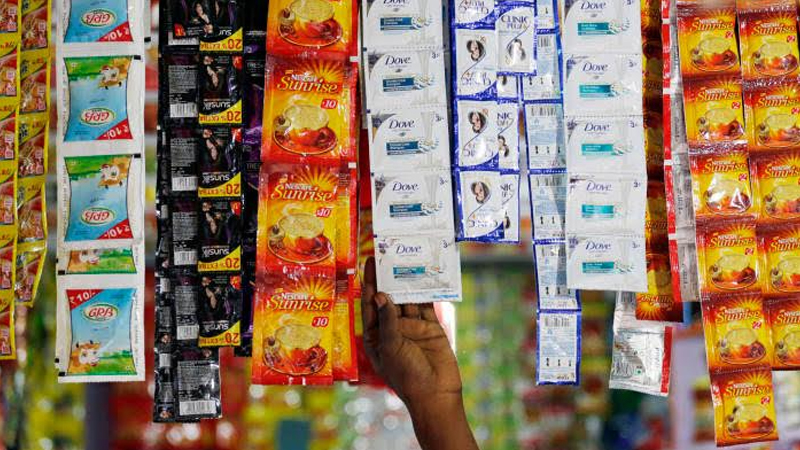
    Bite-sized formats like Sensodyne (75g), Nabati wafers (30g), and Tresemme sachets (6ml) are driving trials without denting the “premium” aura. Even super-premium players like Dove, Malkist and Taj Mahal tea are cashing in with affordable packs.

    It’s not just soaps and snacks. Luxury housing sales (Rs 3 crore plus homes) surged 80 per cent in 2024, premium smartphones grew 8 per cent YoY in Q2 2025, and luxury car sales crossed 50,000 units for the first time. Clearly, India’s “premium” shift is rewriting aspiration itself.

    “Premiumisation in India is no longer restricted to metros or high-income households,” said Worldpanel by Numerator, managing director – South Asia, K. Ramakrishnan. “Rural consumers are becoming aspirational, disruptors are redefining premium, and affluent households are reprioritising spends. For brands, this is both a challenge and a golden opportunity.”

  • Lubrizol names Abhishek Shrivastava as IMEA managing director

    Lubrizol names Abhishek Shrivastava as IMEA managing director

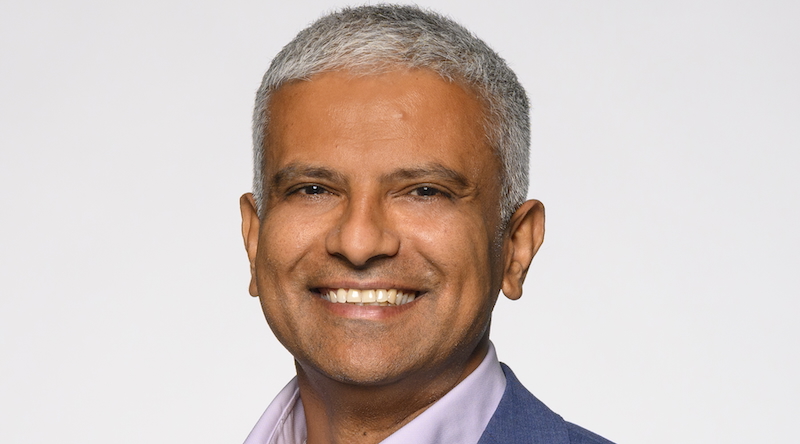
    MUMBAI: Lubrizol has appointed Abhishek Shrivastava as managing director for India, Middle East and Africa (IMEA), underlining the strategic weight of the region in its global growth plans.

    Shrivastava, who has been with the company for nearly two decades, was previously vice-president of innovation and decision science. In that role he drove the development of growth platforms, sustainable product pipelines and digital capabilities. His new remit spans everything from customer engagement to regional manufacturing and supply-chain expansion, with an emphasis on a local-for-local model.

    Lubrizol president and chief executive Rebecca Liebert said Shrivastava’s “blend of industry knowledge, technical depth and ability to match innovation with customer needs” made him the right choice to spearhead the next phase.

    Shrivastava said India, the Middle East and Africa were “dynamic regions full of opportunity and home to exceptional talent”, adding that Lubrizol would double down on localised innovation and partnerships to stay competitive.


  • Delhi’s Loya Qissa welcomes Mexico’s Aruba bar takeover

    Delhi’s Loya Qissa welcomes Mexico’s Aruba bar takeover

    MUMBAI: When Delhi’s iconic Loya says “cheers” it does so with stories. Its much-loved bar takeover series, Qissa, is back. This time shaking things up with a spirited cross-continental collaboration.

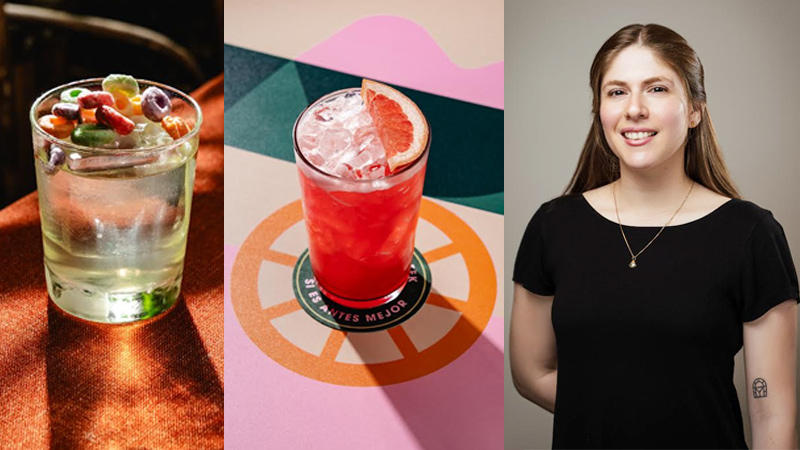
    Flying in from Tijuana, Mexico, the celebrated Aruba day drink bar, ranked No. 22 in North America’s 50 best bars 2025, is stepping behind Loya’s counter. At the helm is Frida González, Aruba’s co-owner and one of the brightest forces in Baja California’s cocktail culture.

    González is known for crafting ingredient-forward drinks that are as vibrant as they are honest, championing a style that feels playful yet deeply rooted in Mexico’s northwest coast. Under her watch, the takeover promises a sun-drenched menu echoing Aruba’s signature ‘daytime conviviality’: fresh, bold, and layered with Baja narratives.

    Think zesty pours brimming with Mexican flavours, inventive techniques, and a dash of storytelling, all served against Loya’s backdrop of north Indian artistry and flavour. 

    After its showcase at Loya, Taj Palace, New Delhi,  this edition of Qissa won’t stop there. The collaboration will pack its shakers and journey to Mumbai’s The Taj Mahal Palace, and Bengaluru’s Taj West End carrying a dialogue of craft and culture across three cities.

  • Perform ace’s Connect X bags exclusive Indian sneaker festival

    Perform ace’s Connect X bags exclusive Indian sneaker festival

    MUMBAI:  Talk about making the right move. Perform ace’s connect X has just bagged the exclusive rights to the Indian sneaker festival (ISF): a coup that cements its place at the heart of India’s booming streetwear and sneaker scene.

    Billed as the country’s biggest celebration of sneakers, music and lifestyle, ISF has already become the holy ground for sneakerheads, collectors, and culture vultures. With connect X stepping in, the festival is gearing up to scale bigger heights, blending ‘phygital’ experiences to make sure India’s street style has a truly global strut.

    So, what makes ISF such a cultural heavyweight? Think more than just shoes. The festival brings together limited-edition drops, exclusive showcases from global and local brands, high-octane music acts, and interactive zones with sneaker-trading pits, graffiti walls, customisation booths, flea markets and more.

    This year, Grammy-winning rapper 21 Savage headlined the event: a watershed moment for India’s music-meets-streetwear scene. Past years have seen homegrown favourites like Seedhe Maut and Wazir tearing up the stage, proving ISF is as much about beats as it is about kicks.

    A spokesperson from Perform ace put it simply, “Sneakers and streetwear aren’t just products, they’re identity, creativity and culture. With ISF under the PerformAce banner, we’re creating a platform that lets India’s youth connect, collaborate and celebrate on a global scale.”


  • RED FM & Bengaluru police helm road safety with Ganesha

    RED FM & Bengaluru police helm road safety with Ganesha

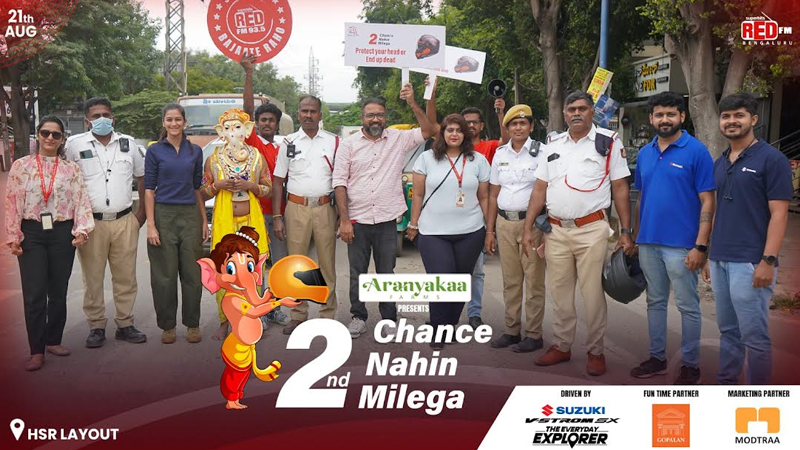
    MUMBAI: Lord Ganesha may have been blessed with a second head, but Bengaluru’s riders won’t be as lucky. That’s the message 93.5 Red FM and the Bengaluru Traffic Police hammered home this Ganesh Chaturthi with their cheeky yet sobering campaign, ‘Second chance nahi milega’.

    Running from 18–29 August, the initiative took a mythological twist on road safety, reminding riders that while Ganesha was revived after his beheading, mortals don’t get divine do-overs. The only shield between life and tragedy? A helmet.

    And Red FM made sure that message wasn’t just lip service. Rjs hit the city’s busiest junctions such as Indiranagar, Silk Board, MG Road, Rajajinagar, Koramangala, and more, alongside the traffic police, stopping bare-headed bikers in their tracks. Instead of just a fine or lecture, riders got a free, ISI-marked helmet and a much-needed reality check.

    The campaign went beyond the roads, too. On-air banter, live bytes, and social media snippets carried commuters’ stories and witty safety reminders to thousands more, weaving road sense into festive celebrations.

    “Through ‘Second Chance Nahi Milega’, we transformed festive celebration into civic action,” said Red FM, general manager – Karnataka, Suresh Ganesan. “By linking mythology with modern road safety, we gave people a reason they could never forget.”

    Bengaluru’s traffic police were just as upbeat. “A helmet is not for the fear of law, it is for your own safety,” stressed joint commissioner of police, traffic, Karthik Reddy. “We are happy Red FM took up this initiative and gave free helmets to riders.”


  • Lauritz Knudsen flips the switch with cricket stars for nonstop India

    Lauritz Knudsen flips the switch with cricket stars for nonstop India

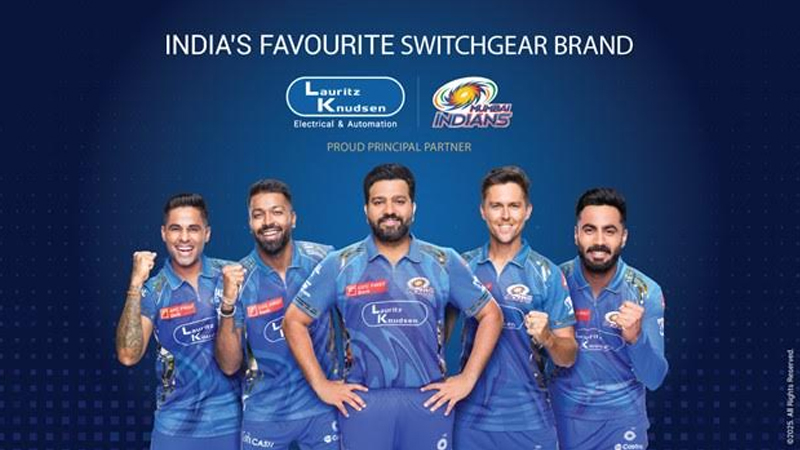
    MUMBAI: When the lights stay on and the game never stops, you know someone’s powering the innings behind the scenes. Lauritz Knudsen Electrical and Automation, a leader in India’s electrical and automation space, has rolled out its latest campaign Powering a Non-Stop India with the star power of Mumbai Indians’ trio, captain Hardik Pandya, Rohit Sharma and Suryakumar Yadav.

    As the Principal Partner of Mumbai Indians, the brand isn’t just about logo placement on jerseys. The campaign spotlights how Lauritz Knudsen keeps India moving from hospitals running 24/7 and factories working round the clock, to homes that never miss a beat. The film runs seamlessly through these everyday scenarios, reflecting the company’s promise of reliability and resilience.

    Backed by creative muscle from Saatchi & Saatchi India, the campaign goes beyond advertising bravado. “Empowering bold and future-ready operations is at the heart of what we do,” said Schneider Electric vice president of marketing for Greater India Rajat Abbi emphasising Lauritz Knudsen’s role in driving a relentless India forward. Saatchi’s Chief Creative Officer Rohit Malkani added, “When you have three cricketing giants and a brand that never stops, the film itself had to move nonstop.”

    With India’s love for cricket as its amplifier and a message rooted in everyday resilience, the campaign blends entertainment with utility. Live across multiple platforms, it plugs Lauritz Knudsen’s story straight into households, reminding viewers that while the stars may play on the field, it’s reliable power that keeps the country’s innings going.

    Would you like me to also suggest a crisper alternate headline option without the cricket pun, in case you want to emphasise the “non-stop India” theme more strongly?

  • Tax Benefits of ULIP Plans vs. Term Life Insurance: 2025 Update

    Tax Benefits of ULIP Plans vs. Term Life Insurance: 2025 Update

    In India, the world of finance is always changing, especially when you look at life insurance and ways to save on taxes. ULIP plans and term life insurance are popular for those wanting to protect their family and get the most out of tax breaks. If you’re planning to in invest in 2025, it’s good to know the tax differences between these options.

    What are ULIP plans

    ULIP stands for Unit Linked Insurance Plan. These plans mix investment and insurance together. A portion of what you pay goes to life insurance, and what’s left is invested in stocks, bonds, or a mix of both. How well those investments do decides how much your ULIP is worth later on. That’s why ULIPs can be a good pick if you want both insurance and a chance to earn some money from the market.

    What is term life insurance

    Term life insurance is a simple kind of insurance. It gives you risk protection for a set time. If you pass away during this time, your beneficiary gets a payment. It doesn’t have any investment or maturity payouts. People like it because it gives you a lot of coverage for a low price.

    Key tax benefits of ULIP plans and term life insurance

    Tax deductions under Section 80C

    Both ULIP plans and term life insurance premiums qualify for deductions under Section 80C of the Income Tax Act, 1961. You can claim a maximum deduction of up to Rs. 1.5 lakh per financial year.

    ULIP plans: Premiums paid for self, spouse, or children are eligible.  
    Term life insurance: Premiums paid for self, spouse, or children also qualify.

    The premium should not exceed 10% of the sum assured, else the deduction will be restricted. This rule is applicable for policies purchased after 1 April 2012.

    Maturity and death benefits under Section 10(10D)

    Section 10(10D) of the Income Tax Act offers exemptions on maturity proceeds for both ULIP plans and term life insurance, under specific conditions.

    For ULIPs: The maturity benefit, including bonus and top-up premiums, is exempt from tax if the premium amount does not exceed 10% of the actual sum assured. For policies issued after 1 February 2021, if the aggregate premium paid in any year for ULIP policies exceeds Rs. 2.5 lakh, the maturity proceeds will be taxable as capital gains.

    For term life insurance: Since these policies do not have any maturity benefit, the provision is relevant for the death benefit, which is always tax-free for the nominee.

    Death benefit exemptions

    In both products, the death benefit paid to the nominee is fully exempt from tax in the hands of the recipient, regardless of the premium amount paid.

    Taxation of surrender value

    ULIPs: If surrendered before completing five years, the surrender value is taxable as per your income tax slab. After five years, surrender value and gains are tax-free unless the annual premium exceeds Rs. 2.5 lakh for policies issued after 1 February 2021.

    Term life insurance: As there is no surrender or maturity value, this aspect is not applicable.

    Recent changes and 2025 updates

    High value ULIPs and taxability

    The Union Budget, 2021 introduced a rule that greatly impacts ULIP plans. If the annual premium paid on ULIP policies issued on or after 1 February 2021 exceeds Rs. 2.5 lakh, the maturity amount will no longer remain entirely tax-free. Gains above this limit are taxed as capital gains under Section 112A, which currently stands at 10% without indexation benefits for amounts over Rs. 1 lakh. In 2025, this rule remains unchanged. It is crucial for high net-worth individuals to evaluate the implications before purchasing multiple ULIP policies to maximise tax-free returns.

    2025 updates for Section 80C

    Section 80C is still the main way to get tax deductions on premiums you pay for ULIP plans and term life insurance. But, the total limit for each person is still Rs. 1.5 lakh. This includes all the investments that qualify, not just insurance premiums. New options like the National Pension System give you extra chances to save on taxes under Section 80CCD(1B).

    Comparing tax benefits of ULIP plans and term life insurance

    ULIP plans and term life insurance both provide tax benefits, but the nature and scope of these benefits vary. While both allow deductions under Section 80C, ULIPs offer additional advantages like tax-free maturity under certain conditions. However, ULIPs also involve complexities such as potential capital gains tax and taxable surrender value if exited early. The table below summarises the key differences:

    Practical examples for Indian policyholders

    Let us consider two investors, Rahul and Priya.

    Rahul buys a term life insurance policy with a sum assured of Rs. 1 crore and pays a premium of Rs. 12,000 per year. He claims this amount under Section 80C, and his nominee will receive a Rs. 1 crore death benefit, completely tax-free under Section 10(10D).

    Priya invests Rs. 2 lakh annually in a ULIP plan. She claims the premium under Section 80C. Upon maturity, since the aggregate annual premium does not exceed Rs. 2.5 lakh, her maturity proceeds will be tax-exempt under Section 10(10D).

    If Priya’s annual premium was Rs. 3 lakh, only the death benefit component would be tax-free. The maturity proceeds would be taxable as capital gains.

    Important considerations for choosing between ULIP plans and term life insurance

    Assess your financial goals

    ULIP plans suit those seeking long-term wealth creation with life cover. The market-linked nature presents both opportunity for growth and exposure to risk. Term life insurance remains best for those wanting to protect their family with a large sum assured and low cost.

    Evaluate premium limits

    To maintain tax exemption on maturity, ULIP investors should restrict annual premiums to Rs. 2.5 lakh across all policies purchased post-February 2021. Term life insurance premiums tend to be much lower for high coverage.

    Investment flexibility

    ULIP plans offer switching benefits between funds, catering to investors with changing risk profiles. This flexibility is not available with term life insurance.

    Conclusion

    For Indian investors in 2025, both ULIP plans and term life insurance are still key parts of a tax-smart financial plan. Term life insurance is simple, cheap, and covers a lot of risk, so it’s great if you just want protection. ULIP plans give you both life cover and a chance to grow your money with the market, plus good tax breaks if you follow the premium rules. Recent tax changes mean it’s really important to pick the right kind of policy and premium amounts.

    If you understand the tax perks, rules around Sections 80C and 10(10D), and how high-value ULIPs are taxed now, you can invest wisely. Always think about what insurance you need and how much you can save on taxes, and make sure your family’s financial safety comes first, not just quick gains. If you’re not sure what works best for you, talk to a financial advisor.  

     

  • Ganesh Chaturthi 2025: Brands pull out all stops for the festive season

    Ganesh Chaturthi 2025: Brands pull out all stops for the festive season

    MUMBAI: Ganesh Chaturthi, the festival that brings Mumbai to a standstill and fills Indian homes with chants, modaks and the heady sound of dhols, has long been more than just a religious celebration. For brands, it is a marketing carnival. The ten-day festival celebrates Lord Ganesha, remover of obstacles and patron of new beginnings. It also signals a consumer mood of optimism and indulgence.

    Companies from FMCG giants to real estate firms time campaigns to coincide with this wave of sentiment. Families repaint homes, stock up on groceries, splurge on new clothes, buy sweets in bulk, and even consider big-ticket purchases such as cars and property. This year, marketers approached the festival with unusual zeal. The result was a crop of campaigns that combined technology, nostalgia and product innovation—some deft, some daring, but all designed to link brands to the emotional core of Ganesh Chaturthi.

    Instamart: Groceries become art
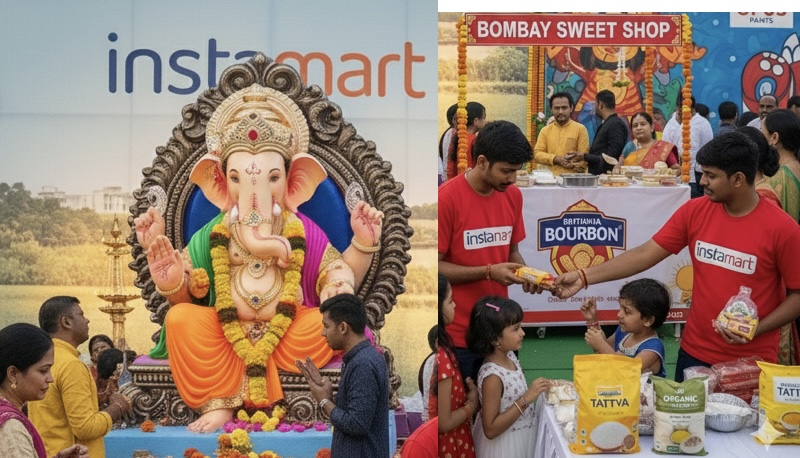
    Quick-commerce platforms usually shout about speed: delivery in ten minutes, essentials at the tap of an app. But Instamart chose subtlety. Teaming up with Arthat Studio, it erected a striking installation in Mumbai’s Inorbit Mall. At first glance it appeared to be nothing more than a chaotic heap of coconuts, diyas, flowers and puja thalis. But scan it through a smartphone, and the pieces aligned into a three-dimensional idol of Ganesha.
    The symbolism was neat. Just as the scattered objects formed a whole only when viewed through the right lens, Instamart promises to assemble the seemingly random pieces of a festive shopping list into one convenient order. Beyond the art, the campaign also functioned as a product catalogue: eco-friendly idols, temple prasad, modaks, decorations, and other essentials featured prominently on the platform. For Instamart, the festival was not only about spectacle but also about asserting itself as the indispensable partner for India’s season of plenty.

    Britannia Bourbon X Bombay Sweet Shop: Tradition with a twist
    If Ganesh Chaturthi has one culinary icon, it is the modak. Sweet shops across Maharashtra line their shelves with hundreds of varieties, from the classic steamed ukadiche modak to innovative chocolate and mango-flavoured versions. Into this crowded space stepped Britannia Bourbon, a mass-market biscuit brand, in collaboration with the boutique Bombay Sweet Shop.
    Their creation—the Bourbon chocolate modak—was a clever cultural remix: a peda made of crushed Bourbon biscuits and choco crème, topped with edible gold leaf. It hit stores and delivery platforms across Mumbai just in time for the festive rush. For Britannia, this was not merely a seasonal gimmick but a signal that even humble biscuits can aspire to festive luxury. For Bombay Sweet Shop, it was another instance of blending old traditions with urban tastebuds. The tie-up underscored a wider marketing trend: heritage foods reinvented for Instagram and the urban millennial palate.

    Organic Tattva: Purity as positioning
    Amidst the sugary excess, one brand chose restraint. Organic Tattva’s campaign was centred on “authenticity”, linking pure, chemical-free food to the sanctity of religious rituals. In a short film featuring Reshma More, a modak specialist, the brand emphasised that offerings made with organic jaggery and flour are more than just healthy—they are spiritually appropriate.
    The move taps into a growing consumer anxiety: are today’s foods safe? By associating itself with puja rituals, Organic Tattva positioned its products as the morally correct choice, not just the nutritious one. In a world of fusion modaks and instant mixes, the brand argued for a return to roots. It was less about modaks themselves than about staking ownership of the values underpinning festivals—purity, health, and continuity of tradition.

    Ganpati babaBirla Opus Paints: The colour of devotion
    For paint companies, the festival season is peak season. Homeowners rushing to refresh walls ahead of Diwali and Ganesh Chaturthi make for a lucrative market. Birla Opus Paints approached the festival with a story rather than a sales pitch. Its digital film showed a boy yearning to bring Ganesha home for the first time. His parents, hesitant because repainting seemed a hassle, eventually relented, understanding that devotion outweighs logistics.
    The metaphor was simple: painting is not just about colour, but about emotional renewal. The act of giving one’s home a fresh coat becomes part of the ritual of inviting joy in. The campaign, closing with the line “Rangon Ko Khushiyan Phailane Do, Duniya Ko Rang Do”, elevated paint from commodity to symbol. By focusing on the child’s perspective, Birla Opus sidestepped the hard sell and instead wrapped its product in emotional resonance.

    Sunny Cooking Oil: A journey home
    Cooking oil is hardly the stuff of cinematic storytelling. Yet Sunny Cooking Oil’s “Letter to Bappa” managed to turn it into one. The film followed a young girl travelling from her city home back to her ancestral village. Along the way she witnessed varied forms of celebration: modest pujas in small homes, elaborate pandals in city streets, and community feasts.
    Her reflections coalesced in a letter to Lord Ganesha, reminding viewers that while rituals differ, the essence—devotion, family, and food—remains constant. Sunny’s long-standing tagline, “Life Aapki, Recipe Aapki”, slotted neatly into this narrative. The implicit message: whether frying festive snacks or preparing a simple family meal, Sunny is a quiet enabler of togetherness. It was an attempt to take an everyday staple and imbue it with festival emotion.

    JSW MG Motor India: Practicality with panache
    In the crowded car market, features such as touchscreen displays, panoramic sunroofs and safety ratings usually dominate. MG Motor took a different tack. Its digital film set in a showroom depicted a family shopping for a car, with a son oddly obsessed with inspecting the boot. Only in the final scene did the reason emerge: he was making sure their new car could carry Lord Ganesha home.
    The reveal was both heartwarming and slyly strategic. For Indian families, festivals are a prime moment to justify big-ticket purchases. By linking boot space—a mundane but practical feature—to a cultural ritual, MG embedded itself into the festive decision-making process. The campaign exemplified how even a rational purchase can be reframed through the lens of emotion.

    Homesfy: A roof for Bappa, a dream fulfilled
    If Ganesh Chaturthi is about beginnings, then few beginnings are as momentous as owning a home. Homesfy, a digital-first real estate brokerage, tapped into this with an ad film tracing a boyhood memory. A group of children marvelled at Ganesha idols in a workshop. One remarked wistfully: “To bring Bappa home, you need a home of your own.” Decades later, the same boy, now a man, finally achieved that dream—with help from his Homesfy advisor.
    The film struck at a deep cultural truth: festivals, especially Ganesh Chaturthi, are intertwined with aspirations of stability and progress. By aligning itself with the emotional climax of home ownership, Homesfy elevated its service from transaction to life milestone.

    The wider lesson
    What unites these disparate campaigns is the way brands sought to move beyond surface-level festivity. Some relied on spectacle and technology (Instamart), others on culinary innovation (Britannia Bourbon), while still others leaned on emotion and memory (Birla Opus, Homesfy). All tried to embed themselves in the rituals, values and aspirations that define Ganesh Chaturthi.
    There is always a risk of over-commercialisation—of sacred traditions reduced to product placements. But when handled deftly, as many of these examples show, brands can do more than sell: they can become part of the collective experience of celebration. In a festival devoted to the remover of obstacles, perhaps it is only fitting that marketers too find creative ways to enter Indian homes, hearts—and shopping baskets.