Category: Marketing

  • Banijay Asia shoots for the stars with Thailand’s first space reality show

    Banijay Asia shoots for the stars with Thailand’s first space reality show

    MUMBAI: Space just got a primetime slot. Banijay Asia, in collaboration with SERA (Space Exploration & Research Agency) and Truevisions Now, has unveiled Race to Space Thailand, a genre-bending reality format that will see one Thai citizen catapulted from dreamer to astronaut.

    Produced by Deepak Dhar’s Creasia Studio, the show marks the first time Thailand will select and send a citizen into orbit. SERA, which partners as the backbone of the mission, will work hand in glove with Creasia to turn this ‘out-of-the-planet’ spectacle into a reality.

    “As an Indian creator, it fills me with pride to see our ideas travelling beyond borders,” said Creasia Studio Banijay Asia Endemol Shine India Founder & Group CEO Deepak Dhar. “Thailand is just the beginning. The format will soon resonate in India as well as across South East Asia.”

    For Banijay Asia, the mission goes far beyond entertainment, it’s a milestone in exporting Indian-born creativity to global frontiers. The series blends science, aspiration, and showbiz, democratising space travel and inviting ordinary citizens, regardless of background, to compete for an extraordinary chance.

    Truevisions Now’s Ongard Prapakamol called it “a gateway to global-scale content and a new frontier for Thailand,” highlighting how, for the first time, everyday Thais will be in contention for a shot at space.

    Banijay Asia & Endemol Shine India Group CDO Mrinalini Jain described it as “a landmark concept that embodies aspiration, innovation, and inclusivity.” SERA co-founder Joshua Skurla added that the project would “inspire an entire nation” while confirming India is next in line for lift-off.

    With Season One ready for launch in Thailand and India’s chapter waiting on the launchpad, Banijay Asia’s Race to Space could well be reality TV’s boldest leap yet proof that the sky is no longer the limit.

  • AI storm brews as Studio Blo films fashion in a whole new dimension

    AI storm brews as Studio Blo films fashion in a whole new dimension

    MUMBAI: When fashion meets philosophy in the middle of a sandstorm, you know something otherworldly is at play. Studio Blo, the next-gen content studio pushing the limits of AI-driven filmmaking, has dropped a 100 per cent AI-generated film for the Almost Gods × Fila collection blurring lines between fantasy, sport, and storytelling.

    The high-concept short, live on Youtube and Instagram, unfolds during a rare celestial event where three cloaked figures summon a sweeping sandstorm. Each figure wears pieces from the new collection, which reimagines Fila’s clay-court tennis heritage through Almost Gods’ brutalist aesthetic, laced with mysticism and elemental power.

    In a striking industry first, real fashion models were digitally cloned, with every garment and accessory rendered entirely in AI, no physical shoot, no stitched seams, just crafted pixels with the gravitas of a full-scale cinematic production. Months of prep went into the project, with seasoned cinematographers, creative directors, and AI artists at the helm.

    Studio Blo co-founder & CEO Dipankar Mukherjee set the record straight: “AI films aren’t quick and cheap. This took months, not minutes, because pedigree demands time, talent, and vision. Almost Gods treated us as true creative partners, and that made all the difference.”

    Studio Blo Co-Founder & CCO Rishabh Suri added: “AI gave us the canvas to make a metaphysical thriller in fashion form. Traditional production would’ve struggled with the sheer scale and spectacle. Here, we created something immersive and emotionally resonant, where philosophy and symbolism flow seamlessly into couture.”

    Studio Blo, staffed by veterans from VFX giants like Dneg and MPC, has already delivered showstoppers for Warner Music, YRF Films, Dentsu, and Nykaa. This film cements its mission: AI is not a shortcut, but a collaborator expanding fashion’s stage into realms once thought impossible.

    With the Almost Gods × Fila collection, sport-luxury isn’t just walking the runway; it’s conjuring storms.

  • The Essential Guide to Third-Party Car Insurance for Vehicle Owners

    The Essential Guide to Third-Party Car Insurance for Vehicle Owners

    Owning a vehicle comes with more than just the freedom to travel at will—it also comes with legal responsibilities. One of the most important is having an active and valid car insurance policy. Among the various options available in India, third-party car insurance remains the most widely mandated and crucial form of cover for vehicle owners. But what makes it so essential, and how does it actually work?

    Understanding Third-Party Car Insurance in India

    Third-party car insurance is a legal necessity under the Motor Vehicles Act of 1988. This policy covers you against any liability that arises due to damage or injury caused to a third person, their vehicle, or property in an accident where you are at fault. Essentially, it ensures that you don’t bear the financial burden for harm caused to others while using your car.

    This type of insurance does not extend coverage to your own car or personal injuries, but rather acts as a safety net for everyone else affected by the incident. It is the most basic and compulsory form of motor insurance you must have to operate your vehicle legally on Indian roads.

    How Does Third-Party Insurance Protect You?

    Imagine being involved in a road mishap where your car damages another vehicle or causes injury to someone. Without the right insurance, you could be liable for paying medical bills, legal costs, or property repair expenses out of your own pocket. This is where third-party insurance steps in, covering all such costs within the limits set by regulatory authorities.

    Not only does this shield you from sudden financial stress, but it also ensures that the affected parties receive the compensation they deserve. By shifting this liability to the insurer, you avoid the emotional and monetary distress that could arise in such unfortunate events.

    Why It’s Mandatory—and Rightly So

    The law mandates at least third-party cover because it supports the wider safety net of road users. Accidents can be unpredictable and sometimes involve people or properties that are completely unrelated to the driver. By enforcing minimum coverage, the government ensures that victims in road incidents receive due compensation without unnecessary disputes or delays.

    From a governance standpoint, this also reduces the burden on public systems, such as hospitals or civil courts, by routing settlements through insurers. It contributes to a more structured and predictable system of accountability.

    What’s Actually Covered in a Third-Party Plan?

    The scope of third-party insurance is straightforward yet effective. It covers:

    ●    Property damage caused to third parties, including vehicles, walls, fences, etc.

    ●    Bodily injury or death of another person caused by your insured car.

    ●    Legal liabilities, including expenses involved in defending you in court if a claim is raised.

    While the sum insured for property damage may have certain limits, coverage for bodily injury or death is typically unlimited as per the law. This ensures victims of serious accidents are adequately compensated.

    Where It Falls Short: Key Exclusions To Know

    Although a third-party plan covers external damages, it excludes coverage for the policyholder’s own vehicle damage or personal medical expenses. So, if your car is badly dented in an accident, you would need to bear those repair costs unless you have a more comprehensive policy.

    It also doesn’t cover incidents where the policyholder was driving under the influence, without a valid license, or using the vehicle for unauthorised purposes like racing or commercial transport if the policy does not include those terms.

    How the Claim Process Works

    Once an accident occurs, the injured third party (or their representative) can file a claim under your insurance policy. The insurer, in turn, will assess the claim, verify documentation, and facilitate the settlement—whether through repair costs, hospital expenses, or legal support. Some insurers may even assist in court proceedings if a lawsuit is filed.

    Insurers like TATA AIG often handle these claims with a dedicated support system that helps you through documentation, estimation, and final settlement. This makes the process relatively smooth and much less stressful than going at it alone.

    Premiums and How They Are Calculated

    In India, premiums for third-party insurance are regulated by the Insurance Regulatory and Development Authority of India (IRDAI). The amount is mainly based on your vehicle’s engine capacity (in cc). A car with a smaller engine pays a lower premium, while a larger engine commands a higher rate. This system ensures fair pricing while keeping the policy affordable for the masses.

    These rates are revised periodically and applied uniformly across all insurers. This means there’s not much room for variation when it comes to premium costs for third-party coverage.

    Why More People Are Buying Third-Party Car Insurance Online

    In the age of digitisation, more and more consumers are turning to digital platforms to handle their car insurance needs. Buying third party car insurance online offers a number of advantages, such as quick policy issuance, ease of comparing multiple options, and convenient claim tracking—all without the need for an agent or paperwork.

    Moreover, most insurers now offer mobile apps or web portals that let you download your policy instantly, raise a claim, or renew your policy with minimal effort. This shift towards online insurance makes it easier to stay compliant with legal requirements while enjoying round-the-clock service.

    When Should You Upgrade From Just Third-Party Coverage?

    While third-party insurance is a legal must-have, it may not be enough if you’re looking for complete financial protection. If your car is new or you frequently drive in high-traffic areas, you might want to consider upgrading to a comprehensive plan. This would not only include third-party liabilities but also offer coverage for damages to your own vehicle due to accidents, theft, or natural disasters.

    Think of it as upgrading your basic safety net to a complete financial shield—one that takes care of both your liabilities and your assets.

    Conclusion

    Third-party car insurance is more than just a box to tick for legal compliance. It’s a fundamental form of protection that ensures your responsibilities as a car owner don’t turn into financial burdens. From compensating accident victims to shielding you against costly legal claims, this policy offers peace of mind every time you hit the road. Whether you’re a new driver or a seasoned commuter, understanding how this insurance works is the first step towards driving smarter and safer. 

     

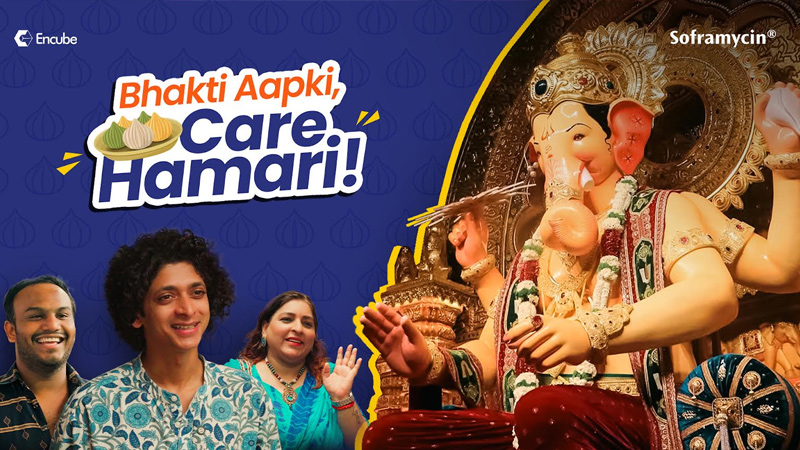
  • Soframycin brings care to Lalbaugcha Raja with ‘Bhakti Aapki Care Hamari’

    Soframycin brings care to Lalbaugcha Raja with ‘Bhakti Aapki Care Hamari’

    MUMBAI: Every year, lakhs of devotees walk barefoot, stand in long queues, and brave crowded lanes for a glimpse of Bappa at Lalbaugcha Raja. In this journey of faith, cuts, blisters, and skin discomforts often become companions.

    Encube Ethicals’ trusted antiseptic brand, Soframycin, brought its purpose-driven campaign Bhakti Aapki Care Hamari to life during Ganesh Chaturthi 2025 at one of India’s most iconic and revered pandals. At a festival where faith draws millions, Soframycin stepped in to ensure that devotion could continue without interruption, by caring for the small injuries and discomforts devotees faced along the way.

    This year’s initiative created a truly integrated experience, from a heartfelt campaign film shot at Lalbaugcha Raja capturing devotees’ journeys, to the on-ground distribution of over 25,000 care samples supported by Look-walker teams and a giant Soframycin inflatable, along with special product gifting for karyakartas and volunteers, and a digital layer of comic-style posts, contests, and vox pops that raised awareness about festive injuries while highlighting Soframycin’s quick healing promise.

    The campaign brought Soframycin’s new message Bhakti Aapki Care Hamari alive at Lalbaug, evolving the brand from a trusted antiseptic to a cultural companion during one of India’s most cherished spiritual gatherings.

    With a 1.9 milion plus digital reach and direct engagement with lakhs of devotees, the initiative amplified Soframycin’s presence while deepening its emotional connect with communities of faith.

    “Ganesh Chaturthi is about devotion, community, and care. With Bhakti Aapki Care Hamari at Lalbaugcha Raja, we extended Soframycin’s promise of protection and healing directly to devotees. Seeing thousands walk barefoot with faith, and being able to provide comfort through our care kits, was truly fulfilling,” said business head – India formulations, Encube Ethicals, business head – India formulations, Dinar Mhatre.

    The campaign was conceptualized and executed by BigTrunk Communications, Soframycin’s digital marketing partner. “This campaign shows how tradition and modern engagement can come together. From on-ground activations to amplification across Instagram, Facebook, and YouTube, we created a holistic experience that celebrated both devotion and care, reaching nearly 2 million people,” said BigTrunk Communications, founder & md, Bharat Subramanian .


  • Akzo Nobel India marks five years of ‘Dulux Assurance’ with witty new campaign

    Akzo Nobel India marks five years of ‘Dulux Assurance’ with witty new campaign

    MUMBAI: Akzo Nobel India, the maker of Dulux paints, is celebrating five years of its ‘Dulux Assurance’ programme with a new campaign that asks a cheeky question: What’s better? The unmatchable quality of Dulux paints or the unbeatable Dulux Assurance warranty.

    Conceptualised by Lowe Lintas and directed by acclaimed filmmaker Prasoon Pandey, the “Lage Shaandaar, Chale Shaandaar” TVC plays out this dilemma in a lighthearted banter between characters, only to conclude that Dulux homeowners get the best of both worlds.

    “For over 70 years in India, Dulux has been synonymous with world-class quality. The assurance programme reflects both our confidence in that quality and the trust consumers place in us,” said Akzo Nobel India Limited, chairman and managing director, Rajiv Rajgopal.

    Adding to this, Akzo Nobel India, executive director, Rohit Totla noted that Dulux Assurance was introduced in 2021 as the industry’s first promise for colour, finish, and coverage, and was later expanded into a comprehensive warranty programme in 2023. “In just five years, Dulux Assurance has infused new confidence and is helping families across India, from Vellikulangara in Kerala to Nalbari in Assam, flourish with the magic of Dulux,” he said.

    The Dulux Assurance journey has grown from its original “A coat of trust in every stroke” positioning to today’s celebratory “Lage shaandaar, chale shaandaar.” Pandey’s direction brings the story to life with trademark humour and visual charm.

    Lowe Lintas, president – creative, Vasudha Misra added, “Some projects drain you, but this one re-energised us. Finding a fresh take on the warranty conversation and bringing it alive with Prasoon’s vision was an inspiring process.”

    The integrated campaign launches with the TVC and will expand across connected TV, social media, digital platforms, and festive activations, reinforcing Dulux’s message of quality, durability, and peace of mind.

  • Sania serves up a bold shot with Boldfit as athlete, investor, and designer

    Sania serves up a bold shot with Boldfit as athlete, investor, and designer

    MUMBAI: When Sania Mirza picks up a racket, history follows. Now, the six-time Grand Slam champion is turning her legendary forehand toward the boardroom, joining Boldfit not just as an athlete, but also as an investor and co-creator of its newest range of tennis rackets and pickleball paddles.

    The Bengaluru-headquartered sports and fitness brand, founded in 2018, has built its name on high-performance apparel, footwear, and equipment. With Sania on board, Boldfit is swinging into racket sports with fresh ambition, aiming to make tennis and pickleball more accessible to India’s 1.4 billion-strong sporting population.

    “Pickleball is exploding across all age groups, while tennis has always been my first love,” Sania said. “Partnering with Boldfit lets me bring my years of experience into designing gear that’s lighter, durable, and truly built for Indian players. My hope is to inspire more people to pick up a racket and fall in love with these sports.”

    Boldfit’s “Boldfit Athlete” roster already boasts names like cricketer KL Rahul, and Sania’s addition signals its intent to become a multi-sport powerhouse. Rahul summed it up: “Her joining Boldfit goes beyond equipment, it’s about inspiring millions to embrace sport as part of life itself.”

    The tie-up also puts pickleball, the world’s fastest-growing sport firmly in Boldfit’s sights. By developing performance-driven paddles alongside Sania, the brand hopes to capitalise on the sport’s surging popularity, supported by new courts and a growing community.

    For Boldfit founder and CEO Pallav Bihani the partnership reflects the company’s broader mission. “Sania isn’t done making history, and we’re thrilled she’s starting this bold chapter with us,” he said. “This is about giving aspiring Indian players access to products designed with the insight of a legend.”

    With tennis, table tennis, pickleball, and cricket already in its portfolio, Boldfit is steadily cementing its reputation as the sporting glue of modern India. And with Sania’s backing, the brand seems set to rally an entire generation toward sport as lifestyle not just pastime.

  • The Sancy cuts a fine figure as Chandan Allen brings label home to India

    The Sancy cuts a fine figure as Chandan Allen brings label home to India

    MUMBAI: Fashion, when stitched with purpose, always fits better. Mumbai-born, California-based designer Chandan Allen has brought her ready-to-wear label The Sancy to India, unveiling a debut collection that reimagines accessible luxury through the lens of craftsmanship and cultural depth.

    Launched as a digital-first brand, The Sancy offers a curated range of tops, tailored bottoms, dresses, and jumpsuits designed for women who crave elegance without excess. Priced between Rs 3,500 and Rs 8,500, the collection positions itself firmly in the premium yet attainable bracket, balancing refinement with responsibility. Each garment is crafted in Allen’s Mumbai atelier using sustainable practices, turning everyday pieces into lasting wardrobe investments.

    Among the early favourites are the Teres Shift Dress, Linearis Shift Lace Dress, Encelia Wrap Skirt, and Carissa Printed Dress. With clean silhouettes, heritage-inspired detailing, and a muted colour palette, the line promises both versatility and timeless appeal.

    Allen’s own journey reads like a global design itinerary. Trained at Central Saint Martins in London, she honed her skills blending Indian handcraft with European precision. Years spent in Cape Town and California sharpened her eye for lifestyle-driven fashion, and in 2009 she set up Chandan Allen Designs Pvt. Ltd. in Mumbai. The Sancy, born out of this trajectory, is her answer to fast fashion’s fleetingness: garments built to last, imbued with artistry and meaning.

    “The Sancy is not just a fashion label, it’s a conversation between heritage and modernity,” Allen says. “My Indian roots anchor me in craft, while my global exposure sharpens the silhouettes. Together, it’s about creating pieces with longevity, not just seasonal appeal.”

    Currently available only through thesancy.com, the label will soon expand offline with a flagship Mumbai store, the first step in a larger retail rollout across India’s metros. The strategy mirrors the evolution of Indian fashion retail itself, where consumers increasingly seek story-driven, conscious luxury.

    With sustainability stitched into its seams and style woven into its fabric, The Sancy’s arrival signals that India’s fashion-forward needn’t choose between meaning and modernity, they can now wear both.

  • Kenstar turns up the heat with smart water heaters built to last longer

    Kenstar turns up the heat with smart water heaters built to last longer

    MUMBAI: Bathing blues just got a hot upgrade. Kenstar, one of India’s most trusted appliance brands, has unveiled its latest portfolio of water heaters under the cheeky campaign “Bath Ban Jaye,” a promise to end the nation’s dreaded “half bath” syndrome.

    The new line-up is designed to tick every modern checklist: smarter heating, energy efficiency, sleek design, and safety at its core. Backed by SwirlHeat Technology, the heaters deliver 20 per cent more hot water output, while high-density PUF Insulation keeps it warm 10 per cent longer, trimming electricity use. Add to that German Blue Sapphire Technology, which extends product life by 40 per cent, and Kenstar’s proposition of “Heats Fast, Makes It Last” feels less like a tagline and more like a guarantee.

    With a wide capacity range from 3 litres to 100 litres, the line includes storage, instant, tankless, gas heaters, and even immersion rods all tested to withstand 8-bar water pressure, suiting India’s growing high-rise lifestyle.

    Kenstar hasn’t skimped on safety either. Its 7-Level Safety Shield combines thermal cut-out protection, an IPX4 splash-proof design, and multi-functional valves, ensuring peace of mind with every shower. Each unit also comes with a 7-year warranty on tanks, adding durability to dependability.

    For those who think style belongs only in the living room, Kenstar’s designs make bathrooms just as chic. The Art Series adds a wooden finish, while the Oris Series comes in Snow White, Golden Yellow, Cocoa Brown, and Ocean Blue, a palette that makes water heating look positively fashionable.

    “Every bath should be complete, not compromised,” said Kenstar CEO Sunil Jain as the brand doubled down on its mission of blending smart, stylish, and sustainable home solutions. With 5-star BEE ratings, Kenstar water heaters are designed to lighten not just bills but also the everyday burden of Indian households.

    From cutting bills to cutting cold showers short, Kenstar’s latest range is turning up the heat on the competition ensuring that when it comes to bathing, India gets the full story, not a half chapter.
     

  • Ajay Devgn splits the difference as Instamart launches India’s quickest sale

    Ajay Devgn splits the difference as Instamart launches India’s quickest sale

    MUMBAI: When Ajay Devgn does the splits, India sits up and shops. Swiggy’s Instamart has kicked off its first-ever Quick India Movement 2025 billed as the nation’s quickest festive mega sale by bringing back the actor’s legendary debut stunt with a cheeky twist.

    Rolling out from 19–28 September 2025 on both the Swiggy and Instamart apps, the sale promises lightning-fast deliveries and discounts of 50 per cent to 90 per cent across electronics, kitchen, dining, beauty, personal care, and toys. It’s not just a shopping spree; it’s a sprint.

    The campaign film, conceptualised by Lowe Lintas, reimagines Devgn’s Phool Aur Kaante split, this time not between motorcycles but everyday essentials like speakers, jugs, ladders, and toys. Backed by the playful refrain “I just splitttt”, Devgn declares, “Jo mujhe chahiye, abhi chahiye.” The tongue-in-cheek homage captures the absurd, meme-worthy energy Instamart wants to bottle this festive season.

    Shoppers can score an extra 10 per cent off with Axis, RBL, HSBC, and IDFC Bank, plus an additional 10 per cent cashback on Swiggy HDFC Bank Credit Cards. Digital wallets are in on the action too Rs 150 cashback via Amazon Pay, Rs 50 off on Simpl, and up to Rs 200 cashback on Mobikwik UPI.

    Ajay Devgn summed up the stunt-with-a-spin: “Instamart has given my Phool Aur Kaante stunt a twist. The Quick India Movement is all about bringing speed and ease to everyone!”

    The sale reflects a broader shift in how India shops. From groceries to gadgets, Instamart has become a festive favourite in Tier II cities and beyond, with demand peaking on occasions like Holi, Father’s Day, Mother’s Day, and Rakhi.

    With movie nostalgia, meme-ready swagger, and heavy-duty deals, Instamart’s Quick India Movement 2025 looks set to prove one thing when India wants it, India wants it now.

  • 84 per cent Indians seek healthier food choices: Pwc report

    84 per cent Indians seek healthier food choices: Pwc report

    MUMBAI: A new Pwc India report reveals that for Indian consumers, it’s no longer just about what’s on the plate, it’s about how it’s made, how safe it is, and how it supports their health goals.

    Released on 11 September, the ‘Voice of the consumer 2025: India perspective’ surveyed over 1,000 Indian consumers and uncovered a clear appetite for healthier, tech-integrated, and eco-friendly food choices.

    Among the standout stats: 84 per cent of respondents said food safety is a top priority; 29 per cent would switch brands for health benefits; 80 per cent now use health apps or wearables to manage wellness; nearly half prefer eco-friendly packaging, while 73 per cent would even pay more to support sustainable farming.

    “Nutrition, affordability and sustainability are shaping today’s food choices,” said Pwc India, partner and leader- retail and consumer sector, Ravi Kapoor.“Consumers are embracing tech-led, personalised wellness, local produce and digital shopping experiences offering huge opportunities for forward-looking brands.”

    The report also highlights a shift towards cost-conscious shopping, with 63 per cent of consumers citing food prices as a key concern. They’re mixing it up buying from supermarkets, local kirana shops, and digital delivery platforms to get the best value.

    Interestingly, tradition still holds its ground: 74 per cent of consumers said their food habits are rooted in cultural heritage, proving that while innovation matters, nostalgia isn’t going anywhere.

    As supply chains tighten and consumer expectations climb, the food industry is feeling the heat but it’s also getting a recipe for reinvention. Clean labelling, tech-savvy wellness solutions, and genuine sustainability practices could be the key ingredients for future growth.