Category: Marketing

  • Legendary Zeenat Aman shines in Tyaani’s latest campaign

    Legendary Zeenat Aman shines in Tyaani’s latest campaign

    MUMBAI: When timeless glamour meets contemporary brilliance, the result is Zeenat Aman for Tyaani. The legendary actor, whose style has inspired generations, headlines Tyaani Jewellery by Karan Johar in the brand’s latest campaign, Forces of Tyaani, celebrating individuality and self-expression as the rarest forms of luxury.

    In striking modern attire, Aman is transformed into a living masterpiece, adorned in Tyaani’s signature uncut diamond jewellery. The campaign positions her as more than a cinematic icon, she is the embodiment of the jewellery’s ethos: bold, luminous, and timeless.

    Forces of Tyaani has previously showcased stars like Shefali Shah, Rasika Dugal, Tillotama Shome, and Kalki Koechlin. With Aman joining the roster, the narrative reaches a showstopper moment, pairing her enduring charisma with Tyaani’s contemporary jewellery mastery.

    At the heart of the collection lies Tyaani’s reimagined uncut diamond technique, allowing light to pass freely through each stone, enhancing brilliance while remaining elegantly lightweight. Each piece reflects the balance of tradition and modernity, a mirror to Aman’s own ageless allure.

    Tyaani Jewellery founder Karan Johar said, “Having Zeenat Aman headline Forces of Tyaani is a dream realised. Her legacy stands untamed by time, and she embodies our belief that individuality is the rarest form of luxury.”

    The campaign is a celebration of more than just jewellery. It champions empowerment, inclusivity, and self-expression, encouraging women to embrace their own rhythm and story with jewels that are at once modern and eternal.

    Tyaani Jewellery is available in eight cities: Delhi, Mumbai, Bangalore, Hyderabad, Pune, Lucknow, Chandigarh, and Ahmedabad, and online at tyaani.com.

  • Maddys 2025 crowns India’s best in creative brilliance

    Maddys 2025 crowns India’s best in creative brilliance

    MUMBAI: When creativity squared off against innovation, India’s ad world took centre stage. The 43rd edition of Maddys, presented by Dinamalar and powered by Peps, celebrated the finest in creative, media, digital, design and strategy excellence under the theme “AI vs AI – Awesome Ideas vs Awesome Ideas.”

    Held in Chennai, Maddys 2025 attracted a record 929 entries across 155 categories from over 106 agencies and clients spanning India and Nepal, making it one of the most competitive editions in its storied history. After a rigorous two-round judging process, 340 entries were shortlisted, culminating in 184 awards, including 4 Grand Prix, 31 Gold, 61 Silver and 76 Bronze.

    The gala also featured a high-profile panel discussion, “Awesome Ideas in the Age of AI”, with industry leaders sharing insights on blending human creativity with technological transformation.

    Key winners at Maddys 2025 spanned a diverse range of creative and strategic categories. In Creative Maddys, Mind Your Language! was named agency of the year, while Way 2 News took the client of the year title. In Digital Maddys, Advertout Ventures secured agency of the year and ITC Classmate was recognised as client of the year. 

    The Sight won agency of the year in Media Maddys, with Lingo India Private Limited as the client honouree. In Film & Audio Craft, Kadhai Films was named producer of the year. For Design & Print Craft, Be positive 24 Innovation Design was awarded agency of the year, with art directors Rakesh Gandla and Velu Radhakrishnan, and copywriter Abhishek D Shah receiving individual accolades. In the Regional Pride (Tamil) category, Mind Your Language! and Way 2 News once again took the top honours as agency and client, respectively.

    The two-stage evaluation system, overseen by 8 Jury Chairs and 27 industry experts, ensured transparency and fairness, awarding points that contributed to the coveted agency and client of the Year titles across categories.

    Advertising Club Madras president S. Balasubramanian said, “Maddys 2025 is about celebrating ideas, celebrating culture, and showcasing how awesome ideas meet awesome ideas. With entries from outside India, this year’s event hints at the global potential of Maddys.”

    The evening combined awards, entertainment, and networking, highlighting the evolving creativity landscape while reinforcing Maddys as a benchmark for excellence in India’s advertising and media sectors.

    From AI-inspired campaigns to timeless creative brilliance, Maddys 2025 reminded everyone that in the world of ideas, there are no boundaries, only imagination.

  • Cinema Halls to Smartphones: The Shift in Indian Entertainment Consumption

    Cinema Halls to Smartphones: The Shift in Indian Entertainment Consumption

    India has long been among the world’s biggest film markets in terms of ticket sales, number of films produced, and theatre infrastructure. Over the past decade, the rise of digital streaming, cheaper data, and changing consumer behavior has pushed for a rebalancing.

    According to a recent EY research, the Indian media and entertainment (M&E) industry increased by 3.3% in 2024 and was valued at approximately INR 2.5 trillion (US$29.4 billion).

    Within that, digital media is the largest segment, and contributed around 32% of total revenues. In contrast, traditional media, like TV, print, and radio, saw drops in both advertising and subscription income.

    The Legacy of Cinema Halls

    For so long, the cinema has been the centrepiece of Indian entertainment. Big festivals, major star vehicles, and regional cinema in language hubs built the live-theatre experience. It was in the 2000s and 2010s when multiplexes in large cities boomed. Single screens remained relevant in smaller towns, and cinema halls generated major portions of film revenues.

    However, it can’t be denied that experiencing entertainment at the cinema can be a bit pricey. The cost of theatre tickets, travel, and supplementary expenses (food, parking) slows attendance for many films. Some mid-budget or smaller regional films struggle to recoup costs via theatrical alone. The impact of COVID-19 also forced many delayed releases or direct-to-OTT experiments, which in turn raised questions about the sustainability of cinema as the only route.

    Rise of OTT and Mobile-First Viewing

    India’s OTT universe in 2025 stands at 601.2 million people who watched at least one streamed or online video in the past month. That accounts for about 41.1% of the population.  
    Of those, 148.2 million are active paid OTT subscriptions (including through telecom bundles and OTT aggregators).

    Connected TV usage has surged: the number of Connected TV users is now 129.2 million, up 87% year-on-year.  This shift shows streaming is no longer confined to phones only, as viewers want larger screens and living room experiences as well.

    Data costs have fallen, smartphones have become ubiquitous, and broadband penetration has improved in urban and rural areas alike. Streaming platforms like Netflix, Amazon Prime Video, Disney+ Hotstar (now JioHotstar), Zee5, SonyLIV, and many regional players have scaled voice, subtitle, language localisation, and pricing to reach broader audiences.

    Sports-related platforms or communities, both legal streaming and fan engagement spaces, show another angle of audience shift. For instance, users who follow cricket or other live sports not only stream matches on OTT platforms but also use various digital forums and social media platforms.

    10CRIC and other similar websites are some of those online spaces where fans get access to the latest odds, team stats, and more. That reflects the way entertainment and live content spill over into related digital spaces, though the core viewing remains on OTT and smart devices.

    Regional Content and Language Diversity

    Regional language content is a key driver in this transformation. Ormax Media reports show that in 2024, the number of streaming originals in India dropped by about 18% compared to the previous year, after peaking in 2023. Still among originals, fiction series dominate (around 70% of OTT originals), and Hindi remains the dominant language with 65%share.

    Other languages, such as Bengali, Telugu, and Tamil, have growing representation. Platforms focused on regional content (e.g., those devoted to one language) are just really seeing stronger engagement in their markets.

    Viewers increasingly prefer content in local languages, with dubbed or subtitled versions helping content move across state borders. Films originally released in theatres are seeing extended life on OTT in regional markets.

    Economics: Theatrical vs OTT

    Releasing a film in theatres is expensive. Studios spend on distribution, digital or print delivery, big marketing campaigns, and then share a large cut with theatre owners. If a film doesn’t get a strong opening weekend, it often struggles to recover those costs.

    An OTT release works differently. Platforms can cut down distribution expenses, reach audiences across cities and smaller towns at once, and earn through subscriptions or ads. This makes it a safer option for mid-budget or niche films that may not draw big crowds in cinemas.

    Subscription Video On Demand (SVOD) and Advertising Video On Demand (AVOD) are also coexisting. Many platforms give both options. There is also bundling through telecom providers. Some films release theatrically and land on OTT after a window. Some would have direct-to-OTT release strategies, especially for smaller budgets or niche content.

    Technology, Platforms, and Interactivity

    Better mobile networks (4G, growing 5G), cheaper data, improved video compression, and smart TVs all push streaming quality up. Platform features like offline downloads, profiles, parental controls, and multi-device sync help retain users.

    Interactivity now matters. Live trivia, polls during shows, social features built into streaming apps, and second-screen experiences. Streaming of sports or live events gets further amplified by chat, fan forums, commentary, and behind-the-scenes clips.

    Hybrid content consumption (combining cinema and streaming) is becoming standard. Consumers may watch big action or festival films in theatres, but a large part of their weekly content diet comes from OTT. As streaming grows, the role of theatres adjusts.

    What the Future Looks Like

    Growth projections are strong, and the FICCI-EY report estimates the M&E sector will grow 7.2% in 2025. So, that’s about INR 2.7 trillion at a CAGR of about 7% to reach around INR 3.1 trillion by 2027.

    OTT audience and adoption are also expected to increase, though growth rates might moderate. Connected TV adoption will likely continue its sharp rise.

    However, platforms will still need to combine technology investment, pricing innovation, content localisation, and strong marketing to retain audience loyalty. Those who will are the ones likely to remain relevant for a long time. 

    Disclaimer:This article has been published without the journalistic or editorial involvement of Indiantelevision.com. IndianTelevision.com Group, or any of its affiliated websites. IndianTelevision.com Group does not endorse, subscribe to, or take responsibility for the content, opinions, or views expressed herein.

    Readers are further advised that Online Casino, Betting, Cryptocurrency products, Financial Investments/Engagements, NFTs, and products or calls-to-action related to Health, Booking, Wellness, and Food are largely unregulated and carry significant risk. There may be no regulatory protections or avenues for recourse in the event of financial losses or health-related risks arising from engagement with such products or services.

    IndianTelevision.com Group expressly disclaims any responsibility or liability for the information, views, announcements, declarations, or affirmations presented in this article. By choosing to proceed, the reader acknowledges and agrees that they do so at their own discretion and risk, and expressly absolve indiantelevision.com (IndianTelevision.com Group) from any potential legal claims, liabilities, or actions.

    The content provided is solely for informational and awareness purposes.
     

  • The Benefits of Dewy Sunscreen for Dry, Dull Skin

    The Benefits of Dewy Sunscreen for Dry, Dull Skin

    If your skin often feels tight, rough, or dull, you know how frustrating dryness can be. Flakiness and a lack of natural glow are especially noticeable during stressful days or seasonal changes. While sunscreen is essential, many traditional formulas can feel heavy or even accentuate dryness. That’s why choosing the right sunscreen for dry skin is so important; it protects your skin while keeping it soft, hydrated, and radiant.

    A good routine doesn’t stop there. Starting with a Vitamin C face wash can gently cleanse your skin, brighten your complexion, and prepare it to get the most out of your sunscreen. Together, these two steps ensure your skin stays protected, nourished, and glowing every day.

    What Makes Dewy Sunscreen Different

    Unlike many typical sunscreens, which tend to have a chalky or matte finish, dewy sunscreens have a radiant and hydrating texture. They are intended to absorb, leaving your skin with a light, velvety feel. Many formulas also contain moisturising components, so you feel soft and nourished, protecting against the sun.

    The dewy finish allows your skin to look radiant in a natural, glowy way. If you want that fresh, healthy look, without the added highlight or makeup, this is a good way to go.

    Why Dewy Sunscreen is a Game-Changer for Dry Skin

    1. Extra Hydration for Tight, Dry Skin

    One primary difficulty with dry skin is maintaining hydration throughout the day. Dewy sunscreens typically contain humectants, such as Hyaluronic Acid or Glycerin, which help retain moisture while protecting your skin from UV damage.

    This makes an enormous difference. No tight or uncomfortable feeling after applying sunscreen; your skin remains soft, plump, and comfortable, even after long hours outdoors or indoors with the heat on.

    2. A Natural Glow, No Highlighter Needed

    If your skin appears dull or tired, a dewy sunscreen can enhance it just enough to brighten up your complexion. The light-reflecting ingredients in the sunscreen will have the effect of reflecting light off   
    your skin, leaving a soft, natural, and healthy glow.

    It simply feels like a soft filter in real life, your skin would look awake, fresh, and energised for the day! Plus, since it’s gentle, it will not emphasise dry patches the way some matte sunscreens do.

    3. Sun Protection Without the Weight

    Many traditional sunscreens can feel thick or greasy, making them unenjoyable to wear every day. Dewy sunscreens feel lightweight and breathable, making them easy to integrate into your morning routine. Additionally, we all know that if a product feels too heavy, it will be that much less likely to be used regularly. And ultimately, with a dewy sunscreen, you can continue to achieve the level of protection from premature ageing, pigmentation, and UV damage without the sticky feeling.

    4. Multitasking Made Simple

    The best part? Dewy sunscreens often double as moisturisers. That means they can replace an extra step in your morning routine, saving you time while still providing your skin with the hydration it   
    needs. Some even include soothing or anti-inflammatory ingredients, making them ideal for sensitive or stressed-out skin.  
    Basically, it’s one product doing the work of two or three, which is always a win when your mornings are hectic.

    5. Suitable for Almost Every Skin Type

    While dry skin benefits the most, dewy sunscreens are versatile. Mature, sensitive, or combination skin can also enjoy their lightweight hydration and natural glow. They work as a great base for makeup, too, giving your foundation or BB cream a smooth, radiant finish.

    Whether it’s a daily commute or a weekend outdoors, dewy sunscreen keeps your skin protected and looking fresh.

    How to Pick the Right Dewy Sunscreen

    Here’s what to keep in mind when shopping:

    ●  SPF: Go for SPF 30 or higher for daily use, and SPF 50+ if you’re spending extended time in the sun.

    ●  Ingredients: Look for hydrating and skin-friendly ingredients like Niacinamide, antioxidants, or Hyaluronic Acid.

    ●  Skin Type: Ensure the formula suits your skin; what works for dry skin may be too rich for oily skin.

    ●  Test First: Patch testing is always a good idea to ensure your skin reacts well.

    How to Apply Dewy Sunscreen for Best Results

    1.  Prep Your Skin: Begin with a clean, hydrated face to help the sunscreen absorb more effectively.

    2.  Use Enough Product: Apply about a nickel-sized amount to the face to ensure proper coverage.

    3.  Apply Gently: Massage in upward, circular motions to avoid tugging.

    4.  Layer Wisely: If you use serums or moisturisers, apply those first and let them absorb.

    5.  Even Coverage: Ensure dry areas receive a little extra for a consistent glow and hydration.

    6.  Reapply: Especially if you’re outside for long periods, every 2 hours for full protection.

    Conclusion

    Dewy sunscreen is ideal for those with dry, dull skin. It hydrates, protects, and brightens in one step, making your skincare routine simpler and more effective. With a lightweight, radiant finish, it’s a product you’ll truly enjoy wearing every day.

    For dry skin in particular, it’s a small change that can make a noticeable difference, softening tight patches, boosting glow, and helping your skin stay healthy, even in harsh weather. Protect, hydrate, and let your natural radiance shine through with dewy sunscreen.  
     

  • Twinkle Khanna bags new role as face of Titan’s Irth campaign

    Twinkle Khanna bags new role as face of Titan’s Irth campaign

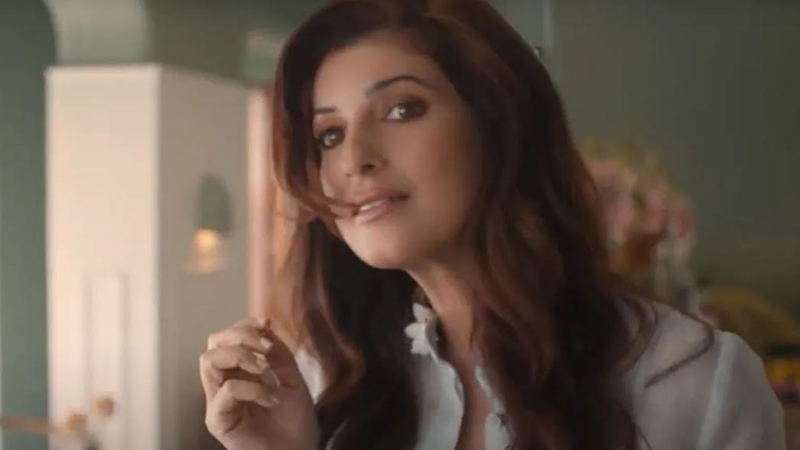
    MUMBAI: There are handbags, and then there are stories you carry around in leather and zippers. With a wink and a wisecrack, Twinkle Khanna, aka Mrs Funnybones, has now been roped in as the first-ever brand ambassador for Irth Bags, from the House of Titan. And true to form, she’s already got a bone to pick with the bag industry.

    The brand’s latest campaign, shot under her Mrs Funnybones avatar, doesn’t just showcase handbags, it pokes fun at them. From zippers that betray you at the worst possible moment to totes that don’t understand how women actually move, the films flip the script with wit, sass, and design solutions that promise to make IRTH the everyday ally women didn’t know they needed.

    “There’s a whole world that lives inside a woman’s handbag snacks, secrets, sanity, sometimes even a screwdriver!” Twinkle quipped. “This campaign felt like the perfect fit for me. It’s clever, it’s honest, and it treats bags not just as accessories, but as companions in the chaos and charm of everyday life.”

    The campaign kicks off with a spotlight on Irth’s Initials collection, the brand’s first monogram line. In her trademark style, Mrs Funnybones reveals how perfect design isn’t just seen, it’s felt, making even a simple bag a conversation starter. From tall shoulder bags and sleek handhelds to backpacks and wide shoulders, the Initials range merges timeless elegance with Irth’s design-first philosophy.

    Titan Company Ltd business head of women’s bag division Kanwalpreet Walia summed up the vibe: “A woman’s bag is far more than an accessory. It’s her constant companion, her secret keeper, her styling partner, and sometimes even her snack stash! With this campaign, we wanted to spark playful conversations around all the fabulous and not-so-fabulous moments women share with their bags. And who better to lead this dialogue than Twinkle Khanna with her sass and sparkle?”

    The films, produced by Kondurkar Studio under the creative direction of Amrish Kondurkar, are designed to be bite-sized drops of fun each one highlighting a fresh handbag truth. “It’s a collaboration of shared sensibilities,” Kondurkar explained. “Mrs Funnybones brings her wit and joyful take on daily life, Irth brings thoughtful design that makes each of those moments a little better. Together, they elevate the everyday.”

    Behind the scenes, the campaign brought together a powerhouse creative team: from director Afshan Hussain Shaikh and cinematographer Kartik Vijay, to music by Sanjay Das and production design by Daaku Aunties. The polished films are already live on Youtube and across Irth’s and Twinkle Khanna’s Instagram handles, giving audiences a first peek into a campaign that promises style with substance, and humour stitched right into the seams.

    As India’s women’s accessories market grows, Irth is carving out its own niche by being design-led, insight-driven, and refreshingly honest. And with Twinkle Khanna at the helm, expect handbags to become less of a silent accessory and more of a sparkling conversation piece.

    Because let’s be honest when it comes to bags, every woman has a story. Irth just made them a little funnier.

  • Surya joins hands with GLS University

    Surya joins hands with GLS University

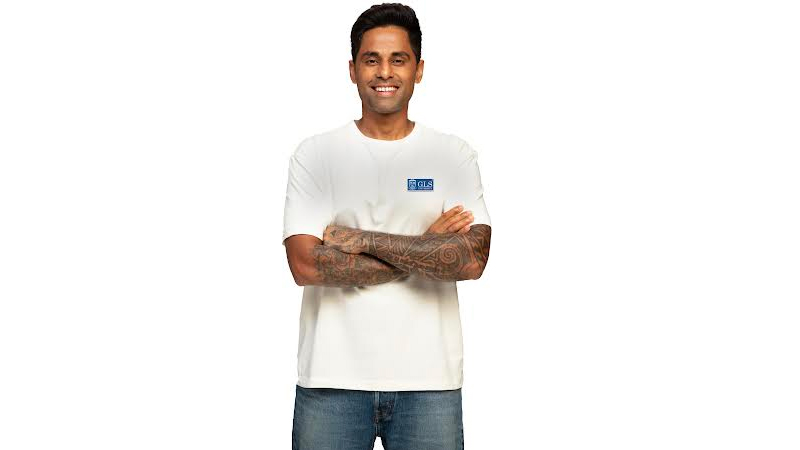
    MUMBAI: When it comes to fresh innings, GLS University has knocked it out of the park. The Ahmedabad-based institution has roped in Indian cricket superstar Suryakumar Yadav as its brand ambassador, bringing together the worlds of fearless sport and forward-thinking education.

    Fondly known as Mr 360 for his audacious stroke play, Surya embodies resilience, adaptability and ambition, qualities GLS says mirror its own vision of preparing students to thrive in real-world challenges. His journey from street cricket to captaining India in T20I echoes the university’s rise in under a decade as one of Gujarat’s most dynamic centres of learning.

    “I am thrilled to be associated with GLS University,” said Yadav. “What excites me most is how their legacy combines with new thinking, encouraging students to take risks, stay disciplined and think beyond the ordinary.”

    Welcoming him to the fold, GLS president Sudhir Nanavati remarked, “SKY is more than a cricketer, he is a symbol of belief and perseverance turning dreams into milestones. That is exactly the aspiration we want every GLS student to embrace.”

    GLS executive director Chandni Kapadia added, “Surya doesn’t just play cricket, he paints the sky with possibilities. His fearless 360 degree play reflects our multidisciplinary approach, inspiring students to go beyond limits.”

    Founded in 2015, GLS University is backed by the legacy of the Gujarat Law Society, established in 1927. With industry-linked programmes, dual degree pathways and global collaborations, the institution is betting big on innovation and skill-based learning.

    The partnership with Surya aims to spread a message of excellence and leadership, blending education and sport to inspire the leaders of tomorrow. And as this collaboration takes flight, one thing is clear, for GLS and SKY, the boundaries don’t exist.

  • Eveready’s toy truck sparks joy this Durga Puja

    Eveready’s toy truck sparks joy this Durga Puja

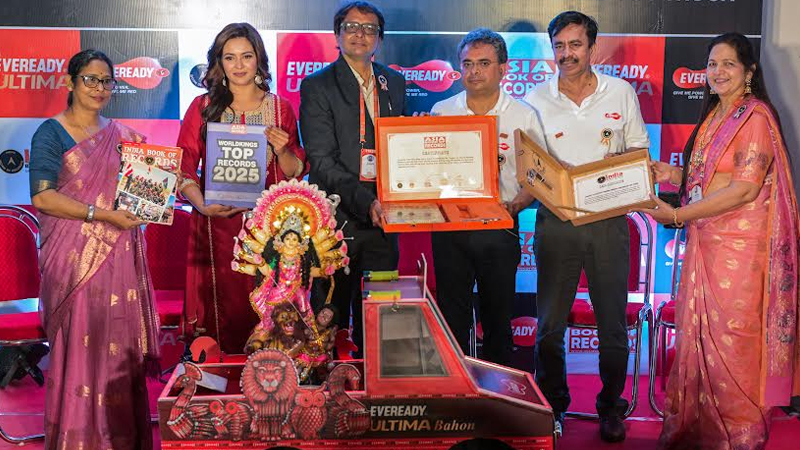
    MUMBAI: When it comes to lighting up festivals, Eveready has gone beyond batteries and straight into hearts. This Durga Puja, the brand has built the Ultima Bahon, the largest AA battery-powered remote-controlled toy truck, to carry the idol of Goddess Durga into a celebration organised by underprivileged children in Kolkata.

    The playful creation, powered by eight Eveready Ultima AA batteries, has already entered both the India Book of Records and the Asia Book of Records. But more than the feat of engineering, it has turned into a symbol of simple joy, bridging the gap between big-budget pandals and smaller, heartfelt pujas.

    “Durga Puja is a festival of joy and togetherness,” said Eveready Industries India Ltd CEO Anirban Banerjee. “With Ultima Bahon, we wanted to bring smiles to children and give them a story they can cherish forever.”

    The toy truck, designed with miniature depictions of Durga’s traditional bahons: the lion, owl, swan, peacock and mouse, is a nod to tradition wrapped in innovation. Actress Priyanka Sarkar, present at the unveiling, called it “a reminder that celebrations don’t need to be huge to be special, sometimes the simplest joys create the most unforgettable memories.”

    Supported by the Vikramshila Education Resource Society, the initiative saw Eveready sponsor the entire puja for children up to Class 4, ensuring that their devotion shone just as brightly as the city’s glittering pandals.

    Recognised as the largest toy truck of its kind, the Ultima Bahon will also be on display at the 95 Pally Puja Association during the festival. For pandal hoppers chasing lights and spectacle, it’s a gentle reminder: sometimes the most powerful celebrations run on nothing more than a few batteries and a lot of heart.

  • Good Day stirs up India’s chai love

    Good Day stirs up India’s chai love

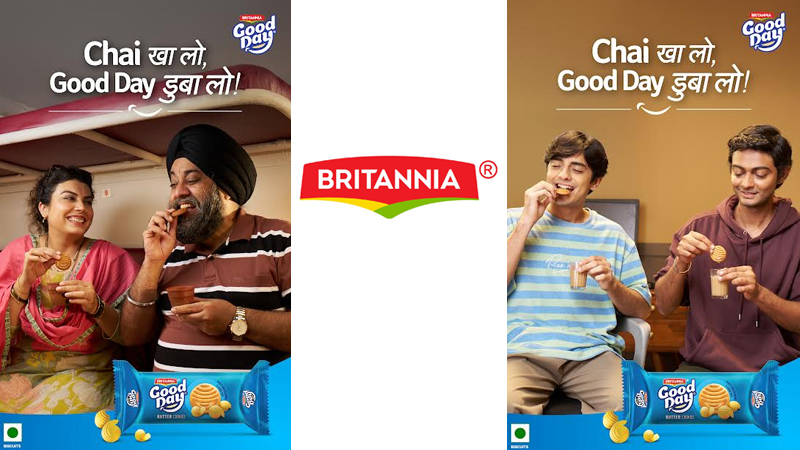
    MUMBAI: Biscuit dunking has never sounded so sweet. Britannia Good Day is giving India’s favourite chai break a chart-topping twist with its new campaign “Chai khaa lo, Good Day duba lo”, a playful call to take a bite of tea.

    Inspired by a tea-seller’s viral “chai kha lo” chant, the brand has turned a street-side moment into a national mood. Partnering with viral sensation Yashraj Mukhate, Britannia has dropped a catchy “Chai Anthem” that celebrates the unbreakable bond between steaming chai and a dunked Good Day biscuit.

    Mccann Worldgroup has bottled this energy into a series of snappy 20-second films, capturing everyday Indian scenes: a chatty hostel evening, a quiet train journey, all stitched together with the joy of dip-and-sip.

    “Chai time is the heartbeat of India, and Good Day has always been a part of that magic,” said Britannia Industries general manager–marketing Archana Balaraman. “We wanted this campaign to celebrate that shared joy in a fun, instantly relatable way.”

    Mccann Worldgroup executive vice president and creative head south Sambit Mohanty, added that the idea was to highlight Good Day’s timeless partnership with chai through wholesome stories and familiar faces.

    So, the next time you pour yourself a cup, don’t just sip it. Dunk in a Good Day, hum the new anthem, and let your tea break hit all the right notes.

  • Oxpecker hits it out of the park with Washington Sundar as brand face

    Oxpecker hits it out of the park with Washington Sundar as brand face

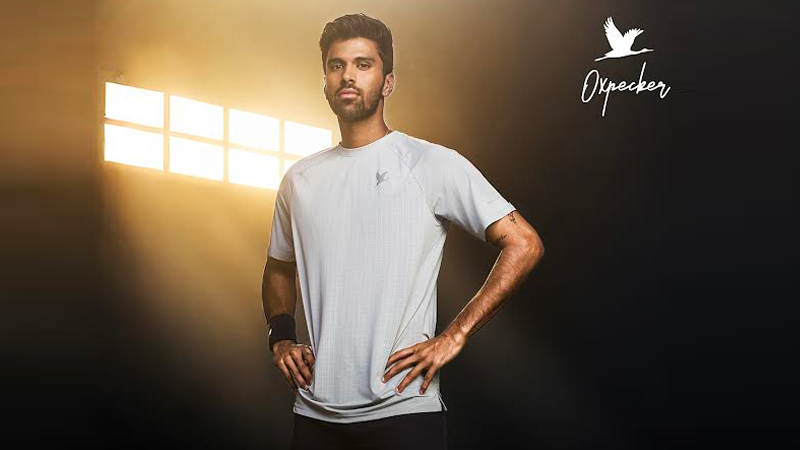
    MUMBAI: When a cricketer known for his calm grit partners with a brand built on hustle, you know the pitch is perfect. Oxpecker, India’s next-gen activewear and athleisure label, has roped in Indian international cricketer Washington Sundar as its first-ever brand ambassador marking a bold new chapter in its journey to redefine how India sweats, stretches, and shows up.

    For Washington, the association goes beyond logos and photo shoots. “What excites me most is seeing a young entrepreneur identify a real gap in the market and build an activewear brand that’s stylish, functional, and uncompromising on performance,” he said. “Oxpecker has the potential to inspire people to show up every day with confidence, in comfort and style.”

    And that mantra “Show Up” is at the heart of Oxpecker’s new campaign and its first brand film starring Sundar. From dawn workouts to late-night travel, the film showcases the all-rounder’s consistency as more than just a cricketing skill: it’s a life skill. The message is simple being a champion isn’t about chasing perfection, but about showing up, day after day.

    The Oxpecker difference lies in its blend of sweat-wicking, breathable, odour-resistant fabrics, engineered for India’s weather, and its mid-premium positioning that offers international quality without international price tags. Every piece is designed to empower individuality while being proudly Made in India, for India and beyond.

    Founded in 2023 by 20-year-old entrepreneur and Oxpecker founder Dev Raval and Oxpecker co-founder Nitesh Raval, the brand was born out of frustration with the lack of good choices in the Indian market. “Consumers either compromise on quality with budget options or overspend on international brands. With Oxpecker, we bridge that gap,” said Dev Raval. “Washington Sundar, consistent both on and off the field, perfectly embodies our spirit of showing up.”

    In less than two years, Oxpecker has built serious momentum:

    ●    Launched in 2023 with a disruptive vision.

    ●    Partnered with 150 plus influencers, strengthening its digital-first presence.

    ●    Secured listings on Amazon, Myntra, and Ajio, building strong e-commerce traction.

    ●    Now unveiling its first brand film with Washington Sundar, cementing its identity.

    The campaign’s visuals are more sweat than sparkle: Sundar powering through intense drills, long practice hours, and the grind of everyday travel all while Oxpecker gear keeps him comfortable and game-ready. The film underscores a universal truth: performance isn’t about spotlight moments, it’s about consistency, and showing up is already half the battle won.

    With cricket’s rising all-rounder as its face, Oxpecker is betting big on India’s fitness-conscious millennials and Gen Z, who want gear that works hard without burning a hole in their pockets. If Washington Sundar embodies composure at the crease, Oxpecker is looking to embody resilience in the wardrobe proving that for champions, on the field or off it, the secret lies in one mantra: Show up.

  • Game on: Non-RMG takes the winning shot in India

    Game on: Non-RMG takes the winning shot in India

    MUMBAI:  When the chips are down, India’s gamers are levelling up with play without pay. A new report by Mumbai-based VC fund Lightbox says the country could soon shift from being a volume-heavy market to a value-driven gaming powerhouse, as the spotlight moves from real-money games (RMG) to non-real money titles.

    India already has a formidable player base, with nearly 420 million gamers logging in regularly, second only to China. Yet while downloads surge, monetisation lags, with India’s average revenue per user at just 3.03 dollars compared to 68 dollars in China and a hefty 215 dollars in the US. That gap, however, signals massive untapped potential.

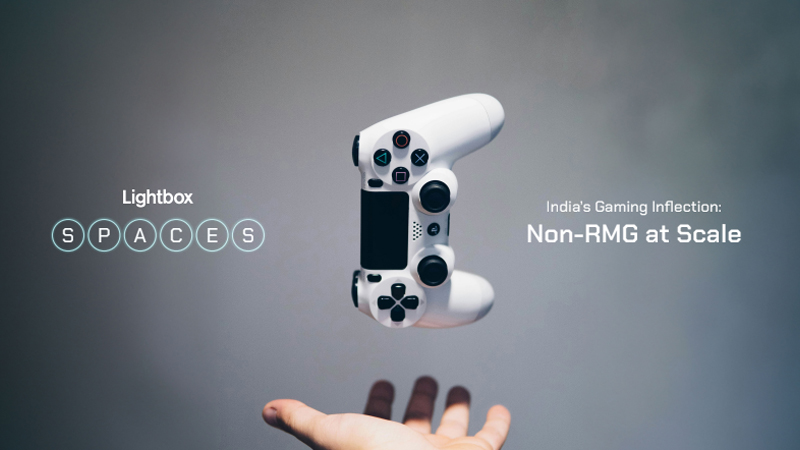
    According to Lightbox’s India’s gaming inflection: Non-RMG at scale, the future lies in casual, mid-core and esports titles, fuelled by in-app purchases, ads, and subscriptions. A poll with Rooter revealed that three-quarters of gamers already spend on non-RMG add-ons, with 31 per cent shelling out more than Rs 1,000 each month on battle passes, cosmetics and unlockable content.

    “The question is no longer about scale,” said Lightbox managing partner Sandeep Murthy. “India can leap from a volume-driven market to a value-driven giant. If given the right content and community, gamers will pay.”

    The shift comes on the heels of the Promotion and regulation of online gaming act, 2025, which banned RMG and its advertising. While the crackdown clipped one wing of the industry, it has given non-RMG games legitimacy and fresh tailwinds.

    Advertising and esports are also scoring big. Casual and hyper-casual titles are becoming brand playgrounds, while India’s esports revenue touched 100 million dollars in 2024, with sponsorships making up over half the pie.

    Regional language content and hyper-localisation are further fuelling the boom. Nearly 75 per cent of gamers prefer Hindi or other vernacular titles, while AI-powered storytelling and cloud gaming are tipped to supercharge the next phase of growth.

    Globally, gaming is a 177.9 billion dollars industry set to hit 198 billion dollars by 2027. With its young, mobile-first players, India’s paradox of high play but low pay might just be its superpower, turning the world’s second-largest gamer base into one of its most lucrative.