Category: Marketing

  • SBI Life stumbles in Q2 FY25: Premium growth falters amid market uncertainty

    SBI Life stumbles in Q2 FY25: Premium growth falters amid market uncertainty

    Mumbai: As SBI Life Insurance’s latest financial results cast a shadow over its once-steadfast growth, policyholders may be left wondering: Who will secure your family’s future when you’re no longer around? The insurer’s Q2 FY25 report, covering the quarter ending 30 September 2024, reveals a tale of contrasting fortunes. While renewal premiums held their ground, first-year and single premiums faltered, pointing to headwinds that could challenge the resilience of one of India’s largest life insurers.

    In Q2 FY25, SBI Life’s renewal premium surged to Rs 11,72,120 lakhs, up from Rs 10,12,113 lakhs in Q2 FY24, reflecting the company’s strength in retaining policyholders. However, first-year premiums amounted to Rs 4,91,567 lakhs, a marginal increase compared to Rs 4,63,332 lakhs in the same period last year, indicating slower new customer acquisition. The single premium, a critical contributor to income, saw a notable decline, down to Rs 3,77,629 lakhs from Rs 5,42,136 lakhs, suggesting that customers may be hesitant to make large one-time insurance investments amid economic uncertainties.

    This subdued performance in single premiums highlights a key area of concern for the insurer. As global and domestic markets face volatility, customers may have opted for lower-risk, shorter-term products over substantial long-term investments, impacting SBI Life’s overall premium growth. The company’s net income stood at Rs 52,942 lakhs, up from Rs 38,019 lakhs, despite the challenges in premium growth.

    On a positive note, the company’s solvency ratio remained stable at 2.04 per cent, above the regulatory minimum of 1.5 per cent, showcasing its ability to meet policyholder obligations even in challenging times. Additionally, SBI Life’s expense management ratio rose slightly to 10.57 per cent, reflecting increased operational costs, which may put pressure on profitability in future quarters if not addressed.

    SBI Life, company secretary, Girish Manik stated, “Despite market challenges, we are committed to sustaining long-term growth by focusing on improving renewal premiums and maintaining a healthy solvency margin.” The company’s decision to keep expenses under tight control and further diversify its product offerings could be pivotal as it navigates the evolving financial landscape.

    The persistency ratios (percentage of customers renewing policies) remained robust across different timeframes, with the 13-month ratio at 84.16 per cent, suggesting SBI Life continues to foster customer loyalty even as it faces pressure in attracting new policyholders.

    One of the more troubling figures is the decline in new business, particularly in the individual life segment. With first-year premiums stagnating and single premiums sharply falling, SBI Life may need to revise its product strategies, particularly in response to changing customer preferences for more flexible and lower-risk options.

    At the same time, the insurer’s investments performed admirably, providing a buffer against premium-related shortfalls. Investment income for policyholders’ funds without unrealised gains stood at 8.26 per cent for non-linked policies, a slight uptick from the previous quarter, ensuring that SBI Life can continue to offer competitive returns to its policyholders.

    As India’s insurance market grows increasingly competitive, SBI Life’s focus on sustaining renewal premiums and improving operational efficiency will be crucial in reversing the downward trend in new business premiums. The company has already shown resilience, but it may need to adapt more swiftly to market forces in order to achieve consistent growth.

  • Zydus Wellness launches Sugar Free D’lite cookies

    Zydus Wellness launches Sugar Free D’lite cookies

    Mumbai: Zydus Wellness’ Sugar Free, a sweetener brand, has entered the packaged foods segment with Sugar Free D’lite cookies. This launch aims to provide consumers with sugar-free alternatives to satisfy their sweet cravings. To connect with health-conscious individuals, Sugar Free has partnered with Bollywood superstar Shahid Kapoor for promotion.

    As a category leader with a 95 percent market share in sweeteners, the brand’s entry into Indian packaged foods follows the success of D’lite cookies in international markets. The new range is available in three flavors: choco chip, yummy berries, and mocha hazelnut. Partnering with Shahid Kapoor, a fitness icon known for his disciplined lifestyle, aligns with the brand’s message of enjoying sweet treats responsibly.

    Zydus Wellness CEO Tarun Arora said, “Health consciousness in Indian consumerism is on the rise, and with it, the demand for healthy yet tasty packaged foods. As we script the next phase of our growth story, we are focusing on innovation that help us bridge the gap between taste and health. Our Sugar Free D’lite cookies have been the consumer’s favourite in international markets for a few years, enabling them to balance their desire for fitness and without sacrificing the joy of eating. Now we are focusing on driving this proposition for Indian consumers. Shahid Kapoor strongly reflects our brand’s personality making him a perfect fit, especially among health-conscious consumers, to amplify our message of guilt- free indulgence.”

    Kapoor said, “I am very mindful about the brands that I endorse and always ensure that they align with my values. This collaboration is not just about sweetening food, it is about promoting a balanced lifestyle and encouraging everyone to embrace healthier options without sacrificing taste. It is a brand I trust and have used for years. One of my favourite indulgences is Sugar Free D’Lite Choco Chip Cookies – a delectable snack, with no added sugar.”

    In his recent Instagram reel, Shahid revealed his preference for healthy food options, such as ‘ghar ka khana’, yet he has a sweet tooth. Elaborating on how he keeps the sugar in check while enjoying all the sweetness, he turns to Sugar Free D’Lite Choco Chip Cookies, which has all the taste and no sugar.

    Sugar Free has been at the forefront of revolutionising the way people enjoy sweetness, offering a range of products that may be added to desserts and dishes without the negative effects of added sugar.

  • VRB enters cup noodles market with ‘WokTok by Veeba’

    VRB enters cup noodles market with ‘WokTok by Veeba’

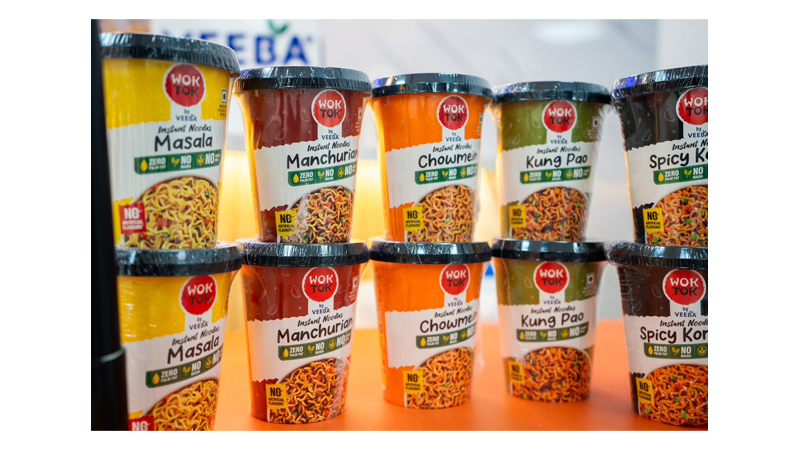
    Mumbai: VRB Consumer Products has launched WokTok by Veeba, entering the cup noodles category with a fusion of pan-Asian and Indian flavors. This better-for-you range features no added MSG, no palm oil, and no maida, making it a guilt-free option for noodle lovers.

    The launch is supported by a TV campaign showcasing how Indians adapt to global cuisines. The film depicts humorous scenarios where Chinese characters embrace Indian quirks, capturing the campaign’s tagline: ‘Chinese, Par Apne Style Se!’

    WokTok’s cup noodles come in five flavors: Chowmein, Masala, Manchurian, Kung Pao, and Spicy Korean. Additionally, the brand will launch dipping and culinary sauces made without added MSG, ideal for any meal. WokTok aims to become a household favorite across India.

    VRB Consumer Products VP marketing Niyati Kochhar said, “Creating WokTok has been a labour of love—one that celebrates how we, as Indians, embrace and adapt anything by adding our signature twist. Our campaign, ‘Chinese, Apne Style Se,’ captures this beautifully. From food to culture, we have always made things our own, and WokTok is no different. With this launch, we’re speaking to a new generation—the WokTok generation—who values authenticity but also seeks personalization. They crave bold flavors that resonate with their unique palate, and WokTok offers just that, combining the best of both worlds in a way that’s distinctly theirs.”

    Enormous Brands managing partner & CCO Ashish Khazanchi said, “WokTok, the latest brand in the instant noodles segment, is set to revolutionize the market with its new line of products: “Chinese but apne style se.” Rooted in the essence of India’s love for bold, diverse flavours, WokTok combines the richness of traditional Chinese cuisine with bold Indian takes. The campaign captures the evolving Indian psyche that craves global experiences but with a familiar, comforting Indianness. WokTok’s bold, exciting flavours and packaging are designed to resonate with India’s youth, offering a quick, delicious, and distinctly Indian spin on the beloved Chinese noodles. It’s not just noodles, it’s Chinese – but our own way.”

  • CG Power’s profit shrinks as operational costs weigh heavily on Q2 FY25

    CG Power’s profit shrinks as operational costs weigh heavily on Q2 FY25

    Mumbai: CG Power and Industrial Solutions Ltd’s Q2 FY25 financial results tell a story of struggling profitability amidst growth. The net profit dropped by 8.8 per cent year-on-year to Rs 221 crore in Q2 FY25, as operational challenges weighed on earnings. The company also reported a 4.6 per cent decline in Earnings Before Interest, Tax, Depreciation, and Amortisation (EBITDA), which stood at Rs 294.7 crore for the quarter. The EBITDA margin shrank significantly, falling by 320 basis points to 12.2 per cent, down from 15.4 per cent a year earlier. The drop in profit is primarily driven by escalating operational costs, including materials and employee expenses, which surged due to inflationary pressures and a competitive business environment.

    The second-quarter results, which were approved at the 21 October 2024 board meeting, reveal a significant rise in the cost of materials, reaching Rs 1,558.22 crore compared to Rs 1,258.59 crore in the same period last year. Employee benefit expenses have also jumped by 17 per cent to Rs 114.44 crore, signalling ongoing cost pressures. While revenue from the industrial and power segments showed growth, these gains were offset by mounting expenditures, with other expenses rising to Rs 246.27 crore.

    “The increase in operational costs, particularly in raw materials and employee benefits, continues to put pressure on our margins. We are taking measures to optimise our cost structure,” said the management, reflecting the growing need to improve operational efficiency.

    Adding to the company’s financial burden, the board approved an additional capacity expansion at its Mandideep plant, requiring an investment of Rs 26.64 crore. This move comes after a similar expansion initiative a year ago, which has yet to fully yield returns. With current utilisation at 85 per cent, the additional capacity aims to meet future transformer demand, yet it also adds to capital expenditure concerns at a time when profitability is already under strain.

    The tax expenses for Q2 surged dramatically, with the company reporting a total tax bill of Rs 75.72 crore compared to Rs 80.40 crore last year. Additionally, finance costs doubled, reaching Rs 1.94 crore, exacerbating the strain on net income. The ongoing cost of expansion and the higher depreciation expense of Rs 21.29 crore are further dragging down profitability.

    Shares of CG Power are down to the lowest point of the day, currently trading 5.5 per cent lower at Rs 774.05 post the earnings announcement. The stock is still up 73 per cent so far in 2024.

  • Paytm reports Q2 profit amid strategic realignment and cost optimisation

    Paytm reports Q2 profit amid strategic realignment and cost optimisation

    Mumbai: Amidst an evolving digital payments landscape, Paytm’s parent company, One 97 Communications, has achieved a notable turnaround in the second quarter of the fiscal year 2025. Announcing its unaudited financial results for Q2 ended 30 September 2024, the company posted a net profit of Rs 9,100 million, reversing a loss of Rs 8,401 million in the prior quarter. The profit surge largely stems from gains on the sale of non-core assets, namely its movie ticketing and events business, to Zomato, marking a strategic pivot toward consolidating its core operations.

    “On 21 August 2024, the company entered into definitive agreements with Zomato Limited for sale of its movie ticketing business and events business housed in the company as well as its two wholly owned subsidiaries for a total consideration of Rs 2,048 crore which was subject to cash and net-working capital adjustment at closing,” the company said in a regulatory filing.

    The financial results reflect a significant upswing, bolstered by a one-time gain of Rs 13,454 million from the divestitures finalised in August. The sale’s proceeds were instrumental in offsetting recurring operating losses, as revenue from core payment and financial services continued to face pressure. While total revenue from operations rose to Rs 16,595 million from Rs 15,016 million last quarter, this was tempered by increased payment processing charges and high employee benefits expenses.

    The company’s management, led by CEO Vijay Shekhar Sharma, has demonstrated a strong commitment to cost optimisation, which is critical in a competitive payments market. “Our focus remains on enhancing our core payments business while optimising resource allocation to drive sustainable growth,” stated Sharma. However, high costs associated with marketing, technology infrastructure, and regulatory hurdles present ongoing challenges.

    A closer look at the financials reveals a reduction in marketing and promotional expenses from Rs 2,214 million in Q1 to Rs 1,544 million, reflecting a shift in strategic priorities. Yet, employee costs remain elevated at Rs 8,310 million, underscoring the company’s challenge to balance cost controls with talent retention and growth initiatives.

    The divestiture of the non-core businesses, though lucrative, has raised concerns over the long-term sustainability of Paytm’s revenue streams. While the gains have provided short-term relief, they may not compensate for the structural headwinds in the payments ecosystem. Analysts caution that without a significant improvement in core business performance, reliance on asset sales could become problematic.

    Moreover, regulatory headwinds remain a significant factor. Paytm Payments Bank, a critical associate, continues to face restrictions imposed by the Reserve Bank of India, limiting its ability to onboard new customers. This has affected the overall business outlook, with the management admitting that the regulatory uncertainty could impact future growth.

    In response to market dynamics, Paytm is doubling down on its payment and financial services segment, which accounted for the bulk of the revenue. The company is investing in technology upgrades and expanding partnerships to fortify its position in the rapidly growing digital payments market. However, ongoing issues related to regulatory compliance and profitability pose formidable challenges.

    As Paytm navigates this competitive landscape, its future performance will hinge on the effectiveness of its cost-management strategies and the resolution of regulatory constraints. The recently restructured business model offers a leaner operational framework, but the path to sustainable profitability remains uncertain.

  • Adani acquires Orient Cement for Rs 8,100 crore to boost cement capacity

    Adani acquires Orient Cement for Rs 8,100 crore to boost cement capacity

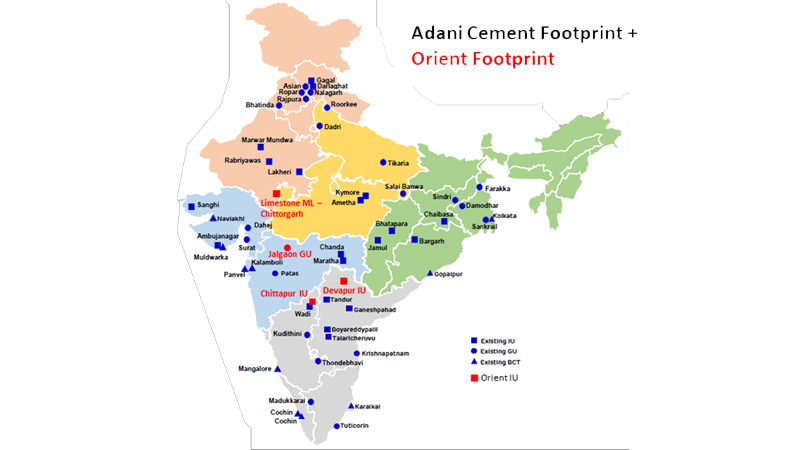
    Mumbai: Ambuja Cements, part of the Adani Group, announces the acquisition of Orient Cement Ltd. (OCL)  at an equity value of Rs 8,100 crore, marking a significant step towards its goal of 100+ MTPA operational capacity by FY25. The deal involves the purchase of a 46.8 per cent stake in OCL, enhancing Ambuja’s presence in the Indian cement market while expanding its sustainability footprint.  

    The acquisition adds 16.6 MTPA of capacity (8.5 MTPA operational and 8.1 MTPA ready for execution), strengthening Ambuja’s competitive edge in core markets and increasing pan-India market share by 2 per cent. OCL’s strategic assets, including 5.6 MTPA clinker capacity, efficient plants, and renewable energy initiatives, complement Adani Group’s existing cement footprint.  

    Ambuja Cements director, Karan Adani commented, “This timed acquisition marks another significant step forward in Ambuja Cements’ accelerated growth journey, increasing cement capacity by ~30 MTPA within two years of Ambuja’s acquisition. By acquiring OCL, Ambuja is poised to reach 100 MTPA cement capacity in FY25. The acquisition will help to expand Adani Cement’s presence in core markets and improve its pan-India market share by 2 per cent. OCL’s assets are highly efficient, equipped with railway sidings and well supported by captive power plants, renewable energy, WHRS, and AFR facilities. OCL’s strategic locations, high-quality limestone reserves, and requisite statutory approvals present an opportunity to increase cement capacity in the near term to 16.6 MTPA.”  

    Strategic Advantages and Expansion Plans  

    – Enhanced Capacity and Market Reach: The acquisition provides potential for 6 MTPA additional capacity in North India, leveraging OCL’s high-quality limestone reserves in Chittorgarh, Rajasthan.  

    – Sustainability Initiatives: OCL recently commissioned a Waste Heat Recovery System (WHRS) in Chittapur, with plans to finalise 16 MW solar capacity at the same location and 3.7 MW solar in Jalgaon.  

    – Operational Efficiency and Logistics: OCL’s assets, including 95 MW Captive Power Plants (CPP) and railway sidings, will reduce lead distances and logistics costs.  

    Orient Cement, chairman, CK Birla said, “The CK Birla Group is continuously reallocating capital to sharpen its focus on consumer-centric, technology-driven, and service-based businesses. We are confident that the Adani Group, with its strong focus on cement and infrastructure, is the ideal new owner to drive continued growth at Orient Cement for our people and stakeholders.”  

    With a focus on capacity optimisation, Ambuja aims to improve OCL’s cost efficiency and operating performance while leveraging synergies with its existing cement operations.  

  • Pepperfry enters luxury furniture & home decor market

    Pepperfry enters luxury furniture & home decor market

    Mumbai: Pepperfry, an e-commerce furniture and home decor marketplace, has forayed into the luxury furniture and home decor category. This launch caters to customers seeking high-end, unique pieces.

    The luxury furniture segment offers over 650 items from 25 brands, including Freedom Tree, Orange Tree, and Ziba Homes. The home decor segment features over 1000 products from 30 brands like Jaipur Rugs, Noritake, and India Circus. The collection includes sofas, dining sets, carpets, lamps, and lights, crafted with premium materials.

    Pepperfry chief business officer Hussaine Kesury said, “Our leadership in the furniture, mattress and home decoer segment has always been fueled by innovation and a deep understanding of our customers’ evolving needs. Recent consumer insights show a clear surge in demand for premium furniture and home decor, with more customers seeking luxurious, high-quality options for their homes. Leading brands have echoed this demand, reinforcing the need for a dedicated luxury segment. With our vast omnichannel presence across 100+ cities and 150+ stores, expanding into this space was a natural progression. We are excited to offer discerning customers a curated selection of luxury furniture and home decor, further cementing Pepperfry’s position as the premier destination for all home furnishing needs.”

    In the next quarter, Pepperfry will expand its offerings by adding premium and luxury brands across its omnichannel platform. In response to growing demand for luxury goods, the brand plans to introduce over 5,000 exclusive products from national and international brands in the furniture and home decor category. This move strengthens Pepperfry’s position as a key destination for customers seeking premium home products.

  • KidZania Noida & DOMS launch painting studio for kids

    KidZania Noida & DOMS launch painting studio for kids

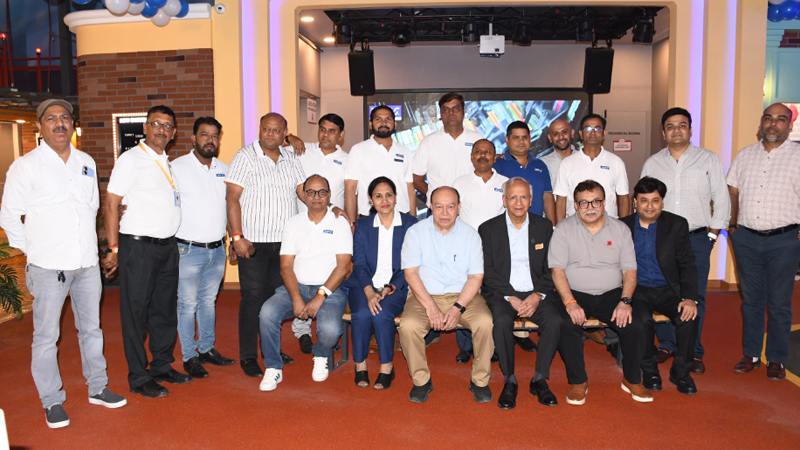
    Mumbai: KidZania Noida, the globally acclaimed educational entertainment brand and DOMS, successfully launched the DOMS Painting Studio on 21 October 2024, at KidZania Noida. This event offering children a dynamic space to nurture their creativity and artistic skills.
    The DOMS Painting Studio, a joint initiative between KidZania Noida and DOMS, provides young visitors with an immersive, hands-on experience where they can explore various artistic roles, such as Mural Painter and Studio Painter. With engaging activities and the use of DOMS’ high-quality art products, children had the chance to unleash their creativity and discover new techniques in a lively, enjoyable setting.
    DOMS Industries, managing director Santosh Rasiklal Raveshia said “An important step in our mission to foster and inspire children’s creativity has been taken with the opening of the DOMS Painting Studio at Delhi NCR. We’re thrilled to work with KidZania to provide young artists with a special setting where they can develop critical skills that support both creative and personal growth as well as explore their artistic talents.”

    DOMS Industries CMO Saumitra Prasad stated, “We are excited to bring the DOMS and Kidzania partnership to the Delhi NCR region. The DOMS Painting Studio is dedicated to offering children an enriching artistic experience, where they can explore a variety of techniques and fuel their passion for art, while nurturing their dreams of becoming artists.” 
    KidZania India head strategic partnerships Bhavesh Gajjar said “We are thrilled with the tremendous response to the launch of the DOMS Painting Studio. This collaboration with DOMS emphasises on our dedication to offering children meaningful and enriching experiences. We believe in the transformative power of art to inspire self-expression and personal growth, and through this partnership, we aim to help children unlock their full creative potential. Together we both are preparing kids for a better world.”
    Senior DOMS management, as well as their trade representatives and dealers, attended the event and showed their support and excitement for the project. The hands-on experience provided at the launch event was highly enjoyed by the children, who came away inspired to pursue their artistic endeavours.
    This will be the second collaborative association between both companies after the success in Mumbai and will give young visitors an exciting opportunity to explore their artistic abilities in a dynamic and engaging environment.

  • UltraTech Cement Q2 performance sees sluggish growth amidst rising costs

    UltraTech Cement Q2 performance sees sluggish growth amidst rising costs

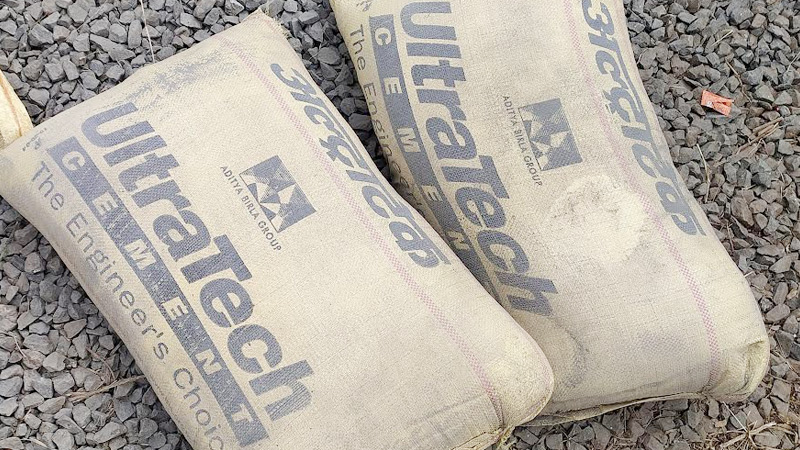
    Mumbai: In a landscape where construction and infrastructure development are vital to economic growth, UltraTech Cement Limited finds itself navigating turbulent waters. On 21 October 2024, the company disclosed its unaudited financial results for the quarter and half-year ending 30 September 2024. These results tell a story of declining revenues and profits, prompting a closer examination of the underlying factors affecting this leading player in the cement industry.

    The company’s revenue saw a marginal increase of 3.7 per cent year-on-year, reaching Rs 15,634.73 crore. However, despite this rise in top-line growth, profitability was under pressure due to escalating costs, causing a 35.5 per cent decline in net profit compared to the same quarter last year.

    The quarter was marked by an environment of rising costs, notably in power and fuel expenses, which accounted for Rs 3,837.69 crore, a 12.5 per cent decline from the previous quarter but still high compared to historical levels. Additionally, freight and forwarding expenses surged by nearly 2 per cent year-on-year to Rs 3,583.51 crore, further eroding the company’s operating margins. Employee costs also saw a significant rise, reaching Rs 913.86 crore, a 12.5 per cent increase year-on-year.

    Despite these challenges, UltraTech Cement managed to maintain a steady volume growth and revenue stability, driven by ongoing infrastructure developments and a resurgence in the real estate sector. However, the company’s efforts to manage costs through operational efficiencies and alternative fuel strategies fell short of countering the broader cost inflation impacts.

    UltraTech Cement, managing director, K.C. Jhanwar commented, “While we have seen revenue growth supported by increased sales volume and price improvements, the cost inflation in key inputs such as power and logistics remains a significant challenge. We are focusing on optimising our fuel mix and enhancing our efficiency to mitigate these impacts.”

    The company’s net profit stood at Rs 825.18 crore for the quarter, down from Rs 1,280.38 crore in the same period last year, indicating a tightening profit margin from 8 per cent to 5 per cent. On the brighter side, UltraTech’s ongoing expansion plans remain on track, with a commitment to increasing capacity by 22.6 million tonnes per annum by FY26, aiming to cement its leadership in the Indian market.

    Analysts point out that while revenue growth is encouraging, the impact of elevated costs on UltraTech’s profitability raises concerns about its near-term performance. As cement demand is expected to continue its upward trajectory, the company’s ability to manage cost pressures will be critical in determining future growth.

  • NPCI offers essential tips to prevent digital payment fraud this Diwali

    NPCI offers essential tips to prevent digital payment fraud this Diwali

    Mumbai: As the festive season ignites a surge in shopping, the National Payments Corporation of India (NPCI) emphasises the importance of digital payment security. With many customers often overlooking crucial safety practices, financial losses and emotional distress can occur. NPCI shares key advice to help shoppers navigate the festive season securely and enjoy their shopping experiences.

    Flashy offers and discounts may lead to impulse buying, but rushing to avail these deals can cause you to overlook the legitimacy of the platform. Always conduct thorough research on unfamiliar sellers and untrustworthy businesses.

    When signing up for offers, refrain from sharing excessive personal information that isn’t required, as this increases the risk of data theft.

    Avoid making purchases on unsecure networks, such as open Wi-Fi at shopping malls, which can expose your financial information to hackers.

    During the festive season, as shopping frequency increases, customers often lose track of their orders, making them vulnerable to phishing scams. Always double-check payment links before clicking to avoid fake delivery notifications.

    Finally, avoid using simple or default passwords for your accounts, as these make you an easy target for hackers. Create strong, unique passwords for each account to enhance security.