MUMBAI: PerceptH has roped in Ryan Menezes as its chief creative officer. He moves in from McCann Erickson, where he was executive creative director.
Prior to McCann, Menezes was with Vyas Giannetti Creative as executive creative director.
Menezes has been a part of the industry for more than two decades. He spent these years at various agencies such as Lowe (Nairobi), SSC&B Lintas, Saatchi & Saatchi, O&M, Ambience Publicis, Grey Worldwide and Mudra. At Mudra, he was national creative director.
At SSC&B Lintas, Menezes had played an important role in fetching India its first Gold Lion at Cannes for pest-repellant brand Hexit.
Category: Marketing
-
PerceptH appoints Ryan Menezes as chief creative officer
-
Starcom MediaVest Group’s digital head Pushkar Sane resigns
MUMBAI: Starcom MediaVest Group chief digital officer, north and south Asia and global head of social marketing practice Pushkar Sane has put in his papers.
Based out of Hong Kong, Sane overlooked operations in India, Greater China and Japan among other regions.
A spokesperson at Starcom MediaVest Group confirmed the news to Indiantelevision.com.
Sane has spent nearly 15 years in the industry. He joined SMV Group in 2005, prior to which he worked at Euro RSCG and FCB Ulka.
-

Oscar gets a 9% drop in viewership
MUMBAI: Though the 83rd Academy Awards ceremony was watched extensively around the globe, it failed to beat last year’s ratings.
In its three-hour presentation, the Oscar ceremony drew an audience of 37.6 million. But compared to that of last year, there was a drop of 9 per cent in total viewership and another 12 per cent in the 18 to 49 demographics.
Among the broadcasters, ABC finished on top among its network rivals like Fox, CBS and NBC. As per Oscar night tradition, the predictable bonanza of other-network repeats failed to make a dent in the recent Academy awards.
Meanwhile, during the live telecast on Sunday, ABC Television President announced a contract extension of six additional years till 2020.
-
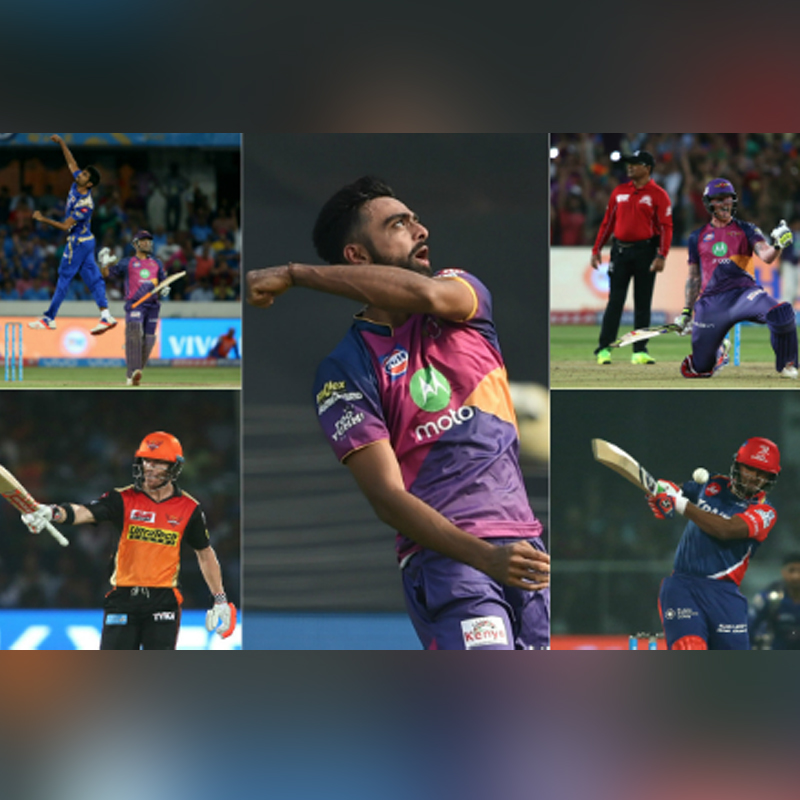
Cricket to earn Rs 18 bn TV ad revenue in 2011
MUMBAI: Cricket is expected to earn an advertising revenue of Rs 18 billion from its television telecast this year, up from Rs 15 billion in 2010, as it showcases the World Cup and the Indian Premier League (IPL) in back-to-back events.
“Our estimate is that this year cricket will earn Rs 17-18 billion. The World Cup and IPL will each get around Rs 6-7 billion,” says Lodestar Universal CEO Shashi Sinha.
The World Cup will be bigger for ESPN than it was for Sony in 2007. “Cricket is pre-sold. 80 per cent of the inventory has been pre sold for this World Cup which is what also happened in 2007. It is the client and agency’s gamble on the property when it is pre-sold. There is an 80 -100 per cent increase in rates compared to what was paid in 2007,” Sinha says.
Digging into the game are a lot more advertisers, offering the telecast rights owner a wider plate to bargain from.
“In 2007, there were three telecom companies. Today there are 15. There were five auto companies then. Today there are many more. The reach has also gone up. There are at least 60 per cent more TV homes today compared to 2007. I expect ESPN Star Sports to make at least double of what Sony managed to earn in 2007,” says Sinha.
For Sinha, comparing the World Cup to the IPL is not a sane thing to do. “They are different properties and they do not happen simultaneously. If extra money is coming into cricket advertising, then why are they competing? The decision to advertise or not depends on the audience being targeted and the requirement. Both properties have relative strengths,” says Sinha.
News channels also stand to gain from the World Cup but this will be small compared to the larger scheme of things. “News channels will make around 10 per cent of what the live World Cup broadcaster earns. It is a complementary activity for some clients. Others take it as it is less expensive,” explains Sinha.
-
Kapil Tammal joins Scarecrow Communications as creative director
MUMBAI: Scarecrow Communications has roped in Kapil Tammal as its creative director.
Prior to this, Tammal was with McCann Erickson Mumbai serving as creative director (art).
Scarecrow Communications founder director Manish Bhatt told Indiantelevision, “I had worked very closely with Kapil during my stint at McCann Erickson. His talent is a right mix of ideas and design. Apart from winning multiple international/national awards like Abbys, Cannes, Adfests and spikes, he was second runner up in Young Spikes 2008.”
In his work experience spanning over 10 years, Tammal has worked for nearly seven years at McCann Erickson India, McCann Worldgroup and McCann Erickson Mumbai.
Tammal started his career with Concept Communication as a visualiser in 2001 where he worked for more than two years, before moving to Triton Communications as an art director and then to Umbrella Design Mumbai as senior art director. He worked for seven months at both the agencies.
At McCann Worldgroup, Tammal has worked with various clients including Vaseline, Pears, Liril (Unilevers), Maybelline (L’Oreal), Hanes, Wonderbra (Sara Lee), The Economic Times, Onida, Siemens, Britannia, Nerolac, NDTV, Cathay Pacific, Neo Cricket/Sports, Indian Oil Corporation, SBI, UTI, HDFC, Artha Money and Tata Indicom.
-

Marketers have to be accountable for business consequences
MUMBAI: Marketers have to be accountable for business consequences and not just idea executions, experts in the industry said.
“There has to be an analytical correlation. If Rs 100 million is being spent, the marketer must know by how much he has moved the needle of market share. There has to be a target. A brave CFO (chief financial officer) works with his gut after getting an idea from his marketing team. Marketers should have the courage to put their necks on the chopping block and own the idea,” said Reliance DTH and IPTV CEO Sanjay Behl, while speaking at the Mindshare Brand Equity Compass.
Spatial Access Managing Partner Meenakshi Madhvani bemoaned the fact that big money is chasing mediocre ideas. “90 per cent of advertising consists of mediocre ideas. So marketers feel that they have to shout louder as the idea is mediocre. We are on a mediocrity spiral as often there is not enough time for creative. Every brand manager feels that a bigger budget leads to a stronger market position.”
Madhavani made the point that advertising shies away from accountability as there is no long term perspective. This is the same reason why a marketer will not want to invest in developing an accountability matrix.Lowe chairman and chief creative officer R Balki denied suggestions that there is no accountability for a creative agency. “If that was the case and we kept failing, then why would we keep getting business? We get a retainer fee. There are also incentives which are not much anyway. The rewards and amount kept for success are not linked to performance. What we do is in line with the objective of a campaign. Is it to change perception or to sell?
There is a need to have ROI modeling embedded in the minds of marketers. Behl noted that Cricket offers immediate reach and impact. It is more measurable than any other media tool. Techniques are advanced and it can be known which game gave better economic value.Madhavani said that cricket is good if you have just launched a product and want lots of people to know about it in a short period of time. “However if you have been doing a sustained campaign for your product over months, then you might not need cricket. Also for involvement, cricket reaches a small group. Advertisers are being misled by the fact that women watch the IPL. But IPL is not cricket. It is a tamasha. Generally women do not watch cricket.”
Obviously if one is getting higher value, then one will spend more. The question is what is the premium you have to pay and how much more value is the client going to get. Clients and agencies must also have a vision. -
Brands need to constantly engage with consumers
MUMBAI: Brands need to hold on to consumers through a constant engagement process. Digital conversations are important but not many brands are using it enough.
A panel discussion at The Mindshare Brand Equity Compass looked at strategies and trends for marketing through brand involvement.
For finance, there is an attempt at consumer involvement but penetration is low. The category, especially insurance, should try to market itself throughout the year to engage consumers continuously and not only appear at the end of the financial year where people invest for the purpose of tax saving; it should convey to the consumer that it cares about their health in good and bad times.
Prozone Enterprises president Vishal Mirchandani gave the example of Shoppers Stop which built consumer involvement through a loyalty club. The retail chain even involved customers in product launches; it used focused group discussions to change logos.
Many Indians are open to brands engaging with them. The young consumer is impatient but willing to spend. Experiential marking can help like Axe does with dance parties.
The digital medium can allow brands to build a powerful continuous relationship with the consumer. However not many brands are being built around digital or are using digital as a significant part of their strategy. There is an opportunity to learn, explore and propagate in the digital space.
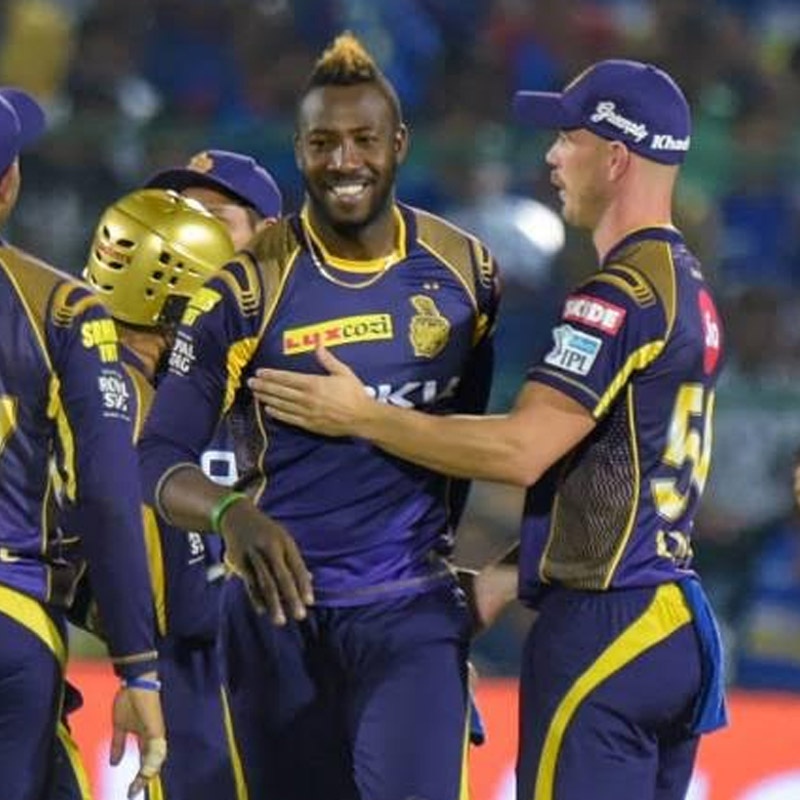
Nokia India head – activation, media and online marketing Viral Oza spoke about how Nokia did an initiative with Kolkata Knight Riders and their fans on the mobile. It asked fans to send in their advice on how the team could improve the team’s performance. While 180,000 fans registered, the initiative got six million responses.
Nokia, Oza said, uses Twitter and Facebook to have a continuous dialogue with consumers. The company realised that online care issues had to be managed;it would help if marketers looked at themselves as consumers also.
Aditya Birla Financial Services Group CMO Ajay Kakar said that his company did not make the mistake of treating cricketers like demi gods. In the spots, they spoke about their real life situations. “It is about using the celebrity in a relevant manner,” he added.
-
A case for disruptive innovations
MUMBAI: Disruptive innovations like the Indian Premier League (IPL) can break through a cluttered market, several experts said.
Kolkata Knight Riders CEO Venky Mysore noted that the IPL was about challenging the norm. “Viewership has leapt sixfold and the reach has gone beyond traditional cricket lovers. From a business perspective, it was about creating a platform to reach out to a passionate public. The IPL was packaged to catch the people’s attention,” he said.
Particpating in a panel discussion at The Mindshare Brand Equity Compass, LinkedIn India country manager Hari V Krishnan noted that Linkedin created a disruptive innovation in the talent economy. The traditional ways of employment did not give transparency. “We extract insight from data. We are not just about helping somebody find a job but also helping them become more productive in their jobs,” he elaborated.
Disruptive innovations can be fought by rival companies by moving into another arena to strike. This is what Cirque Du Soleil did in the circus arena. Microsoft joint MD Hemant Sachdev said that innovation is what makes a company tick as it impacts the consumer experience. “Going forward, the Natural User Interface will be important like Xbox. It is a community that is real and experiential. Telecom is another example of disruptive innovation which gives real value not just to businesses but also to consumers.”
Leaders must provide fertile ground for innovations to grow. Companies, in the process, must be more open to failures and take the risk of adopting disruptive trends so that they break patterns. The interesting thing is that while 95 per cent of ideas fail, innovation is still the only way to succeed.
-

Synovate boosts senior leadership team in Greater China
MUMBAI: Global market research company Synovate has effected changes in China, Hong Kong and Taiwan, promoting two senior executives and roped in a new one.
Managing Director of Taiwan Jenny Chang is promoted to MD of technology and telecommunications for Greater China. He has over 20 years of experience in market research, and has been working with various technology and telecommunications clients in Taiwan and will be relocated to Beijing in June 2011.
Synovate Greater China CEO Eliza Wong said the business unit was reorganised in September 2010 to consolidate key industry-specific offerings and better focus on client needs and align with their structures.“It is no secret that Greater China is a fast-growing and extremely changeable business environment. These new appointments sharpen our expertise in the areas our clients are most focused on, and position us to deliver operational excellence as well as industry know-how,” added Wong.
Steve Garton is promoted to MD of Media for Greater China. He has over 40 years of media experience, much of it in Asia. Besides, Garton also holds the role of global head of media and will continue to be based in Hong Kong.Roland Leung joins Synovate this week as the managing director of emerging industries for Greater China and as the office head of Synovate in Hong Kong. He has over 16 years of experience in the industry, and was most recently senior vice president of sales and marketing in Asia for Harris Interactive.
Wong said: “These appointments will allow us to take our client service, industry knowledge and quality to even greater heights. We are delighted to be able to offer this expertise to our clients as they grasp the opportunities presented by doing business in Greater China.” -

Allied Digital Services ropes in Gaurav Bahirvani as CMO
MUMBAI: IT services and solutions provider Allied Digital Services has appointed Gaurav Bahirvani as its global chief marketing officer.
Bahirvani will report directly to chairman and managing director Nitin Shah and be based at the company‘s headquarters in Mumbai.
Bahirvani will work in close collaboration with the senior executive team and will lead to global brand development, marketing communications strategy and all communication functions including advertising, media relations, investor relations and public relations.Said group chief executive officer Bimal Raj, “As we continue our rapid growth in major global markets, it is important that we take a more brand driven customer-focused view of our overall marketing strategy. We feel Gaurav‘s marketing acumen and brand leadership makes him the right leader for this position.”
Bahirvani has worked with various multinational corporations such as PricewaterhouseCoopers, Colliers International and EQUiTOR-Interbrand Consulting United Utilities among others.
Adds Shah, “With Gaurav‘s broad-based experience, we strongly believe he will play a pivotal role in our transformation journey and help our business achieve sustainable growth and accelerated success.”