Category: Marketing

  • AdAsia begins with I&B Minister stressing on the need of CSR

    AdAsia begins with I&B Minister stressing on the need of CSR

    NEW DELHI: Even as advertising has grown from Rs 100 billion to Rs 300 billion in the last 20 years, consumers are rewarding those advertising agencies who are doing good for society and fulfilling their corporate social responsibility (CSR), Information and Broadcasting Minister Ambika Soni said here today.

    CSR should be used in a country like India for health and education, she said while inaugurating the 27th AdAsia being held in India after a gap of eight years.

    Reiterating that the government is for a free media, she noted that the Advertising Standards Council of India (Asci) is doing a great job in self-regulation as far as advertising was concerned.

    At the same time, the government wants to bring in a more robust system for television rating points and is working towards that end.

    She said the Directorate of Advertising and Visual Publicity (DAVP) is being revamped to “match up to the private advertising agencies”. 
     
    Meanwhile, she said that despite the meltdown in the west, Indian media has continued to grow and there is a boom in the newspaper industry where around 107 billion copies are being sold daily. The number of television channels has reached almost 800 and the number of radio FM channels is expected to go up to 839 after the third phase.

    She said the country had also taken concrete steps to be fully digitalised by 31 March 2014.

    Referring to the theme of the meet, ‘Uncertainty: the new Certainty‘, Soni said “the only certainty is that there will always be uncertainty.”

    Bollywood star Shah Rukh Khan, who has just achieved a milestone in marketing with the way his film Ra.One has been promoted, said on the occasion that he saw himself in various ways as far as advertising was concerned. He was the consumer who always fell for the dream merchants and the “tricks unveiled on my poor unsuspecting greed”; the brand endorser; the seller of his own films and the causes he endorsed including the Kolkata Knight Riders; and marketing himself as a brand for which he always needed to re-invent himself. Luring attention to himself is a great effort and therefore he believed in the idiom “early to bed and early to rise, work as hell and advertise.”

    Khan also unfurled the AdAsia flag, before former Miss India Diana Hayden who was conducting the inaugural ceremony asked him to do a jig on ‘You are my chhamak chhalo‘ from Ra.One.

    About 1200 delegates from India and 25 other countries are attending the meet, which is featuring around fifty of the world‘s top experts in the world of marketing, media and advertising.

    Around 18 sessions are being held on various subjects apart from the opening and closing ceremonies. The speakers will include around 45 from overseas.

  • Govt intent on code to discipline advertisers

    Govt intent on code to discipline advertisers

    NEW DELHI: The government appears to be heading for a confrontation with the advertising fraternity following the insistence of the Consumer Affairs Ministry to draw up a Code with penal powers to deal with the issue of misleading advertisements.

    The Ministry is already holding discussions with the core Ministry – Information and Broadcasting – and with the Health Ministry in this connection.
     
    The Advertising Standards Council of India (Asci) has already met officials in the I&B Ministry to point out that it has a comprehensive Code in this regard being enforced on a self-regulation basis.

    The I&B Ministry is understood to have said that the steps taken by it are adequate and the Consumer Affairs Ministry should ensure that its nominee also takes part in the meetings of the inter-ministerial committee which normally goes into such complaints.

    Asci sources told indiantelevision.com today that it had apprised the Consumer Affairs Ministry of the work being done by it for 26 years and the fact that the I&B Ministry had been appreciative of their work. The sources also said Consumer Affairs Minister KV Thomas was assured that the Asci could work in cooperation with his Ministry, and could receive complaints from this Ministry in the manner it was already doing from the I&B Ministry.
     
    But Thomas told representatives of Asci who met him recently that this was not enough and he wanted a legal regulatory system.

    Officials of the Consumer Affairs Ministry told the Asci that the framework would be meant to only deal with “unscrupulous manufacturers” as they only resort to “dubious advertisements”.

    The Ministry had got into action following a directive from the Prime Minister‘s office after Manmohan Singh received several complaints of exaggerated product claims especially in ads touting anti-ageing creams, fairness creams, weight-loss programmes, and of vitamins or dietary supplements that may even harm consumers.

  • CTM Group partners Mango Cabs for ad space

    CTM Group partners Mango Cabs for ad space

    MUMBAI: Creative Thinks Media (CTM) Group has entered into an agreement with Round-O-Clock Services for the managing the advertising space in the Mango Cabs.

    With the deal in place, CTM Group will be responsible to sell the advertising space inside and outside of the cabs.

    CTM Group MD Ritesh Malik said, “The objective is to create different media vehicles owned by CTM which would help in creating more revenue streams thereby working towards making ourselves a leading media house from an advertising agency that we are currently.”
     
    Mango Cabs business model runs on the lines of London Radio Taxi, under which driver own the cabs and are attached with company for business activities. At present, the fleet size is of 500+ cabs and the company is planning to double the number with in next six months. It is also planning to launch in Bangalore, Agra and Kanpur.

    CTM is also eyeing to go public and already is in talks with private equity firms to raise funds. “The vision is to work towards an IPO in the coming years and we are also talking with few venture capital firms and investment firms which would help us in our growth path by infusing the necessary funding requirements. We are a zero debt company with our own asset base which has made us worthy of the growth that we are looking for ourselves,” Malik added.

  • WPP’s Q3 revenues up 9%

    MUMBAI: Global marketing and communications giant WPP has announced that in the third quarter revenues rose by nine per cent to ?2.46 billion.


    The revenue was up by 13.1 per cent in dollars to $3.9 billion and up 3.6 per cent in Euros to €2.8 billion. Revenue from India was up by 10.4 per cent, the agency said.


    Revenues globally, in constant currencies, were up 8.5 per cent, chiefly reflecting the comparative weakness of the pound sterling. Excluding the impact of acquisitions and currency fluctuations, like-for-like revenues were up 4.7 per cent, less than the 6.7 per cent achieved in the first quarter and 5.6 per cent achieved in the second quarter, but against more difficult comparatives, with the third quarter like-for-like growth for the same period last year at 7.5 per cent. 
     
    On the same basis, gross margin, which is a better indicator of top line growth and measure against costs, was up 5.5 per cent in the third quarter. Over the last two years, there has been a sequential improvement in the combined like-for-like revenue growth of 6.7 per cent in the first quarter, 10.3 per cent in the second and 12.2 per cent in the third.


    On a constant currency basis, the geographic pattern of revenue growth chiefly reflected strengthening in the faster growing markets of Asia Pacific, Latin America, Africa and the Middle East and Central and Eastern Europe and an anticipated slowing in the US.


    The US‘ third quarter revenues were up by 4.6 per cent, on a constant currency basis, compared with 6.1 per cent in quarter two. The UK improved significantly in the third quarter, with constant currency revenues up 8.9 per cent compared with 6.6 per cent in the second quarter and 7.7 per cent in the first. Western Continental Europe, although the slowest growth region, showed an improvement in the quarter, with revenues up 7.6 per cent compared to 5.9 per cent in quarter two and 2.2 per cent in quarter one, with some of this being driven by acquisitions.


    Asia Pacific, Latin America, Africa and the Middle East and Central and Eastern Europe also showed an improvement in the third quarter with revenues up 12.4 per cent, similar to quarter one growth of 12.6 per cent, but above quarter two growth of 11.5 per cent. Within this region there was some improvement in the Middle East, with growth in the quarter, although there is still considerable and, if anything, increased uncertainty. Again within this region, all markets in Asia, with the exception of Japan, showed double digit revenue growth, with Mainland China up 26.6 per cent, India was up by 10.4 per cent and Singapore, one of the Group‘s largest markets in the region, up 11.9 per cent.


    Revenues in the Brics were up 19 per cent, with the Next 11 up almost 15 per cent. The Civets were up by over 29 per cent. The new G8, highlighted by Goldman Sachs Asset Management chairman Jim O‘Neill was up almost 18 per cent.


    By communications services sector, the pattern of revenue growth strengthened across all service sectors, compared with the second quarter, except consumer insight, within which custom research remains the drag, particularly in mature markets. On a constant currency basis, advertising and media investment management revenues grew by 12.5 per cent, compared with 11.4 per cent in the second quarter, with advertising up almost seven per cent and media investment management up by 21 per cent. The Group‘s public relations and public affairs businesses were up by 7.4 per cent, compared with six per cent in the second quarter, with improvement in almost all brands. 
     
    The Group‘s branding and identity, healthcare and specialist communications businesses (including direct, digital and interactive) grew by 10.5 per cent, above the second quarter growth of 9.1 per cent and 7.9 per cent in quarter one. This improvement was driven largely by WPP‘s global direct, digital and interactive businesses, amongst others comprising OgilvyOne Worldwide, OgilvyAction, VML, G2, Possible Worldwide and Wunderman.


    In the first nine months of 2011, reported revenues were up by 7.1 per cent at ?7.170 billion, up 12.9 per cent in US dollars to $11.5 billion and up by 5.2 per cent in Euros to €8.2 billion. In constant currencies, revenues were up by 8.2 per cent, chiefly reflecting the weakness of the pound sterling against most major currencies. On a like-for-like basis, excluding the impact of acquisitions and currency fluctuations, revenues were up 5.6 per cent and the more relevant gross margin up by 6.4 per cent.


    On a constant currency basis, the pattern of revenue growth by region varied in the first nine months, although all regions, except the United States, strengthened in the third quarter. Although the United States softened in the third quarter up by 4.6 per cent, constant currency revenues were up 6.6 per cent year-to-date. The UK improved significantly, with revenues up 8.9 per cent in the third quarter and 7.7 per cent year-to-date, and with gross margin up by 10.4 per cent.


    Western Continental Europe, although relatively more difficult, showed a marked improvement, with revenues up by 7.6 per cent in the third quarter and 5.3 per cent year-to-date, although, again, this was partly the result of acquisitions. Austria, Belgium, Germany and Switzerland all showed double digit growth in the third quarter, but France and particularly, Greece, Portugal and Spain remained affected by the Eurozone debt crisis. Revenues in Asia Pacific, Latin America, Africa and the Middle East and Central and Eastern Europe were up 12.4 per cent in the third quarter and 12.2 per cent year-to-date, driven by particularly strong growth in South East Asia and Africa.


    In the first nine months of 2011, 29 per cent of the Group‘s revenues came from Asia Pacific, Latin America, Africa and the Middle East and Central and Eastern Europe, a further increase of almost one percentage point, compared with the first half of this year and 1.5 percentage points over the first nine months of 2010 and against the Group‘s strategic objective of 35-40 per cent in the next three to four years.


    By communications services sector, although again the pattern of growth varied, constant currency revenues strengthened across all sectors, with the exception of consumer insight. The rate of growth of the Group‘s advertising and media investment management, public relations and public affairs and branding and identity, healthcare and specialist communications (including direct, digital and interactive) sectors increased by over 100 basis points or over one per cent in the third quarter compared with quarter two. On a constant currency basis, advertising and media investment management showed the strongest growth, with third quarter revenues up by 12.5 per cent, compared with 11.4 per cent in quarter two and 12.2 per cent year-to-date. Public relations and public affairs was up 7.4 per cent in quarter three compared with six per cent in quarter two and 6.4 per cent year-to-date. Branding and identity, healthcare and specialist communications (including direct, digital and interactive) was up 10.5 per cent in quarter three compared with 9.1 per cent in quarter two and 9.2 per cent year-to-date.


    The Group‘s consumer insight businesses were up by 0.7 per cent in the third quarter with gross margin up 1.7 per cent. Double digit growth in the faster growing markets of Asia, Latin America, Africa and the Middle East and Central and Eastern Europe was offset by poorer growth in the mature markets of North America, the UK and Western Continental Europe. Year-to-date, revenue was up two per cent with gross margin up by 2.5 per cent.


    Digital and interactive revenues accounted for almost 29 per cent of total revenues, up 0.7 percentage points against last year and also against the Group‘s objective of 35-40 per cent in three to four years.


    Additional information is provided in appendices 3 to 6, showing the third quarter and nine months revenue and revenue growth in reportable US dollars and Euros, to allow for better comparison with a number of our competitors, who report in these currencies.


    New Business: Net new business billings of ?1.4 billion ($2.2 billion) were won during the third quarter, well up on the same quarter last year. Net new business billings won in the first nine months of 2011 were ?2.6 billion ($4.2 billion) and similar to the same period last year. The Group continues to benefit from consolidation trends in the industry, winning several large assignments from existing and new clients and ranking towards the top in the three new business league tables, reflecting relative competitive strength.


    WPP adds that to date, it has seen little, if any impact of six global risks – feared Euro contagion, lack of attention to the US deficit, rising commodity prices, the impact of the tragic events in Japan, uncertainties caused by the Arab Spring and finally the possibility of the withdrawal of the post-Lehman fiscal and monetary stimulus – on client spending, although there was some geographic impact on Ireland, Portugal, Spain, Greece, Japan and the Middle East. However, the continuous macro economic gloom and despair in the media and elsewhere must have some impact on both corporate and consumer confidence. As a result, the marginal hire or investment by uncertain CEOs and Boards and marginal purchase of a car or house or holiday or domestic appliance by worried consumers must be affected.


    Balance Sheet and Cash Flow: Average net debt in the first nine months of 2011 was ?2.7 billion, compared to ?3 billion in the comparable period last year, at 2011 average exchange rates, a decrease of ?332 million or $531 million. Net debt at 30 September 2011 was ?3 billion, against ?2.9 billion at the same time last year, at 2011 average exchange rates, an increase of ?123 million, reflecting an increase in acquisition activity and share buy-backs in the latter part of the first nine months of 2011. The Board continues to examine ways of deploying its EBITDA, (of over ?1.5 billion or over $2.4 billion for the preceding twelve months) and substantial free cash flow (of over ?950 million or approximately $1.5 billion per annum, also for the previous twelve months), to enhance share owner value.
     
    WPP adds that there is still a significant pipeline of reasonably priced small and medium sized potential acquisitions, with the possible exception of digital acquisitions in the USA which remain over-priced and Brazil, where the market appears to be over bought. As a result, deals done continue to be of small and medium sized companies, focused on new markets, new media and consumer insight and will not be limited to ?100 million per annum as before, but will more likely total around ?400 million this year.


    It will continue to seize opportunities in line with our strategy. In the first nine months of 2011, the Group continued to make small-sized acquisitions or investments in high growth geographical or functional areas. In the first nine months of this year, acquisitions and increased equity stakes have been focused on advertising and media investment management in India, the US, France, Germany, the Netherlands, Bahrain, South Africa, Brazil, China and Korea; in consumer insight in the US, Ireland, Germany, Russia, Lithuania and Kenya; in public relations in the UK; in direct, digital and interactive in the US, the UK, Austria, Brazil, China, the Philippines and Singapore and in specialist communications in the US.


    Future Prospects: The parent company will be reviewing the operating companies third quarter revised forecasts in New York over the next two weeks. The preliminary, unreviewed figures show full year like-for-like revenue growth of five per cent and gross margin growth of 5.7 per cent. Although this implies a reduction in the top line growth rate in the fourth quarter, the two year revenue and gross margin growth remains strong in line with the rest of the first three quarters and, even more importantly, operating margins show continuous improvement in the fourth quarter, beyond the first half achieved improvement of 0.7 margin points. This augurs well for enhanced profitability, despite more difficult economic headwinds and industry comparatives.


    Although it is too early to compile or estimate budgets for next year, despite current uncertainties, the prospects do not look dire, particularly given the record high levels of variable costs in the company‘s structure. Even though recent global GDP forecasts have been reduced by pundits like Goldman Sachs to 3.5 per cent and may be reduced further by the end of the year to say around three per cent, the World is growing at different speeds – the Brics and next 11 or the CIVETS or Jim O‘Neill‘s new G8 the fastest; the USA and Germany next; the UK, France, Italy and Spain next; and Japan the slowest, although recent restructuring investments have raised the short-term GDP growth rate.


    Advertising as a proportion of GDP remains at depressed levels in mature markets post-Lehman and the faster growth markets remain under-branded and under-advertised. Nervous, risk averse clients, not only continue to invest in brand rather than in additional capacity in slow growth, predominantly Western markets, but also invest in brand behind new capacity in faster growth markets – a positive double whammy for our industry, even if some clients mistakenly believe, in our subjective view, that advertising should be a variable cost and not a fixed investment. WPP expects ad expenditure for next year to be further buttressed by the London Olympics, the European Football Championships and the US Presidential Election, all of which should add another one per cent or so to spending levels, as usual in a maxi-quadrennial year and take industry expansion into four per cent territory. WPP remains of the view that 2012 will not be the really challenging year. It is likely that European politicians will just about muddle through the current Eurozone crisis.


    The rubber is really likely to meet the road, however, after the US Presidential Election in late 2012 and into 2013, when a newly elected American President will finally have to deal with the US deficit. We remain attracted to the “LUV” analogy, with an increasing emphasis on the “L” indicating the long slog in Western markets, in particular.


    Future Objectives: In these uncertain times, the Group continues to concentrate on its long-term targets and strategic objectives of improving operating profits by 10-15 per cent per annum; improving operating margins by half to one margin point per annum or more depending on revenue growth; improving staff cost to revenue or gross margin ratios by 0.6 margin points per annum or more depending on revenue or gross margin growth; converting 25-33 per cent of incremental revenue to profit; growing revenue faster than industry averages and encouraging stronger creative standards and co-operation among Group companies.


    Asia Pacific, Latin America, Africa and the Middle East and Central and Eastern Europe (including the BRICs and Next 11), revenues and digital revenues are both now approximately 30 per cent each of total revenues, which this year will be approaching $16 billion. We have now increased our previous targets of one-third of revenues coming from these geographic and services sectors to 35 to 40 per cent. Given these industry trends, the strategic focus is now centered, not only on strategic planning, creative execution and distribution, but on the application of technology and analysis of data, to the benefit of our clients and people. This strategy, WPP adds, should stand it in good stead in an increasingly challenging economic environment.
  • Big Street retains OOH mandate for Line II of Delhi Metro till 2016

    Big Street retains OOH mandate for Line II of Delhi Metro till 2016

    MUMBAI: Reliance Broadcast Network’s OOH arm, Big Street, has retained the mandate for Line II of the Delhi Metro Rail Corporation (DMRC) till 2016.

    This 10.46 kilometres stretch covers commercial, office, shopping and government office areas of central Delhi through its nine stations – Vishwavidyalaya, Vidhan Sabha, Civil Lines, Kashmiri Gate, Chandni Chowk, New Delhi, Rajiv Chowk, Patel Chowk and Central Secretariat. 
     
    Big Street business head Rabe T Iyer said, “We feel proud to have bagged this OOH mandate of DMRC for the second time in a row. The DMRC metro service is probably the most widely used public transport in Delhi whose passengers are mostly professionals across relevant SECs.

    Within a short time of being in the business we have firmly established ourselves as innovators for a wide variety of our clients who found value for money in campaigns initiated on their behalf by Big Street. We will continue to provide innovative platforms connecting marketers to relevant audiences.”
     
    RBNL claims that DMRC has already been one of the most successful mandates for Big Street, and especially Line II and Big Street has hosted a host of innovations for its clients that boast of marquee brands across sectors – BFSI, FMCG, consumer goods, automobile, fashion etc.

    With this retention of Line II and other DMRC mandates i.e. Line III (21 stations between Barakhamba and Dwarka) as well as Delhi Metro Airport Express, Big Street claims access to 40 Metro stations and nearly 75 per cent of the commuters, making it the largest OOH player in Delhi Metro, the company said.

  • Omnicom to acquire majority stake in Mudra Group

    Omnicom to acquire majority stake in Mudra Group

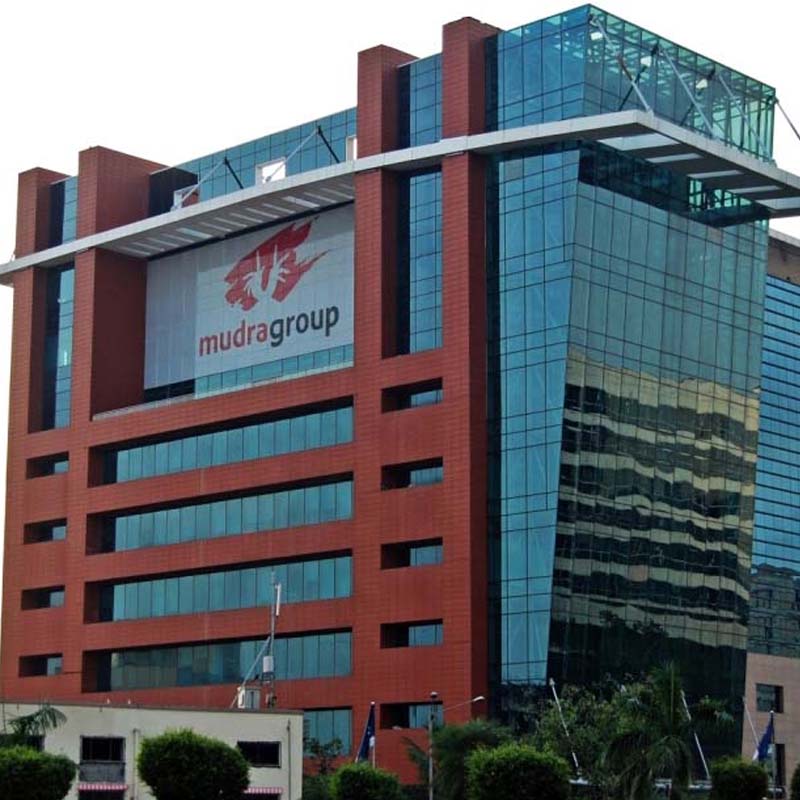
    MUMBAI: US-based advertising giant Omnicom Group is upping its stake in Anil Ambani’s integrated marketing communications company Mudra Group in a bid to significantly expand its service capabilities and presence in India.

    Omnicom, which at present holds 10 per cent stake in the Mudra Group will increase the holding to 51 per cent. As part of the agreement, Omnicom will also extend its partnership with the Reliance ADA Group and Reliance ADAG chairman Anil Ambani will join the Omnicom International Advisory Committee.

    The deal will give Omnicom a strong foothold in the Indian market, where it is far behind its international competitors like WPP.

    “This acquisition is an important step in achieving Omnicom‘s strategy to extend and deepen our presence in rapidly growing markets,” said Omnicom Group president and CEO John Wren. “Our vision is to be a source of innovation in every market we serve. Mudra is widely acknowledged as an outstanding company with impressive creative product and expertise in a broad range of disciplines. Mudra‘s innovation and depth of talent will strengthen our business capabilities not only in India but around the world.”
     
    Mudra Group has a four agency networks: branding and communications agency Mudra India; marketing and advertising agency DDB Mudra; integrated engagement and experiential agency Mudra Max; and Ignite Mudra. It has 26 offices across the country and an extensive field activation network.

    “DDB has been an excellent partner over the years. We have benefited immensely from the collaboration and transfer of knowledge from around the globe. We are proud to belong to such a storied network,” Mudra Group CEO Madhukar Kamath said. “Omnicom and DDB have clearly been the inspiration for Mudra Group‘s transformative growth over the last five years. My colleagues and I look forward to the next decade of explosive growth in the Indian market.”

    DDB Worldwide president and CEO Chuck Brymer noted, “This acquisition will further unite two companies that have long held the same values, creative goals and ambitions. Under Madhukar‘s leadership, Mudra is the original challenger brand of the Indian communications industry, and it shares DDB‘s culture of creative excellence. Together, we will create even greater growth for our clients in this rapidly changing, technologically driven region.”
     
    DDB and Mudra Group‘s relationship began in 1988 and later in 2007 the two companies formed DDB Mudra, which established DDB India, Tribal DDB, Rapp and DDB Health & Lifestyle in the Indian market.

    DDB Asia Pacific CEO John Zeigler added, “Mudra has an impressive history as both creative leaders and strong believers in integrated solutions making them one of the most innovative companies in India.”

    Omnicom Group EVP and CFO Randall Weisenburger noted, “In addition to significantly expanding our service capabilities in the region, this partnership will bring with it an exceptional Shared Services and Operations Center in Ahmedabad that will help Omnicom more efficiently expand its other operations in India. Additionally, Mudra recently moved into a new headquarters facility in Mumbai called Mudra House, a sustainable building and one of the few in India to be awarded LEED (Leadership in Energy and Environmental Design) Gold certification. Mudra House is widely acclaimed for its conservation features and state of the art technology.”

  • The marketing significance of the Indian Formula 1 Grand Prix

    The marketing significance of the Indian Formula 1 Grand Prix

    MUMBAI: With India hosting a F1 race for the first time over the weekend in Delhi advertisers and sports marketing experts expect the event to give F1 and motorsports a big fillip.

    GroupM ESP managing partner Hiren Pandit expects television viewership on Star Sports to more than double. “The race will have a direct impact on the sport’s popularity. Already you are seeing hotel rates going berserk.”

    He adds that people who only knew of F1 from the fringes will now take a more active interest. They will start watching the event more. He points to the increase in chatter happening on social networks.

    “Opinions will form on the various teams. Depending on the drama that happens in Delhi there will be a positive spillover effect on the other races that take place after that. The good news is the sheer amount of coverage that publications like The Times of India are giving. That is creating a tremendous amplification effect.”

    The only drawback according to Pandit is that in terms of watching the event live if one does not have right tickets it can be difficult to make out what is happening. At the same time F1 does have a unique in-stadia atmosphere with elements of glamour.

    In terms of brands being associated with the event he said that this is a chance for a company like Airtel to stand up and announce its arrival on the global stage. He notes that F1 teams will increasingly do promotional initiatives in the country.

    Already Red Bull did a race in Delhi while Vodafone McLaren brought Lewis Hamilton to Bangalore.

    Offering a media buyer’s perspective Madison Media Group CEO Punitha Arumugam noted that for brands like Airtel, F1 offers the chance to do segmental targeting. “FI is about narrowcasting compared to cricket which is about broadcasting to the masses.”

    From a psychographics perspective, Arumugam notes that it is viewers who initiate changes in consumption patterns and who influence the market who will be targeted by advertisers.

    “Interest levels for the sport will grow. F1 is at the cutting edge of adventure sport. At the same time though I don’t think that the sport will become mass,” she adds.

    Total Sports Asia MD India Suvrangsu Mukherjea notes that this event will do for the classes what the IPL did for the masses. “It will give the SEC A+ segment a different experience. This viewer has gone off cricket. He/she wants to see something new. The race will change the way Indians appreciate the sport. The event will give the upper middle class a new platform to look forward to.”

    Asked about the TG for this event he says that it will initially start with the Metros. However a few years down the line the classes and masses will converge in terms of viewing the event.

    “The aspirational class will start to watch this event. These are people who aspire to a better lifestyle. Sport at the end of the day is about a lifestyle.”

    Different tie-ups are happening. Sahara bought a stake in Vijay Mallya’s Force India team for $100 million. The team is now called Sahara Force India. It roped in former cricketer Saurav Ganguly for a ‘Raise The Flag’ campaign. On the merchandise front, it launched limited edition Sahara Force India commemorative Kingfisher Premium and Kingfisher Strong cans to celebrate the sport.

    Vodafone has been associated with the McLaren Mercedes team since 2007. The mobile phone operator has been drawing up initiatives to bring the race and the team closer to its subscribers.

    The company recently announced the winners of the two initiatives that it ran in the run-up to the Indian GP. These were ‘Vodafone Race to Fame’ and ‘Vodafone Drive into the Big League’. The ‘Race to fame‘ scheme offered participants a chance to spend this weekend with the Vodafone Mclaren Mercedes team, with access to the Paddock club, Pit lane and Team garage.

    The other initiative ‘Drive into the big league‘ offered a chance for an enterprise to have its logo on the Vodafone McLaren Mercedes cars during the race weekend at the Indian Grand Prix. ABC Consultants won this.

    Amul is sponsoring the Sauber F1 team from Switzerland and is using the platform to forge a youth connect.

    Machdar Motorsports is organising a league around motorsports later this year. The company’s CEO Darshan M says that the inaugural F1 GP in India is going to have a very positive impact on the sport in the long run. “The interest has been immense and for the first time there seems to be more buzz around the race than even cricket in India. We have seen a lot of support from the big corporate houses and their association with the sport is great to see.

    “This will aid motorsports in India to grow as a category and will indirectly also provide a platform for F1 Super Series in building its credibility as it promises to usher in a new era of Indian Motorsport. Even in terms of economic impact it is huge on the city. The amount of tourists who will come for the race will add to the hospitality industry, the F&B consumption and the local handicraft market will also receive a boost,” adds Darshan.

    Meanwhile Jaypee Sports, which is organising the F1 Grand Prix, is pulling out all the stops to ensure that the glamour quotient which F1 is famous for will be ever present. Among other things it has roped in American pop icon Lady Gaga to perform at the after party. This will be her first visit to India. Furthermore, on all the days 28-30 October 2011, the races will be followed by routines by DJ Roger Sanchez, German DJ producer Tom Navy as well as producer and musician Edward Maya.

    These parties are being organised by JPSI in association with LAP, the restrobar founded by Arjun Rampal and restaurateur AD Singh, set in the Jaypee Green Golf and Spa Resort.

    Off the circuit though, like the IPL, this event is also generating some amount of controversy. The Jaypee Group has been directed to deposit 25 per cent of ticket sale receipts in a separate account by the Supreme Court.

    A bench of justices DK Jain and AR Dave in an interim order directed that the amount would be subject to the final outcome of a plea challenging tax exemptions accorded to the organisers of the F1 race by the UP Government.

  • AdAsia to focus on the uncertainties in the new world

    AdAsia to focus on the uncertainties in the new world

    NEW DELHI: About 1500 delegates from India and overseas are expected in the capital early next week for the 27th AdAsia being held in India after a gap of eight years.

    Around fifty of the world‘s top experts in the world of marketing, media and advertising will share their wisdom and experiences during the meet being held from 31 October to 3 November at the Taj Palace Hotel.

    The meet is being held on the theme of ‘Uncertainty: the new Certainty‘ and will have around 18 sessions on various subjects apart from the grand opening and closing ceremonies. The speakers will include around 45 from overseas.
     
    Bollywood star Shah Rukh Khan will inaugurate the meet and the closing will feature PepsiCo chairperson and CEO Indra Nooyi in conversation with Omnicom CEO John Wren.

    The last Congress hosted by India was in 2003 in the pink city of Jaipur and was considered a landmark event. AdAsia 2011 is being organised under the aegis of the Asian Federation of Advertising Associations (AFAA).

    The theme “Uncertainty: The New Certainty” underlines the dynamic world that is currently at an inflection point witnessing a realignment of global economic leadership. Post the global meltdown, Asia leads the world on the path of recovery, thus attracting attention from the world over, according to AdAsia 2011 chairman and Mudra Group MD and Group CEO Madhukar Kamath.

    The sessions will be conducted by global stalwarts of the corporate, marketing, advertising media and communications community that will explore the business ecosystem and understand the nature of disruption. Time tested tools which have never failed the industry along with new tools, methods, applications and ever booming digital medium will be discussed in detail. The topics have been selected to rouse debates on concerns vital to the marketing, advertising and media fraternity.

    Some of the subjects being taken up are: The Game Changers, Creative Asia, Decoding the New Age Consumer, Future of Management, From Chat rooms to Twitter, Media Fragmentation – How to Navigate through traffic?, Disruptive Branding / Away from Herd Marketing, Art of Storytelling in Multi-screen environment, Building Brands in a Trust Deficit World, Global Ethos: Managing Unpredictability across circumstances of Life & Business, The Pursuit of Big Ideas in the Age of Now, and Marketing 3.0 – New rules of Engagement. 
     
    Some of the speakers are: A Salman Amin (EVP and CMO, PepsiCo); Chris Thomas (Chairman and CEO of BBDO in Asia, Middle East and Africa & Chairman of Proximity Worldwide); Anna Bernasek (Writer and Journalist); Nitin Paranjpe (CEO & MD, Hindustan Unilever Limited & EVP South Asia, Unilever); Harish Manwani (COO, Unilever); Arvind Rajan (MD and VP of Asia Pacific and Japan (APJ) at LinkedIn); Ronda Carnegie (Head of Global Partnerships at TED); Kate Day (Communities Editor, Daily Telegraph Online); Ram Charan (Business Consultant, Speaker and Author); Akira Kagami (Executive Advisor & Global Executive Creative Advisor, Dentsu Inc.); Thirasak Tanapatanakul (Worldwide Chairman, Creative Juice); Duncan Goose (Founder & MD, Global Ethics Limited); Joseph V Tripodi (EVP and chief marketing & commercial officer, The Coca-Cola Company); Kitty Lun (Chairman & CEO, Lowe China); Koichi Yamamoto (GM, Global Solutions Center, Dentsu Inc.); Michael I. Roth (Chairman & CEO, Interpublic); Pankaj Ghemawat (Global Strategist, Professor, Author and Speaker); Irfan Mustafa (Chief Leadership Development Officer, Yum! Brands Inc. & MD, Middle East, North Africa, Pakistan and Turkey, Yum! Restaurants International); and Piyush Pandey (Executive Chairman and Creative Director, South Asia, Ogilvy & Mather India).

    Sidelights will include lunches and dinners in specially created sets depicting Indian Royalty, the Streets of Delhi in the Opening Gala dinner, and a Vietnamese evening. Taiwan and Thailand are to pitch to hold the AdAsia 2015.

  • Colgate ties up with upcoming Tintin film

    Colgate ties up with upcoming Tintin film

    MUMBAI: Colgate-Palmolive India has tied up with Sony Pictures for the upcoming film ‘The Adventures of Tintin‘ which releases on 11 November.

    There is a contest and the winner will visit Tintin‘s homeland – Brussels.

    Colgate 360 degree surround toothbrush has announced the ‘Fight-Against-Evil‘ contest that gives the consumers a chance to be part of Tintin‘s life. Winners stand a chance of winning Tintin merchandise. Three winners will also get to win a 5-day trip to Brussels, Tintin‘s homeland.
     
    Colgate-Palmolive India VP marketing Rekha Rao said, “We are excited to partner with Sony Pictures to bring the ‘Fight-Against-Evil‘ contest to our consumers. Most of us have been Tintin fans and we are delighted to present our consumers with an opportunity to be part of their favourite character‘s life.”

    Sony Pictures India director marketing Divya Pathak added, “The Adventures of Tintin is the movie event of the year and Tintin, together with the movie‘s creators Steven Spielberg and Peter Jackson, are icons in India. We see this partnership with Colgate as iconic brands coming together to give Tintin fans one more reason to celebrate the release of this much-awaited movie.”

    The new TVC campaign introducing the contest draws synergies of Tintin and Colgate 360° Surround toothbrush fighting evil forces. While Tintin travels the world solving mysteries, Colgate 360° Surround helps fight the evil forces all across the mouth.

  • Vatsal Asher joins DMA: India as CEO

    Vatsal Asher joins DMA: India as CEO

    MUMBAI: Direct Marketing Association: India (DMA: India) has appointed Vatsal Asher as chief executive officer. In his new role at DMA: India, he will be responsible for strengthening DMA: India’s presence as an apex body for advocacy of direct marketing practices.

    Asher said, “With multitude of choices, Indian consumers are becoming more discerning about their brand preferences and where they spend money. Considering this consumer behaviour and the increasing media clutter, it is imperative for marketers to create data driven customer centric campaigns. From traditionally being defined as ‘response generating’ domain, direct marketing is now used for ongoing customer engagement. By emphasising on global best practices for marketing services providers and marketers, I aim to carry forward DMA: India’s vision of establishing industry standards and promote the direct marketing community.”

    Direct marketing has gained popularity in past few years with emphasis not just being laid on measuring the returns on marketing spends but also campaigns being created to initiate a dialogue with the customer. With advent of new media and innovative usage of technology to engage with customers, spends on direct marketing have also increased significantly.

    Prior to DMA: India, Asher was associated with Deepak Fertilisers’ consumer facing VARE division as VP. He has also worked with Reliance Retail, Tata Teleservices and RPG group.

    He comes with over 15 years of experience in domain of marketing communications across brand management, sales and promotions, loyalty and customer experience. With understanding of consumer behaviour and approach to engage with consumers, he has strategised and executed marketing campaigns.

    Vatsal added, “Thanks to direct marketing going digital, it now considered as targeted and customer specific media rather than an intrusive form of marketing. In coming months I look forward to promote new trends and technology in direct marketing, besides creating platforms for knowledge sharing and innovation. We envisage instituting forums with active stakeholder participation in form of industry councils and regional chapters. We shall be organising webminars, periodic meet ups and an annual colloquium modelled on global format to meet the objectives. Emphasis will also be laid on protecting consumer’s interest, thereby strengthen their belief in direct marketing.”