Category: Marketing

  • EMM enters India via JV

    MUMBAI: EMM International, one of the four global media auditors, is entering the Indian market through the joint venture route.


    The London-based company is partnering Indraksh Media & Management Services (IMM), Mumbai to launch Indraksh EMM India.


    EMM, thus, becomes the first global media management company and auditing consultancy to launch in India. It will have offices in Mumbai and Delhi.


    The chairman of EMM India is Stephen White, EMM International‘s founder, while Yuvraj Agarwal has been named as the CEO. 
     
    The Indian outfit will serve international and local advertisers operating in India and offer the same services for local advertisers who need media help in the markets they are exporting to.


    “EMM has completed many ad hoc assignments in India during the last nine years and now with the increasing growth of the media market in India, it is time for it to offer services on a permanent basis,” the company said.


    The Indian offices, to be launched next week, will serve advertisers operating throughout the continent.


    “India is in the midst of a media blitzkrieg and advertisers are hounded by a plethora of media options and possibilities every day. The high level of media fragmentation poses a serious challenge for advertisers and their media agencies. Our research amongst advertisers and agencies in India confirms that there is a distinct need from advertisers for a ‘critical friend‘ who can help in the media buying and planning process, increasing ROI, assessing inter and intra media effectiveness by medium, ensuring deliverables and presenting a completely independent, accountable and clear plan. EMM India will focus on being this ‘friend‘ to the advertisers,” White said.


    EMM India will offer “entirely bespoke products and services” to clients who have specific requirements, particularly those Indian companies needing media management help both inside and outside of India.
     
    EMM India will offer services including media performance evaluation, media agency contract reviews- improving client media process- auditing contractual deliverables – media planning and strategy benchmarking- clarification of volume rebates from the media- media agency pitch management- media performance incentive programmes.


    “EMM‘s proposition is that we save advertisers significant sums of money through the specific best practice services and tools that we have developed over 20 years. In India, we are moving from an ‘ad hoc‘ service to a full time service to satisfy client demand,” the company said.

  • Pamela Levine is HBO US EVP, marketing

    Pamela Levine is HBO US EVP, marketing

    MUMBAI: Pamela Levine will join US broadcaster HBO as executive VP of marketing and will report to co-president Eric Kessler.

    Levine will be responsible for overseeing ad campaigns for all programming, providing strategic marketing direction for HBO and Cinemax as well as guiding digital platforms and retail marketing efforts for the company. She will start in her new position on 15 November working out of HBO‘s headquarters based in New York.

    Kessler said, “We use event marketing strategies often employed in the theatrical arena to launch most of our series so Pam‘s background makes her an ideal choice for this position. HBO‘s programming touches every genre and Pam has experience with all of them. She will bring an exciting new perspective as well as an appreciation for the unique nature of our brand and business model.”
     
    Levine comes to HBO with 16 years of experience at Twentieth Century Fox, where she spent the last nine years as co-president of Domestic Theatrical Marketing, responsible for overall branding, media strategy and campaign strategy. She jointly led marketing for over 140 movies, playing an integral role in helping to craft upfront marketing strategies for all of the studio‘s releases, including creating and leading campaigns as diverse as ‘The Devil Wears Prada‘, ‘Walk The Line‘, ‘Marley And Me‘, ‘Taken‘ and ‘Avatar‘, the highest grossing movie of all time.

    Levine has experience in launching, building and managing blockbuster franchises for films such as X-Men, Ice Age and Night At The Museum. She also has expertise in managing all areas of traditional media, promotion as well as content integration and digital/mobile.

  • Audiences swell for India F1 GP

    Audiences swell for India F1 GP

    MUMBAI: The first Indian F1 Grand Prix that was held last weekend has seen a sixfold increase in TV ratings compared to other F1 races, according to data from TAM Sports (c&s, 4+ six Metros).

    Tam data shows that if an average F1 GP has a TVR of 100, then the India race managed a TVR of 715. In terms of the other GP races, the Malaysian GP ran a TVR of 171 while the Australian GP managed 154 and the Singapore event got around 85 TVR. The analysis is based on the Qualifying Race and Race Day.

    Lodestar UN COO Anamika Mehta said that since the F1 race was taking place in India for the first time, there was a lot of buzz. “There was a lot more excitement and it is natural that the TVR grew. F1 is still a nascent sport but if it is cultivated and marketed well, it will grow.”

    Advertisers are still figuring out how an F1 association works in terms of economics and ROI. “The good news is that the race took place during the holiday season. Around 95,000 people watched the race on the ground which shows the kind of interest the event generated,” said Mehta.
     
    Mehta feels that interest in advertisers among F1 at a ground level will mostly be for the India event as opposed to being involved with the other races. “Being involved with F1 at an overall level will be a slow burn process. Even Indian companies which want to go abroad for now are mostly only involved with the Indian race. It does not make sense for Indian companies who are mostly local to be involved at a ground level with races in foreign markets.”

    Mehta expects advertisers to experiment with the F1 race in India over the next two to three years, both on-air and on the ground. So one could see different kinds of partnerships taking place.

    Mehta also does not expect much viewership growth to happen for the other races remaining in the season. “While there might be a bit of growth for the remaining races in the season, I don‘t think that it will be dramatic. The sport has to be cultivated in the country,” she averred.

  • Loyalty marketing growing in India

    Loyalty marketing growing in India

    MUMBAI: India‘s continued economic growth has fueled an emerging opportunity for brands and retailers to engage consumers, according to the new 2011 Colloquy Cross-Cultural Loyalty Study.

    This research was carried out in collaboration with multichannel marketing services firm Epsilon International and LoyaltyOne, a provider of loyalty marketing services that recently entered the Indian consumer market.

    Among the key findings for India is the importance of word-of-mouth (WoM) as compared to other countries surveyed. WOM conversations are rated at 7-8 on a 10 point scale, where 10 signifies that WOM conversations are “extremely important”, approximately, 15 – 25 per cent higher than developed countries. This is of great significance for brands looking to create early adopters and loyal ambassadors.

    India also offers a significant socially accessible and connected consumer audience with a hundred million internet users more than half of whom (55 per cent) read product reviews online and only make a purchase based on the feedback, according to the Asian Digital Marketing Association (ADMA) report 2011.
     
    LoyaltyOne India CMO Rathin Lahiri said, “The results of the study validate that there‘s never been a better time for brands in India to engage in meaningful relationships with their customers. First generation loyalty programs create a means to get to know customers better. With that knowledge brands can successfully adapt and build the type of lasting relationships that drive sustained growth.”

    Other study highlights:

    • Consumers in India have an engaged, energised, and enthusiastic attitude about their economic prospects, consumerism, brands and companies, and loyalty rewards programs. Over one-third (34 per cent) of Indians feel strongly that their economic prospects will improve over the next decade.
    • While a sizeable 42 per cent of Indians belong to at least one reward programme, it is significantly lower than their American counterparts, 74 per cent of whom are enrolled in such programs.
    • 20 to 33 per cent of Indian consumers are “extremely loyal” to their favorite brands across six major categories — clothing retailers, grocery retailers, financial services providers, dining, auto fuel and travel providers
    • 56 per cent of Indians believe that most businesses can be trusted. This is significantly higher than all other countries surveyed.
    • A high number of Indians (56 per cent) also seem to have inherent trust towards international brands over domestic brands.
    • Email and text messages rank number one and two respectively as the preferred means of receiving marketing messages among India‘s middle class consumers, beating television and print advertising.

    Epsilon VP sales, Asia Pacific Adrian Hoon said, “The opportunity for marketers in India is clear. The challenge, however, is to convert the Indian consumer‘s growing love affair for the brand into a longer term, sustainable and profitable relationship. As the role of word of mouth grows in an increasingly social environment, the gap between satisfaction and dissatisfaction has never been more pronounced. Brands that invest in understanding customers‘ engagement dynamics and engaging their hearts and minds will win big, in terms of perceived service and loyalty.”

    LoyaltyOne president Bryan Pearson will provide additional research-based insights into the best ways for marketers to communicate with increasingly sophisticated Indian consumers when he serves as a featured presenter at the World Brand Congress in Mumbai on 25 November. Pearson‘s presentation is titled, ‘From the Mouth of India‘s Consumers: New Research into Attitudes about Loyalty‘.

  • CTM partners BehindTheMoon Consultants for client servicing

    CTM partners BehindTheMoon Consultants for client servicing

    MUMBAI: Delhi-based Creative Think Media (CTM) Group has entered into a strategic alliance with the brand consulting boutique firm BehindTheMoon Consultants for brand advisory to its selected clients.

    BehindTheMoon chief associate Zaara Khader said, “Advertisers in the SME sector need our kind of consulting services the most since they work on stringent budgets but hesitate on coming to independent consultants such as us as they feel this will tax their already tight budgets or even due to paucity of information. CTM has got us on board for a host of their clients and we respect that ingenuity immensely.”
     
    BehindTheMoon offers strategic consulting on matters of brand development and has developed a filter where every initiative of the brand including all communication strategies is processed through it.

    CTM select clients so that higher efficiencies are achieved in advertising and the clients not only get more for their advertising buck but also build formidable brands.

  • Ogilvy creates new campaign for Vodafone

    Ogilvy creates new campaign for Vodafone

    MUMBAI: Vodafone India has launched a new campaign to promote the new voice based services on the basic handsets. It also revolves around the thought that a mobile does serve other purposes also apart from just talking and SMSs. The tagline of the campaign is “Kyon ki phone sirf baat karney ki liye nahi hota”.

    Conceptualised by Ogilvy, the brand film is produced by Vikram and directed by Bob while Good Morning Films has created the TVC.

    The new campaign sees the return of Vodafone‘s representatives of the common man – Irrfan Khan and Prakash Raj (for the southern markets). It has a series of films that bring to light the dilemmas he faces and how a mobile can help him resolve some issues.
     
    “While most of us use smart phones and know the possibilities, there is a huge segment of consumers with basic phones and a lot of hesitancy in exploring other services or even data. So even while it is relevant to them, there is a huge inertia, with the lack of awareness, cumbersome activation process and uncertainty on costs and usage. It‘s only fair that we involve and evolve this audience by giving them information they want without the complications. So, a voice based 123 service makes it easier,” said Vodafone India VP-brand communication and consumer insights Anuradha Aggarwal.

    All the services are available through a voice based service from a single number 123, making it easier for consumers to activate them.

    “Irrfan Khan and Prakash Raj have long been our partners in the face of common man as the masses associate with them. With a simple narrative style, they explain technology more effectively for our target audience. It‘s all answered on Vodafone. Bas Vodafone par 123 dial karo aur dekho aapka mobile aur kya kya kar sakta hai,” said Ogilvy NCD Rajiv Rao.

  • Birla Sun Life launches new TVC

    Birla Sun Life launches new TVC

    MUMBAI: Birla Sun Life Insurance‘s (BSLI) has launched a new TV commercial urging viewers to not leave their dreams to chance but to protect them.

    Created by JWT India, the TVC is produced by Chrome Pictures and directed by Amit Sharma.

    The TVC is scheduled to go live today and will be seen across all leading television channels. In the time to come the company will also invest in promotions to reach out to audiences across the country with the theme of ‘safety, security and protection‘. These will span television, radio, outdoor, below the line and digital media.

    Aditya Birla Group CMO – financial services Ajay Kakar said, “As a brand, we consider it our mission to provoke mass India into realising the many roles which insurance can play in their lives. We have been successful in doing so, with our wealth with protection solutions campaign with Yuvraj and Sehwag, followed by our children‘s future solutions campaign. We now want to do the same with our protections solutions campaign.”

    JWT VP and ECD Nandita Chalam added, “India is a young and optimistic nation where most people believe that they can create their own destiny. Therefore to sell protection solutions from Birla Sun Life Insurance, we at JWT had to find a way of making people aware of the fragility of life without frightening them. We managed to do this by adopting a tone that is provocative yet empathetic.”

    The TVC portrays a young working couple who is on their way home from work, on a normal working day. Suddenly they have a lucky escape from what could have been a fatal accident. This completely shakes them up. It is at this crucial point that BSLI forth a thought-provoking question to the viewer “Can you afford to leave your dreams to chance?” The film ends on a note with the couple realising that there is a lot that need to do, to live their dreams.

    Mindshare is the media planning agency of BSLI.
     

  • Epson launches contest around Manchester United

    Epson launches contest around Manchester United

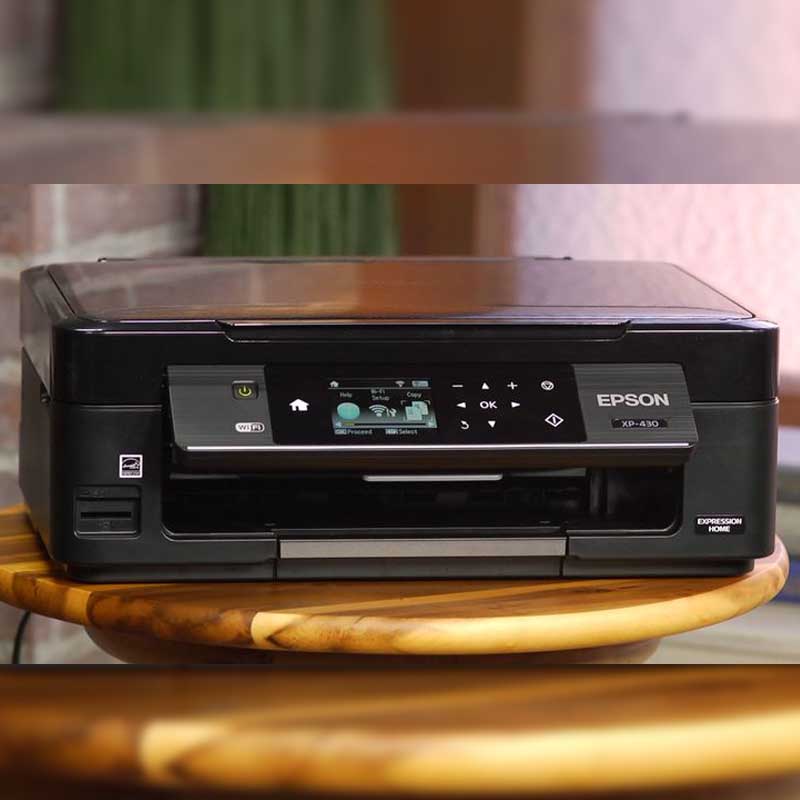
    MUMBAI: Epson, the digital imaging technology provider and the official partner of soccer club Manchester United, is looking to incentivise its customers during this season of the Barclays Premier League.

    Leveraging Epson‘s global sponsorship, Epson customers, dealers and Manchester United fans in India have an opportunity to experience and watch a match live at Old Trafford in England this season.

    The promotion will see Epson align its brand with the club to raise its profile in India where the club is avidly followed. On purchase of any Epson product, consumers stand to win an opportunity to watch a Manchester United match. Two lucky customers will win an all-expense paid trip to Old Trafford to watch the club play live in the Barclays English Premier League. 
     
    In addition, two lucky Epson dealers who sell the Epson products to these winning customers get to win the same prize as well.

    To be eligible to participate, customers can purchase any Epson product and register their product anytime before 31 December 2011 by either filling up their online warranty form or the warranty card.

    Epson is also giving away official Manchester United merchandise to consolation prize winners during the course of the two and a half month promotion.

  • India England series averages 3.09 TVR

    India England series averages 3.09 TVR

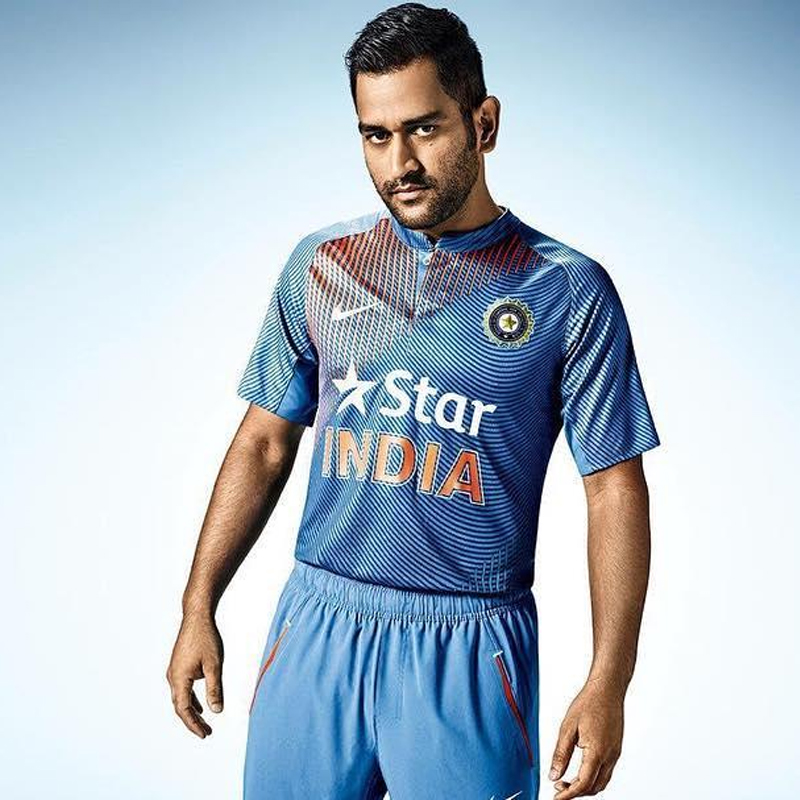
    MUMBAI: With India whitewashing England 5-0 at home during the ODI series the ratings showed a big improvement compared to the away series in England where Dhoni‘s boys had lost 3-0.

    TAM data (c&s4+ all India) shows that the five matches at home averaged a TVR of 3.09 on Neo Cricket. Compared to that the ODI series in England on Star Cricket had averaged at a 1.79 TVR.
     
    For the series at home viewership grew as the series progressed. This could be attributed to some initial pessimism about how India would perform. The first two matches averaged 2.50 TVR. After that the interest picked up in a serious manner. The third ODI which saw India wrap up the series fared the best by getting a TVR of 3.64. The last three ODIs each managed a TVR of over 3.

    MPG India senior director R Venkatasubramanian said that while the delivery was okay given the price paid he was disappointed that the ratings did not touch at least five. “Given that India dominated the performance should have been better. However if India‘s performance continues to improve then viewers will get back into cricket,” he said.
     

  • Advertisers should continually reinvent

    Advertisers should continually reinvent

    NEW DELHI: In a world of so many choices, it is important for advertisers and corporates to continually reinvent ideas to reach out to the new generation, and also use social media through the Internet for this purpose.

    This was the general consensus at the 27th AdAsia held in India after a period of eight years and attended by over 1200 delegates from India and 25 countries.

    On the concluding day, Pepsico chairman and CEO Indra Nooyi cautioned those in the advertising and marketing business that the uncertainties in the corporate world could only be overcome if one could adapt suitably to face the future.

    She said that the corporate world today faced a crisis of leadership, of governance, and of expectations.

    The corporate leaders therefore have to lead for ‘today and tomorrow at the same time‘ – that is, keep an eye on the horizon even as one planned for the present. Similarly, one has to be ambitious, attract and tap the right talent and make sure that it stayed with you, and the leaders have to be ‘super visible‘ – they should be available to all their employees and not sit in ivory towers and give orders.

    She said creativity and adaptability are the answers to uncertainty, and referred to working in an atmosphere of connective autonomy.
     
    Referring to her own brand, she said that the way to sell globally is to innovate and so while Lays is a popular Pepsico brand, it is marketed in different countries with local flavours.

    Nooyi was addressing the concluding session of AdAsia 2011.

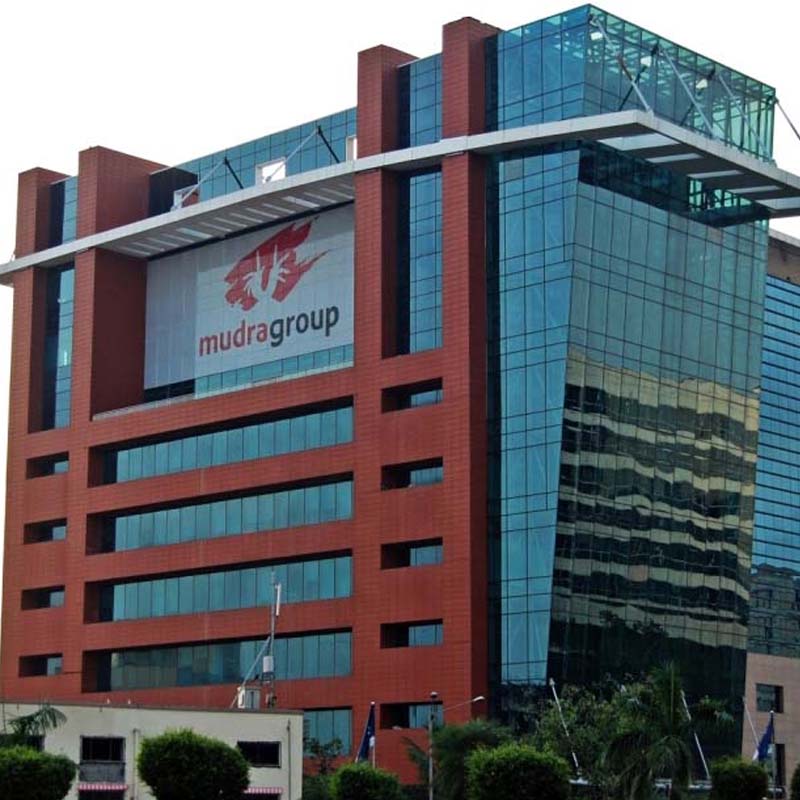
    Talking about the theme – “Uncertainty: The New Certainty” – Mudra Group MD and Group CEO and AdAsia 2011 chairman Madhukar kamath said that it underlines the dynamic world that is currently at an inflection point witnessing a realignment of global economic leadership. Post the global meltdown, Asia leads the world on the path of recovery, thus attracting attention from the world over.

    Earlier, Saatchi and Saatchi creative chairman Robert Senior said there have to be certain change in strategy to be in the advertising and marketing business in ‘the age of now‘. Thus, attention had to be substituted by participation, inform by inspire, interpretation with interaction, return on investment with return on involvement, and pumping markets with creating movements.

    Speaking on the pursuit of Big Ideas in the Age of Now, he said the consumer today lives in a VUCA world: he is volatile, uncertain, complex, and ambiguous. The advertiser has to change that attitude to being vibrant, unreal, crazy and astounding.

    Noting that ideas can be the prism of hope, he said the real skill lay in seeing the point in an idea and then nurturing it with speed, agility, and news desk mentality.

    He said at the outset that he is particularly impressed by the optimism among the advertising fraternity in India, as compared to Europe. The advertisers know what their consumers expected from them.

    In another session where he interacted with lyricist and McCann Worldgroup India‘s chairman and CEO Prasoon Joshi, Coca Cola Company EVP and chief marketing and commercial officer Joseph Tripodi said large companies tend to be very conservative and often do not take risks. In his company, he has encouraged a policy where one would put 70 per cent of his money where he know it would pay, 20 per cent to innovate off that 70 per cent, and 10 per cent just innovate with new ideas. Thus, it would not matter too much if that 10 per cent failed.

    There is also need to take some risk and take some challenges, part of which is trying to create popular culture.

    He said it is important to understand the brand and create love for it. Coca Cola did this with the help of inspirational and operational marketers.
     
    He said the aim was to create both love and value for the brand as well as the product. Consumers demanded value for their time and attention and wanted entertainment, and portability. For all this, evolution was mandatory.

    For his brand, he said the focus was on storytelling and there has been a link with the liquid being sold.

    Furthermore, he said in reply to a question that value for him meant shared dividends and this was the reason for Coca Cola to endorse causes. He gave several examples of how this had been done by showing short film clips. There is need to market certain global values as commonalities are growing all over the world with ‘Internet being the great democratiser‘ which made everything ‘glocal‘. People like to connect with each other and therefore Coke has also used the social media for this purpose since it is a natural human behaviour to share.

    But it was necessary to earn the trust of the local people. One cannot let the hype get ahead of the reality and therefore the nature of Corporate Social Responsibility has changed with the non-governmental organisations not just wanting cheques. They want commitment and not mere promises, and wanted that the corporate house should be transparent. Therefore one has to work to earn the trust of the consumer and the NGO.

    Answering a question, he said that flavour extensions in Coke were only aimed at catering to local populations.

    In a session on how to navigate through in the face of media fragmentation, Citi Head of Global Marketing (Consumer) Bob O‘Leary said new technologies demand new choices and new behaviours and it is important to rise to the occasion.

    OMD Worldwide CMD Mainardo de Nardis said it is necessary to capture the imagination of the people through the right beliefs.

    Maxus Worldwide CEO Kelly Clark said that it is important to keep creative talent motivated and challenged, and excited about their work. People can be brought in from various fields but have to be kept in the company by appreciating the impact of their work.

    The importance of reinventing oneself was driven home again in a discussion on building brands in a trust deficit world. All the speakers stressed the need to be able convince the people about brands.

    Moderating the session, author Deepa Prahlad said technology is changing everything and affecting the metaphors of brand marketing. Therefore advertisers and brands have to change.

    Engine and WCRS President Robin Wight was clear that brands were created to avoid too much of brain work by the consumer who should be able to recognise what he wanted by seeing a brand. The decline in trust is because the consumer often did not want to use brain power. The Internet and social interactions could help to rebuild that trust, he said. Peer-to-peer marketing through social networking is a great tool, he said.

    Bharti AXA Life Insurance CEO Sandeep Ghosh said people expect proof rather than promises, and showed two commercials of his company to prove this point. But leadership also matter, he added.

    Ford India president and managing director Michael Boneham said one has to re-invent brands to separate oneself from competitors. For example, he said his cars have added features like a Bluetooth to become different. He also believed in consumers talking to consumers and therefore his company has avoided brand ambassadors.

    GroupM CEO South Asia Vikram Sakhuja said a major problem is that with too many choices, one live in an attention deficit world. Therefore, psychological equity is as important as brand equity. Digital tools could help engage the consumer and build trust. There is need to evolve with the consumer, and brands should never talk down to consumers.