Category: Marketing

  • Shiba Bhutani makes a dash for Agilitas as brand director

    Shiba Bhutani makes a dash for Agilitas as brand director

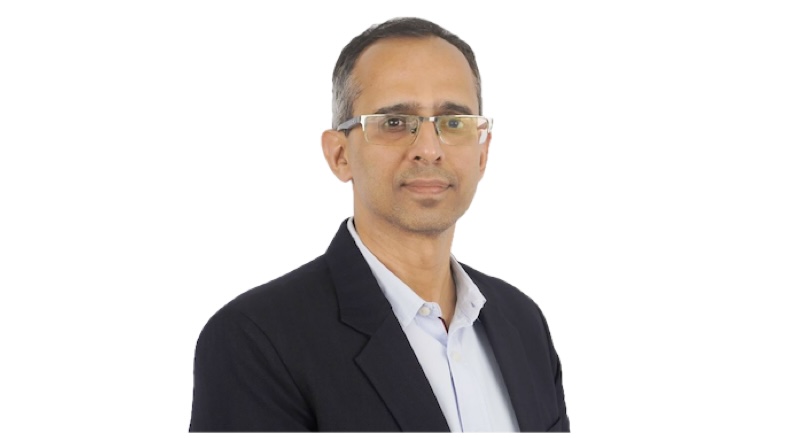
    MUMBAI:  Shiba Bhutani has officially joined Agilitas as brand director, bringing over a decade of diverse marketing experience to the role. Agilitas  is a sportswear  brand promoted by former  Puma south east Asia boss Abhishek Ganguly and has the licence to make and sell Lotto shoes in India.

    Bhutani has a proven track record in sectors ranging from cheese and protein supplements to personal care and beverages.

    At Agilitas, a company committed to transforming the sports category, Bhutani will leverage her consumer-focused approach to drive product innovation and enhance brand engagement. The company emphasises robust manufacturing, advanced R&D, and interconnected retail strategies to deliver quality products that resonate with consumers.

    Previously, Bhutani held several key positions at AB InBev, including associate sirector of marketing for Budweiser, where she led successful campaigns and brand activations. Prior to that she managed the personal care creams brands for the Himalaya Drug Co.  She also had short brand management stints at Glanbia Performance and Ornua besides doing corporate sales for HDFC Life.

    Her educational credentials include a Level 1 certification from the Wine & Spirit Education Trust, and a PGDM in marketing from the Goa Institute of Management.

    “Excited to score new life goals at my role as brand director.,” Bhutani enthusiastically exclaimed.
     

  • RIL delivers 3.7 per cent growth; solid Q3 gains amid mixed sector trends

    RIL delivers 3.7 per cent growth; solid Q3 gains amid mixed sector trends

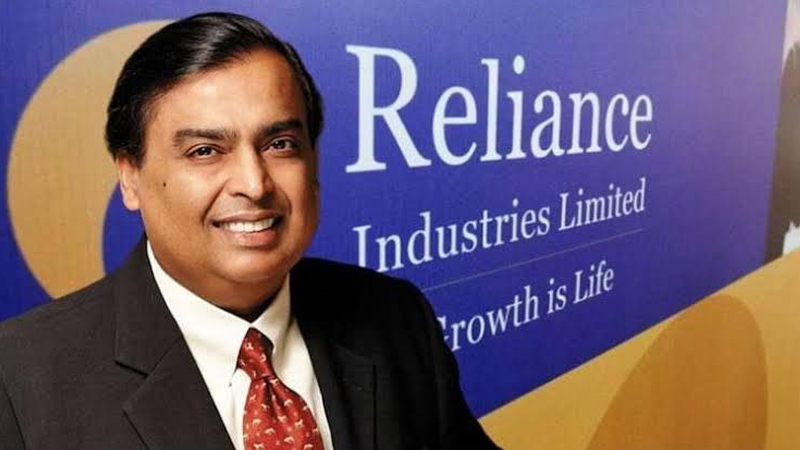
    MUMBAI: Step aside, Indian cinema blockbusters—India’s corporate juggernaut, Reliance Industries Limited (RIL), has dropped its Q3 FY25 and nine-month financial results, and the plot twists are as gripping as any thriller.

    Mukesh Ambani, Asia’s richest man with a jaw-dropping net worth of $101.9 billion, continues to steer this mammoth conglomerate with a flair that makes even the Ambani family’s $600 million wedding bash look like just another weekend splurge.

    But the numbers game is where the real drama unfolds.

    A behemoth company straddling sectors as diverse as petrochemicals, retail, telecom, and renewable energy, all while navigating rising costs, shifting consumer behaviours, and the ever-demanding shareholders. It’s a delicate high-wire act, with every quarter bringing a mix of triumphs and challenges that could put even the savviest financial analysts on edge.

    RIL has once again delivered a performance that is equal parts spectacle and strategy. With Q3 FY25 results showcasing both sharp gains and a few headwinds, the company continues to prove why it remains the unshakable titan of India’s corporate skyline.

    Will Reliance’s growing retail and telecom arms counterbalance the fluctuating fortunes of its oil-to-chemicals business? Are rising costs pinching the profits, or is this a strategic pause before another leap forward? Stay tuned as we break down the twists and turns of Reliance’s financial performance.

    Spoiler alert: it’s as gripping as a weekend binge-watch session—except this one comes with billions riding on the final scene.

    For the quarter ended 31 December 2024, RIL clocked consolidated revenue from operations of Rs 235,481 crore, a decent 3.7 per cent growth from Q3 FY24. Total income stood at Rs 240,357 crore, marking a steady rise. Net profit for the quarter came in at Rs 19,323 crore, slightly down from Rs 19,641 crore in Q3 FY24. Resilient? Yes. Spectacular? Maybe not. Is the glass half-full, or is it just heavy with operational costs?

    For the nine-month period, revenue from operations hit Rs 783,036 crore, a hair’s breadth below last year’s Rs 785,650 crore. But here’s the kicker: net profit surged to Rs 60,666 crore, riding high on stellar performances in retail and digital services. Looks like RIL’s strategy of diversification is paying dividends.

    The standalone core remains strong. RIL’s standalone revenue from operations for Q3 FY25 was Rs 134,054 crore, up from Rs 130,579 crore last year. Standalone net profit, however, dipped to Rs 7,713 crore from Rs 9,924 crore in Q3 FY24. For the nine months, standalone revenue reached Rs 405,559 crore, with net profit at Rs 30,351 crore. Steady as she goes, but where’s the spark? Does the core business need a shot of adrenaline?

    Segment Performance

    ●    Oil-to-Chemicals (O2C): RIL’s O2C business pulled in Rs 155,580 crore for Q3 FY25, contributing significantly to the topline. But wait, here’s the rub: EBITDA for the segment dropped 5.4 per cent  year-on-year to Rs 12,413 crore, thanks to higher feedstock prices. Can RIL recalibrate this cornerstone of its empire, or is it time to rethink its O2C game?

    ●    Retail: The retail arm—the show-stealer yet again—raked in Rs 83,040 crore, up 8.8 per cent  year-on-year. Segment EBITDA climbed to Rs 6,251 crore, driven by aggressive expansions and innovative consumer offerings. But the million-dollar question is: Can this momentum continue in an increasingly competitive retail arena?

    ●    Digital Services: Reliance Jio, the crown jewel of RIL’s digital portfolio, dazzled with revenues of Rs 38,055 crore and EBITDA of Rs 14,256 crore. Rising data consumption and subscriber additions fuelled the growth, but as competition heats up, will Jio’s dominance hold steady?

    ●    Oil and Gas: A surprising hero this quarter, the oil and gas segment posted revenue growth of 12 per cent  year-on-year to Rs 6,222 crore. EBITDA surged to Rs 5,290 crore, thanks to improved realisations and higher production. Is this a sign of sustained recovery for a segment once relegated to the shadows?

    This quarter saw RIL’s ambitious demerger of Viacom18’s media and cinema businesses into Star India, backed by a hefty Rs 11,500 crore investment. Bold? Absolutely. But will this manoeuvre bring blockbuster results or leave the balance sheet bruised?

    The company’s continued push into green energy and retail expansion highlights its long-term vision. Renewable energy projects underscore RIL’s commitment to sustainability, though the hefty upfront costs may weigh on short-term results. Meanwhile, its retail arm’s logistics and operational costs are rising—is it time for some belt-tightening?

    And let’s not forget O2C’s margins. With feedstock prices acting like an unruly stock ticker, RIL’s ability to navigate these headwinds will be crucial. Will precise execution and bold strategies be enough to keep this segment buoyant?

    What lies ahead?

    Reliance Industries’ Q3 FY25 results showcase a company balancing on the edge of consolidation and expansion. With robust performances in retail and digital services, RIL’s adaptability shines through. Yet, rising costs and narrowing margins in its flagship O2C segment call for sharp focus.

    Will the investments in green energy and entertainment usher in the next wave of growth, or will rising costs hold the company back? And as India’s digital transformation accelerates, can Jio keep its throne?

    For now, RIL’s saga of bold bets and calculated moves makes for an unmissable watch. Stay tuned as this corporate behemoth’s next chapter unfolds.
  • Roles and Responsibilities of an Authorised Person

    Roles and Responsibilities of an Authorised Person

    In the financial markets, an authorised person plays an important role in bridging the gap between stockbrokers and investors. This person is registered under the guidelines of market regulators such as the Securities and Exchange Board of India (SEBI). An authorised person facilitates trade and improves the market reach by extending the broker’s presence to various geographical locations. In this article, we will discuss the important roles and responsibilities of an authorised person and the factors that influence their earnings. 

    Who is an Authorised Person? 

    An authorised person is an entity or an individual who is authorised by a stockbroker to act on their behalf in facilitating trade and other services for investors. The role of an authorised person is to build a business book of the stockbrokers by bringing in new investors and helping existing clients in reinvestment.  

    Key Roles and Responsibilities of an Authorised Person 

    The primary role of an authorised person is serving clients and aiding the operations of the stockbroker. The following are the key roles and responsibilities of an authorised person:  

    1. Client Acquisition and Support 

    An authorised person undertakes activities of identifying prospective investors and presenting them with opportunities on the stock exchange. They guide their clients on how to open trading and Demat accounts in union with an associated broker. An authorised person provides advisory services for clients to help in making informed decisions in investments. 

    2. Trade Execution 

    An authorised person facilitates the performance of buy and sell orders on behalf of clients. They also ensure timely and accurate trade placement to avoid differences. An authorised person stays updated on the latest market trends, policy changes, and technological advancements to serve clients better. 

    3. Market Education and Awareness 

    Authorised persons educate clients about market trends, investment strategies, and regulatory changes. They conduct workshops or webinars to improve financial literacy among investors. The authorised person provides clear information about brokerage fees, charges, and terms of service to clients. 

    4. Compliance and Reporting 

    They ensure adherence to the guidelines set by SEBI and stock exchanges. Their main role is also to maintain proper records of transactions, agreements, and client interactions. An authorised person submits periodic reports to brokers, ensuring transparency in operations. The major responsibility of an authorised person is to follow the rules and regulations laid down by SEBI and stock exchanges and avoid indulging in any fraudulent or unethical practices. 

    5. Ensuring Financial Integrity 

    They avoid unauthorised transactions and ensure funds are handled responsibly. Verify that sufficient funds or securities are available before placing orders. They protect client data and ensure that sensitive information is not misused. 

    6. Conflict Resolution and Customer Handling 

    An authorised person plays an important role in addressing and resolving client complaints. They act as a bridge between clients and the stockbroker, ensuring prompt responses to queries and issues. They mediate conflicts related to trades, account discrepancies, or other concerns, ensuring client satisfaction and maintaining trust. Additionally, they ensure that client feedback is communicated to the broker for service improvements.

    Factors Influencing the Earnings of an Authorised Person 

    Several factors may influence the monthly earnings of an authorised person. They include: 

    Industry and Sector 

    The earnings of an authorised person can vary widely depending on the industry they are in. For example, an authorised person working in the stockbroking industry might have different earnings compared to one working in the banking or insurance industry.  

    Qualifications and Certifications   

    The earning potential of an individual can be enhanced based on the qualifications or certificates they have like Chartered Accountancy (CA), Certified Financial Planner (CFP), or licenses from regulatory bodies such as the SEBI (Securities and Exchange Board of India)  

    Experience and Expertise 

    To determine the earnings of an authorised person, experience plays a significant role. An individual with years of experience may have higher earnings than a newcomer. Additionally, expertise in a particular niche or specialisation can also impact earnings. 

    Location 

    The location also influences the earnings of an individual. For instance, an authorised person who is working in a metropolitan city may have higher earnings compared to the one working in smaller towns or cities. 

    Conclusion 

    The role of an Authorised Person is indispensable in bridging the gap between investors and stockbrokers. By combining regulatory compliance with client-centric services, they contribute significantly to the efficiency and integrity of financial markets. In today’s digital age, many authorised persons use online trading app to provide seamless services to clients, offering real-time market updates, easy trade execution, and portfolio management on the go. These apps enhance accessibility and transparency, making it easier for investors to stay connected to the stock market.

  • 5paisa Capital appoints Gaurav Seth as CEO

    5paisa Capital appoints Gaurav Seth as CEO

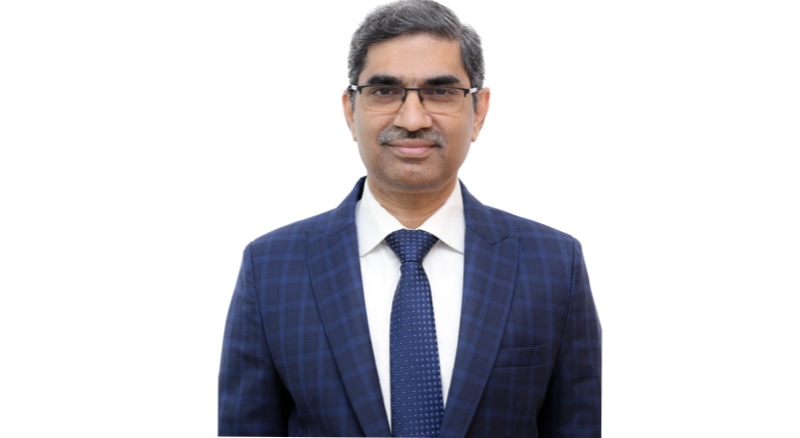
    MUMBAI: 5paisa Capital has announced the appointment of Gaurav Seth as its CEO, effective immediately. With over two decades of experience in financial services and technology, Gaurav has a proven track record across the US, India, and southeast Asia. Prior to joining 5paisa, he served as chief product officer at Syfe, where he established it as a leading digital wealth player in southeast Asia. He also played a key role in propelling Paytm Money to prominence in India and led the digital transformation of Morgan Stanley’s wealth management division in New York.

    Gaurav is an alumnus of the Indian School of Business, Hyderabad, and holds a bachelor of engineering from Thapar Institute of Engineering and Technology, Patiala.

    5paise co-Promoter R. Venkataraman stated, “Seth’s experience in tech-driven innovations will enhance our digital transformation priorities at 5paisa Capital. We anticipate significant growth and innovation under his leadership.”

    In response, Gaurav expressed, “5paisa Capital was the original disruptor in the Indian broking industry, democratizing equity investing for millions. I am excited to contribute to this legacy and spearhead the next phase of growth.”

    5paisa.com stands as one of India’s largest discount brokers, boasting over 4.62 million customers and a reported net profit of Rs 219 million in Q2 FY25, with revenues reaching Rs 1008 million. The platform is widely used, with over 20.6 million users and a 4.3 rating on Google Play.


  • Metro Brands  reports steady performance in Q3 FY 2025

    Metro Brands reports steady performance in Q3 FY 2025

    MUMBAI:  Footwear retailer Metro Brands  announced its standalone and consolidated financial results for the quarter ending 31 December 2024 which showcased robust growth, largely driven by the festive and wedding seasons.

    The company recorded a standalone revenue of Rs 688 crore, reflecting a year-on-year sales growth of 10 per cent. The EBITDA margin stood at 32.6 per cent  with a profit after tax (PAT) margin of 13.7  per cent. Notably, the PAT figure includes a one-time tax charge of Rs 25 crore resulting from the reconciliation and reassessment of tax liabilities, mainly related to the Fila business.

    During the quarter, Metro Brands expanded its retail presence with the launch of its first Foot Locker store and a new kiosk for New Era, catering to an increasingly diverse customer base. The company also enlisted celebrities Triptii Dimri and Vijay Varma for its Metro Shoes line, alongside Shanaya Kapoor and Vedang Raina for Mochi, which bolstered brand visibility and contributed to growth.

    Metro Brands liquidated its old Fila inventory during this period and is set to release a second drop of India-manufactured merchandise by mid-February 2025.

    Over the nine months ended  31 December 2024, the company opened 61 new stores while closing four bringing total net new openings below the initial guidance of 100 for the year. However, the company remains committed to its overall target of establishing 225 new stores by FY 2026.

    Said CEO Nissan Joseph: “The third quarter of FY 2025 reflects steady progress for Metro Brands as we build on the momentum of the festive season. With an 18 per cent increase in PBT and a 13 per cent  rise in EBITDA, our focus on operational rigor is yielding results. The successful launch of the Foot Locker store and New Era kiosk, along with our celebrity partnerships, have enhanced our brand visibility and customer engagement. We are optimistic about our initiatives and remain dedicated to delivering value for our customers and stakeholders as we approach the final quarter of the year.”

  • Indian Bank welcomes Binod Kumar as managing director & CEO

    Indian Bank welcomes Binod Kumar as managing director & CEO

    MUMBAI: Indian Bank has appointed Binod Kumar as managing director & chief executive officer. With over 30 years of diverse banking experience, Kumar previously served as executive director at Punjab National Bank (PNB), where he oversaw key divisions including corporate banking and treasury.

    Throughout his career at PNB, Kumar held several notable positions, including chief general manager of corporate credit and CEO of PNB operations at the Dubai International Financial Centre. He is recognised for driving innovation and enhancing customer experience in the banking sector.

    An alumnus of NIBM, Kumar holds a post graduate diploma in banking & finance, as well as certifications in financial risk management & treasury investment. He is also a graduate of a leadership program at IIM Bangalore.

    Under Kumar’s leadership, Indian Bank aims to strengthen its market position, deepen customer relationships, and continue delivering exceptional financial services nationwide and at select international locations.
     

  • Vani Rane transitions  to JioStar as creative head of network branded content

    Vani Rane transitions to JioStar as creative head of network branded content

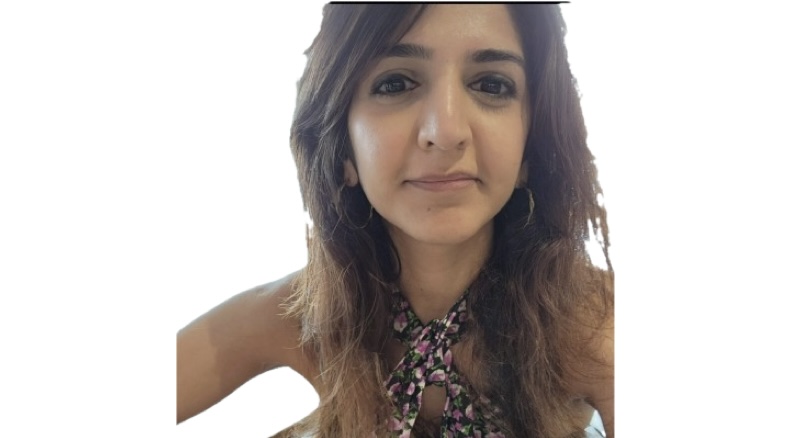
    MUMBAI: Vani Rane, has recently taken on the role of creative head for the expanded branded content vertical for the network at JioStar, following the merger of  the two media powerhouses – Disney Star TV India  and Viacom18 Media under the Reliance Industries umbrella.  With over 18 years of experience in content development and production, Vani is eager to leverage this new opportunity to push creative boundaries and deliver innovative content.

    Expressing her excitement about the transition, Vani stated, “My playground just got a whole lot bigger and better!”

    She is enthusiastic about leading a talented team, emphasizing that their collaboration will enable them to create compelling stories and branded content. The merger has opened up expansive possibilities for content creation, positioning the team to explore exciting new directions in both television and OTT platforms.

    Prior to her move to JioStar, Vani served as the creative Head at Viacom18, where she honed her skills in both fiction and non-fiction content development. Her impressive portfolio includes successful projects like Swipe Ride with Shruti Haasan and various brand partnerships across different media formats. Vani’s tenure at prominent companies such as Zee Entertainment, Zoom, Maxus ESP and Culture Machine further cements her reputation as a leader in branded content.

    With her new role, Vani aims to elevate JioStar’s content strategy, focusing on creative solutions and partnerships that resonate with audiences. 

  • Singapore Airlines steers sponsorship for F1 Singapore GP through 2028

    Singapore Airlines steers sponsorship for F1 Singapore GP through 2028

    MUMBAI: Fasten your seatbelts, because Singapore Airlines (SIA) isn’t just cruising past the chequered flag; it’s doubling down.

    The airline has committed to four more years as the title sponsor of the Formula 1 Singapore Grand Prix, cementing its partnership with one of the most anticipated events on the F1 calendar.

    Since first revving up as the title sponsor in 2014, Singapore Airlines has proudly supported this electrifying race for 11 years, and now, the track is set for an extension covering 2025 to 2028. The event will retain its full-throttle name, FORMULA 1 SINGAPORE AIRLINES SINGAPORE GRAND PRIX, kicking off this year from 3-5 October at the iconic Marina Bay Street Circuit.

    This is no ordinary Grand Prix—it’s a spectacle.

    Imagine the roar of engines reverberating through Singapore’s city streets, illuminated by a stunning night-time skyline. It’s not just a race; it’s a showstopper that puts Singapore on the global map as a premier business and tourism hub. The event draws racing fans, tourists, and international businesses alike, creating an economic ripple effect that benefits SIA’s global network.

    What makes this partnership so special?

    Commenting on the renewed partnership, Singapore Airlines chief commercial officer Lee Lik Hsin said, “The Singapore Grand Prix is an important event in Singapore’s sporting and tourism calendar. It has become iconic not just for showcasing our beautiful skyline but also for highlighting Singapore’s position as a key global hub. This extension underscores Singapore Airlines’ long-standing commitment to supporting the development of sports and tourism in Singapore.”

    Meanwhile, Formula 1 chief commercial officer, Emily Prazer added, “We are delighted that Singapore Airlines will continue as the title sponsor of the FORMULA 1 SINGAPORE AIRLINES SINGAPORE GRAND PRIX. Singapore has become one of the most revered Grands Prix on the calendar, and it is through the hard work and dedication of partners such as Singapore Airlines that we can continue to deliver such a strong event. We look forward to continuing to work with them to further elevate this event for years to come.”

    Beyond the adrenaline rush, the race serves as a turbocharged driver for Singapore’s economy, attracting thousands of attendees and coinciding with major international meetings and events. For Singapore Airlines, the sponsorship isn’t just about brand visibility—it’s about showcasing Singapore’s excellence to a global audience.

    The renewed partnership promises to keep raising the bar. Whether you’re a racing enthusiast or a casual fan drawn by the glamour and glitz of the night race, the F1 Singapore Airlines Singapore GP guarantees high-octane drama, world-class entertainment, and Singapore’s signature hospitality.

    So, what’s not to love? Stunning night-time views, thrilling races, and a brand partnership that screams excellence. Mark your calendars for October 3-5, 2025, and prepare to witness Singapore Airlines fly high—both in the skies and on the track.

  • Sula Vineyards gets high on  Q3FY 2025 revenues growth

    Sula Vineyards gets high on Q3FY 2025 revenues growth

    MUMBAI: Bacchus would surely approve. As would Dionsyus. One, the Roman, the other the Greek god of wine. Sula Vineyards informed the Bombay stock exchange on 14 January that its own brands are doing very well in Q3FY2025 thank you.

    Its Elite and Premium portfolio recorded a six per cent year on year growth, while iconic brands like The Source and Rasa showed double digit growth.

    Its wine tourism business too generated a fancy uptick, recording the highest ever Q3 revenue, led by higher spend per guest and strong occupancy rates.

    Sula said it was looking forward to the SulaFest in Q4 FY25 with acts such as Divine, Ritviz x Karan Kanchan, Oaff & Savera, When Chai Met Toast, Dualist Inquiry, and Madboy/Mink already booked for it. Advance ticket sales have been storog, and the company is looking forward to launch its Sula cans during the Sula Festival. 
     

  • How Life Insurance Provides Financial Security During Uncertain Time

    How Life Insurance Provides Financial Security During Uncertain Time

    Life is full of surprises. Some of them make us smile, like a promotion at work or a child’s first steps. Other things can catch us off guard – unexpected illnesses, sudden job loss, or the untimely passing of a loved one. These moments are reminders that uncertainty is a certain part of life. While we can’t predict what’s coming, we can definitely try to be prepared for it. One way is through life insurance – a quiet but powerful tool that ensures your family’s financial security when you need it the most.

    Safety net for loved ones

    Term insurance provides a safety net for your loved ones. In case of an unfortunate event, it provides a payout—known as the sum assured – to your family. This lump sum can cover immediate expenses such as medical bills, EMIs, daily living costs etc.

    More importantly, term insurance gives families time to adjust to their new reality without the added burden of financial worry. When a pivotal person is no more, bereaving family members can’t see the proverbial ‘bottom of muddy water’. They require time and support.

    To put that in context consider this example – A term insurance plan of ₹1 crore costs about ₹10,000 annually for a healthy 30-year-old. This small annual expense can secure a significant sum for your family, ensuring they’re protected even when if you are not around.

    Helping deal with job loss

    Today, disruption in jobs has become fairly common. The reasons are varied: evolving technology, global headwinds, and market movement, among others. This brings about the uncertainty of employment as a reality many face. A sudden job loss can disrupt even the most carefully planned finances. Life insurance with built-in savings or investment options, like endowment or ULIP plans, offers a dual benefit.

    Endowment plans combine life cover with a savings component, allowing you to accumulate wealth over time. During financially challenging periods, these savings can be used as a buffer.

    Similarly, ULIPs let you invest in market-linked instruments while offering life coverage. If you have built a good corpus in the lock-in period of 5 years, these policies can ensure you don’t have to dip into long-term savings or retirement funds during short-term crises.

    Health and rising medical costs

    In India, the cost of healthcare is rising rapidly. Room rates, consultation charges, medicines, diagnostic tests – these costs have risen for every imaginable healthcare-related service. Thus, a single hospitalisation can cost lakhs, leaving families drained financially. Life insurance policies with critical illness riders offer an added layer of protection. Some of these riders pay out a lump sum, directly on the diagnosis of a serious condition like cancer or heart disease without requiring hospital bills.

    To put this in context consider this – Adding a critical illness rider to your term plan might cost an extra ₹2,000 annually. But this small amount can provide coverage worth ₹10 lakh or more, helping you prepare for unexpected medical expenses without depleting your savings.

    Education and future goals

    For parents, their children’s education is often the top priority. Higher education, whether in India or abroad, is an expensive affair. Life insurance policies like child plans ensure that funds are available when they are needed most, regardless of life’s uncertainties.

    For instance, a policy maturing at your child’s 18th birthday can help pay for college fees, tuition, or even living expenses. By planning early, you can lock in affordable premiums and ensure your child’s dreams remain on track, no matter what.

    Tax benefits

    Life insurance isn’t just about protection; it’s also a tax-efficient investment. The premiums paid up to ₹1.5 lakh per year towards life insurance are eligible for deductions under Section 80C of the Income Tax Act, 1961. Additionally, if you have added a critical illness rider to your policy, you can claim an extra deduction under Section 80D of the same act. 
    Moreover, the proceeds received are also tax exempt subject to conditions under Section 10(10D) of the Income Tax Act, 1961.

    Emotional security

    Beyond numbers, life insurance offers something intangible but equally valuable: peace of mind. Knowing that your family will be financially secure, no matter what, allows you to focus on living life to the fullest. It’s not just about insuring your income; it’s about insuring your peace of mind.

    Take the case of Sunil, a 38-year-old software professional. He purchased a term insurance plan worth ₹1 crore when his daughter was born. Two years later, Sunil was diagnosed with a critical illness. His policy’s rider provided a payout of ₹15 lakh on the diagnosis, thus easing the financial strain on his family. Today, as Sunil continues to recover, he knows that his policy can secure his family’s future, come what may.

    Small steps for big security

    Securing your family’s financial future doesn’t have to be complicated. Start by evaluating your needs. Consider factors like your age, income, existing debts, and family goals. Choose a plan that aligns with your requirements and ensure timely premium payments.

    For young professionals, starting early means locking in lower premiums and higher coverage. For parents, child-specific plans provide targeted benefits. And for those nearing retirement, life insurance can supplement other savings, offering a comprehensive safety net.

    Uncertainty is a part of life, but it doesn’t have to define it. Life insurance offers a way to turn unpredictability into preparedness. By offering financial security during tough times, it allows you to focus on what truly matters – creating memories with your loved ones and living life without fear of the unknown.