Category: Marketing

  • Rajeev Singh appointed leader for transportation & mobility at Publicis Sapient

    Rajeev Singh appointed leader for transportation & mobility at Publicis Sapient

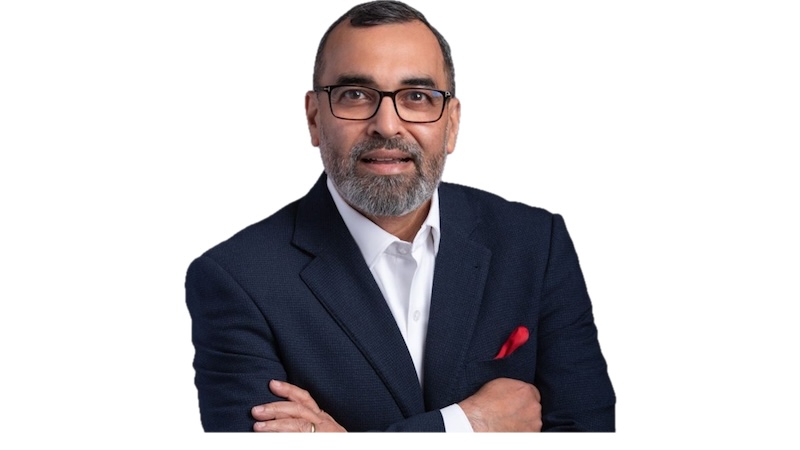
    MUMBAI: Rajeev Singh has announced his new role as leader for the transportation & mobility industry across EMEA and APAC at Publicis Sapient. In this position, he will focus on developing strategic visions and driving profitable growth within a rapidly transforming sector. 

    His leadership will focus on leveraging Publicis Sapient’s Speed capabilities—strategy, product, experience, engineering, and data & AI – to support clients’ digital transformation journeys.

    Rajeev brings extensive experience, having previously served as consumer industry leader at Deloitte Asia Pacific. With a strong background in automotive and consumer sectors, he is well-equipped to facilitate large-scale digital transformations and explore new business opportunities.

    He holds an MBA in operations management from SP Jain Institute of Management & Research and a bachelor’s degree in mechanical engineering from the College of Engineering, Pune.

    Excited about his new journey, Rajeev expressed gratitude for the support received during his transition and looks forward to leading innovation in tech-driven transportation solutions.

  • Riya Arora gets  managing director’s post at Inspirational group

    Riya Arora gets managing director’s post at Inspirational group

    MUMBAI:  Riya (Rani) Arora has been appointed as the managing director of Inspirational group, bringing 27 years of extensive experience as a global leadership development and communications consultant. In her role, she will manage a wide range of leadership interventions across various sectors, including financial services, IT, FMCG, automotive, and manufacturing.

    Riya, who previously served as the director for inspirational development group’s India office, holds a marketing degree and several certifications, including executive coaching, MBTI, DiSC, NLP, and assessment centers certification. She also possesses an honors diploma in information systems management.

    Before her current role, Riya enjoyed an 11-year tenure at Capgemini (formerly Kanbay), where she created communication strategies and led comprehensive leadership development programs globally. Her final position was as the global head of assessment and development centers, where she oversaw programs across the US, UK, Singapore, Australia, and India.

    As an independent consultant, she has collaborated with high-profile clients such as Barclaycard, World Bank, and Bajaj Auto, delivering customized leadership interventions. Riya’s earlier career included managing a computer academy and teaching French.

    Beyond her professional commitments, Riya is an ardent follower of Sri Sri Ravishankarji and a daily practitioner of Sudarshan Kriya, advocating the importance of well-being in personal and professional settings.

  • Mandhir Bhatia moves to corporate marketing to handle website user experience at TCS

    Mandhir Bhatia moves to corporate marketing to handle website user experience at TCS

    MUMBAI: Tata Consultancy Services (TCS) has named Mandhir Bhatia as user experience journey for tcs.com in corporate marketing corporate marketing. Bhatia, who joined TCS in  as senior engagement manager in March 2023 , brings over 18 years of experience in driving business growth through technology-driven marketing solutions. His new position is effective as of November 2024.

    Prior to TCS, Bhatia worked at Adobe for 11 years, holding various roles including enterprise customer success manager and global customer success lead. He also worked at Capgemini Invent as a manager consulting services.

    Bhatia specializes in AI-driven martech solutions, digital transformation, and strategic technology adoption to enhance customer experiences. He holds an MBA in Information Technology from the Institute of Management Technology, Ghaziabad, and a bachelor of  commerce from Delhi University.

    In his new role, Bhatia will focus on leveraging technology to transform marketing and drive business growth for TCS.

  • TVS Motor launches connected electric three-wheeler, King EV Max

    TVS Motor launches connected electric three-wheeler, King EV Max

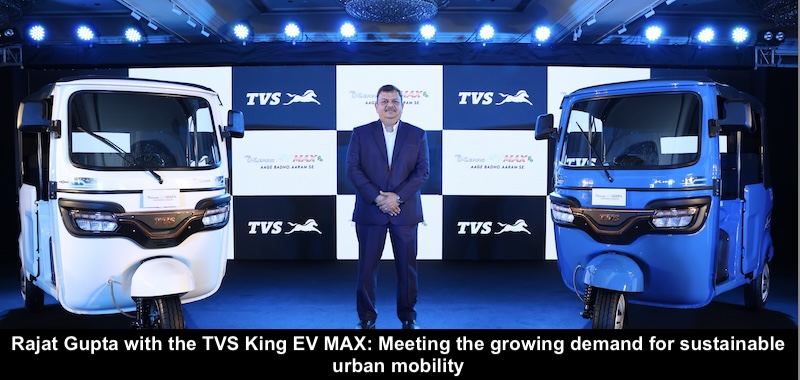
    MUMBAI:  Here’s another player who’s tuk-tuking into the  three wheeler EV segment. Two and three wheeler maker TVS Motor Co has officially launched its new connected passenger electric three-wheeler, the TVS King EV Max on 20 January . The innovative vehicle comes equipped with advanced features such as Bluetooth connectivity through TVS SmartXonnect, addressing the growing demand for sustainable urban mobility.

    At the launch event, TVS Motor Co business head of commercial mobility Rajat Gupta, highlighted the significance of the new introduction. 

    “The TVS King EV Max  represents our commitment to sustainable last-mile connectivity solutions amid rapid urban expansion,” he stated. “With superior comfort and connectivity features, this vehicle is designed to meet the needs of both individual users and fleet operators, ensuring increased earning potential.”

    The TVS King EV Max boasts a remarkable range of 179 kilometers on a single charge and quick recharging capabilities, achieving 80 per cent in just hours and 15 minutes. The electric three-wheeler is powered by a high-performance 51.2V lithium-ion LFP battery, offering a top speed of 60 km/h and a spacious, ergonomic cabin for passenger comfort.

    Initially available in Uttar Pradesh, Bihar, Jammu and Kashmir, Delhi, and West Bengal, the King EV MAX will soon be rolled out nationwide, priced at Rs 2,95,000 (ex-showroom). It also features a robust six -year or 150,000 km warranty, along with 24/7 roadside assistance for the first three years.

  • Airtel & Bajaj Finance to jointly offer financial services

    Airtel & Bajaj Finance to jointly offer financial services

    MUMBAI: Bharti and Bajaj are getting together. No, it’s not a couple from heartland India that’s getting hitched (would we be writing about a couple from rural India? Just kidding, on second thoughts, we might. But nonetheless this  punning around was to make this heavy piece feel light!)

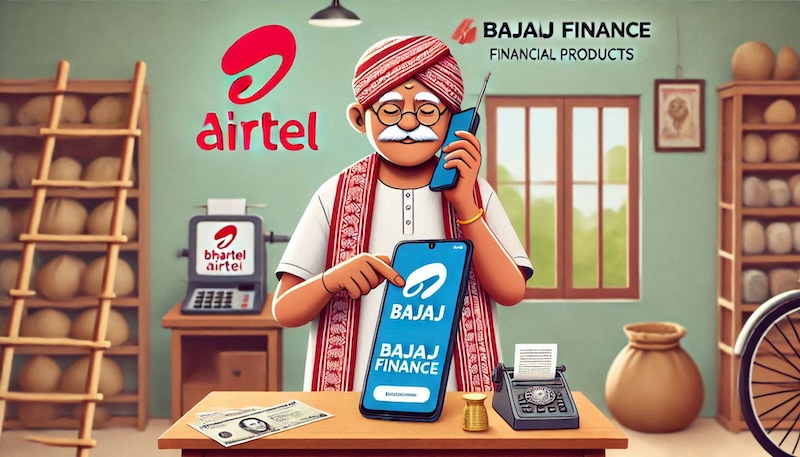
    Anyway getting  back to business: it’s India’s second largest telco Bharti Airtel and non-banking finance company Bajaj Finance that have p has shaken hands to create a  one-of-its-kind digital platform for financial services.

    The partnership brings together Airtel’s vast customer base of 370 million, 12 lakh+ strong distribution network, and Bajaj Finance’s diversified suite of 27 product lines, and distribution heft of 5,000+ branches and 70,000 field agents.

    Under the agreement, firstly, Airtel will progressively offer close to 10 Bajaj Finance’s financial products to its customers within this calendar year. Secondly,  customers can apply for Airtel-Bajaj Finserv Insta EMI card through the Airtel Thanks App, providing access to a range of offers and flexible EMI options.

    Bharti Airtel vice-chairman & MD Gopal Vittal said, “We are building Airtel Finance as a strategic asset for the group and will continue to invest in and grow the business.”

    Bajaj Finance managing director Rajeev Jain, added: “Together with Airtel, we seek to be the financier of choice to India and enable millions to access financial services, even in remote areas.”

    When it does manage to do that, it sure would have proved to  have been a valuable handshake. 

  • Paytm Q3 shows revenue at Rs 18,278 million, but net loss looms

    Paytm Q3 shows revenue at Rs 18,278 million, but net loss looms

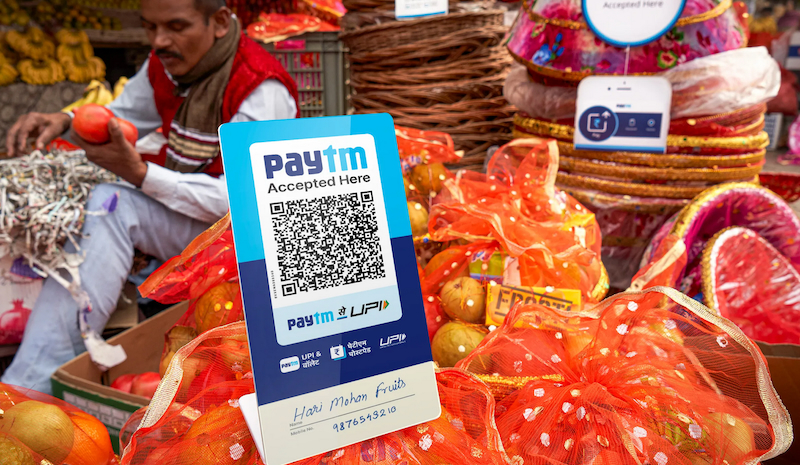
    MUMBAI: Digital payments powerhouse, Paytm, has rolled out its Q3 FY25 financial report, revealing both triumphs and trials. But before we get into the nitty-gritty, let’s rewind a bit.

    Founded by Vijay Shekhar Sharma, a man whose billion-dollar smile once symbolised the fintech boom, Paytm’s journey has been nothing short of a Nolan blockbuster—full of twists, drama, and cliffhangers.

    Valued at a staggering $16 billion during its 2021 IPO, Paytm was riding high on the wave of digital transformation. Fast forward to today, and that valuation has taken a reality check. Then there’s the infamous Paytm Payments Bank fiasco—a debacle where the Reserve Bank of India (RBI) froze new customer onboarding in 2022, leaving users stranded like passengers at a cancelled train station. Trust took a nosedive, and so did Paytm’s goodwill.

    Add to this the rising competition in a thriving fintech ecosystem, and you’ve got yourself a classic ‘hero vs. villains’ plot. But here’s the big question: can Paytm channel its inner phoenix and rise from these ashes, or are these missteps just the beginning of a longer slide? Let’s dive into the numbers—and the drama—to decode where Paytm truly stands today.

    Consolidated Results

    Paytm’s consolidated revenue from operations for Q3 FY25 stood at Rs 18,278 million, which, while a 10 per cent rise from the previous quarter, still missed the dazzling Rs 21,379 million achieved in the same period last year. Add Rs 1,887 million in other income, and the total income stood at Rs 20,165 million—a decent climb, but far from scaling Everest.

    Payment processing charges surged to Rs 9,910 million over nine months—a stark reminder that in the fintech world, expansion doesn’t come cheap. Meanwhile, employee benefit expenses slimmed down to Rs 21,186 million from last year’s Rs 30,640 million, showing that cost-cutting is very much in fashion at Paytm HQ. Despite this, profitability remains more elusive than your favourite radio station’s caller contest jackpot.

    Now, let’s talk about profits… or their absence. Paytm posted a net loss of Rs 2,035 million for Q3, contributing to a cumulative nine-month consolidated loss of Rs 14,486 million. While the EBITDA margin did show some improvement, suggesting baby steps towards sustainability, one can’t help but ask: Is Paytm attempting to juggle too many flaming fintech ambitions at once? Will it ever strike the perfect balance, or is this the fintech equivalent of chasing unicorns?

    Standalone Results

    In standalone terms, Paytm reported Rs 14,916 million in revenue from operations for Q3, marking a steep drop from Rs 21,379 million a year ago. Total income for the quarter stood at Rs 16,603 million, supported by Rs 1,687 million in other income—a much-needed silver lining in an otherwise cloudy quarter.

    On the cost front, payment processing charges reached a hefty Rs 9,910 million over nine months. Meanwhile, marketing and promotional expenses in Q3 hit Rs 1,383 million. These figures tell us one thing loud and clear: Paytm is playing hard to stay visible in a crowded market. But here’s the catch: at what cost? The standalone net loss for Q3 stood at Rs 2,053 million, bringing the nine-month tally to Rs 2,085 million. Ouch!

    The EBITDA, meant to showcase operational efficiency, seemed to be waving a white flag, coming in at Rs (14,666 million) for the nine months. However, the loss per share for the same period narrowed to Rs 3.28 from a jaw-dropping Rs 14.35 last year. Could this be a sign of recovery, or just a smaller storm brewing? Either way, Paytm’s ambitious growth strategy will need more than just cost-cutting to turn this ship around.

    Despite financial headwinds, Paytm’s focus on strengthening its core offerings is clear.

    Key operational highlights include:

    International expansion: Subsidiary Paytm Cloud Technologies plans to establish entities in the UAE, Saudi Arabia, and Singapore. Is Paytm gearing up to become the global leader in digital payments?

    GIFT City initiatives: A move to incorporate subsidiaries in Gujarat signals a deeper commitment to domestic fintech innovation.

    Default Loss Guarantee: The DLG limit for merchant lending has been raised from Rs 225 crore to Rs 350 crore, enhancing support for SME growth.

    Yet, regulatory uncertainties loom. The Reserve Bank of India’s restrictions on Paytm Payments Bank remain unresolved, and the company’s investments in its associate have been impaired by Rs 2,096 million.

    Paytm’s financials reflect a company in transition, balancing the costs of aggressive growth with the harsh realities of an unforgiving market. It’s the classic tale of ambition meeting its archnemesis: practicality. As the digital payments sector surges ahead, Paytm is busy laying tracks to new horizons—geographies, services, and market opportunities. But is this the innovation express, or a high-speed derailment waiting to happen?

    Let’s not forget the backdrop: a thriving fintech economy, where competitors are sprinting ahead while Paytm retools its strategy. Investments in new geographies, like its UAE and Singapore expansions, could be the ticket to redemption. Or will these plans go the way of the once-famous “Paytm ka ATM” campaign—promising, but ultimately short-lived?

    Here’s the kicker: Will these grand strategic pivots deliver the profitability Paytm desperately needs, or will the costs of expansion continue to weigh like a proverbial albatross? For now, stakeholders can do little but watch this financial drama unfold.

    Key Financial Highlights

    . Consolidated Revenue: Rs 18,278 million for Q3; Rs 49,889 million for nine months.

    Standalone Revenue: Rs 14,916 million for Q3; Rs 39,055 million for nine months.

    Net Loss: Rs 2,035 million for Q3 consolidated; Rs 14,486 million for nine months consolidated.

    EBITDA Margin: Improved due to cost controls.

    DLG Expansion: Raised to Rs 350 crore for merchant lending.
     

  • AI to transform marketing strategies, not its core – Vikram Sakhuja

    AI to transform marketing strategies, not its core – Vikram Sakhuja

    MUMBAI: Artificial intelligence (AI) has gone from being a buzzword to an indispensable tool, revolutionising industries across the globe.

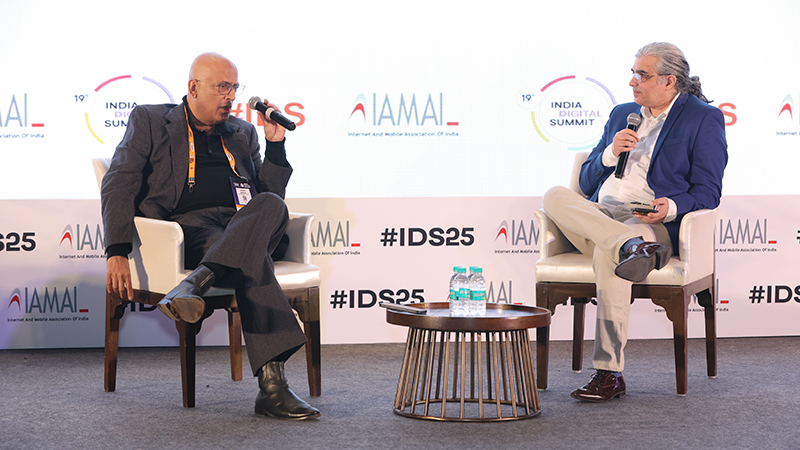
    At the 19 India Digital Summit, Madison Media & OOH at Madison World group CEO Vikram Sakhuja shared his views on how AI is transforming marketing strategies without disrupting its core principles. Spoiler alert: marketing fundamentals are safe, but the methods? They’re getting an AI upgrade!

    Sakhuja made it clear that while AI is rewriting the “how” of marketing, the “why” and “what” remain rooted in human understanding.  “The core principles of marketing will largely remain unchanged. What will evolve and transform are the methods of marketing,” he said during a thought-provoking session hosted by India Today Group consumer revenue group CMO & COO, Vivek Malhotra.

    Malhotra posed the billion-dollar question: Can publishers leverage AI-driven algorithms to help the ad industry scale to $1 trillion? Sakhuja’s reply was simple: AI’s learning thrives on data. “You can’t just write an algorithm; it’s the data fed into the system that enables learning and improvement over time,” he noted, adding that companies like Google are refining AI engines to optimise media spends through better data.

    Can AI foster human connection? The answer is a surprising yes.

    Are algorithms too mechanical to form meaningful consumer bonds? Not according to Sakhuja.  “AI can create a deep connection. For instance, when Meta launches a trailer, the number of shares it gets is a real-time pulse check,” he explained. AI helps broadcasters and advertisers bypass traditional targeting and focus on consumers who actually engage.

    And the examples don’t stop there. Think about Cadbury’s Diwali campaign, where Shah Rukh Khan’s virtual presence personalised messages for neighbourhood stores. That’s AI delivering local charm on a national scale.

    Sakhuja dismissed the notion that AI is the sole domain of new-age brands. “Of course, legacy brands can embrace AI,” he said. He highlighted how even routine tasks like food delivery via Swiggy or Zomato rely on AI, demonstrating its seamless integration into daily life.

    The takeaway? Age doesn’t matter if you’re willing to innovate.

    But wait, what about data validation? With great data comes great responsibility.
    Sakhuja cautioned about the dangers of bad data—what he called the “garbage in, garbage out” problem. Feeding unvalidated data into AI can lead to “hallucinations” (no, not the psychedelic kind) where outputs are wildly off-mark.

    The solution? “Validation checks are crucial to ensure accuracy and prevent biases. The key is balancing AI’s capabilities with human oversight,” Sakhuja advised, adding that ethical use and privacy concerns need to stay top of mind.

    Three ways AI supercharges marketing:

    1    Precision targeting: AI identifies who’s engaging and how, skipping old-school guesswork.

    2    Customised experiences: From localised campaigns to dynamic messaging, AI personalises at scale.

    3    Smart scaling: Brands like Cadbury use AI to connect with millions while keeping it personal.

    Final thought: Will AI replace humans? Not likely. Sakhuja pointed out that AI is a tool, not a replacement. “Human judgment remains critical. Over-reliance on AI could erode the creativity and ethics that define good marketing,” he concluded.

    So how will your brand embrace the AI wave without losing its human touch?

  • Kurkure® inks partnership with Ching’s Secret for the ultimate snack fusion

    Kurkure® inks partnership with Ching’s Secret for the ultimate snack fusion

    MUMBAI: When two iconic brands join forces, you get a snack so bold and spicy, it might just ignite your taste buds!

    Kurkure®, India’s favourite crunchy snack, has partnered with Ching’s Secret, the trailblazer of desi Chinese flavours, to launch the flavour we never knew we needed- ‘Schezwan Chutney Kurkure®’. This new variant fuses Kurkure®’s classic Masala Munch with the fiery zing of Ching’s Schezwan Chutney, creating a snack designed to revolutionise your chai breaks and binge sessions.

    Indian-Chinese cuisine has a loyal fan base, much like Kurkure® and Ching’s Secret. This collaboration is a celebration of everything we love—chatpata masalas, spicy kicks, and an oh-so-addictive crunch. Whether you’re team Kurkure® or team Ching’s, this snack is sure to win your heart.

    Available in Rs 5, Rs 10, and Rs 20 packs, it promises to bring big flavour without burning a hole in your pocket. Perfect for sharing, snacking solo, or adding a fiery twist to your Netflix binges.

    PepsiCo India marketing director for Kurkure® & Doritos, Aastha Bhasin shared, “PepsiCo India is excited to partner with Tata Consumer Products’ Ching’s Secret for this milestone collaboration. Kurkure®️ has always led the way in introducing trendsetting innovations within the snacking category, and this partnership underscores our commitment to delivering flavours that truly connect with evolving consumer preferences. Together, this collaboration brings two well-loved brands to celebrate a snacking innovation that blends flavours enjoyed by consumers across India.”

    Adding to the excitement, Tata Consumer Products president – packaged foods, Deepika Bhan said, “We are thrilled about this maverick collaboration between two iconic chatpata masaaledar brands – Ching’s and Kurkure®. Together, they bring to life a fusion that seamlessly blends the zesty notes of Ching’s Schezwan Chutney tadka with Kurkure’s signature masala profile. This collaboration is set to surprise and delight consumers, promising an unforgettable sensory adventure.”

    The launch will roll out with a high-impact TVC, supported by a multimedia blitz across TV, digital, and print channels. Whether you’re scrolling Instagram or catching up on your favourite show, this fiery snack is bound to catch your eye. Because who doesn’t love a snack that screams bold and desi?

    This collaboration is the stuff foodie dreams are made of, and with its addictive mix of flavours, it’s destined to become the snack of the season.

    Grab a pack and let the flavours do the talking!

  • Kedaara Capital adds industry vet  Jai Shankar Krishnan as operating advisor

    Kedaara Capital adds industry vet Jai Shankar Krishnan as operating advisor

    MUMBAI: Kedaara Capital  is laying it on  thick with advisors. The latest to be added on its roster is Jai Shankar Krishnan as an operating advisor, effective immediately. 

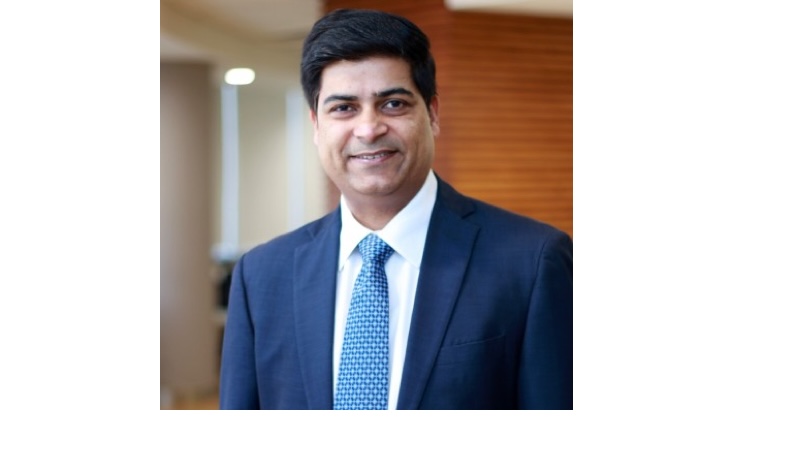
    With over three decades of diverse experience in high-impact industries such as FMCG, pharma, industrials, life sciences, and diagnostics, Jai’s career began at Hindustan Unilever. He has since held key leadership roles at prominent companies including GlaxoSmithKline, Novartis, and Danaher Corp.

    Notably, Jai served as managing director &d CEO for Danaher Corp in India, where he scaled the business nearly tenfold within six years. He later became regional president for Asia Pacific, overseeing a revenue stream exceeding $2.5 billion and chairing the APAC board.

    In 2019, he took on the role of president for high growth markets at Danaher, managing critical markets that contributed significantly to the company’s $10 billion+ revenue.

    In addition to his corporate roles, Jai is active on the boards of several respected organisations and is committed to community service with various non-profits.

    At Kedaara, Jai will provide strategic guidance to its healthcare team, advising on both existing and new investments in the sector

  • Donald Trump, Mukesh & Nita Ambani, Kalpesh Mehta & Pankaj Bansal: What’s the connection?

    Donald Trump, Mukesh & Nita Ambani, Kalpesh Mehta & Pankaj Bansal: What’s the connection?

    MUMBAI: When the incoming president of the US invites you, you definitely have to go. The pre-swearing in inaugural festivities thrown by the to-be -President  Trump at an intimate gathering of  friends and family at Trump National Sterling in Virginia saw a handful  of Indians mark their presence. But those who really want to make a splash of it are two Indian real estate developers who are the Republican leader’s Indian partners in Trump Towers. 
     

    Mr & Mrs Trump The fireworks celebration

    We are referring to Tribeca Developers founder Kalpesh Mehta and M3M Developers managing director Pankaj Bansal who were seen hobnobbing with Trump and sharing a glass of bubbly with him.  Both Mehta and Bansal are key partners in the development of Trump Towers in India, reflecting the strong ties between Indian business leaders and the Trump Organisation. Kalpesh Mehta, the licensed Indian partner for Trump Towers, has been instrumental in bringing the Trump brand to India. They were also seen cracking a few jokes with India’s richest couple – Mukesh and Nita Ambani.  Mukeshbhai and Nitabhabi, apparently, took an overnighter on their private jet for a spin to Washington DC.

    Global leaders, including Amazon.com founder Jeff Bezos and other prominent business figures, were also in attendance.

    A nearly 20 minute firework display was watched by Trump and his wife Melania and his extended family from the balcony of his club.

    Trump’s alleged excesses have already got critics carping  about his proximity to several American billionaire friends of his who are getting crucial posts and others (one of them read crypto currency industry)  who are handing out $250 million to  the inauguration committee for spending on what is being called the most expensive inauguration  (read party) of a president in history. Other presidents have reportedly spent less than $50  million (Obama) on their inauguration spending prior to Trump who spent a massive $107 million following  his 2017 election victory.


    With the Trump-baiters getting their knives out even before he has got into the White House, we wonder what they will come up with after he does. We can only wait and watch.