Category: Marketing

  • HSBC Golf League swings into Pune, Kapil Dev tees off a luxury finale

    HSBC Golf League swings into Pune, Kapil Dev tees off a luxury finale

    MUMBAI: HSBC India, in a collaboration with Thriwe, teed off the grand finale of its third golf league at Pune’s exclusive Oxford Golf Course, turning the greens into a playground for India’s high-net-worth (HNW) and ultra-high-net-worth (UHNW) swingers.

    The event, a veritable who’s who of industry titans, was graced by none other than cricket legend Kapil Dev, who, in between ceremonial tee-offs, probably pondered the similarities between a well-timed cover drive and a perfect swing.

    Following regional rounds in Greater Noida, Bengaluru, Hyderabad, and Mumbai, the Pune finale saw the crème de la crème of amateur golfers battling it out for a coveted prize: an all-expenses-paid jaunt to Singapore’s Tanjong Course, where they’ll rub shoulders with the pros at the HSBC Women’s World Championship. Think opulent Hexagon Suites and enough golfing action to make even the most seasoned player giddy.

    HSBC India head international wealth and personal banking Sandeep Batra waxed lyrical about the event, stating, “HSBC’s global ambition is to bring golf to more people across the world. We’re focused on helping to expand the game to the next generation of players and build the sport across markets. This prestigious event, a testament to our commitment to excellence and sportsmanship, has not only brought together the finest amateur golfers across India but has also provided a platform for our esteemed clients to engage in the sport they love. At HSBC India, we are honored to facilitate such a grand celebration of talent and look forward to continuing to foster the growth of golf in India.”

    Thriwe  founder & CEO Dhruv Verma added, “With each year passing we see more and more participation and this year was no different. We will continue to build this golf league, with HSBC India, as a property/IP to further encompass more features and member privileges. At Thriwe, we are also excited on using AI and building the entire model ahead.”

    The event, powered by Thriwe’s tech prowess, wasn’t just about swinging clubs; it was a tech-infused golfing extravaganza. The HSBC golf league mobile app allowed participants to track scores, network, and snag exclusive perks, from free golf cart bookings to discounts on accessories.

    In essence, HSBC and Thriwe have turned golfing into a luxury experience, blending sport with tech and a dash of celebrity sparkle. It’s a hole-in-one for networking and a par-fect day out for India’s elite.

  • Madhur Sugar and Dentsu Creative Webchutney promote The Good Cut

    Madhur Sugar and Dentsu Creative Webchutney promote The Good Cut

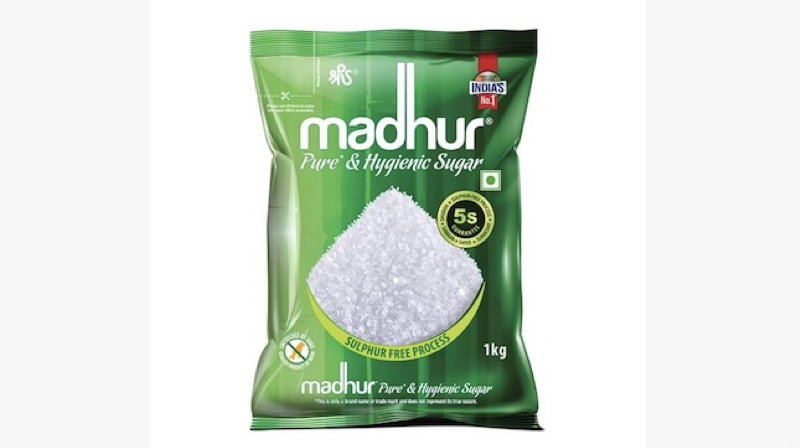
    MUMBAI: Madhur Sugar, in a sweet partnership with Dentsu Creative Webchutney, is shaking up the packaging world with The Good Cut, a simple yet radical redesign aimed at tackling India’s alarming microplastic problem. With India churning out a staggering 391,879 tonnes of microplastics annually – that’s 18 Statues of Liberty’s worth of tiny plastic terrors – something had to give.

    The culprit? Our casual corner-cutting habit. You know, that satisfying snip when opening a packet? Turns out, those tiny plastic shards are ditching the recycling bin and diving straight into the environment. Madhur Sugar’s The Good Cut flips the script, literally, guiding consumers to cut horizontally instead of tearing corners. A mere 5 cm shift, yet a potential game-changer.
     

    Ravi Gupt Surjo Dutt

    Shree Renuka Sugars executive director  Ravi Gupta declared, “Environment and sustainability have to be goals of a responsible business. Our packs are 100 per cent recyclable! But we realized that a corner piece of them never made it to recycling plants as it is trashed directly. That had to change.” He added, with a hint of optimism, “We hope this innovation sparks a movement, encouraging more brands to embrace The Good Cut and rethink packaging for a cleaner future.”

    Dentsu Creative Webchutney chief creative officer Surjo Dutt  chimed in, “Creativity is about solving real problems with ideas that fit seamlessly into everyday life. The Good Cut does just that – transforming a habitual action into an eco-friendly choice. A 5cm cut may seem tiny, but in the fight against microplastic pollution, it’s a step toward something bigger.”

    Available in select stores, The Good Cut is set to launch a digital, social, and outdoor blitz, aiming to turn this packaging tweak into an industry-wide revolution. It’s not just about sugar; it’s about a sweet solution to a sticky problem.

  • Pearl Academy students ‘find themselves’ on Lakmé runway, Ikigai gets a catwalk makeover

    Pearl Academy students ‘find themselves’ on Lakmé runway, Ikigai gets a catwalk makeover

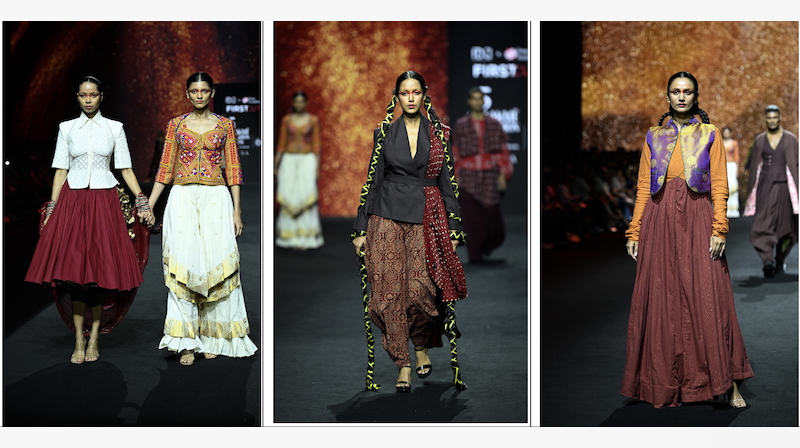
    MUMBAI: Pearl Academy, in partnership  with the Fashion Design Council of India (FDCI), unleashed “First Cut” at Lakmé Fashion Week X FDCI, a student showcase. Inspired by the Japanese concept of Ikigai – the secret sauce to a long and happy life, apparently – the students didn’t just walk the runway; they strutted through the existential.

    This wasn’t your run-of-the-mill frock parade. Oh no, this was a deep dive into the emotional vortex of today’s youth, a sartorial therapy session if you will. The Ikigai pillars – passion, mission, vocation, and profession – were translated into four thematic acts, each a chapter in a style-driven self-help manual.

    “Make Nothing from Scratches” (passion) saw deadstock fabrics resurrected into rebellious silhouettes, proving that one person’s trash is another’s avant-garde treasure. “Juxtapose” (success) threw a curveball at conventional achievement, blending layers like a fashion smoothie gone wild. “Reimagine” (purpose) gave Indian pattern-cutting a global glow-up, marrying heritage with high-street swagger. And “Love is Blind” (love) was a technicolour celebration of connection, from digital dalliances to mature musings.

    FDCI chairman Sunil Sethi waxed eloquent  about nurturing young talent, stating, “Fashion was an evolving dialogue, and this showcase allowed students to engage with its transformative power.” Indeed, this wasn’t just about pretty clothes; it was about provoking thought, sparking conversation, and maybe, just maybe, finding oneself amidst the sequins and stilettos.

    Pearl Academy students, collaborating like a well-oiled fashion machine, proved that they’re not just learning the ropes; they’re rewriting the rulebook. With past themes tackling everything from post-pandemic blues to lunar landings, this year’s inward gaze was a refreshing twist. “First Cut” wasn’t just a show; it was a statement, a reflection, and a wink to the ever-evolving nature of identity. In a world spinning faster than a runway model, these students showed us that fashion can be a map to finding yourself, one stitch at a time.

  • Goyal’s Pivot spins heads at Lakmé Fashion Week, a sartorial butterfly effect

    Goyal’s Pivot spins heads at Lakmé Fashion Week, a sartorial butterfly effect

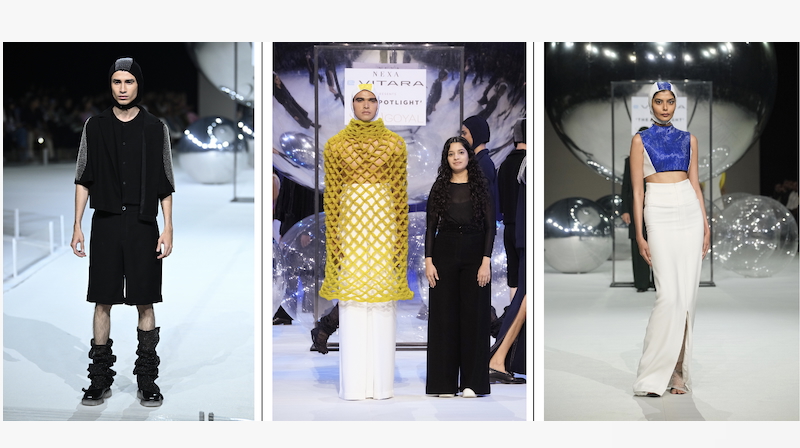
    MUMBAI: Somya Goyal’s Pivot collection, a veritable fashion fandango, pirouetted its way to victory at Lakmé Fashion Week, bagging the “Nexa Presents The Spotlight” award. Goyal, a design dynamo fresh from Pearl Academy and Central Saint Martins, London, showcased a collection that wasn’t just clothes; it was a manifesto on metamorphosis.

    Inspired by the butterfly effect – that tiny flap of wings causing a style tsunami – Goyal’s designs were a masterclass in versatility. Reversible silhouettes flirted with modular constructions, while gradient dyeing techniques painted the runway like a psychedelic sunset. Her 3D cord hand embroidery added a tactile kick, and colour-changing details kept the audience guessing, proving that this designer doesn’t just follow the beat, she remixes the entire track.

    Goyal, who launched her eponymous label in 2019, is a champion of sustainable chic, favouring natural and recycled fabrics. Her “Pivot” collection, however, was a bold experiment in reinvention, with garments that morphed and moved like a well-choreographed dance. “I wanted to explore how even the smallest design decisions can create a ripple effect,” she said, “transforming not just garments but the way we perceive fashion itself. The collection is a dialogue between precision and evolution—where modularity, reversibility, and fluid craftsmanship redefine versatility. For me, fashion is never static; it’ s an ever-changing expression, and Pivot is a  testament to that constant transformation.”

    “We are honoured to support initiatives such as ‘Nexa  e Vitara  Presents the Spotlight,’ which not only recognizes and celebrates emerging design talent, but also fosters innovation within the fashion industry. This season’ s theme has provided designers with a unique opportunity to explore the profound intersection of emotion, creativity, and storytelling through fashion. Somya Goyal has masterfully embodied the spirit of this theme with a bold and visionary collection,” said  Maruti Suzuki India senior executive officer marketing & sales Partho Banerjee.

    Meanwhile FDCI chairman Sunil Sethi stated, “We were impressed by the diverse and innovative presentations from participants nationwide, with Pivot by Somya Goyal’s showcase, particularly catching our attention.”

    In essence, Goyal’s “Pivot” wasn’t just a collection; it was a wink and a nudge to the ever-evolving nature of style, proving that even the subtlest design shift can create a full-blown fashion earthquake. This designer didn’t just turn heads; she spun them.

  • Vadilal’s Gandhi family settles disputes to scoop up a sweeter future

    Vadilal’s Gandhi family settles disputes to scoop up a sweeter future

    MUMBAI: After years of frosty relations, the Gandhi family—owners of India’s beloved Vadilal ice cream brand—have struck a peace deal to end their corporate meltdown. On 29 March, Vadilal Industries announced a comprehensive family settlement between three branches of the dynasty that promises to restructure management while bringing the iconic Vadilal brand under direct company control. The company  made this known through a regulatory filing with the Bombay stock exchange. 

    The fourth-generation Gandhis had been locked in a bitter corporate feud with “diverse interests, different ambitions and varying perceptions” about the strategic direction of the company. These disputes had spilled into multiple legal battles before the National Company Law Tribunal and its appellate body, with at least nine separate appeals pending (Company Appeal Nos. 221, 223, 338, 339, 340, 341, 376, 377 of 2024 and 18 of 2025).

    The Gandhis have settled

    Under the new arrangement, the three family branches—led by Rajesh Gandhi, Virendra Gandhi, and Devanshu Gandhi—will each appoint one director to the board, creating a power-sharing formula designed to maintain “equality of interests.” 

    These nominees will be complemented by four non-executive directors, including at least three independent directors, ensuring family members remain in the minority on the seven-person board.

    The three branches will have equal representation on board committees on a rotational basis and similar representation rights on subsidiary boards. Each branch will maintain information and inspection rights, including access to audited financials, quarterly statements, and monthly management information. 

    Professional managers will need to submit annual business plans and budgets to the family members at the start of each financial year.

    All current executive leadership will step aside. Rajesh Gandhi and Devanshu Gandhi will resign as managing directors but remain as executive directors. Kalpit Gandhi will step down as chief financial officer and non-executive director, while Deval Gandhi will also leave her non-executive directorship. Janmejay Gandhi, a 46-year-old MBA graduate from the University of Technology, Sydney and described as a “dynamic business leader” with experience in finance and strategy, will join as an executive director representing the Virendra Gandhi branch.

    The icing on the cake involves a composite scheme of amalgamation merging three promoter-owned companies—Vadilal International Pvt Ltd (VIPL), Vadilal Finance Company Pvt Ltd  (VFCPL), and Veronica Constructions Pvt Ltd (VCPL)—into Vadilal Industries. Critically, this will bring ownership of the Vadilal brand, currently licensed from VIPL until 2028, directly under the company’s control.

    The merger’s financial details reveal interesting valuations. VIPL, which owns the trademark and had revenue of Rs 589.81 lakh against assets of Rs 2,627.87 lakh as of 28 February 2025, is valued highest in the share-swap deal. Its shareholders will receive 3,241 Vadilal Industries shares for every 100 VIPL shares. Meanwhile, VFCPL shareholders will get 317 shares for every 10 held, and VCPL shareholders will receive 116 shares for every 5 shares they own. The valuations were provided jointly by GT Valuation Advisors and PwC Business Consulting Services, with a fairness opinion from ICICI Securities.

    Vadilal Icecreams

    The agreement includes robust governance mechanisms, with the three branches sharing affirmative voting rights on key matters affecting the company. These matters include corporate restructuring, capital changes, decisions regarding the Vadilal brand, creation of joint liabilities on promoters, delisting of securities, and liquidation or winding up of the company or material group companies.

    The family branches will have significant influence over the appointment of independent directors, CEO, CFO and other key managerial personnel, with unanimous consent required from all branches for such appointments, reappointments, or removals. The company will adopt formal policies for the appointment of independent directors and professional management personnel.

    A new dividend policy ensures investors aren’t left feeling cold—the company will distribute at least 10 per cent of consolidated profits in 2024-25, rising to between 20 per cent and 25 per cent from 2025-26 onwards. The agreement also allows for the adoption of an employee benefit scheme with stock options, though limited to 0.5 per cent of total post-issue paid-up capital for any individual.

    Future funding for the company will follow a specific waterfall mechanism: first through internal accruals or debt, then through rights issues (requiring unanimous branch consent), and finally through preferential allotments with branch approval.

    The agreement includes strict transfer restrictions with rights of first refusal should any family member wish to sell shares. Tag-along rights are triggered if a third-party purchaser acquires more than 10 per cent of the company’s share capital and subsequently transfers shares to a competitor. These special rights fall away if a branch’s holding drops below 10 per cent of the company’s share capital on a fully diluted basis.

    Three new independent directors—Shalini Raghavan, Shivakumar Dega and Nagarajan Sivaramakrishnan—will join the board, along with non-executive director Gaurav Marathe. Additionally, Rajesh Pandya will serve as a non-executive director until the litigation withdrawal date.

    The entire arrangement is contingent upon shareholder approval via postal ballot and the resolution of the ongoing litigation before the National Company Law Tribunal and Appellate Tribunal. The amended articles of association will incorporate all relevant terms of the agreement, replacing the existing articles entirely.

    For a company that began as a humble ice cream stall in Ahmedabad in 1926 and has since grown into a major player in ice cream, frozen desserts, and processed foods, this professionalisation marks a watershed moment. After nearly a century of family management, Vadilal appears ready to trade family fights for market might—ensuring its frozen treats remain anything but its business prospects.

  • Mishra’s Silk Route hits high gear, Janhvi Kapoor revs up the runway

    Mishra’s Silk Route hits high gear, Janhvi Kapoor revs up the runway

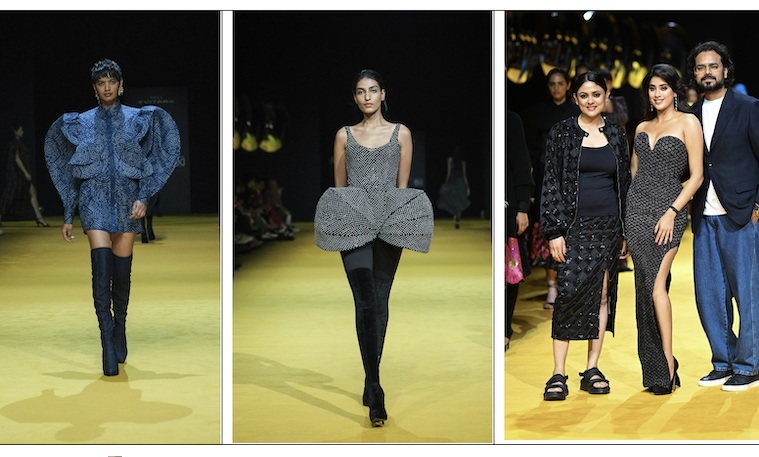
    MUMBAI: Lakmé Fashion Week’s grand finale saw AFEW Rahul Mishra unveil his Fall Winter 2025 Silk Route collection, a sartorial odyssey that blended ancient trade routes with modern swagger. And what a ride it was. Janhvi Kapoor, channeling her inner Bond girl, rolled onto the runway in a gleaming Vitara, swathed in a figure-hugging, thigh-high slit willpower gown that could stop traffic – both vehicular and pedestrian.

    Mishra’s collection, a sumptuous tapestry of cultural cross-pollination, drew inspiration from the historic Silk Road, a conduit for goods, ideas, and, crucially, style. Think Indian bandhani flirting with Japanese shibori, and Henri Rousseau’s lush jungles mingling with miniature Indian paintings. It was a visual feast, a global mash-up for the discerning fashionista, whether they’re sipping chai in Mumbai or champagne in Paris.

    The runway itself, a clever nod to Nexa’s e-Vitara, featured blind-spot mirror installations, a wink to the future of automotive design and, perhaps, fashion itself. Mishra, ever the alchemist, transformed traditional Indian textiles into contemporary silhouettes, a fusion of old-world craft and new-wave innovation that felt both timeless and tantalisingly modern.

    Maruti Suzuki senior executive officer of marketing and sales Partho Banerjee chimed in, extolling the “seamless alignment” of the e-Vitara with Mishra’s vision. “We’re not just selling cars, we’re selling experiences,” he declared, hinting at a future where automotive elegance and haute couture are bedfellows.

    Mishra’s collection, with its focus on nowness and sustainable chic, delivered versatile separates that were as practical as they were breathtaking. It was a masterclass in modern couture, a reminder that fashion, like the Silk Road itself, is a journey, not a destination.

  • Cricket and cinema: the strategic brand accelerator in India’s cultural economy

    Cricket and cinema: the strategic brand accelerator in India’s cultural economy

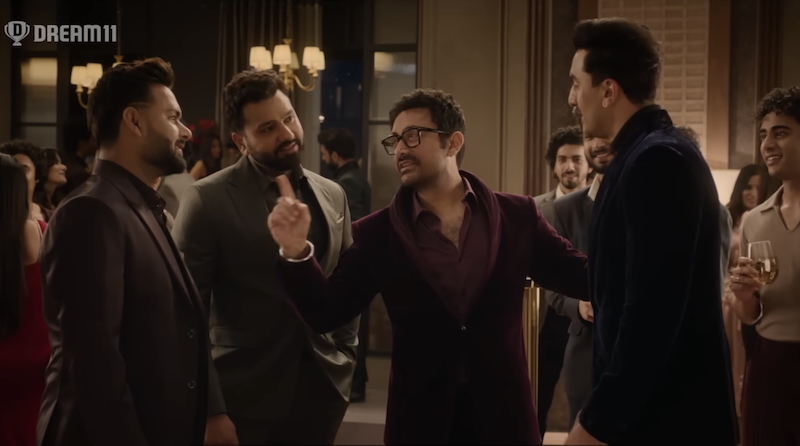
    MUMBAI: With IPL 2025 underway, it’s worth examining why the combination of cricket and Indian cinema remains the most potent market entry and brand acceleration strategy in India’s dynamic consumer economy. Brands like Dream11 and EMotorad continue to demonstrate how effectively leveraging the insight ‘cricket and cinema unite India as a country’ can drive exceptional marketing results. 

    What makes cricket and cinema uniquely powerful is their unparalleled ability to transcend India’s extraordinary diversity. In a nation with 22 official languages and countless regional subcultures, these two cultural forces create a shared national experience that cuts across all demographic divides. The data supports this observation: when mapped against consumer engagement metrics, no other cultural touchpoints come close to matching their penetration across income brackets, age groups, and geographic regions. This isn’t merely entertainment – it’s the social fabric that connects 1.4 billion people. 

    For brands like Dream11 and EMotorad that recognise this cultural alignment, the benefits extend far beyond conventional marketing metrics: 

    The 2024 IPL season shattered all previous viewership records, reaching an astonishing 572 million viewers across platforms, with average engagement time increasing to 47 minutes per match. This represents nearly 40 per cent of India’s population actively engaged with a single longish running event.

    When these viewership patterns are overlaid with the social media footprint of leading Indian cinema personalities – many commanding follower-ships larger than the population of European countries – the potential reach becomes unparalleled in global marketing. The cross-platform amplification effect creates a visibility multiplier that traditional media planning simply cannot replicate. 

    EMotorad Dhoni Sandeep Vanga Raddy

    Analysis of over 200 Indian brand campaigns shows that those leveraging both cricket and Indian cinema consistently generate emotional engagement scores 3.7x higher than those using either element alone. This emotional resonance translates directly to brand affinity metrics that persist long after campaign completion. 

    The strategic advantage of this dual approach lies in its demographic universality. Consumer panel research across 18 Indian states reveals that cricket-cinema integrations uniquely solve the urban rural divide that plagues most marketing strategies. 

    In a market where consumer trust metrics show declining confidence in traditional advertising, the implicit endorsement effect of cricket-Indian cinema integrations provides a critical credibility accelerator. Recent research indicates brands with authentic cricket and cinema  associations report up to 41 per cent higher trust ratings than category competitors. This trust premium directly influences the consumer decision journey, with 68 per cent of consumers demonstrating increased purchase intent for products within this ecosystem. 

    Forward-thinking brands are now moving beyond simple endorsements to create sophisticated ecosystem strategies that maximize the cricket-cinema connection. Through narrative integration, these brands develop authentic storylines that merge cricket themes with Indian cinema storytelling conventions, creating content that resonates at a deeper cultural level with Indian audiences. 

    Their platform architecture constructs comprehensive touchpoint ecosystems that begin during IPL broadcasts, extend through celebrity social channels, and culminate in immersive digital experiences, creating seamless consumer journeys across multiple media. Additionally, strategic brands position themselves to capitalise on specific cricket-cinema convergence points—such as celebrity reactions to dramatic match moments—enabling real-time engagement that feels organic rather than manufactured. This integrated approach allows brands to participate in cultural conversations in ways that traditional advertising simply cannot achieve. 

    As more brands recognize this strategy, the key differentiator has become execution sophistication. Brands achieving breakthrough results are those implementing “cultural intelligence” – the ability to authentically participate in the cricket-cinema conversation rather than simply appropriate its imagery. 

    The most successful campaigns demonstrate deep understanding of the subtle cultural codes embedded within both cricket and cinema, allowing them to engage at a level that feels native rather than commercial. 


    Jaspreet Bumrah Haridik Pandya Dream11

    Perhaps most importantly, leading brands have developed specialized metrics to quantify the impact of cricket-cinema integrations beyond traditional marketing KPIs. These include cultural relevance scores, conversation share analysis, and cross-platform engagement attribution that capture the true business impact of these strategies. 

    In India’s intensely competitive brand landscape, the cinema-cinema  convergence represents not just a marketing tactic but a strategic imperative. Brands like Dream11 and EMotorad haven’t merely adopted this approach – they’ve embedded it within their core business strategy. 

    With another IPL season, the brands that will emerge victorious are those that recognize a fundamental truth: in India, cricket and cinema aren’t just marketing channels – they are the cultural operating system through which consumers experience and interpret brand meaning. 

    The question for strategic leaders isn’t whether to engage with this cultural ecosystem, but how to do so with the sophistication and authenticity that today’s discerning Indian consumer demands. 

  • Tahiliani’s OTT season 2: A right royal remix, where reinvention reigns supreme

    Tahiliani’s OTT season 2: A right royal remix, where reinvention reigns supreme

    MUMBAI: Tarun Tahiliani’s OTT has returned to Lakmé Fashion Week with season 2, and frankly, it’s a bit of a belter. This ain’t your average frock parade, mind you; it’s a masterclass in multi-wear magic, where fluidity and versatility are the name of the game. Tahiliani’s philosophy? Reinvention, darling, reinvention.

    The show kicked off with a flourish of draped silhouettes and layered separates, setting the tone for a collection that’s both elegant and, dare we say, rather clever. Models, those stylish shape-shifters, demonstrated the collection’s adaptability by restyling pieces live on the runway, proving that one garment can indeed be many. A clever mix of new bits and archive classics reinforced OTT’s commitment to a sustainable, timeless wardrobe, which is rather sensible, isn’t it?

    Indian and western influences collided in a distinctly India modern mash-up. Draped gilets, fluid dresses, structured jackets, and layered separates offered a sensual, bohemian vibe that catered to all ages. Light, effortless, and versatile, season 2 championed a modern approach to dressing, where thoughtful design means endless possibilities.

    At the collection’s core lies a deep respect for heritage craftsmanship. Hand-embroidered chikankari got a contemporary makeover, while rabari craft was revived with vintage replicas and fresh, archive-inspired designs. The Singh Twins’ geometric prints, a blast from Tahiliani’s 2015 past, made a triumphant return in a delicate summer palette of ecru, blush, sage, and taupe, rendered on luxurious linens, chanderi, georgette, organza and jersey.

    “This collection speaks to the multifaceted urban woman,” said Tarun Tahiliani, “Her wardrobe  is evolving as she moves through life, accumulating pieces that reflect her journey and achievements. The act of buying fashion transforms into a deeply personal statement of self-expression.”

    As that old romantic, John Keats, once said, “A thing of beauty is a joy forever.” 

    And Tahiliani’s OTT season 2? Well, it’s certainly a joy to behold, proving that fashion can be both a playground and a treasure trove.

  • Ajio and Asos bring a summer of style sizzler to LFW, with cinema royalty in tow

    Ajio and Asos bring a summer of style sizzler to LFW, with cinema royalty in tow

    MUMBAI: Reliance Industries’ online luxe and fashion platform Ajio teamed up with Asos, the online fashion behemoth, to deliver a right proper Summer of Style at Lakmé Fashion Week. And, darling, it was a corker. The collaboration, exclusively available on Ajio in India, brought Asos’s latest transition line to the runway, proving that global fashion can indeed have a desi twist.

    The show, a veritable feast for the eyes, showcased an eclectic mix of shirts, trousers, skirts, dresses, and co-ord sets, all designed with a breezy, contemporary aesthetic. Hindi cinema’s own Tara Sutaria and Veer Pahariya strutted their stuff as showstoppers, embodying Asos  bold yet relaxed vibe.

    “Fashion’s about confidence, innit?” said Tara Sutaria, “and Asos nails it. Walking for LFW is always a thrill, and this year’s summer of style with Ajio was no exception.” 

    Veer Pahariya echoed the sentiment, adding, “Asos has always pushed the boundaries of fashion, and this collection is no different. Walking for A Summer of Style was a thrilling experience, and I can’t wait for more people to discover these looks on Ajio.”

    The Asos transition line, presented in three distinct collections, catered to every sartorial whim:

    * Botanical Garden/Resort: Think breezy, nature-inspired looks perfect for escaping the city’s stuffiness.

    * Pastel Stories: Dreamy, soft hues for those who prefer a touch of effortless elegance
    .
    * Monochrome: A bold black-and-white affair for the modern minimalist who likes things sharp.

    “We’re proud to bits to bring Asos’ latest collection to India,” said Ajio CEO Vineeth Nair. “We’re all about bringing global fashion to Indian consumers, and this collaboration nails that.”

    Asos managing director wholesale  Michelle Wilson added, “India’s a right exciting market for us, and our partnership with Ajio has helped us reach a growing audience of fashion-forward types. The response has been smashing.”

    Following the runway spectacle, Ajio and Asos hosted a swanky stakeholder event, giving industry bigwigs a sneak peek at the collection. It was a right royal knees-up, and a testament to the power of fashion to bring people together. 

  • Shivan & Narresh’s Léger-than-life resort collection paints Lakmé Fashion Week a vibrant hue

    Shivan & Narresh’s Léger-than-life resort collection paints Lakmé Fashion Week a vibrant hue

    MUMBAI: Shivan & Narresh have given Lakmé Fashion Week a right royal splash of colour, unveiling a Resort 2025 collection that’s as bold as a brass monkey and twice as playful. Drawing inspiration from the legendary French artist Fernand Léger, the design duo, celebrating their fifteenth year, has whipped up a sartorial cocktail that’s part art gallery, part beach party.

    Their LégerLeisure  print, a blast from their archives, has been resurrected with all the kaleidoscopic vibrancy of a summer sunset after a few too many gin and tonics. This ain’t your granny’s floral print, mind you. We’re talking painterly strokes and rich hues that’ll make your peepers pop. Forty ready-to-wear ensembles strutted down the runway, each a love letter to leisurely living.

    Menswear took centre stage, finally! Think coordinated sets, jumpsuits that are less boiler suit, more bohemian chic, and ponchos that’ll have you looking like a suave art critic on holiday. Swim trunks and resort separates, including vests, shackets, shirts, and polos, offered a laid-back sophistication that’s perfect for escaping the dreary drizzle.

    For the ladies, bold cuts and breezy statements ensured no one was left feeling like a wallflower. Summer knits, with their intricate melanges, jacquards, and tactile textures, added a touch of luxe to the proceedings. Footwear ranged from resort mules and slides to clogs and brogues, while bucket hats, visors, and silk twillies added a touch of whimsical charm. Signature bags, including the Pomsky, Olly, and Totes, completed the ensemble, ensuring every accessory made a statement.

    “We’ve taken the arty spirit of French pop-art and the iconic canvas of Fernand Léger and given it a right good shake,” said Shivan Bhatiya, head designer, and Narresh Kukreja, creative director, in a joint statement. “This collection is a celebration of art, fashion, and leisure colliding in a perfect storm of elegance.”

    In essence, Shivan & Narresh’s Resort 2025 collection is a visual feast, a riot of colour and texture that’s as refreshing as a dip in the Med. It’s a collection that screams, “Darling, let’s escape!” and quite frankly, who are we to argue?