Category: Marketing

  • Fevicol sticks it to the Louvre heist with witty real-time masterstroke

    Fevicol sticks it to the Louvre heist with witty real-time masterstroke

    MUMBAI: Paris lost a jewel, but Fevicol stole the moment! In a stroke of sticky brilliance, Fevicol turned the recent Louvre Museum jewel heist into a marketing masterpiece, proving once again that no global moment escapes its famously “mazboot jod” (strong bond).

    As social media buzzed with Dhoom 2 and Mission Impossible references after the theft, Fevicol, crafted by Schbang, slid smoothly into the conversation. Their cheeky post read, “Ab Dhoom machane ki hamari baari” (Now it’s our turn to make an impact), suggesting that if the display case had been sealed with Fevicol, the heist would’ve been, quite literally, impossible.

    The tongue-in-cheek ad glued together global pop culture and local wit, making audiences chuckle while subtly flexing the brand’s promise of unbreakable bonds. And the numbers spoke louder than any art critic, over 41 million views, 73,000 shares, and 165,000 interactions in just five days.

    Fevicol’s vice president of marketing Rajiv Subramanian, put it best, “Every global moment is a canvas for creativity and we love adding Fevicol’s sticky twist.”

    Senior creative strategist Sanyukta Jamkhedkar revealed that the idea came naturally, “When the team saw the news, someone joked, ‘Fevicol laga diya hota!’ That’s how seamlessly it began.”

    By blending topical humour with desi flair, Fevicol once again proved that it doesn’t just join conversations, it cements them. From furniture to fandoms, if it’s trending, Fevicol’s got it stuck.
     

  • Gallant serves up a smash with padel complex

    Gallant serves up a smash with padel complex

    MUMBAI: Game, set, match! Gallant Sports has just scored big. The sports infrastructure pioneer has unveiled one of India’s largest four-court padel complexes at the Jindal Steel Plant in Angul, giving the country’s fastest-growing racquet sport a grand new stage.

    Spanning nearly 10,000 square feet, the all-weather facility sets a new benchmark in design and quality. Built to international standards, each panoramic court features galvanised steel framing, 12mm tempered glass for crystal-clear visibility and high-performance artificial turf for that perfect bounce. The complex is illuminated by advanced LED lighting, ensuring the rallies don’t stop when the sun goes down.

    Awarded in May 2025 and completed by September, the project reflects Gallant’s signature precision and speed. “Delivering a project of this scale and quality for a prestigious client like Jindal is a moment of immense pride,” said Gallant Sports & Infra founder and CEO Nasir Ali. “Padel is the fastest-growing racquet sport globally, and this complex puts Jindal’s township on the map as a premier sporting destination.”

    More than a showcase of engineering excellence, the facility aims to bring communities together through sport, fitness and friendly competition. With playability ensured year-round and courts that meet every international specification, this padel paradise is ready to rally the region.

    From steel to serves, Jindal’s latest addition proves that when it comes to passion and precision, Gallant Sports always plays to win.


  • Radcliffe Schools reimagine learning with 2.0

    Radcliffe Schools reimagine learning with 2.0

    MUMBAI: Education just got an upgrade. The Radcliffe Group of Schools has rolled out Radcliffe 2.0, a bold new chapter in schooling that promises to prepare children not just for exams, but for life itself.

    With 20 campuses across India and more on the way, Radcliffe’s transformation marks a shift from traditional classrooms to future-ready learning spaces that spark curiosity, creativity and character in equal measure.

    For over 15 years, Radcliffe has been synonymous with quality education and academic excellence. Now, through its Radspark framework, the school is setting a fresh benchmark with five learning pillars, skill development, personalised pathways, applied learning & agency, relationships & values, and keystone attributes. Together, they power the spark score, a unique index tracking every learner’s academic, emotional and creative growth.

    Adding to the mix are flagship programmes such as Reach (language and communication skills), Raise (life skills and leadership), and Spa (sports and performing arts). From immersive labs to hands-on learning, Radcliffe 2.0 is designed to connect knowledge with the real world, and to make learning a lived experience rather than a race for marks.

    “Radcliffe 2.0 is more than a rebranding; it’s a reimagining of education in India,” said Radcliffe Schools CEO Himanshu Yagnik. “Our aim is to nurture learners who are rooted in values, ready for the future, and resilient in spirit.”

    With its refreshed identity and renewed purpose, Radcliffe 2.0 brings together innovation, empathy and excellence, lighting the way for a generation of students ready to lead with heart and head in harmony.


  • Dentsu cracks the code: three human truths that will define marketing in 2026

    Dentsu cracks the code: three human truths that will define marketing in 2026

    MUMBAI: In an era where artificial intelligence orchestrates our every click, the most valuable marketing insights remain decidedly human. Dentsu’s latest media trends report strips away the algorithmic complexity to reveal three enduring behaviours that will separate winners from also-rans in 2026: our craving for simplicity, our need to connect, and our dwindling attention spans.

    The sixteenth edition of Human Truths in the Algorithmic Era arrives as brands grapple with seismic shifts—conversational search engines that blur the line between query and oracle, agentic AI that promises to shop on our behalf, and cultural formats from Japanese anime to Chinese microdramas rewrite entertainment rule books.

    “Just a few years ago, the media landscape seemed dominated by a handful of platforms,” said dentsu global practice president of media and integrated solutions  Will Swayne. “By 2026, the foundations may crack even further. Brands must focus on what remains stable over time by rooting their strategic thinking in core, invariable human behaviours.”

    The first truth—we are simple until we are complex—captures how consumers chase convenience but rebel against algorithmic predictability. Nobody enjoys searching for parking spots or wading through bloated recipe blogs. Yet the Labubu plush toy frenzy proves the thrill of the chase still matters.

    Dentsu identifies search experience optimisation as the new battleground, encompassing everything from large language model optimisation to retail search. As zero-click searches proliferate, brands must ensure content appears everywhere consumers look—whether that’s ChatGPT, TikTok or Amazon.

    The report warns against “agent inflation”—rushing to deploy AI agents without strategy. With 80 per cent of chief marketing officers citing generative AI as a priority investment, dentsu urges building context-aware systems with governance safeguards, not chatbots slapped together for boardroom optics.

    Then there’s the friction paradox. Whilst Amazon rolls out instant-scan shopping and same-day perishable delivery, cult brands like Knitwrth announce collection drops weeks in advance with strict no-returns policies. Trader Joe’s refuses online ordering entirely. Strategic friction, dentsu argues, can spark desire and build community—if wielded deliberately.

    The second truth—we are social animals—explores how influence has decentralised. Nearly half of American adults regularly spend time with friends, and 83 per cent of consumers believe brands should facilitate human connections, not just transactions.

    Reddit threads now rival mainstream media for product reviews. Substack recently surpassed The Wall Street Journal in traffic. Dentsu’s research shows promotional content from creators holds attention longer and drives greater consideration than brand ads—but only when creators retain control.

    The report urges brands to invest in diverse smaller creators with authentic ties rather than chasing mega-influencers. Twice as many people engage most with influencers under one million followers than with mega-influencers. Gen Z favour Twitch and Discord; boomers prefer LinkedIn and Facebook.

    Live experiences remain unmatched for forging shared memories. Streaming platforms are acquiring sports rights and launching original live programming—WWE’s Raw has ranked in Netflix’s global top 10 every week in 2025. Meanwhile, Millennial nostalgia is peaking: Oasis tours, Buffy reboots, and The Devil Wears Prada sequels are minting money in 2026.

    Business messaging is finally monetising at scale. WhatsApp, WeChat and Messenger each boast over one billion monthly users, with WhatsApp reportedly opened 891 times monthly versus TikTok’s 359. New ad placements are emerging, but the real opportunity lies in unified commerce and customer experience through persistent conversations.

    The third truth—we don’t read advertising—acknowledges that nobody ever has. Howard Luck Gossage nailed it decades ago: “People read what interests them; and sometimes it’s an ad.”

    With exploding screen time and AI slop drowning feeds, advertisers are collectively spending more to reach fewer people. Dentsu’s answer: play the quality game, not the saturation game.

    AI-generated audiences offer a way forward. These synthetic consumer profiles simulate real-world attitudes and behaviours, providing immediate creative feedback and reducing research costs. Dentsu’s Generative Audiences capability combines ID-based precision with AI-driven scale, enabling brands to engage known customers accurately whilst connecting with new audiences as interests shift.

    Carat’s Brand Reset research—the world’s largest attention study on video’s long-term impact, spanning 40,000 people and ten NextGen video platforms—reveals that connected television now delivers outcomes comparable to broadcast. A single CTV exposure lifts long-term sales by 3.16 per cent over three years, approaching broadcast television’s 3.61 per cent. Even short-form vertical video in fast-scroll environments can lift sales by 6.62 per cent with proper attention.

    Entertainment presents untapped white space. Sports docuseries reach 40 per cent of global consumers monthly, capturing women, Gen Z and emerging markets where traditional sports lag. Gaming still captures less than five per cent of global media investment despite massive user bases. And 50 per cent of Gen Z watch anime at least weekly—more than any major sports league in the United States.

    dentsu creative and media brands in South Asia chief executive Amit Wadhwa frames the challenge starkly: “In a world ruled by algorithms, human truths remain our compass. Technology opens doors, but empathy, creativity and understanding people will determine who truly wins.”

    The report, developed by 30 global media experts, positions media not as a channel but as a growth engine connecting creativity, commerce and culture. Brands that anchor strategy in enduring human truths whilst embracing new formats—from agentic AI to microdramas—can move beyond mere survival.

    Because in 2026, as algorithms reshape everything from search to shopping to storytelling, the brands that win won’t be those with the most agents or the biggest ad budgets. They’ll be the ones that remember we’re still human—simple when we can be, social when we need to be, and utterly unmoved by advertising that forgets what interests us.

  • Ad Man for All Seasons Enters the Hall of Fame at AdAsia Beijing

    Ad Man for All Seasons Enters the Hall of Fame at AdAsia Beijing

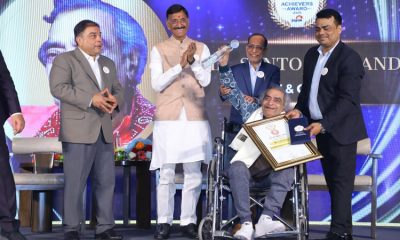
    MUMBAI: In a world where ad campaigns come and go with the seasons, one man has managed to make his impact timeless. Srinivasan Swamy, chairman of R K Swamy ltd., was inducted into the Hall of Fame of the Asian Federation of Advertising Associations (AFAA) at the grand AdAsia Beijing, joining an elite circle of legends who’ve defined the region’s advertising landscape.

    The honour AFAA’s highest recognition was presented by Raymond So, immediate past president of AFAA, in the presence of delegates from 32 countries, each applauding a career that has shaped not just Indian advertising, but global marcom thinking.

    For over 40 years, Swamy has been more than an adman, he’s been an architect of industry institutions. The citation, read before a full house, traced a remarkable career spent leading and building one of India’s largest integrated marketing groups, the R K Swamy Hansa group, which he has helmed for over 25 years.

    But his legacy stretches far beyond boardrooms. Swamy has steered nearly every major advertising and marketing body worth its acronym AFAA, IAA, CAAAA, AAAI, ASCI, ABC, AIMA, and more with distinction, diplomacy and a deep sense of purpose.

    He’s been President of the India Chapter of the International Advertising Association (IAA) for an unprecedented four years, President of the Advertising Agencies Association of India (AAAI) for a record three consecutive terms (and now, re-elected again in 2025), Chairman of the Advertising Standards Council of India (ASCI), Chairman of the Audit Bureau of Circulations (ABC), and even President of the All India Management Association (AIMA).

    And that’s not counting his presidencies at the Madras Chamber of Commerce and Industry, the Madras Management Association, and the Advertising Club Madras, where he remains a beloved mentor and fixture.

    Swamy’s fingerprints are on some of the most defining industry moments from the birth of GoaFest, the country’s biggest celebration of creativity, to the IAA World Congress 2019, the IAA Silver Jubilee Summit in Kochi, multiple editions of the CII International Brand Summit, and the AIMA World Marketing Congress.

    Each of these events, powered by Swamy’s vision, cemented India’s stature on the global advertising map. His leadership style, a mix of quiet conviction and unflagging optimism has turned committees into communities and conferences into milestones.

    Swamy’s shelf of awards could fill a museum and each comes with a story of grit, growth and generosity.

    He’s the only Indian to have received the Award of Appreciation from the Japan Advertising Association, the IAA Global Compass Award, and the AdStar Korea Lifetime Honour Award rare distinctions that underscore his global influence.

    Add to that the AFAA Special Merit Award, the IAA Inspire Champion Award, the IAA North Star Medal, Honorary Life Fellowship from AIMA, Lifetime Achievement Awards from AAAI, Rotary Club of Guindy, and Indira Institutions, and it’s clear the industry has been applauding his impact for years.

    Even his alma mater, Alagappa College of Technology, honoured him with a Distinguished Alumni Award during its Platinum Jubilee celebrations, a homecoming moment that completed the circle.

    But what sets Swamy apart isn’t just the positions he’s held, it’s the purpose behind them. His contributions extend to education, healthcare, culture, and community development, where he has quietly but consistently supported institutions and causes that build social capital alongside business growth.

    Colleagues often describe him as “approachable yet awe-inspiring,” a man whose friendly demeanour, wise counsel, and willingness to help have earned him as much affection as admiration. In an industry known for its egos, Swamy’s humility stands out like a perfectly written headline simple, powerful, and memorable.

    As AFAA conferred its Hall of Fame honour, the applause in Beijing carried a sense of inevitability. Here was a man who didn’t just witness the evolution of Indian advertising he helped write its script, one association, one reform, one landmark event at a time.

    Swamy’s story mirrors the evolution of India’s creative economy itself: rooted in Madras, reaching the world, powered by persistence and propelled by purpose.

    In an industry built on ideas that sell, his greatest idea has been service to the profession, to people, and to progress.

    So, what do you call an adman who’s outlived every campaign, outperformed every title, and outshone every accolade? In the language of advertising, a timeless brand. And as Srinivasan Swamy takes his rightful place in the AFAA Hall of Fame, one thing’s clear: legends don’t retire, they just find better placement.


  • Glow and Behold as Colors Queen Rules the Raabta Runway

    Glow and Behold as Colors Queen Rules the Raabta Runway

    MUMBAI: When beauty met bling, sparks quite literally flew. As the Diwali lights shimmered across the grand Raabta by Rahul showcase, all eyes were on the runway and on Colors Queen Cosmetics, the official beauty and makeup partner that turned the ramp into a riot of radiance. The luxury jewellery brand’s much-awaited festive gala known for its grandeur and glitterati found a perfect match in Colors Queen’s artistry. With each model’s look curated from the brand’s own product line, the beauty label didn’t just style faces; it sculpted the very mood of the night.

    The event’s theme, saltanat evoking imperial opulence came alive in a parade of luminous skin, jewel-toned eyes, and statement lips. The in-house creative team at Colors Queen went beyond standard runway glam, designing every look as a story of texture, tone, and technique. The result? A seamless dialogue between couture and cosmetics where shimmer met substance.

    And then came the showstopper moment: Kangana Ranaut swept down the ramp, radiating a mix of regal poise and modern fire. The actress’s striking presence, paired with Colors Queen’s bold yet refined palette, drew collective gasps from the audience. For a night built on sparkle, she was the incandescent finale.

    For Colors Queen Cosmetics co-founder Nitin Panjwani, this collaboration was more than a commercial tie-up, it was a celebration of vision and artistry. “Our collaboration with Raabta by Rahul was not merely a partnership; it was a celebration of eternal beauty and modern expression,” Panjwani said. “At Colors Queen, our mission has always been to offer high-performance, luxurious yet accessible beauty. Being part of an event of such magnitude reiterates our role in empowering beauty professionals and celebrating confidence with color and creativity.”

    From backstage brushes to bold beauty statements, the brand’s team ensured every element aligned with Raabta’s luxury ethos. The models’ looks mirrored the jewellery intricate, confident, and unmistakably Indian.

    Colors Queen extended its touch beyond the ramp, curating an entire pre-event experience that felt as indulgent as the runway itself. Each celebrity guest and influencer received an exclusive invite paired with a specially designed beauty hamper featuring the brand’s newest product launches.

    This strategic move proved a masterstroke: the campaign clocked a combined online reach of over 1.1 billion views across social media platforms, amplifying the brand’s voice well beyond the Diwali dazzle.

    Among the star-studded attendees were Meenakshi Dutt, Sara Khan, Guneet Virdi, Kriti DS, and Harpreet Suri, who shared their behind-the-scenes glimpses and red-carpet moments, flooding timelines with a generous dose of glitz and gloss.

    The event underlined Colors Queen’s growing stature in India’s booming beauty market. Positioned at the intersection of fashion, celebrity culture, and accessible luxury, the brand is steadily redefining what Indian beauty looks like confident, creative, and unapologetically bold.

    With this partnership, Colors Queen isn’t just selling makeup; it’s scripting cultural moments, the kind that blur the lines between fashion week spectacle and festive tradition. The brand’s DNA is unmistakably Indian but its aesthetic is global, a blend of precision, pigment, and panache that resonates across runways and reels alike.

    If Raabta by Rahul was about timeless jewellery, Colors Queen added the modern shimmer. The collaboration stands as a reminder that in the world of fashion, beauty isn’t the finishing touch, it’s part of the narrative.

    As Kangana Ranaut glided off the ramp and flashbulbs popped, the message was clear: beauty doesn’t just complement luxury, it completes it. And with each brushstroke, Colors Queen is painting its own legacy bold, brilliant, and beautifully Indian.

    After all, when you’re born to rule the runway, the crown isn’t gold, it’s glitter.


  • Sunfeast melts hearts with a squeeze of chocolate

    Sunfeast melts hearts with a squeeze of chocolate

    MUMBAI: When life gives you bread, drizzle chocolate on it. ITC’s Sunfeast Fantastik! is making that sweet fantasy a delicious reality with its latest innovation, Choco Meltz, a rich, smooth molten choco that’s playful, portable and priced at just Rs 5.

    Reimagining how India indulges, Choco Meltz isn’t just another chocolate fix. It’s a squeeze of joy that can be sipped, drizzled or spread, over toast, paratha, fruit bowls or even straight into your mouth. With its no-fuss packaging and silky texture, this one’s designed to turn every “yum” moment into a “yummy” one.

    The new campaign, crafted by FCB Ulka, captures that feeling perfectly through a series of fun, relatable stories, from siblings sneaking a molten choco moment to friends sharing secret squeezes under desks. Each film showcases how Choco Meltz makes even everyday snacks feel indulgent.

    Speaking on the launch, ITC Foods VP & head of marketing (confectionery, chocolates and coffee) Anuj Bansal said that Choco Meltz was all about “democratising indulgence,” making rich chocolate accessible, affordable and irresistibly fun. Meanwhile, FCB Ulka national creative director Suchitra Gahlot noted that the campaign blends “indulgence and emotion” to show how a squeeze of chocolate can melt hearts as easily as it melts on toast.

    Currently available across Karnataka, Kerala, Tamil Nadu and Telangana, Sunfeast Fantastik! Choco Meltz is already sweetening shelves and smiles at just Rs 5, proof that a little chocolate can go a long way. 
     

  • Bingo! chips away at Its past with a bold new bite

    Bingo! chips away at Its past with a bold new bite

    MUMBAI: Now that’s how you take the chips on your shoulder and turn them into a punchline. Bingo! potato chips has flipped the script on its “Big No” phase with a hilariously self-aware new campaign that sees the brand roast itself before making a fiery comeback.

    Known for its trademark wit and quirky energy, Bingo! has never shied away from humour, and this time, it’s using it to reclaim its snack throne in north and west India. In the new campaign film, the brand cheekily admits it wasn’t quite everyone’s first pick before declaring, “Yes, we were a Big No. But not anymore!”

    The bold relaunch features a complete makeover, right from edgy, gothic-inspired pack designs to two flavour-packed innovations, butter garlic, the garlic-bread-in-a-chip experience, and Himalayan pink salt, a refined twist on a timeless classic. With six striking packs that blend art, attitude and appetite, Bingo! is betting on curiosity, confidence and serious crunch.

    “Humour has always been in Bingo!’s DNA,” said ITC Foods VP & head of marketing, snacks, noodles & pasta Suresh Chand. “This isn’t just a comeback, it’s a new energy, a new attitude, and a brand that’s owning its journey.”

    Echoing that sentiment, Ogilvy senior executive creative director Rohit Dubey added, “When mischief and marketing meet in the right spot, magic happens.”

    With this self-roasting, high-flavour reboot, Bingo! isn’t just back on the shelves, it’s back in the conversation. And this time, the answer to Bingo! is a loud, crunchy “YES.”

  • How Indian brands hit the festive marketing jackpot in 2025

    How Indian brands hit the festive marketing jackpot in 2025

    MUMBAI: If there’s anything we Indians look forward to as much as our morning chai and newspaper, it’s the festive season. Homes come alive with the glow of diyas, embodying the victory of good over evil; floors bloom with rangoli and laxmi charans; the air fills with laughter, and the sweet aroma of mithai. And amid all this joy, brands flood algorithms, billboards, and social media timelines, eager to strengthen their customer base or build one from scratch. It’s the most lucrative time of the year for brands, with marketers pulling out all stops to win over audiences. For instance, international brands go all out to strike a chord with their Indian diaspora. Who would’ve thought we’d ever see a Diwali Barbie draped in a Anita Dongre lehenga choli? With cultural resonance ticked off and fair representation for the brown community, this isn’t just festive marketing, it’s festive marketing on steroids.

    Back home, Indian brands aren’t far behind, leaving no stone unturned during the peak festive season. The festive marketing report card for India’s FMCG sector is glowing. This year, the festive season didn’t just light up homes; it set marketing budgets ablaze. With recent GST cuts lowering costs and boosting consumer sentiment, brands rolled out campaigns that evoke creativity, value, and cultural relevance.

    For instance, launching gold scheme campaigns is fairly common in the retail jewellery industry, but Tanishq changed the script altogether. The House of Tata brand launched a campaign, headlined by former cricketer Sachin Tendulkar, encouraging households to repurpose existing gold, estimated at 25,000 tonnes in homes, into new designs. This reduces dependence on gold imports, which account for nearly 99 per cent of India’s annual requirement. By highlighting locally sourced and recycled gold, the campaign shifts the focus toward Indian production and sustainability, while still tapping into the cultural significance of gold during festivals.

    Meanwhile, it’s no news that the concert economy in India is booming. Recently, celebrated rapper and singer Travis Scott brought his Circus Maximus World Tour to India. Bookmyshow’s new campaign ‘Travis Wali Diwali’ shows how some brands can make the most of such moments and bring in attention from their target audience. Set in a vibrant Delhi household, the film shows how young Indians blend tradition with contemporary flair, from Travis-inspired rangolis and cactus-themed décor to stylish fusion outfits. The film captures the true spirit of a generation that embraces global trends while staying rooted in India’s festive culture.

    Squidjc founder Siddharth Jalan believes that last year’s post-pandemic, bargain-heavy approach is giving way to “premium storytelling” that taps into culture and identity rather than just price. He noted that consumers aren’t hunting for deals as much as they are looking to feel “part of the broader narrative.” For instance, “People don’t want a brand or a product, they want the story. Can I buy into the story? That’s when I’ll purchase your product,” he added.

    Meanwhile, Abhay Group managing director and co-founder Apurv Modi points out that the ad-spend boom is being fuelled by newer platforms and formats. The rise of quick commerce, precise digital targeting and interactive hoardings is enabling brands to be everywhere i.e physical stores, social media platforms, and even hyperlocal outdoor screens.

    The two leaders find common ground in noting how digital-out-of-home (DOOH) and hyperlocal advertising are gaining traction as outdoor screens become programmatic and locally tailored. At the same time, brands are diversifying across channels such as quick commerce, social media apps like Whatsapp, and precision-targeted digital spaces, reflecting how today’s consumers shop and engage. Modi added that experiential rewards and bundled offers are replacing simple markdowns, creating stronger perceived value.

    On similar grounds, Jalan emphasises that Gen Z and emerging consumers are drawn to campaigns that lean into sustainability, inclusivity and regional identity, rather than just discount tags.

    Influencer marketing has become another critical avenue. “Budgets are increasingly moving toward micro-influencers and mixed-use influencers who can authentically connect with niche audiences. Consumers are inspired by brands that integrate culture and identity into their messaging,” he explained.

    Other notable industry moguls said this year marked a clear shift towards campaigns that marry value, emotion, and innovation: a trinity that made festive marketing more personal and purposeful than ever before. And with recent GST cuts lowering costs and lifting consumer sentiment, brands across the country are rolling out campaigns that club all these factors.

    “This year, festive marketing is becoming even more value, and emotion driven. Compared to
    previous years, we’re seeing a greater emphasis on regional relevance, personalisation, and
    deeper engagement, rather than just top-of-the-funnel campaigns,” said Hyfun Foods head of marketing Vincent Noronha. “The recent GST rate cuts, especially packaged foods, have certainly freed up some marketing budgets. This provides both established and emerging brands, particularly regional players, an opportunity to increase visibility during the busy festive window.”  

    The brand recently launched its campaign “Hyfun Khao Sona Pao,” offering a direct incentive of winning gold to its customers. The campaign taps into the Indian tradition of auspicious gold purchases during festivals, creating an immediate call-to-action beyond the product itself. By strategically combining OOH advertising in Bengaluru and Delhi NCR with digital ads and quick commerce platform banners, the brand has orchestrated a cohesive, high-recall marketing blitz to leave a lasting imprint on consumers.

    In a similar vein, for skincare brand Joy Personal Care (RSH Global), GST cuts and rising disposable incomes are driving broader festive engagement. CMO Poulomi Roy notes, “Economic stability, along with government measures such as GST rate reductions and tax exemptions up to ₹12 lakh, has boosted consumer confidence and purchasing power. Coupled with renewed optimism and increasing disposable incomes, these conditions are encouraging brands to invest more actively in festive campaigns.” Consumers now seek fresh looks and meaningful brand experiences, prompting brands to maintain engagement throughout the season via targeted offers, new product launches, and regional content, she added.  

    Roy predicts that with rising disposable incomes leading to greater affluence, certain FMCG and food categories might witness the first wave of increased consumption particularly dairy, cheese, biscuits, sauces, condiments, and instant food products. In the personal care segment, stronger traction for larger pack sizes in everyday categories such as lotions and shampoos is anticipated.

    Whereas, incense sticks manufacturer and supplier Zed Black’s director Ankit Agrawal pointed out, “Lower GST rates bring cost flexibility, allowing us to reinvest in regional activations and consumer engagement.” The brand unveiled an experiential campaign featuring an eight-foot Durga idol made of incense sticks during Pujo in Kolkata, illustrating the shift from generic festive greetings to immersive storytelling. Premiumisation is a key driver, with consumers upgrading to aesthetically appealing, long-lasting products, from masala agarbatti to white-stick series.

    However, Jalan offered a measured view, “GST reductions are more of a motivator than a game-changer. Consumers may feel happier, but purchasing habits haven’t shifted dramatically. For brands, the opportunity lies in leveraging the festive moment effectively and delivering value without compromising brand equity.”  

    He also identified key categories seeing an uptick in festive campaigns. “Beauty, fashion, and footwear are booming, along with niche segments like spices and seeds. There’s a post-pandemic appetite for premium, culturally resonant, and exotic products, giving brands more room to innovate and engage.”

    There has been another consequential observation being made around the industry during this festive season: the resurgence of OOH and DOOH campaigns, but with a twist.

    The role of outdoor advertising has evolved. Hyperglocal business head Sumit Taneja, observed that “brands are investing heavily in OOH and point-of-purchase branding to build stronger festive visibility.” Large-format sites, high-street displays, and transit zones, combined with in-store décor and last-mile activations, are converting awareness into purchase. Real-time data, automation, and immersive displays ensure campaigns reach consumers where they shop, travel, and celebrate.

    Meanwhile, The Stone Sapphire India managing director & CEO Shobhit Singh had a lot to add regarding the surge of DOOH campaigns. “In an over-crowded and noisy digital environment, outdoor media delivers scale, visibility, and credibility, especially in high footfall locations like malls, shopping areas, and residential developments. For purchases in gifts for the home and toys, where sight and gift-giving are very important experiential elements to OOH, such as interactive displays, augmented reality billboards, and 3D displays, are connecting the offline life with digital storytelling. OOH is no longer stagnant; it is establishing itself as a dynamic storytelling opportunity, activating festive sentiment and impulse purchases,” he opined.

    Roy offered a slightly different perspective. “While traditional OOH may not always directly drive engagement, formats that encourage interaction and enhance the overall experience are proving to be more effective. Interactive setups near shopping hubs and digital OOH enhanced with augmented AI can deliver stronger engagement and create more memorable brand experiences, both during the festive season and beyond.”  

    Jalan also agreed on the fact that DOOH is seeing a resurgence. “Outdoor is evolving. Digital billboards are no longer prohibitively costly, and even smaller startups can leverage them for short bursts of highly targeted campaigns. Hyperlocal digital outdoor, near points of sale, is increasingly being used to drive sales with a higher ROI,” he said.  

    Personalisation and technology are also playing a key role. “There’s tracking software that allows brands to analyse movement around a billboard and even create interactive afterimages in real time. While this isn’t widespread yet in India, it’s an example of how innovation is shaping engagement,” he added.

    Similarly, Roy also shed some light on emerging technologies influencing festive campaigns. “Martech continues to be strong. Brands are using data analytics and audience insights to better understand purchase intentions, personalize festive messaging, and deliver more relevant consumer experiences across digital and offline touchpoints,” she opined.

    What stands out this festive season is how brands are pushing beyond conventional campaigns to create experiences that truly resonate with consumers. From hyperlocal DOOH activations and interactive outdoor displays to storytelling rooted in culture, identity, and emotion, marketers are finding innovative ways to capture attention and engagement. Technology, personalisation, and cultural insight are no longer optional, they are essential tools in connecting with audiences in meaningful ways.


  • Rannvijay shifts gears with Madcap Luxe lunch

    Rannvijay shifts gears with Madcap Luxe lunch

    MUMBAI: Fasten your seatbelts, luxury just hit the fast lane. Rannvijay Singha, along with co-founders Arvind Balan and Rohit Jha, has launched Madcap Luxe Travel Experiences, India’s first cultural powerhouse that merges motorsport, heritage, and high-end adventure into one roaring movement.

    Born from the thrill of the open road, Madcap Luxe redefines travel as an emotion rather than an itinerary. The brand blends self-drive expeditions with world-class hospitality, taking travellers from private F1 paddocks and Dakar rally zones to royal palaces and Michelin-starred dining tables, all wrapped in an unmistakable spirit of Indian luxury.

    “Madcap Luxe is not about itineraries, it’s about emotion engineered,” says Rannvijay Singha. “It’s for those who live boldly and want to drive their own legend.”

    The venture also introduces a second vertical, Madcap Lifestyle & Adventure IPs, with its debut property, Blackout 40, India’s first 40-hour non-stop biker festival in the deserts of Rajasthan. Designed as an immersive cultural celebration, it unites bikers, artists, and adventurers in a heady mix of music, craftsmanship and desert soul.

    “We are creating formats that go beyond festivals, these are cultural movements,” says Arvind Balan. “Blackout 40 celebrates India’s roots and modern identity in one frame.”

    Powered by experiential marketing giant Maxperience, the creative force behind 500 plus campaigns for Porsche, Hyundai, and Royal Enfield, Madcap Luxe is positioning itself as a global experiential brand built in India for the world.

    The 2026 global luxe drive calendar revs up the experience with curated international expeditions, from the Saudi Grand Drive – Dakar Edition to the Grand American Drive – Route 66 Centennial Edition. With its bespoke “Curate Your Own” journeys and “Rare Experiences” offering everything from F1 laps at Monza to desert glamping in Arabia, Madcap Luxe is redefining how India travels, where adrenaline meets elegance, and every mile tells a story.