Category: MAM

  • Onsitego partners with Pine Labs

    Onsitego partners with Pine Labs

    Mumbai: Onsitego, a device care company, has announced a strategic partnership with Pine Labs, a leading platform for EMI payments. Under this partnership, the companies aim to provide easy EMI options to consumers while purchasing Onsitego’s extended warranty and damage protection plans for their new devices. Over the past few years there has been significant increase in EMI based purchase. While affordability solutions were always available for devices, there were very few options of clubbing protection plans with devices. The partnership will allow two companies to offer the customers a unique value proposition of getting both their devices and protection plans covered under a single EMI option.

    Onsitego chief revenue officer Gaurav Agarwal said, “As payment preferences evolve, we recognize the importance of offering flexible and convenient options for our customers. Our collaboration with Pine Labs will enable us to expand the device protection market and extend the benefit of our hassle-free service to a much wider audience.”

    Pine Labs chief growth officer – affordability business Mayur Mulani remarked, “We are delighted to partner Onsitego and help them in their quest to provide worry-free device protection to their customers by integrating easy pay later payment options at the point of sale. Pine Labs’ robust tech stack and an ever-growing network of bank and NBFC partners is tailored to provide seamless instalment payment options for Onsitego’s customers.”

    Onsitego and Pine Labs will be working together to expand the reach of this offering across all offline retailers – both modern trade and general trade.

  • Booking.com unveils how Indian travellers plan their trips

    Booking.com unveils how Indian travellers plan their trips

    Mumbai – Everyone plans their holidays differently. While some Indian travellers prioritise securing the perfect flight deal first, others crave the comfort of booking their accommodation before planning the rest of their travel itinerary.

    Booking.com’s Travel Trends for 2024 unveils interesting insights into the mindset and behaviour of Indian travellers when they plan their trips. While 61 per cent of travellers book flights and 37 per cent book event tickets well in advance, car rentals, restaurant reservations and even taxis are either booked along with the accommodation or left until closer to the trip date.

    Planning for Takeoff: Flights Lead the Way: More than half (61 per cent) of Indian travellers book their flights before securing accommodation while planning their holiday.

    The All-in-One Approach: Around a quarter of Indian travellers prefer booking multiple aspects of their trip at the same time and are looking to book flights, accommodation, attractions, car rentals, restaurant reservations and even taxis simultaneously on a platform offering seamless travel experience.

    Foodies Rejoice: While making decisions about the choice of accommodation, Indian travellers emphasise culinary convenience. 40 per cent of travellers are willing to pay extra for that delicious breakfast spread and 54% crave unique food experiences like food tours and cooking classes.

    Last-Minute Decisions on the Ground: Nearly a third (13 per cent to 33 per cent) of Indian travellers wait until after booking their stays and just before their trips, to arrange car rentals, restaurant reservations and taxis. They are looking for flexible and spontaneous experiences during their travels. This likely allows them to discover hidden gems and local delights once they are settled into their destination, adding an element of surprise and discovery to their itinerary.

    Train Travel: Planning is Key: More than half (58 per cent) of Indian travellers book train tickets before securing accommodation to ensure a smooth journey and avoid the stress of last-minute scrambling for seats.

    Event Enthusiasts Plan Early: Similar to flights, 37 per cent of travellers prioritise booking event tickets before their accommodation. Whether it is a music concert or a sporting event, securing event tickets ensures these experiences become a highlight of the trip.

    Booking.com country manager for India, Sri Lanka, Maldives and Indonesia Santosh Kumar commented, “Booking.com Travel Trends provides valuable insight into the travel planning behaviour of Indian travellers. By understanding these preferences, the travel industry can tailor their offerings to cater to different planning styles and preferences – and at the right time across the traveller journey. Whether it’s the meticulous planner or adventurous improvisers, Booking.com is committed to making it easier for everyone to experience the world.”

    How Indians are booking various aspects of their travel

  • OnePlus unveils The Red Perspective celebrating community creativity with shot on OnePlus

    OnePlus unveils The Red Perspective celebrating community creativity with shot on OnePlus

    Mumbai: OnePlus, the global technology brand unveiled its first-ever limited-edition Shot on OnePlus Book, titled The Red Perspective, as an ode to its community’s creative endeavours with “Shot On OnePlus” photography efforts. “The Red Perspective” initiative serves as a testament to the OnePlus community and RCC members’ passion for photography and creative ambitions empowered by their OnePlus devices.  This initiative is a community co-creation effort that highlights the exceptional camera capabilities of OnePlus devices.

    The limited-edition Red Perspective book features a series of curated visuals from the Red Cable Club and community members, showcasing life through their lens. The book covers various themes ranging from macro photography and black and white photography of various genres such as wildlife, nature, travel and lifestyle. ‘The Red Perspective’ has been divided into sections to highlight community and creator contributions through “Life Through Your Lens”, “Red Cable Curation” and “OnePlus X Creators”. The book showcases over 90 stunning photos which comprise curated shots from Red Cable Club and community members, as well as captivating images by OnePlus creators and stunning features by renowned wildlife photographers Varun Aditya and Arzoo Khurana.

    At the heart of “The Red Perspective” is the brand’s Shot on OnePlus (SOOP) campaign, which highlights the exceptional camera capabilities of OnePlus devices consisting of an industry-leading camera partnership with Hasselblad. The photographs have been shot with OnePlus flagship devices starting from OnePlus 5 launched in 2017. The book underlines breathtaking pictures clicked by community members and creators showcasing the power and quality of OnePlus cameras over the years.

    Addressing the Red Perspective launch, Ishita Grover, Director of Marketing, OnePlus India, shared, “We are thrilled to introduce our first-ever limited-edition Shot on OnePlus Book, ‘The Red Perspective’. The idea behind this unique Shot On OnePlus initiative is to encourage the creative ambitions of our talented OnePlus community and bring their perspectives and creative efforts to life through the power of OnePlus’ unparalleled camera capabilities.

    Our user-driven approach, fueled by constant feedback, ensures that our products resonate with our community’s desires and aspirations. This book is a tribute to their creative aspirations and our shared journey of pushing boundaries together.”, she added.

    Varun Aditya, the renowned wildlife photographer, expressed his excitement and said, “I am delighted to be a part of the imminent launch of ‘The Red Perspective’ and witness the community’s excitement towards these curated visuals. The OnePlus device impeccably aligns with my professional vision as a photographer. Each image encapsulates a narrative, effortlessly guiding viewers into the essence of the moment and evoking emotive responses.”

    Each photograph in ‘The Red Perspective’ is thoughtfully curated which instills deep emotion and transports viewers to captivating moments. The selection criteria prioritized the meaning alongside visual appeal. ‘The Red Perspective’ celebrates innovation and creativity, showcasing our community’s unique perspectives through photography that speaks directly to the heart.

    In addition, the RCC community member, Ganeshkumar, shared “I have been a RCC member for 10 years and have seen the commitment of OnePlus to its community. The Red Perspective is another great example of how the brand engages with its community, giving us a platform to showcase our passion and skills driven by OnePlus’s technology.”

    The Red Perspective will be available for viewing at select OnePlus Retail stores soon. To commemorate the launch, an exclusive event was held in Bangalore on 27 April, where community members had a firsthand experience of the book.

  • India maintains highest national index score despite April 2024 consumer sentiment drop: LSEG-Ipsos PCSI survey

    India maintains highest national index score despite April 2024 consumer sentiment drop: LSEG-Ipsos PCSI survey

    Mumbai: India continues to sit at the top of the consumer confidence index with the highest national index score of 67.0, despite a 5.0 percentage point drop in overall consumer sentiment index in April 2024, according to the LSEG Ipsos primary consumer sentiment index (PCSI).

    Among the 29 countries, India (67.0) and Indonesia (65.1) remain the only countries with a National Index score of 60 or higher.

    Ten other countries now show a National Index above the 50-point mark: Mexico (59.8), Thailand (57.6), the Netherlands (54.8), Singapore (54.6), Sweden (54.5), the U.S. (53.4), Brazil (53.3), Poland (50.3), Great Britain (50.2) and Australia (50.1).

    In contrast, just three countries show a National Index below the 40-point mark: South Korea (39.6), Türkiye (36.8), and Hungary (33.2).

    Each month, Ipsos tracks attitudes of consumers in 29 markets on the current and future state of their local economy, their personal financial situation, the employment climate, and their purchasing and investing confidence.

    Consumer sentiment lowers in April 2024 for India

    The overall or national index has experienced a drop of 5.0 percentage points in April 2024 for India. Further, consumer sentiment has fallen across the 4 sub indices (the PCSI is an aggregation of four weighted sub-Indices) – the PCSI Employment Confidence (“Jobs”) Sub- Index, is down  6.3 percentage points; the PCSI Current Personal Financial Conditions (“Current Conditions”) Sub-Index is down 6.6 percentage points; the PCSI Investment Climate (“Investment”) Sub-Index is down 6.5 percentage points; and the PCSI Economic Expectations (“Expectations”) Sub-Index has a minor drop of 1.5  percentage points.

    Summarizing on the findings of the survey, Ipsos India CEO Amit Adarkar said, “India continues to show the highest national index score of 67.0 percentage points despite the drop in consumer sentiment this month. There is  lowering of consumer sentiment overall and largely driven by lowering of sentiment for personal finances, investments, jobs and the economy. Consumers are experiencing financial crunch for not only day-to-day running of households but also for savings and investments. We see downgrading of confidence for jobs. End of the financial year for a lot of companies would mean freeze on hiring by India Inc. And it should pick up in May/ June. Further, around this time, the tax burden increases on personal incomes, tightening the tight rope for discretionary spends. Also, it is election time in India. For 2 months no course correction or sops are likely to be announced by the incumbent government.”  

    Sentiment is largely up throughout Europe. Sweden (+3.6 points), Great Britain (+3.1 points), France (2.8 points), and Spain (+2.5 points) all show significant gains this month. For Sweden, this month’s reading is the country’s highest in nearly two years.

    In contrast, sentiment is more mixed in other regions. In the Asia-Pacific region, consumer confidence is up in Thailand (+2.1 points), while India (-5.2 points) shows the largest decline of any country. In Latin America, Argentina (+3.7 points) shows the largest increase among all countries, while sentiment declined sharply in Brazil (-3.5 points).

    The Global Consumer Confidence Index is the average of all surveyed countries’ Overall or “National” indices. This month’s installment is based on a monthly survey of more than 21,000 adults under the age of 75 from 29 countries conducted on Ipsos’ Global Advisor online platform. This survey was fielded between 22 March and 4 April 2024.

  • Redefining event relocation for fashion & corporates in remote realms with AVZA

    Redefining event relocation for fashion & corporates in remote realms with AVZA

    Mumbai: In an era defined by technological advancements and a growing appetite for unique experiences, the realm of event hosting has witnessed a transformative shift. Nowhere is this more evident than in the fashion industry and among corporate entities seeking to make a statement through grand shows and gatherings held in remote locales.

    As the demand for seamless relocation services escalates, management consultants like Vani Gehani, stand at the forefront, orchestrating the convergence of technology and logistics to streamline operations and exceed client expectations.

    Indiantelevision caught up with AVZA management consultant Vani Gehani and talked about the pivotal role of technology in the digitisation era, exploring the latest innovations shaping relocation strategies, and envisioning the future landscape of event hosting in remote areas.

    Edited excerpt

    On technology playing a role in the digitisation era, particularly in the automation of relocation services

    Technology plays a pivotal role in the digitization era, particularly in the automation of relocation services. In logistics, technology has revolutionized cargo tracking through the implementation of GPS trackers, reducing dependency on manual updates from truckers. The use of barcoding ensures precise loading of cargo, minimizing human errors that could lead to costly discrepancies. These technological advancements not only streamline relocation processes but also enhance efficiency and accuracy, crucial for ensuring smooth operations, especially in complex scenarios such as remote locations.

    On the specific technological advancements that have been instrumental in streamlining relocation processes for fashion houses and big corporates organizing events in remote locations

    Specific technological advancements have been instrumental in streamlining relocation processes for fashion houses and big corporates organizing events in remote locations. The deployment of WiFi cameras enables real-time monitoring of precious cargo during remote handling, mitigating the risk of careless handling. Additionally, sensors equipped with alarm systems provide immediate alerts in case of mishandling, ensuring the safety and security of high-value goods throughout the relocation process.

    On the key factors that people consider when evaluating relocation service providers for hosting grand shows in remote places

    When evaluating relocation service providers for hosting grand shows in remote places, key factors such as service levels often outweigh cost considerations. Word-of-mouth referrals play a significant role, as experience and expertise in handling large-scale events in challenging environments are highly valued. Relocation teams must demonstrate the ability to adapt and think on their feet to navigate unforeseen challenges effectively, earning the trust of clients seeking reliable and proactive solutions.

    On the recent innovations or developments in relocation services that have significantly impacted the efficiency and effectiveness of hosting large-scale events in remote areas

    Recent innovations in relocation services, such as moving exhibitions or road shows, have transformed the landscape of large-scale event hosting in remote areas. Initiatives like those undertaken by Nykaa and Zomato exemplify the growing demand for comprehensive logistics support to facilitate such ventures. These innovative approaches require sophisticated relocation strategies to ensure seamless execution and optimal outcomes for all stakeholders involved.

    On foreseeing the future of relocation services evolving in the context of the fashion industry’s increasing preference for hosting events in unconventional or remote locations

    The future of relocation services in the fashion industry is poised for significant evolution, driven by the increasing preference for hosting events in unconventional or remote locations. Emerging trends indicate a shift towards niche experiences and unique venue choices, offering corporates and fashion houses greater visibility and publicity opportunities. Temporary infrastructure solutions, such as temperature-controlled storage and mobile facilities, will play a crucial role in supporting these endeavours, enabling memorable and impactful events in diverse settings.

    On the emerging patterns or trends are evident in the relocation strategies adopted by fashion houses and big corporates for organizing grand shows in remote locales

    Emerging patterns in relocation strategies adopted by fashion houses and corporates reflect a growing emphasis on experiential events and unique venue choices. Rather than traditional venues, there is a notable trend towards exploring unconventional locations that offer distinct cultural, historical, or natural backdrops. This trend aligns with broader industry preferences for immersive experiences that captivate audiences and differentiate brands in a competitive market landscape.

    On these relocation strategies aligning with broader industry trends and consumer preferences in terms of experiential events and unique venue choices

    These relocation strategies align closely with broader industry trends and consumer preferences for experiential events and unique venue choices. In an era where consumers crave authenticity and memorable experiences, fashion houses and corporates are increasingly seeking out distinctive locations that offer a sense of exclusivity and novelty. By tapping into these trends, brands can create immersive brand experiences that resonate with their target audience and drive engagement and loyalty.

    On the challenges and opportunities associated with organizing events in remote locations, particularly in terms of logistics, infrastructure, and local community engagement

    Organising events in remote locations presents both challenges and opportunities, particularly in terms of logistics, infrastructure, and local community engagement. Cultural diversity and unique work cultures require adaptability and sensitivity from relocation teams, while issues such as labour unions, accessibility, and heritage preservation must be navigated carefully. Despite these challenges, remote locations offer opportunities for innovation and creativity, allowing brands to differentiate themselves and create memorable experiences that leave a lasting impression on attendees.

    On your vision and mission for the next three years in terms of providing relocation services for fashion events and corporate gatherings in remote areas

    Over the next three years, our vision and mission for providing relocation services for fashion events and corporate gatherings in remote areas revolve around innovation, creativity, and customer-centricity. We aim to continue pushing boundaries and exploring new frontiers in event hosting, offering our clients unique and unforgettable experiences that capture attention and drive brand success. By staying ahead of industry trends and leveraging cutting-edge technologies and logistical expertise, we are committed to delivering exceptional value and exceeding the expectations of our clients in every relocation endeavour.

  • HARMAN & Tata strengthen partnership with HARMAN Ignite platform launch

    HARMAN & Tata strengthen partnership with HARMAN Ignite platform launch

    Mumbai: HARMAN today announced that Tata Motors, an automobile manufacturer, has selected the HARMAN Ignite Store as its in-vehicle app store, bringing easily accessible, reliable and safe mobility experiences to more customers across a new geographical region. For the past decade, HARMAN and Tata Motors have collaborated to deliver cutting-edge intelligent cockpits and car audio products in India, with HARMAN’s R&D and manufacturing facilities in India playing a pivotal role in meeting the demands of Tata Motors’ expanding market presence.

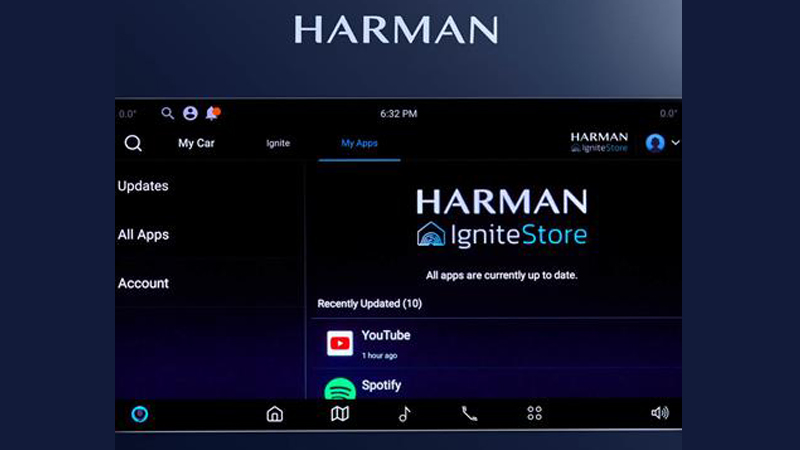
    HARMAN Ignite Store is a safe and secure automotive platform, fully compliant with Android Automotive Operating System (AAOS) standards that connects OEMs with developers to provide consumers unique in-vehicle digital experiences. Consumers can connect with their favorite digital services in the car, through an intuitive, safe, and secure interface. With HARMAN Ignite Store, OEMs and developers can realise lucrative digital revenue streams via new business models creating a stand-out and personalized driver experience for their customers. OEMs remain in control of the app catalogue, the app store’s look and feel, and the commercial relationship with the end-user.

    Through the new partnership with Tata Motors, the HARMAN Ignite Store is powering Arcade.ev, the automaker’s recently launched built-in app suite available in the market-leading Nexon.ev, India’s best-selling SUV, as well as in the Punch.ev. The list of apps will be continuously extended. The initial content partners include Gaana, Jio Saavn, Jio Pages, Beach Buggy Racing, TuneIn RadioPocketcasts, DASH Radio, Radioline, Trebble FM, Gaming and Video Apps.

    “We are delighted to collaborate with Tata Motors and bring India its first integrated in-vehicle app store,” said HARMAN International senior director of HARMAN Ignite Store Jens Beckmann. “HARMAN Ignite Store continues to bring unique in-vehicle app experiences from our developer partners — delivering on what consumers expect, today.”

    “Our relationship with HARMAN allows us to keep consumers connected to the content that is most important to them, while also delivering experiences that enhance their drive,” said Tata Motors chief product officer for EV Anand Kulkani. “Our customers want to bring their digital lives along with them on the road, with HARMAN Ignite Store our new Nexon.ev and Punch.ev vehicles deliver that for them, seamlessly.”

    HARMAN Ignite Store is designed to meet the rigorous demands and standards of the automotive environment — a value proposition that HARMAN calls ‘Consumer Experiences. Automotive Grade.’ It brings OEMs and Android developers together to make in-vehicle experiences easily accessible, reliable, and safe while providing OEMs and developers the opportunity to monetize these high-quality experiences throughout the lifetime of the vehicle.

  • Content Lab overhauls for brand-centric creative solutions!

    Content Lab overhauls for brand-centric creative solutions!

    Mumbai: In response to the evolving needs of the digital landscape and to better serve our clients’ diverse requirements, The Content Lab announced a strategic restructuring initiative that brings different solutions under focussed silos; Stir (Digital & Creative Agency), Carbon (Production backbone for TVCs/DVCs) and H2O (essential, scalable and snackable content creation – think Reels, Shorts & YouTube always on). This transformation underscores our commitment to delivering creative content solutions.

    As part of this restructuring, the three verticals, Stir, Carbon and H2O will operate under a unified umbrella, The Content Lab, enabling seamless integration of services and enhanced efficiency. By leveraging the collective expertise of our multidisciplinary teams, we are poised to offer a comprehensive suite of solutions that spans from concept development to execution across various digital platforms.

    “At The Content Lab, we recognise the evolving nature of the digital landscape and this restructuring will allow for a more efficient content-first approach for brands” said Vaibhav Mehta, founder and CEO. “This restructuring initiative will create a greater focus for each vertical, stronger collaboration between teams and sharper results for brands”.

    The newly restructured entity will enable clients to access a wide array of services seamlessly, including creative strategy, scalable content creation, digital marketing, campaign conceptualisation, branding, ad-film production and more.

    “With our integrated approach, clients can expect a seamless experience from concept to execution, enabling them to achieve their marketing objectives with maximum impact,” added Supriya Sehgal, co-founder and COO.

    The restructuring also reflects our commitment to fostering a culture of creativity by encouraging greater cross-functional collaboration.

  • Indus Valley Cosmetics to invest ₹40 crores in marketing & research initiatives

    Indus Valley Cosmetics to invest ₹40 crores in marketing & research initiatives

    Mumbai: Indus Valley, a leader in ‘Organic and Natural beauty products’ for over five decades, aims to invest ₹40 crores towards marketing, and research. This investment underscores the company’s ambitious roadmap in India and signals a robust commitment to enhancing research and development (R&D) efforts, aligning with the esteemed ‘Made in India’ initiative. With a strong presence across major eCommerce platforms in India and a global reach spanning over 25 countries, this marks a pivotal moment in Indus Valley’s growth journey, with a focus on captivating GenZs and millennials.

    Indus Valley has risen prominently, selling over 50 million products to date and gaining significant traction in Europe. Today, it proudly stands as a market leader in its category within the US market, particularly on Amazon. With a customer retention rate exceeding 45 per cent and continuing to rise, Indus Valley remains steadfast in its commitment to quality, efficacy, and customer satisfaction. Currently, the brand is shipping over 300,000 units monthly, averaging 10,000 units per day.

    The investment strategy is twofold – the first would be to increase the brand equity and visibility through nationwide advertising and awareness campaigns, spotlighting its flagship product ‘Organic Gel Hair Colour’. The ground-breaking, organic gel hair colour is hydrogen-per-oxide free, PPD free and ammonia free and the brand wants to increase awareness about the effect of these chemicals on the scalp and skin. Already proving to be tough competition for industry giants, this product is set to revolutionize the market. The company will also emphasize its presence in South India through collaborations with influencers and vernacular advertising. It also aims to launch a tailored packaging for South Indian consumers that will further enhance brand resonance.

    Secondly, a portion of the investment aims to fuel research and development (R&D) initiatives, in personal care & beauty products tailored to Indian needs and leveraging scientific insights. With a focus on customized formulations informed by age-old herbal formulations and preferences, Indus Valley will cater to the needs and preferences exclusively of Indian consumers. The investment in marketing and R&D synergizes perfectly to amplify the brand’s presence and drive innovation, ensuring that the products meet and exceed the evolving needs of the customers.

    In response to the development, Indus Valley founder & CEO Shyam S Arya expressed, “We have an ambitious roadmap tailored for the Indian markets, especially focusing on our flagship products, which have garnered immense success globally. We’re deeply committed to formulating hair care and skincare solutions tailored to Indian conditions, enriching the experience of our Indian customers. Our vision is to craft products that genuinely address concerns and promote awareness about the benefits of adopting organic hair and skincare routines. To expedite this process, we’re expanding our R&D facility. Additionally, we’re allocating additional resources to develop safe and effective formulations and educate people about their advantages. Enhancing our supply chain efficiency is also a priority, ensuring our products reach customers within a mere two working days.”

    With production units in Himachal Pradesh and Faridabad, Indus Valley offers a diverse product range including hair care, skin care, and more, featuring 280 plus SKUs across several categories.

  • Kantar’s AI-volution: Making AI-dable connections in consumer insights

    Kantar’s AI-volution: Making AI-dable connections in consumer insights

    Mumbai: India’s digital landscape is evolving, and at its heart lies a burgeoning AI revolution. With over 724 million users already engaging with AI features, the country is on the brink of a transformative shift. Kantar, a global leader in marketing data and analytics, delves into this dynamic AI market, offering actionable insights for brands. From the widespread adoption of AI in fitness and social media apps to the emergence of virtual assistants and smart home automation, the AI wave is reshaping consumer experiences.

    But it’s not just about adopting AI; it’s about humanizing it. Kantar’s innovative suite of AI-powered research solutions empowers brands to understand consumer behavior like never before, paving the way for sustainable growth and competitive advantage in an increasingly AI-driven world.

    Indiantelevision.com in conversation with Kantar MD and chief client officer- South Asia, insights division Soumya Mohanty and Kantar senior executive director, South Asia, insights division Puneet Avasthi delved into Kantar’s AI Summit that was held on 24 April 2024; the ways in which Indian consumers are incorporating AI into their daily lives, on Kantar’s AI-based offerings and more…

    Edited Excerpts:

    On the Kantar AI Summit and its key insights

    Puneet: The AI Summit is a platform where we’re going to be sharing the details of our full range of investments leveraging AI and our unique models, and datasets for the purpose of addressing client questions in this fast-paced world of AI. We have a very rich understanding of how consumers in India have adopted AI and the different features that really go under the umbrella of AI. This is really what matters from a connect-with-consumer standpoint and that is something that we’ve understood in depth.

    We’ve looked at, not just understanding the different features of AI in the country, we’ve also looked at an understanding of what kind of apps are enabling that usage. So that’s something that we’re going to be talking about in the AI Summit.

    On the ways in which Indian consumers are incorporating AI into their daily lives, and the implications that this has for marketers

    Puneet: AI in India has started out principally as a feature to make things more efficient for the Indian activator and user. There are people who are living in this very fast-paced digital world and AI really helps make life easier for them a lot more. And that’s really why AI has a reason to exist from a consumer standpoint.

    In that, it has started out with powering recommendation engines, image enhancement. So some of those features are pretty much reaching saturation levels and are going to be growing at the rate at which the internet grows in India, which is five-six per cent per annum. But really the big growth over the next two-three years is going to be in terms of virtual assistants and that is something that is going to be radically changing the way we see it how brands are also going to be creating unique experiences to reach out to consumers as the virtual assistants are growing very rapidly in terms of their reach.

    We are seeing a rapid growth and I think the next four-five years are going to be transformational in terms of the device and durable ecosystem at home with many more smart and connected devices at home that are going to be used by consumers.

    Soumya: Also, if you look at it broadly, AI will help marketers analyze data faster than they are able to do today because you can real-time analyze data and real-time take decisions. AI will improve experience of your customers because if you use recommendation engines better, you will improve the kind of experience they get through that method because you know what they are. I mean you look at something very simple, the kind of choices that you are shown when you go to an e-commerce site or when you are watching an OTT, all of that is AI-driven. So as AI becomes better and more powerful, those choices will become, what you expose the consumer to, will also become much more nuanced and much better.

    Today it is based on, let’s say, only my past history. Tomorrow it’s going to be based not just on my past history but maybe, the kind of browsing I do. Maybe I’ve spent just five minutes and I’ve stopped watching something. That can be fed into it. Other things that I’m doing can be fed into it. It can make a much richer experience for me. And finally, I think you can just sort of create marketing strategies on the fly.

    I can do a lot of that with AI. Of course, all this will be within, by the way, you can also type an answer to what AI will do for marketers using GoViolet or using ChatGPT. So it is generally transformative in that sense. But I think the challenge is that you are going to have walled gardens like Facebook.

    You won’t be able to follow the consumer through those walls. You really won’t. Actually, there will be stricter and stricter privacy laws. There already are, and they will become even more stricter.

    So, all this will have to be done keeping in mind that the data access that you have today may also reduce. Then, therefore, it will become important to have an understanding or a framework with which you analyze that data. That’s where actually the Kantar tools come in. Because we do so much of consumer research, we actually have an understanding of how consumers behave. We have a lot of data. Now, it’s not just random data, which is there on Twitter or on Facebook or whatever. It’s the data in a framework.

    So that’s the advantage when you start working with folks like us to make more sense of the data that you are surrounded by.

    On the ethical considerations that marketers should keep in mind when deploying AI-powered marketing strategies

    Soumya: The first one would be bias. I think AI is as good, apart from the fact that it’s as good as the data it is trained on, which is garbage in, garbage out.

    There is also some amount of analyst bias or the person who is actually writing the code bias that comes into any kind of AI. Obviously, after some time, open AI, etc, but it regards itself. But somewhere, some human intervention has led to its learning. So it can go horribly wrong at times.

    Just like social listening can go horribly wrong. If you are on Twitter, you will be served with what you are actually seeing, and you will end up believing what you are reading. For instance, during election season, you may end up believing whatever you are shown because it becomes such an echo chamber. Social media is getting weaponized. Marketers have to be really, really careful that it’s unbiased, it is neutral, it is objective.

    The challenge, again, is that we are in an era where two or three big players actually dominate the Internet in a way. Everything is dominated. It’s not as open as we think. That’s where I think they’ll have to take the data that is getting given to them with a pinch of salt. They will have to ensure the algorithms are not biased. There’s a lot of work to be done here.

    On Kantar’s AI-based offerings and how does it work for marketers

    Puneet: So Kantar has traditionally developed a very strong suite from the standpoint of understanding consumers and understanding specific marketing activities, whether it is ROI, whether it is creative. Naturally, when it’s about consumers, it is about understanding the needs of the consumers, understanding what trends are defining consumers.

    So what we’ve done is we’ve taken those frameworks which have been owned over several decades through the different researches that we’ve done and developed those models into a framework which is now pretty much where we’ve got the data across a multitude of studies that have been done over years along with our powerful engines which have been fed into the machine learning models as such to create a suitable mechanism of ensuring that the machine is able to process diverse data sets and create appropriate learnings about the consumer as such, whether it is understanding trends, whether it is leveraging the large database of ad pre-tests that we’ve been doing over years.

    In India, for example, we’ve done over 28,000 ads being pre-tested over the last couple of decades. Using that data, we’ve created a very nuanced understanding of what kind of ads are going to be working. That is particularly relevant in this new age where ads need to get rolled out very quickly in this digital age and particularly the YouTube age as such.

    In these environments, the ability to be able to test out the likely results that a particular ad or a creative is going to deliver in a fairly quick turnaround time is something that is a differentiator in itself. That is something that Link AI does very effectively. Similarly, we’ve got other tools such as Trend AI, which allows you to understand trends that are bubbling up and defining the consumer today, leveraging a multitude of data sources, unstructured data sources, that are being fed into our machine learning algorithms to create suitable understanding of how consumers are evolving.

    These are some of the offerings. We’ve got Needscope, which allows you to understand consumer needs, needs based on how, what are the spaces that a brand can take within their targeting framework.

    Soumya: So if I was to say how useful this is, less than one per cent of ads that are put out are tested. Most advertisers don’t test advertising. Now with our AI offer, they can actually test a lot more advertising and the chances of failure of ads reduces.

    If there’s something horribly off, at least you don’t have to risk putting it online and then taking it down because there is a big backlash. At least you can avoid those kind of mistakes by using these AI solutions that we have.

    On marketers effectively humanizing AI technologies to create innovative and relatable brand experiences for consumers

    Puneet: So to humanize AI, to create those superlative brand experiences and brands are always looking at ways and means of delighting the consumer because in a manner where the message of the brand is consistent and delivered in a way that it anchors itself to what is relevant to the consumer and is truly differentiated versus whatever, you know, are the options that are set in the marketplace.

    Brands are looking to create those superlative experiences and what AI and technologies do is, it creates a new mechanism of reaching out to consumers, targeting them effectively in their own spaces. Now AI is something that is increasingly getting embedded in consumers’ ways of living.

    There is a cohort of consumers and a fairly large chunk of consumers who are looking at a variety of images and playing with their own images, anything on their own and using some of those features of AI which are brilliantly available in a whole host of social media apps. So a lot of these things are already now, defined by consumers. It is actually about the marketer leveraging some of these trends that have already, the technologies and trends, both are actually in place now.

    You’ve got the technology, you’ve got the trend, consumers have adopted it. It’s for marketers to leverage it effectively and create those superlative brand experiences. Some that come to mind are, for example, what Britannia has done recently where they have leveraged the power of trend, the reach of trend as such and created something that is almost, a surreal dreamlike experience. You would imagine a newspaper and what if the images were to be moving and you’ve got this little QR code there which you scan using a mobile phone and it reaches out to the camera and it creates a big CRT which is quite brilliant. And you’ve got Ranveer Singh who’s suddenly talking about the brand message to the consumer. It’s done in a very interesting manner and leverages a tremendous amount of computing capacity and creates a very, a superlative brand experience.

    Similarly, Mondelez had done something very effectively where they had created a hyperlocal targeting program where they had helped retailers across various micro-markets to, grow their business or gain their business traction as such post the pandemic and they’ve done it very effectively through a campaign where they used the face of Shah Rukh Khan who spoke to the consumer in various parts of the country as such in that particular micro-market, advocating a specific retailer. That is something that is fantastic for the retailer and it is also a delight for the consumer who is residing in that particular market. These are some very interesting examples of how AI has been used to humanize this technology and create great brand experiences for consumers.

    Soumya: The simplest way in which AI can be humanized is that basically you can segment your audience better and you can target your audience better. The moment you start targeting better, you are creating personalized experiences, personalized recommendations. So automatically you are sort of humanizing it. Apart from these brilliant examples of using technology to make an experience normalized.

    On the role that you see AI playing in shaping the future of consumer insights and market research

    Soumya: It will make market research more accessible to a lot more people. In India, by the way, market research is probably penetrated less than 10 per cent, even less than that. If you look at how big the Indian economy is, and if you look at how big marketing and advertising spends are, that itself is very low in India. Within that, research and insights is even lower. So, effectively, the coming of AI and, of course, social media and the internet can increase the reach of everything, from marketing and advertising. Marketing and advertising itself will grow, and so will consumer research.

    Number one, it will improve accessibility. It will make it faster. It will make it more cost-effective for the kind of clientele that today may not be able to afford large-scale work. Having said that, what is most important is that you finally need a human behind the AI because the data that goes into the AI, and the algorithm that is written, is the most important part. Otherwise, AI can go horribly wrong.

    On the threats that AI can pose

    Soumya: I think more than threat, it’s an opportunity, because we are a neutral, third-party, objective source of information, and we have very validated, strong consumer frameworks.


  • “The one-size-fits-all approach is too old school for us”: Mukesh Vij

    “The one-size-fits-all approach is too old school for us”: Mukesh Vij

    Mumbai: In the fast-paced world of digital advertising, where innovation is the currency of success, one agency shines brightly as a beacon of creativity and forward-thinking strategies. Hashtag Orange, the powerhouse reshaping industry norms and leading the charge into new territories. Since its inception, Hashtag Orange has fearlessly challenged the status quo, establishing itself as a trailblazer in the world of digital marketing.

    Indiantelevision caught up with Hashtag Orange founder Mukesh Vij a trailblazer in the dynamic realm of advertising and digital marketing. With over 18 years of industry experience and a passion for technology. Vij has led Hashtag Orange to redefine brand promotion and online engagement. His people-first approach and commitment to delivering holistic digital marketing solutions underscore Hashtag Orange’s success in empowering clients to achieve their goals.

    In this Conversation, we delved deeper into what makes Hashtag Orange stand out, redefining engagement in digital advertising through its unique strategies and dynamic fusion of expertise.

    Edited Excerpt

    On  Hashtag Orange redefining engagement in digital advertising, and specific strategies or approaches setting it apart from traditional methods

    At Hashtag Orange, we are a collective of enthusiastic creators making it India’s leading new-age digital marketing agency. We are proactive rather than reactive with the perseverance that only the best strategies are implemented for our digital partners. Some of the strategies devised at Hashtag Orange are:

    ●   Cultivation of pro-digital mindset: The first step to thriving in a world where digital natives are taking over the markets slowly is to be open to all things digital. The realm of creativity is expanding constantly and the only way to exist is to keep up with it.

    ●   Targeting usage of the latest available technology: When working towards achieving the vision for our clients/partners, we incorporate the latest trends and technology to ensure we maximise our reach.

    ●   Ensuring digital savviness: As they say, “charity begins at home”; we believe disruption begins at our desk. With the group of digital-savvy creators at Hashtag Orange, we’re always ready for a new trend, a new tool, and a new challenge.

    ●   Syncing brand advocacy and business goals: The code one needs to crack in the digital world is to know that one must promote the brand’s ethos with a strategic

    We actively work towards the inclusion of such strategies to keep consumers engaged and satisfied. This also helps us be an enthusiastic partner for our clients on their digital journey. Success is subjective and dependent on the industry, target audience, and the goal of every campaign.

    At Hashtag Orange, what sets us apart is our effort to combine traditional and digital strategies effectively, leveraging their pros and eliminating their cons. Digital marketing offers global reach and detailed data, but traditional advertising can still reach specific language audiences well. The team at Hashtag Orange is using digital marketing wisely, while also learning from traditional marketing ideologies.

    On Hashtag Orange’s diverse expertise contributing to driving innovation in integrated agencies, and examples of successful collaborations or projects that showcase this dynamic fusion

    In today’s day and age, innovation is key to survival. The leadership that guides Hashtag Orange brings a diversified profile and experience from different industries to the table. Our experts encourage creative problem-solving and teamwork from traditional and new-age digital perspectives. By embracing their unique perspectives, experiences, and backgrounds, we’ve been able to tap into a wealth of ideas and unleash our full potential. The team at Hashtag Orange has been fortunate to be associated with clients with whom we could change the business landscape.  We emphasise the need for cross-functional collaboration and explain to clients the benefits of diversification. We’ve been quite fortunate to be working with brands that trust our vision in fulfilling their goals. This mantra has helped us to continue experimenting and innovating as we cater to a diverse set of brands from various sectors.

    On the common mistakes companies make in social media marketing, and Hashtag Orange addressing or avoiding these pitfalls in their campaigns

    We believe that everybody has their own learning curve. We’ve observed that sometimes agencies may fail to recognise the needs of their clients. That’s why we approach things differently, at Hashtag Orange. Every time we partner with a new brand, we step into their shoes and walk around in it to fully grasp their challenges and requirements. The one-size-fits-all approach is too old school for us. We believe in tailoring solutions to fulfil the needs of each brand specifically. We strongly believe scratching the surface won’t cut it so we dig deep into our clients’ businesses, using digital platforms, and deliver results.

    To share an instance, when we see potential in organic marketing, we’ll recommend it overpaid promotions. The goal is to prioritise our clients’ success over immediate profits. This approach is key to our success, ensuring our clients are well-guided and happy.

    On key challenges  that Hashtag Orange has faced in the journey and overcoming or adapting to them

    No story worth telling goes by without a conflict. That point of conflict in Hashtag Orange’s journey came with the COVID-19 pandemic. At that time, our primary clients dealt with retail business. We genuinely believe that our employees are our greatest strength, as they have always been. Our mutual belief in each other assured us that explore digital platforms. We extended the same assurance to our clients, building confidence that their brands are managed by a team with long-term strategies in mind. And we can say that it has turned out well!

    On Hashtag Orange measuring the success of its digital advertising campaigns, and key performance indicators (KPIs) that you prioritise to gauge effectiveness

    At Hashtag Orange, we set KPIs as part of the marketing strategy, which purely depends on the client’s goals. With the market dynamics evolving every day, having a clear focus on Key Performance Indicators is fundamental. These help us understand a snapshot of current performance and also guide the client for future strategies and decision-making processes. Our strategies yield the desired outcomes and provide a measurable return on investment. That’s why we have different KPIs for different brands, according to their business goals.

    On the Hashtag Orange USP playing a role in building and maintaining its reputation for excellence and innovation

    Integrated solutions, our unique selling proposition, have always been our core strength. It has enabled us to provide 360-degree solutions to our clients constantly. We believe in diving deep into data analytics. It helps us understand trends and patterns. But we also believe in having direct conversations with the consumers. That’s where our creative solutions come from. The solution could be an Influencer campaign or a community creation, a substance idea, or a digital campaign. In fact, we could even combine it with a mainline idea and technological integration.