Category: MAM

  • Gen Alpha kids prioritise close bonds with parents over peers: Kantar Kidscan report India 2024

    Gen Alpha kids prioritise close bonds with parents over peers: Kantar Kidscan report India 2024

    Mumbai: Post-pandemic, Gen Alpha’s engagement with digital media has surged, significantly influencing family choices in food, entertainment, IT products, durable goods, and FMCG.

    To explore this generation’s impact, Kantar has launched the 2024 Kidscan India report, providing insights into the lives of nearly 2,500 children aged 5-14 and their parents across 14 Indian cities from NCCS A, B, and C households. The report examines Gen Alpha’s interactions with brands in food, beverages, technology, and media, with a focus on television and digital platforms, and delves into their preferences, ambitions, and lifestyle influences.

    Kantar director, specialist businesses, insights, South Asia, Puneet Avasthi said: “Gen Alpha is reshaping the family dynamic in ways we haven’t seen before. Their influence is far-reaching, from tech and entertainment choices to key household purchases. The 2024 Kidscan Report captures these shifts, providing brands with invaluable insights into the preferences and digital behaviours of this new generation. For brands, understanding Gen Alpha is not just an opportunity but an imperative to stay relevant in a rapidly evolving landscape.”

    Key highlights of the report:

    1.    Gen Alpha kids today enjoy enormous freedom and discretion in their career choices – 55 per cent of parents are allowing full discretion to their kids over their career choices.

    2.    Children are wielding growing influence over family purchase decisions across various product categories- 1.46X increase in incidence of parents taking into considerations their kid’s choice or opinion when purchasing a Smart TV as compared to 2022.

    3.    Gen Alpha is increasingly gravitating towards digital media, with online video consumption sharply rising – Kids now spend 60 per cent more time watching online videos than they did in 2022.

    4.    Gen Alpha is increasingly driven to a more digital recreational experience. 69 per cent of kids find video games more enjoyable than outdoor play.

    5.    Gen Alpha kids increasingly value close, friendly bonds with their parents over traditional peer relationships – 57 per cent more kids now choose to confide their secrets in their mothers over friends

  • Oven Story launches limited-edition ‘Kiddy Pizzas’

    Oven Story launches limited-edition ‘Kiddy Pizzas’

    Mumbai: Oven Story, from the house of Rebel Foods, is celebrating Children’s Day with the launch of its one-of-its-kind, limited-edition ‘Kiddy Pizzas’ – an innovative campaign designed to break the clutter and capture the hearts of both adults and kids alike.

    Available across 140 kitchens in seven major cities such as Bangalore, Hyderabad, Chennai, Mumbai, Pune, Kolkata, and Delhi-NCR, this playful range of pizzas is designed to spark joy and rekindle childhood memories. From 8 to 14 November, pizza lovers can order these nostalgic treats, bringing a whimsical twist to their meal with pizzas available in delightful shapes like Duck, Star, and Unicorn – all customisable at no extra cost.

    This innovative ‘Time to Be Kids Again’ campaign goes beyond the pizzas, offering a full nostalgia experience. Each order includes a lollipop with a QR code and the message, ‘It’s time to be kids again,’ inviting customers to explore more memories. Additionally, every Kiddy Pizza comes with a nostalgic kit featuring paper and step-by-step instructions to fold classic shapes like a boat, aeroplane, and dog, bringing back cherished moments from childhood.

    Rebel Foods CMO Nishant Kedia said, “At Oven Story, we wanted to create something that resonates with everyone who yearns to relive the joy of being a child. The idea for Kiddy Pizzas came from a desire to make mealtime a moment of fun and play, not just for kids, but for the kid in all of us. With Children’s Day around the corner, we thought it was the perfect time to launch a campaign that encourages everyone to take a little break from the ordinary and reconnect with their playful side. Our brand is all about creating delightful experiences, and we hope these Kiddy Pizzas bring smiles to our customers, one slice at a time.”

    Kiddy Pizzas are now available on the Oven Story app and website till 14 November.

  • Britannia Industries shows 5.3 per cent YoY revenue growth in Q2

    Britannia Industries shows 5.3 per cent YoY revenue growth in Q2

    Mumbai: As a child, I fondly remember reaching for Britannia’s Good Day cookies, drawn in by the promise that even on a rough day, those cookies could spark a smile. This quarter, it seems Britannia itself enjoyed a ‘Good Day’ as it reported resilient financial results for Q2, ending September 2024. The company’s total revenue from operations rose to Rs 4,667.57 crore, a 5.3 per cent increase year-on-year, driven by surging domestic demand, a broadened product range, and expanded distribution across India’s rural and urban sectors. Yet, while revenue painted a bright picture, profitability revealed a bit more complexity. Net profit declined by around 9.4 per cent to Rs 531.55 crore, reflecting the pressures of rising costs that have started to weigh on margins.

    The quarter’s revenue increase was complemented by other operating income, totaling Rs 4,713.57 crore, which is a notable rise from Rs 4,485.23 crore in Q2 FY24. Despite this uptrend in revenue, Britannia’s profitability faced headwinds. The company’s cost of materials soared by 12.9 per cent, amounting to Rs 2,578.05 crore, signaling intensified raw material cost burdens. Additionally, employee benefits expenses reached Rs 232.28 crore, up by 45.3 per cent year-on-year, reflecting Britannia’s focus on workforce expansion and talent retention amid a competitive labor market.

    VC & MD, Varun Berry said, “An eight per cent volume growth with a sequential increase in revenue and operating profits are satisfactory results in the face of severe commodity inflation leading to a tepid consumer demand scenario in most FMCG categories.”

    The profit before tax, after adjusting for exceptional items, stood at Rs 715.15 crore, a decrease from Rs 798.63 crore reported in the same quarter last year. Tax expenses further tightened the profit margin, with total tax outflows recorded at Rs 183.60 crore. This leaves the net profit for the quarter at Rs 531.55 crore, showing a decline from Rs 586.50 crore in Q2 FY24. Britannia’s operational expenses also contributed to the contraction in net margins, rising by 11.1 per cent to Rs 3,994.87 crore, primarily due to inflationary pressures on logistics and supply chain costs.

    The company reported consolidated sales of Rs 4,566 crore for Q2, a year-over-year growth of 4.5 per cent. However, profit after tax (PAT) decreased by 9.6 per cent to Rs 531 crore. Compared to the prior quarter, sales rose by 10.6 per cent, with a 5.1 per cent PAT increase. For the six months ending 30 September 2024, sales grew 4.3 per cent year-on-year, while PAT declined by 0.8 per cent. The results highlight Britannia’s sales resilience amidst economic challenges, though profitability remains impacted by rising costs and workforce investments.

    A notable development during this quarter was Britannia’s exceptional expenses totaling Rs 24.79 crore, largely attributed to voluntary retirement schemes (VRS) for factory workers and associated labor restructuring efforts. These measures are expected to enhance operational efficiency in the long term by streamlining the workforce at key manufacturing facilities. Britannia also invested heavily in contract labor in the wake of increased production targets, a move aimed at reinforcing the company’s manufacturing capabilities to support market demand.

    Despite the contraction in profitability, Britannia’s balance sheet remains solid, with a positive outlook on revenue streams from both domestic and international markets. The ongoing demand for packaged foods and baked goods continues to present a strong growth trajectory for the company. “Our agenda of being a ‘Total Global Foods Company’ is progressing well with our adjacent businesses such as Croissant, Milk Shakes, Wafers and International growing at a healthy pace. Making strides in this direction, we are working on redefining our distribution strategy to optimise range distribution and improve outlet servicing, and the preliminary results of the pilots across 25 cities covering more than 50,000 outlets are encouraging” added Berry.

    The company’s total comprehensive income, factoring in other gains, came to Rs 533.01 crore, slightly down from Rs 589.39 crore in Q2 FY24. Additionally, Britannia’s consistent investments in expanding its product portfolio and supply chain suggest a robust setup for future growth, although profitability will likely remain susceptible to fluctuating raw material costs and labor expenses. Berry remarked on the situation, “In the context of steep rise in prices of key commodities such as Wheat, Palm, Cocoa etc, we demonstrated agility in initiating focused pricing actions and identifying new levers for cost optimisation across the value-chain. As a result, we maintained a healthy operating margin of 15.5 per cent during the quarter. We are committed to investing in capability enhancement and brand development with the clear objective of driving market share and sustaining profits”.

    Britannia Industries has demonstrated both resilience and adaptability in a challenging financial environment, marking stable revenue growth yet grappling with cost pressures. The outlook remains cautiously optimistic, bolstered by Britannia’s solid market presence and strategic product diversification.

  • Bingo! & AIPA partner to popularise pickleball in India

    Bingo! & AIPA partner to popularise pickleball in India

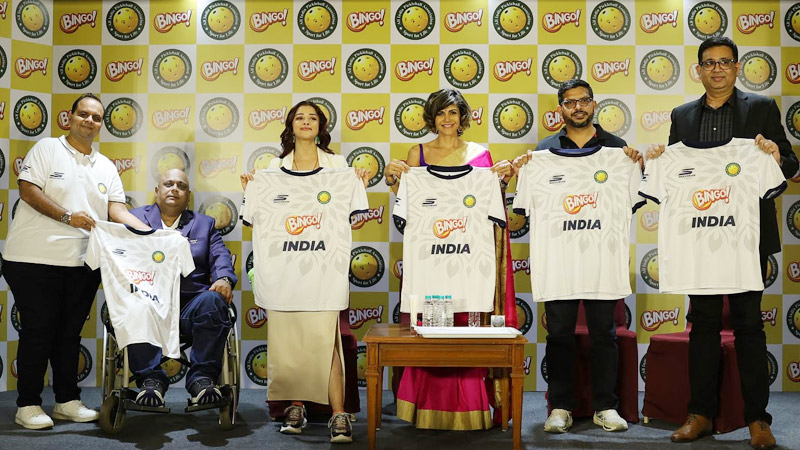
    Mumbai: Bingo!, a popular snacking brand from ITC Foods, has announced a five-year partnership with the All India Pickleball Association to promote pickleball in India. The partnership begins with the Bingo! World Pickleball Championship (WPC) aims to support the growth of pickleball, one of the fastest-growing sports globally.

    The championship was launched with ITC Foods VP, head of marketing snacks, noodles and pasta, Suresh Chand; All India Pickleball Association president Arvind Prabhoo; and celebrity guests Mandira Bedi and Nyra Banerjee.

    Pickleball, with over five million players in 84 countries and 40 per cent female participation, has grown 275 per cent in India over the past three years. The sport is expected to surpass one million active players by 2028. Bingo!’s sponsorship will help expand this growth by hosting college tournaments across 23 states, introducing the sport to students, and cultivating new players for national and international competitions.

    Bingo!, known for innovation in snacking, aligns with pickleball’s dynamic gameplay. As part of the collaboration, the classic ‘Love All’ start of pickleball matches will be rebranded as ‘Boing All,’ adding a fun twist to the game.

    ITC Foods VP, head of marketing snacks, noodles and pasta, Suresh Chand said, “At Bingo!, we’ve always believed that sports and innovation go hand in hand, making this partnership with the All India Pickleball Association a particularly prestigious moment for us, enabling us to support young athletes and sports enthusiasts across the country. We are dedicated to working closely with AIPA to build a strong foundation for pickleball and to support its growth through grassroots programs, college tournaments and nationwide promotions.”

    All India Pickleball Association president Arvind Prabhoo said, “We are thrilled to partner with Bingo! Snacks, a brand that resonates with millions of Indians, and believe this partnership will be instrumental in bringing pickleball to the forefront of Indian sports. Through this partnership, we envision a future where pickleball is accessible to everyone, from college students to aspiring professional athletes. With Bingo!’s extensive reach and vibrant brand presence, this partnership aspires to create a ripple effect, making pickleball a household name and positioning India as a leading force in the global pickleball arena.”

    GroupM, South Asia MD, content, entertainment and sports Vinit Karnik said, “It’s a great collaboration between Bingo and All-India Pickleball Association to announce the five-year partnership, supporting the growth of the sport across India. We’re optimistic that this partnership will strengthen Bingo’s commitment to expanding the sport’s reach and accessibility across the country. This collaboration reflects our commitment to expanding the sport’s reach and inspiring the next generation of players to take on both national and international challenges. We’re confident that this alliance will foster a new wave of enthusiasm for pickleball, helping it gain the popularity it truly deserves.”

    This strategic partnership between Bingo! and AIPA is poised to shape the pickleball landscape in India. By merging Bingo!’s innovative brand identity with pickleball’s thrilling gameplay, the collaboration aims to inspire a new wave of athletes while promoting a healthy, active lifestyle.

  • How AR & VR are revolutionising the advertising landscape

    How AR & VR are revolutionising the advertising landscape

    In the digital age customers are continuously bombarded with ads. This has led to customers purposely ignoring them reducing their efficacy. How can marketers then connect with their target audience? The answer is simple, to not just display ads to the customers but make them a part of it. Augmented reality (AR) and virtual reality (VR) are a couple of ways to do so. Digital assets are either superimposed on top of the real world as in augmented reality or create a completely exclusive virtual world as in VR.

    These engaging and immersive experiences not only deliver the brand message but build a strong positive bond with their target audience. They have become mainstream and have numerous benefits to leveraging them in advertising.

    1. Deeper engagement with customers – as the attention span of people is on the decline, brands are forced to think of creative ways to advertise. AR/VR campaigns immerse the customer into the brand’s world increasing the time spent by the customer with the brand.

    2. More convincing – While traditional ads are considered intrusive and are being ignored, AR/VR are considered as storytelling mediums and have higher convincing power. Making it ideal for e-commerce brands to sell their products online since studies suggest that AR experiences boost impulse buys and online shopping in general.

    3. Better data driven insights – Since the customers will be spending more time experiencing the AR/VR campaigns it will be easier for brands to not just collect customer data but gain insights into their target audience’s preferences. They can study their behaviour and customise their campaigns based on those insights for optimal results. These insights help brands build better personalised experiences.

    4. AR/VR powered by AI – while AR/VR themselves are powerful advertising tools, their implementation with AI has led to improved performance of ads and data analysis. Computer vision and machine learning has enabled marketers to automate email marketing, social media campaigns, and content creation but also study facial expressions, emotional response, sentiment analysis and attention of the customer to brand products. Computer vision and machine learning can enable gesture-based control and feedback. Leading to the creation of personalised and adaptive AR/VR experiences. AI based plugins such as ConvAI adds human-like conversational capabilities to characters in the virtual worlds. There are attempts made to incorporate edge AI to AR/VR experiences to reduce latency and improve real-time performance.

    While there are several advantages to AR and VR experiences within the advertising space a few drawbacks might impede their adoption.

    1. Cost – developing AR/VR experiences can be cost-intensive especially for smaller businesses. Limiting the access to these technologies to brands with deeper pockets.

    2.  Error in perception – While digital assets within the AR/VR experience might help customers become acquainted with the products they will not be exactly the same as the real product and may lead to errors in perception. For example a real estate property in VR might feel very different in real life when the customer is in the actual space.

    3. Difficulty in integrating AI into AR/VR experiences – VR experiences especially need to be optimised for performance, keeping in mind the frame rate, latency and resolution. AI computation is resource-intensive and relies on remote cloud servers. This can slow down the AR/VR experiences turning a delightful experience to frustration for the end user. Moreover testing AI models in the AR/VR environment takes additional time and resources to test its effectiveness.

    The article has been authored by Tagglabs founder Hariom Seth.

  • KlugKlug eyes 10x growth by the end of FY 24-25

    KlugKlug eyes 10x growth by the end of FY 24-25

    Mumbai: KlugKlug, a global SaaS platform for influencer marketing, plans to expand across India & South Asia, Southeast Asia, MENA, and Latin America, targeting 10x growth by the end of this financial year. The company has already achieved five times growth in the first two quarters of 2024.

    KlugKlug’s growth is driven by a diverse client base, including electronics, FMCG, B2C companies, and e-commerce platforms. As technology adoption in influencer marketing increases, KlugKlug has become a trusted partner for brands seeking tech-driven solutions.

    With over 200 clients, KlugKlug is expanding its presence in markets like Thailand, Malaysia, Philippines, Kuwait, Saudi Arabia, and other key regions in the next 12 to 18 months.

    “Data has become an integral part of influencer marketing to drive optimisation, transparency, and therefore compliance. Fortunately for us, brands are increasingly seeing its value and even teaming up with us. At KlugKlug, we’ve been working to help them make this transition smoother by helping brands make radically better decisions based on data and insights and see concrete numerical benefits. It has helped to work with clients and industry captains to weigh in with their inputs to build what we have and find validation of our superiority against the best in the world across all geographies, globally. We are blessed and eager to capitalise on this,” said KlugKlug co-founder & CEO Kalyan Kumar.

    KlugKlug co-founder and CPO Vaibhav Gupta added, “Emboldened by our client successes across categories and sizes and geos, KlugKlug is keen to further jumpstart the expansion. We’re witnessing more CMOs and marketing professionals embrace the tech narrative as essential and not feel good in influencer marketing decisions. KlugKlug has earned the role of a trusted resource for companies – we have so many testimonials – looking to refine their strategies and see instant wins from day zero. It’s exciting and humbling to see global and local brands alike leverage KlugKlug’s to make smarter decisions and easily maximize their campaign impact.”

  • A paint giant’s growth slows as net profit slides to 42.4 per cent

    A paint giant’s growth slows as net profit slides to 42.4 per cent

    Mumbai: In a season marked by dampened demand, economic pressures, and persistent monsoons, Asian Paints saw a dip in performance during Q2 of FY25. The company’s consolidated net sales for the quarter reached Rs 8,003 crores, down 5.3 per cent from Rs 8,451.9 crores in the previous year. The period was particularly challenging for the domestic decorative business, impacted by low consumer sentiment, extensive rains, and floods in key regions, marking a volume decline of 0.5 per cent and a revenue decrease of 6.7 per cent.

    Asian Paints’ standalone financials also reflect these struggles. The standalone net sales fell by 6.5 per cent, reaching Rs 6,840.6 crores compared to Rs 7,315.7 crores in Q2 FY24. The company’s efforts to adjust its pricing, with reductions last year and selective increases this quarter, had limited impact on countering the cost pressures from raw material prices and sales expenses, hitting the operating margins substantially. For Q2, the standalone PBDIT margin decreased to 16.4 per cent, a decline of 530 basis points from last year.

    The strategic decisions on pricing have had a notable impact on Asian Paints’ bottom line. Although the firm implemented price increases during Q2, the benefits are expected to manifest only in the second half of the year, while ongoing cost pressures from raw materials and elevated sales expenses strained Q2 margins. The consolidated PBDIT margin narrowed to 15.5 per cent, down 480 basis points from last year’s 20.3 per cent. Net profit after tax, excluding exceptional items, saw a sharp 42.4 per cent reduction, sliding to Rs 694.6 crores.

    Exceptional items further dampened the quarter’s results, including a Rs 180.1 crore impairment loss, which affected goodwill on acquisitions like White Teak and Weatherseal in addition to foreign exchange losses associated with subsidiary operations in Ethiopia.

    Despite the challenging quarter, Asian Paints’ Industrial Business displayed resilience. General Industrial, Protective Coatings, and Refinish segments reported decent growth, providing some support against the broader revenue challenges. In international markets, however, the effects of currency devaluation in Ethiopia, Egypt, and Bangladesh weighed heavily, contributing to a revenue decline of 0.7 per cent. On a constant currency basis, though, the segment achieved an 8.7 per cent growth rate, underscoring the strength of Asian Paints’ offerings despite global economic pressures.

    Asian Paints’ Home Décor category experienced growth through its Beautiful Homes network, albeit below expectations. In the Bath Fittings and Kitchen segments, sales growth was steady, with bath fittings recording a 2.1 per cent increase to Rs 83.1 crores and the kitchen business up by 8.8 per cent to Rs 105.3 crores. Yet, profit margins in these segments were under pressure, as the Kitchen business posted a slight loss in Q2 despite increased sales.

    Meanwhile, White Teak and Weatherseal, recent acquisitions within the decor portfolio, continued to benefit from synergies with Asian Paints’ distribution network. White Teak’s Q2 sales rose by 19.2 per cent to Rs 31.1 crores, while Weatherseal saw a 4.8 per cent increase to Rs 13.2 crores.

    As Asian Paints enters the latter half of FY25, it faces ongoing pressures in both domestic and international markets. With anticipated easing of material costs and the impact of recent price increases expected to flow through, the company foresees margin improvement in the coming quarters.

    Key Financial Highlights:

    •    Q2 FY25 Consolidated Net Sales: Rs 8,003 crores, down 5.3 per cent YoY

    •    Standalone Net Sales: Rs 6,841 crores, down 6.5 per cent YoY

    •    Consolidated PBDIT Margin: 15.5 per cent, down 480 bps from last year

    •    Standalone PBDIT Margin: 16.4 per cent, down 530 bps from last year

    •    Net Profit (post-minority interest): Rs 694.6 crores, down 42.4 per cent YoY

  • Harnessing geotargeting and personalisation in mobile marketing

    Harnessing geotargeting and personalisation in mobile marketing

    Mobile marketing in India has turned to another peak in 2024 owing to its rapid transformation within the geography. More than 1.2 billion people own mobile devices, and the uploading rates of mobile phones in tier two and three cities are very high. Complex geo targeting practices along with other types of individualised messages allow advertisers to extend their coverage of consumers. Such global shifts allow brands to reach their audiences and fulfill their marketing strategies in new, location enriched, yet personalised ways.

    However, India’s mobile marketing tactics have to cater to the country’s multidimensional cultural fabric. AI alongside machine learning has made it easier for marketers to identify and segment their audience accurately. Companies, for example, provide specific community based marketing wherein language, shopping habits, app usage, and preferred payment methods are taken into account in all communications. For instance, the same active campaign can execute offering Bengali promos at the time of Durga puja in Kolkata and different promos for Navratri in Gujarat at the same time.

    After the implementation of India’s Digital Personal Data Protection Act 2023, new legal regulations have changed the way marketers sought to collect and use consumer’s data. Campaigns today manage to do this better than the past, by being personal yet respecting consumer’s privacy. Brands have begun to place emphasis on ethical data collection by adopting opt-in policies for geolocation sharing, as well as giving users options on how much data they want to share. This notion of privacy has now shifted from simply being a policy to being a key factor in generating consumer confidence.

    Such geotargeting and personalised marketing techniques have already begun to yield positive results in various industries. Lunch promotions at office buildings are being employed by quick service restaurants, retail stores are presenting local customers with available items in their vicinity, while e-commerce sites are showing people when their orders in their area will be delivered and the products that are most appropriate for them. Even banking applications have jumped on the band wagon, advising users on available ATMs in their vicinity, with the maximum amount of cash that they can withdraw from the machine automatically determined by the specific user’s account activity and preferences.

    With 85 percent of users relying on smartphones to access services, 65 percent accessing the internet, and social media via mobile platforms, it is no wonder that campaign planning in India takes a different perspective than in other countries. Most of the successful campaigns today include installation of progressive web apps for better and forward client engagements through searching in voice for a specific region, automatically crafting conversations through information available on WhatsApp, and embedding augmented reality content to be accessed geographically. Such features are critical in countries where the availability of particular networks can be limited and where the specs of devices being used are unlikely to be the same.

    Taking such an approach, marketers experience blockades which relates to data being orthodox regarding Indian audiences, applicable network connectivity standards, device fragmentation and cultural factors. Nevertheless, answers are coming through operational-grade data availability, offline-first approach and extensive compatibility requirements and relevant professional for the market engaged to the content being presented. Metrics have also changed and mobile geo-conversion metrics, app stickiness, geo revenue per user and language friendliness responsiveness have come on board.

    Predictions for 2024 are optimistic, as businesses expect AI to map the location of their customers and persuade them efficiently across channels. Advanced biometric identification and blockchain technologies promise increased data protection without compromising on relevance. It is already apparent that performing accuracy checks on the data, testing campaigns in bunches and smaller biogeographical areas, and being mindful of the shifts in the audience will be the end goals in the land battle of mobile marketing.

    By the end of 2024, marketers will need to combine marketing automation and effective geo-fencing solutions to provide targeted marketing in mobile channels in India. On the other hand, locations and cultures must attract marketers who are sensitive. In this scenario, the future is portrayed in a very optimistic light – the end belongs to those in mobile marketing who can understand the nuance of the country, where heavy personalisation is welcomed not as an intrusion but an enhancement.

    The article has been authored by NetSetGo Media global business head Abhishek Tiwary.

  • India Affiliate Summit edition 10 concludes on a high note

    India Affiliate Summit edition 10 concludes on a high note

    Mumbai: The tenth edition of the India Affiliate Summit (IAS), organised by the Internet and Mobile Association of India (IAMAI) was concluded on 8 November. The two-day summit brought together leading marketers, industry experts, and innovators, creating a dynamic forum to explore the latest trends and strategies in performance marketing. The conference featured an expansive expo floor, engaging agenda of keynotes, masterclasses, panel discussions, and networking sessions, providing invaluable insights into the future of the industry.

    The summit commenced with an insightful keynote session by vCommission CEO Parul Bhargava, on ‘Future Trends: Shifting Paradigms of Affiliate Partnerships’. She highlighted the transformative shifts underway in affiliate marketing and the need for brands to adapt to these evolving dynamics. She stated, “Our industry is at a pivotal juncture where embracing change is not only essential but urgent. On the advertiser side, the pillars of transparency, compliance, clean media, and long-term engagement have become fundamental. For affiliates, the focus lies in achieving stability and campaign sustainability.”

    A highlight of the event was the panel discussion on ‘Winning Touchpoints: Less Clicks, More Sales’, featuring insights from Adani Group joint president and chief digital officer Nitin Sethi. Sethi emphasised the importance of precision, personalization through analytics, micro-conversations, mobile voice search, and A/B testing frameworks in today’s competitive market. “In today’s landscape, out of every 100 consumers, about 90 tend to bounce back on the first page. At each stage of the funnel, drop-off rates close to 70-80 percent are common. Even with significant investment to bring in 1,000 customers, conversion rates average only 10-15 percent, which is the industry’s best,” he said.

    NP Digital founder Neil Patel, in a fireside chat on AI, opined, “When you think about your KPIs and business goals, start by asking how AI can help you achieve them. Many marketers run ads, but when AI is used alongside human creativity, it creates a powerful combination. AI can analyze data in real time, helping optimize content and ad strategies on the go. Personally, AI has been instrumental in scaling my content. The next big trend I see coming to social media is live selling it’s already huge in China but hasn’t yet taken off globally. I believe it’s going to generate significant revenue in the near future.”

    India Today CMO Vivek Malhotra while moderating the panel discussion on ‘The Modern Data Stack: Revolutionising Customer Insights and Marketing Agility’, remarked, “In the past 12 months alone, we have collectively gathered more customer consent than in many previous years combined. I believe the key to unlocking future opportunities lies within this consent, empowering us to build more personalized and impactful customer experiences.”

    Indian Express Digital CEO Sanjay Sindhwani commented, “In the media industry, if we look back five years, data largely rested with intermediaries, and we didn’t focus on it as much. Over the last five years, however, we’ve witnessed a tremendous shift. Media now has massive reach and relevance to advertisers, who increasingly seek more definitive, targeted insights. As subscriptions grow, the intersection of technology and marketing becomes even more critical in shaping this data-driven landscape.”

    HDFC Bank SVP Deepak Oram said, “The modern data stack today essentially unifies a brand’s data, encompassing behavioural insights and predictive information. What many tend to overlook, however, is the importance of third-party data and the concept of data reflexes. While it’s relatively easy to hire data engineers in the industry, what’s truly lacking are data reflexes, the ability to quickly and effectively respond to data insights for real-time decision-making.”

    In a panel discussion on ‘Bridging Online and Offline: The Impact of Programmatic Advertising on Consumer Behaviour’, Uniqlo India head of marketing Nidhi Rastogi said, ‘We strategically leverage data from our e-commerce platform to gain insights on order origins, guiding our decisions on store locations and optimizing our product assortment for each market. This data-driven approach is integral to our expansion and product mix strategies. Additionally, programmatic advertising has been highly effective in precisely reaching our target audiences.

    More than 50 stalwarts from the digital marketing ecosystem addressed over 15 engrossing sessions over two days. Over 6500 industry professionals and around 50 exhibitors participated in the summit. Some of the major partners supporting IAS 2024 are vCommission, Valueleaf, Flickstree, Optiminastic, and Seventynine Digital.