Category: MAM

  • Roles and Responsibilities of an Authorised Person

    Roles and Responsibilities of an Authorised Person

    In the financial markets, an authorised person plays an important role in bridging the gap between stockbrokers and investors. This person is registered under the guidelines of market regulators such as the Securities and Exchange Board of India (SEBI). An authorised person facilitates trade and improves the market reach by extending the broker’s presence to various geographical locations. In this article, we will discuss the important roles and responsibilities of an authorised person and the factors that influence their earnings. 

    Who is an Authorised Person? 

    An authorised person is an entity or an individual who is authorised by a stockbroker to act on their behalf in facilitating trade and other services for investors. The role of an authorised person is to build a business book of the stockbrokers by bringing in new investors and helping existing clients in reinvestment.  

    Key Roles and Responsibilities of an Authorised Person 

    The primary role of an authorised person is serving clients and aiding the operations of the stockbroker. The following are the key roles and responsibilities of an authorised person:  

    1. Client Acquisition and Support 

    An authorised person undertakes activities of identifying prospective investors and presenting them with opportunities on the stock exchange. They guide their clients on how to open trading and Demat accounts in union with an associated broker. An authorised person provides advisory services for clients to help in making informed decisions in investments. 

    2. Trade Execution 

    An authorised person facilitates the performance of buy and sell orders on behalf of clients. They also ensure timely and accurate trade placement to avoid differences. An authorised person stays updated on the latest market trends, policy changes, and technological advancements to serve clients better. 

    3. Market Education and Awareness 

    Authorised persons educate clients about market trends, investment strategies, and regulatory changes. They conduct workshops or webinars to improve financial literacy among investors. The authorised person provides clear information about brokerage fees, charges, and terms of service to clients. 

    4. Compliance and Reporting 

    They ensure adherence to the guidelines set by SEBI and stock exchanges. Their main role is also to maintain proper records of transactions, agreements, and client interactions. An authorised person submits periodic reports to brokers, ensuring transparency in operations. The major responsibility of an authorised person is to follow the rules and regulations laid down by SEBI and stock exchanges and avoid indulging in any fraudulent or unethical practices. 

    5. Ensuring Financial Integrity 

    They avoid unauthorised transactions and ensure funds are handled responsibly. Verify that sufficient funds or securities are available before placing orders. They protect client data and ensure that sensitive information is not misused. 

    6. Conflict Resolution and Customer Handling 

    An authorised person plays an important role in addressing and resolving client complaints. They act as a bridge between clients and the stockbroker, ensuring prompt responses to queries and issues. They mediate conflicts related to trades, account discrepancies, or other concerns, ensuring client satisfaction and maintaining trust. Additionally, they ensure that client feedback is communicated to the broker for service improvements.

    Factors Influencing the Earnings of an Authorised Person 

    Several factors may influence the monthly earnings of an authorised person. They include: 

    Industry and Sector 

    The earnings of an authorised person can vary widely depending on the industry they are in. For example, an authorised person working in the stockbroking industry might have different earnings compared to one working in the banking or insurance industry.  

    Qualifications and Certifications   

    The earning potential of an individual can be enhanced based on the qualifications or certificates they have like Chartered Accountancy (CA), Certified Financial Planner (CFP), or licenses from regulatory bodies such as the SEBI (Securities and Exchange Board of India)  

    Experience and Expertise 

    To determine the earnings of an authorised person, experience plays a significant role. An individual with years of experience may have higher earnings than a newcomer. Additionally, expertise in a particular niche or specialisation can also impact earnings. 

    Location 

    The location also influences the earnings of an individual. For instance, an authorised person who is working in a metropolitan city may have higher earnings compared to the one working in smaller towns or cities. 

    Conclusion 

    The role of an Authorised Person is indispensable in bridging the gap between investors and stockbrokers. By combining regulatory compliance with client-centric services, they contribute significantly to the efficiency and integrity of financial markets. In today’s digital age, many authorised persons use online trading app to provide seamless services to clients, offering real-time market updates, easy trade execution, and portfolio management on the go. These apps enhance accessibility and transparency, making it easier for investors to stay connected to the stock market.


  • How Life Insurance Provides Financial Security During Uncertain Time

    How Life Insurance Provides Financial Security During Uncertain Time

    Life is full of surprises. Some of them make us smile, like a promotion at work or a child’s first steps. Other things can catch us off guard – unexpected illnesses, sudden job loss, or the untimely passing of a loved one. These moments are reminders that uncertainty is a certain part of life. While we can’t predict what’s coming, we can definitely try to be prepared for it. One way is through life insurance – a quiet but powerful tool that ensures your family’s financial security when you need it the most.

    Safety net for loved ones

    Term insurance provides a safety net for your loved ones. In case of an unfortunate event, it provides a payout—known as the sum assured – to your family. This lump sum can cover immediate expenses such as medical bills, EMIs, daily living costs etc.

    More importantly, term insurance gives families time to adjust to their new reality without the added burden of financial worry. When a pivotal person is no more, bereaving family members can’t see the proverbial ‘bottom of muddy water’. They require time and support.

    To put that in context consider this example – A term insurance plan of ₹1 crore costs about ₹10,000 annually for a healthy 30-year-old. This small annual expense can secure a significant sum for your family, ensuring they’re protected even when if you are not around.

    Helping deal with job loss

    Today, disruption in jobs has become fairly common. The reasons are varied: evolving technology, global headwinds, and market movement, among others. This brings about the uncertainty of employment as a reality many face. A sudden job loss can disrupt even the most carefully planned finances. Life insurance with built-in savings or investment options, like endowment or ULIP plans, offers a dual benefit.

    Endowment plans combine life cover with a savings component, allowing you to accumulate wealth over time. During financially challenging periods, these savings can be used as a buffer.

    Similarly, ULIPs let you invest in market-linked instruments while offering life coverage. If you have built a good corpus in the lock-in period of 5 years, these policies can ensure you don’t have to dip into long-term savings or retirement funds during short-term crises.

    Health and rising medical costs

    In India, the cost of healthcare is rising rapidly. Room rates, consultation charges, medicines, diagnostic tests – these costs have risen for every imaginable healthcare-related service. Thus, a single hospitalisation can cost lakhs, leaving families drained financially. Life insurance policies with critical illness riders offer an added layer of protection. Some of these riders pay out a lump sum, directly on the diagnosis of a serious condition like cancer or heart disease without requiring hospital bills.

    To put this in context consider this – Adding a critical illness rider to your term plan might cost an extra ₹2,000 annually. But this small amount can provide coverage worth ₹10 lakh or more, helping you prepare for unexpected medical expenses without depleting your savings.

    Education and future goals

    For parents, their children’s education is often the top priority. Higher education, whether in India or abroad, is an expensive affair. Life insurance policies like child plans ensure that funds are available when they are needed most, regardless of life’s uncertainties.

    For instance, a policy maturing at your child’s 18th birthday can help pay for college fees, tuition, or even living expenses. By planning early, you can lock in affordable premiums and ensure your child’s dreams remain on track, no matter what.

    Tax benefits

    Life insurance isn’t just about protection; it’s also a tax-efficient investment. The premiums paid up to ₹1.5 lakh per year towards life insurance are eligible for deductions under Section 80C of the Income Tax Act, 1961. Additionally, if you have added a critical illness rider to your policy, you can claim an extra deduction under Section 80D of the same act. 
    Moreover, the proceeds received are also tax exempt subject to conditions under Section 10(10D) of the Income Tax Act, 1961.

    Emotional security

    Beyond numbers, life insurance offers something intangible but equally valuable: peace of mind. Knowing that your family will be financially secure, no matter what, allows you to focus on living life to the fullest. It’s not just about insuring your income; it’s about insuring your peace of mind.

    Take the case of Sunil, a 38-year-old software professional. He purchased a term insurance plan worth ₹1 crore when his daughter was born. Two years later, Sunil was diagnosed with a critical illness. His policy’s rider provided a payout of ₹15 lakh on the diagnosis, thus easing the financial strain on his family. Today, as Sunil continues to recover, he knows that his policy can secure his family’s future, come what may.

    Small steps for big security

    Securing your family’s financial future doesn’t have to be complicated. Start by evaluating your needs. Consider factors like your age, income, existing debts, and family goals. Choose a plan that aligns with your requirements and ensure timely premium payments.

    For young professionals, starting early means locking in lower premiums and higher coverage. For parents, child-specific plans provide targeted benefits. And for those nearing retirement, life insurance can supplement other savings, offering a comprehensive safety net.

    Uncertainty is a part of life, but it doesn’t have to define it. Life insurance offers a way to turn unpredictability into preparedness. By offering financial security during tough times, it allows you to focus on what truly matters – creating memories with your loved ones and living life without fear of the unknown.

  • Jackelyn Keller takes on chief marketing officer’s role  at Comscore

    Jackelyn Keller takes on chief marketing officer’s role at Comscore

    MUMBAI:  Jackelyn Keller has been appointed chief marketing officer of Comscore,  effective January 2025. With a robust background in marketing and academia, Keller brings a wealth of experience to her new role.

    Currently, she also serves as an adjunct professor of marketing at Fordham Gabelli School of Business and runs her own consultancy firm, Jackwell Partners. Just prior to her CMO appointment, she worked as a consultant for Launch and held the position of global head of product marketing at Quantcast.

    Keller has held senior marketing roles at notable companies such as Samsung Ads and Dotdash Meredith, where she focused on revenue strategy and product marketing. Additionally, she has contributed her expertise as a board advisor for Lalumwe and Aderize.

    Keller holds an MBA in communications and media management from Fordham and graduated summa cum laude with a BA in English communications from Yeshiva University. Her extensive career positions her to drive innovative marketing strategies at Comscore.

  • Himalaya Wellness reaches out to thousands of teenagers through pimple campaign

    Himalaya Wellness reaches out to thousands of teenagers through pimple campaign

    MUMBAI:  Zits are popups on a teenager’s face which get him or her  all riled up. Riled up enough to lose sleep and shed a river of tears. 

    To address the knowledge gap about pimples, wellness firm Himalaya Wellness  organised its impactful My First Pimple campaign and even successfully wrapped it up. 

     It reached thousands of young girls in over 125 schools across west Bengal, Bihar, and Uttar Pradesh. The initiative aimed to empower adolescents with knowledge and confidence to navigate puberty-related skin changes, particularly pimples.

    The campaign educated participants on the hormonal shifts that cause pimples, emphasising that they are a natural part of growing up. Interactive sessions led by local skincare influencers offered insights into managing skin health, including practical tips and emotional support.

    Himalaya Wellness marketing director – beauty & personal care  Ragini Hariharan  stated, “Pimples are a common experience that shouldn’t undermine a young person’s confidence. With My First Pimple, we normalised these changes and equipped girls with the knowledge to embrace healthy skincare habits.”

  • Maximising your retirement corpus with SWP in mutual funds

    Maximising your retirement corpus with SWP in mutual funds

    A comfortable retirement depends on not just a well-built corpus but also a strategic approach to manage it. A Systematic Withdrawal Plan (SWP) in mutual funds offers retirees the ideal blend of regular income and sustained growth. With SWP, retirees can withdraw a fixed sum at regular intervals while keeping their investments active in the market, ensuring financial independence and longevity of their savings.

    What is SWP and why is it beneficial?

    SWP allows you to withdraw a pre-determined amount from your mutual fund investment at intervals you choose – monthly, quarterly, or annually. Unlike lump-sum withdrawals, an SWP ensures a steady cash flow while your remaining investment continues to generate returns.

    Here’s why SWP is ideal for retirees:

      1.  Regular income: It replaces a salary, providing a steady stream of money to cover monthly expenses.

     2.  Tax efficiency: Withdrawals are taxed on the gains component only, unlike fixed deposits, which are fully taxable.

     3.  Market participation: Even after withdrawals, the remaining corpus stays invested, benefiting from market-linked growth.

     4.  Flexibility: You can modify or stop SWP as your needs change.

    Steps to maximise your retirement corpus with SWP

    1. Choose the right funds

    Selecting the right mutual funds is key. Retirees may opt for:

       . Hybrid funds: A mix of equity and debt for balanced risk and returns.

      . Debt funds: For stability and consistent returns.

      . Equity funds: Higher returns but suitable only for those comfortable with moderate risk.

    2. Set realistic withdrawal rates

    To ensure your funds last, stick to a withdrawal rate of 4-5% annually. Overdrawing may deplete your corpus quickly, while under-withdrawing may leave funds underutilised.

    3. Account for inflation

    Expenses will rise over time due to inflation. Plan SWP increments periodically to ensure your purchasing power remains intact.

    4. Monitor and rebalance

    Markets fluctuate, and your risk tolerance may change as you age. Regularly review your portfolio and rebalance to align with your evolving financial goals. For instance, gradually shifting more funds into safer debt instruments as you grow older can protect your corpus.

    Example of SWP in action

    Let’s assume you invest Rs. 50 lakh in a hybrid mutual fund earning 10% annual returns. With a withdrawal rate of Rs. 40,000 per month (Rs. 4.8 lakh per year), you’ll still grow your corpus over time because the returns outpace withdrawals. This sustainable strategy ensures that your wealth lasts longer while meeting your financial needs.

    Advantages of SWP over other options

        . Better liquidity: Unlike fixed deposits, SWPs provide regular income without locking in your funds.

       . Wealth preservation: Your corpus remains invested, offering the potential for inflation-beating growth.

       . Low emotional bias: Automation prevents emotional decision-making during market volatility.

    Conclusion

    An SWP is an excellent strategy for retirees seeking steady income without compromising the growth of their savings. By choosing the right funds, setting sustainable withdrawal rates, and accounting for inflation, retirees can enjoy financial stability and peace of mind. SWP ensures your retirement corpus not only sustains your golden years but also leaves behind a legacy for the next generation. With an SWP, you’re not just withdrawing money – you’re maximising the potential of your hard-earned wealth.

  • Havas Media Network ropes in Pankaj Nayak from Dentsu

    Havas Media Network ropes in Pankaj Nayak from Dentsu

    MUMBAI: Havas Media Network has appointed Pankaj Nayak as CEO – Singapore & president – southeast Asia, effective immediately. With over two decades of experience in marketing and media across Asia, Nayak is set to drive the network’s strategic growth and innovation in the region.

    Nayak’s career encompasses leadership roles at prominent agencies. He served as managing director of the media group at Dentsu Singapore, where he enhanced product offerings in insights, commerce, experience, and analytics. Prior to Dentsu, Nayak held positions including OMD APAC chief marketing officer and Omnicom Media Group Asia Pacific, director of business development.

    An alumnus of the University of Mumbai, Nayak holds a Master of management studies in marketing and a Bachelor of Science in statistics from St. Xavier’s College.

    In his new role, Nayak will oversee Havas Media Network’s operations in Singapore and Southeast Asia, focusing on delivering integrated media solutions and fostering client partnerships.

    Havas Media Network’s leadership expressed confidence in Nayak’s appointment, citing his extensive experience and strategic vision as pivotal for the network’s expansion in the dynamic Southeast Asian market.

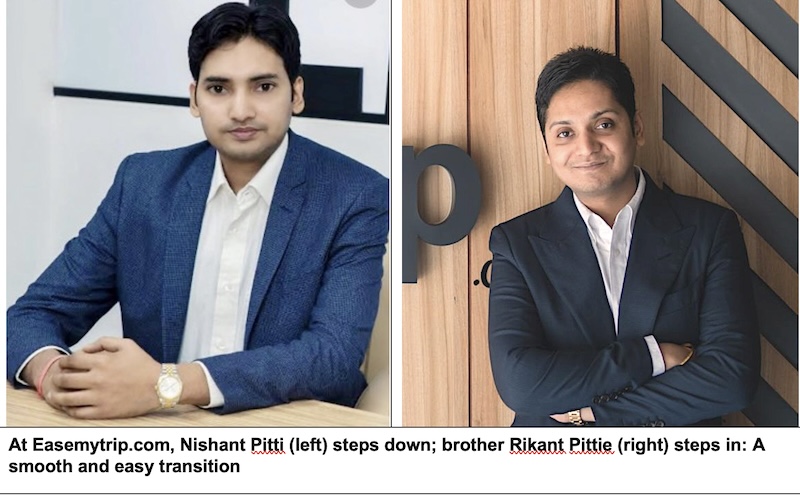
  • EaseMyTrip chairman & CEO  Nishant Pitti departs; replaced by co-founder Rikant Pittie

    EaseMyTrip chairman & CEO Nishant Pitti departs; replaced by co-founder Rikant Pittie

    MUMBAI:  The transition has been rather smooth and easy, though we don’t know much about about the parting. Traveltech platform EaseMyTrip on New Year’s day announced that its  its chairman & chief executive officer Nishant Pitti had said ta-ta to the company on 31 December, citing personal reasons.  Media reports said that Nishant  offloaded 1.4 per cent of his stake in Easy Trip Planners – the listed parent – in  the open market for Rs 78 crore before departing. 

    The board met this morning and decided on the appointment of co-founder Rikant Pittie as his replacement for the chairman &  co-founder’s  position. In his new role, Rikant will lead the company’s strategic initiatives, drive innovation, and enhance customer experiences to further strengthen EaseMyTrip’s position in the industry. 

    What led to Nishant’s departure is not known, but a company press release emphasised on more than one occasion about Rikant’s ability to lead easemytrip going forward. 

    Rikant Pittie co-founded EaseMyTrip in 2008  with his brothers Nishant and Prashant Pitti.  With over 16 years of experience in the travel and tourism industry, he has a deep understanding of market trends and customer needs. Under his leadership, EaseMyTrip has achieved significant growth, reflecting its commitment to a customer-first approach.  

    “The travel industry is at a transformative juncture where technology and personalisation are redefining how people explore the world. At EaseMyTrip, our mission goes beyond simply offering an enhanced travel experience,” said Rikant, in the release.  “It is about setting new benchmarks. We are dedicated to pioneering innovative solutions that empower travellers globally. I am both honoured and thrilled to take on this role and look forward to continuing the company’s journey.” 

    Rikant has also been recognised for his exceptional contributions to the business landscape, having won the prestigious Fortune India 40 Under 40 and Entrepreneur India’s entrepreneurship of the year in service business – travel category. Notably, Rikant  is also the vice-chairman of the CII Delhi State Council for 2024-2025. Among his recent achievements, Rikant has been named among IDFC First Private & Hurun India’s Top 200 Self-Made Entrepreneurs of the Millennium 2024, a testament to his relentless drive and entrepreneurial excellence. He was also honored with the ET Inspiring Leaders Award North 2024 for his exemplary leadership and innovation. 

  • Indian citizens trust defence forces and the PM the most: Ipsos survey

    Indian citizens trust defence forces and the PM the most: Ipsos survey

    MUMBAI : The news is not so good for all of us who are part of the media. Our tribe ranks even below the police in terms of the trust that the general public places in it, if one were to go by the results of the quarterly survey, the Ipsos IndiaBus Trust in Institutions, conducted by global research company’s Ipsos India..

    If the fourth estate is held in such low esteem by its primary customer,  the  Indian citizen, do media owners need to go back to the drawing board and do a rethink about their raison d’etre ? That’s question that begs an answer! An honest answer!

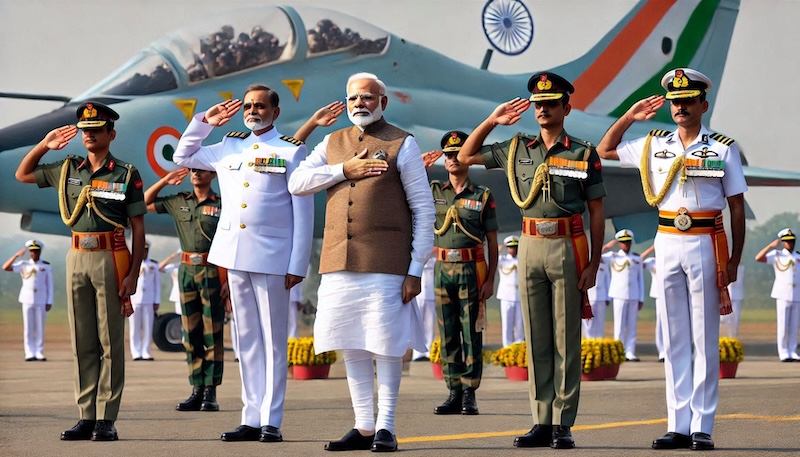
    The Ipsos survey revealed that the defence forces (army, air force and navy) are the most trusted  with a score of 56 pr cent, followed by Indian prime minister Narendra Modi who scored 45 per cent positive responses. The RBI came third with a 44 per cent score, followed by the supreme court. 

    Interestingly, all these institutions have improved their scores over the last quarter (in September) and have shown that the citizens have the highest faith in these institutions, as they continue to serve the nation with exemplary dedication and ethical work practices, says a press release issued by Ipsos India. To be fair even us media folks improved our trust score from 24 per cent in September 2024. But we are a far cry from the 36 per cent we notched up in June  2024.


    Trust list


    Politicians (20 per cent), political parties (21 per cent), community leaders (22 per cent), and religious leaders (24 per cent), have even more reasons to be worried as they continue to lead in the distrust list.

    The survey displayed certain pockets where the most trusted institutions have higher equity among the citizens.

    The defence forces have received higher trust scores among the tier1 citizens (71 per cent), the north zone (69 per cent), the west zone (68 per cent), the employed (67 per cent), tier2 (63 per cent), metros (62 per cent) and males (61 per cent) etc.  

    The PM of the country received highest scores in the north zone (62 per cent), tier1 (57 per cent) and tier 2 (57 per cent) cities, the west zone (52 per  cent), the employed (51 per cent) and males (48 per cent). Whlle the RBI was trusted most by the west zone (61 per cent), tier1 (59 per cent) and tier2 (54 per cent) citizens, the north zone (53 per cent) and the employed (52 per cent). Across these three institutions, they have a common thread of supporters with high trust – though only in the case of the RBI, trust is high in the west zone, Mumbai being the commercial capital of  India.
     

    Parijat chakrabortyIpsos India group service line leader, public affairs, corporate reputation, CSR & ESG Parijat Chakraborty pointed out that the topper  institutions are the backbone of the nation with their word being sacrosanct.  “After all, they have stood the test of time in serving the nation with transparency, equality and justice. All these institutions command respect – whether our defence forces, PM of the country, the RBI, the supreme court of India, the parliament – and their reputation has been built over years of impeccable delivery and service to the nation,” he elaborated.
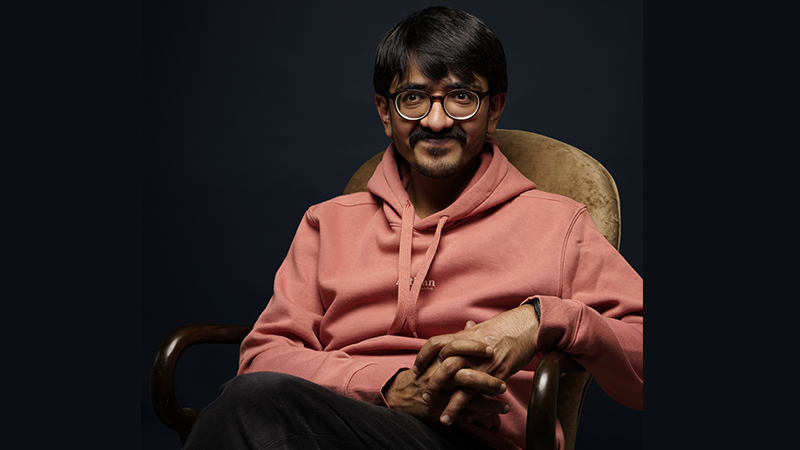
    According to him politicians, political parties, community leaders, and religious leaders, are institutions that need to win the trust of the masses through greater transparency and fulfilment of their promises to the electorate and patrons on one hand and managing their reputation through visibility around their achievements via communication, not leaving anything to speculation. He highlighted one positive outcome from the survey for them. ”We see recovery in scores to the previous levels, after a dip in September,” he said.

    (For the doubting Thomases who doubt the survey’s authenticity, at least use it as a guide post. Ipsos IndiaBus is a monthly pan India omnibus – which also runs multiple client surveys-  that uses a structured questionnaire and is conducted by Ipsos India on diverse topics among 2200+ respondents from Sec A, B and C households, covering adults of both genders from all four zones in the country. The survey is conducted in metros, tier one, tier two and tier three towns, providing a more robust and representative view of urban Indians. The respondents were polled face to face and online. We have city-level quota for each demographic segments that ensure the waves are identical and no additional sampling error. The data is weighted by demographics and city-class population to arrive at a national average. )

  • We are focusing on healthcare, education and emerging sectors – Mohd Saqib Khan

    We are focusing on healthcare, education and emerging sectors – Mohd Saqib Khan

    MUMBAI: In the evolving landscape of digital marketing, change is the only constant. New Mumbai-based Digixpressions Media co-founders Vinay Singh and Mohd Saqib Khan have embraced this principle by adding a new logo DX as a prefix to their agency branding. The five year old digital agency has a roster of clients that’s a mixed bag: Tata Capital, Kotak securities, Yes securities, PowerUp, HDFC Sky, Asus, Axis Mutual Funds, Aditya Birla Capital, IIF Finance, Shriram Finance, Wockhardt Hospitals, UpGrad, Angel Broking,  RBL Bank, ICICI Bank and Sharekhan  – amongst many others. But the perception so far has been that its strengths lie in the BFSI sector. 

    The agency is looking at breaking from that mold  and image and is pushing aggressively  to enter healthcare, education, and emerging markets, utilising data analytics and AI-driven solutions to create strategies tailored to specific industry challenges. 

    Digixpressions co-founder & CEO Mohd Saqib Khan has been in the digital space for more than a decade having worked with companies such as Mouthshut.com and Angel One, learning the rudiments of the trade. The post-graduate degree holder in physics spoke to Indiantelevision’s Suman Baidh  about the rebranding exercise, outlining a strategic vision designed to enhance its service offerings across new sectors. He emphasised the innovative methods the agency is adopting to address the unique needs of these industries while maintaining a strong focus on delivering measurable results., Edited excerpts from the conversation:

    On what inspired the addition of the DX monogram to  DigiXpressions  how does it reflect the company’s core values and vision for the future
    With strategic rebranding and repositioning, DigiXpressions is well-positioned to transform the marketing landscape and establish new standards of innovation, growth, and influence. The rebranding to DX symbolises a streamlined, modernised vision for DigiXpressions. The monogram means transformation, innovation, and simplicity, which aligns with our commitment to cutting-edge marketing solutions. It represents the core values of agility, creativity, and strategic impact while positioning us as a future-forward brand that evolves with the digital ecosystem.

    On the immediate and long-term business goals the company aims to achieve by the repositioning.
    DigiXpressions’s repositioning comes with a clear vision aimed at both short and long-term growth. In the short term, the company is enhancing its digital offerings while building complete marketing solutions, including advertising campaigns, omnichannel experiences, public relations, and much more.

    Moving ahead, DigiXpressions looks to evolve as a go-to partner for comprehensive marketing solutions across diverse industries. While it is already a trusted name in the finance sector, DigiXpressions  is focusing its attention on healthcare, education, and emerging sectors, aiming to establish itself as a leading player.

    On industries that DigiXpressions is focusing on and the unique value  it brings to these sectors
    Having established itself as a leader in the BFSI sector, DigiXpressions is now ready to explore new horizons including healthcare, e-commerce, technology, and education. Combining data analytics with our in-house AI-driven solutions, DigiXpressions  delivers measurable results through personalised and engaging strategies that effectively address industry challenges. This customised and target-oriented approach makes DigiXpressions  truly different.  

    On DigiXpressions’ plan to expand its suite of services 
    As part of its ambitious growth strategy,DigiXpressions is expanding its services catering to a diverse clientele. The company is enhancing its offerings with high-quality performance marketing pitches, influencer collaborations, and customer journey mapping. To enable real-time engagement, DigiXpressions is leveraging cutting-edge tools like conversational AI and hyper-personalised marketing strategies. These AI-driven solutions, discover distinctive product attributes, identify positive and negative campaign triggers within a campaign, and uncover optimisation gaps to improve overall performance, are significant differences.

    These technologies give brands the ability to create accurate, data-driven strategies that boost effectiveness and impact. Its comprehensive portfolio now includes digital strategy, content strategy, SEO, ASO, influencer marketing, biddable media marketing, performance marketing, media buying, content marketing, programmatic buying, marketing analytics, AI martech solutions, local SEO, YouTube marketing, and marketplace marketing.

    Some former successes include facilitating client campaigns in financial services, healthcare, and food sectors to build their audience profiles widely across tier two and tier three cities. By enabling campaigns that effectively relate to all these markets, DigiXpressions has significantly driven audience traction, with a 150 per cent on-average growth in consumer outreach across these sectors.  Additionally, clients have benefited from a 20 per cent improvement in conversion rates from digital campaigns targeting tier 2 and tier 3 markets.

    On specific initiatives in placing to upskill or reskill existing employees to align with the company’s forward-looking vision.
    Absolutely. To remain aligned with any industry’s trends, DigiXpressions has created structured training plans based on emerging marketing technologies, AI tools, and creative storytelling. Public-private partnerships with industry leaders for certifications, internal hackathons, and mentorships create a culture of continuous learning and innovation, equipping employees with skills to carry forward the company’s vision.

    On turning brand visibility into lasting impact and on metrics or benchmarks that DigiXpressions will use to measure success
    DigiXpressions uses a great mix of quantitative and qualitative benchmarks to measure success. From campaign ROI to engagement level, customer lifetime value, and audience retention, they are dedicated to providing measurable results for their clients. Key performance indicators (KPIs) such as brand equity, customer satisfaction scores, and consumer outreach rate help to ensure that brand visibility results in actual performance. For example, DigiXpressions saw a 35 per cent increase in customer satisfaction scores for its clients within six months of implementing a new marketing campaign.

    On any success story or campaign that illustrates that DX has already achieved this kind of impact for a client
    A real example of how DigiXpressions made an impact is its collaboration with a BFSI client that focused on higher digital adoption, with hyper-targeted ads, personalized content, and gamified engagement strategies. 
    DigiXpressions delivered remarkable results: 1,913.71 per cent increase in traffic, 540.12 per cent growth in leads, 438.71 per cent boost in conversions, 10,46.388 per cent surge in app installs, a 462.093 per cent increase in app leads. We combine strategic creativity and data-driven insights to lay the ground for concrete results that not only achieve visibility but also ensure lasting impact in an ever-changing marketing landscape today.

    DigiXpressions is advancing towards a future where marketing innovation meets measurable success. The future is here—and it’s powered by DX.

  • AI to AR: Key trends driving the next era of branding in India

    AI to AR: Key trends driving the next era of branding in India

    MUMBAI: In an era where digital transformation is reshaping every aspect of business, marketing, and branding are undergoing revolutionary changes. With India’s digital consumer base projected to reach 900 million by 2025, the convergence of technology, changing consumer behaviours, and evolving market dynamics are creating new paradigms that will define the future of how brands connect with their audiences.

    The rise of hyper-personalisation through AI

    Gone are the days when segmentation meant dividing consumers into broad demographic groups. Today’s marketing is moving towards individual-level personalisation, powered by sophisticated AI algorithms. According to recent studies, 76 per cent of consumers are more likely to purchase from brands that personalise their experiences.

    Indian success stories

    – Myntra’s “Style Squad” AI engine analyses over 15 million fashion products to provide personalised recommendations, resulting in a 25 per cent increase in customer engagement
    – HDFC Bank’s EVA AI assistant handles over 50,000 customer queries daily with a 95 per cent accuracy rate
    – Swiggy’s AI algorithm processes over 40 data points per customer to customise food recommendations, leading to a 30 per cent increase in order values

    Immersive technologies reshaping brand experiences

    The metaverse and augmented reality (AR) are no longer futuristic concepts but present-day marketing tools. The global AR market in retail is expected to reach $45 billion by 2025, with India showing one of the fastest adoption rates.

    Notable Indian implementations

    – CaratLane’s “Perfect Look” AR feature has increased online conversion rates by 40 per cent
    – Lenskart’s AR try-on technology serves over 10 million virtual trials monthly
    – IKEA’s AR app in India has reduced furniture returns by 35 per cent

    – Flipkart’s “Camera, Your Story” AR feature enables users to virtually place furniture in their homes, with 30 per cent of furniture buyers now using this feature

    Purpose-driven branding takes centre stage

    Modern consumers, particularly Gen Z and millennials, are increasingly aligning with brands that demonstrate genuine commitment to social and environmental causes. Research shows that 88 per cent of Indian consumers want brands to help them make a positive difference.

    Indian brand initiatives

    – Tata Tea’s “Jaago Re” campaign increased brand loyalty by 45 per cent while raising social awareness
    – Hindustan Unilever’s “Water Conservation Program” saved over 900 billion litres of water while strengthening brand trust
    – Patagonia India’s “Repair, Reuse, Recycle” initiative has led to a 60 per cent increase in brand advocacy among young consumers

    Emerging technologies transforming marketing

    Blockchain in marketing

    Supply chain transparency: ITC’s “Know Your Product” blockchain initiative allows customers to trace product origins
    Digital assets: Tata Motors’ NFT collection generated ₹5.2 crore in revenue while building brand engagement
    Loyalty programs: Mahindra’s blockchain-based rewards program has increased customer retention by 40 per cent

    Internet of things (IoT) integration

    Smart packaging: Dabur’s IoT-enabled packages track freshness and usage patterns
    Retail analytics: Reliance Retail’s IoT sensors analyse customer movement patterns, optimising store layouts
    Connected experiences: Asian Paints’ IoT-enabled colour visualisation system has increased conversion rates by 35 per cent

    Advanced data analytics and predictive marketing

    The future of marketing relies heavily on predictive analytics and real-time data processing. Indian brands are investing heavily in these technologies:

    Implementation examples

    – Marico’s predictive demand forecasting has reduced inventory costs by 25 per cent
    – BigBasket’s real-time analytics engine processes over 15 million data points daily to optimize delivery routes and inventory
    – PepsiCo India’s AI-driven market analysis has improved campaign ROI by 45 per cent

    Voice and visual search optimization

    Voice commerce in India is expected to reach $40 billion by 2025, with 82 per cent of smartphone users regularly using voice search features.

    Market leaders

    – Amazon India reports 3x growth in voice shopping queries in regional languages
    – Google Lens processes over 50 million visual searches daily in India
    – Flipkart’s visual search feature has improved product discovery by 50 per cent

    Sustainability and circular economy

    Environmental consciousness is driving major changes in brand strategies. Studies show that 79 per cent of Indian consumers prefer sustainable brands.

    Brand initiatives

    – Hindustan Unilever’s plastic waste collection program has recycled over 100,000 tons of plastic
    – Flipkart’s sustainable packaging initiative has reduced plastic usage by 50 per cent
    – Godrej’s circular economy program has created a new market for recycled products

    The integration of online and offline experiences

    Omnichannel presence is becoming crucial, with 74 per cent of Indian consumers using multiple channels before making a purchase.

    Success stories

    – Reliance Digital’s integrated shopping experience has increased cross-channel sales by 45 per cent
    – DMart’s hybrid model has shown 60 per cent higher customer retention compared to single-channel shoppers
    – Tata CLiQ’s phygital presence has reduced customer acquisition costs by 30 per cent

    Social commerce evolution

    Social commerce in India is projected to reach $70 billion by 2025, revolutionising how brands engage with consumers.

    Platform innovation

    – Meesho’s social commerce model has enabled over 15 million resellers
    – Instagram Shopping has seen a 120 per cent growth in Indian merchant adoption
    – WhatsApp Business’s shopping feature processes over 1 million orders daily

    The future of marketing and branding is being shaped by technological advancement, changing consumer values, and evolving market dynamics. India’s unique position as a rapidly digitalising economy with a strong traditional retail presence creates opportunities for innovative marketing approaches.

    For brands in India and globally, success lies in leveraging these trends while maintaining authentic connections with consumers. The most successful brands will be those that can:

    – Implement technology thoughtfully and purposefully
    – Maintain strong ethical and sustainable practices
    – Create seamless omnichannel experiences
    – Build genuine connections with their audience through personalization and purpose

    As we move forward, the key to success will be balancing innovation with authenticity, technology with human touch, and global trends with local relevance.

    (This article has been authored by Thinkin’ Birds CEO Bhavik Mehta. The views expressed here are his own and indiantelevision.com need not subscribe to them)