Category: MAM

  • Zepto and Škoda tease 10-minute car deliveries, but there’s a catch

    Zepto and Škoda tease 10-minute car deliveries, but there’s a catch

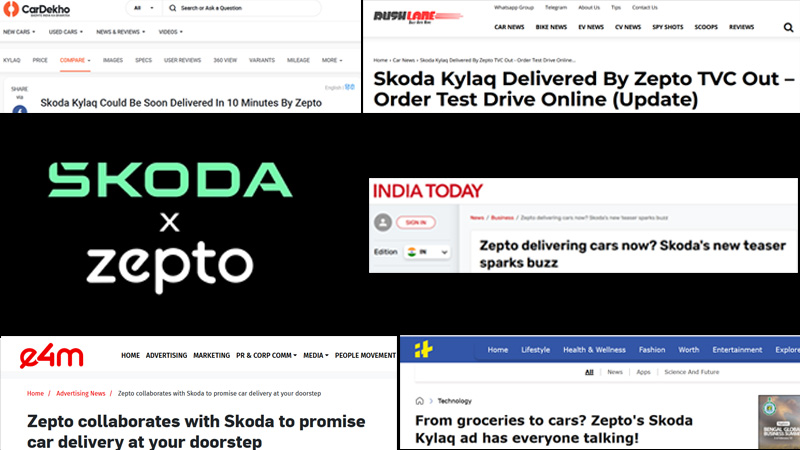
    MUMBAI: Last night, at precisely 9 pm, Zepto turned social media upside down with a cheeky new TVC that had people convinced they’d cracked the code to 10-minute car deliveries. Yes, you read that right.

    Imagine scrolling through the Zepto app, adding a Škoda Kylaq to your cart, and having it delivered before you can even pick a playlist for your first drive. Too good to be true? Well, it is.

    The ad, directed with a mischievous twinkle, never outright says that Zepto will deliver cars. But the visual storytelling cleverly nudged viewers into believing the impossible. The message? A bold synergy between Zepto and Škoda—without a single spoken word confirming the deal.

    And, naturally, media outlets pounced. Business Today, India Today, CarDekho, and a flurry of others sprinted to drop the juiciest headline first. “Zepto to Deliver Škoda Cars in 10 Minutes!” screamed one. “End of Dealerships?” suggested another. The internet had a field day.

    But before the world could collectively lose its mind, Zepto’s co-founder & CEO Aadit Palicha, stepped in at around 7 pm today to clear the air with a LinkedIn post that read: “No, We’re Not Delivering Cars in 10 Minutes… yet. We’ve seen the headlines—Škoda & Zepto delivering cars in 10 minutes?! We love the energy, but let’s clear things up: you won’t be ordering a Škoda Kylaq from the Zepto app (as tempting as that sounds).

    What you can get in 10 minutes? A test drive of the Škoda Kylaq for now 🙂

    But… who knows what the future holds?”

    Aadit

    That last line? A classic cliffhanger. Zepto may not be handing over car keys at your doorstep just yet, but they’ve certainly kept the audience hooked. And let’s be honest, with how fast commerce is evolving, nothing sounds impossible anymore.

    So, while you might not be able to get a brand-new Škoda delivered faster than your morning espresso, the hype around this stunt proves one thing: Zepto and Škoda know exactly how to grab attention.

    What’s next? Supercars on subscription? Jetpack deliveries? One thing’s for sure—2025 is looking exciting.

  • Unlock Better Breathing: How Stress Relief Boosts Respiratory Health Naturally

    Unlock Better Breathing: How Stress Relief Boosts Respiratory Health Naturally

    Most of us breathe without a second thought, but for millions of people across this world, every breath reminds them of the struggles that their lungs must endure. We normally consider mental health as abstracted from our physical health but it is actually your feelings and level of stress that make the difference in this world about your lungs and the respiratory system. And when chronically suffering respiratory conditions, like Asthma, COPD (chronic obstructive pulmonary disease) or Chronic Bronchitis occur, a little sign of stress or anxiety seems to really make their struggle to breathe all the worse. 

    According to the recent IPSOS global survey on World Mental Health Day 2024, 53% of city dwellers in India reported stress levels so high that it impacted their daily lives. Stress can cause inflammations and deteriorated lung function. Apart from inflammations, the chest tends to become tight, and flare-ups happen frequently. Mental strain can make the management of Asthma, and Chronic Bronchitis exacerbated.

    Stress: A Silent Trigger for Respiratory Disorders

    When we are stressed, the body releases hormones like cortisol, which would make the airways contract and cause them to be even more inflamed and produce higher mucus rates. For asthmatic patients, this will lead to worsened wheezing, tightening in chest, and inability to breathe to its full capacities, hence triggering an asthma attack. Patients suffering with Chronic Obstructive Pulmonary Disease (COPD) would experience poor breathing. It makes it painful to breathe in and out as the airways contract around lung muscles. Eventually, requiring enhanced effort and concentration while breathing, leading to anxiety-led panic attacks.

    Chronic Obstructive Pulmonary Disease (COPD) is ranked as one of the most potent killers in the world, and World Health Organization (WHO) in 2021 reported 3.5 million deaths as a result of this disease. Stress could exacerbate the chronic bronchitis with persistent coughing, increased mucus production, and more congested airways. This vicious circle starts with anxiety and stress leading to physiological response which, in turn, worsens the underneath problems of our lungs.

    Nature-Based Solutions for Alleviating Respiratory Distress 

    The above-mentioned underlined symptoms could be managed and this vicious cycle of stress and respiratory problems can be broken. Lifestyle changes form the best method to reduce stress and put less pressure on our heart and lungs. By adopting healthy dieting, regular exercises, quitting smoking and practices like mindfulness, yoga, or deep breathing exercises to manage stress. Along these lifestyle modifications, herbal medications can provide great results in treating respiratory illnesses. Research cites that Phyto-actives (high-potency plant extracts), offer an all-round holistic and natural solution, to improve respiratory virus illnesses. 

    Clinically tested PhytoAdvance Technology further enhances the therapeutic activity of these plant bioactives, which have shown efficacy in reducing lung inflammation and making it healthier without any side effects. Natural ingredients such as Turmeric, Amla, Ginger, Pomegranate, Black Pepper, Mulethi, and Tulsi in these plant extracts possess anti-inflammatory properties that detoxify the respiratory system to enhance immunity within the body and help protect the lung against viral respiratory infections.

    This over-the-counter supplement, PhytoRelief-Plus, combines these powerful Phyto-actives in a form that also reduces chronic coughing, chest congestion and irritation in the throat. The medicated lozenges work in harmony with the body to provide natural relief and support upper respiratory health during episodes of chronic coughing and irritation. Immunity-boosting ingredients enhance the body’s defense mechanism and enhance ease of breathing as well as comfort with PhytoRelief-Plus immunity lozenges.

    PhytoRelief-Plus is not a cure for the respiratory conditions like Asthma, or Chronic Bronchitis; however, it is a natural nontreatment approach in reducing symptoms. As a supportive therapy in nurturing the body’s natural healing process, it acts as a lifestyle supplement that helps to efficiently manage chronic cough and discomfort caused by respiratory issues.

    Boost Your Respiratory Health with the Power of 7 Phyto-actives

    Managing chronic lung conditions often begins with an understanding of the relationship between stress and respiratory conditions. Stress itself is not the core cause of Asthma and Chronic Bronchitis, though it can exacerbate symptoms, making it harder to breathe. Nevertheless, ways to reduce stress, such as by practicing relaxation techniques, can be extremely important, but then incorporating natural remedies like Phyto-actives (high-potency plant extracts) can enhance relief and support for the lungs.

    Living with chronic respiratory issues isn’t easy. The good news, however, is that with a holistic approach-championing both the physical and psychological aspects of lung health-you can break the vicious cycle of stress and respiratory discomfort. Incorporating lifestyle changes, stress management practices, and incorporating some natural supplements into your life makes it easier to breathe more comfortably and maintain control over your respiratory health.

    In terms of lung health, it’s not just managing the symptoms but also trying to understand the deeper connection between body and mind. But when this is approached as a comprehensive care, we all can ensure our breaths are a little easier, even amidst life’s stresses.

  • Is It Time to Renew Your Car Insurance? Key Factors to Consider Before You Renew ?

    Is It Time to Renew Your Car Insurance? Key Factors to Consider Before You Renew ?

    Renewing your car insurance policy is essential to remain financially secure against unforeseen events like accidents or theft. With the convenience of online car insurance renewal, the process has become faster and more accessible. However, many car owners overlook critical factors during renewal, leading to unnecessary costs or inadequate coverage. This blog highlights key considerations for a smooth and informed car insurance renewal experience.

    Why Timely Renewal is Essential?

    Driving without a valid car insurance policy is illegal and exposes you to significant financial risks. Under the Motor Vehicles Act 2019, driving without insurance attracts penalties of up to INR 2,000 for the first offence and INR 4,000 for subsequent offences, along with possible imprisonment of up to 3 months. However, suspension of the driving license is not explicitly stated as a penalty for this violation. Beyond legal issues, an expired policy leaves you unprotected against damages to your vehicle or third-party liabilities, creating potential out-of-pocket expenses.

    The Ideal Time to Renew

    Renewing your car insurance within the last 45 days of its validity is advisable to avoid lapses. This window gives you ample time to review your current policy, compare alternatives, and make any adjustments based on your current needs. If you miss the renewal deadline, insurers typically offer a grace period of 15 to 30 days. The 90-day period generally applies to retaining the No Claim Bonus (NCB), not the grace period itself. Keep in mind that renewing during the grace period may attract additional charges.

    Key Factors to Consider Before Renewal

    Renewing your car insurance is a vital step in ensuring uninterrupted financial protection and compliance with legal requirements. To make the most of your renewal, it’s essential to evaluate various aspects of your policy to secure comprehensive coverage that suits your current needs.

    1. Review Your Current Policy

    When opting for online car insurance renewal, renewing the same policy without reviewing the details is tempting. However, your coverage needs may have changed over time.

    What to Do:

    ●  Check the existing policy’s coverage, including third-party liability and comprehensive benefits.  
    ●  Assess whether the add-ons you previously selected are still relevant to your current situation. For instance, a Passenger Cover may not be necessary if you travel alone.

    2. Insured Declared Value (IDV)

    The IDV represents the maximum amount your insurer will pay if your car is stolen or totalled. A lower IDV reduces your premium but may leave you underinsured, while a higher IDV increases the premium unnecessarily.

    What to Do:

    ●  Use a car insurance calculator to Understand that IDV is calculated based on standard depreciation rates set by the Insurance Regulatory and Development Authority of India (IRDAI). Policyholders can only select from a range of values within the insurer’s preset guidelines.

    3. No Claim Bonus (NCB)

    The NCB is a discount offered for every claim-free policy period, potentially reducing your premium by up to 50%. Many policyholders forget to apply this during renewal.

    What to Do:

    ●  Confirm that your NCB has been transferred or applied correctly. Keep in mind that the maximum NCB discount of 50% is typically applicable after five consecutive claim-free years. NCB cannot be transferred during mid-policy renewals or grace periods.

    4. Compare Policies Online

    Sticking with your current insurer without exploring alternatives may result in missed opportunities for better coverage or lower premiums.

    What to Do:

    ●  Compare different online car insurance renewal options from various insurers. Look for discounts, better add-on covers, and customer service reviews.

    5. Add-On Covers

    Add-ons such as zero depreciation, engine protection, and roadside assistance offered by insurers can significantly enhance your car insurance policy by providing additional financial security.

    What to Do:

    ●  Evaluate the relevance of each add-on based on your current needs and driving habits.  
    ●  Remove add-ons that no longer align with your requirements to avoid unnecessary costs.  
    ●  Remember that certain add-ons, such as zero depreciation, are typically available only for vehicles up to 5-7 years old.

    6. Update Personal Information

    Outdated personal details, such as an old address or phone number, can lead to complications during claim settlements.

    What to Do:

    ●  Ensure your details are updated during the renewal process.

    Benefits of Renewing Car Insurance Online

    Renewing car insurance online offers several advantages, including:

    ●  Convenience: The process can be completed in a few clicks without physical paperwork or visits.  
    ●  Cost Savings: Online platforms often provide exclusive online savings.  
    ●  Transparency: You can compare policies, add-ons, and premiums before deciding.  
    ●  Quick Assistance: Insurers like Bajaj Allianz General Insurance Company provide 24×7 call assistance and instant updates via SMS, ensuring seamless claim support.

    Tips to Save Money on Your Renewal

    Saving money on your car insurance renewal doesn’t have to mean compromising on coverage. By being proactive and making informed decisions, you can reduce costs while maintaining comprehensive protection.

    1.  Choose Higher Deductibles: Opting for a higher voluntary deductible can lower your premium. It will also increase your out-of-pocket expenses during claims.  
    2.  Install Anti-Theft Devices: Many insurers offer discounts for cars equipped with certified anti-theft systems.  
    3.  Leverage NCBx: Maximise your NCB to reduce premium costs.  
    4.  Opt for Online Policies: Direct-to-customer digital insurers often offer better rates.

    Common Mistakes to Avoid

    ●  Ignoring Policy Details: Renewing without reviewing coverage may result in paying for unnecessary features.  
    ●  Forgetting Add-On Relevance: Continuing with irrelevant add-ons increases your premium without added value.  
    ●  Delaying Renewal: Missing deadlines could lead to policy lapse, legal issues, and higher costs.  
    ●  Overlooking Discounts: Many miss out on offers that could reduce renewal costs.

    Final Thoughts

    Renewing your car insurance policy is a critical step in ensuring financial protection and legal compliance. By choosing online car insurance renewal, you not only simplify the process but also unlock opportunities to customise your coverage to fit your needs.

    Take the time to review your existing policy, compare options, and make necessary adjustments to maximise benefits and minimise costs. A little attention to detail can go a long way in ensuring peace of mind and hassle-free driving.

    *Standard T&C Apply

    Insurance is the subject matter of solicitation. For more details on benefits, exclusions, limitations, terms, and conditions, please read the sales brochure/policy wording carefully before concluding a sale.

    Claims are subject to terms and conditions set forth under the motor insurance policy.

  • Budget boost to ad industry: WRM’s Shrenik Gandhi foretells the future

    Budget boost to ad industry: WRM’s Shrenik Gandhi foretells the future

    MUMBAI: Like many others before him,  Shrenik Gandhi, co-founder &  CEO of White Rivers Media (WRM), has predicted a significant uptick in advertising expenditure across consumption-driven sectors following the latest Union Budget announcement. With the government providing income tax relief up to Rs 12 lakh, Gandhi anticipates a ripple effect benefiting both brands and advertisers.

    He remarked, “With more disposable income in the hands of consumers, ad spends are expected to see a positive uptick, particularly in consumption-driven sectors from the salaried class.”

    Sectoral Impact on Ad Spends

    The overall advertising market is projected to witness a 10 per cent growth, driven by increased discretionary spending. Gandhi highlighted key sectors likely to ramp up marketing investments:
    * Retail & E-commerce: Boosted by increased purchasing power, aggressive online and offline campaigns are anticipated.
    * Automobiles: Higher disposable incomes often translate into greater car and two-wheeler sales, prompting auto brands to invest more in promotions.
    * Real Estate: With improved affordability, developers are expected to push marketing efforts for mid-income housing projects.
    * Consumer Electronics & Smartphones: This segment is poised for heightened promotional activity.
    * Travel & Hospitality: Financial ease could drive a surge in both domestic and international travel advertisements.
    * Fintech & BFSI: Additional savings may lead to increased interest in investments and insurance products, encouraging BFSI companies to up their advertising budgets.

    Digital advertising, already experiencing robust growth, is expected to accelerate further as brands seek to capture positive consumer sentiment. Gandhi concluded that the budget’s impact on the advertising landscape signals a promising year ahead for the industry.

  • CAGR as a tool for family wealth planning across generations

    CAGR as a tool for family wealth planning across generations

    In family wealth planning, where the objective is to ensure financial security and growth across generations, understanding and leveraging the right financial tools is essential. Among these tools, Compound Annual Growth Rate (CAGR) stands out for its ability to assess and guide the long-term performance of investments. By providing a precise measure of average annual growth over time, CAGR becomes a valuable ally in creating strategies for sustainable family wealth.

    Understanding CAGR

    CAGR, or Compound Annual Growth Rate, measures the rate at which an investment grows annually while assuming that profits are reinvested each year. Unlike one-time returns or volatile annual figures, CAGR smoothens growth over a specific period, providing clarity on how an investment performs consistently over time.

    For instance, if an investment portfolio grows from Rs. 5,00,000 to Rs. 10,00,000 in 10 years, the CAGR shows the annual growth rate required to achieve that result, providing a clear and realistic picture of the performance.

    Why CAGR is crucial for family wealth planning

    Family wealth planning aims to grow and preserve assets while ensuring financial stability for future generations. Here’s how CAGR plays a pivotal role:

    1.  A long-term perspective  
    Family wealth often involves multi-decade goals, such as funding education, passing down assets, or retirement planning. CAGR helps evaluate investments based on their consistent growth potential, making it easier to align them with long-term objectives.

    2.  Comparing investment avenues  
    Whether it’s real estate, equity, or fixed deposits, CAGR provides a standard metric to compare diverse investments. This ensures that the family wealth is invested in assets that balance growth, risk, and sustainability.

    3.  Wealth creation across generations  
    Intergenerational wealth planning demands stability and compounding benefits. By analysing CAGR, families can identify growth-focused investments that preserve wealth and compound it over decades.

    4.  Alignment with financial goals  
    Different generations often have distinct priorities – some may focus on aggressive growth, while others may prioritise wealth preservation. CAGR enables better decision-making by showing which investments align with these unique goals.

    Using CAGR effectively for family wealth planning

    1.  Diversify with purpose  
    Use CAGR to identify high-growth investments like equities while balancing them with safer options like bonds or fixed-income assets. This diversification ensures steady growth while managing risks.

    2.  Set target returns  
    For goals like funding a child’s education or building a retirement corpus, calculating the required CAGR provides clarity on how much to invest and where to allocate resources.

    3.  Reassess investments regularly  
    Investments with consistently negative CAGR can erode wealth over time. Monitoring CAGR helps you reassess and shift funds to better-performing avenues.

    4.  Leverage the power of compounding  
    Since CAGR inherently considers compounding, it encourages long-term thinking, which is essential for creating wealth that lasts across generations.

    Limitations to keep in mind

    While CAGR is a reliable metric, it assumes smooth and consistent growth, which may not always align with the market realities. External factors such as inflation, taxes, and economic shifts must also be considered when making long-term decisions based on CAGR.

    Conclusion

    CAGR is indispensable while planning for family wealth creation for financial stability and growth for future generations. By offering a realistic view of long-term investment performance, CAGR simplifies decision-making and ensures that wealth is managed thoughtfully. Families that use CAGR as part of their wealth strategy are better equipped to meet their financial goals and pass on a legacy of prosperity to the next generation.

  • Aisle’s #FindAnkit campaign brings meme marketing to new heights

    Aisle’s #FindAnkit campaign brings meme marketing to new heights

    MUMBAI: Romance and memes—a pairing as timeless as chai and rain. Aisle has hit the sweet spot with its latest meme marketing campaign, #FindAnkit, blending humour, nostalgia, and modern matchmaking. This campaign, which exploded on Bengaluru’s social media scene and iconic streets like Church Street, has become a viral sensation, showcasing how even a dating app ‘swipe mishap’ can lead to a city-wide love quest.

    The campaign began when a playful tweet from a group of friends revealed that one of them had accidentally skipped a profile on Aisle—a 5’11” chai-loving techie named Ankit from Bengaluru. Armed with witty placards and heartfelt pleas, the group took to the streets, turning the quest into a public mission. Their light-hearted appeal was simple: “Help us find Ankit!” Social media influencers and meme lovers soon joined the fun, with one popular X (formerly Twitter) influencer rallying their followers to tag every ‘Ankit’ in their contact list.

    What happened next? Chaos—delightful, hashtag-fuelled chaos. Aisle didn’t miss a beat, jumping into the action with cheeky tweets and amplifying the hashtag #FindAnkit. The result? Timelines flooded with tags, memes, and witty banter, as netizens united to locate the elusive techie.

    Aisle Network head Chandni Gaglani described the campaign as a playful ode to old-school romance, “At Aisle, we believe love isn’t just about profiles and swipes; it’s about creating moments that matter. #FindAnkit is a light-hearted, Bollywood-style effort to show that putting yourself out there can be romantic too. With this campaign, we’ve turned an accidental skip into a collective mission—proving that effort, humour, and a little serendipity make modern matchmaking just as special.”

    The campaign’s numbers speak for themselves. 8.6 million reach, 9.8 million views, and an entire city talking about Ankit. Aisle has not only driven engagement but also reminded everyone that meaningful connections require a touch of persistence and charm.

    The campaign’s clever approach resonated deeply with Bengaluru’s meme-loving crowd. By tapping into the city’s love for humour and community-driven missions, #FindAnkit didn’t just entertain—it created a shared moment that blended digital culture with the charm of chance encounters.

    So, has Ankit been found? That’s for the internet to decide. One thing is clear, though—Aisle has captured the essence of modern romance, one meme at a time.

  • Shejale-Ganganna’s LS Digital mastermind revolutionary AI Marketing Stack

    Shejale-Ganganna’s LS Digital mastermind revolutionary AI Marketing Stack

    MUMBAI: Founded by visionary leaders Prasad Shejale and Venugopal Ganganna, LS Digital has long been the underdog-turned-powerhouse in the marketing world. Now, with the launch of their much-anticipated “AI Marketing Stack”, they’ve thrown down the gauntlet to competitors, effectively saying, ‘AI isn’t optional anymore – it’s your secret weapon’.

    This revolutionary offering integrates cutting-edge AI tools into every facet of marketing, empowering businesses to unlock insights, optimise campaigns, and stay miles ahead of the competition in today’s ever-evolving digital ecosystem.

    What sets LS Digital apart? Well, it’s not just about slapping a buzzword on a product. This stack is more like a power packed pitstop for marketers, blending tools that decode data, predict consumer behaviour, and even create hyper-personalised campaigns.

    Prasad, the “master strategist” CEO, pairs perfectly with Venugopal, the “technological wizard” CIO, making LS Digital a dynamic duo in the marketing universe. Together, they’ve created a solution that not only future-proofs brands but turns AI from a mystery into a necessity. And the best part? They’re making it accessible for businesses large and small. Intrigued yet?

    From L to R: LS Digital founder & CEO Prasad Shejale; LS Digital co-founder & CIO Venugopal Ganganna

    LS Digital gets it: CMOs aren’t here for more jargon, they’re here for tools that actually do the heavy lifting. And that’s where swoops in AI Marketing Stack—a marketer’s secret sauce that promises to spice up campaigns, cut the fluff, and deliver results faster than you can say, conversion rates! AI features include:

    1    Research AI: Turning customer data into golden insights faster than you can say “target audience.”

    2    Generate AI: Because no one has time to write generic content anymore—this tool churns out campaigns and social posts so personalised, they might as well come with your customers’ birthstones.

    3    Predictive AI: It’s like a marketing crystal ball—forecasting trends and fine-tuning campaigns like it’s nobody’s business (except yours).

    Oh, and they aren’t stopping there. They’re letting existing clients take their Research AI tool for a free test spin—no strings attached. Why? Because getting CMOs hooked on AI shouldn’t feel like pulling teeth.

    Shejale said, “AI isn’t just another tool; it’s the foundation for tomorrow’s marketing success. With our AI Marketing Stack, we’re removing the hurdles and enabling brands to explore new frontiers of growth and innovation. This is about making every brand unstoppable in the age of AI.”

    Adding to this vision, Ganganna emphasised the strategic depth of the initiative: “AI isn’t just about technology—it’s about staying ahead of the curve. With our solutions, we’re not just helping clients optimise campaigns; we’re future-proofing their strategies.” Ganganna also highlighted LS Digital’s partnership with Quilt, an expert in AI culture analysis and market intelligence, which has been instrumental in refining the stack’s capabilities.

    Forget everything you thought you knew about marketing—it’s not just about playing darts with data anymore. LS Digital’s new AI Marketing Stack is like upgrading from a rusty bicycle to a rocket ship; it promises to make AI the default setting for every brand aiming to win the marketing race.

    Indiantelevision.com Sreeyom Sil had an exclusive tête-à-tête with Venugopal Ganganna during LS Digital’s big launch event in Mumbai. Amidst the buzz and excitement, Ganganna spilled the beans on how this stack is a marketer’s dream come true and why it’s set to leave competitors playing catch-up. Let’s dig in!

    What inspired the creation of the AI marketing stack? Who were the key collaborators?

    The AI marketing stack has been a product of collaborative innovation involving multiple partners, technologies, and our experience over the last 18 months of building a digital business transformation agency. Our partnerships with companies like Quill.ai, Gemini, Vertex AI, Claude, and others helped shape the stack. We connected the dots around data intelligence, creative automation, and predictive modelling to tackle real-world marketing challenges.

    What’s the price tag for this innovation, and what ROI are you targeting?

    Our investment in the AI marketing stack amounts to $2–3 million over the past 18 to 24 months, spanning technology, talent, and research. But the expected ROI isn’t just financial – it’s about driving marketing transformation. We measure success through cost savings, productivity improvements, and efficiency gains, aiming for a 15–25 per cent uplift in these areas for our clients.

    Who are your target clients?

    The stack is industry-agnostic but tailored for sectors like FMCG, retail, e-commerce, BFSI, and lifestyle brands – areas that demand scalability, hyper-personalisation, and data-driven insights. We cater to enterprise clients needing large-scale solutions, mid-sized brands seeking efficiency at an accessible cost, and digital-first businesses looking to integrate creativity, media, and predictive modelling seamlessly.

    What makes this stack unique compared to similar tools?

    It’s not just a tool – it’s a customised AI agent, or rather 20 agents, designed for specific marketing needs such as predictive analytics, hyper-personalised media planning, and consumer cohort analysis. It’s a combination of many agents that integrate across platforms, scale effectively, and, most importantly, are cost-effective. We also offer a tiered pricing model ranging from SMB subscriptions to enterprise-level solutions with advanced capabilities.

    Is the stack India-focused, or is global expansion in the works?

    While the initial launch was in India, we’ve already done projects across GCC, SEA, the UK, and the US. As we scale, we’re targeting the Middle East, North America, and the EU as key hubs for enterprise adoption.

    What are the biggest challenges clients face when transitioning to AI-driven marketing?

    The main challenge is: where do I start? How do I begin? There’s scepticism about AI’s ROI, fears of complexity, and integration issues. To tackle these, we offer exclusive free access to our research modules for a few months, supported by dedicated training. This removes the barrier to entry, enabling brands to test the waters without huge upfront budgets.

    Ganganna is clear: AI isn’t a luxury – it’s a necessity. LS Digital’s AI Marketing Stack doesn’t just level the playing field; it flips the script entirely. Imagine a world where marketers swap their guesswork for a precise, algorithm-fueled strategy—and that’s exactly the future LS Digital promises.

    So, what’s next? The tools are here, the playbook is ready, and LS Digital is handing CMOs the keys to the AI kingdom. Ganganna leaves us with this thought: “AI isn’t just about technology; it’s about staying ahead of the curve and winning the race.” And with that, LS Digital makes one thing clear—when it comes to marketing, it’s no longer a sprint; it’s a smart race powered by algorithms.
  • Sunil Gupta lectures AI’s transformative role at IAA Conversations

    Sunil Gupta lectures AI’s transformative role at IAA Conversations

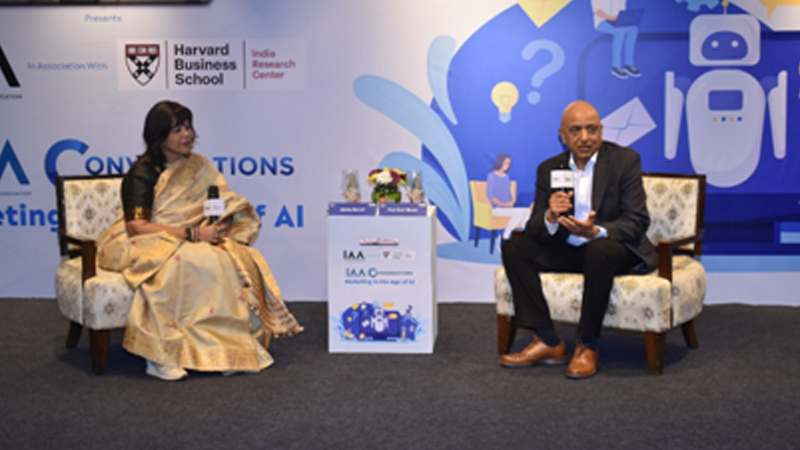
    MUMBAI: Artificial intelligence isn’t just a buzzword anymore—it’s shaping the way industries think, act, and innovate. At the recent IAA Conversations in Mumbai, Harvard Business School Edward W. Carter professor of business administration, Sunil Gupta delved into AI’s transformative power in marketing, branding, and beyond. The event, titled ‘Marketing in the Age of AI’, was moderated by VML India CEO and an IAA Mancom member, Babita Baruah and organised in association with Harvard Business School.

    The session kicked off with Gupta highlighting the disruptive nature of AI and how businesses across sectors are adapting to leverage it. “Almost every business, not just advertising, is thinking about AI and how it will affect their operations,” he noted.

    He outlined three ways AI is transforming industries:

    1    Augmenting and automating tasks to increase efficiency.

    2    Expanding and growing capabilities with innovative tools.

    3    Disrupting and experimenting, encouraging businesses to push creative boundaries.

    Gupta cited tech giants like Facebook and Google, explaining their use of AI to automate ad creation, audience targeting, and budget allocation.

    Gupta emphasised the unprecedented access to consumer data in today’s digital age. “It’s not just about what they buy or search for. It’s also about what they do on social media or why they contact a call centre,” he observed.

    AI, he argued, offers the ability to synthesise qualitative and quantitative data to create a 360-degree view of consumers. It enables brands to map customer journeys, uncover pain points, and even predict behaviours. “AI can act as a smart research assistant, helping brands connect the dots across vast datasets,” he added.

    Gupta also introduced the concept of synthetic consumers, personas created using past data to simulate market research scenarios. This approach offers quick insights at early product development stages.

    Gupta didn’t shy away from discussing the hurdles of AI adoption. “The use of AI will increase competition as it lowers entry barriers, making it easier for anyone to experiment and innovate,” he said.

    However, he flagged the risk of short-term thinking in advertising. “With AI’s ability to experiment and fine-tune ROI, there’s a danger that brands might focus too much on immediate results and lose sight of long-term brand building. And advertising is all about building brands,” he cautioned.

    Addressing how organisations should approach AI, Gupta urged companies to embrace the technology actively. “You can’t learn to swim by watching someone else. You need to dive into the pool yourself,” he remarked.

    He recommended dedicating time to understanding AI’s potential and limitations, noting that no technology has ever reduced workload—it has only shifted it. “Jobs don’t go away, tasks do. AI will eliminate non-value-added tasks, allowing professionals to focus on more impactful work,” he asserted.

    On a closing note, Gupta reminded attendees of the importance of starting with the problem, not the technology. “Sometimes, we get so caught up in the technology that we forget the problem we’re trying to solve,” he said, adding that copyright and IP protection will remain critical concerns in an AI-driven world.

    IAA India Chapter president, Abhishek Karnani underscored the event’s relevance, “At the India Chapter of the International Advertising Association (IAA), we take pride in being the only body in the industry that brings together creative agencies, media agencies, and media under one roof. This year, our focus is clear—Conversations, Skilling, and Artificial Intelligence—all aimed at preparing us for the opportunities and challenges ahead.”

    Organised with support from Free Press Journal as the presenting partner, the IAA Conversations event highlighted the intersection of technology, creativity, and strategy, offering a forward-looking perspective on how AI is reshaping industries.

  • C Com Digital teams up with Rushi Ventures to redefine F&B branding

    C Com Digital teams up with Rushi Ventures to redefine F&B branding

    MUMBAI: In a move that promises to revolutionise its online presence, Rushi Ventures Pvt Ltd (RVPL) has joined hands with C Com Digital, a global full-service techno digital marketing agency. The partnership will drive digital transformation across RVPL’s diverse food and beverage portfolio, including celebrated brands Rushi Fudzs, Mumbai Bowls, and Say Yummee.

    From its humble beginnings in 1993 as ‘Udipi Refreshment’, founded by Sham Shinde, RVPL has grown into a multi-brand enterprise. Now under the leadership of Siddhartha Shinde, the company blends a legacy of excellence with a flair for innovation. C Com Digital will spearhead digital campaigns, social media management, and strategic print marketing to amplify RVPL’s reach and resonance across Mumbai and Thane.

    Here’s a quick rundown of the brands set to sizzle in the spotlight:

    . Rushi Fudzs: A tribute to Mumbai’s soul food-think vada pav and dabeli with a dash of modern charm.

    . Mumbai Bowls: Customisable meals in a bowl, curated for the Gen Z crowd and corporate hustlers.

    . Say Yummee: A vibrant QSR offering everything from pav bhaji to pasta, created to delight Millennials and Gen Z alike.

    Each brand brings a unique flavour to the table, and C Com Digital’s job is to ensure they shine brighter in the crowded F&B market.

    RVPL’s MD, Siddhartha Shinde expressed his enthusiasm for the collaboration, “At RVPL, our journey has been fuelled by a passion for food, a legacy of excellence, and a belief in constant innovation. Partnering with C Com Digital marks a new chapter, allowing us to engage with audiences in meaningful ways. Their expertise will be pivotal as we expand our footprint and bring our unique offerings to more customers.”

    Meanwhile, C Com Digital founder & director Chandan Bagwe shared his vision, “Rushi Ventures is a remarkable blend of legacy and modernity in the F&B space. This partnership is an opportunity to craft dynamic, data-driven strategies that will elevate their brands, ensuring they stay relevant and top-of-mind in an increasingly digital world.”

    C Com Digital’s strategy will focus on expanding brand visibility, boosting customer engagement, and data-driven storytelling.

    Through creative campaigns, precision targeting, and relentless innovation, C Com Digital aims to establish RVPL as a leader in the F&B industry. With a legacy that began in 1993 and a vision that looks far into the future, the partnership is set to cook up something truly spectacular.

  • AI to transform marketing strategies, not its core – Vikram Sakhuja

    AI to transform marketing strategies, not its core – Vikram Sakhuja

    MUMBAI: Artificial intelligence (AI) has gone from being a buzzword to an indispensable tool, revolutionising industries across the globe.

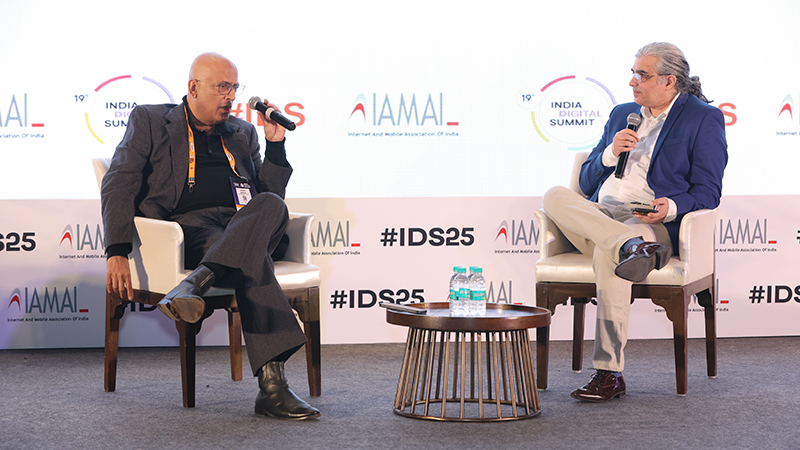
    At the 19 India Digital Summit, Madison Media & OOH at Madison World group CEO Vikram Sakhuja shared his views on how AI is transforming marketing strategies without disrupting its core principles. Spoiler alert: marketing fundamentals are safe, but the methods? They’re getting an AI upgrade!

    Sakhuja made it clear that while AI is rewriting the “how” of marketing, the “why” and “what” remain rooted in human understanding.  “The core principles of marketing will largely remain unchanged. What will evolve and transform are the methods of marketing,” he said during a thought-provoking session hosted by India Today Group consumer revenue group CMO & COO, Vivek Malhotra.

    Malhotra posed the billion-dollar question: Can publishers leverage AI-driven algorithms to help the ad industry scale to $1 trillion? Sakhuja’s reply was simple: AI’s learning thrives on data. “You can’t just write an algorithm; it’s the data fed into the system that enables learning and improvement over time,” he noted, adding that companies like Google are refining AI engines to optimise media spends through better data.

    Can AI foster human connection? The answer is a surprising yes.

    Are algorithms too mechanical to form meaningful consumer bonds? Not according to Sakhuja.  “AI can create a deep connection. For instance, when Meta launches a trailer, the number of shares it gets is a real-time pulse check,” he explained. AI helps broadcasters and advertisers bypass traditional targeting and focus on consumers who actually engage.

    And the examples don’t stop there. Think about Cadbury’s Diwali campaign, where Shah Rukh Khan’s virtual presence personalised messages for neighbourhood stores. That’s AI delivering local charm on a national scale.

    Sakhuja dismissed the notion that AI is the sole domain of new-age brands. “Of course, legacy brands can embrace AI,” he said. He highlighted how even routine tasks like food delivery via Swiggy or Zomato rely on AI, demonstrating its seamless integration into daily life.

    The takeaway? Age doesn’t matter if you’re willing to innovate.

    But wait, what about data validation? With great data comes great responsibility.
    Sakhuja cautioned about the dangers of bad data—what he called the “garbage in, garbage out” problem. Feeding unvalidated data into AI can lead to “hallucinations” (no, not the psychedelic kind) where outputs are wildly off-mark.

    The solution? “Validation checks are crucial to ensure accuracy and prevent biases. The key is balancing AI’s capabilities with human oversight,” Sakhuja advised, adding that ethical use and privacy concerns need to stay top of mind.

    Three ways AI supercharges marketing:

    1    Precision targeting: AI identifies who’s engaging and how, skipping old-school guesswork.

    2    Customised experiences: From localised campaigns to dynamic messaging, AI personalises at scale.

    3    Smart scaling: Brands like Cadbury use AI to connect with millions while keeping it personal.

    Final thought: Will AI replace humans? Not likely. Sakhuja pointed out that AI is a tool, not a replacement. “Human judgment remains critical. Over-reliance on AI could erode the creativity and ethics that define good marketing,” he concluded.

    So how will your brand embrace the AI wave without losing its human touch?