Category: MAM

  • GUEST COLUMN: What can be the anticipated future of the creator economy

    GUEST COLUMN: What can be the anticipated future of the creator economy

    Mumbai: It’s no wonder that the digital media industry has shifted tremendously over the previous decade. This shift in focus has given rise to a new type of media personality: the content creator. Content creators are capturing the attention that was previously reserved for traditional media and as a result, they’re transforming content, consumer behaviors, and – maybe most importantly – consumer purchasing. These developments are spawning a completely new industry: the creative economy.

    From restricted IG and YouTube creators to now boasting over a million creators in the country as a result of the development of short-form video platforms and the simplicity of making content – ‘Content Creator’ is now a proper career that a gen-Z youth can now justify to their parents.

    As of now, creators have relied mainly on marketing campaigns and ad money generated by YouTube views. While this is fantastic, very few people can truly get it right and achieving wider adoption is extremely difficult because brands work with a small number of agencies, who in turn work with a small amount of creators. Technology can help companies and creators communicate more effectively but there is currently no dominant player in this space. Instagram and YouTube, on the other hand, have made pledges to develop toward the Creator economy and it will be fascinating to follow where they land.

    All of this is unfolding so rapidly that it’s vital to stop and think about where it’s all heading. What is the creative economy’s future?

    Affiliate – Affiliate revenue is something that fintech developers have been able to fully realise and reap tremendous rewards from. The next phase is to scale across the board. You don’t have to be linked with a brand to sell it; marketplaces such as Amazon reward referrals and affiliate sales.

    Paid subscriptions – This is really exciting for producers who have a strong connection with their viewers and may provide exclusive material or other advantages to their fans. If a creator can attract even two per cent of their viewers into monthly paid customers, there is a lot of money to be made.

    Creator products – Creators benefit from a focused reach, which, when utilised wisely, may result in the creation of incredibly profitable D2C enterprises. A creator is the one who best knows their audience; they understand the gaps and goals in their life and can help cross these by developing various things. Creators are also adept at creating excitement, something conventional businesses must pay considerably in to guarantee their brand narrative is delivered appropriately – it does become a zero-cost game for the creator. To get this right, producers must create high-quality products, engage in authentic communication, and go all out with their digital content to maximise sales.

    NFTs – With all of the hoopla around NFTs, and even once it corrects and comes down a bit. This will be a really vital tool for creators to involve with communities and possibly allow fans to own stock in them. NFTs will play a significant part in creating incredibly tight-knit communities for creators, as well as opening up a variety of new avenues for commercialisation for creators.

    Branded content – This statistic has climbed steadily over the last five years and shows no indications of decreasing, businesses will soon are becoming more ROI and conversions focused on these efforts. With more and more tech tools to measure real sales for such campaigns on the horizon, this will eventually become similar to ad purchasing with pre-determined KPIs, unlocking value for artists.

    It is reasonable to assume that Indian content producers will lead the very next century in global space. We are only getting started, and the times ahead are incredibly exciting for both artists and viewers. All in all, it is believable that the creator economy has a lot of potential and that more monetisation avenues will open up for creators in the future. So, to all the creators, businesses, customers and brand owners who are working and building in this space be in it for the long haul. Ultimately, investing in relationships and communities can never go wrong.

    (About Author: Vaibhav Pathak is the co-founder of The Girlfriend Box)

  • Lexar on-boards Advent PR as its strategic brand communication partner

    Lexar on-boards Advent PR as its strategic brand communication partner

    Mumbai: The global brand name in flash memory solutions, Lexar has announced the appointment of Advent Public Relations, an award-winning research-based PR Consultancy, as its strategic brand and digital communication partner.

    In its role, Advent PR shall be responsible for formulating and adopting an integrated communication channel route, aimed at enhancing and reinforcing the corporate leadership position in India as well as driving the consumer engagement through digital and influencer marketing, in a phased manner.

    Lexar has been a trusted global brand name in flash memory solutions for over 25 years, with its award-winning line-up of products including memory cards, USB flash drives, card readers, solid-state drives, and DRAM, committed to providing the right solution to fit everyone’s needs. All Lexar product designs undergo extensive testing in their quality labs with more than 1,100 digital devices, to ensure performance, quality, compatibility, and reliability.

    Talking about the development, Lexar’s Director Gaurav Mathur said, “The rising demand for the low-cost storage solution across various applications is emerging as one of the key factors for the growth of flash memory solution industry in India and this is where we see a huge potential for Lexar to grow in the Indian market.”

    “To meet our vision and required goal, it is imperative to on-board an expert consultancy in the field of Tech Communication, who with their expertise could devise and implement the right brand strategy to enhance our presence across print, electronic, online, and social media. Advent PR met our criteria and we are elated to have them on board as our prospective communications partner,” he added.

    Advent Public Relations Director Kheman Kumar said “We are happy to announce as the recognized communications and digital partners for Lexar for the Indian market. Advent Public Relations as an agency is committed to understanding the client’s needs and delivering the best. We look forward to working closely with the brand’s marketing team and designing result-driven strategies for the brand which shall boost & achieve brand objectives.”

  • Philips unveils its latest campaign #TenOnTenYou with Virat Kohli

    Philips unveils its latest campaign #TenOnTenYou with Virat Kohli

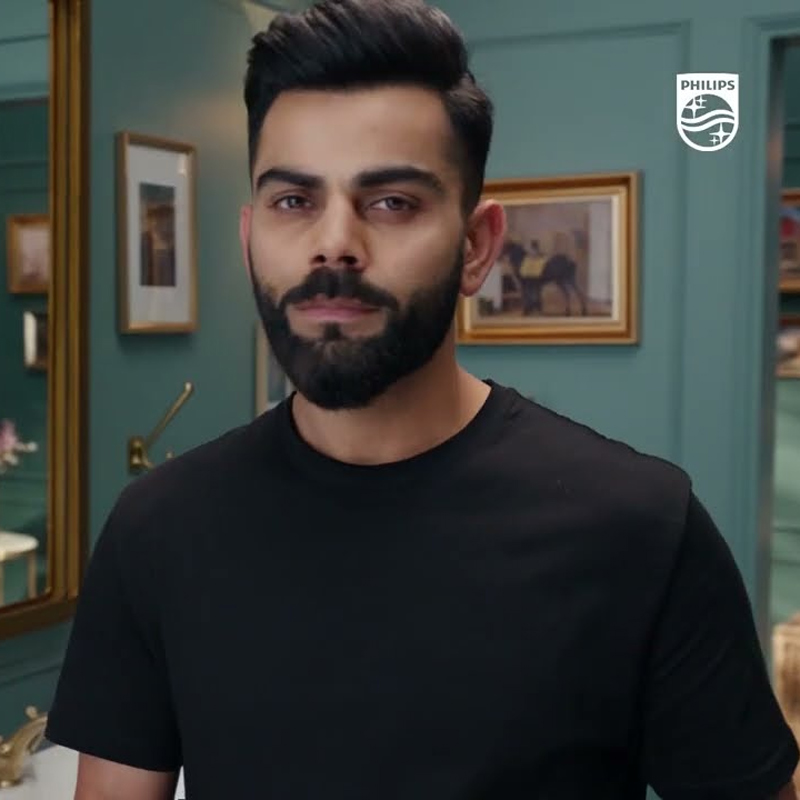
    Mumbai: With the influx of social media and the pressure laid on people to be presentable concerning societal benchmarks, millennials today tackle both physical and mental issues impacting their overall well-being. Keeping this thought in mind, Philips India has launched a new campaign called #TenOnTenYou with brand ambassador Virat Kohli.

    The campaign video created by Philips takes you on a journey through the eyes of Kohli. It captures a day of his life starting from the stadium to his home. The focus of this video is to highlight how people around him are constantly judging him, shown through the analogy of holding up various scorecards.

    The film parallelly puts into focus Philips BT3000’s innovative product offering of Power Adapt Sensor which demonstrates how no matter what happens in life, the only score those matters is the one you give yourself. The vision for this video is to talk about self-importance and confidence that people need to have within themselves, as nothing beyond that matters.

    “In life, we often face the pressure of living up to certain expectations and always are under the radar of being judged by the people around us, leaving little room for self-confidence. Through the latest campaign #TenOnTenYou, we hope to create awareness around how individuals need not adapt to the standards set by society but have a certain level of self-confidence coming from how they perceive themselves,” said Philips Indian subcontinent head of personal health Vidyut Kaul. “This level of self-esteem can only come when they are vocal about their own needs and demands and look for a personalised experience. BT3000 series is Philips’ answer to all these desires of consumers to break free from the shackles of societal pressure. Have a journey for yourself, and an experience just like you wanted, which is exactly what our new product BT3000 offers which adapt to the hair density 125 times a second to give you the perfect trim and enables you to be the best version of yourself that works for you.”

    The campaign breaks with a long-format digital film and extends to OTT (IPL on Hotstar) TV, outdoor, YouTube as well as social media influencer engagement.

  • There is a growing awareness of Metaverse and it is the future, reveals Wunderman Thompson Intelligence’s survey

    There is a growing awareness of Metaverse and it is the future, reveals Wunderman Thompson Intelligence’s survey

    Mumbai: There has been an increasing awareness of the metaverse recently. It was revealed in Wunderman Thompson Intelligence’s latest survey ‘New Realities: Into the Metaverse and Beyond’, that 76 per cent of people feel the metaverse will allow authentic self-expression and however, the market is becoming aware of the advantage of it.

    The survey shows brands and agencies a clear direction in a tech field where 74 per cent of people feel metaverse will be the future. The analysis presents a roadmap for adland which expands upon the groundbreaking into the metaverse study.

    Its 2022 metaverse survey ‘New Realities: Into the Metaverse and Beyond’ for which research was fielded in March – from over 3,000 people aged 16-65 in the US, UK and China – shows that awareness of the metaverse has more than doubled in less than a year. While less than a third (32 per cent ) had heard of the term in July 2021, by March 2022 almost three quarters (74 per cent) had heard of the term.

    Although awareness has increased, understanding remains low. The research also finds that there is a lack of clarity around what the term means, with only 15 per cent stating that they know what it is and can explain it to someone else.

    Despite being unable to explain the metaverse, consumers believe that it promises to impact our lives significantly and among those who know what the metaverse is, two-thirds believe it will be life-changing.

    Wunderman Thompson Intelligence’s global director and author of the report Emma Chiu said, “As ever-greater portions of our lives move into the virtual realm, it’s becoming increasingly clear that the metaverse will be instrumental in our collective future, with our follow-up survey uncovering widespread expectation that the metaverse heralds enormous changes to almost all industries.”

    Areas in which consumers are expecting to see innovation include entertainment where 90 per cent of respondents held this belief, followed by advertising and retail. Meanwhile, 85 per cent believe the metaverse will impact the fashion industry and also the world of work.

    With many still assessing the impact of new screen-based habits, alongside the continued blurring of the virtual and physical worlds, the latest, companion report includes fresh data and several other critical insights:

    • Retail brand analysis shows the development of digital and physical shopping alongside one another, sharing case studies including Nike in Roblox, Forever 21’s Shop City and Fred Segal’s Artcade.

    • The finance section of the report outlines the top banks, credit companies and crypto literacy projects along with research into the growth of virtual currencies. The outcome is that these currencies are becoming a significant economic force both for business and for countries as several get involved in experiments with nationally regulated crypto.

    • Health and Wellness shares insights into deepening connections between digital and physical care for bodily and mental health. Explore case studies from Sims to CVS.

    • Food brands have jumped into the metaverse with restaurants and beverage brands leveraging the link between food and social connection. From Coca-Cola’s Indian wedding to the Flyfish member’s only restaurant where NFTs are exchanged as verification, this sector shows real creative flair.

    Wunderman Thompson Global Chief Marketing and Growth Officer Naomi Troni said, “Brands must establish a roadmap for entry into the metaverse. However, there are concerns too around privacy, security, and safety.”

    “So, while our latest findings indicate almost limitless opportunities for brands — enabling them to re-imagine what their products, services and consumer engagement could and should look like – they must also enter this new world carefully,” she added.

  • Sugar Cosmetics doesn’t spend moolah on influencer marketing. : Vineeta Singh

    Sugar Cosmetics doesn’t spend moolah on influencer marketing. : Vineeta Singh

    The 15th edition of Goafest has seen interesting conversations on day one. Sugar Cosmetics co-founder and chief executive officer Vineeta Singh was part of the biggest advertising festival where she spoke about the journey of Sugar Cosmetics, its marketing channels and talked about the popular show The Shark Tank.

    In 2015, Sugar Cosmetics was launched as a digital-first brand, which catered to the needs of Indian women. However, the brand has grown exponentially in the last seven years. Mentioning its growth in the market during day one of the Goafest event, Singh said, “We launched Sugar in 2015 and right now almost 60 per cent of consumers from more than 30,000 offline stores continue to discover us online.”

    The sugar cosmetics brand has witnessed a transition since it started its business in the market. “We saw a transition happen and we knew this would amplify. Now, more than 90 per cent of women consumers are doing digital shopping,” she added. 

    In the initial days, the brand experienced many challenges but being digital-first helped them to establish itself as a strong D2C cosmetics brand. “It seemed so difficult to disrupt the Loreals, P&Gs and Unilevers of the world. But in the last few years, digital has allowed us to compete.”

    On unpaid influencer marketing

    Sugar Cosmetics has a whopping 2.1 million followers on Instagram, and 60,000 subscribers on Youtube. The brand doesn’t spend a single penny on influencer marketing. 

    “Consumers have become so smart now and they can easily figure out the fake and paid influencer marketing tactics hence it’s not useful to spend on influencer marketing,” she said. 

    “We don’t spend on influencer marketing at all, still it is one of the strongest marketing tools for us. We have more than one-thousand influencers associated with us but they are all with us without any fee. They’re the real users of our customers. They promote our brand and in return, we feature them on our platform,” she explained. 

    The brand is too young for performance marketing 

    Sugar cosmetics has experimented with performance marketing but the approach didn’t work well for the brand. Sharing the reason behind it, Singh said, “I do feel that just spending as a young brand on performance marketing is not great for brand building.” 

    Explaining it further, she added, “At the end of the day, you know, the relationship that you have with the consumer, which you get through performance marketing is very transactional.” 

    She added that the brands are built on deep emotional relationships. So, you need to go beyond the transaction, which is why we feel that the best investment is to woo consumers with a great product, communication, design and packaging. 

    On being asked, how do they manage to hit that sweet spot between being a premium or affordable product? She reveals that the cosmetic brand does a lot of benchmarking. She added, “Our whole idea is that world-class quality at an affordable price will always be like 40-50 per cent more premium than the largest brands.”

    “Despite the price range, we always ensure that when the consumer gets the product in her hand, she feels like she’s getting more than what she paid,” she added.

    “At the same time, we invest heavily in the packaging and the entire brand experience is more about a nicely packaged product. Customers are usually ready to pay a slight premium for the room,” she asserted. 

    On growth in the regional market

    While the Indian middle class is a little hesitant when it comes to spending on cosmetic products, Vineeta revealed that the emerging selfie culture has helped them to get a lot of customers from the regional market. 

    She revealed, “The highest part of our business comes from the Northeastern part of the country, especially West Bengal.”

    “In the west, we have a huge consumer base in Punjab and the south, our major business comes from Telangana, Andhra Pradesh and Odisha,” she added. 

    She shared, “Looking at the demand in the regional market, we try to create a lot of content in the regional languages as well. The whole northern and central belt gets covered with Hindi. So, we don’t have to create specific content for them but we specifically create a lot of Bengali, Tamil and Telugu content and it works great for us.”

    About Shark Tank

    After being a part of Shark Tank, Vineeta’s popularity has overpowered the popularity of Sugar Cosmetics. “But it’s my dream to make Sugar cosmetics more famous,” she noted.

  • Can creativity and consumer protection go hand in hand? Industry experts weigh in at Goafest 2022

    Can creativity and consumer protection go hand in hand? Industry experts weigh in at Goafest 2022

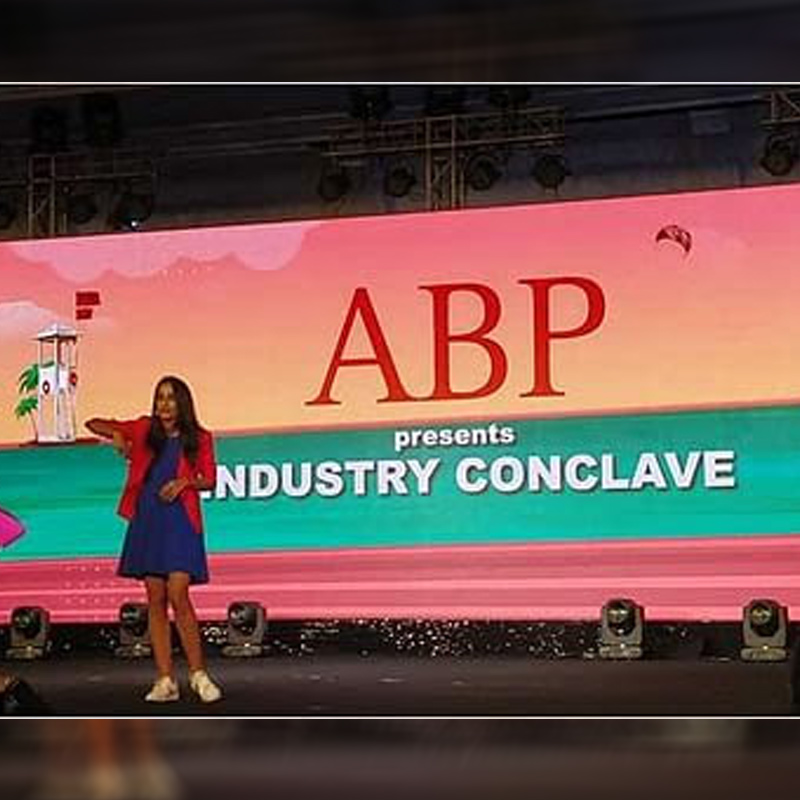
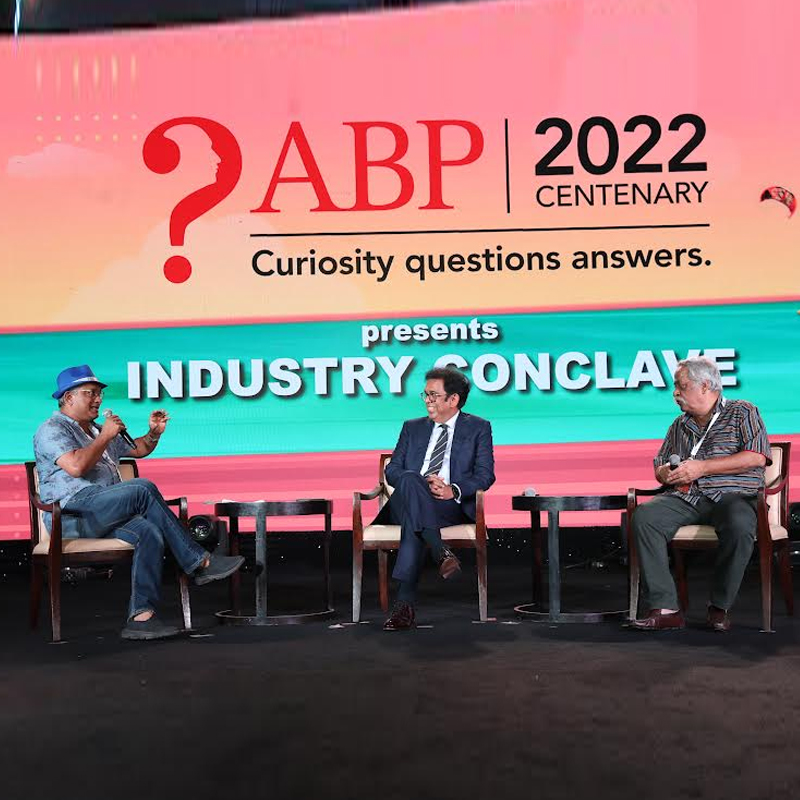
    Mumbai: Goafest 2022 kicked off with a bang after a two-year pause at Goa’s Grand Hyatt Hotel on Thursday, featuring some of the industry’s brightest minds along with the industry awards felicitating notable creative thinkers from South Asia. This year marks the advertising, media and marketing symposium’s 15th edition.

    The day one of the adfest saw an interesting mix of panels and speaker sessions with bristling conversations. There was also a knowledge session in partnership with the Advertising Standards Council of India (ASCI), wherein the ministry of consumer affairs & food distribution secretary (CA) Rohit Kumar Singh spoke with Ogilvy India chairman of global creative Ogilvy and Worldwide and executive chairman Piyush Pandey on consumer safety. The panel discussed the importance of consumer protection and the responsibility that we have as professionals. The session was moderated by ASCI chairman and BBH India CEO Subhash Kamath who asked some pertinent questions regarding brands promoting and marketing misleading information, bait advertising, and those compromising consumer interest.

    “Conceptually, creativity by its very nature doesn’t like boundaries, constantly looking at pushing the envelope and thinking out of the box,” observed Kamath, kicking off the session. “And yet consumer protection does require some responsibilities and boundaries to reign it in. So can creative ideas and consumer safety coexist and go hand in hand?”

    Singh spoke about how the keyword is that creativity is not “misleading ” the consumer and taking him for a ride, adding that the moment it crosses that line “we need to intervene.”

    “Creativity should raise the bar without crushing or at the expense of someone else’s life,” weighed in Pandey. “If you cannot show any piece of communication to your family then you can’t show it to anyone else’s family.”

    “Now, with the CPA 2020 (Consumer Protection Act) in place over the last few years, what are the priorities of the government from the consumer protection perspective, what are the things that you would really keep your eye on.”

    Singh spoke about firstly focusing on brands making tall claims and leading the consumer with false expectations and the second is on bait advertising. We have to impose penalties on such brands who try to fool the vulnerable consumer with misleading claims.

    He explained how in the new paradigm that has emerged in the past few years, there is a mad race for Customer acquisition and valuations, what is getting compromised is probably “consumer interests.” “And that is the only thing of concern for us, whether you are compromising consumer interest?”

    “While there is increased consumer awareness today, there’s also an increased risk of vulnerability with the consumer’s data, because their entire data is now available to marketers,” observed Kamath.

    “When they shop, what they do. The data that comes out is mined and those insights and that mining of those in favor leading to performing targeted marketing so is there something that we need to look at for protection from targeted marketing with data mining as well,” Kamath maintained.

    Singh said that unless a customer has permitted you to use their data, one cannot use that data. “The Data Protection Bill is before the parliament. And that will define the boundaries of what data can be shared, and widely covers all. You cannot share my data without my permission,” he emphasised.

    Singh also called out the taxi aggregators Uber and Ola on their unfair pricing algorithms. “Just last week, I personally issued notices to, I said your algorithms, cancellation charges, and the way you calculate fields are not fair,” adding that here it is literally about taking the consumer for a ride! “If we don’t look out for consumer interests, who will?” he asked.

    Singh also spoke about making the grievance redressal system more robust. The national consumer helpline gets over 4000 calls every day and over the last four years, analytics showed that calls pertaining to e-commerce have grown from eight per cent to 44 per cent. “Now, that means there’s something wrong somewhere in this rat race for customer acquisition. Something is going wrong somewhere,” he asserted.

    Appreciating that the administration was trying to have a dialogue with the rule violators, Piyush Pandey said it is heartening that the government is trying to have a more robust system in place by guiding and cautioning, rather than by ruling with fear. Speaking about creativity in advertising, he said, “Creativity is about touching millions of hearts, sometimes in three seconds. The consumer is not a moron who can get influenced easily.”

  • Anuradha Aggarwal joins Amazon as CMO and director of user growth

    Anuradha Aggarwal joins Amazon as CMO and director of user growth

    Mumbai: Anuradha Agarwal has joined Amazon as CMO and director of user growth, according to her LinkedIn profile update. She was previously associated with Disney Star India as cluster head of kids, infotainment and English channels.

    In a career spanning almost two decades, Aggarwal has experience across FMCG, telecom and broadcast sectors in India and South Asia. Prior to joining Star TV Network, she was associated with Marico as chief marketing officer. She has also had stints at Mondelez International, Vodafone India (Vodafone Idea), and Unilever.

    She is an alumnus of Sri Ram College of Commerce, Delhi University and PGDBM in marketing management from the Indian Institute of Management, Bangalore.

  • DDB Mudra appoints Aniruddha Deb as EVP and head of business – North

    DDB Mudra appoints Aniruddha Deb as EVP and head of business – North

    Mumbai: DDB Mudra Group has appointed Aniruddha Deb as executive vice president and head of business – North.

    In his new role, Aniruddha will lead the integrated business between DDB Mudra and 22feet Tribal Worldwide in the North office. He will report to DDB Mudra Group managing partner – North Ashutosh Sawhney.

    In his 19+ years of brand stewardship experience in advertising and marketing, Aniruddha has worked with global businesses like Unilever, Nestle, Wipro, Samsung, LG, HSBC, Vodafone, KFC, and Subway. He began his career with MullenLowe Lintas Group, where he rose through the ranks to lead Unilever’s detergents, oral care and deodorants business in SE Asia, operating out of Thailand.

    After working with agencies such as Ogilvy, Publicis Groupe and Cheil Worldwide, he took on a marketing role and served as head of marketing at Mobiistar. Here, he launched the Vietnamese smartphone brand in India, both online and retail. His last stint was with Wunderman Thompson as senior vice president & executive business director, where a major part of his role was as the branch head, ADK Fortune, Bangalore.

    “The last two years have accelerated clients’ needs for ‘Through the Line’ consumer-focused marketing,” said Ashutosh Sawhney. “The leaders for this hybrid discipline in our business are rare as they ought to have one foot planted in brand, human insights and strategy and the other in digital, platform-out thinking. Aniruddha’s appointment is in sync with this growing need as he complements both these skill sets with aplomb and has a keen appreciation of what is effective, creative work. We’re excited to see what the future of this hybrid model at the group holds with him on board.”

    “With the changing landscape of creative agencies and an ongoing digital transformation, only a few networks have truly been able to shape themselves as a truly integrated agency in India and DDB Mudra Group is clearly one of them,” said Aniruddha Deb. “What attracts me is the company’s constant endeavour to grow and build great brands through recognisable and effective creative work and the ability and eagerness to provide integrated solutions irrespective of the kind of business they hold. It really excites me to come on board and lead client partnerships across mainline and digital. I hope to play a significant part in the group’s ongoing growth journey.”

  • Twitter unlikely to be free for commercial & government users: Elon Musk

    Twitter unlikely to be free for commercial & government users: Elon Musk

    Twitter is likely to charge costs for commercial or government users, Tesla’s CEO Elon Musk revealed in a recent twitter post.

    He also highlighted that Twitter will always remain free for casual users. “Twitter will always be free for casual users, but maybe a slight cost for commercial/government users,” he said in his tweet.

    In the last week of April, Twitter announced the sale of the company to Tesla for $ 44 billion. Ever since the news of Twitter’s acquisition by Tesla broke out, Tesla CEO Elon Musk has been suggesting a series of changes to Twitter. After finalizing the deal with Twitter, Musk made it very clear that he is planning to enhance the platform with new features.

    “Twitter has tremendous potential – I look forward to working with the company and the community of users to unlock it,” he had said earlier. 

    This is not it, in one of his Tweets, he even advocated free speech over social media and said, “I hope even my worst critics remain on Twitter, because that is what free speech means.”

  • This Mother’s Day, Let us do the “Super-moms” a favour, retire them

    This Mother’s Day, Let us do the “Super-moms” a favour, retire them

    MUMBAI: Brand X “launches heart-warming video dedicated to all ‘Super Moms’” blares an accessories brand campaign…“Celebrating the superstar mothers”, says another. “Dedicated to mothers who like a superwoman…blah blah” reads yet another brand campaign.

    Come Mother’s Day and one is inundated with ads showcasing heroic, self-sacrificing moms multitasking, juggling an over-abundance of chores while managing both the work and home fronts super efficiently, constructing an image of a super-human or a symbol of divinity with multiple pairs of hands. Brand after brand in ad after ad repeats the same tired tropes of a “super mom” effortlessly ‘doing it all’ or role-playing the selfless epitome of virtue and goodness in a bid to keep the domestic machinery well-oiled and running smoothly.

    In a damning indictment of how we treat our women as a nation, a 2011 Nielson Survey found that women in India are the most stressed of all. The study conducted across 21 countries measured stress by asking women questions such as ‘If they often felt pressured for time’, ‘If they rarely had time to relax’, ‘If they felt stressed/ overworked most of the time’. An overwhelming 87 per cent of Indian women signalled that they felt stressed most of the time, and 82 per cent had no time to relax.

    Ten years down the line, a cursory look at our ads and campaigns rolled out ahead of Mother’s Day makes it clear that little has changed in women’s lives, while also presenting a possible indicator of why this may be so.

    Lifestyle & mobile accessories brand KDM has launched a ‘Karo Dil Ki Marzi Mummy with KDM’ video ahead of Mother’s Day, that starts with a young daughter introducing her mother who’s talented but sacrificed her dreams for the sake of her family. The film shows the mom busy dusting, cleaning, cooking and having no time to follow her passion. The key purpose of the campaign is to pay tribute to all the “selfless sacrificing mothers who need to also listen to their heart along with performing their jobs”. The ad, which probably has its heart in the right place, unfortunately, chooses to play to the gallery with all the mommy stereotypes in place.

    A recent LG Dishwasher advert, although not strictly a mother’s day campaign – takes us right back to the 70’s era if not earlier with its brand film and tagline of ‘Love wife, Love LG Dishwasher’. Circa 1982, Prestige pressure cooker ad, anyone? The vintage ad for the Prestige pressure cooker brand had a similar sentiment to sell its brand of pressure cookers- “Jo Biwi se kare pyar, Woh Prestige se kaise kare inkaar”! And from the looks of it, the time has stood still for the LG dishwasher ad!

    Coming back to 2022, LG’s latest depicts a seemingly modern-looking urban couple beginning their marital journey. The film goes on to show the new bride struggling and labouring over a pile of dirty dishes. That is, till her knight-in-shining-armour – the husband, decides to rescue her from the catastrophic fate by gifting her an LG dishwasher. The voiceover in the ad ends with a believe it or not- “Not only take care of your dishes but your wife’s hands too!” slogan, clearly implying that it’s only the woman’s job to keep the soiled dishes ‘spic n span’. If only the brand’s marketing team had some “modern” thinking to go along with the modern features it talks about inbuilt in the machine!

    If you thought this was an aberration to the brand’s dishwasher campaigns, there’s more. In another advert of the same series, the film goes on to nominate the husband as “the best husband in the world” for being gracious enough to gift his wife an LG dishwasher. The ad spot goes on to commission the brand itself as “The true symbol of love and care” for “Keeping your wife’s hands soft and beautiful as ever”! Coming from a multinational conglomerate, and one of the leading names in consumer electronics and home appliances, one would have expected better. But alas..that was not to be.

    A lot has been said about equal parenting, but the truth remains, in one way or the other, women do end up with a larger share of work at the domestic level and such advertisements and brand campaigns further drill into the trope of a woman-managing-it-all perfectly are not helping matters!


    In a slightly refreshing mode, the latest Prega news campaign seeks to break the stereotypical image of a “perfect” mom while acknowledging that a mother can be humanly imperfect and not excel at every role laid out by society. The brand in its latest Mother’s Day campaign depicts a working mother undergoing guilt pangs because she feels she has let her baby down. The film goes on to emphasise the message that mothers need not be perfect all the time and “embraces the imperfection of a mother with the #SheIsImperfectlyPerfect campaign”.

    On the flip side, the pregnancy detection brand’s International Women’s Day 2022 campaign appears to be at odds with its Mothers’ day messaging. It speaks about the same tired trope of celebrating the “boundless spirit of womanhood with its #SheCanCarryBoth” message, where it enunciates “the huge strength of women who do not shy away from any form of responsibility”. Here the brand attempts to examine via the life journeys of four women passing through a railways waiting room, whether being a mom while being “extremely rewarding”, takes a toll on one’s ambitions and dreams? While the concept and intent behind the campaign is to be commended, (as it says, “, it’s time to break free from the nay-sayers of society and bring in confidence to women that #SheCanCarryBoth!”) the ad ends up glossing over the challenges faced by new mothers in trying to single-handedly manage the baby, home and her career, with the daddys, as usual, nowhere in the picture. 

    However, to be fair, the brand has in the past highlighted important issues faced by women through its ads. It even threw light on an important matter such as postpartum depression (PPD) and how new mothers grapple with it, in its 2018 campaign, emphasises how PPD is a harsh reality and how we, as a society, can help mothers deal with it by being understanding and empathetic.

    But sadly, such advertisements are exceptions rather than the rule, and the major part of the ads still depict women and mothers in conformist avatars. This, while adding to the not-so-subtle societal pressure on women, also takes away the culpability of the rest of the household to do their bit in easing the load on a single individual.

    It’s 2022. High time we retired the “super-mom” from our ads? And bring them down from the ‘divine’ super-humanly pedestal we have bestowed upon them only to weigh them down with the crown of our expectations? Let’s keep hoping.