Category: MAM

  • Global ad expenditure to grow 8% in 2022: Zenith’s Report

    Global ad expenditure to grow 8% in 2022: Zenith’s Report

    Mumbai: Global advertising expenditure is expected to grow 8 per cent in 2022, according to Zenith’s latest Advertising Expenditure Forecasts report, which was released on Wednesday. This represents a minor downgrade from a little over 9 per cent growth rate provided by Zenith in December 2021. 

    The Winter Olympics, the mid-term US elections, and the soccer World Cup, which will be held for the first time in the most advertising-intensive period of the year, the run-up to Christmas, will all help to boost growth. Faced with this difficult comparison, the growth will slow down to 5.4 per cent in 2023, before the Summer Olympics and US presidential elections help boost it to 7.6 per cent in 2024.

    Zenith’s forecasts for North America, MENA and Western Europe this year are unchanged at 12 per cent, 7 per cent and 6 per cent growth respectively. Latin America was downgraded slightly from 9 per cent to 8 per cent, but the Asia Pacific was upgraded from 6 per cent to 7 per cent, thanks to a very strong performance from India. 

    Severe disruption in Russia and its closest trading partners after the invasion of Ukraine will lead to a 26 per cent decline in ad spend in Central & Eastern Europe, even though most other markets in the region will continue to grow.

    Ad spend has remained on track despite the macroeconomic headwinds that emerged this year. High inflation, concentrated in essentials like heating, petrol, and food, is forcing consumers to reprioritise their spending, particularly the less well-off, and has led to a drop in consumer confidence. 

    But for now, consumer spending continues to grow, as consumers demonstrate their strong appetite for the travel and entertainment experiences that were denied to them over the pandemic. Business confidence is generally high, corporate investment is rising, and there is little evidence of widespread cost-cutting.

    India to lead growth with 21 per cent expansion this year

    Global ad spend is expected to increase by $58 billion in 2022, rising to $781 billion from $723 billion in 2021. Most of the new ad dollars will come from the US, which is forecast to expand by $33 billion in 2022, driven by continued, rapid digital transformation, accounting for 57 per cent of all the money added to the ad market this year. 

    China, Japan, and the UK come next, supplying 9.1 per cent, 6.2 per cent, and 5.8 per cent of new ad dollars, respectively. India is in fifth place, accounting for 4.6 per cent of the growth in ad spend this year, even though it is only the 12th largest ad market. India will be the fastest-growing market in percentage terms, expanding by 20.8 per cent, driven by election advertising and the resumption of festivals that were cancelled at the height of the pandemic.

    Zenith India chief executive officer Jai Lala said, “India continues to have a robust adex growth on the back of digital and TV. Key categories continue to be led by FMCG and the new app-based clients in the area of fintech, edutech, food tech amongst others.”

    Higher prices in traditional channels accelerate shift to digital alternatives

    The sustained growth in demand from advertisers is pushing up media inflation, particularly in television, where the supply of audiences is falling steadily as viewers switch to alternatives. Price rises vary widely for different audiences in different countries, but the global average cost of television advertising across all audiences is expected to rise by 11 per cent-13 per cent this year. 

    Online video prices are expected to increase by about 7 per cent, although in this case the supply of audiences is rising. Other digital channels where supply is climbing and volumes are flexible are inflating only modestly, with three per cent average price rises forecast for social media and other digital displays. 

    Out-of-home and radio prices will go up about four per cent this year, while print prices will remain stable, because demand for advertising in printed publications is falling as rapidly as readership.

    Brands that simply buy broad audiences to reach targets will not be able to avoid having to spend more to reach the same audiences. But brands that use first-party data to identify their most profitable customers, and combine it with third-party data to target their best prospects in the most efficient channels, will be able to mitigate much of the effect of media inflation. 

    The huge and growing volume of digital content consumption is making it more effective for brands to scale by aggregating digital audiences. Zenith predicts 62 per cent of ad budgets will be spent on digital media in 2022, up from 59 per cent in 2021, and that this proportion will reach 65 per cent in 2024. 

    Zenith Global Chief Strategy Officer Ben Lukawski said, “In a world where trading is becoming dominated by auctions, competitive advantage is achieved not by scale, but by data.”

    “Inflation will hit cheap reach buyers hard, but brands that make smart use of their data will manage costs and grow their business at the same time,” he added.

    Online video overtakes social media as the fastest-growing channel 

    Online video is now predicted to be the fastest-growing channel over the next three years: Zenith forecasts it will grow 15.4 per cent a year on average between 2021 and 2024, driven by the rapid development of connected TV, ad-funded video-on-demand, streaming and other video formats. 

    Connected TV is now a mainstream video platform in the US, with a higher penetration than cable TV, and is becoming established in other markets, especially in Western Europe and Asia Pacific. The introduction of cheaper ad-funded tiers by SVOD services like Netflix and Disney+ will boost growth further by providing new high-quality environments for brand communication. 

    Mixed video-on-demand models that combine subscriptions with advertising will also help online video audiences continue to grow across the world by recruiting consumers unwilling or unable to afford the growing roster of subscription-only services. Zenith expects online video ad spend to rise from $62 billion in 2021 to $95 billion in 2024.

    Online video will overtake social media, the fastest-growing channel for the previous nine years. Social media ad spend (which includes video ads in social media feeds) is still forecast to grow at an average rate of 15.1 per cent a year between 2021 and 2024, propelled by rising competition among platforms that is driving continued innovation on formats and closer integration with commerce. 

    Meta’s share of social media ad spend outside China has been falling steadily since it peaked at 89 per cent in 2019, reaching 85 per cent in 2021 as TikTok, Snapchat, LinkedIn and Pinterest gained market share. Zenith forecasts social media ad spend will rise from $153 billion in 2021 to $187 billion in 2022, when it will account for 25 per cent of expenditure on advertising across all media.

    Cinema and out-of-home will take third and fourth place among the fastest-growing media, averaging 11.9 per cent and 8 per cent annual growth between 2021 and 2024, respectively. 

    These are still recovering from the deep losses they suffered in 2020 and 2021 when cinemas were closed, and consumers were confined indoors. Cinema and out-of-home have a lot of ground to make up, however, and are taking their time to do so. Many brands that were forced to find alternatives, often digital, have found them effective, and see little need to shift their budgets back again. 

    Zenith expects cinema ad spend to reach $3.9 billion in 2024, well below its pre-pandemic level of $4.8 billion in 2019, while out-of-home will reach $45.0 billion in 2024, exceeding the $42.3 billion it achieved in 2019 for the first time.

    Linear television advertising will grow by 1.1 per cent a year on average between 2021 and 2024, from $173.6 billion to $179.2 billion, as price rises continue to compensate for loss of audiences. This ongoing decline in reach and efficiency will drive brands to digital channels, however, including online video. Television’s share of total ad spend is forecast to fall from 24.6 per cent in 2021 to 20.8 per cent in 2024, while online video’s share increases from 8.8 per cent to 11.1 per cent.

    “Online video is growing by creating new opportunities for building brand awareness, complemented by social media’s capacity for cost-effective targeting with low barriers to entry,” said Zenith Head of Forecasting Jonathan Barnard. “Online video is steadily narrowing the spending gap with television, and will be half as large as television by 2024.”

  • Restaurant industry jittery on service charge issue, says neither illegal nor unfair

    Restaurant industry jittery on service charge issue, says neither illegal nor unfair

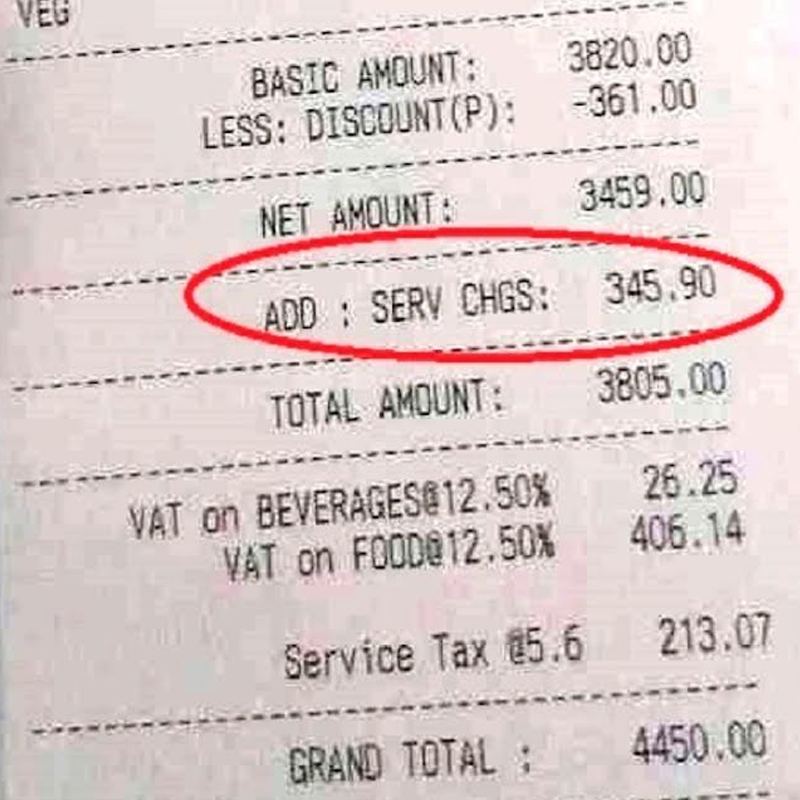
    Mumbai: For quite some time, restaurants, and the government have been at odds over the imposition of service charges. However, the issue has just recently come under the public scanner, with consumer bodies joining the struggle. The ministry of consumer affairs, food and public distribution called the practice “unfair,” and the government said last week that it is mulling a legal framework to prevent restaurants from levying customers a service charge at all. This has landed restaurants and eateries across the board in a soup.

    Following multiple consumer complaints to online consumer helplines and media reports of the same, the consumer affairs ministry adopted a strong stance against restaurants levying service charges without following standard guidelines. A lack of standard guidelines for service costs meant that restaurants charge the amount as per their discretion, ranging from five to 20 per cent of the bill, depending on the service and the restaurant management.

    We asked several restaurant management and eatery owners for their take on the present issue, as the practice is about to become illegal.

    Mumbai-based The Chocolate Spoon company CEO & founder and the National Restaurant Association of India (NRAI), Mumbai Chapter head Rachel Goenka stated, “Firstly, the levying of service charge is neither illegal nor an unfair trade practice as alleged,” adding that this debate in the public domain is creating unnecessary confusion and disruption in restaurant operations.

    Mincing no words while stating her opinion on the ongoing dispute, she continued, “Service charge exists in many industries. Aggregators call it a delivery fee, ticketing platforms call it a convenience fee, and airports levy all sorts of fees and surcharges. Why are restaurants being singled out as usual? We are always a soft target for the government.”

    The government had previously in April 2017 issued guidelines on hotels/restaurants charging a service fee, which said that no restaurants or eateries can charge service tax by default in a bill. However, it was discovered that this rule was broken on multiple occasions. Customers have frequently raised issues about some restaurants levying service charges compulsorily, while others add it as a default without the consent of the consumer.

    The consumer affairs ministry called a meeting on 2 June 2022 with the NRAI and consumer organisations in attendance to discuss growing complaints that consumers are being forced to pay service charges without their express consent, as the issue became increasingly about transparent business practices and consumer rights.

    The Kolkata Consumer Disputes Redressal Commission declared in January that restaurants cannot forcibly impose a service charge on a consumer without their consent, and ordered restaurants to return the service charge they collected from a customer together with a compensation amount.

    Agreeing with the view of the consumer commission, Delhi-based The Biryani House founder and chairman Sarvesh Chaubey acknowledged that restaurants should not impose service charges on customers. “But it can be placed as optional where customers can pay if they like the hospitality of the restaurant.”

    “We at The Biryani House don’t impose service charges on customers but most of the time customers pay additional service charges as a gesture towards our good hospitality,” he added.

    On the contrary, Delhi-based Mama’s Buoi co-founder Gaurav Luthra shared a differing viewpoint. He stated that the F&B (food & beverages) industry has been scarred on account of the financial burden that the multiple waves of Covid have put on all stakeholders, including their staff. “We are trying to overcome the same and offer a stable environment to our employees, and service charge was a means to compensate them beyond salaries. In my opinion, service charge should be imposed as it is a formal and more standardised way of incentivising the staff.”

    “Service charge is a means by which distribution happens in a more organised manner across all the staff members, rather than only front-end staff that shall be eyeing tips offered by guests,” he further added. This thought is echoed by other restaurateurs as well.

    Agreeing with his brother and business partner Gaurav, also Delhi-based Romeo Lane co-founder Saurabh Luthra noted that although service charge is seen as an imposed move by the F&B industry, what the consumer is not aware is that, “The service charge is not for us, the sum is shared by the whole staff – from the cleaners to the servers.”

    “You might end up giving a tip to that one person who served you but the service provided is not a single server thing, the efforts are equally done by the cleaner, kitchen staff and servers. Therefore, service charge is important to boost the confidence of our staff and serve consumers better every day,” he explains.

    Mumbai-based Fable & True Tramm Trunk owner Ankit Anand said, “We want to create a better restaurant culture in India. We are only asking for our staff rights, while in other countries, especially Europe, not just service charge, cover charge is also compulsory at some restaurants.”

    Anand believes that both their employees and consumers are equally essential to them. He added, “We want to make sure they receive the best quality service from our staff. To do that, we need to charge this surcharge on top of our regular prices to cover the cost of improving our products and services.”

    Meanwhile, Delhi’s Delilah’s Cafe co-founder Raghu Raj Tanwar takes the middle ground on the issue. From the standpoint of a restaurateur, he believes that the service charge should be legal, but with some modifications. He noted, “As the service at a cafe and the service at a fine dining restaurant in a five-star hotel is different, the percentage too should differ accordingly,” adding that it would work evenly for hospitality as well as consumers.

    Currently, however, the matter doesn’t appear to be that simple, as the government and industry stakeholders attempt to break the logjam. With a mutual agreement yet to be arrived at by both the parties, for now the restaurant industry awaits the government’s next move with bated breath.

  • Xiaomi India partners with YouTube to provide free trials on eligible devices

    Xiaomi India partners with YouTube to provide free trials on eligible devices

    Mumbai: Xiaomi India announces its partnership with YouTube to offer extended free trials of YouTube Premium to eligible users on select current devices. 

    Eligible customers will receive up to three months of YouTube Premium free of charge, in a move to give users access to the best content ad-free and offline, wherever available. 

    YouTube Premium benefits include a subscription to YouTube Music premium where users can get unlimited, ad-free access to more than 80 million official songs plus live performances, covers, and remixes.

    Commenting on the partnership, Xiaomi chief marketing officer Anuj Sharma said ,”With content consumption on rise with each passing day, we believe that consumers want to experience quality content in an uninterrupted manner. We are happy to partner with YouTube and offer Xiaomi consumers an opportunity to watch their favourite content without any hindrance. We are hopeful that this will be the beginning of a long-standing relationship between YouTube and Xiaomi that will ultimately benefit our users.”

    The eligible consumers can redeem this YouTube Premium offer on eligible Xiaomi and Redmi products starting 6 June 2022 and valid till 31 January 2023. 

  • WhatsApp India supports small businesses to go digital; unveils #SMBSaathi Utsav

    WhatsApp India supports small businesses to go digital; unveils #SMBSaathi Utsav

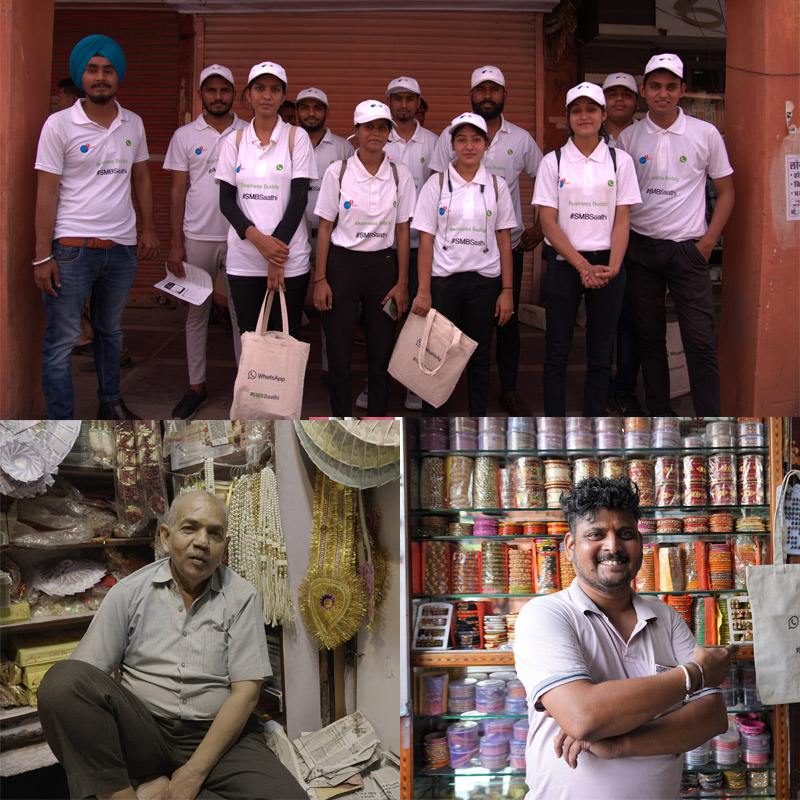
    Mumbai: WhatsApp India on Tuesday unveiled #SMBSaathi Utsav, a programme aimed at supporting small businesses in adopting digital tools like the WhatsApp Business App to conduct their operations. The goal of this programme, which was launched in partnership with Josh Talks, is to educate and assist small businesses in realising their full potential through WhatsApp.

    #SMBSaathi Utsav has kicked off with a pilot in Jaipur’s Johri Bazaar and Bapu Bazaar where 500+ small businesses are being trained on various aspects of running their business online. 

    India is home to approximately 63 million MSMEs (micro, small and medium enterprises) accounting for 30 per cent of the country’s GDP (gross domestic product) and employing over 110 million people at present. During the pandemic, these businesses were severely affected witnessing a 20-50 per cent decline in their overall earnings. One of the major reasons behind this fall was the lack of market access. To help these businesses revive from this downturn, WhatsApp launched the #SMBSaathi initiative earlier this year. The #SMBSaathi Utsav is the second phase of the #SMBSaathi campaign. 

    The initiative showcased inspiring stories of business owners across India who pivoted to digital ways of doing business during the pandemic. For many of these businesses, WhatsApp was their first digital gateway and an easier & more effective alternative to building and maintaining a website. 

    Businesses across sectors such as traditional arts and handicrafts, jewellery, fashion and apparel, food and beverage outlets and several others are being trained on using the various features of the WhatsApp Business App and are being guided on how they can market their product to the right audiences.

    WhatsApp India head Abhijit Bose said, “We are excited to launch the #SMBSaathi and #SMBSaathi Utsav, programmes that are dedicated to India’s small business community. Small businesses are the backbone of our economy and technology has the potential to further boost their business. During the pandemic, we saw several small business owners thriving by using simple platforms such as WhatsApp Business App to stay connected with their customers. A small beauty salon in suburban Mumbai used WhatsApp Business App to keep her regular customers engaged through the lockdown, a dhaba owner in Gurgaon, is directly connecting with his customers using WhatsApp Business App thus driving an overall efficiency in his operations and reaching newer markets. Examples such as these are a testament to the fact that India’s small business owners have the ambition, passion and creativity to leverage simple and reliable technologies. We are committed to finding new ways of increasing awareness about simple digital tools for businesses to support and celebrate the spirit of entrepreneurship and innovation in India.”

    Jaipur’s Rupam Jewellers owner Arvind Sharma said, “I always thought that taking my business online would be a difficult and tedious process. As small business owners, we have earlier focused only on the traditional ways of doing business. However, the pandemic taught us that it is important to innovate and find new ways of running our business on digital platforms as that is where the audience is today. WhatsApp plays a very important role in our everyday communication with our regular customers and now with my business digitally available on the WhatsApp Business App, it will become a lot easier to connect with newer customers and service them quickly.”

  • The Moms Co. onboards Sonam Kapoor as a brand ambassador

    The Moms Co. onboards Sonam Kapoor as a brand ambassador

    Mumbai: Leading toxin-free & natural personal care D2C brand The Moms Co. has roped in soon-to-be mother and actor Sonam A. Kapoor as brand ambassador for its skincare & babycare range. 

    The actress believes in the company’s natural, toxin-free, and highly effective products that don’t compromise either efficacy or safety. With this association, the company will also launch its first-ever television campaign to promote its natural skin care products that come with proof of performance.

    The TV commercial talks about how the products are entirely natural and dermatologically tested, and that 100 per cent of women who used them noticed smoother skin.

    Speaking about her association as a brand ambassador with The Moms Co. Sonam said, “The Moms Co. is a brand that was born out of a mother’s need to find the best products for her baby and is built on the philosophy of creating products that are natural, effective, clinically tested and one that meets global safety standards. I have been using The Moms Co.’s products as part of my daily skincare regime and they have proven extremely effective for me and I look forward to using them for my baby as well.”

    The Moms Co. founder & CEO Malika Sadani said, “Over the past five years, The Moms Co. has become India’s go-to brand for safe and effective products and is trusted by over two million consumers. In this journey, we have found the perfect partner in Sonam A. Kapoor. She is known for her conscious and discerning choices in all aspects of life. The synergy between our brand values and what she represents is remarkable. We are delighted to partner with her to make The Moms Co. reach many more homes.”

    Commenting on this launch, The Good Glamm Group CEO of beauty and FMCG brands business Sukhleen Aneja commented, “The Moms Co. is the first brand The Good Glamm Group acquired, and to see the brand grow and make such bold moves is really exciting. The Moms Co. is one of our most awarded clinically certified brands within our portfolio. It creates clinically proven products encouraging women to love their skin without compromising. With its new campaign, we would like The Moms Co. to become the first brand of choice for mom and baby backed by-products that are gentle yet highly effective.” 

    In October 2021, The Moms Co. was acquired by South Asia’s largest beauty and personal care conglomerate and beauty unicorn The Good Glamm Group with an aim of increasing the company’s Rs 500 crore revenue run rate over the next two years. The acquisition was one of the largest DTC (depository transfer check) transactions to have taken place in India. The partnership between The Good Glamm Group and The Moms Co. developed between the founders on a shared vision of leveraging content-to-commerce as a growth engine.

  • Online shopping scam victims down to 74%: Report

    Online shopping scam victims down to 74%: Report

    Mumbai: The number of online scams and frauds drastically increased during the Covid-19 pandemic. However, a recent report revealed that the percentage of online shopping scam victims has come down to 74 per cent globally compared to 78 per cent in 2020.

    Online retailers came across various fraud schemes in 2021. Among all the fraud schemes, “friendly fraud” scheme was by far the most prevalent. According to Banklesstimes.com analysis, the emergence of e-commerce during the pandemic increased the possibility of fraudulent activities. “About three-quarters of online traders globally have reported a net increase in fraud attempts since 2019,” said the report.

    In a statement, Banlesstimes.com’s Jonathan Merry said, “The number of victims is reducing. The restoration of normalcy after Covid-19 might be a factor. Now, retailers are also cautious, thus making it difficult for fraudsters to pull off their scams.”

    According to the data, the highest number of online fraud activities were recorded in Latin America and Asia-Pacific regions.

    Because of the presence of online fraudsters, the need for online retailers to manage these attacks has never been greater. So far, more than nine out of ten businesses believe that combating E-commerce fraud is essential to their success.

  • InMobi expands partnership with Microsoft Advertising into Southeast Asia, Middle East, and Africa

    InMobi expands partnership with Microsoft Advertising into Southeast Asia, Middle East, and Africa

    MUMBAI: The leading provider of content, marketing, and monetization technologies InMobi on Tuesday announced an expansion of its partnership with Microsoft Advertising to support enterprise and strategic advertisers in southeast Asia, middle east, and Africa. They will offer marketers an integrated solution to power their campaigns built on the search and native display capabilities of Microsoft Advertising and the mobile ad tech capability of InMobi’s advertising platforms.

    InMobi and Microsoft have been in a strategic partnership since July 2018 to help enterprises accelerate their digital transformation by providing them with insights, audience, and engagement platforms for a connected world. The partnership was expanded in 2019 as InMobi added the Microsoft Advertising products and solutions to its offerings in India.

    Speaking of this association, Microsoft Advertising APAC vice president Nick Seckold said, “Over the last two and a half years InMobi has done a wonderful job establishing Microsoft Advertising’s Indian footprint while doubling revenue over the same period. InMobi’s extensive knowledge and expertise of the digital advertising ecosystem in India combined with their trusted client relationships has delivered significant growth despite the effects of the pandemic. InMobi’s successful track record in India has led Microsoft Advertising to extend their coverage across southeast Asia where they will be tasked with building close relationships with advertisers and agencies to grow the business in the region.”

    Microsoft Advertising’s EMEA and LATAM vice president Mark Richardson said, “Microsoft Advertising are thrilled that InMobi will further expand their representation of our full suite of advertising offerings to strategic and enterprise clients in the Middle East, Turkey and Africa as part of our continuation to expand our sales and marketing efforts into this region. Microsoft Advertising offers advertising solutions that reach people across Microsoft properties including Bing, Microsoft News, Edge, and Outlook as well as on partner sites like AOL and Yahoo.”

    As part of the expansion, the Microsoft Advertising business at InMobi general manager Rohit Dosi will take up additional responsibilities for growing the Microsoft Advertising business across southeast Asia, middle east, and African markets and leading the global relationship with Microsoft.

    “The extended partnership between Microsoft Advertising and InMobi will enable marketers to deliver a unified brand experience to customers by bringing together the best of search and native display platforms across both organisations,” he said.

    “We are positioned uniquely to bring Microsoft Advertising to marketers in southeast Asia, middle east, and Africa through our deep appreciation of marketers’ needs, a keen understanding of the markets, and a customer-obsessed team,” Dosi added.

    Talking about the benefits of this partnership, Angara vice president of marketing Ankit Maheswari said “The InMobi team is pivotal to the success that Angara witnesses with Microsoft Advertising. Their proactive approach has time and again enhanced campaign efficiency, driven innovation, and delivered healthy returns for the brand. We are looking forward to replicating this success across multiple geographies and markets and going from strength to strength with InMobi as a partner.”

    On the promise of the expansion, Commerce Pundit digital marketing head Anand Mistry shared, “In the last two years, the partnership with the InMobi team has consistently enabled us to grow business and maximise ROI for our clients on the Microsoft Advertising platform. The strategic inputs and executional excellence from InMobi have not only added value to our client’s business but also deepened Commerce Pundit’s relationship with them. The comprehensive insights shared by the InMobi team on search, shopping and native display have been pivotal in exploring and scaling our business across new locations globally. We are excited to see the partnership reach new heights in the future!”

  • GUEST COLUMN: Marketing in the metaverse – A giant leap for the advertising world

    GUEST COLUMN: Marketing in the metaverse – A giant leap for the advertising world

    Mumbai: The pandemic made digital engagement very mainstream. Nowadays, people are up for exploring the variety of tech innovations available in the virtual space. During the pandemic, they switched from offline engagement to online engagement, whether in the field of shopping, eating, gaming, lifestyle, etc. This switch resulted in wide online social traffic, especially in the immersive gaming experiences through the use of augmented reality (AR) and virtual reality (VR).

    With 4.8 billion active internet users worldwide, the online social sphere is growing to accommodate new kinds of communication, engagement, and entertainment for a tech-savvy generation. A recent concept that has come alive in the online social sphere is metaverse. It is backed by a fully working virtual economy, much based on cryptocurrencies and digital items and assets such as nonfungible tokens (NFTs).

    Metaverse, the internet’s evolution, is emerging as a potential tech innovation in the spheres of marketing and social connection. It encapsulates a set of immersive virtual experiences where people can exist and engage with each other on virtual platforms. It builds rich user engaging virtual spaces using augmented reality (AR), virtual reality (VR), blockchain, and digital media principles. Merging the virtual, physical and augmented reality in real-time, metaverse allows interaction in a virtual 3D environment through avatars.

    The worldwide metaverse market is worth $63.83 billion in 2021 and is expected to be worth $1,527.55 billion by 2029. It implies growth at a CAGR (compound annual growth rate) of 47.6 per cent between 2022-2029. Prodigious companies are eagerly investing in the metaverse market. Therefore the marketing and advertising companies have found their newly developed fondness for the metaverse. And true enough, the newly developed concept projects ample opportunities for tech-savvy entrepreneurs and brands to advertise themselves through it.

    Metaverse creating value in advertisement wold

    Marketing space has continuously evolved in time from radio to television to the internet and now metaverse. The early days of social media saw a rise of social marketing agencies likewise for metaverse, these agencies will have to, urgently, explore virtual and metaverse practices lest new metaverse dedicated companies prop up to better engage customers.

    Marketers constantly seek out customers, whether in person or online, therefore, the expansion of metaverse will undoubtedly be one of the primary future playgrounds for the digital advertising sector. Experiments through influencer marketing are also being undertaken in the metaverse for engaging customers in metacommunities. Virtual reality will revolutionise business and marketing attitudes by serving as a medium for invention, discovery, identification, expression, connection, and socialisation.

    Some companies have already taken a lead. Big brands like Google, Facebook, Microsoft, Puma, Gucci, Nike, etc are making their way into the metaverse. For e.g Nike’s Nikeland, a virtual universe that offers sports venues, digital showrooms where people can dress their avatars, etc. Or M.A.C cosmetics that provide virtual make-up facilities or Fortnite, which introduced in-game concerts for its players. These moves will strengthen their digital foundation more.

    Some apparent benefits make it clear why the companies must explore the metaverse to create value in the advertisement world. Metaverse is believed to have a high engagement rate. Tech-savvy gen-z and millennials who engage in it are the future customers. They spend their significant time on the internet. Companies and brands must step into the world of metaverse to advertise and capture this expansive lot of audience. Furthermore, because it is a novel concept in the market, it is less expensive than standard advertising modes. Therefore, the first-mover advantage will have a cost-benefit for the businesses.

    The data-driven interaction is another benefit. The data collected in the virtual 3D environment will come from real people that are operating as avatars. This data can be analysed and used to forecast or make business scaling strategies both for the online and offline market. Not only tech companies and business industries, but even government entities are keen on investing in the multiverse. Several innovative advertising methods have been explored so far. Use of non-fungible tokens, collectibles, cryptocurrencies, in-game activities, and virtual billboards are some to name.

    Direct to avatar sales values at $54 billion and innovative entrepreneurs are already envisaging the ways for new income streams. From real estate purchases to online AR / VR-based offices to gaming, all is happening in the metaverse. Silicon Valley sees it as the next generation of the internet. Facebook has made a significant investment in its growth. Snapchat has incorporated augmented reality components into its services. Thus, it is bound to become a parallel reality because technological innovation is here to stay.

    Data privacy, security and copyright issues are challenges that will prevail for now, but that must not prevent companies from exploring. Smart advertisers will succeed in any reality if they focus on matching their needs with the needs of their customers to produce useful experiences.

    The author is Wing Communications CEO and founder Shiva Bhavani

  • UAE’s International League T20 to be held in Jan-Feb 2023

    UAE’s International League T20 to be held in Jan-Feb 2023

    Mumbai: Emirates Cricket Board has confirmed that the inaugural ILT20 League will be held between 6 January to 12 February 2023. The new league will be called ‘International League T20 (ILT20)’.

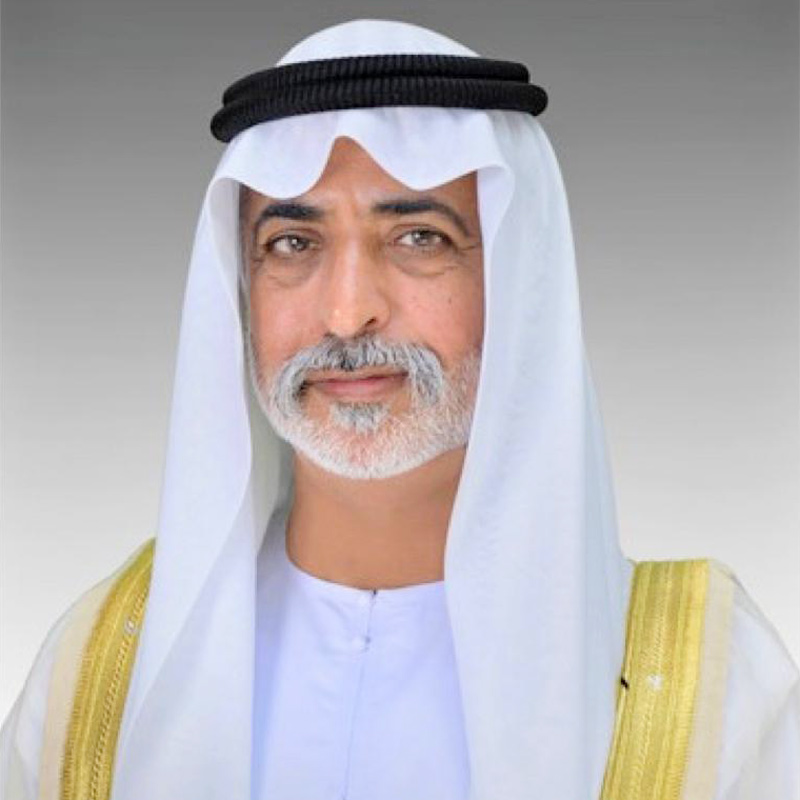
    Minister of Tolerance and Coexistence and Emirates Cricket Board chairman Sheikh Nahayan Mabarak Al Nahayan said, “Emirates Cricket Board is delighted to welcome Reliance Industries, Kolkata Knight Riders, Capri Global, GMR, Lancer Capital, Adani Sportsline, broadcaster ZEE and all other stakeholders to the newly established T20 League of UAE. Such illustrious, experienced names and entities as partners bode well for the UAE T20 League. Through the commitment of these partners, they have demonstrated confidence in the Emirates Cricket Board as we take the game into the future.”

    “As we begin this long journey, I am confident that together we will achieve new heights and in the process provide entertainment and excitement to the millions of fans around the globe who are waiting for the first ball of the UAE T20 League to be bowled. On behalf of the ECB let me assure everyone that whilst being entertained on the field with cricket, you will also be entertained by our traditional UAE hospitality off the field,” he added.

    The six-team franchise-style league will be played over a 34-match schedule at world-renowned, world-class venues in UAE.  

    The tournament will also provide a valuable platform for Emirates Cricket to take developing their local talent to a higher level, where UAE-based players currently integrated into the board’s program, as well as those identified by the high-performance coaching and selection committee teams, will be allowed to train and play alongside some of the world’s best minds of today’s game.

    ILT20 chairman Khalid Al Zarooni said, “Emirates Cricket, and the UAE, has a proven history of identifying and embracing initiatives that underpin the success of the game. It is vitally important that through this tournament UAE-based players continue to flourish which is one of the objectives of this league.”

    He further added, “The ILT20 wishes to thank His Highness Sheikh Nahayan Mabarak Al Nahayan, Chairman of ECB for his unstinting support to UAE cricket which, under his guidance, has been growing from strength to strength. We look forward to introducing to the world a T20 event that will provide unmatched competition and entertainment to the ardent followers of this game.”

    Selection Committee – Emirates Cricket Board chairman Dr Tayeb Kamali said, “The annual ILT20 event presents an excellent exposure for our players given the highly intense and competitive nature of the league. Each of the six teams in the 34-match tournament provides a wonderful opportunity for our young cricketers to play competitive cricket with world-class players.”

    “Further, such a unique international league would play a big role in attracting and nurturing a larger pool of players who will go on to represent the UAE in the years to come. We look forward to the inaugural event and our players taking full advantage of the opportunity,” he said.