Category: MAM

  • Social Panga on boards Indrayudh Mitra & Archana Sudarsan; bolsters creative leadership

    Social Panga on boards Indrayudh Mitra & Archana Sudarsan; bolsters creative leadership

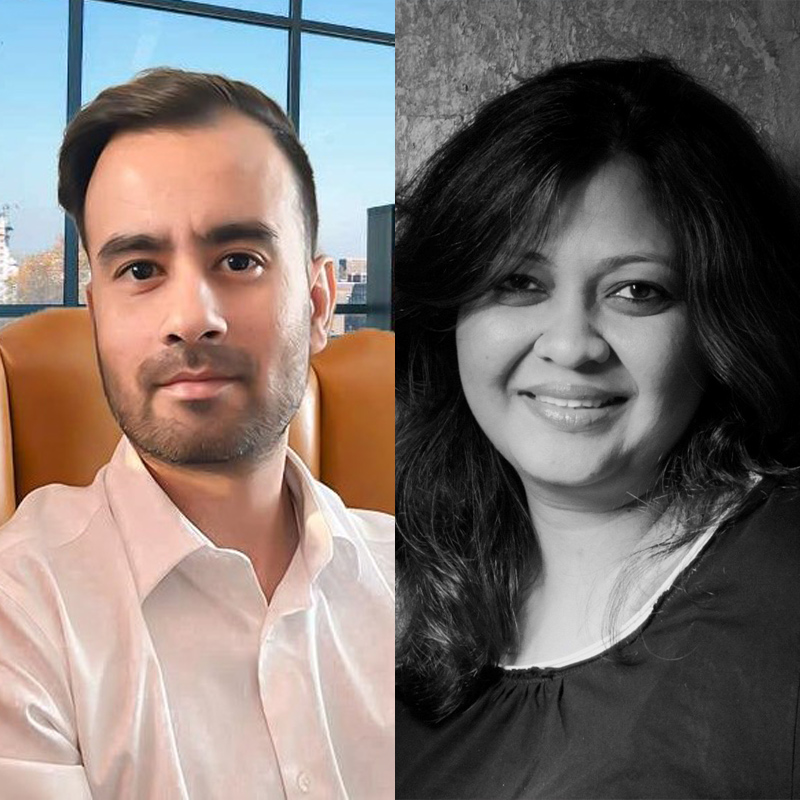
    Mumbai: Integrated digital marketing agency, Social Panga has further strengthened its creative team. The agency, founded by Gaurav Arora and Himanshu Arora, has appointed Indrayudh Mitra as senior creative director & Archana Sudarsan as creative director.

    Mitra comes on board with a vast experience of 15 years in the sector and has worked with agencies such as RK Swamy BBDO, Grey, Ogilvy, and Mudra. He has engaged with brands like Nokia, Vodafone, Marico, Dish TV, etc. In his new role at Social Panga, he will be leading brand engagements with an integrated mandate involving BTL, digital & films too. 

    Sudarsan brings in her experience of about more than 14 years of working with leading brands like Airtel, Honda, Toshiba, Canon, Philips, Medanta, Network 18, Adidas & many more. Prior to joining Social Panga, she worked with agencies like Ogilvy, Taproot Dentsu & few more. At Social Panga she will be leading a creative team to focus upon creative strategy, brand positioning & ad films.

    Commenting on the appointments, Social Panga co-founder Gaurav Arora said, “As we move forward to be a solution-driven, integrated advertising agency, we are excited to have Indra and Archana onboard who will play a crucial role in strengthening our creative team. Their role and contributions will play an integral part in our growth story over the coming years.”

    “We focus upon creative business solutions and how we can positively impact the brand. Digital or BTL is just a channel to reach out to the audience, our core will always remain the creative solutions, he further added.

    On joining Social Panga, Indrayudh Mitra stated, “After spending more than a decade in mainline, I have embarked on an integrated brand journey with Social Panga. I’m sure it will be an enriching and exciting ride.”

    Archana Sudarsan commented, “It’s very exciting to be a part of a set-up like Social Panga. The whole idea of being the solutions people have kept advertising interesting for me and to find myself in a place with the same mindset opens a lot of avenues. What makes my role envious is a great team of enthusiastic and proactive, creative people focused to deliver business results.”

  • Kantar launches FMCG out of home consumer panel in India

    Kantar launches FMCG out of home consumer panel in India

    Mumbai: Marketing data and analytics company Kantar has launched a FMCG panel that tracks out of home purchases in India. The panel has already been up and running across ten countries around the globe before finding its way to India in June 2022.

    This in-depth panel will track and report purchases made for a total of 13 out of home (OOH) categories which include 11 F&B and two QSR categories. Within the QSR categories (pizzas and burgers) not only out of home, but in-home orders/consumption will also be captured.

    The panel will cover 11,000 individuals aged between 15-49 years across both genders, covering NCCS A, B, and C amongst 10L+ population Indian towns.

    The data will be captured in real time at the purchase occasion itself through a 100 per cent self-filling application. Since the consumer will fill the survey live, it will be actual purchases being recorded and not re-called ones. The reporting of the data will however be done at a monthly level to keep it in line with Kantar’s already existing and successful in-home panel. Eventually, the panel will be able to provide a 360-degree view of the consumer purchases- both from an in-home and OOH perspective.

    Important key highlights from the inaugural leg: Firstly, the out of home chocolate market is worth Rs 1.1 billion with more than 40 per cent of the population buying in a quarter. The quantity purchased over a quarter of 370 grams is purchased per person. Secondly, two-third of individuals purchasing salty snacks consumed out of home opt for potato chips and lastly, chocolate and not vanilla is the dominant flavor consumers opt for ice creams, with 25 per cent volumes being contributed for out of home consumption.

    Speaking on this launch, Kantar managing director – Worldpanel division K. Ramakrishnan said “We are very excited at the launch of India’s only robust FMCG OOH panel. This panel will collect consumer data in real time and provide extremely actionable insights to the FMCG companies who operate in India and help them make informed marketing decisions.”

  • Charu Gupta appointed as director of brand & content marketing at Hiver

    Charu Gupta appointed as director of brand & content marketing at Hiver

    Mumbai: Hiver has appointed Charu Gupta as director of brand and content marketing. She has more than 13 years of experience in brand, social and digital media marketing.

    Charu is based in Bengaluru and is an award-winning creative professional, having led engaging social campaigns for brands across various sectors – FMCG, lifestyle, apparel, finance, travel, and food & beverages, amongst others. She spearheaded the Whisper – ‘Touch The Pickle’ campaign, which won several awards including the Cannes Lion for the TVC. She has also created the highly acclaimed “TATA Tea annual property – The Photography Escapade”.

    Prior to Hiver, Charu has worked in leadership roles in organisations like Ola Electric, Chtrbox, Licious and GroupM amongst others.

    Hiver CEO and co-founder Niraj Ranjan Rout says, “It gives us great pleasure to welcome Charu to Hiver. Charu’s role will be to integrate Hiver’s brand messaging across traditional as well as new media communication channels. I have no doubt that with her experience and passion, she is well equipped to take the brand forward in this journey.”

    Charu Gupta said, “I am excited about my role and the opportunities that Hiver provides at such an interesting juncture where they are revolutionising the customer service ecosystem and changing the norms of accessibility. I’m looking forward to working with this exceptional team to grow the company’s brand and its strong base of customers and partners worldwide.”

  • Wunderman Thompson India launches WT Health

    Wunderman Thompson India launches WT Health

    Mumbai: Wunderman Thompson India has announced the launch of its healthcare specialist unit Wunderman Thompson Health (WT Health).

    Wunderman Thompson India’s new specialized practice offers a unique suite of services which will help health and wellness brands connect more meaningfully with consumers and healthcare professionals (HCPs) across all platforms of communication.

    With a multidisciplinary team of more than 100, WT Health has experts across creative, medico legal, compliance and public health; ensuring that technology, creativity and data are drivers of humanizing the healthcare and wellness experience.

    Commenting on the launch, Wunderman Thompson South Asia chief executive officer Shamsuddin Jasani said, “We couldn’t have chosen a better time to launch our specialized practice of Wunderman Thompson Health as the healthcare market is poised for exponential growth owing to an unprecedented demand for robust health and wellness solutions. Health and wellness brands are on the lookout for a partner that understands the specific nuances of healthcare marketing, and we believe we can provide business solutions to brands and can unlock growth by leveraging our core strengths of creative, strategy and martech.”

    Wunderman Thompson India director – business development Srikant Subramanian commented, “Advances in technology make the next chapter in healthcare delivery very exciting. In the ever evolving, and digitally transforming ecosystem, it’s so important to create tailored communication for each audience, and develop optimized ways to engage with them, be it HCPs, patients, MRs, or pharmacies. Our strategic technology partnerships, leveraged using our in-house medical professionals, allows us to provide truly end-to-end omnichannel healthcare delivery.”

    With vast experience across renowned health and wellness brands such as GSK, Zydus Wellness, Sanofi, Unilever, Pfizer, Bayer, Abbott, Mankind, Dr. Reddy’s in several therapy areas such as diabetology, cardiology, pediatrics, Covid care, central nervous system, WT Health will be focused on driving excellence in an evolving healthcare sector and delivering products that are insight driven and innovative to make a positive impact with key stakeholders.

    Wunderman Thompson India senior VP and executive business director Samarth Shrivastava added, “It’s an incredibly exciting time to be working in healthcare. Healthcare has evolved massively in the last 19 months compared to the last 19 years. Current developments have forced the industry to evolve at an unprecedented pace and have dramatically accelerated digital health’s adoption. With its pedigree in strategy and its complete suite of services, Wunderman Thompson Health has a unique offering which will help clients achieve their objectives in these dynamic times.”

  • GUEST COLUMN: How Micro-Influencers become creators for brands

    GUEST COLUMN: How Micro-Influencers become creators for brands

    Mumbai: Until recently, the concept of brand endorsements and the way brands reach their target audience has recreated the social media landscape. A newer concept of influencer marketing has emerged in the era of the creator economy. Considering the explosion of social media and creator tools in the market, the creator economy has grown from $1.7 billion in 2016 to $6.5 billion in 2019 further crossing $9.7 billion in 2020.

    Given the accelerated transformation of the advertising economy to the creator economy, it has become necessary for brands to develop relationships with influential personalities and promote their products and ideas. Creator economy is centered on creators becoming influencers, someone with 10,000 to 1 million followers or micro-influencers with 500 to 10,000 followers. Brands partner with influencers on a smaller scale to generate authenticity in brand promotion instead of focusing on sponsored ads or paying hefty to branded influencers for their stardom.

    Influencers vs Micro-influencers

    Influencer marketing is at its peak. It has gone beyond the brands partnering with people with thousands and millions of followers and promoting their product to their audience. Having said that customers are more likely to purchase from a brand they can connect with. That’s where influencer marketing comes into the picture as an effective tool for word-of-mouth marketing and increasing social media authenticity. Hence, brands pay macro influencers to create and publish content based on their products or sponsor their events, as large-scale outreach programs.

    Micro-influencers, on the contrary, have fewer followers and are extremely valuable for brands looking to increase their awareness within a particular niche. With the surge in the popularity of micro-influencers, younger generations are coming forward with their charismatic appeal and niche expertise, leading the brands to capitalize on the youth marketing techniques. For instance, go-to Gen Z fashion brand – Urbanic created a 150+ community of best-dressed campus students aka creators, who created some fabulous content and engaged in a variety of brand collaborations, drove meet & greets to drive brand sales, digital visibility and grow community size.

    Collaborating with the right influencers

    Influencers are appreciated for their real content. They are considered to be more authentic and community oriented than a brand or a celebrity promoting a product. Known for being more engaging with the TG, the influencers typically get more time to connect with their follower base. This helps in creating a loyal audience for the brand. Instead of having followers with varied interests, demographics or geographics, these influencers tend to be more specialized and niche specific.

    In the fast-paced creator economy, influencer marketing offers several benefits to brands. As social media algorithms continue to change, brands struggle to reach their audience in broader terms. According to the facts – influencers with more than 5,000 followers are usually responsible for 70 per cent of all reach in the influencer landscape. Hence, a smaller follower base of micro-influencers can actually create engagement for the brand by making the content appear right in front of the eyes of the target audience. Furthermore, it becomes more cost-effective to collaborate with micro-influencers as brands can share free product samples or coupons with micro-influencers.

    Strong community building

    Social media connects people on a global level. However, a community is built with like-minded people who have common ideas and thoughts to share. Though micro-influencers do not have instant name recognition, their narrower reach and specific content build a strong community of followers for brand endorsements. Even with a smaller reach, micro-influencers have higher credibility than some high-profile endorsements. This helps brands to create connections with the targeted audience with local interests that can have a huge impact on the brand’s marketing front.

    Brands experiencing growth

    Onboarding the right influencers and empowering them to create real content is always followed by long-term relationships that further depend on the success metrics of the campaign. However, brands still find it challenging to evaluate the results of a micro-influencer marketing campaign. Differentiating between real influencers and people who buy inorganic followers that can offer no guarantee of engagement or success remains the biggest concern of the brands. Those looking to experience growth and engagement need to explore different marketing perspectives and tools such as followers, profiles, quality of comments, profile visits and even previous experience of influencers as brand endorsers to evaluate results. They can prove to be important numbers to quantify success metrics and can work as great ROI predictors for brands as well as micro-influencers.

    The author is Sociowash co-founder Pranav Agarwal

  • Airtel Xstream Fiber’s new film by DDB Mudra aims to solve bandwidth issues

    Airtel Xstream Fiber’s new film by DDB Mudra aims to solve bandwidth issues

    Mumbai: Airtel Xstream Fiber has launched a new campaign to showcase its superior connection and service, which aims to solve bandwidth issues commonly encountered by broadband users. Conceptualised by DDB Mudra, the campaign has been developed to establish the product and its benefits in comparison with regular broadband services.

    Since the pandemic, every household has seen an increase in their internet consumption – for school, work, entertainment and more. However, with all devices connected to the same internet connection, bandwidth and connectivity issues are common. Backed by this insight, the campaign showcases an urban family’s dissatisfying virtual experience caused by a slow internet connection. The film ends as it explains the benefits of an Airtel Xtream Fiber connection.

    The campaign has been amplified on various consumer touchpoints including TV, print, digital, outdoor and cinema.

    DDB Mudra creative head – west Pallavi Chakravarti says, “On-off-on-off is a mantra no one wants to chant, but invariably does when living with poor broadband at home. If everyone in a family is plugged in, something’s got to give. We translated this pain-point into a fun campaign which paved the way for our solution to make a seamless entry and save the day.”

  • Team Pumpkin retains ITC Foods Division’s digital mandate

    Team Pumpkin retains ITC Foods Division’s digital mandate

    Mumbai: Team Pumpkin will continue to work on digital creatives, moment marketing, and tech-enabled social media for ITC Foods Division brands including Bingo Mad Angles, Bingo Tedhe Medhe, Yippee Noodles, Sunfeast Moms Magic, Aashirvaad Svasti Milk and others.

    The agency works extensively with ITC Sixth Sense, which uses digital tools for social listening to observe the key trends, issues, needs, and concerns on people’s minds through social media forums. The Sixth Sense works to optimize the marketing initiatives with a data-led approach. Among notable work, the agency recently helped launch a live social commerce campaign “Jugalbandi”, for its D2C platform ITC e-store, bringing in nearly 20,000 customers to its online event in a two-hour time span, a first for an FMCG company.

    ITC chief digital officer Shuvadip Banerjee said, “We are happy to continue our engagement with Team Pumpkin for our creative and content requirements. Over the last four years, Team Pumpkin has proven to be a valuable partner for us with execution being their strength.”

    Team Pumpkin chief executive officer Ranjeet Kumar said, “We are delighted to continue our partnership with the ITC Food Division as we have the opportunity to add great value to the brand and to the category leading products that the division offers. The collaborative work with ITC’s team led by Shuvadip has been extensive and encouraging. We are gearing up to take the relationship to even greater heights.”

  • Infectious Advertising bags creative mandate of Independence Brewing Company

    Infectious Advertising bags creative mandate of Independence Brewing Company

    Mumbai: Infectious Advertising has won the creative mandate for Independence Brewing Company (IBC). The mandate for Infectious Advertising is to manage brand creative development and brand planning and strategy for all four locations.

    Commenting on the appointment of Infectious Advertising as its creative agency, Brewing Company promoter – independence Anirudh Khanna said, “Choosing the right communication partner wasn’t easy! We were looking for that perfect balance between creativity and digital know-how. Infectious fit the bill perfectly with their experience.”

    Infectious Advertising managing director and co-founder Nisha Singhania said, “We had our 9th-anniversary celebrations at IBC, and fell in love with the place. Both their food and craft beer are brilliant. We are delighted that they have chosen us as their communication partner. Who better than fans to work on your business.”

  • How do the new TDS rules impact influencer marketing in the country?

    How do the new TDS rules impact influencer marketing in the country?

    Mumbai: If you are a social media influencer, then, come July, you will have to take a tax cut on the gifts or freebies received from brands for the sales promotions of their products. The Central Board of Direct Taxes (CBDT) recently announced that gifts, samples and other promotional stuff that is given to a social media influencer will be treated as an “income” for the influencer and will attract TDS (or tax deducted at source). As per the new income tax rules, a 10 per cent TDS will be mandatory on “benefits received in cash or kind in a business or profession.” The new TDS Rules will come into effect from 1 July.

    In recent years, influencer marketing has been growing by leaps and bounds. What was a $1.7 billion industry in 2016 has since grown to become a $9.7 billion industry in 2020. In 2021, it grew to $13.8 billion and this year, the market is projected to expand to a whopping $16.4 billion industry.

    IndianTelevisionDotCom spoke to various stakeholders from the industry to find out how the new tax rules will impact the burgeoning influencer marketing industry in the country.

    While a lot of intricacies in terms of the legalities involved and how exactly it will function need to be figured out, some industry players quantified that the guidelines issued by the CBDT for social media influencers is a step in the right direction that will have a positive impact in the long run. Several believe that it will lead to a more regularised industry in the long run, but that its implementation, perhaps, requires more thought.

    According to Langoor co-founder & CEO Venugopal Ganganna, the new guidelines are an effort at bringing a greater degree of reliability and accountability to the products being promoted since the influencers will now be forced to collaborate only with those products and services they believe in.
    “Today, an influencer’s fee depends wholly on the size of their audience and following. The influencer economy is also largely driven by the promotion of free products. Taxing this freebie forces both the brand and the influencer to be more intentional about their partnership making it a win-win-win not just for the both of them, but also for the end customer,” stated Ganganna.

    TheSmallBigIdea associate director – new business Kruthika Ravindran believes the new guidelines come with its own pros & cons. “There definitely is going to be an inflation in the rates since influencers would look at paid deals with brands where they can recover their money, as compared to barter deals”. However, she adds, this will also lead to the influencers being more credible & accountable for the brands they represent and the products they endorse.

    Pointing out the challenges related to the guidelines’ implementation, Alpha Zegus founder & director Rohit Agarwal said, “The guideline requires people who are benefiting from sales promotions to ‘report’ the same in their tax returns and pay 10 per cent TDS. Problem 1 – How do you ensure that everyone reports every freebie that they have received? .

    He further added, “Many social media influencers are young, and receive products from various brands quite regularly. Some of them don’t even fall under the taxable age, while some don’t have the funds to pay TDS out of their pockets (since the product does not have a liquid monetary value).

    A lot of electronic gadgets (and similar products) have a certain MRP, but are actually sold at a much lower value than the MRP, he said. “Is the influencer expected to pay 10 per cent TDS on the MRP, or on the in-store value? All in all, the move is understandable but comes with a lot of challenges in terms of opportunities and execution.”

    On the new CBDT guidelines for social media influencers, Mirum India joint CEO Hareesh Tibrewala marked that TDS is not a new concept and when payments are made to another person, TDS is deducted and the recipient of the payment can claim a TDS credit while filing his return of income.

    Tibrewala was more scathing in his criticism of the move, however, calling it a “bit of a retrograde measure” listing out three reasons for the same: The revenue that the govt generates will be extremely minimal. Secondly, it is going to increase paperwork for the brand and the influencers. And, lastly, he feels the gifts given to an influencer are not really an income for the influencer.

    “A social influencer is able to promote a product (say a new shampoo launch) or a service (promoting a hotel) only if he is able to ‘experience’ the product or service,” he said. “Hence the product or promotional material that is given to a social influencer is not in lieu of his professional fees for doing the promotion (unlike in the case of saying the medical fraternity where the doctors are given gifts and gratification as a part of compensation for their services).”

    In the realm of influencer marketing, free goodies sent to the influencers indeed generate substantial PR for the brand. But they’re also a little one-sided, with the influencers having less to no say on whether they would be interested in receiving the freebies.

    The new rule, says SoCheers director – digital marketing Rajni Daswani, will allow for a more respectful and understanding relationship to be fostered between the brands and the influencers. “It will now require a two-way conversation when it comes to sending free packages, where both the parties can agree from the very beginning. This will also lead to setting more clear expectations between the two,” she mentioned.

    According to Tonic Worldwide director strategy Ankita Chauhan, as social media and related businesses continue to grow, the changes in the regulations and policies are going to be inevitable. Just like the past regulations of declaration of sponsored content, this too will become a part of the working process between the parties, she believes.

    Last year in June, the Advertising Standards Council of India (ASCI) issued guidelines making it mandatory for influencers to label all kinds of promotional content they post, in order to create a distinction between user-generated content and promotional advertisements. 

    According to Scrollin’ Media co-founder Samridhi Goel, the government sees as much potential in this industry to grow as much as it sees in crypto and hence they are taking steps to generate more revenue from such streams. However, she added, it should phase out in a more structured way so that it does not impact the earnings and businesses of either of the parties involved.

    Socxo CMO Ajit Narayan said that Influencer marketing is an abused channel, where influencers, be it celebrities, macro or micro-influencers are all in the game of leverage. So, if they are a business by itself, should they be exempt from taxes, he asks. “On one side is the monetary remuneration. Which is directly proportional to their fees which already is within the ambit of TDS. And why not, this is income and should be treated so.”

    However, this blanket tax on products is ‘taking it too far’. “It would have been a more thought-through approach if there were limits on freebies,” adding that the most affected will be micro and nano influencers for whom this business might be a side hobby or a corporate program. Not a good move for this segment, he concluded.

    IPLIX Media founding member & head- talent management & client servicing Arpan Soni is in agreement with Narayan, noting, “The new TDS rule will undoubtedly have an impact on the revenue of nano and micro-influencers as most of their associations are barter. However, it will not impact macro influencers to such an extent as they majorly undertake paid collaborations only.”

    The best strategy for aspiring and budding creators will be to charge a nominal fee for the amount they’ll have to pay later on, Soni adds. “While we’ll definitely have to wait and watch to see the real impact it will have, at this juncture, creators, brands, and even agencies are waiting for more clarity.”

    On the other hand, influencer marketing startup ClanConnect co-founder and COO Kunal Kishore Sinha believes that there will be minimal impact on micro and nano influencers, who will continue to work on barter and paid collaborations on a scale that isn’t taxable.

    He stated, “The only big difference, then, will be that brands that currently offer such freebies will minimise making payments in kind and prefer cash transactions. Simply put, this is a positive move and will only lead to the growth and evolution of the influencer marketing ecosystem with no major change in influencer activities and opportunities.”

    He also agrees that the government recognising the influencer marketing space as a mainstream business worthy of regulation is a positive development for the entire industry.

    Gaming talent management agency 8bit Creatives founder and CEO Animesh Agarwal too believes it to be a logical step. “Given that influencers receive the products, in exchange for providing the promotional service, it is income for them, and liable to tax, as per the fundamental principles of income tax. This move is also one of the first few official recognitions of the creator economy by the tax department, which is important for any industry to grow.”

    “The 20K threshold is a welcome exception because it spares smaller creators and numerous modest home brands the hassle. Additionally, this TDS is not applicable in the case of returnable products, which is also logical. All in all, I feel the move is an indication of how bullish the government is on the creator economy, and how far we have come,” he further says.

    Several of the influencers themselves while being sceptical about the impact of the move believe the new guidelines will definitely lead to a drop in barter deals being undertaken, making it slightly difficult for new influencers to enter the market.

    Social media influencer Cherry Mardia shared, “A lot of influencers are lured by corporate freebies like vacations & gadgets. Since there will be a tax on this, both parties now- the brand & the influencer being taxed, both will be equally involved & mindful while promoting it vs an influencer being a passive consumer of a free gift.”

    Content creator, podcaster, entrepreneur, and author Varun Duggirala added that while the idea comes from the right place, the system needs to be thought through. “For any regulation to work the system or process needs to be in line with how these transactions happen in reality, and therein lies the concern with this announcement. The creator space is still largely chaotic and this can very easily add to the chaos rather than help in systematising it.”

    According to another influencer, The Bajis, “Collaborations like this foster the relationship between the creator and the brand and thus, help both of them grow parallelly. Therefore, eradicating them from the picture completely might become an obstacle to the growth of small and medium businesses along with creators.”

    Aaliya Ilyasi, another influencer with a sizeable following, states that the problem arises because the creator now has to pay tax on a good/ service that they are not getting paid for in the first place! “Small-scale influencers and even small businesses start with barter collaborations to build a portfolio and it helps them get recognised by other creators and brands which then leads to more monetary gigs for these influencers and low-cost high return sales for the brands.”

    On the bright side, several of them feel that this also recognises ‘being an influencer’ as ‘an actual job’, and dignifies the hours that they put into content creation as work, which will essentially translate into growth and progress for the industry.
  • Cannes Lions ’22: India’s best ever haul of 47 Lions; Dentsu Creative India bags ‘Agency Of the Year’

    Cannes Lions ’22: India’s best ever haul of 47 Lions; Dentsu Creative India bags ‘Agency Of the Year’

    Mumbai: India concluded its Cannes Lions campaign on a historic high with its best ever haul of 47 metals, which includes five Grand Prix and two Titanium Lions, in another first for the country. Dentsu Creative walked away with ‘Agency Of the Year’ trophy with an unprecedented three Grand Prix wins in a stunning performance by the agency at this year’s International Festival of Creativity.

    It is also the first time that India has bagged five Grand Prix in one year at the annual Fest. The award-winning campaigns are ‘The Unfiltered History Tour’ by Dentsu Creative which clinched three, and ‘The Killer Pack’ by VMLY&R, and ‘The Missing Chapter’ by Leo Burnett, which won one each. 

    India’s first-ever Titanium Lion wins came for Dentsu Creative’s ‘The Unfiltered History Tour’ and Ogilvy’s ‘Shah Rukh Khan – My Ad’ campaigns. 

    A total of sixteen campaigns won at the prestigious fest this year. The top three award-winning campaigns were Dentsu Creative’s ‘The Unfiltered History Tour’ with a total of 12 metals, FCB’s ‘Chatpat’ with eight metals, and Ogilvy’s ‘Shah Rukh Khan – My Ad’ with five metals.  

    India’s previous best at Cannes Lions was in 2017, when it took home 40 metals. 

    Here’s the lowdown on the country’s overall performance at Cannes Level Festival of Creativity 2022:

    The maximum metals were grabbed by FCB including three gold, five silver, and 6 bronze. It was followed by Dentsu Creative with three Grand Prix-haul along with one Gold, four Silver, three Bronze, and one Titanium Lions. On the third spot was VMLY&R + VMLY&R Commerce with seven metals including one Grand Prix, one Gold, four Silver, and one Bronze metal. 

    The most number of Lions came under the Radio & Audio (6), Media (5), and Brand Experience & Activation, Direct, and Radio & Audio (4 each) categories.  

    There were 121 shortlists this year from a total of 921 entries sent.

    Reacting to the agency’s historic performance, Dentsu Creative CEO India Amit Wadhwa said, “Honestly, I am speechless right now, so it is a challenge to find words and new adjectives to express how I feel. To say this is historic almost seems like an understatement. When you start the week with a Grand Prix, then add two more along the week besides a Gold, four Silvers and three Bronze, you feel it’s a dream run. Then you end with a Titanium and it is that ‘top of the world’ feeling. But guess what this is not where it ends, we are ‘The Agency of the Year!!’ 

    He further added, “While we have won what we have, it is also amazing to see all the other agencies from India win big. What a lovely feeling!! We are undeniably proud to be associated with a campaign that takes top honours on a global platform. This indeed fuels the fire of passion and commitment in the team that has relentlessly worked on it. The entire credit goes to each one of them who has been involved, to all our present and ex-colleagues who have worked so hard on the campaign. They are the real winners.”  

    Dentsu Creative group chief creative officer India Ajay Gahlaut added, “Winning the “Agency of the Year” is an emotion I cannot even begin to describe. When I used to watch other agencies win the title I often wondered if I ever would get that same honour. What they say is true. Dreams DO come true! I’m over the moon with the Titanium win along with the hat trick of Grand Prix and a whole lot of other metals. Not just me I think no one in the entire Indian ad industry has been part of such a huge haul of Lions ever before. And I do believe we are the first full-service Indian agency to win the title of “Agency of the Year”. I doff my hat to the entire team responsible for the Unfiltered History Tours. Those who are with us now and those who have moved on. Congratulations all. For now, it’s party time!”

    Ogilvy India, which got India one of the elusive Titanium Lions for  its ‘Shah Rukh Khan – My Ad’ campaign created for Mondelez India also shared its elation. 

    Ogilvy chairman global creative & executive chairman India Piyush Pandey said: “I am delighted that the people’s choice is also the jury’s choice. I am very proud of the team that worked on it.”

    Ogilvy India chief creative officers Sukesh Nayak, Harshad Rajadhyaksha & Kainaz Karmakar said: “This is a piece of work that has found love with the masses in India and we are grateful that the idea has also found love with the hugely accomplished Titanium Jury at Cannes.  This is a salute to our brave Ogilvy Team, Mondelez India Team, Tech partner – Rephrase, Content partner – Pack Films and Media partner – Wavemaker.”

    The work also won the agency a Gold Lion in the Creative Data category, and another Gold Lion and a Bronze Lion in the Direct category as well. 

    Furthermore, the same campaign also won a Silver Lion in the Tech-led Brand Experiences category.