Category: MAM

  • WPP acquires e-commerce agency Corebiz

    WPP acquires e-commerce agency Corebiz

    Mumbai: WPP has announced that it is acquiring Corebiz, a Latin American e-commerce agency specialising in VTEX implementation. It is one of the largest enterprise digital commerce platforms in the region. 

    Founded in 2013, Corebiz employs over 600 people across Latin America, with the majority of its headcount based in its São Paulo and Franca offices in Brazil. The Brazilian operations of the company will join the VMLY&R COMMERCE global network, with further regional outposts of the business coming onboard over the course of the coming year. 

    Corebiz counts companies such as Whirlpool, Casino Group, Walmart, Carrefour, Decathlon and Estée Lauder amongst its clients. It specialises in a range of e-commerce digital solutions covering three key pillars: acquisition, from creating visuals for digital campaigns to driving targeted SEO; conversion, including CRO and full stack development; and loyalty, spanning from CRM system implementation to managing consumer data and running targeted promotional campaigns. As an implementation specialist of VTEX, the agency helps clients reduce time-to-market, reach audiences across multiple channels, and uncover new growth areas in Latin America and beyond.

    WPP said that this acquisition reflects its ongoing investment in strengthening its commerce offer for clients as consumer needs continue to change. It is aligned with WPP’s accelerated growth strategy, building on existing capabilities in the areas of commerce and technology. WPP added that it is ranked as a leader in Forrester’s global Commerce Services Wave, and already manages more than $40 billion of direct and $20 billion of marketplace GMV for clients and employs 13,500 commerce specialists across its agencies.

    WPP in Brazil country manager Stefano Zunino said, “Companies both in Latin America and around the world are looking to grow their e-commerce capabilities, having seen over the last two and a half years the impact that strong digital commerce strategies can have on business growth. Corebiz’s market-leading knowledge of enterprise commerce platforms such as VTEX will further strengthen our commerce expertise. I look forward to welcoming the Corebiz team as we expand our offer to clients here in Brazil and beyond.”

    VMLY&R COMMERCE global CEO Beth Ann Kaminkow said, “Bolstering our creative commerce offering to drive conversion every day for our clients is an essential ingredient to creating connected brands. The team at Corebiz are not only experts in this field, but also share our philosophy for building a thriving company culture alongside business growth. We’re thrilled to get our collaboration underway across our client base.”

    Corebiz founders and co-CEOs Felipe Macedo and Renan Mota said, “Over the last few years, we have actively participated in the acceleration of the ecommerce market in Latin America. Now, our goal is to take this expertise to the rest of the world. This will only be enhanced by joining WPP and the VMLY & R COMMERCE network, and we are excited to strengthen ecommerce enablement for VMLY & R COMMERCE’s global clients.”

  • Spotify leverages Scibids’ AI to boost customer acquisition

    Spotify leverages Scibids’ AI to boost customer acquisition

    Mumbai: Headquartered in Paris, Scibids, which works in the area of artificial intelligence (AI) for digital marketing, recently launched a campaign. This, it said, helped music streaming service Spotify deliver a 30 per cent increase in registrations at a 24 per cent lower cost per registration.

    Spotify leverages programmatic marketing to run customer acquisition campaigns. In order to further turbocharge its marketing ROI, Spotify recently introduced Scibids’ artificial intelligence solutions into its ad tech stack.

    Scibids AI worked with the Google Display and Video 360 team and Spotify’s agency, MatterKind, to create custom algorithms that were specifically engineered to boost Spotify’s customer acquisition. Google’s DSP platform, Display and Video 360, has some of the most advanced tools for advertisers, allowing them to create and push sophisticated algorithms to optimise campaigns. Scibids, as an AI solution customisable to the needs of a brand’s media buying strategies, created algorithms designed specifically to improve Spotify’s cost per registration.

    Scibids managing director- Asia Pacific Rahul Vasudev said, “Scibids is proud to partner with Spotify and MatterKind, who share our vision of smarter optimization enabled by AI. In this case, the challenge on the Google Display & Video 360 platform was to break the glass ceiling of performance and turn exchange-based media buying into a competitive acquisition channel for Spotify. Results like these prove that AI has the ability to dramatically improve marketing ROI by carrying out real-time computations that were previously impossible. The icing on the cake is that the teams can then focus on more value-adding tasks.”

    Spotify head of media, CRM & partnerships Shipra Srivastava said, “We leveraged the power of AI to unlock scale with efficiency by using Scibids AI to add custom insights to Display and Video 360’s bidding mechanism. This proved to be useful in optimising not only the top of the funnel but deeper metrics for us as well.”

    The challenges for digital marketers looking for efficient brand and sales growth have multiplied, and the imminent demise of cookies and other identifiers means that running addressable marketing is actually becoming more difficult. Scibids said that it has built an AI that extracts the most discerning combination of variables for each campaign, enables reach on the open web and creates optimal algorithms to optimise KPIs as DSP campaigns start scaling up.

    Scibids added that it has recently also started operations in India with Samir Karpe as the country manager with teams across Mumbai, Delhi and Bangalore.

  • GoMechanic ropes in Sharman Joshi for its out new digital campaign

    GoMechanic ropes in Sharman Joshi for its out new digital campaign

    Mumbai: GoMechanic has launched a new campaign and roped in Bollywood actor Sharman Joshi as the brand ambassador. The digital marketing campaign #ShaantSharmanShaant is inspired by the everyday anxiety of cars meeting with an accident or being totaled.

    The #ShaantSharmanShaant campaign was conceptualised by GoMechanic’s in-house creative team, with the help of production house Bambai Dreams Entertainment.

    The ad film highlights various value propositions of GoMechanic, primarily convenience and ease of use, further showcasing its transparent pricing and expert services.

    The advertisement begins with Sharman Joshi’s car getting rear-ended and the actor stepping out of the vehicle looking furious. He then asks the person to dance, but the ad film concludes with Sharman dancing with the simpleton and asking him not to stress about these things as it tends to happen all the time. The ad film concludes with the message that GoMechanic offers over 150 expert car services with transparent pricing, thus solving most customers’ anxiety.

    GoMechanic brand strategy head Adhiraj Saksena said, “With our efficient and at-your-door services, GoMechanic has aimed to encourage hassle-free car ownership. However, we recognise and understand how any issue in your car is enough to give you anxiety. Therefore,  we believe that brands today should communicate relevant solutions to consumers while highlighting the challenges in a compelling story. This advertisement was inspired by regular road rage when people get into unnecessary fights. Through this campaign, we hope to spread the idea that anything and everything, including your car, can be fixed, so a sense of camaraderie could foster harmony.”

  • Grapes wins integrated creative mandate for Zee Media

    Grapes wins integrated creative mandate for Zee Media

    Mumbai: News network Zee Media has chosen Grapes as its integrated creative partner. The Delhi office will handle account servicing after a multi-agency pitch resulted in the win.

    The agency will focus on developing integrated communication strategies and creatives for offline and online media, in accordance with the mandate. 

    One of the top Hindi news stations in India, Zee News, as well as other Zee Network realms including ZEE Business, ZEE 24 Ghanta, ZEE 24 Taas, and Zee Digital, which owns websites like Bgr.in, bollywoodlife.com, and India.com, are all included in the mandate.

    Speaking on the development, ZEE Media marketing head Anindya Khare said, “It is our pleasure to associate with Grapes. The agency has a strong foothold in the market. We look forward to reaching our consumers effectively. The decision to choose Grapes to handle our Integrated Creative Duties was decided based on the intensive pitch where the agency outshined given to their compelling, creative, and engaging plan of action. It was completely in sync and united with our strategically devised creative approach.”

    Commenting on the mandate win, Grapes CEO and co-founder Shradha Agarwal said, “It is a proud moment to have a brand like Zee Media as our client. We are quite pleased to have them on onboard. We look forward to building a strong communication base for the network across platforms. We are quite enthralled with the association and will relentlessly help them in building a strong bond with their audience. Considering that Zee Media is one of the largest news networks in India, we strive to amplify its presence and reach amongst the audience with our holistic communication approach that relates to the ethos of the company.”

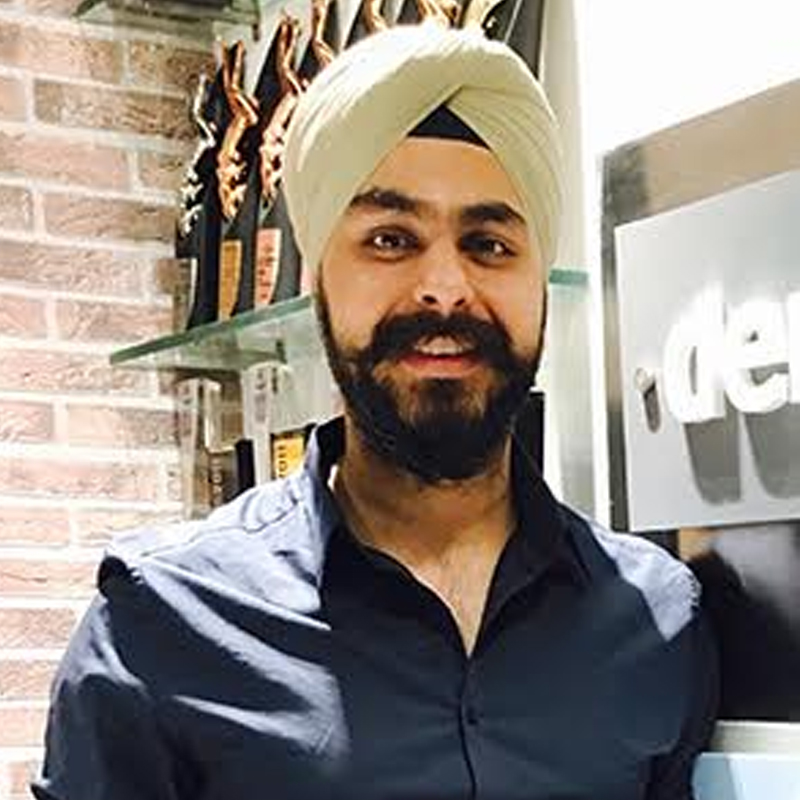
  • Gurjot Shah Singh moves on from Dentsu after 8 years

    Gurjot Shah Singh moves on from Dentsu after 8 years

    MUMBAI: Isobar India’s Gurjot Shah Singh has stepped down from his role as executive vice president- media after an eight-year stint at the network. The development was confirmed by Dentsu to IndianTelevision.com.

    Singh’s next move is not yet known. Having joined the agency in 2014 as account director at iProspect, Singh served a stint of nearly six years at Dentsu Webchutney where he took on the role of executive vice president & national media head. He was elevated to his current role at Isobar India in January this year.

    A multi-dimensional digital marketer, Singh has been instrumental in the success of Dentsu Webchutney having built the media practice ground up at the digital marketing agency in the last few years. He has been a part of over 30 national and international award-winning campaigns in his career of 12 years, having worked on 200 plus brands, including Ather Energy, Honda bikes, Uber, Max life insurance, IndusInd Bank, Whirlpool, Canon, Flipkart, Under Armour, British council, Air India, Sony Pictures, to name a few.

    Recently, the network has witnessed a spate of high profile exits, even the Dentsu Creative Group India centralised its digital media services across all its agencies and capabilities under the Isobar India group.

  • Nexgen Energia appoints Abhinav Govil as head-marketing

    Nexgen Energia appoints Abhinav Govil as head-marketing

    Mumbai: Abhinav Govil has been named head of marketing, performance marketing, brand management, strategic planning through integrated marketing campaigns, for business transformation in the Indian market by Nexgen Energia, a Noida-based alternative fuel energy company with the fastest growing market share.

    Prior to this, Govil served as general manager – marketing & strategy at Approach Advertising & Exhibitors, where he was in charge of planning, implementing, and administering various marketing-related decisions as well as launching product campaigns through focused market research and competitor studies. 

    In June 2022, he joined Nexgen Energia as director of marketing for the company’s energy business division.

    The company said in a statement, “Govil has expertise in marketing & strategy with a vision to invest and expand business functions in diverse fields. He worked across geographies in India with cross functional experience of over a decade in core areas of brand & marketing management.”

  • How are inflation-hit FMCG players protecting their bottom lines?

    How are inflation-hit FMCG players protecting their bottom lines?

    Mumbai: The domestic fast-moving consumer goods (FMCG) industry has been feeling the impact of unprecedented inflation for several quarters now. The unexpected rise in commodity prices, whether in food, chemicals, or packaging, combined with the spike in fuel prices, exacerbated by increased logistics and shipping costs, is putting pressure on FMCG companies, including packaged food companies, while also reducing the share of buyer income available for spending on consumer staples. As the market continues to witness an incremental increase in inflation, it’s not only the consumers who are feeling the pinch, but also the manufacturers, leading to a downgrading of sales across urban and rural areas.

    With no respite in near sight, how are the FMCG players dealing with the situation? How are brands resorting to innovative ways to mitigate the rise in input costs and deal with the soaring inflation?

    Most of the FMCG companies have increased prices of the products, says Kantar South Asia Insights Division managing director Soumya Mohanty. “So, it’s actually the end consumer who is feeling the pinch most. As a result, they are rationalising spends.”

    Findings from the latest Kantar Global Issues Barometer report indicates for 74 per cent of Indians, the increasing cost of living and other issues of concern are having an impact on their big life plans. “Customers are however unwilling to cut their spending on essentials, it’s the large ticket high value items which are most likely to bear the brunt most,” notes Mohanty. “We expect brands to optimise their portfolio to rationalise the cost of production and pass on the benefit to consumers.”

    Inflation’s impact can’t be “dealt with,” says White Rivers Media co-founder and CEO Shrenik Gandhi. This is why industry leaders are implementing changes that they hope will mitigate the said impact, he adds, pointing out some cost-saving initiatives that major FMCG players have begun implementing.

    Can “shrinkflation” be a solution?

    Among these methods is “shrinkflation,” which has been adopted by several major manufacturers, including Hindustan Unilever, Nestle, Dabur, P&G, Coca-Cola, and Pepsico. According to news reports, Haldiram has cut down the size of its aloo bhujia packet to 42 gm from 55 gm.
    HUL, Nestlé, Dabur, Marico, ITC, and Britannia have rolled out price increases of between 5 per cent and 20 per cent since October last year. Dabur India has introduced a mix of pricing actions and cost-control measures, even as companies across the board are using recycled aluminium for cans, cutting costs on advertising and marketing spends, and postponing new launches.

    According to Gandhi, some innovative ways FMCG brands are mitigating the rise in input costs and dealing with the soaring inflation are by investing in technology and digital initiatives to increase efficiency, introducing “bridge packs” as a strategy that gives slightly more grammage than the lower-priced pack while charging the customer higher, and by resorting to economical packaging and recycled products.

    “The Edelweiss report points out that FMCG companies are integrating systems across suppliers, inventory management, and distributor management, which were previously distinct systems in silos,” he noted. “Digital initiatives are being implemented across the board, from supplier onboarding and management to inventory management, distributor management to sales. Even if technology does not directly impact the end product, it will certainly play an increasingly important role in ensuring that it reaches customers faster and generates greater cost savings for these companies.”

    Increasing the price is not always an answer

    For FMCG and packaged food products, India has always been a very price-sensitive market, and the market volumes were at the lower end of the market, catering to the masses. In the Indian FMCG industry, smaller, single-use SKUs at price points of one rupee, two rupees, five rupees, and ten rupees are important.
    Hence, consumer companies are finding ways to increase prices without disturbing the grammage in the sensitive segments, priced less than Rs 10, and also protect margins at the same time. For fear of undermining demand in this category, they are considering launching ‘bridge packs’ at a higher price.

    Some manufacturers are using thinner packaging to counter runaway costs in commodities, packaging, and freight. Parle Products is looking at savings from carton configuration—meaning, it is looking at ways to add more packets of biscuits or snacks per carton. Britannia has said the company is bringing in process automation to raise productivity, reducing the distance to market to reduce cost and provide fresh products to consumers, reducing wastage at the factory and in the marketplace, and moving to a target of using up to 60 per cent of renewable energy.

    Avalon Consulting partner Santosh Sreedhar agrees that increasing prices is easier said than done in India, which is “a highly price-sensitive” market. However, he adds that beyond a point, this becomes inevitable as commodity pressures increase. “For brands that are operating at these price points, it’s a challenge since the product is sold on price. “In the case of one fruit juice company we are in touch with, the sales dropped as much as 40 per cent when the price of their highest-selling SKU was increased from Rs 10 to Rs 12,” he mentioned.

    “In my view, in most products, the opportunity to further reduce pack size is low as the companies have maxed out the potential. So, we may see companies now trying to move up the price point. We have already seen this happen in confectionery and shampoos more than a decade ago when 50p products moved to rupee one. There was a temporary dip in sales for many brands, but eventually, the market settled down at the higher price point,” he added.

    He lists out the following options for FMCG companies if they have to retain margins, apart from increasing prices: reduce pack sizes; change product formulation; reduce packaging/packaging reengineering. Changing product formulation is very much a possibility, but may not be applicable in many product categories, says Sreedhar. “We are not expecting at least the top brands to change the composition, but companies can come up with lower priced variants that help them continue to serve customers at lower price points. Many of the shampoo and chocolate brands have done this in the past where the product in the larger SKUs is different from the ones in the smaller SKUs.”
    According to Pescafresh founder Sangram Sawant, the quality and freshness of the product, remaining non-negotiable factors, do pose a double challenge for the brand to ensure cost optimisation across functions and efficiency. He said, “Just-in-time inventory, reducing shrinkage, maintaining cold chain across the supply chain links, and introducing technology stacks to reduce the supply chain hurdles have helped us offset a few cost increases.” The brand has currently not decided to hike prices. However, if its procurement costs continue to rise, it will “take a call accordingly.”

    The Impact on AdEx?

    Will the current scenario warrant a decrease in Advertising spends by brands, as marketing costs are known to one of the first to take a hit in uncertain times?

    Sawant says that with the introduction of Pescalive, the seafood e-supplier is innovating across the supply chain and marketing functions to control costs. With regards to ad spends, the brand is in the process of building Pescafresh as an overall foodtech brand and will continue to focus on the same for the fiscal, he adds.

    Whenever there is uncertainty, consumers need reassurance, and they fall back to familiar and known options, observes Kantar’s Mohanty. So, it will be key for the brands to stay true to their core purpose and talk to consumers about it. For this to happen, communication is going to be important. So, visibility on different medias- TV, Social media will be important and Ad expenditure is unlikely to get reduced, he believes.

    Bombay Shaving Company COO Deepak Gupta is optimistic on the impact on Adex as well. Marketing spends is a function of number of units sold, contribution margin and marketing effectiveness, he notes. “For premium brands on a growth trajectory, current situation provides a unique opportunity as reduced ad expenditure from incumbent brands is leading to higher SOV (Share of voice), and lower CPMs (cost per mille) without increasing absolute ad spends.”

    “We are increasing our ad spends on key categories with a channel focus to improve TOMA (top-of-mind awareness) and enter into consideration set of prospective buyers. Overall, we expect higher marketing investment from FMCG brands in second half of the year, considering the onset of festive season and easing of inflationary pressures,” he adds.

    While mass FMCG brands are resorting to price increase, volume reduction (or both) and cut in marketing and other discretionary spends, for premium brands the effects have been less pronounced as target consumers for premium grooming products are less price sensitive.

    According to Deepak Gupta, the brand has been able to grow by investing in strengthening brand equity and maintain gross margin by reducing discounts, promotions and other discretionary spends. 

    He takes a more optimistic outlook on the long-term impact of the inflationary trend. “In our view, July-August-September quarter bodes well for FMCG sector as inflation has peaked and festive season is expected to lead to demand revival. Count and intensity of Covid cases have also reduced considerably compared to previous quarters which will lead to incremental growth.” We do not expect any price hike or volume reduction as brands will invest to gain higher share of wallet, Gupta adds.

    New-age integrated sales and distribution SaaS platform FieldAssist CEO Paramdeep Singh Anand that connects CPG businesses to the broader value chain too holds on to a positive stance. “According to a recent report, the inflation rate in India is expected to reach five per cent by March 2023, that is a dip of two percentage points. Recently the government has asked FMCG companies to reduce cooking oil prices. Amidst these developments, it is difficult to say if inflation will rise further.”

    This is to give some respite to the CPG companies who have been dealing with the trilemma of raising prices, cutting margins or cutting corners, he adds. “It is clear that we have reached the saturation point where companies that have been reducing grams without impacting prices cannot do so anymore for having reached the threshold. A similar statement could be said of companies increasing prices. That leaves many with the option of adopting strategic moves to stay in the race.”

    Strategies such as using technology to identify “golden stores”, or the twenty percent stores that sell eighty percent of your products would help in optimising assortment, price, promotions and share of shelf, says Anand. “Another strategy could be optimising advertising costs by targeting new-age platforms to tap audience, for instance gaming sites, or utilising influencer marketing in untraditional ways. This will reduce expenditures and help utilize funds optimally,” he adds.

    Apart from reducing price and volume, FMCG brands are looking at each line of P&L to optimise cost. Reducing advertising spends, increased focus on hero SKUs to get scale advantages, premium product innovation, reducing consumer promos and discount, improving sales mix to deliver higher gross margins, allocating higher spends for more capital efficient channels and top customers etc are some of the additional ways that industry stakeholders cite to mitigate input cost pressures, other than supply side measures.

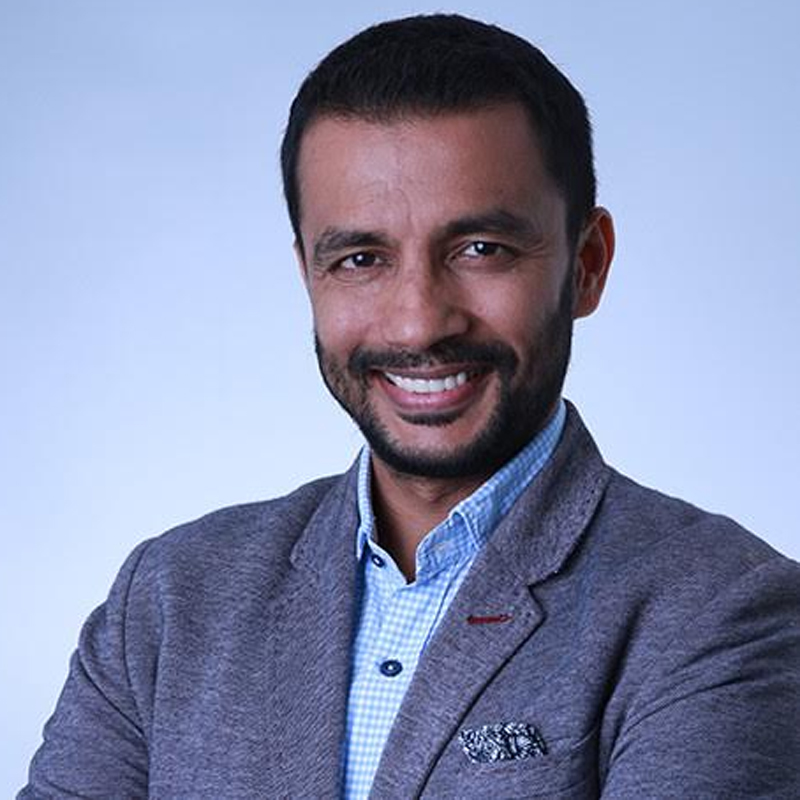
  • Weekend Unwind with: Tanya Swetta CEO & co-founder of Id8 Media solutions

    Weekend Unwind with: Tanya Swetta CEO & co-founder of Id8 Media solutions

    Mumbai : In this week’s edition of informal Q&As with industry execs through IndianTelevision.com’s Weekend Unwind series, we have Id8 Media solutions CEO & co-founder Tanya Swetta sharing her musings and nuggets on work and life.

    With a passion for managing brands and the drive to deliver the best branding experiences in the industry, Tanya chalked id8 media solutions into reality in 2001. The groundwork for going global was laid on the East Coast of the US in 2018. Today, the agency is a full-service integrated marketing solution with a brick-and-mortar office headquartered in Mumbai and the first global office in New York. Having launched their agency in The Big Apple, Tanya also won the Indian Achievers’ Award for CEO of the Year recently. ‘Innovative’ & ‘unflappable’ is how she describes herself, even as she believes that there are no shortcuts to success.

    So here goes…

    A book you are currently reading/plan to read

    I am currently listening to this amazing podcast “The power of your subconscious mind” by Weird Humming Bird on Spotify- it’s life-changing! Another book I just finished was the autobiography of Rafael Nadal. I am looking forward to reading about the life of Elon Musk

    Your fitness mantra, especially during the pandemic

    My fitness mantra has always been – a healthy body is a healthy mind. During the pandemic, especially the lockdown, I decided to put my focus back on yoga and meditation, with a strong focus on building core strength. Usually, my exercise routine consists of a mix of yoga, swimming, walking and meditation

    Your comfort food is

    Always chocolate! (Everything in moderation of course)

    When the chips are down a quote/philosophy that keeps you going

    Remember always: Life has its shares of ups and downs, it’s cyclical and always moving. My mantras are

    1. Consistency is key

    2. Practice makes perfect

    3. There is always a light at the end of the tunnel

    4. Just do it!

    5. What doesn’t kill you makes you stronger

    Your guilty pleasure

    A luxurious completely pampering spa treatment

    When was the last time you tried something new?

    Recently, tried my hand at the sport of skiing, it was exhilarating and amazing

    A life lesson you learnt the hard way

    Never burn bridges

    What gets you excited about life?

    The beauty of our planet earth, accomplishments and achievements, inspirational stories of real-life heroes and so on

    What’s on top of your bucket list?

    A visit to Hawaii

    If you could give one piece of advice to your younger self, what would it be?

    Be wise, do not give out your trade secrets, always know that there is someone right behind you waiting to take your spot, so be bang on always

    One thing you would most like to change about the world

    How we as human beings treat our fellow living creatures and plants

    An activity that keeps you motivated / charged during tough times –

    Listening to and reading inspirational stories, exercising, spending time with my family and my gal pals

    What lifts your spirits when life gets you down?

    My two daughters and my husband- my soul mate

    Your go-to stress buster

    The movie “Zindagi na milegi dobara”

    Your Mantra for life

    Be kind

  • DDB Mudra appoints Manish Darji as head of Art – West

    DDB Mudra appoints Manish Darji as head of Art – West

    Mumbai: DDB Mudra has announced the appointment of Manish Darji as head of Art – West. In his new role, Darji will lead the design mandate for the agency’s west office and will report to DDB Mudra creative head – West Pallavi Chakravarti.

    As part of his mandate, Darji will explore applications of craft in newer categories like digital, data, entertainment, and content. His appointment reinforces the Group’s commitment to craft at a time when visual storytelling is constantly evolving, said the agency in a statement. DDB’s unexpected works philosophy lays a strong emphasis on creating clutter-breaking work that drives results, and craft plays a crucial role in this advanced approach.

    In a career spanning two decades, Darji has worked on some of India’s leading brands like Coca-Cola, NDTV, Big Bazaar, Volkswagen, Marico, Viacom 18, Mondelez. He served as executive creative director and associate creative director at DDB Mudra in the year 2014 and 2010 respectively. He has also worked at BBH, McCann Erickson, Ogilvy, Rediffusion Y&R and Bates 141.

    Speaking on his appointment, Pallavi Chakravarti said, “It is impossible to look at a piece Manish has worked on and not be wowed. His passion for craft and grasp of distinctive visual languages are skills sorely needed in this day and age. We’re delighted to have him on board to further the creative vision for DDB Mudra West.”

    “Bill Bernbach was the first to put art and copy on the same floor, back in the 60s, and that’s been the model for all agencies ever since. With it comes the opportunity to let craft shine as we pursue our promise of unexpected works. I am truly excited to be on this ride,” Manish Darji added.

    An art graduate from MSU Baroda with a specialisation in advertising, digital, graphic design, illustration, product design and animation, Darji’s work has been recognised at some of the biggest creative forums including Cannes Lions, Spikes Asia, One Show, D&AD, LIA, and Kyoorius.

  • R K Swamy launches Amrit Mahotsav Campaign for finance ministry

    R K Swamy launches Amrit Mahotsav Campaign for finance ministry

    Mumbai: The ministry of finance has released a special music video called “Thank You” as part of the “Azadi ka Amrit Mahotsav” celebrations, which mark the 75th anniversary of India’s independence. 

    The song was composed by the duet Salim-Sulaiman and has a star cast of singers in several languages. It was written and conceptualised by R K SWAMY. This music video stands out since it was created as originals in 11 languages and was originally rendered in each language.

    The video is intended to recognise the contributions of everyone involved in the ministry as well as the workers in the banks, insurance, and other financial services sectors to nation-building and the fight against the Covid pandemic.

    R K SWAMY executive creative director Sangeetha N said, “We wanted to break the clutter for these special people who never shut down their service even during Covid, so that the country could cope. We cast for talent in every language, and we have a lineup of the best of them. Remarkably, there was so much enthusiasm for this project from everyone. It shows in the genuine expression of gratitude we could capture both in the song and in the video.”

    Music composer Salim Merchant commented, “This was a super special project for us. It was a privilege and an honour to be able to execute this on behalf of the ministry of finance. It was a special thought. It needed a magical expression. We were fortunate to get such good talent to participate. Hats off to Team R K SWAMY for their conception and management of this project.”