Category: MAM

  • WhatsApp unveils latest campaign ‘Scam Se Bacho’

    WhatsApp unveils latest campaign ‘Scam Se Bacho’

    Mumbai: WhatsApp has launched a user-safety campaign titled “Scam Se Bacho,” which will come to life through a music video. The campaign aims to create awareness and educate users on making safer online payments. It is conceptualised by BBDO India and directed by Indian film director and editor Shimit Amin, known for award-winning films like “Chak De! India.”

    The “Scam Se Bacho” music video is a parody rendition of the popular evergreen song, “Dekh Ke Chalo,” and it delivers the socially relevant message of user safety in a fun and breezy tone.

    The new lyrics demonstrate real-life situations in which individuals could be susceptible to scams and reinforce the message of staying safe and exercising caution while making digital payments. It warns users about scams such as falling for bogus lottery schemes, disclosing your UPI PIN over the phone to a phoney customer service representative, or sending money to a scammer posing as a friend without first verifying their identity.

    The goal of the video is to engage the audience through nostalgia and educate them about digital payment safety in the most comforting and memorable way.

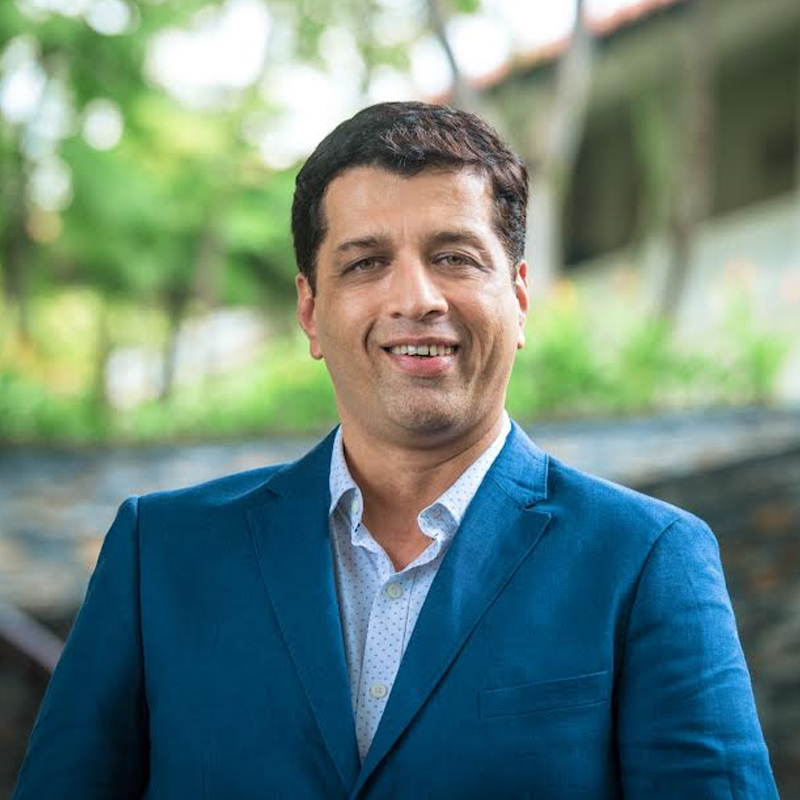
    Talking about the music video, WhatsApp India director-payments Manesh Mahatme  said, “While UPI continues to remain one of the safest, most convenient and interoperable modes of making payments, India’s growing acceptance of online payments has also seen an increase in digital payment fraud. User safety is at the core of everything we do at WhatsApp, and through this exciting and captivating music video, we want to educate and empower our users with all the information they need to safeguard themselves against any fraud while making digital payments. We hope that this initiative by WhatsApp will resonate with people and they can sing their way through safe and secure online payments.”

    Talking about the campaign, Meta India director-marketing Avinash Pant said, “India’s growing acceptance of digital payments has also led to an increase in the need to make people aware of how to keep their payments safe. Through this campaign, which is built on several real-world scenarios that people face in their everyday life, our endeavour is to educate and empower users with all the information they need to safeguard themselves against any fraud while making digital payments. This initiative reinforces Whatsapp’s commitment to the safety of our users while making payments as simple and convenient as sending a message.”

    Commenting on the creative treatment of the music video, BBDO India chair and chief creative officer Josy Paul said, “Our primary goal with this music video was to spread awareness and engage the audience sensitively on this subject. We decided to create entertainment that educates rather than advertisements. Our goal of reworking a fun, nostalgic song like “Dekh ke Chalo” was to use the power of music to convey a strong message that’ll help people relate to the moments that we collectively face in our lives. The song triggers memory structures that allow the audience to more easily receive the message. We hope it will encourage people to be more aware next time.”

    Payments on WhatsApp allow users to send and receive money from their contacts via the unified payment interface (UPI) as easily as sending a WhatsApp message. With user safety at its core, payments on WhatsApp are designed with a strong set of security and privacy principles, including entering a personal UPI PIN for each payment.

  • “ShareChat & Moj are focused on building robust creator economy in India”: Senior director Shashank Shekhar

    “ShareChat & Moj are focused on building robust creator economy in India”: Senior director Shashank Shekhar

    Mumbai: Social media company ShareChat which was founded back in 2015, became a unicorn in April 2021. It has raised several funding rounds over the years, most notably in 2021 as it scales up rapidly. Earlier this year, it raised $255 million from Google, Times Group, and Temasek. It is now valued at $5 billion after this multi-tranche funding round.

    In the first part of the round, ShareChat raised $266 million in December 2021 from Alkeon Capital, Temasek, HarbourVest, Moore Strategic Ventures, and India Quotient. Twitter, Tiger Global, and Snap are among the other investors of ShareChat.

    ShareChat’s parent company is Mohalla Tech. ShareChat, besides its app, also runs short-form video content platforms Moj and TakaTak. It had acquired Takatak from MXMedia earlier this year. The platforms cater to over 400 million users.

    Indiantelevision.com caught up with ShareChat & Moj senior director of content strategy and operations, Shashank Shekhar. Among other things, he shed light on how the company has built diversified monetisation avenues beyond advertising in areas like virtual gifting and video commerce.

    He leads content operations for the organisation and focuses on driving the growth of the user and creator communities across all languages. In his role, he manages the content operations, creator growth and management, feed and product operations, and the overall app experience. Prior to joining ShareChat, Shashank was an entrepreneur. He founded Circle Internet, an Indian language hyperlocal content platform in 2018, and Elegart Solar Technologies, a company focused on offering outdoor solar lighting solutions in 2014. Shashank also briefly worked with Grabhouse as category head-commercial in 2015.

    He is a BTech graduate in Material Science and Engineering from the Indian Institute of Technology, Kanpur. He is fluent in two languages—Hindi and English—and enjoys exploring all content related to social media.

    Edited excerpts:

    On the monetisation strategy for ShareChat

    Shashank: We opened ShareChat to monetisation through advertising in early 2020. We have been building ShareChat’s ad platform for over two years now. We personalise ads using machine learning and AI algorithms as this enables marketers to target their customers more effectively and makes advertisements feel very organic to the consumer. As a result, we can improve revenue yield while keeping customer retention rates high.

    As several brands want to collaborate with us to tap into regional markets with their large-scale campaigns, we are helping micro-influencers monetise their content through native brand endorsements.

    Last year, we launched virtual gifting on ShareChat Live Audio Chatrooms. This year we rolled out video commerce. We are the only platform in India that offers all three avenues of monetisation-brand collaboration, gifting, and commerce-to creators in a consolidated bouquet.

    We also introduced a self-serve advertising platform, ShareChat Self Serve Ads, a few months ago that enables SMBs to create highly targeted multilingual advertisements. So far, it has supported more than 1,500 SMBs in posting highly targeted advertisements on ShareChat.

    On the content creators and remuneration

    Shashank: More than 32 million creators use the ShareChat app, and nearly 50 million creators use Moj. A passion for creating content no longer fuels the creator ecosystem. It’s a lucrative career option, and creators are equipping themselves with the right tools, skills, and technology to stay ahead of the curve. ShareChat and Moj are focused on building a robust creator economy in India.

    To enable creator growth, Moj recently launched the ‘Moj For Creators’ programme to build a path of accelerated growth for talented creators at different stages. With plans to facilitate creator earnings worth Rs 3,500 crore by 2025, we have several revenue sources for creators on the platform—virtual gifting, influencer marketing, and video commerce. These avenues will help creators across India earn a sustained livelihood and pursue a full-time career as content creators, thereby fuelling the creator economy.

    Virtual gifting is among the successful revenue models for monetising the Live Audio Chatroom feature on ShareChat. The feature enables users to send virtual gifts in the form of digital tokens to the hosts or the chatroom creators, making them feel valued. We are one of the largest Indian virtual gifting platforms in the country right now. We have generated more than Rs 390 crore in annualised earnings through virtual gifting on ShareChat and have recently launched it on Moj, witnessing a similar trajectory of growth.

    On the live and video commerce partnership with Flipkart

    Shashank: Our Live and Video Commerce partnership with Flipkart has also been a key development. While enriching the viewing experience on the platform by providing convenient access to products that content creators are showcasing, it also allows creators to share their curated tastes with their community and opens a revenue stream for them. In recent months, Moj has also become a key social commerce platform in the country through its partnership with Flipkart.

    On trends being seen when it comes to user generated content

    Shashank: In the last two years, we have seen the growing popularity of live streaming content across both our platforms. ShareChat Live Audio chatroom has emerged as India’s largest voice-based hangout destination with 12 million+ MAUs. Users from across the country are joining the chatrooms to connect with like-minded people and express themselves. We have seen interesting use cases of our community organising birthday parties, satsangs, sermons, discussing movies, celebs launching songs and products, connecting with astrologers, jamming together through this feature.

    We recently announced the launch of live video streaming on Moj, giving creators from across the country access to create highly engaging content across different creative formats such as live talk shows, live game streaming, jam sessions, stand-up comedy, shayari, cooking, astrology, and much more. Since its beta launch, Moj LIVE is already witnessing one million daily active users watching live content on the platform.

    On the whitespace that exists

    Shashank: Of late, we have witnessed a growing preference for shorter video content from both the creator and viewer perspectives. Most of our user community prefer watching short videos that are less than 30 seconds, and are also inclined towards long format videos that are less than three minutes long.

    Users these days are looking for quick doses of entertainment and infotainment that can be consumed on the go. While comedy and challenges are the most popular content categories, infotainment content, where information is presented innovatively, in a fun manner, has a higher chance of getting more engagement. Moreover, we have seen an increase in interest in lifestyle content categories like food, fashion, beauty, and grooming, and e-gaming content is also getting popular amongst teenagers. 

    On the languages that people prefer for content consumption

    Shashank: By virtue of the large number of creators and users of that language in our country, Hindi content is consumed the most across our platforms. In the southern regions of India, regional languages like Tamil, Telugu, Malayalam, and Kannada take precedence. Other Indian languages are also gaining high traction among our users.

    On the plan to go deeper in terms of language offerings 

    Shashank: Today ShareChat is India’s leading homegrown social media platform that operates in 15 Indian languages, which include Hindi, Marathi, Gujarati, and Punjabi. Kannada, Malayalam, Bengali, Tamil, Telugu, Odia, Assamese, Haryanvi, Bhojpuri, Rajasthani, and Urdu.

    We are already present in the major languages of our country, and the short-term focus is to go deeper within them and deliver an unparalleled social experience for our community.

    On the challenge in scaling up rapidly

    Shashank: The ecosystem of social media and short videos has experienced rapid growth. Users have a wide range of options, and there is fierce competition. Only businesses with a strong retention engine—i.e., those with a high percentage of users who frequently use the app—will succeed in this market. The keys to ensuring users and creators continue to be dedicated to the apps are and will be constant innovation and product enhancement.

    The delivery of a user-specific content stream will largely depend on sophisticated recommendation engines. Most social media businesses are working to tackle the significant problem of hiring AI expertise and developing these networks.

    On the challenge posed by other platforms

    Shashank: With over 650 million Indians on the internet, there is a lot of ground to cover for all. Consumers stick to a particular platform if it is highly personalised to their interests. Both Moj and ShareChat exclusively focus on Indian users and customise the product based on their needs.

    Our goal is to make Moj and ShareChat the top two social media platforms in India. We have observed interaction overlaps between our platforms and US-based global social media platforms. This indicates that ShareChat and Moj are fulfilling certain needs of Indian audiences with their capability to reach out to language-first audiences.

  • Tata Nexarc onboards Kapil Ohri as head of performance marketing

    Tata Nexarc onboards Kapil Ohri as head of performance marketing

    Mumbai: Tata Nexarc on Tuesday announced the appointment of Kapil Ohri as head of performance marketing and customer success. He brings over 15 years of experience in digital media across digital transformation, D2C, media planning, programmatic advertising, and content marketing, working for companies like Mindshare, Ogilvy, Nnnow.com, Afaqs etc.

    Ohri shared about joining his new role at Tata Nexarc via a LinkedIn post. He posted, A “New Start,” After several years in the CPG sector, it’s time to reboot. It’s time for a “New Start” and become part of Tata Business Hub team as Head of Performance Marketing & Customer Success (Engagement Marketing). It’s time for a fresh mission – Enable emerging businesses to grow, solve challenges and optimize processes. And with this change, I have also moved out of Delhi NCR. Namaskara Bengaluru.”

    Link: https://www.linkedin.com/posts/kapilohri_tata-nexarc-newjob-activity-6957542039739617280-TmPF?utm_source=linkedin_share&utm_medium=member_desktop_web

    Prior to joining Tata Nexarc, Ohri was the deputy general manager at Dabur India. He joined the company as head of digital marketing.

    Ohri founded ‘afaqs! Campus,’ a digital marketing education venture that has coached over 2,000 marketing professionals from leading companies and institutes. He is the author of the series of books titled “The Curious Digital Marketer.”

    His LinkedIn profile read, “He has won around 35 awards (including team awards as well) at national and APAC level for digital marketing work for brands.”

    The Top 100 Digital Marketer Awards in India featured Ohri twice. In 2020, he received the Top 100 Smartest Digital Marketer award from ET NOW & World Marketing Congress. He has also won the title of Top 100 Digital Marketer from Paul Writer PluralSight in 2017.

  • Maverick India bags digital & creative mandate for RenewBuy

    Maverick India bags digital & creative mandate for RenewBuy

    Mumbai: The leading insurance aggregator, RenewBuy, has signed Maverick India as its digital and creative partner. The agency will be responsible for managing brand’s engagement, digital and creative solutions.

    As a part of this collaboration, the agency will bring a fresh set of ideas to achieve the brand’s objective of achieving better engagement across their B2B and B2B channels. They will create innovative strategies to position RenewBuy as the most trusted and expert insurance aggregator.

    Commenting on the new collaboration, Maverick India founder & director Om Dev Sharma said, “We are delighted to work for a brand like RenewBuy. It is a great opportunity for us to be associated with such a vast organisation. Having worked with various different clients across varied domains, we understand the unique requirements of the brand. We are looking forward to taking the brand’s presence to new heights and for this association to continue for years to come.”

    RenewBuy quoted, “We are thrilled to partner with Maverick India as our communication partners. With the growing digital world, we plan to connect with our Point of Sale Advisors as well as consumers digitally while still using traditional means. Maverick India’s market reputation, creative inputs and go-getter attitude has ensured us that they are the right partners for us.”

  • ‘coto’ partners with BigBang.Social to nurture entrepreneurial aspirations of women creators

    ‘coto’ partners with BigBang.Social to nurture entrepreneurial aspirations of women creators

    Mumbai: Eve World’s ‘coto’ has partnered with leading influencer marketplace Collective Artists Network’s BigBang.Social (BBS) to offer early access to their strong, incredible base of female creators across genres.

    This association is in line with ‘coto’s’ commitment to enabling meaningful conversations for women creators and social media influencers.

    Both ‘coto’ and BigBang.Social take a step ahead to help nurture the entrepreneurial aspirations of women creators. Creators can offer paid communities, paid content, live commerce, social commerce, and merchandising on the platform.

    Commenting on this association, ‘coto’ founder and CEO Tarun Katial said, “It is our commitment to provide community-driven opportunities to creators worldwide. We are happy to partner with BigBangSocial and take our vision to empower female experts and social media influencers further. We want to build a responsible virtual environment that incentivizes and gives an equal shot at digital value creation and ownership for women worldwide.”

    Collective Artist Network founder and group CEO Vijay Subramaniam added, “BigBang.Social has always functioned at the forefront of exploring new opportunities for creators and providing them with the platform they need to both showcase and monetize their talent, thereby catalysing their growth. I’m glad to have us associated with ‘coto’ and provide a new avenue for women to amplify their voice and meaningfully engage with the right audiences.”

    Priyanka Mohite who plans to build her community OceanToSky@coto commented, “It has always been my life’s mantra to work hard and with passion. ‘coto’ as a women’s-centric platform helps me be myself without any societal pressure. I want to build a community of like-minded people who thrive on doing big things in life. I look forward to OceanToSky@coto, where I want to motivate young girls and women to take up trekking and mountaineering.”

    Priyanka holds the Tenzing Norgay National Adventure Award, 2021 in recognition of her achievements and contribution to land adventure. She is the first Indian woman to climb Mt. Annapurna and the youngest Indian woman to climb Mt. Lhotse.

    Ankita Gain who plans to build her community GetFitWithAnkita@coto said, “In any sphere, it is very important for women today to be recognised. ‘coto’ does just that with a web3 platform designed for women, enabling them to build their own space and be themselves without being judged. As we all know, the fitness industry today is mostly male-dominated, and it is very important to have female representation. As a fitness expert and influencer, I want to educate women and encourage them to adopt a healthy lifestyle with the help of my community, GetFitWithAnkita, on ‘coto’.”

    Ankita Gain, a bodybuilder and fitness trainer, has won the title of Miss India Junior twice, conferred by the Indian Body Building Federation (IBBF).

    BBS has curated over 15,000+ creators across genres such as beauty, fashion, lifestyle, parenting, health, motivation, and finance in their marketplace. ‘coto’ and BBS plan to evangelise the concept of community building for creators and leverage Web3 through learning and interactive sessions.

  • Omnicom Media Group India appointed Anand Chakravarthy as its chief growth officer

    Omnicom Media Group India appointed Anand Chakravarthy as its chief growth officer

    Mumbai: Omnicom Media Group (OMG) India on Tuesday announced the on-boarding of Anand Chakravarthy as its new chief growth officer. Anand is set to use his strategic foresight and over two decades of rich industry experience to create new opportunities for growth and play an instrumental role in shaping OMG India’s future trajectory.

    He will report to Kartik Sharma, Group CEO of OMG India.

    With over 24 years of experience in marketing, advertising, media, and entrepreneurship and having worked with many reputable businesses, all of which witnessed exponential growth under his guidance, Anand has a deep well of knowledge to draw from. Prior to this, he has led many profitable businesses, including during his leadership stints at Essence Global, Wavemaker, and Reliance Broadcast Network.

    Anand’s strength lies in his ability to formulate crucial strategies that help businesses scale up and become sustainable in an extremely competitive market. Across his repertoire of experience, he has worked with global and Indian brands, including several leading D2C brands in India.

    Speaking of his appointment, Omnicom Media Group India CEO Kartik Sharma said, “I am delighted to welcome Anand on board. His extensive knowledge, values-based leadership style, and commitment to delivering results will undoubtedly be a great asset to our business going forward. His work speaks for itself and shows that he has the propensity to lead and help companies capitalise on new growth opportunities in an emerging market.”

    Anand Chakravarthy said, “I am thrilled to be a part of OMG India and get the opportunity to work with Kartik and his leadership team, for whom I have immense respect. OMG is recognised globally for its thought leadership and building future forward capabilities—a critical need in the industry today. Working in this ecosystem with this team and leveraging these capabilities to help brands evolve without any limitations is a fantastic opportunity. I look forward to fully committing to OMG’s vision and pushing the boundaries of innovation and growth.”

  • Global top-50 insights companies witness combined growth of 14% in 2021: ESOMAR Report

    Global top-50 insights companies witness combined growth of 14% in 2021: ESOMAR Report

    Mumbai: Global trade association ESOMAR has released its annual ranking of the Global Top 50 Insights Companies for 2022. The global top-50 companies grew by a combined 14 per cent in 2021, as per the report, after the sluggish growth registered in 2020. The strong performance of these companies will likely see their combined market share increase slightly during 2021 as they surpass global rates of growth, says the latest edition of this flagship report.

    In fact, ESOMAR’s Global Market Research 2021 report revealed the industry barely holding its ground in 2020 with a global net growth of 0.3 per cent, or a linear one of 1.7 per cent, and an estimated turnover of almost $90 billion. It is also clear from the study that the industry has bounced back from the stifling uncertainty it experienced during 2020.

    This year’s list includes companies from MarTech, consultancies, self-service platforms, and enterprise feedback management firms. Companies that made it to the top 50 ranking include big software names like Adobe, Accenture, and Salesforce, along with KPMG, McKinsey, E&Y, and Deloitte, and insight sector players, including BCG, Gartner, Ipsos, Kantar, Nielsen, Dynata, Qualtrics, and health data giant IQVIA, which headed the list.

    Below are some of the trends and insights that emerged through 2021 for some of the top global companies:

    Growth of technology

    As technological development seeps through all levels of society and means of production, it also profoundly changes the tools at the professionals’ disposal. Nonetheless, an unforeseen externality pushed the insights industry to rely more than ever on remote and passive methods of research. The necessity many companies had of treading unexplored technological paths to deliver insights has proved promising for the industry and its future by attracting unprecedented levels of investment in 2021.

    As presented in the 2021 edition of the Global Market Research report, the market share of technology-enabled methods of research grew by up to 4 percentage points over the course of 2020, to the detriment of established ones.

    The swift adoption of technological tools caused the industry to transition to alternative business models. While the product was initially driven by action – research, data collection, project scope – it has now transitioned to a specific tool that allows the emergence (or discovery!) of insights – SaaS – or the ability to crunch large datasets – DaaS.

    Industrial segments like Digital Data Analytics or Social Listening and Communities (MarTech) grew at stupendous levels during 2021 and expanded by almost one-fourth over that year. MarTech growth, even during the pandemic, was not only positive but higher than other industry segments.

    Consolidation of players

    Nearly 20 of the Top-50 companies in the ranking, which is almost 50 per cent of the total turnover reported by the entire ranking, saw a degree of mergers and acquisitions (M & A) involvement in 2021. The number of M&A in the industry has been fuelled by easy access to capital and the need to expand the portfolio of products and services. One of the biggest arenas for consolidation was found in the MarTech sector, where a number of the largest players declared notable growth originating from mergers and acquisitions. Up to 40 per cent of the turnover from the largest companies related to the MarTech sector was related to companies that had either been acquired or had been acquired.

    Investment in the insights industry

    Easy access to financial resources, high levels of industry consolidation, and sustained levels of capital return have turned the insights industry into an attractive investment opportunity. As per the study, 2021 saw investors piqued by the positive results and swift growth of remote and passive research imposed by the pandemic, facilitated in part by technology and platforms.

    In just the span of one year, investment in platforms went from representing 20 per cent of total investment in 2020 to growing to a remarkable share of 48 per cent in 2021.

    Top-50 Global Insights Companies are a mix of all three realms: 37 per cent of the turnover is taken by 14 companies related to the established industry, 30 per cent is taken by 17 tech-enabled companies, and 33 per cent by reporting companies.

    Fastest growing firms

    Lightspeed, with an increase of 227 per cent in its turnover, is in first place, while another MarTech company, Hubspot, which surpassed a one-billion-dollar turnover in 2021, came in second place with a growth of 47 per cent. Qualtrics, which operates as a self-service platform, is expected to grow by 41 per cent by 2021. Sitecore increased by 30 per cent following a significant round of funding in excess of one billion dollars.

    According to the study, 28 companies out of 50, or more than half of all companies, reported double-digit interannual growth. 15 of these companies grew between 10 per cent and 20 per cent (mostly consulting and industry research firms), seven grew between 20 per cent and 30 per cent (mostly digital data analytics companies), three grew between 30 per cent and 40 per cent, and three grew between 40 per cent and 50 per cent, even as Lightspeed more than tripled in turnover (227 per cent).

    Remarkably, only three of the Global Top-50 Insights Companies declared negative growth in the past year: INTAGE with -0.5 per cent, McKinsey & Co. with an estimated -2.2 per cent, and PwC with -4.8 per cent.

    The report notes the impressive expansion of the sector and the pervasiveness of M&A activity—as many as twenty of the top 50, accounting for almost half the total turnover, are significantly affected in their revenue and rankings by takeovers and mergers taking place in 2021.

  • Tata Sampann rolls out new campaign #JaiseNatureNeBanaya with Manoj Bajpayee

    Tata Sampann rolls out new campaign #JaiseNatureNeBanaya with Manoj Bajpayee

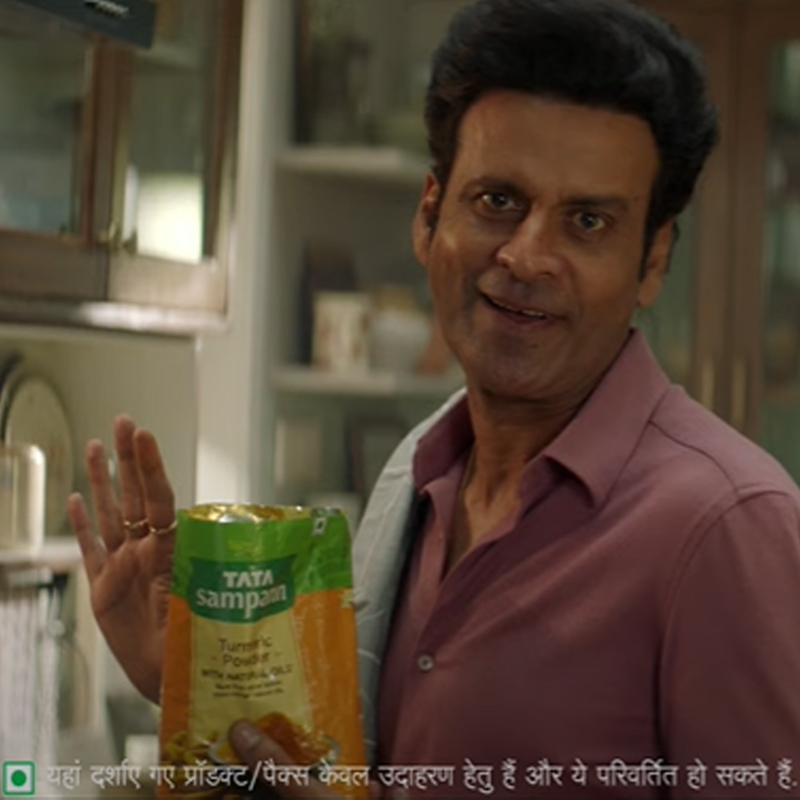
    Mumbai: Tata Sampann has launched a new campaign called # JaiseNatureNeBanaya, which features Bollywood actor Manoj Bajpayee in a TV commercial. Crafted by Ogilvy, the campaign is in line with the company’s focus on ensuring “For Better” products for its consumers seeking quality nutrition as part of their everyday Indian diet. At the core, is the brand’s inspiration to address consumers’ needs by providing quality food choices and retaining the power of the food ingredients by avoiding any additional processing.

    Tata Sampann, as a brand, believes that there is an authentic essence in the food that we eat and that, when processed in a mindful way, helps to harness the elemental power of nature. Through a series of ad films featuring actor Manoj Bajpayee, this belief has been brought to life. The films encourage consumers to rethink their choices when purchasing food items, further raising questions in their minds if they focus too much on how the spices and staples look over their flavour and benefits, thereby reaffirming the brand’s promise that Tata Sampann delivers staples and spices “just as nature intended them to be.”

    Commenting on the campaign, Tata Consumer Products president of packaged food India Deepika Bhan said, “Our commitment is to bring high quality nutrition to Indian homes. This commitment inspires us to work towards mindful processing, allowing for food to retain its full nutrient potential. The constant obsession with retaining natural goodness is why our products are high quality and have high sensorial value—so they taste great. Tata Sampann is Sarvagun Sampann.”

    Speaking on his association with Tata Sampann, Manoj Bajpayee said, “My favourite kind of food is always the everyday Indian food that I eat at home. I am very particular about quality, be it my roles or my food ingredients. Tata Sampann’s proposition of providing sarvagun nutrition to its consumers was one of the key driving factors for my association. I personally believe that if your ghar ka khana is made with high quality ingredients that are not tampered or polished in any way, their nutrition will be as close to nature as possible and will assure sampann poshan at all times.”

    Commenting on the thought behind the advertisement, Ogilvy chief creative officer Sukesh Nayak said, “We wanted to present Manoj Bajpayee not just as an actor but as a discerning food lover who loves to cook. In this light-hearted campaign, he shares with us some simple yet effective tips on how to elevate even the most basic dishes with Tata Sampann dals and haldi.”

    The campaign is live across the electronic channels and social media platforms of Tata Sampann.

  • RBI recommends banning cryptocurrencies, industry shows concern

    RBI recommends banning cryptocurrencies, industry shows concern

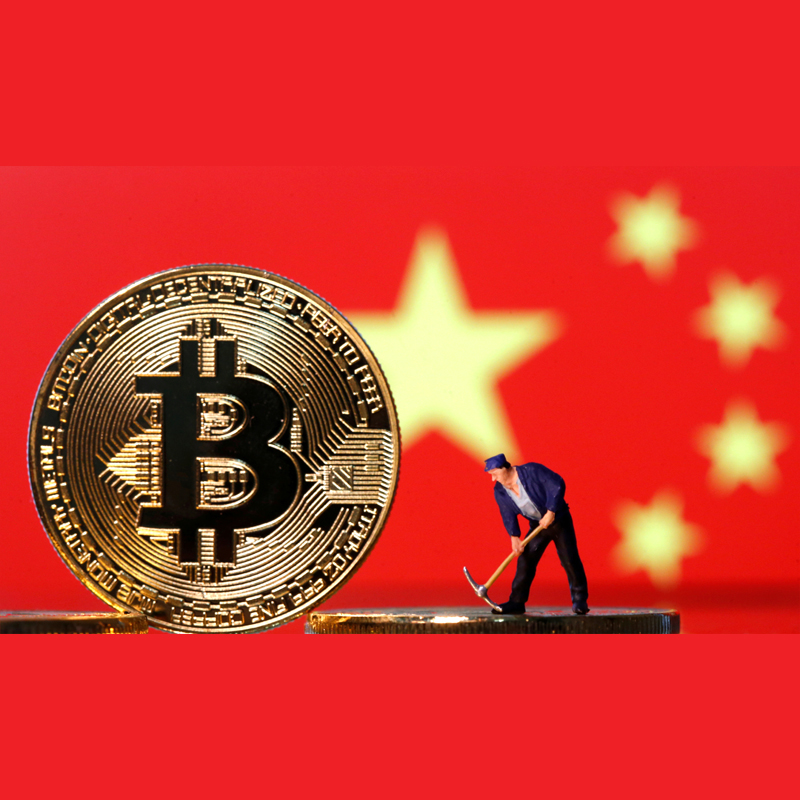
    Mumbai: The crypto ecosystem in the country has once again come under the scanner after finance minister Nirmala Sitharaman stated in Parliament recently that the Reserve Bank of India (RBI) has expressed concerns over cryptocurrencies and sought a ban on them from the government.

    “In view of the concerns expressed by RBI on the destabilising effect of cryptocurrencies on the monetary and fiscal stability of a country, RBI has recommended the framing of legislation on this sector. RBI is of the view that cryptocurrencies should be prohibited,” said the FM in reply to a question raised in Lok Sabha on the stance of the government and the RBI on Cryptocurrency.

    This is even as India recorded the second-highest number of cryptocurrency users in the world last year, and the crypto market in the country grew by over 600 per cent, as per a report released by industry research firm Chainanalysis in 2021. The cryptocurrency sector in the country can no longer be termed niche, as it catches the fancy of an increasing number of traditional-minded investors looking to diversify their investments.

    However, on whether the government has any immediate plans to legislate a law restricting the use of cryptocurrency in India, the FM clarified that while cryptocurrency by definition is borderless, it requires international collaboration to prevent regulatory arbitrage. “Therefore, any legislation for regulation or for banning can be effective only after significant international collaboration on evaluation of the risks and benefits & the evolution of common taxonomy and standards,” she said.

    Despite this clarification on the long-standing matter of regulation of the digital asset class, and notwithstanding the boom in adoption of the virtual currency just last year, uncertainty continues to plague the crypto industry in the country. The crypto market has been on a downward trend since the start of the year due to various macroeconomic factors, according to industry insiders.

    Even so, most of the industry stakeholders Indiantelevision.com spoke to were sceptical about the ban on crypto becoming a reality.

    According to Optiminastic Media founder Akshae Golekar, with several first world countries, such as the UK, Australia, Denmark, France, Germany, and Spain, to name a few, accepting and working towards adopting the technology and adapting to the new trend, it will be outright foolish to ban crypto altogether.

    Secondly, he points out, the core of crypto is blockchain, and blockchain is a public global ledger. “If a particular country bans it, it would have no effect on the functionality or the application of the technology. Instead, it will be the country that is left behind. “

    So while it would be sad for the entire crypto ecosystem, it wouldn’t come to a point where the crypto ecosystem is so affected that it breaks down or the technology is aborted, Golekar asserts. “Brands can still emerge successful by focusing their marketing and operations in other countries of the world. Thriving and sustaining in India, though, would be a grave issue. Crypto ban would simply mean there’s nothing left for such brands in India,” he added.

    Already, some crypto startup founders are moving out of the country in a bid to shift base to more crypto-friendly destinations. The co-founders of India’s largest cryptocurrency exchange, WazirX, Nischal Shetty and Siddharth Menon, recently moved to Dubai with their families for clearer policies around digital assets.

    This comes on the back of the hefty tax imposed on crypto, amid a progressive clampdown on the virtual currency, including action by enforcement agencies against some platforms, and the basic lack of clarity on policy in the long run.

    They can’t work in an uncertain environment, and this literally affects the country, its economy, and the present and coming generations. “It is a concerning thing when it comes to the growth and development of the nation with respect to technology,” said Golekar.

    “The RBI is voicing concerns about the ‘adverse effects’ of digital assets on the Indian economy, alternating between ‘legislation’ and ‘prohibition’ and the government adopting a wait-and-watch strategy, India is on the brink of losing the opportunity to become a world leader in the cryptosphere,” feels crypto banking platform CEO and director Abhijit Shukla.

    “The central bank digital currencies are known to palpably denounce private cryptocurrencies. While the government is finalising a concrete stance on this, there seems to be a lack of understanding between money and currency,” he says. “While the RBI could be over-critical of the crypto assets considering their volatile nature and the risks involved for its investors, it is always better to gauge both sides of the same coin, looking at the positive effects of utilising this technology,” says Shukla, adding that a blockchain-based payment system with sovereign backing can’t be a replacement for cryptocurrencies on the whole.

    Digital assets technology company, Atato’s co-founder and head of partnerships, Maxime Paul, echoes the sentiment when he says that centralised banks may feel a greater need to regulate products which they find it hard to control considering the decentralised nature of crypto. “As a regulated and licenced wallet provider, we do see increased sandboxes for crypto by regional regulatory authorities that welcome cryptocurrency,” he continues. While being supportive of legislative frameworks on crypto, Paul believes an outright ban would not be easy to enforce considering India is one of the largest demographics for cryptocurrency.

    Armoks Media founder Arun Prabhudesai agrees with the majority opinion that banning cryptocurrency is not the solution. “Around two crore Indians have cryptocurrencies right now, whose value is estimated to be Rs 45,000 crore. It’s a trillion-dollar market globally, and we cannot just shut it down. Since crypto is essentially decentralised money, there is no point in banning it, he adds.

    India will close the doors for FDI as well as next-gen technological innovations if we ban cryptocurrency, says Prabhudesai. “We will be clubbed with China, and essentially tell the world that hey, we cannot handle the future.” He adds that the government should consider cryptocurrencies as investment instruments and should impose transparent taxes on them (which right now is a bit ambiguous).

    Industry experts agree that there has to be a balanced approach. Regulation of crypto is the solution for the long run, most believe.

    “We believe that a collaborative approach towards crypto investment aligned with India’s positioning to be an upcoming superpower would be the right approach considering the global acceptance and adoption of crypto,” says BuyUcoin CEO Shivam Thakral.

    The challenges he foresees for the crypto industry in the country mainly come in the form of “mainstream acceptance,” as crypto needs support from a regulatory perspective to be culturally accepted by the masses, says Thakral.

    Notwithstanding the RBI’s concerns about cryptocurrencies affecting monetary stability, global crypto investment platform Mudrex CEO and co-founder Edul Patel believes cryptos can create a more transparent environment for transactions using blockchain.

    “India has over 20 million stakeholders holding crypto assets worth $5.3 billion. If the government decides to ban cryptos, the act would directly impact them,” says Patel. “And this would also hinder the growth and innovation in the sector to a great extent in this digital era, taking the country’s performance down.”

    Bhavan’s SPJIMR associate professor of finance, Dr. Hemant Manuj, sums up the discussion when he says that cryptos have several positive features, but the counterparties have no resort if there is any kind of breach in the transaction.

    Based on their optimal design, he says, they can serve as fast and efficient modes of payment and also ensure privacy. However, regulators should be questioning whether public trading should be allowed in a security with no tangible underlying asset. And if so, what safeguards are required?

    Ironically, the large-scale acceptance of cryptos can happen only at the cost of the existing currency systems. That would have monetary, economic, and nationalistic implications. So, the anti-crypto stance of the regulators like RBI can be understood as partly logical and partly protective of the existing systems, notes Manuj.

    Crypto brands were also some of the biggest spenders in advertising and marketing in the last couple of years. Crypto exchanges took out full-page ads in newspapers and signed up top Bollywood stars to promote their offerings during popular marketing properties.

    However, there has been a drastic dip in the promotional activities of late-this year’s IPL being a case in point where the brands were glaring by their absence. It’s a remarkable turnaround from last year, when the crypto platforms were some of the country’s hottest brands.

    It is likely that, given India’s huge demographic, sponsors shying away from the IPL would like to not be in the spotlight while regulations are not defined, says Atato’s Maxime Paul. Uncertainty will divert marketing resources to crypto-friendly markets. He adds that this is also something to consider for regulatory authorities as part of the ecosystem of crypto.

    Industry stakeholders also believe the reason behind the brands’ going “missing in action” could also be the recession. The roots of these crypto brands are finance and the economy. These players knew that the macroeconomic indicators were not looking good and hence paused investing in marketing, says Optiminastic Media Golekar. At times like these, marketing spending needs to take a back seat and brands focus on sustainability and developing and improving the product and service.

    Whenever markets go through a bear phase, as is the case currently, belts need to be tightened, agrees the Coinswitch Kuber spokesperson, adding that the crypto sector is no different. “Volumes in the Indian crypto market have been following global trends. We believe that the bear market is temporary and that crypto is here to stay,” said the spokesperson for the cryptocurrency exchange platform.

    There were also a lot of concerns raised about the advertisement blitzkrieg by crypto brands last year, with several of them being flagged for misleading claims. Other industry experts opined that it is likely that brands are working with recent advertising guidelines and standards to create new, acceptable creative means of promotion.

    Amid a bull market last year, cryptos were the clickbait of social media platforms with ever-engaging ads and well-tractioned branded promotions, says Tarality’s Abhijit Shukla. This year established an alternative crypto-perspective, he says. “The ads promoting cryptos were toeing a fine line between ‘puffery’ and ‘misinterpretation’—luring Indians into investing in notorious asset classes for fluctuating price swings without comprehending the real risks involved.”

    With the prime focus on driving awareness with crypto exchanges, ads with extensive disclosures and disclaimers for a layperson’s investing decisions are the need of the hour, marketers believe.

  • Amitabh Bachchan is the most recognised celebrity in the country: Hansa Research’s Brand Endorser Report

    Amitabh Bachchan is the most recognised celebrity in the country: Hansa Research’s Brand Endorser Report

    Mumbai: Hansa Research’s Brand Endorser Report has ranked Amitabh Bachchan as the most recognised celebrity in the country with a very high all India rank. Bachchan leads among the likes of MS Dhoni, Virat Kohli, Akshay Kumar, Shah Rukh Khan, Salman Khan and other favourites who are younger than him and who are also perhaps more active in their respective fields.

    The Brand Endorser is a report of research conducted across 36 Indian cities. As per the syndicated study, Amitabh Bachchan is the most recognised celebrity in the country with the highest-ever recognition score of 92 per cent. He is perceived to be a global personality: self-made, relatable, influential, fit, energetic, sophisticated, and trustworthy. These factors make him a compelling brand ambassador for a range of products.

    Hansa Research CEO Praveen Nijhara said, “Our study Brand Endorser is a holistic and comprehensive assessment of the value that an endorser brings to a brand. The study aids marketers to take informed decisions and improve the overall return of investment (ROI) in celebrity engagement.”

    The celebrities are ranked as per the Brand Endorser (BE) Score results. They are tracked on various metrics like likability, social media influence, perception, marketing potential, recognition, etc., which make up their final BE score. While Bachchan has scored really high in the all India rank BE score, he ranks third in the west and north zone, ninth in the south zone, and eleventh in the east zone. The ‘Shahenshah of Bollywood,’ as he is fondly called, has a strong presence and mark in the states of Uttar Pradesh, Rajasthan, Punjab, Maharashtra and Gujarat.

    At the age of 79, Bachchan is one of the most ubiquitous personalities, endorsing various brands, providing voiceovers with his trademark baritone, acting in Indian films and Hollywood, and hosting one of the longest running game shows on Indian television, Kaun Banega Crorepati.

    Hansa Research’s Brand Endorser Report covered more than 550 celebrities across domains in the country. For this study, the research was conducted amongst 5,100 respondents across 36 cities in the country. To measure the results, structured interviews were conducted across India through online and offline methodologies to understand the standings and performances of shortlisted celebrities.