Category: MAM

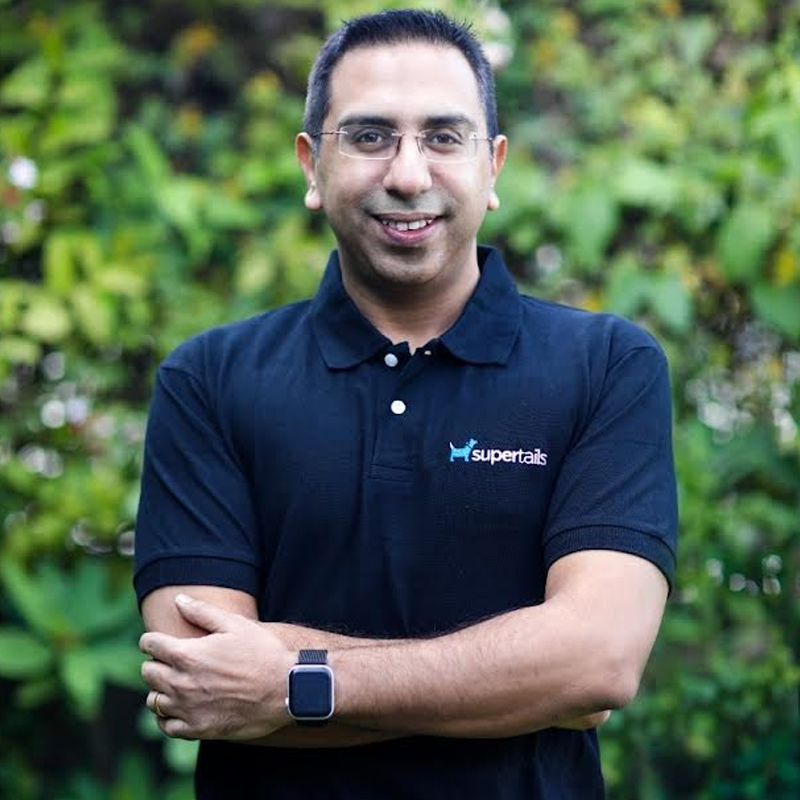
  • Supertails to expand and bring international pet brands exclusively to India: Co-founder Varun Sadana

    Supertails to expand and bring international pet brands exclusively to India: Co-founder Varun Sadana

    Mumbai: Since 2019, the growth rate of the Indian pet market has increased from 16-17 per cent to upwards of 20 per cent in 2020. In fact, while dog adoption rates have increased by up to 50 per cent by 2020, the cat market has increased by up to 40 per cent. With pets in more than 12 per cent of urban Indian homes, the country is on the threshold of further exponential growth in this industry, similar to what happened in more evolved pet markets like China ($30 billion) and the USA ($105 billion) in the past.

    Following the emergence of petcare in the country, Supertails is encashing the space pretty well with 50 per cent month-on-month growth for the last one year.

    Supertails is a first-of-its-kind digital platform that supports the ever-increasing pet parent community with a one-stop solution for pet food and supplies.

    Launched in 2021 by Vineet Khanna, Varun Sadana, and Aman Tekriwal, the startup provides veterinary care, pet food and supplies, and offers pet training sessions as well. In recent times, Supertails has been the talk of the town, not only for its unique services but for its ad campaigns and exponential growth too.

    In conversation with Indiatelevision.com, Supertails co-founder Varun Sadana talks about their advertising strategy for the brand, investors, future plans, and a lot more! He also sheds some light on the growth trajectory of the digital platform.

    Prior to Supertails, Varun was the co-founder and COO of Licious. He has also been associated with HUL and Snapdeal in his earlier career. He has pursued his bachelors of technology (mechanical) from the National Institute of Technology, Kurukshetra and an MBA in sales and operations from the Indian Institute of Management, Lucknow.

    Edited excerpts:

    On how Supertails started

    Varun: Similar to the meat market, the pet market too needs disruption as pets are now seen as companions. The relentless passion for the pet care ecosystem and a vision to make India a pet-friendly nation unites the founders of Supertails with their team of pet care experts and enthusiasts.

    Currently, Supertails has over 120 brands in the petcare space, making it the widest assortment of petcare brands on a single platform in the country.

    On enthralling investor response

    Varun: Supertails, which debuted in 2021, raised $2.6 million in pre-series funding. This welcoming response from the investor brands helped the brand start on a very strong note. The first round of collections saw investors like global Indian icon Deepika Padukone, Kunal Bahl, Titan Capital, Sauce VC, and Whiteboard Capital, among others.

    On following the path of growth

    Varun: Over the last one year, the digital platform has been growing at a CMGR of over 50 per cent month-on-monthly.

    Our business is broken down into our ecommerce platform and our own brand. The e-commerce platform is meant for the Indian population and is working towards a better assortment, discoverability, and pricing of pet products in the country. Supertails offers almost all brands across all relevant categories such as food, toys, grooming, etc., available in India on its platform.

    We believe the natural next step for the expansion of this vertical is to bring international brands on an exclusive basis to India.

    The market size of the business we’re building is $1-1.5 billion in India as of 2022, and is expected to grow to five billion dollars by 2027.

    On genZ centric marketing approach

    Varun: Supertails caters to the GenZ pet parent audience. We are aiming to build a brand that makes pet parenting easy and fun for them. When it comes to marketing, we believe that more than the right channel, it’s the right narrative that appeals to the Gen Z consumer.

    Media in today’s day and age is extremely porous and we believe in an integrated approach for all our campaigns. While we have always been a digital media first brand, what we really focus on is bringing valuable content to our consumers and then distributing this through multiple avenues. Whether it has been doing brand films with a unique creative approach, i.e., visualising life through a pet’s point of view or having campaigns like “Crime Master Doggo” which surprise our audiences—our approach is always content first.

    Sadana noted that more than anything, this market is defined by mindsets, where there is a potential for a paradigm shift just by altering the narrative and starting the right conversations among the consumers, which in the case of Supertails is a tech-savvy GenZ pet parent redefining “family” as being centred on their pet.

    On Supertails future

    Varun: As the company grows, Supertails plans to support pet parents as they navigate all aspects of pet parenthood, including the decision of bringing home a pet, training and hygiene consultation, raising a healthy and fit companion, and fulfilling all primary needs for the pet.

    In three years, supertails.com will be a one-stop shop for all pet product needs with the widest assortment available in India at the best negotiated prices with a robust supply chain in place.


  • Weekend Unwind with: Aditya Kuber, CEO & co-founder Ideabrew Studios

    Weekend Unwind with: Aditya Kuber, CEO & co-founder Ideabrew Studios

    Mumbai: Moving on to the next in our series of lighthearted snippets that peek into the minds of corporate executives by having them share their mantras to deal with the curveballs that life throws at them—not necessarily revolving around work life—and sometimes going beyond work.

    This week’s guest is Aditya Kuber, CEO and co-founder of Ideabrew Studios. Kuber is a media professional with over 20 years of experience in B2C, B2B, and market and business development, having worked with Sportz Interactive, Yahoo!, Times of India, and Sakal Media Group, as well as assisting in the establishment of Audioboom India in 2016. He led the launch and scaling of BookMyShow Jukebox, its music and podcast streaming business, before going on to launch his entrepreneurial venture, Ideabrew Studios, “one of India’s largest podcast networks” in August 2020.

    So here goes…

    Your mantra for Life

    Try. Don’t be afraid to fail.

    A Book you are currently reading / plan to read

    The Obstacle is the Way by Ryan Holiday.

    Your Fitness mantra, especially during the pandemic

    Tennis and regular workouts at the gym.

    Your comfort Food

    Almost anything homemade!

    When the chips are down a Quote/Philosophy that keeps you going

    This is a new challenge. Face it.

    Your guilty Pleasure

    Bad movies and ice-cream!

    When was the last time you tried something New?

    That would have to be when I started yoga a few months ago.

    A life Lesson you learnt the hard way

    No substitute for hard work.

    What gets you Excited about life?

    Possibilities and the fact that there’s so much left to experience.

    What’s on top of your Bucket List?

    Watching at least one match of every tennis Grand Slam.

    If you could give one piece of Advice to your younger self, what would it be?

    Get smarter! Work harder! There are no shortcuts in life.

    An Activity that keeps you motivated/charged during tough times

    Looking around to see that I am not the only one fighting a battle.

    What lifts your Spirits when life gets you down?

    My family and friends.

    Your go-to Stress Buster

    TV! Any action film will do!

    One thing you would most like to Change about the world

    Lack of opportunities for so many underprivileged people.

  • GUEST ARTICLE: How web 3.0 can take full advantage of streaming’s potential making it accessible to all users

    GUEST ARTICLE: How web 3.0 can take full advantage of streaming’s potential making it accessible to all users

    Mumbai: Web3 promises to be the renaissance for how we use internet services. It is fundamentally an idea for a more open, decentralised, and secure internet, governed by anti-monopoly and pro-privacy norms. Naturally, the scale and allure of OTT services’ revenue and seemingly insatiable demand make it a prime industry to attempt to ‘disrupt’. The proposition boils down to ‘what value addition does this new technology and ownership structure bring’. It’s an idea we have experimented with for a few years now being on both 1.0 and 2.0 versions of the web.

    Web3 splitting the pie

    There are broadly three models that can exist at scale with web3 characteristics—one, where users are owners [I own a piece of Netflix and I watch it], two, where creators are owners [the studios or the producers or the individuals], and three, where ownership is split between creators, users, and intermediaries [marketers, platforms, other intermediaries, etc.]. Depending on the market this hypothetical business operates in, some of the business models become viable based on the negotiable split amongst these many stakeholders.

    Cutting the middlemen

    The promise of web3 essentially posits ‘cutting the middlemen’ who supposedly ‘do not add value to the flow of creation to consumption, or at least reduce their ‘cut’. “Hey, why is the app store taking 30 per cent?” and “Wait, XYZ label makes millions of dollars off her song, but my favourite artist lives in a rented house?” are the kinds of questions that can be approached two ways. First, since the relationship between creator and consumer is paramount, and since the audience makes someone famous by consuming created content, the value should primarily be distributed between these two.

    Second, stars and hits are made, not born. So, the backers, marketers, technology developers, and distributors (who work thanklessly behind the stage, risking their time and money) deserve a large part of the credit (aka value).

    Therefore, the model of web3 works well for already established creators who can rely on fanfare and loyalty to create subsequent work. However, they will have to choose between their audience’s capital or the existing pool of professional backers. They do acknowledge that the former carrier risks additional work in raising capital, but with the benefit of doing it on their own terms.

    For the new and upcoming creators, it offers them better terms, but at the risk of losing mainstream system support that has proven its success so far.

    Race to the start

    There is now an increasing list of examples of creators across movies, music, social media content, and TV experimenting with the web3 path, which has led to a crop of new web3-only services. Even incumbent studios, distributors, and platforms are making investments in web3 businesses. Following sufficient examples, existing incumbents will further adapt to offering web3-based models as well.

    The fact remains that the entertainment industry overall has very clear risk-reward profiles. If creators take the risk simultaneously with their hopeful audience, they can all potentially gain from it, but will then be on opposite sides of the table. And to create what we deem “hits,” large-scale distribution is still a professional industry, the providers of which will always demand a high fee for their services.

    The web3 model’s adoption will thus grow at the rate that the creators are willing to take it—and help create more stars and hits than the “industry” has allowed since it offers an alternative path to grow. To the end audience, for any type of content, the key criteria remain quality, price, and on-demand. Adding the proposition of being an earning shareholder makes the deal sweeter depending on the potential earnings. What could eventually emerge is a model where audiences contribute to a diversified pool of creators of their choice, while creators will choose who provides intermediary services to them. Some may argue that this is not too different from existing models, but the creatives are pathbreakers by nature.

    The author of the article is Vistas Media Capital & Fantico chief strategy officer Dhruv Saxena.

  • ‘Beats of Marapani’ pays tribute to India’s furniture artists

    ‘Beats of Marapani’ pays tribute to India’s furniture artists

    Mumbai: With Beats of Marapani, InnoDesigns pays homage to India’s furniture artists with a groovy music track that seamlessly blends carpentry sounds with Onam melodies.

    A passion for home furnishings and technology inspired InnoDesigns, and it translates creative ideas into unconventional designs. Every piece that propels them forward in their design journey is created in collaboration with Indian furniture artisans.

    InnoDesigns COO and strategy head Neetii said, “As a brand we believe furniture manufacturers are the lifeline of India’s furniture industry, and as a brand it’s an honour for us to celebrate their craftsmanship and contribution.”

    InnoDesigns marketing and sales head Himanshu said on the track, “It was time to  bring back the focus on our local furniture manufacturers. And what better occasion than Onam to start this conversation in Kerala. This tribute is also about prepping up the consumer in Kochi and Calicut for Onam as we bring in some unbelievable offers for them.”

    LeapX’s Henry Moirang said on this, “For us the brief was clear. Bring alive the brand’s belief that the furniture manufacturer is the protagonist here. So we weaved his craftsmanship and the festival of Onam to make a call-to-action that people of Kerala find relevant and worth advancing. Thanks to Himanshu and his team for making us a part of this journey.”

  • 75 years of Indian Independence, but where are women, asks SheThePeople’s Shaili Chopra

    75 years of Indian Independence, but where are women, asks SheThePeople’s Shaili Chopra

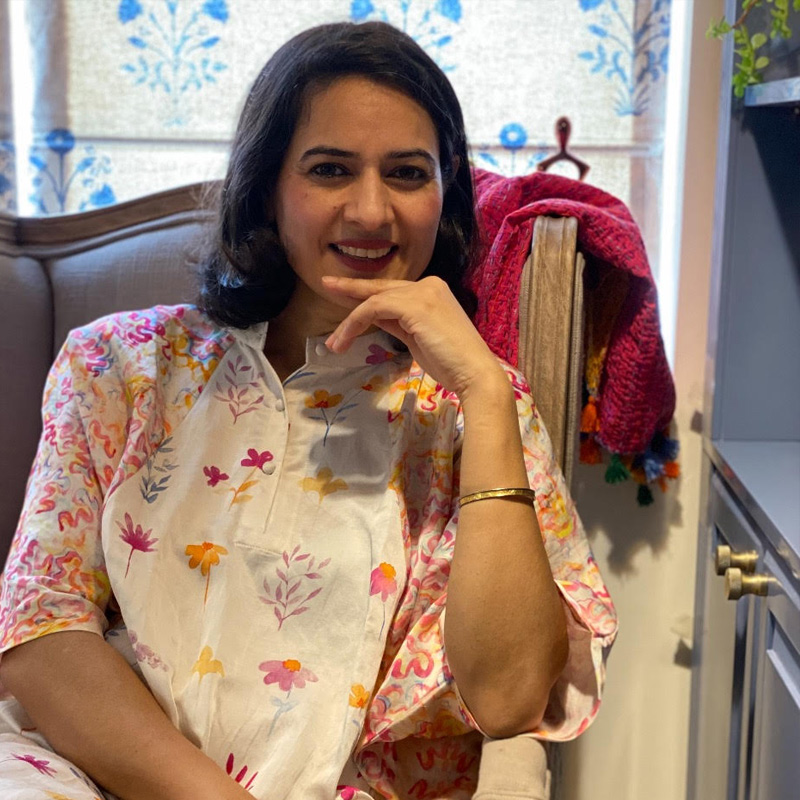
    Mumbai: As India turns a grand 75, have we forgotten to bring to the fore women’s issues in the media, or are we merely indulging in tokenism by scratching the surface? In an interaction with Indiantelevision.com, journalist turned entrepreneur, Shaili Chopra, reflects on the critical role that the media can play in changing perceptions of women in India and how gender equality can be achieved with the media as allies.

    As a thought leader on women’s issues and now a digital entrepreneur and observer, and as someone who has worked extensively in the media sector with 18 years of television journalism behind her, Chopra shares her insights on what’s missing in mainstream Indian media today, even 75 years after the country gained its freedom.

    Chopra is the founder of SheThePeople, a digital platform that helps shape new initiatives to support women to claim their rightful space at decision-making tables. With a focus on content, community, and skill development, it covers issues like women’s health, careers, and sexuality. She was awarded the Entrepreneur of the Year award by Entrepreneur India in 2017.

    Named one of India’s 50 most influential women in media, marketing and advertising by UK-based Impact Magazine in 2016, Chopra has authored four books. Her fifth book on women’s contribution in economic growth called ‘Sisterhood Economy’ came out last week.

    Her experiences at SheThePeople have led her to her next femtech venture, Gytree, which will launch next month and aims to provide primary and preventive healthcare to Indian women. According to Chopra, Gytree.com is a fearless and comfortable space for women to discuss their sexual and gynaecological health issues and needs. 

    Edited excerpts

    On Indian media’s portrayal of women and what more needs to be done on the front

    Shaili: We are behind the curve in how we cover women. We are slow to recognise that women’s issues are headline issues and must not be relegated to the city/inside pages of the newspaper. Things have moved for the better in the last few years. However, we are still way, way behind.

    It’s not just good enough to talk about women as women. We need to showcase female mathematicians for their math, and not just because they are women. We need to talk about the politics, health, and economics of women. We are not yet there at all. We are too busy doing tokenism and celebrating the ‘womanhood’ of these females, who in fact are way beyond that in their journey of growth and success. Let’s not just celebrate their gender, but what they do and bring to the table.

    And so, I urge all that, over the next few years, let’s prove that patriotism isn’t just about hoisting a flag in every home but also about providing equal opportunity, access, and space to half of the country’s population. If India must grow to a 4.5 trillion dollar economy by 2025, be sure it won’t just be one gender that will take us there. 

    On what has changed for women in India over the last few years

    Shaili: When I set up SheThePeople in 2015, they asked me, why do women need a separate channel? With more than 700 million women and half of the country’s population, we deserve our own space, our own voice, and a return on investment for our vote.

    As we celebrate 75 years of Indian independence, I believe things are changing and I am proud to be part of changing that narrative. There is a growing sisterhood of women in the world’s largest democracy who want to get their voices heard, their presence felt, and their economics to matter.

    On why it’s vital to talk about women’s stories and what makes the media a significant tool

    Shaili: Around the world, women are far less likely than men to be seen in the media. As subjects of stories, women only appear in a quarter of all television, radio, and print news. In a 2015 report, women made up a mere 19 per cent of experts featured in news stories and 37 per cent of reporters telling stories globally. The world is becoming more diverse, and it’s a newsroom’s responsibility to reflect this.

    Today, the media as a tool is important and necessary to move beyond traditional stereotypes of women and have diverse storytellers share their unique perspective in the media. While we are at it, it’s time that the media wakes up to include voices from marginalised communities, become caste-inclusive, and go beyond the gender binary to accurately represent the society we live in and tell relevant and impactful stories. We, at SheThePeople, have used the digital platform successfully to help amplify diverse voices and help women’s issues be heard. 

    On increased representation of women as media persons

    Shaili: If seeing is believing, then we need to have far more female representation across the board, across segments of the media (front-facing on-air as well as in business). 

    Like in many sectors, in the media too, the funnel of female leadership shrinks at higher positions. At the moment, there are many top anchors, but how many of them are driving the business or managing it? very few. I think that’s part of the problem.

    A study has also found that women continue to be given what are essentially “soft” beats like lifestyle and fashion, leaving the “hard” beats like politics, economy, and sports to the men.

    The Indian media, by marginalising women’s voices, denies the rights of nearly half the population. By having more women in leadership positions in the media, we can produce more gender-sensitive and gender-transformative content. As a participant and observer of the media industry for over a decade, I have always said that women and men need to be provided the same opportunities. This includes decision-making in all kinds of activities, so that the path to gender equality is sustainable and both women and men’s interests are accounted for..

  • Adidas, Rohit Sharma partner to launch a sustainable apparel collection for the Indian market

    Adidas, Rohit Sharma partner to launch a sustainable apparel collection for the Indian market

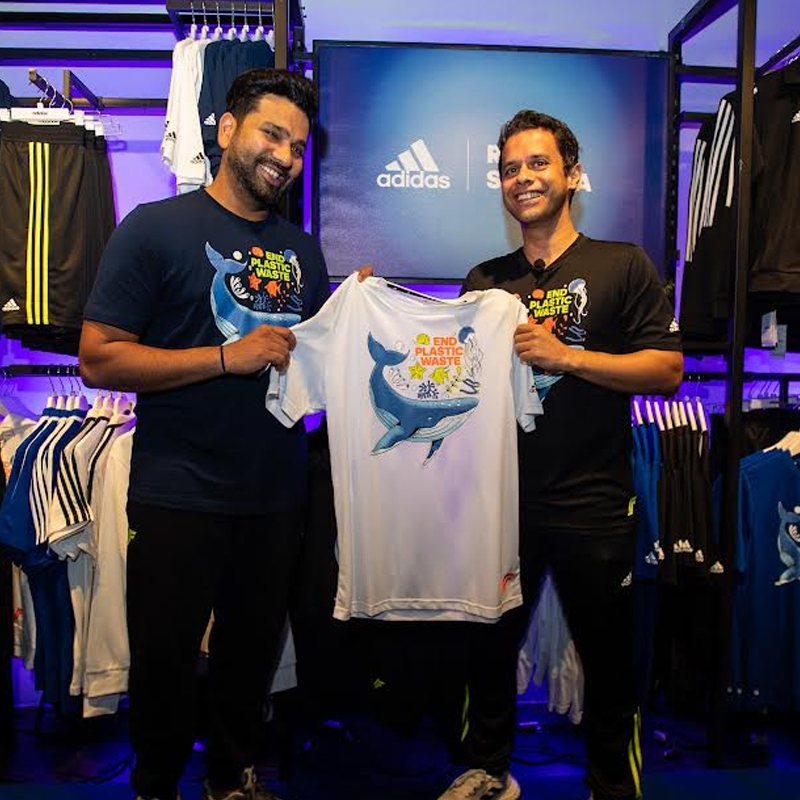
    Mumbai: adidas and Rohit Sharma have signed a collaboration to launch their first-ever collaboration in sustainable apparel for the Indian market. This collection comes in continuation of adidas’ and Rohit’s long-standing partnership and commitment to end plastic waste. Rohit has been committed towards this cause in partnership with adidas, as was witnessed during the past two editions of the IPL, where he used the global stage to showcase specially crafted shoes, highlighting the cause and spreading awareness around marine plastic pollution.

    The stylish and sustainable collection will comprise an array of products ranging from training t-shirts, training pants, shorts, track suits, polo t-shirts, round neck t-shirts, sweatshirts, and lounge pants. The collection has been designed by leading experiential designer Aaquib Wani in collaboration with Rohit. The limited edition collection will be available in select stores and on adidas.co.in.

    Speaking at the launch, Indian Cricket Captain Rohit Sharma said, “Marine pollution is one of the biggest challenges mankind faces today. Oceans are key to our survival, and it is a world like no other and must be protected. My association with adidas over the years has been a major step towards spreading awareness for the cause, which is why I am proud to collaborate with them for this collection. Ending plastic waste is a priority for us both, and this collection is a result of unparalleled commitment and effort towards saving the oceans.”

    Sharing his thoughts at the launch, adidas India senior director Sunil Gupta said, “Sustainability has been one of the core values for adidas over the years. We have been on a mission to help end plastic waste, and all of our efforts ladder up to this goal. We believe that collaboration, creativity, and eco-innovation are the winning formulas to save our oceans and end the global plastic crisis. As our sustainability ambassador, Rohit has always been at the forefront of our quest to end plastic waste, which is why this collection marks a milestone for our partnership. It is through this partnership that we aim to spread awareness and inspire millions out there to join us in our effort to end plastic waste.”

  • Unilever Professional India eyes portfolio expansion; launches digital distribution network in India

    Unilever Professional India eyes portfolio expansion; launches digital distribution network in India

    Mumbai: Unilever Professional India, also known as UPro, has announced that it will be extending its portfolio under the brand names CIF, Domex, Surf, and Comfort to include products like glass cleaners, air fresheners, degreasers, kitchen hygiene products like dishwasher chemicals, food contact safe surface sanitizers, kitchen sanitizers, laundry care detergents, and fabric conditioners for commercial use.

    The products are designed to meet the daily needs of cleaning experts at an affordable price, providing maximum performance. They are manufactured in India and are suitable for Indian operating conditions.

    It further plans to launch a digital distribution channel through its website to reach small operators in India.

    UPro’s priority would be to tap into food services, hospitality, laundrettes, offices, and schools. The business will also address accessibility issues with how instructions are communicated on the product packs.

    Poor working conditions, lower pay, and societal perceptions make the job of a cleaner less attractive, and it is even tougher for the female workforce. Yet the need for professional cleaning requires an understanding of processes and the right application knowledge of cleaning chemicals. UPro plans to address this issue by making the portfolio simple yet effective and making the guidelines accessible digitally.

    With a product range that is locally manufactured, combined with deep operator insights across geographies and professional usage manuals delivered digitally, UPro promises to make professional cleaning chemicals accessible to all.

  • IAA organises IndIAA Awards to salute the idea ‘India’

    IAA organises IndIAA Awards to salute the idea ‘India’

    Mumbai: The International Advertising Association (IAA), an integrated advertising trade association, is organising the IAA IndIAA awards to salute the idea that is India.

    The IAA IndIAA Awards will be presented on 23 August at the Ballroom, Taj Landsend, Bandra (W) at 6:30 p.m. onwards.

    IAA India chapter president Megha Tata said, “As the country celebrates 75 years of its independence, we will be structuring our awards event around the meaningful role communication has played in fostering the idea that is India. I am very happy that in its 7th year, the IndIAA Awards has carved out a special prestigious niche in the minds of the communication industry.”

    IndIAA Awards committee chairperson Abhishek Karnani added, “These are unique awards that salute real, hard-working advertising. The shortlist is compiled by a set of senior journalists, and these are judged by an eminent jury comprised of advertisers who own and invest in brands. The awards are presented to the co-creators of the winning work.”

    Nestle India chairman & managing director Suresh Narayanan chairs the jury this year, and participants include Accenture managing director Charulata Ravikumar, Unacademy partner & chief marketing officer Karan Shroff, Sugar Cosmetics CEO & co-founder Vineeta Singh, and Mahindra Holidays & Resorts India COO Vivek Khanna.

  • Interbrand strengthens India leadership; announces new appointments and elevations

    Interbrand strengthens India leadership; announces new appointments and elevations

    Mumbai: Brand consultancy – Interbrand has bolstered its leadership team by appointing four executives in elevated and new roles, with the goal in mind to drive strategic partnerships, accelerate growth, and burgeon overall enterprise value.

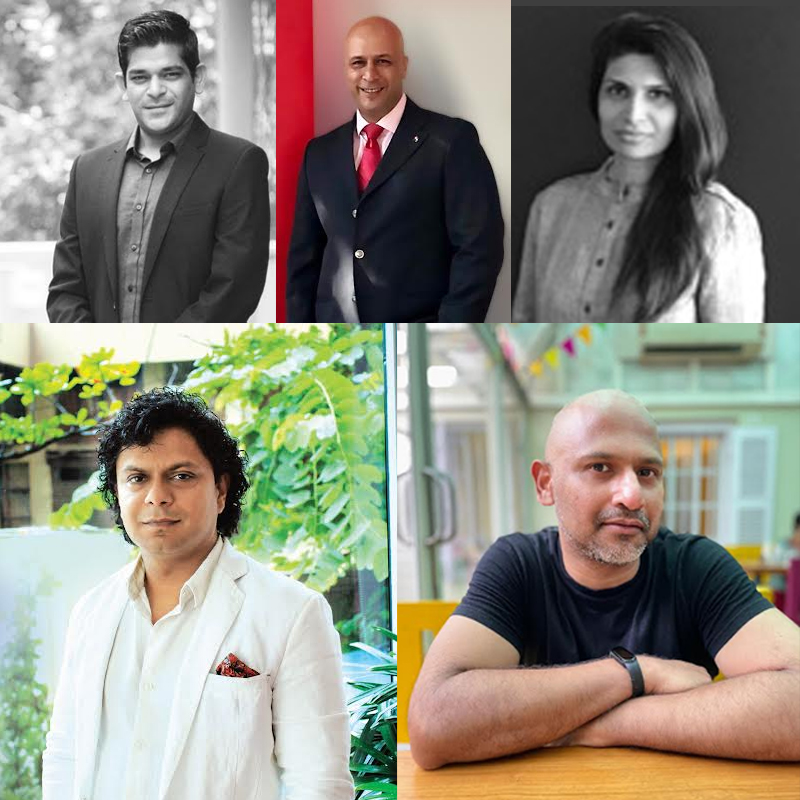
    Satish Krishnamurthy assumes the role of chief strategy officer. Ameya Kapnadak takes on the role of chief growth officer and head of consulting – Interbrand India. Payal Shah has been named the strategy director and head – human truths, India. Rahul Bansal will function as the strategy director and head of brand economics, India.

    Speaking about the new leadership team, Interbrand India, India & South Asia CEO Ashish Mishra said, “We had a late entry into the Indian market but were able to achieve local leadership for the world’s leading brand consultancy in a very short span. We have the top five branding projects of the decade as our showreel. Winning and delivering these iconic brand transformations, including Godrej, Jio, Britannia, Infosys, Mahindra, Hero MotoCorp, and Nerolac, took brilliant and committed talent.”

    “Most of whom have been the core of our team for most of our history. Our people have grown with the firm and are poised well to create the next generation of icons. At Interbrand, our priority is to nurture a global community of thinkers and makers with the curiosity and confidence to create iconic work,” he added.

    Satish Krishnamurthy brings 21 years of global strategic experience to Interbrand, having worked across brand consulting, creative strategy, and design thinking. His diverse experience straddles from driving strategic mandates for large agencies in the US and India, to being a behavioural architect, and also being a Ted X speaker. Satish has crafted unique ways to solve problems by taking inspiration from various disciplines. He has impacted successful outcomes for large clients across positioning, service and experience design, and opportunity consulting.

    Ameya Kapnadak leads the growth and consulting teams at Interbrand’s India office. Over the last 25 years, he has worked on and built some of India’s most iconic brands. Ameya has a wide and deep experience across diverse industries, including technology, banking and finance, automotives, consumer goods, food, and fashion and retail. He started his branding career at J Walter Thompson, and has since worked at Mudra, ICICI Bank, and The Times Group, before joining Interbrand in 2011. Ameya is a pharmacist by qualification and holds a master’s degree in management from the Jamnalal Bajaj Institute of Management Studies.

    As a strategy director at Interbrand, Payal Shah’s approach is to help brands rise to meaningful arenas for growth and sustainable iconic leadership. Possessing a multi-faceted personality and more than 15 years of experience in USA and India, she has been working across categories such as spirits, FMCG, technology and fashion. Some of her clients in the past were Pernod Ricard, Britannia and Gucci. Payal believes in the power of storytelling and delves into experiences for brands that inhabit them. She believes in purposeful innovation that harnesses behavioural data in order to amplify brand growth and value creation. Beyond creating brands, she’s a brand mentor at Ecole Intuit-Lab and the host of ‘Design Rendezvous’.

    Rahul Bansal joined Interbrand India in 2016 in their strategy vertical. In this role, he has helped with the expansion of Interbrand’s footprint in South Asia across Sri Lanka, UAE, and Bangladesh while also leading projects for some of the largest public and private sector brands in India. Prior to Interbrand, Rahul has worked across a diverse range of functions and sectors, including business consulting to help bring global consumer brands into India, gaming, and e-commerce in Southeast Asia.

  • Wunderman Thompson North America names Tom Murphy as chief creative officer

    Wunderman Thompson North America names Tom Murphy as chief creative officer

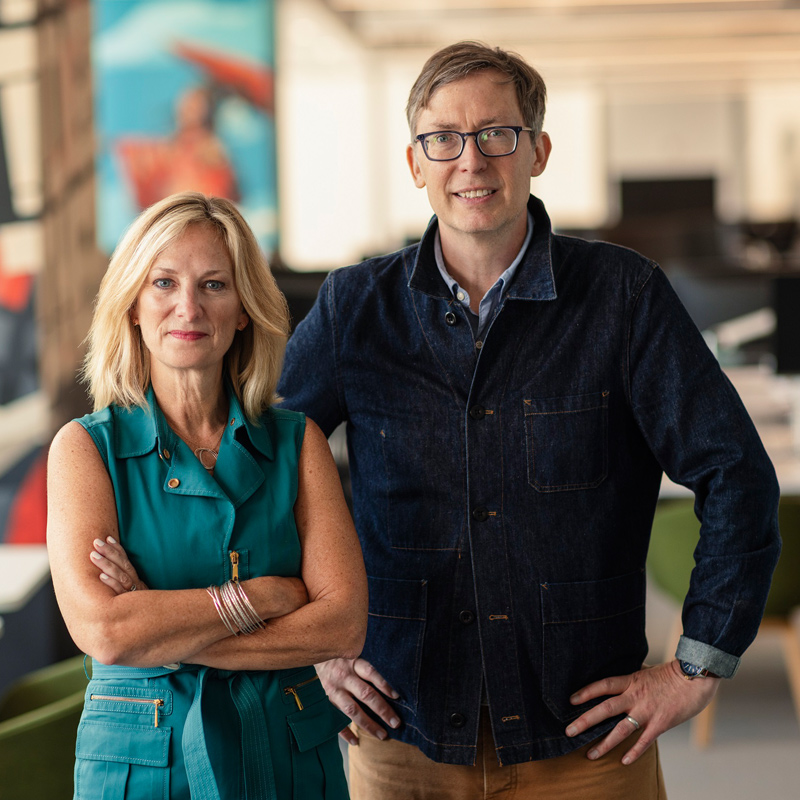
    Mumbai: Creative talent Tom Murphy will join Wunderman Thompson North America as chief creative officer, the agency has announced. He will report to CEO Audrey Melofchik. Wunderman Thompson’s global chief creative officer, Bas Korsten, has been acting as NA CCO for most of 2022.

    Known for his track record of creative excellence that drove McCann’s most celebrated work of the past decade, including the iconic “Fearless Girl,” Murphy has spent 16 years at McCann, most recently as North American CCO, and has influenced creative talent and effective work over the course of his career. His work has impacted brands including Verizon, Mastercard, Microsoft, Ulta Beauty, Lysol, Mucinex, MGM Resorts, NY Lottery, USPS, and HomeGoods.

    “Wunderman Thompson has such a massive breadth of capabilities. When those capabilities meet creativity, they become superpowers,” said Tom Murphy. “From my earliest conversations with Audrey and Bas, I sensed their ambition for the future of Wunderman Thompson North America. On our first call, I underlined two key words in my notebook: ambition and creativity. I could immediately tell we value the same things and will achieve great things together.”

    During Murphy’s tenure at McCann, he oversaw some of the most talked about and award-winning ideas of the past decade, ranging from “Fearless Girl” for State Street Global Advisors, the “True Name” campaign for Mastercard, “Universal Love” for MGM Resorts, “Generation Lockdown” for March for our Lives, and “Changing the Game” for Microsoft – which centred on the brand’s adaptive Xbox controller that makes gaming accessible to players with disabilities. He originally joined McCann as a group creative director in 2004, from DDB Chicago, where he worked on top brands like McDonald’s, Budweiser, and Bud Light.

    “Growth challenges facing clients today require an agency partner steeped in expertise across their entire ecosystem with creative firepower to ignite it in completely new ways,” said Audrey Melofchik, who became CEO of Wunderman Thompson North America in 2021. “From the moment I met Tom, I knew he was the perfect partner to lead Wunderman Thompson NA as we blaze a trail of inspiring creativity and growth with our client partners. He is an amazing thinker, leader, and human being.”

    “Tom coming on board is a testament to our future-forward creative ambitions for clients that we have as Wunderman Thompson in North America, as well as globally. He has proven himself as a powerful and inspiring creative leader that can impact business and culture,” said Wunderman Thompson global chief creative officer Bas Korsten. “I really can’t wait to see how Tom is going to inspire our ambitious clients and our people. He is the real deal.”

    Beyond Tom’s appointment, Wunderman Thompson has been building out its bench of talent with the additions of FCB’s business development leader, Wunderman Thompson North America chief growth officer Laura Cona; Wunderman Thompson New York BBDO ECD Susan Golkin; Swift (a Wunderman Thompson Company) chief creative officer, BBH LA creative lead Ned McNeilage and Inclusive Design global head Josh Loebner. Earlier this year, they acquired influencer agency, Village Marketing.

    Wunderman Thompson North America is enjoying momentum with a series of new business wins, including Snap and Courvoisier, while expanding its portfolio of work for Pfizer, Samsung, and Walgreens. In June, Wunderman Thompson was awarded the first BtoB Grand Prix at Cannes for Sherwin-Williams Speaking in Color, a voice-activated AI color system.