Category: MAM

  • How Vijaya Diagnostics Offers Fast and Accurate MRI Scans

    How Vijaya Diagnostics Offers Fast and Accurate MRI Scans

    PUNE : Vijaya Diagnostics, a leading name in healthcare diagnostics, has been making waves in the medical imaging industry by providing fast, reliable, and highly accurate MRI scans to patients across Pune and beyond. With an emphasis on affordability, expertise, and convenience, the company offers advanced MRI imaging services at competitive rates without compromising on quality. As one of the foremost diagnostic centres in the region, Vijaya Diagnostics has been building a reputation for excellence, providing a seamless MRI scanning experience to its ever-growing customer base.

    The Importance of MRI Scans

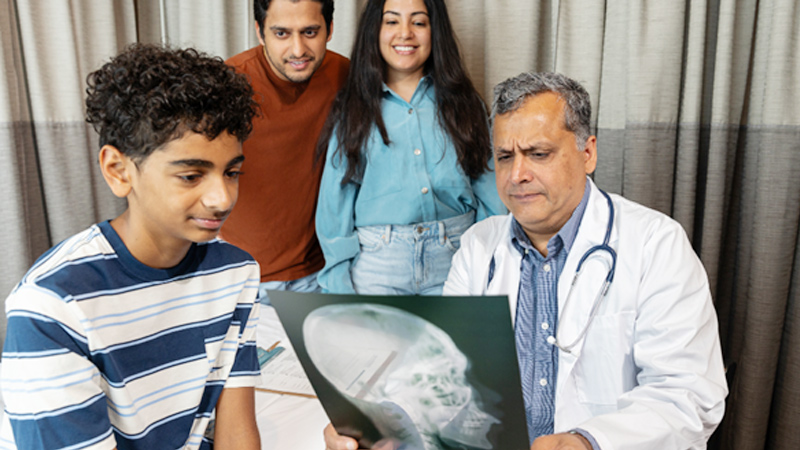
    Magnetic Resonance Imaging (MRI) is an essential diagnostic tool used to get detailed images of the inside of the body. MRI scans are crucial for diagnosing a variety of conditions ranging from neurological disorders, joint issues, to muscle injuries, and more. Ensuring timely and accurate MRI results is vital for patients to get the treatment they need as early as possible. At Vijaya Diagnostics, they understand the significance of delivering accurate results quickly to assist doctors in making informed decisions about treatment.

    Why Choose Vijaya Diagnostics for MRI Scans?

    Vijaya Diagnostics stands out from the competition in several key areas. Here are some of the advantages that patients can expect when they choose Vijaya Diagnostics for their MRI scans:

    1. Affordable MRI Scan Costs

    Vijaya Diagnostics offers some of the most competitive MRI scan prices in the region, ensuring that patients do not have to break the bank to access high-quality imaging services. The centre provides transparent pricing, with no hidden fees, making it easy for individuals to make informed decisions about their health without worrying about the cost of the test. Whether it’s for a brain MRI, spine MRI, or any other body part, patients can be assured of receiving affordable and reliable diagnostic services.

    2. A Team of Highly Experienced Professionals

    Vijaya Diagnostics boasts a team of over 200 radiologists who specialise in interpreting MRI scan in Pune with a high level of accuracy. Their collective experience and expertise help ensure that all reports are comprehensive and precise, allowing doctors to make the best possible decisions for patient care. This collaborative approach between highly skilled professionals plays a crucial role in offering a complete diagnostic service.

    3. Convenient Location with Over 140+ Centres

    With a network of more than 140 diagnostic centres spread across 20 cities, Vijaya Diagnostics makes it easier for patients to access quality MRI scans. For residents of Pune, it is a matter of convenience to find an MRI centre near them. The extensive network allows the centre to cater to a wide patient base, reducing wait times and providing fast access to essential medical imaging services. Whether patients are located in the heart of the city or in surrounding areas, Vijaya Diagnostics offers accessible and dependable services to meet their needs.

    4. Home Sample Collection for Blood Tests

    In addition to offering state-of-the-art MRI services, Vijaya Diagnostics also provides home sample collection services for complementary blood tests. This means patients can complete their blood tests from the comfort of their homes, ensuring added convenience and reducing the stress associated with multiple trips to the diagnostic centre. This service is particularly beneficial for patients who may have mobility issues or those seeking a more convenient healthcare experience.

    Quality Assurance: Why Fast Results Matter

    At Vijaya Diagnostics, speed does not come at the cost of accuracy. MRI scans are carried out using cutting-edge equipment that provides high-resolution imaging and fast processing. The centre’s radiologists work diligently to produce accurate results quickly, ensuring patients don’t have to wait long for their reports. In a medical emergency, timely access to MRI results can be crucial in determining the best course of action for a patient’s treatment. With a strong commitment to providing swift yet precise diagnostic services, Vijaya Diagnostics is able to play an essential role in expediting healthcare decisions.

    Affordable MRI Tests: Transparent Pricing and Packages

    Vijaya Diagnostics understands that cost is an important consideration for many patients when seeking MRI services. The centre offers affordable MRI tests across various body parts, with transparent pricing structures for different MRI scans. Whether it is a brain MRI or an MRI of the spine, the prices are designed to be budget-friendly without compromising on the quality of the imaging service provided. This focus on affordability has made Vijaya Diagnostics a popular choice for those seeking high-quality yet reasonably priced MRI tests in Pune.

    Convenient Online Booking and Fast Appointment Scheduling

    In today’s fast-paced world, convenience plays a significant role in patient satisfaction. Vijaya Diagnostics offers a user-friendly online booking system, allowing patients to schedule their MRI scan in Hyderabad or Pune at a time that suits them best. This eliminates the need for long queues and waiting times. Whether patients need an appointment on the same day or at a later time, the centre’s efficient online booking platform ensures that appointments are booked quickly, and patients are attended to promptly.

    Locations Across India: Find a Centre Near You

    For those searching for a reliable MRI scan centre in their locality, Vijaya Diagnostics has a number of locations available for easy access. With multiple centres spread across the country, finding a nearby diagnostic centre is simple and convenient. Whether you’re based in the bustling centre of Pune or in its more suburban regions, Vijaya Diagnostics ensures that you can access their professional services with ease. If you’re looking for a diagnostic centre near you, simply visit the Vijaya Diagnostics website to find the closest location and book your MRI scan appointment in just a few clicks.

    The Growing Trust of Patients Across Pune and Beyond

    Vijaya Diagnostics has built its reputation on providing patients with high-quality imaging services they can trust. The centre’s focus on customer satisfaction, professional excellence, and affordable pricing has led to a growing base of loyal customers. Word-of-mouth recommendations from satisfied patients have contributed to the centre’s increasing popularity, not only in Pune but also in other cities where its centres are located. This growing trust in Vijaya Diagnostics highlights the commitment of the centre to consistently delivering excellent healthcare services.

    Conclusion: A Trusted Partner for Your MRI Scan Needs

    If you’re looking for a reliable, affordable, and professional MRI scan service in Pune, Vijaya Diagnostics is the name to trust. With competitive pricing, expert staff, advanced technology, and a vast network of diagnostic centres, Vijaya Diagnostics ensures that every patient receives fast, accurate, and affordable MRI services. For the best in diagnostic care, turn to Vijaya Diagnostics, where quality and convenience meet to support your health needs. 
     

  • From Dubai to Saudi: One founder’s big desert bet

    From Dubai to Saudi: One founder’s big desert bet

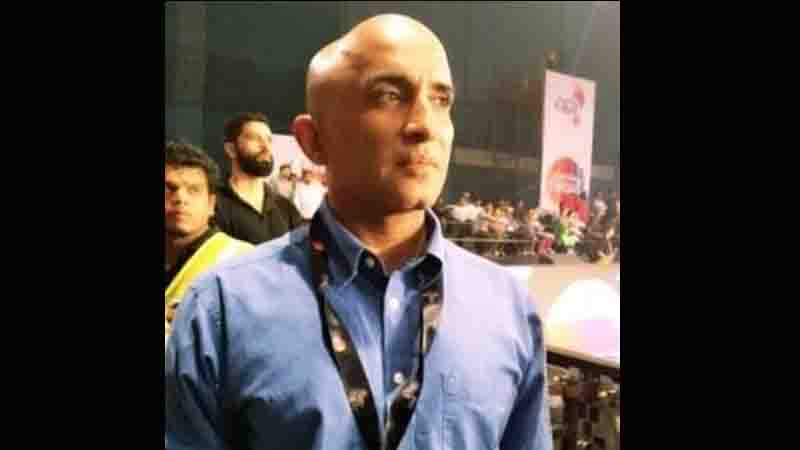
    MUMBAI: After years riding Dubai’s growth wave, Balu Nayar, the man behind several billion-dollar businesses, is betting big on the Middle East’s next blockbuster: Saudi Arabia. And he’s doing more than cheering from the sidelines—he’s launching AraIndica, a venture platform built to plug Indian innovation into the Kingdom’s transformation story.

    “Saudi Arabia is the next in line for transformation—and a much larger economy,” says Nayar, pointing to stats that read like an investor’s dream:

    ●    $26 billion FDI in 2023, up 91 per cent year-on-year

    ●    Mega projects like Neom and Jeddah Central pumping in billions and promising thousands of jobs

    ●    Tourism up 73 per cent, VC funding leading MENA, and green energy powering toward 60 GW

    ●    A leap to 13th place on the 2025 A.T. Kearney FDI Confidence Index

    But Nayar isn’t launching yet another consultancy. “We’re not consultants. We’re builders. We have skin in the game,” he says. AraIndica’s approach is rigorous, selective, and unapologetically blunt.

    First up is market fit diagnostics. No flattery if your business doesn’t align with Saudi needs, you’ll hear a hard “no”. The platform vets Indian ventures against Saudi mega-projects, digitalisation goals, and local demand realities.

    Then comes strategic localisation, which is a regulatory fast-tracking, partner matchmaking, and investor-ready positioning tailored for Saudi dynamics. AraIndica even grooms founders on etiquette and investor psychology before hosting high-stakes roadshows.

    Post-entry, AraIndica sticks around—hiring local talent, ensuring Nitaqat compliance, and establishing advisory boards to guide long-term growth.

    With Saudi’s Vision 2030 eyeing non-oil sectors like healthcare, agri-tech, education, and green energy, Nayar says the time is ripe—but tricky. “Market entry isn’t easy. You need deep local expertise and real relationships,” he adds.

    AraIndica is out to fill that gap, with hard-earned wisdom, not PowerPoint theory. “We know what it’s like to make mistakes and still scale. That’s the edge we bring,” Nayar says.

    The bottom line is AraIndica isn’t selling maps to Saudi Arabia’s gold rush, it’s laying the roads brick by brick.

    (If you are an Anime fan and love Anime like Demon Slayer, Spy X Family, Hunter X Hunter, Tokyo Revengers, Dan Da Dan and Slime, Buy your favourite Anime merchandise on AnimeOriginals.com.)

  • Golden words, golden futures as KEF bets big on real stories of change

    Golden words, golden futures as KEF bets big on real stories of change

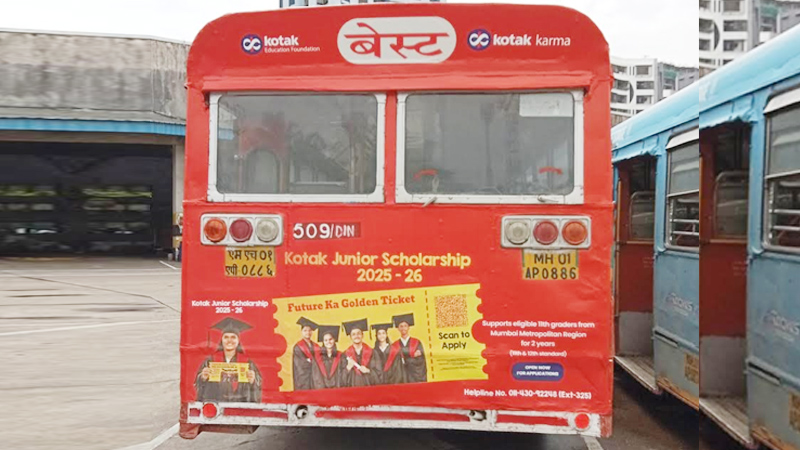
    MUMBAI: What do golden tickets and scholarships have in common? For hundreds of bright young minds, it’s the chance of a lifetime and Kotak Education Foundation (KEF) is spotlighting that connection with heart and purpose. Celebrating MSME Day 2025, KEF has rolled out a compelling campaign titled “Future Ka Golden Ticket” to raise awareness about its flagship Kotak Junior Scholarship.

    Featuring real-life beneficiaries, the integrated campaign draws from actual stories of Mumbai’s promising students whose lives have been transformed through KEF’s support. From bus shelters and cab panels to guerrilla tricycle activations in underserved areas, the visuals and the message go straight to the heart.

    But KEF isn’t just offering financial aid. It’s going the extra mile with what it calls “beyond scholarship” initiatives mentorship, academic assistance, and life-skills training designed to ensure holistic development. And the campaign, by putting real faces to these efforts, doubles down on trust and relatability.

    “We’ve seen how ambition alone isn’t enough. What changes lives is access and zidd,” said a KEF spokesperson, echoing the foundation’s “Inch Wide, Mile Deep” philosophy that underpins every intervention across Maharashtra and Gujarat.

    With three core verticals, school interventions, equitable scholarships, and vocational training, KEF’s initiatives have touched thousands. From building teacher capacity and improving English fluency in middle schools to supporting model schools at the district level, the impact is both broad and deep.

    In numbers, KEF’s scholarship portfolio includes:

    .  Kotak Junior Scholarship for students in Mumbai’s low-income schools pursuing Class 11 & 12.

    .   Kotak Kanya Scholarship (launched in 2021) for meritorious girls nationwide in higher education.

    . Project Unnati, which coaches unemployed youth in IT, spoken English, and life skills, guaranteeing placements to help them step into the workforce confidently.

    With this new campaign, KEF is looking not just to inspire, but to scale with an eye on systemic reform. The focus is shifting from school-level impact to district and state-level education transformation. The next frontier? Impact at Scale.

    As the CSR arm of Kotak Mahindra Group, Kotak Karma’s efforts through KEF are rooted in the belief that education is the greatest equaliser and in this campaign, every story told is another step toward levelling the playing field.

    (If you are an Anime fan and love Anime like Demon Slayer, Spy X Family, Hunter X Hunter, Tokyo Revengers, Dan Da Dan and Slime, Buy your favourite Anime merchandise on AnimeOriginals.com.)

  • Zidd Hai Jeet Hai as TTBS celebrates MSME grit this MSME Day

    Zidd Hai Jeet Hai as TTBS celebrates MSME grit this MSME Day

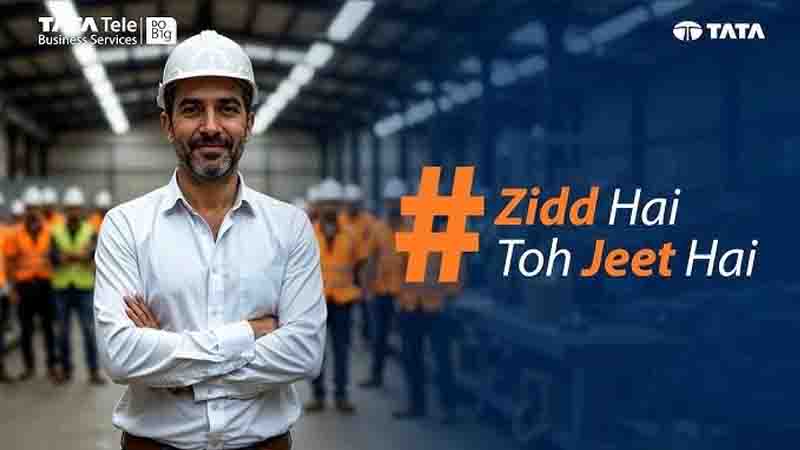
    MUMBAI: What drives India’s small businesses ambition or attitude? Tata Tele Business Services (TTBS) thinks it’s zidd that unrelenting, gritty will to win. And this MSME Day 2025, the brand is spelling it out loud and clear with its new campaign “Zidd Hai To Jeet Hai”, a punchy tribute to the backbone of India’s economy.

    Launched on 27 June , the campaign goes beyond boardroom clichés and brings real MSME hustle to the screen capturing the steely spirit that pushes modest enterprises to punch way above their weight. With a brand film and three hard-hitting stories across tech, banking, and manufacturing, TTBS showcases MSMEs not as underdogs, but as unstoppable forces rewriting India’s growth playbook.

    “In boardrooms and on shop floors, in small towns and big cities, there’s one common thread the zidd to succeed,” said Tata Teleservices senior vice-president of product and marketing Vishal Rally. “MSMEs are the key drivers of India’s economy, and at TTBS, we’re proud to fuel their growth with smart digital solutions.”

    The films, the fire, the fight:

    1.   Tech Pioneers: IT MSMEs coding India’s future, proving that breakthrough innovation doesn’t always need plush offices just persistence.

    2.   Fintech Fixers: Financial inclusion warriors taking banking to Bharat’s unbanked corners, one digital leap at a time.

    3.   Manufacturing Mavericks: Made-in-India heroes delivering world-class goods to global markets from humble beginnings.

    Through these stories, TTBS puts a spotlight on the very sectors it supports with its solutions whether it’s Smartflo Ucaas, secure cloud connectivity or scalable cybersecurity. The message? MSMEs don’t just survive, they scale, when given the right tools.

    The campaign also comes at a time when MSMEs are more crucial than ever. Contributing significantly to India’s GDP and employment, they’re not just business units, they’re engines of economic inclusion and innovation. TTBS, by providing purpose-built digital tools, aims to bridge the tech gap and enable these businesses to thrive in an increasingly connected economy.

    With “Zidd Hai To Jeet Hai”, TTBS isn’t just launching a campaign, it’s raising a toast to the tenacity of those who turn every ‘no’ into a new beginning. Because when India’s MSMEs bet on themselves, they’re not just dreaming big, they’re delivering bigger.

  • AI reshapes market research: insights get faster, sharper, smarter

    AI reshapes market research: insights get faster, sharper, smarter

    MUMBAI: The Market Research Society of India (MRSI) turned the spotlight on AI’s game-changing role in insights at a buzzing webinar on 25 June, titled The Future is AI: Revolutionising Market Research for Tomorrow’s Insights.

    Hosted by independent marketing measurement consultant Sunder Muthuraman, the session featured ,  Ipsos India practice lead – innovation, understanding & client advisory  India Krishnendu Dutta, and ITC Foods, vice president – head of insights and analytics  Vara Prasad.

    Vara Prasad kicked things off by breaking down AI’s impact on market research—declaring traditional methods slow and outdated in a world that demands speed and scalability. At ITC Foods, AI now does the heavy lifting: mining public data, analysing sentiment in customer care calls, listening to social chatter for trend-spotting, and even crafting product concepts. With predictive dashboards in the mix, AI is also helping sharpen business strategy. “AI needs context to shine,” said Prasad, adding that when trained right, it can evolve into a serious innovation engine.

    Krishnendu Dutta pulled back the curtain on Ipsos’s “Facto” — a bespoke AI sandbox built for researchers to safely explore new tools without the chaos. From translation to topline extraction and even creating agentic personas that replace dusty old segmentation decks, Facto is bringing AI to daily insight generation. Ipsos is also tapping into synthetic data to stretch the life and depth of small datasets.

    But both speakers hit pause on the hype with a key reminder: AI won’t replace humans—it’ll supercharge them. Whether it’s prompt engineering, model training or strategic activation, the real magic still needs a human touch.

    To watch the full session, click here.

  • Oppo plays it smart with Gen Z in ‘Har Scene Ka Asli Partner’ blitz

    Oppo plays it smart with Gen Z in ‘Har Scene Ka Asli Partner’ blitz

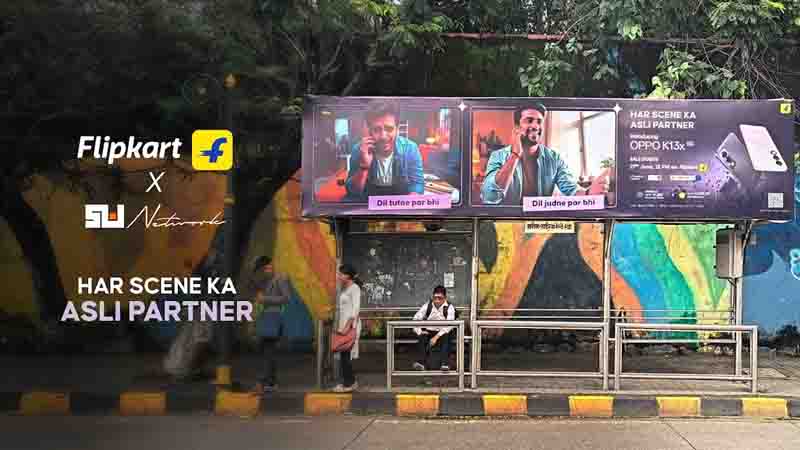
    MUMBAI: When life gives Gen Z heartbreak, potholes, and 7 per cent battery anxiety, Oppo gives them the K13x and a campaign that quite literally meets them where they are. Launched in collaboration with Flipkart and led by SW Network, the ‘Har Scene Ka Asli Partner’ campaign turns everyday desi dilemmas into brand gold, making the Oppo K13x 5G a street-smart star.

    Armed with military-grade durability, superfast charging, and a long-lasting battery, the K13x is clearly built for life’s curveballs. But instead of singing specs in a sterile studio, the campaign took to the streets and memes with cultural insight and cleverness in equal measure.

    From quirky OOH billboards in college zones declaring “Bro, Kya Scene hai? vs Bro, Scene Ho Gya,” to live charging kiosks that saved the day (and your phone), every touchpoint served more than just copy, it offered context.

    And in a monsoon masterstroke, SW Network turned India’s dreaded potholes into real-world testimonials for toughness. Painted road signs and standees reminded passersby: this phone is pothole-proof.

    Print ads in Dainik Jagran and Navbharat Times added yet another punch, flipping familiar frustrations like slow charging and flimsy builds into moments of revelation. The core idea? “This wouldn’t happen if you had the Oppo K13x.”

    SW Network co-founder Raghav Bagai explained, “Instead of talking about durability in a lab, we showed it where people actually feel the pain on the road. This campaign proves creativity can come from chaos.”

    Meanwhile, digital got its own slice of the action. Meme content and skits by Gen Z creators flooded Instagram and Moj, racking up millions of impressions and cementing the K13x’s place in the cultural scrollscape.

    What began as a smartphone launch has now become a scene-stealer of its own literally. In a cluttered phone market, Oppo and Flipkart have cracked the code: sell the story, not just the specs. And in a world that runs on low battery and high emotion, the K13x might just be the asli partner for every scene.

    (If you are an Anime fan and love Anime like Demon Slayer, Spy X Family, Hunter X Hunter, Tokyo Revengers, Dan Da Dan and Slime, Buy your favourite Anime merchandise on AnimeOriginals.com.)

  • All pride, no prejudice, or just marketing metrics?

    All pride, no prejudice, or just marketing metrics?

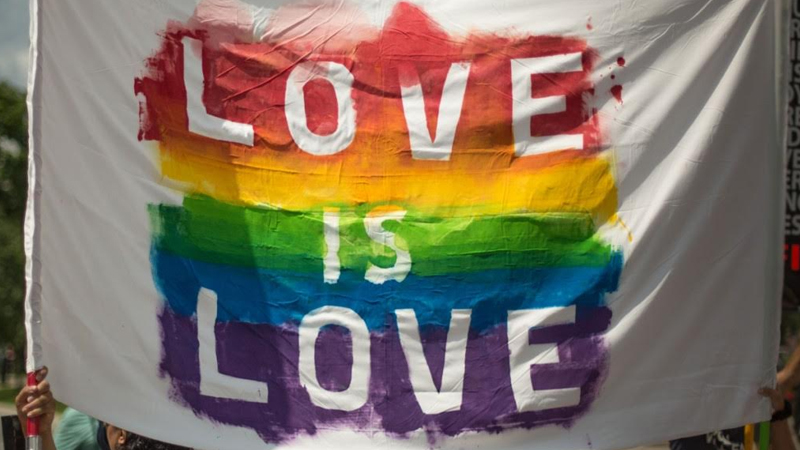
    MUMBAI: As June’s rainbow wave floods timelines, store shelves and corporate logos alike, a sharper question emerges: are brands and agencies walking the talk on LGBTQ+ inclusion, or just flashing their colours for clicks?

    A quick glance across campaigns, policies and creative briefs shows a spectrum—from genuine transformation to performative wokeness. And some of India’s most visible brand voices are ready to call it like it is.

    From “We support Pride” to “We don’t know sh!t”

    Vanaja Pillai, President, 22feet Tribal Worldwide & Head – Inclusion & Impact, Omnicom Advertising Group India, leads with candour. “We believe real change happens when people can show up with curiosity, ask questions, and listen without fear,” she says. Their internal campaign ‘We Don’t Know Sh!t’ ditches moral high ground for messy, human conversations—and Pride is just one point in a year-round learning curve. 

    This year, their Pride initiative is themed ‘Words Build Worlds’, a linguistic lens on how inclusive language can shift narratives and erase bias. Events like Queerically Speaking, Postcards from Pride and even a queer stand-up showcase underscore that allyship doesn’t need a corporate brief—it needs honesty and a mic.

    Beauty with backbone

    At Joy Personal Care, CMO Poulomi Roy doesn’t just market moisturiser. “Inclusivity isn’t seasonal. It’s a mindset,” she says. The brand has walked the walk with a campaign starring Sushant Divgikar—not as a Pride-month gimmick, but as part of a consistent narrative.

    They’ve distributed over 100,000 personal care kits to transgender individuals and sex workers, not under CSR, but baked into their brand DNA. “Representation is not a checkbox for us,” Roy insists. And it shows. From acid attack survivors to plus-sized models, their campaigns are as inclusive behind the scenes as they are on screen.

    Her advice to the industry? “Tokenism is easy. But real impact comes when brands shift the lens from visibility to lived experience.”

    Strategy with substance

    Sonica Aron, founder of Marching Sheep, believes intent is everything. “Pride isn’t about logos in rainbow hues, it’s about policies, partnerships, and presence—every single day.”

    She sees progress in brands that ditch the June-only visibility playbook. “The best campaigns come from rooms where queer folks are not just featured, but decision-makers. That’s when messaging hits home,” says Aron.

    For Aron, real inclusion also looks like safe workplaces, inclusive benefits, and storytelling that avoids the tired tropes. “Less punchline, more person,” she sums up.

    Campaigns with commitment

    Over at White Rivers Media, senior vice president, business strategy & growth, Mitchelle Rozario Jansen sees the shift. “There’s a rise in year-round brand commitment—beyond just posting a rainbow flag,” she says. The agency now partners directly with queer creators to ensure campaigns don’t just represent, but resonate.

    While not every brand is there yet, she’s optimistic. “Today, queer characters aren’t just shown as ‘different’ or comic relief. More stories are about them as people, parents, co-workers and friends. And that’s the real shift.”

    What does the data actually say?

    The numbers don’t lie, especially when it comes to Gen Z. “Younger consumers back brands that back values,” says Roy. “Inclusion drives deeper emotional connections and loyalty that goes beyond seasonal sales.”

    Small audiences? Maybe. But the engagement? “Genuine. Vocal. Long-lasting,” she comments.

    Social Panga founder Gaurav Arora, believes the brands that walk the talk are cashing in where it counts: loyalty, love, and repeat purchases.

    Surveys show 68 per cent of Gen Z and 55 per cent of millennials stick with brands that demonstrate genuine LGBTQ+ inclusion. Companies that offer inclusive benefits, pronoun options, and support queer employee groups have seen a 12–15 per cent jump in repeat business. That’s not just goodwill—it’s growth.

    Inside the evolution of allyship

    “Allyship is now the baseline,” says Arora. “These young consumers expect to see queer inclusion across HR, campaigns, partnerships—even product design.”

    He further says that many brands are stepping up. Gone are the days of token rainbow logos in June. Today’s leaders are offering gender-neutral product lines, non-discrimination clauses, and year-round collaborations with LGBTQ+ organisations. They’re co-creating content with queer voices, embedding representation in hiring and storytelling, and hosting real conversations—not just reels.

    Meanwhile, rainbow-washing is getting called out fast. “Seasonal ads with no follow-through? Bright in June, forgotten by July,” Arora concludes.

    So, are Indian brands truly embracing inclusivity—or still riding the rainbow wave? It’s a bit of both. The glitter is still there, but the groundwork is growing. When campaigns move from optics to action, when hiring shifts from compliance to culture, and when queer stories are told with nuance, not novelty, that’s when the real change happens.

    Until then, the rainbow will remain both a symbol and a litmus test.

  • Gameskraft powers Indian athletes across track, field, para and archery

    Gameskraft powers Indian athletes across track, field, para and archery

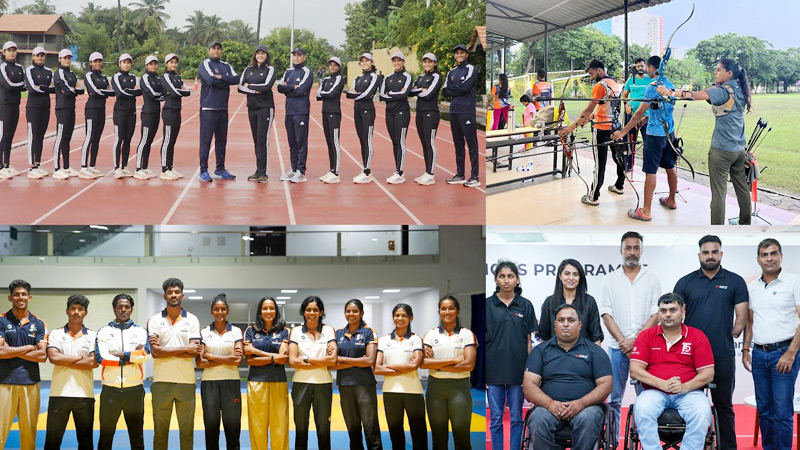
    MUMBAI: When skill meets support, the scoreboard changes. That’s exactly what Gameskraft Foundation is banking on as it doubles down on India’s medal ambitions reaffirming partnerships with four key sporting foundations, the Inspire Institute of Sport (IIS), Anju Bobby Sports Foundation (ABSF), Gosports Foundation, and the Dola & Rahul Banerjee Sports Foundation (DRBSF).

    “Over the past few years, our partnerships have shown encouraging results,” said Rishi Wadhera, Vice President – Corporate Communications & CSR, Gameskraft. “It’s been heartening to see how consistent support can make a meaningful difference in the journeys of emerging athletes. Our focus remains on nurturing potential, building sustainable infrastructure, and supporting communities in their efforts to create future champions. These collaborations are a reflection of our continued commitment to contributing positively to India’s sporting ecosystem with a long-term vision and are grateful to our partners for their commitment.”

    Together, these collaborations form a medal-making machine supporting everything from para-athletes to archers and track stars, from grassroots training to global podiums.

    At IIS, the Foundation backs the Athletics Centre of Excellence, whose star pupil Neeraj Chopra took home Silver in Javelin at the 2024 Paris Olympics. At ABSF, a new academy is taking shape in Bengaluru to foster more future Shaili Singhs who leapt to Bronze in Long Jump at the 2025 Asian Athletics Championships.

    Lauding the efforts of the Gameskraft Foundation and their long-term commitment to a robust sports-driven culture, Anju Bobby George, Founder of ABSF and India’s first medallist in the World Athletic Championship said, “Our association with Gameskraft Foundation has been anchored in a shared belief in long-term impact. The backing we’ve received is not just empowering for our training infrastructure but has been vital in inspiring young girls from small towns to dream bigger.”

    Gameskraft’s partnership with GoSports Foundation under the Para Champions Programme is a testament to inclusivity in sports. At the 2024 Paralympics, the results were golden literally with Sumit Antil and Dharambir grabbing Gold, Suhas Yethiraj securing Silver, and Rakesh Kumar bagging Bronze.

    In the archery arena, Deepika Kumari supported via DRBSF scored Bronze at the 2025 Archery World Cup, aiming true with Gameskraft in her corner.

    “For Indian sport to reach the success we aspire, it needs the coming together of more than just talent. Corporate India’s involvement in sport is pivotal, and some of our more prominent achievements have been a result of this support. At Gameskraft Foundation, we have people who are as obsessed with us about our Olympic ambitions. Together we have created a system for our athletes that gives them the best possible chance to succeed, and I am confident we will have more podiums coming from track and field in the near future.”, said Manisha Malhotra, President, Inspire Institute of Sport.

    The results are already on the leaderboard, but Gameskraft isn’t done yet. With every laurel and long jump, the foundation is showing that gaming companies can play a serious role in India’s Olympic journey not just virtually, but with real impact on real tracks.

    Now that’s how you level up.

  • Spinny drives the point home with Sachin’s ‘God Promise’ on the move

    Spinny drives the point home with Sachin’s ‘God Promise’ on the move

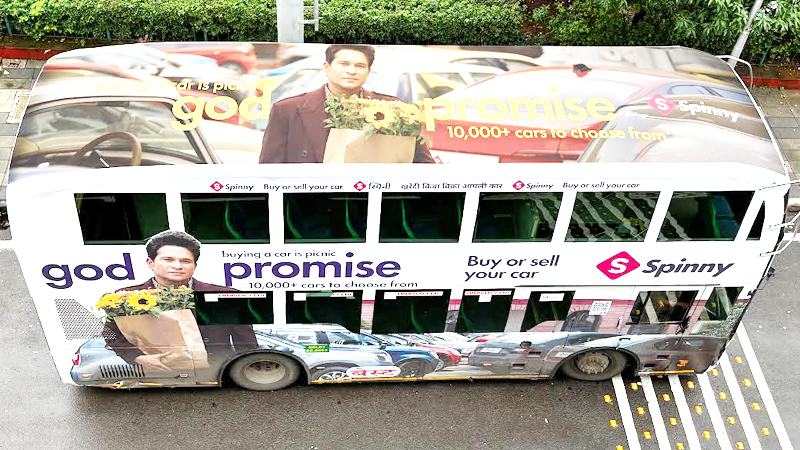
    MUMBAI: When Sachin Tendulkar makes a promise, it’s not just heard, it’s driven home. Quite literally now, as Spinny’s ‘God Promise’ campaign hits the road across India’s metros, shifting gears from screens to the streets. After racking up millions of views online and sparking buzz on Linkedin, Spinny has now rolled out a high-visibility outdoor and transit campaign. Think branded cabs in Delhi, city buses in Chennai, Bengaluru and Pune, and even Mumbai’s iconic double-decker buses all bearing the message of trust, assurance, and India’s most beloved cricketer.

    It’s a smart move. Where better to meet your potential car buyer than during their daily commute?

    Much like the brand films, the OOH creative is no-nonsense and culturally grounded. The sight of Sachin paired with the words “God Promise” cuts through the usual billboard clutter not with flash, but with familiarity. The campaign strikes an emotional chord with Indians for whom trust, especially while buying or selling a car, is non-negotiable.

    In addition to the celebrity endorsement, Spinny has backed its ‘promise’ with action: a first-of-its-kind 3-year Assured+ warranty, a 5-day money-back guarantee, and access to over 10,000 plus verified cars. For sellers, the platform also promises best-price deals putting its money where its messaging is.

    From Delhi’s RWA networks to Mumbai’s bus routes and Chennai’s bustling corridors, Spinny’s strategy is simple: be visible where the buying intent brews. Not in boardrooms or banners, but on buses, in traffic jams, and on roads where real decisions are made.

    As one campaign insider put it, “Trust isn’t a tagline for us, it’s an everyday delivery.”

    With Spinny’s new route, the message is clear: in the great Indian used-car market, faith isn’t optional. It’s a feature.

  • “Brands don’t really push the LBTQIA conversation beyond a tokenistic approach”- Dot Media’s Danny Advani

    “Brands don’t really push the LBTQIA conversation beyond a tokenistic approach”- Dot Media’s Danny Advani

    June is Pride Month – a time when rainbows pop up across corporate India, from brand logos to Instagram grids. But behind the hashtags and the colourful symbolism, a tougher question lurks: is this genuine progress or just another seasonal PR parade?

    Over the years, India Inc. has inched forward in recognising sexual diversity. But is it truly embracing the LGBTQIA+ community, or simply ticking the inclusion box for 30 days a year? To explore this, Indiantelevision.com turned to leaders in the advertising and marketing fraternity.

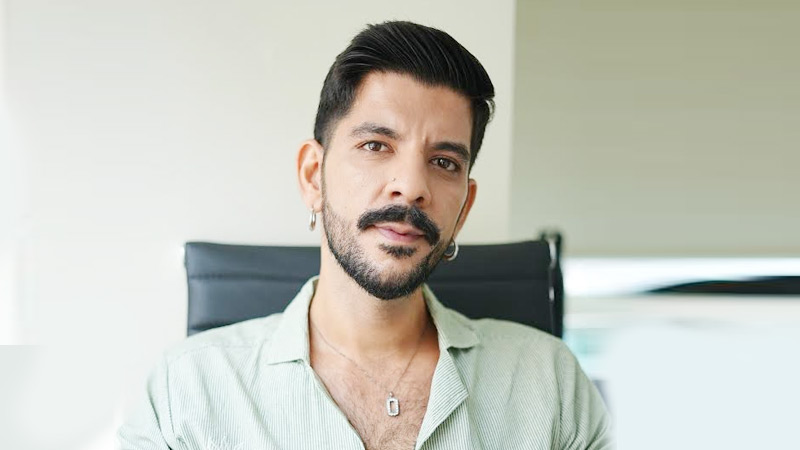
    In the second part of our Executive Dossier series, Indiantelevision.com’s Rohin Ramesh had an email interaction with Danny Advani, head of business strategy at Dot Media. Previously, where Mihir’s take on Indian brands during Pride Month felt like a rainbow with a silver lining — cautiously optimistic, yet hopeful — Advani’s perspective is the thundercloud that follows. In a sharp contrast to the celebratory tone often seen in June, he lays it bare: we’ve barely scratched the surface. For him, the truth is uncomfortable — most brands are still dancing around the idea of inclusion, not walking the talk. His take sparks a necessary debate: are brands truly evolving, or are we still mistaking seasonal signaling for sustained support?

    Advani isn’t buying into the optimism. His perspective acts as a stark counterpoint — a reminder that beyond the sparkle of Pride-themed campaigns, the reality remains largely cosmetic. For him, the issue isn’t that brands are doing too little during Pride Month; it’s that they’re doing so only during Pride Month.

    The tension between these viewpoints opens up a much-needed dialogue: Is India’s brand ecosystem truly evolving in its understanding and representation of LGBTQIA+ identities, or are we still stuck in a cycle of rainbow-washing, safe tokenism, and corporate convenience?

    Excerpts from the interaction  follow.

    On brands evolving from symbolic gestures during pride month to sustained representation in product design, hiring policies, partnerships and campaigns that sparked conversation vs those that felt like rainbow-washing.

    In the Indian brand landscape, I personally haven’t come across any brand that really pushes the boundaries of the LBTQIA conversation beyond a tokenistic approach during the pride month? Where does the association disappear after June? Do we see more open conversations around them? Not yet! Are we ready as a country, not yet! Of course some brands are inclusive in conversations but is it an always on approach? Don’t think so!

    On creative, PR, and digital agencies working to ensure LGBTQ+ stories are told authentically, with lived experience and not just layered filters.

    My response remains the same above. But yes, there are agencies and organisations that do put in the effort for representation and create a safe space and welcoming environment for the community. Parmesh Sahani has been integral in doing this for Godrej now for years and I think we need more of these flag bearers to help open the archaic mindset of most organisations.

    On Indian brands showing up for the queer community throughout the year, or only when it trends.

    Let me switch my gay spotlight on and say ‘Oh honey, don’t even get me started”. Brands don’t care, most of them, they don’t care about Mothers Day, Fathers Day let alone pride. It is a trend that they ride the wave hoping they get to see the golden pot aka ROI across the rainbow.

    But I must say, some brands have at least made some inclusions in their choices of talents being used, be it as a face for commercials, or product shoots but there seems to be some movement in the positive direction.

    On the data about LGBTQ+ inclusion driving brand loyalty, especially among Gen Z and millennial consumers.

    I am not even sure if there’s a substantial data pool in the Indian landscape, but globally brands like Levis, Skittles, etc have seen proof of success in being an inclusive brand. I remember reading a paper that says skittles saw an engagement spike of 20-25 per cent during their pride campaign and as per Nielsen research paper “LGBTQ+-inclusive ads saw 23 per cent higher brand recall among Gen Z, and were 2x more likely to lead to purchase intent”. Even Close Up as a brand in India has been inclusive in their campaigns in the past and not necessarily for Pride but even during Valentines.

    On brands showing solidarity without falling into legal or cultural backlash traps, given the legal grey areas around same-sex marriage in India.

    No one is asking any brand to endorse or fight for the rights of the community by showcasing any strong statements but just have the appetite to showcase and accept the community first for who they are and stop questioning their choices. I remember an incident when X used to be Twitter and a certain Top TIer Bank had rolled out a campaign and a service for same sex couples to have a joint holder account. But when my friend applied for it, she was denied and it became a Twitter War. Pinkwashing isn’t cool!

    On the LGBT market being a big enough market in India to be targeted for products specially designed for them.

    Can’t remember any digital film, television commercial that showcased anything outside a heteronormative lens. The Indian ecosystem is too fragile and lacks awareness of anything outside the biological gender to accept or even have a conversation that could be in the benefit of the community.

    On the LGBT market being a big enough market in India to be targeted for products specially designed for them.

    Take a page from the new age fashion brands and I ain’t talking about the e-commerce giants. Brands in the fashion space today are aware of the choices that the community needs so instead they are keeping it unisex. It’s not necessarily defined by biological gender but by the design and the collection that is inclusive for all.

    On where the right attitude towards the LGBTQ+ community in an organisation truly begins — leadership, middle management, or peers.

    Oh, the chicken and the egg question! Let’s be honest, it all has to work in tandem with each other. The management can set the groundwork and help create an environment that is inclusive, but the middle management and the peers are equally responsible for you to feel it’s a safe space to work. You cannot have your leadership valuing your contributions while your peers and middle management try to tear you apart with ignorant remarks or homophobic slurs. It seems like a lot to ask but you need the majority in an organisation doing the right to silence the wrong.