Category: MAM

  • Wiggles introduces tyohaar ki mithai for “Furryvaar”

    Wiggles introduces tyohaar ki mithai for “Furryvaar”

    Mumbai: Wiggles has launched a purpose-driven campaign to ensure a pet-safe and inclusive Diwali this year. The tagline for the “# TyohaarWithFurryvaar” campaign reads, “Iss Saal Naya Riwaaz Banate Hain, Tyohaar Furryvaar Ke Sath Manate Hain.”

    Celebrations are incomplete without ‘parivaar’ and pets have become integral family members. Hence, Wiggles coined the term “Furryvaar” to include our furry family.

    With this campaign, Wiggles has urged families to change how we look at rituals and traditions and keep our pets in mind while creating our shopping lists, ensure pet treats are a part of the sweets at home; and not forget that one adorable selfie with their fur buddy.

    “# TyohaarWithFurryvaar” is now available on all social media platforms, as well as in the Wiggles Tribe pet parent community. The campaign is conceptualised and executed by the Wiggles’ in-house team.

    Wiggles introduces “Tyohaar ki Mithai” as part of the “# TyohaarWithFurryvaar” campaign, which raises awareness and educates people about how Indian sweets can be toxic to pets and how sugar, maida, and nuts can harm your pet’s health.

    It also shared recipes for pet-friendly sweets like xylitol-free peanut butter and oats laddu that can add sweetness to their Diwali celebrations. In addition to this, Tyohaar Taiyyar offers a socio-cultural atmosphere and educates pet parents to try the anxious pet programme module on firecracker training, besides spreading awareness on celebrating a noise-free Diwali. Lastly, Wiggles highlights the bond of family ties through Tyohaar Wali Selfie and encourages pet parents to upload a festive selfie with their pets, as families often post during Diwali celebrations. 


    A post shared by Wiggles (@wiggles.in)


    Speaking on the campaign, Wiggles founder and CEO Anushka Iyer said, “Pets are at the heart of all we do, and at Wiggles we make earnest attempts to ensure the right kind of pet inclusivity in all celebrations. Diwali is equally important and our campaign urges and encourages pet parents to make sure that their festivities are pet-friendly and pet-safe. We want them to know that while it is generally a difficult time for our pets and streeties, it is the small efforts collectively that make up for the anxiety they face and ensure it is a happy Diwali for them too. After all, dogs and cats are family, and what is Diwali without our furry family?”

  • Mayur Jumani asks customers to come home to Ikea

    Mayur Jumani asks customers to come home to Ikea

    Mumbai: The popular YouTuber Mayur Jumani has launched a new video to celebrate Ikea India’s new brand positioning, Ghar Aa Jao, Come Home to Ikea. The music composer, singer, and social media sensation has taken a musical twist and created this slice-of-life video inviting people to come home and celebrate their life at home.

    In his latest video, Mayur visited the Ikea Navi Mumbai store to shoot the video. He created the beats for his music video out of Ikea products and themed the song around Ghar Aa Jao. The song showcases the visuals of the beautiful Ikea store and invites people to come over to Ikea and experience a better life at home.


    A post shared by Mayur Jumani (@mayurjumani)

  • GUEST ARTICLE: Mobile OEM advertising solutions are helping D2C brands ace their performance marketing game this festive season

    GUEST ARTICLE: Mobile OEM advertising solutions are helping D2C brands ace their performance marketing game this festive season

    Mumbai: Due to conservative market behaviour since March 2019, covid-19 has restricted businesses from taking a full-scale marketing approach. However, mobile user penetration has grown enormously since the same period in India due to the increase in usage of internet services and the affordability and economic viability of smartphones. The upsurge in the use of mobile technology has led to an accelerated growth in the consumption of D2C mobile apps. Moreover, with mobility and in-person interactions returning to life in 2022, consumer behaviour toward D2C brands is also drastically growing.

    As the festive season in India is about to hit the roof, D2C brands are expected to garner significant attention and demand, and consumer sentiment looks upbeat, particularly in tier I & II cities. For these brands, the expectation of such seasonality means growth in revenue through performance marketing, as consumer brands during special promotions and festivals in India are proven to generate more business.

    Boom expected in the post pandemic era…

    As per the ‘Second Festive Pulse Survey by The Trade Desk/Nasdaq: TTD,’ there will be a 68 per cent increase in Indian shoppers this festive season with nearly seven in 10 shoppers intending to shop on D2C sites. While observing the current trends, there is increased competition between D2C brands as they become more focused on their ad spends to maximise growth during this festive season despite the concerns over rising inflation.

    App marketing opens up avenues to acquire loyal users for D2C brands…

    Indian D2C brands are thriving with an omnichannel marketing avatar that includes a mix of DOOH, TV, and digital ads using search and social, print, and more. While measuring the success of traditional marketing methods is difficult, one can effectively measure the ROAS (return on ad spend) with performance marketing through mobile OEM (original equipment manufacturer) app marketing.

    Leveraging OEM app marketing strategies to acquire users during this peak festive period can give D2C brands a more lucrative ROAS and increase user engagement. In addition, with mobile OEMs, D2C marketers can tap into untapped audiences and help them unlock a newer and more efficient revenue stream.

    Mobile OEM advertising offered by mobile OEMs such as Xiaomi, Huawei, Oppo, Vivo, and Samsung can help D2C brands with enabling app discoverability: D2C brands can leverage appographic targeting to target users with similar apps and unique app interests beyond the category during the festive season.

    Appographic targeting with mobile OEMs is potent in providing high-value users and acts as a powerful strategy for app marketers.

    Better Visibility: To increase ad visibility during special promotions or festivals like Diwali in India, D2C mobile apps can take full advantage of “app store featuring” with display formats such as Splash and Interstitial ads. In addition, mobile OEMs offer unique ad placements for special shopping and discount cards during the festive season.

    Increased re-engagement: Few mobile OEMs offer down-the-funnel re-engagement for m-commerce apps with special placements during the festive season to regain static users who have been inactive on the app. For such occasions, featured custom placements are highly recommended for increased brand awareness. In addition, D2C apps can also get consultations about the kinds of creatives that best work for the festive season to get the maximum reach and engagement.

    Getting the most of your app marketing strategy for ‘22 festive season…

    While developing creatives for display ads, app marketers must be highly attentive to ensure that their brand resonates with the colour scheme and fonts. It best helps the users identify and engage with the brand. Secondly, since mobile media buying inventories get increased bidding from app advertisers during the festive period, D2C marketers need to book high-impact branding placements on a timely basis. Before the pricing increases, D2C marketers need to plan media buying effectively. Equally important is to explore PMP deals at private marketplaces with mobile OEMs where app marketers can bid on high-performance-based suggested inventories.

    As consumers buy more from brands directly from the brands’ websites or apps, D2C brands should rightfully leave no stone unturned to scale their app marketing efforts and get some fresh eyeballs with a positive outlook on engagement and retention.

    The author of this article is AVOW co-founder Ashwin Shekhar.

  • Invest during muhurat trading with Angel One’s ‘Shagun ke Shares’

    Invest during muhurat trading with Angel One’s ‘Shagun ke Shares’

    Mumbai: Angel One, formerly known as Angel Broking, has returned with its ‘Shagun Ke Shares’ campaign this Diwali.

    This year, the fintech company is encouraging people to adopt ‘muhurat trading’ as a Diwali ritual and begin their journey of smart investments with Angel One.

    As part of the campaign, Angel One has released a digital film showcasing a young man investing during the Muhurat Hour on Diwali and asking people to make smart investments with Angel One for quick account opening, zero brokerage and smart recommendations. The company has also tied up with influencers from different genres and is leveraging the ICC Men’s T20 World Cup tournament to initiate the conversation around finance.

    Spreading out the message, Angel One chief growth officer Prabhakar Tiwari discusses ‘muhurat trading’ in a video message on his social media.

    According to Angel One, the top Diwali picks for this year include Federal Bank, Sona BLW, HCL Technologies, Stove Kraft, and Shobha, among others.

    Speaking about launching the “Shagun Ke Shares” campaign, he said, “For a long time, Muhurat Trading has been followed by just investors and traders. With an increasing population participating in the stock market, Muhurat Trading can be a good start for more people to hop on the bandwagon and turn it into, like all other Diwali rituals, something we are trying to do with our “Shagun Ke Share” campaign this year. The investment during the auspicious occasion is considered a sign of good fortune.”

    Adding to it, Angel One chief executive officer Narayan Gangadhar said, “India is a land of unique traditions. Even in the stock market, we have a tradition that is unique to us-‘muhurat trading.’ The muhurat hour marks the beginning of the financial year, and our state-of-the-art smart solutions can enable people to begin their investment journey on this auspicious occasion. We look forward to more people adopting to investing during the ‘muhurat trading’ hour this year.”

  • Weekend Unwind’ with: BYJU’S senior director of Film Crew Bhupinder Pal Singh Raina

    Weekend Unwind’ with: BYJU’S senior director of Film Crew Bhupinder Pal Singh Raina

    Mumbai: With another weekend upon us, it is time to unwind with the latest Q&A edition of Indiantelevision.com’s Weekend Unwind — a series of informal chats that peek into the minds of corporate executives through a fun lens in an attempt to get to know the person behind the title a little better.

    In this week’s session, we have BYJU’s senior director of film crew, Bhupinder Pal Singh Raina, opening up the windows to his thoughts.

    Bangalore-based filmmaker, actor, and tutor Bhupinder leads the direction pod at BYJU’S and is involved in setting production processes and quality benchmarks when a new product is conceived. He also tutors teachers, actors, and directors in the art of using film as a medium to better educate.

    Having graduated from an Australian university-affiliated film school in 2010, Bhupinder took up an acting course with The Actor’s Truth in Mumbai in 2018. He has been a part of a variety of audio-visuals, ranging from corporate to educational films to feature films like 777 Charlie, Sarvasva, and commercials with multiple brands. 

    So without further ado, here it goes…

    • Your mantra for life

    Don’t count the days. Make the day count.

    •     A book you are currently reading / plan to read

    I am currently reading “Ride of a Lifetime,” a memoir by the ex-CEO of Disney, Bob Iger. I highly recommend it to anybody who’s in the creative business field.

    •     Your fitness mantra, especially during the pandemic

    Theatre training and playing cricket twice a week kept me active and occupied throughout the pandemic.

    •     Your comfort food

    I enjoy a variety of foods. I just feel blessed to find edible food when I need it.

    •     When the chips are down a quote/ philosophy that keeps you going

    I firmly believe in the famous Hindi saying, “neki kar, dariya mein daal,” which loosely translates to doing everything with a good heart and expecting nothing in return.

    •     Your guilty pleasure

    I’ve had a sweet tooth since forever, so much so that I am genuinely worried about my health now.

    •     When was the last time you tried something new?

    I have recently learnt to swim, well, float to be honest, from a teammate at BYJU’S.

    •     A life lesson you learnt the hard way

    Being nice is cool, being naive isn’t.

    •     What gets you excited about life?

    The prospect of new experiences gets me excited. Like learning something new, meeting new people, hearing a good story and many more such things.

    •     What’s on top of your bucket list?

    I am a simple-minded man who likes to live in the moment, so I haven’t really set any goals for the future. 

    •     If you could give one piece of advice to your younger self, what would it be?

    I wish I had learnt how finance and investment work early in my life, so I’d not have to worry about survival. I am convinced that one can truly start living only when your key motivation is not money.

    •     One thing you would most like to change about the world

    Aahh… There are way too many things. I am glad I am able to contribute to one of those actively through my work at BYJU’S, by enabling better education for the next generation.

    •     An activity that keeps you motivated / charged during tough times

    I wouldn’t know how to define “tough times.” I guess I’ll just give my best without really worrying about the circumstances or consequences. That has really helped keep things calm inside.

    •     What lifts your spirits when life gets you down?

    Kindness Somehow, spotting even the smallest acts of kindness around me has always managed to refill my cup of positivity.

    •     Your go-to stress buster

    My cricket sessions and an engaging movie or series do the job.

  • Interactive Avenues appoints Ashutosh Nagare as vice president & head of performance marketing

    Interactive Avenues appoints Ashutosh Nagare as vice president & head of performance marketing

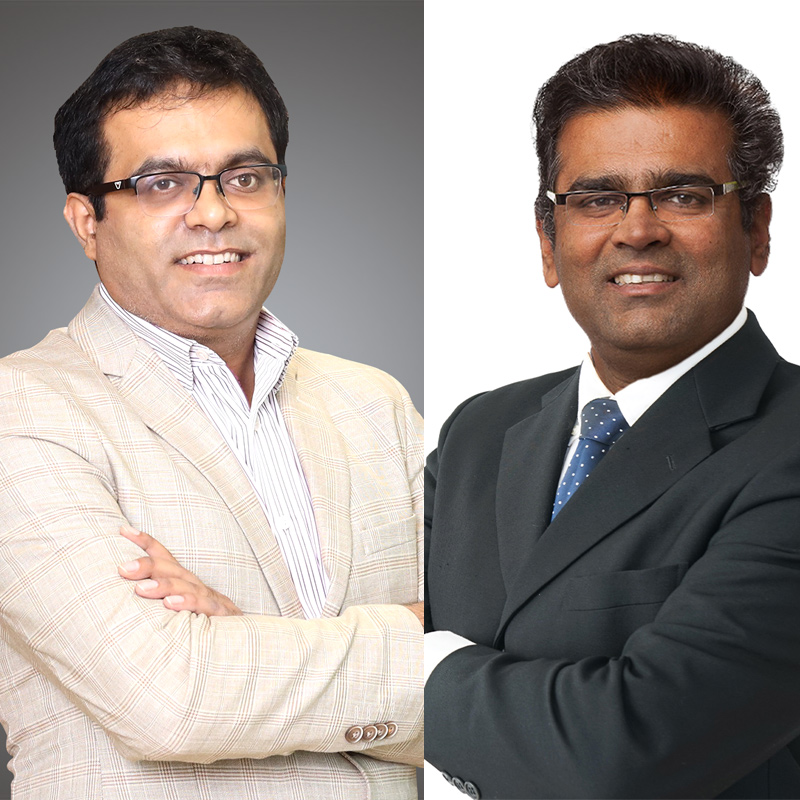
    Mumbai: Mediabrands India’s Interactive Avenues announced the appointment of Ashutosh Nagare as vice president & head of performance marketing. Nagare will be based out of the company’s Mumbai office and will report to the company’s executive vice president of media, Harish Iyer.

    As national lead for performance marketing, he will focus on growing the company’s performance portfolio by leveraging a mix of innovative strategies, robust partnerships, automation tools, and Reprise’s very own FLOW framework – which focuses on the seamless movement of consumers from discovery to purchase.

    Prior to this, Nagare has 12+ years of rich experience in digital marketing and has worked with leading brands like Reliance Communications, Dr. Batra’s, ALTBalaji, Tikona Digital Networks, and TrueFan.

    “As an integrated digital agency with a stellar track record, Interactive Avenues has unlocked incredible opportunities for me to create an impact in the performance marketing space. I look forward to elevating the North Star Metric for brands using a holistic combination of media, experience, and content strategies,” commented Nagare.

    Interactive Avenues Amardeep Singh added, “Ashutosh has deep experience of delivering business outcomes for brands across various verticals, including healthcare, telecom, entertainment, and technology. We are confident his proven expertise and leadership skills will help us deliver next-gen performance solutions that power scale and efficiency for our customers.”

    Interactive Avenues is India’s leading full-service digital marketing company with offices in Mumbai (headquarters), Gurugram, Bengaluru, Chennai, and Kolkata. They offer a comprehensive range of cutting-edge services, including media, programmatic, data & analytics, e-commerce, paid search, social media, SEO, ORM, creative, and web development, under one roof with multidisciplinary teams.

  • Tourism Australia’s new ad campaign invites India, the world to come and say G’day

    Tourism Australia’s new ad campaign invites India, the world to come and say G’day

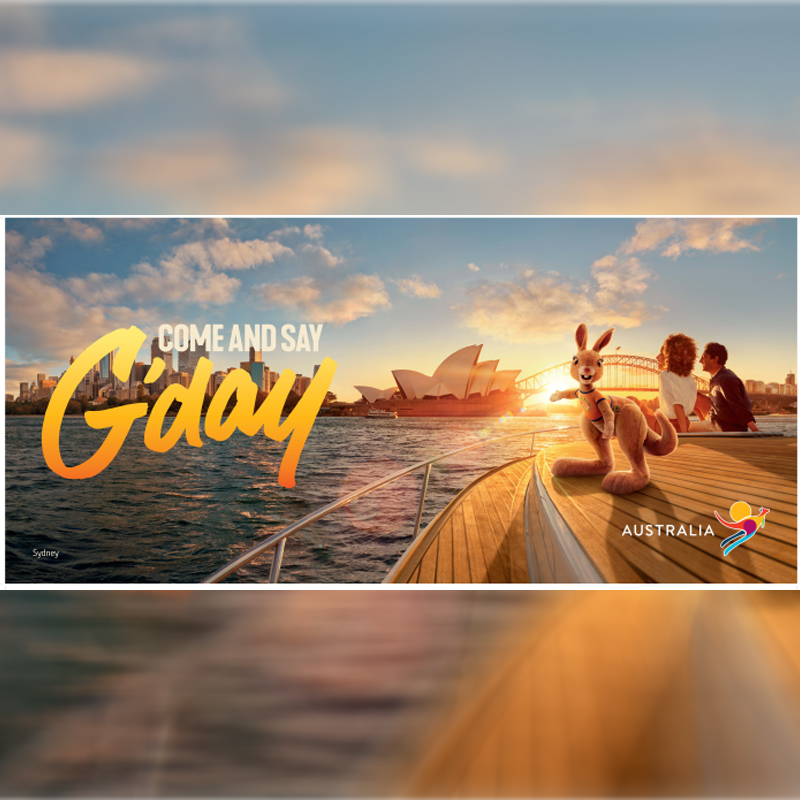
    Mumbai: With the Twenty20 World Cup currently taking place in Australia, the eyes of cricket fans in India are down under. Looking to capitalise on this momentum, Tourism Australia has created a live-action short film with CGI animated characters. The short film, G’day, is part of a new global tourism campaign inviting international travellers, including those in India, to come and say G’day, and plan and book an Australian adventure of their own. Directed by Australian director Michael Gracey (The Greatest Showman) and produced by Finch, G’day, the short film shows the unlikely adventure of a plush souvenir kangaroo named Ruby, voiced by Australian actor Rose Byrne, and a toy unicorn, Louie, voiced by actor Will Arnett.

    The short film follows Ruby and Louie as they ‘break out’ of a gift shop on the Great Barrier Reef and take an incredible adventure around Australia, visiting iconic sites including Sydney Harbour, Melbourne’s laneways, and stunning natural landscapes like Uluṟu and Nitmiluk Gorge. Along the way, they explore the magnitude of travel experiences Australia has to offer, connect with Australia’s Indigenous cultures, and learn why every great adventure starts with the unmistakably Aussie greeting, “G’day!”

    The campaign can be seen on YouTube, Meta’s properties Facebook and Instagram, and on other programmatic video platforms. The goal is to target high-yield travellers.  On 9 November, the campaign will launch on the OTT platform Disney+Hotstar for a one-month period. This deal could be extended. OOH and in-cinema advertising will also be used. Billboards across Mumbai, Delhi, and Bengaluru are being used. Print is also being used. For now, television is not being used.

    The campaign video is the first iteration of a campaign that will run for three years. In terms of marketing, 10 influencers from India have been taken down. They will see the India versus Pakistan clash on Sunday at the MCG and will partake in a variety of activities. They will create content around it for their followers to consume and promote Melbourne and Australia as a destination. Tourism Australia has also taken 20 travel agents to the country for the T20 World Cup. On the ground, there will be Ruby On Tour roadshows across seven cities in India next month and in December.

    The campaign video will be edited into nine minutes, one minute thirty seconds, and fifteen seconds. In some markets, like Japan, the campaign is being fine tuned through the use of local talent. Tourism Australia added that visitor arrivals from India have reached 86 per cent of pre-covid in the April-August 2022 period compared to the same period in 2019. The aim is to go to 100 per cent in the coming few months. Earlier, Tourism Australia had set a target of 18,000–20,000 visitor arrivals from the country to see the T20 World Cup. While the International Cricket Council (ICC) will officially reveal visitor figures at a later date, Tourism Australia is confident that its target will be achieved. The marketing programme is pretty robust, it added.

    In fact, visa processing is still going on for Indians who want to travel to see Sunday’s clash between archrivals India and Pakistan. In the long run, the goal is for one million Indians to visit Australia each year by 2030. For that to happen, direct aviation capacity will have to rise fourfold at least. In 2019, the number was 4,00,000. Moreover, since Australia re-opened its borders and commercial flights restarted, India has been the number two market. Earlier, it was number seven. Australia’s neighbouring country, New Zealand, is the number one market. Singapore, the UK, and the US round out the top five markets. China was earlier number one in terms of visitors to Australia, but it has been badly affected by the pandemic.

    Tourism Australia MD Phillipa Harrison said, “Come and Say G’day is unashamedly and unmistakably Australian. After a challenging time around the world, our uplifting and joyful campaign will stand out in what is a highly competitive international tourism market.”

    The campaign activity will be further amplified by partnership activity with airlines, state tourism organisations, and key distribution partners, including Thomas Cook, SOTC, PickYourTrail, and Kesari Tours, among others.

    G’day, Indigenous cultures and peoples are at the heart of the story, and their warmth can be felt throughout, explains tourism in Australia. The musical score, written by Australian composers Jonathan Dreyfus and Amy Andersen, features Indigenous Australian musicians including William Barton, Frank Yamma, the Marliya Gondwana Indigenous Girls Choir, and the Iwiri Choir. Notably, the film features a fresh new cover of the classic Aussie song Down Under, which was produced in collaboration with Men At Work’s Colin Hay for the campaign and film.

    Harrison concluded, “Another hero of the campaign is the remake of the Australian classic song Down Under by up-and-coming Australian band King Stingray, who sing in both English and Yolŋu Matha, an Indigenous language from northeast Arnhem Land in the Northern Territory.”

    Tourism Australia regional GM South, South East Asia Brent Anderson said, “ The campaign is a genuine, warm Aussie welcome. It is about how the world sees us. What is appealing about us? We did a huge amount of research during COVID. Ruby is an absolute icon that cannot be used by any other country in the world. She comes through really quickly in the advertising. India, among other South and Southeast Asian (SSEA) markets have been critical in Australia’s recovery and I’m really excited to reveal our new campaign to inspire even more Indian travellers to explore Australia. Through Ruby and Louie’s adventures, we are inviting travellers to Come and Say G’day – where they can build new authentic connections with friendly Australian locals and communities, our incredible nature, wildlife, islands and beaches, and enjoy our delicious food and drink. We are ready and can’t wait to welcome back our valued travellers from India. We are excited to announce that we have Qantas as our major airline partner across multiple markets, including here in India. You might see Ruby hopping on a Qantas plane in the near future.”

    With issues like stagflation, inflation, the Russia-Ukraine crisis, and interest rates going through the roof, the world is a bit messed up. The world is a strange place. It needs a bit of laughter, lightness, beautiful scenery, and wide open spaces. That is the result of research conducted. Tourism Australia, he explained, studied what people look for in a vacation. Therefore, in the campaign, one sees things like wide open spaces. He said the campaign also focuses on the indigeneous experience. He added that the reason why India is the fastest growing market for Tourism Australia is that the Indian team pushes hard. There is also healthy competition from the Singapore team.

    He also noted that the department of home affairs’ personalised and streamlined visa services offered for corporate incentive travel and the ICC’s official travel and hospitality agents will ensure sustained growth when it comes to MICE arrivals as well as for the on-going T20 World Cup. There has also been a tripling of direct aviation capacity. Besides India the other markets that Tourism Australia invests money in include Singapore, Malaysia, Indonesia, Japan, South Korea, Hong Kong, Germany, France, Italy, the UK, the US and New Zealand.


  • India’s influencer marketing industry to touch Rs 2,200 crore by 2025

    India’s influencer marketing industry to touch Rs 2,200 crore by 2025

    Mumbai: Social Beat’s influencer marketing platform, influencer.in, has released the Influencer Marketing Report 2022 to provide insights on how influencer marketing has become one of the most important channels that big brands are leveraging as part of their digital marketing.

    The report is based on over 500+ survey responses by Indian content creators and over 60 marketers in Q1’ 22.

    The survey finds that Snapchat and Moj are becoming popular with content creators, with 17.79 per cent of creators on Snapchat and 8.53 per cent on Moj. Brands leveraging their product or service through influencers on these platforms can help them create brand awareness and engagement, educate users about their product or service, drive incremental revenue via conversions, or target a niche audience.

    According to the report, the influencer marketing industry’s value is estimated to grow at a compound annual growth rate (CAGR) of 25 per cent over the next 5 years to reach Rs 2,200 crore by 2025, up from Rs 900 crore in 2021. The projected meteoric rise of the industry can be attributed to the steep growth in the number of creators and the increasing partnerships between brands and creators to deliver compelling, relatable story-telling content to the target audience.

    It finds out that 61.2 per cent of all brands recognise the power of influencer marketing to tap into a newer audience pool to boost brand awareness. While smaller businesses understand the value of influencer marketing but have not yet committed significant resources to it, larger businesses have acknowledged it as an essential component of their digital marketing plans.

    50 per cent of marketers said they spend up to 10 per cent of their digital marketing budget on influencers each year. While 10 per cent of the respondents dedicate over 40 per cent of their annual digital marketing budget to influencer marketing.

    Another interesting insight is how brands and creators are looking at collaborations. While 58 per cent of brands prefer to work with an influencer for an average duration of one month doing short-term promotions, 91 per cent of influencers are looking for a long-term relationship. Some brands, such as SnapDeal, TataCliq, BharatMatrimony, Jupiter, Dhani, and Gamezy, have understood the value of long-term collaborations and entered into long-term contracts with influencers.

    Speaking about the launch of this report, Social Beat co-founder Suneil Chawla said, “We were ahead of the curve in launching influencer.in and these trends confirm our belief that this industry is integral to digital marketing. We predicted that as devices and Internet access increased, content across multiple platforms, video content, and storytelling in regional languages would gain traction.We were confident that influencers across the spectrum, irrespective of their size, would be in demand from brands based on their style, specialty, and content. While video content is the preferred form of content due to its story-telling potential, the emergence of new social media tools is something to watch out for.”

    Adding to that, influencer.in head Arushi Gupta said, “Instagram, YouTube, and Facebook continue to be the preferred platforms for most creators. Short-form videos account for the largest pie of content at 33.8 per cent; carousel posts/videos account for 25.8 per cent of content; statics account for 24 per cent; and long-form videos account for only 15.7 per cent of content. It will be interesting to see how influencers adapt their content to the emerging short video platforms. As the market evolves, we will continue to make influencer.in the most technologically advanced platform for ease of use, verified creator profiles, analytics, and reporting for both brands and creators.”

  • Reviews and recommendations dominate 70% of shopping conversations on Twitter

    Reviews and recommendations dominate 70% of shopping conversations on Twitter

    Mumbai: Shopping is a hot topic in the social space, and especially so during the festive season in India. While shoppers turn to services like Twitter to discuss their big splurge plans, do these conversations about brands and products actually impact sales? With the festive season in full swing, microblogging platform Twitter’s latest #LetsTalkShop report finds out how marketers can engage the festive shopper more effectively.

    Twitter partnered with Publicis to study 2,400 consumers in India on leading social platforms. The study reveals the sentiment that is driving conversations and shopping decisions today, while also throwing light on content consumption patterns and, most importantly, expectations from brands, both in terms of customer service and content.

    Through these insights, Twitter has revealed how brand conversation powers shopping. Twitter wants to help marketers lean into shopping conversations and drive festive success this season.

    Moreover, Diwali conversations on Twitter also open doors for Indian brands to connect and engage with the leaned-in shoppers who are looking to spend during the festivities. The service witnessed more than 3.1 million tweets about Diwali in the festive week (30 October 2021 to 6 November 2021).

    As we head to the festive highs this year, Twitter India country lead-large client solutions, Kanika Mittal said, “Shopping has always been a social experience and the festive season is one of the busiest times of year on Twitter. Today, online brand conversation has become a trusted, everyday part of the shopping process. Our data reveals that 97 per cent of people surveyed seek comments and opinions from others on the service, with reviews and recommendations dominating 70 per cent of shopping conversations. Trust, too, plays a major role. 9 out of 10 consumers are more likely to consider a purchase after seeing someone else’s opinion about a brand or product. In fact, for the majority of shoppers, these spontaneous conversations are as impactful on purchase decisions as traditional reviews. So yes, talk matters.”

    Reviews and recommendations on Twitter take a front-seat during festive shopping

    Connecting with other shoppers to share experiences and make decisions based on these exchanges forms a significant part of today’s tech-savvy consumers’ purchase decisions. As a testament to this, the report indicates that 9 in 10 consumers are more likely to consider a purchase after seeing someone else’s opinion about a brand or product.

    Reviews and recommendations dominate 70 per cent of shopping conversations on Twitter today. For consumers, Twitter has been one of the go-to services for them to help them in their purchase journey, as more than half (51 per cent) of Indian online shoppers agree that ads or tweets on Twitter help them discover new products or brands.

    55 per cent state that reviews and comments on Twitter are more trustworthy than on any other social media platform.

    Consumer Excitement And Buying Inclination During Diwali

    The study reveals that the build-up to the festivities is the most exciting for consumers as 50 per cent of the Diwali conversation on Twitter takes place before the festival, whereas 35 per cent of the conversation happens on the day of the festival.

    92 per cent of festive conversations around Diwali are mostly positive or neutral in tonality, with 75 per cent of mentions of Diwali on Twitter being linked to ‘joy’.

    As brands increasingly tap into the power of click ‘play’ to engage with their audiences, the report notes that 64 per cent of people on Twitter enjoy watching video ads to see what brands have to offer.

    Four in 10 shoppers are on the lookout for deals and promotional offers from brands around Diwali.

    Brand conversations: A beaming opportunity for businesses

    Brand conversation is increasingly becoming influential at every stage of the purchase journey and has the power to influence shopping decisions. As a matter of fact, 93 per cent of Indian shoppers recall brand conversations online before making a purchase.

    In fact, shoppers on Twitter consider 4 out of 5 (80 per cent) of the brand conversations as “trustworthy.” 88 per cent of brand conversations made people feel differently about the brand. Among consumers that made a purchase, 62 per cent said that their experience with brand conversation made them much more likely to consider the purchase.

    Evidently, consumers are increasingly seeking meaningful dialogue with brands. This festive season, engaging audiences beyond ‘clicks’ and moving towards ‘conversations’ is the route that brands must take to drive consideration and purchase behaviour.

  • Havas Group India concludes the Havas Spark 2.0 internship programme with Gen Z Report 2022

    Havas Group India concludes the Havas Spark 2.0 internship programme with Gen Z Report 2022

    Mumbai: Havas Group India has recently concluded the second edition of its flagship internship programme, Havas Spark, and launched the intern-led Havas Spark 2.0 Gen Z Report 2022.

    One of the advertising industry’s biggest internship programmes, Havas Spark 2.0, which kicked off in April 2022, saw 21 bright, young interns transform into integral members of the Havas Group India network. Launched in 2021, Havas Spark is a one-of-a-kind, six-month intensive training programme that gives aspiring industry entrants an opportunity to explore various career paths in a structured yet flexible manner.

    In a graduation ceremony conducted on 11 October, which marked the completion of Havas Spark 2.0, a report called Gen Z Report 2022 was launched. The study presented in the report was conceptualised and executed by the interns as part of their curriculum. The purpose of the study was to provide insights about the newest generation of Indian consumers by exploring how they perceive brands, what drives their purchase decisions, their media consumption patterns, and more.

    To get a more defined and representative view of gen-z within the Indian context, individuals aged 16–24 years across nine metro and tier-1+ cities formed the sample. An additional layer of insight was added by virtue of the researchers, i.e., the Havas Spark interns, belonging to generation-z themselves. The final report, which included both quantitative as well as qualitative analysis approaches, shed light on several interesting outcomes that help us better understand gen-z and bust commonly held misconceptions about them.

    One of the top insights of the study was that 70 per cent of gen-zs are more willing to consider buying from a brand that stands up for environmental and social causes that they believe in. The revelation that gen-z prefers brands whose values align with their own raises questions about the presumption that they are careless and voracious consumers. Furthermore, sustainability, for gen-z, transcends the label of “environmental cause” to encompass a more conscious, mindful mindset that is manifested in small actions as well as larger, more institutional-level ones; for example, not littering, carrying one’s own bag to the market, or even reusing plastic containers, all inform the concept of sustainability.

    Another interesting insight is that when it comes to attracting gen-Z’s attention, the humour factor (27 per cent) works best, followed by luxurious (26 per cent), emotional (17 per cent), and with satire and serious tones each taking 15 per cent. This may be indicative of why instant and meme marketing are so popular.

    From the perspective of brands, sustained brand loyalty from consumers is prized. Inability to adapt to changing times emerges as one of the key reasons gen-z (according to the study, 60 per cent) lose interest in a brand. Other reasons include poor user experience (54 per cent), poor customer service (49 per cent), a limited product range (42 per cent), false celebrity endorsements (32 per cent), and, finally, unjustified product prices (21 per cent).

    Brands that are digitally savvy, adopt the latest tech to make the consumer journey more seamless, and effectively leverage social media platforms are the go-to choice for gen-z. When it comes to digital consumption, social media is where gen-z expresses themselves the most (18 per cent), with Instagram and YouTube being the most popular platforms.

    On average, 29 per cent of gen-z spend one-two hours per day on these two platforms. When it comes to influencers, gen-z feels that influencers represent their own values and beliefs and reflect what they aspire to be.

    In addition to generating insights, the study served the dual purpose of busting some preconceived notions about gen-z. One of the most misunderstood aspects about them is their relationship with money. Contrary to the belief that they do not handle their finances responsibly, results reveal that gen-z is an extremely money-savvy generation. They actively discuss and educate themselves on wealth growth and management, redefining money as a means of elevating quality of life.

    As per the report, some other observations about gen-z are:

        Gen Z is a stressed and anxious generation, but at the same time, they are proud advocates of mental health and wellbeing.

        Gen Z prefers smart work that stimulates growth as opposed to hard work. Additionally, gen-z believes organisational structure is important, but hierarchical boundaries should be porous, allowing them the ability to impact final decision-making.

        Gen Z continues to demand transparency and authenticity from brands over big claims and celebrity endorsements.

    Havas Group India chief human resource officer Vandana Tilwani said, “The programme is meticulously designed so that the newcomers are actively involved in the day-to-day operations of their respective disciplines as well as challenged to go the extra mile by engaging with clients via live projects. This experience not only gives the interns a taste of how the industry operates but is also a conscious effort on the part of Havas Group India to pump fresh voices and perspectives back into the industry.”

    She added, “The experience of working on the gen-z 2022 report has been a key element in the overall learning journey of the Spark. Our effort is to provide as much real experience as possible in these six months, which is why the whole programme has been designed to ensure that the transition into a full-time role is seamless and natural.”

    Commenting on the findings of the Gen-Z 2022 Report, Havas Media Group India head of strategy Sanchita Roy said, “Gen-Z is perhaps one of most misunderstood generations of our times and probably the most enigmatic at the same time. In keeping with our philosophy of finding meaningfulness in everything we do, we launched the second edition of our gen-z study with the Havas Spark interns this year. The study, divided into two parts, not only explores gen-z’s relationship with brands and the media but also busts some of the myths surrounding them. The report will help brands not only make a meaningful difference but also plan more effectively as they try to forge stronger and better connections with this digitally native audience with a natural penchant for quick changes.”