Category: MAM

  • Dabur consol. revenue up 6 per cent to Rs 2,986.5 cr for Q2 FY’ 23

    Dabur consol. revenue up 6 per cent to Rs 2,986.5 cr for Q2 FY’ 23

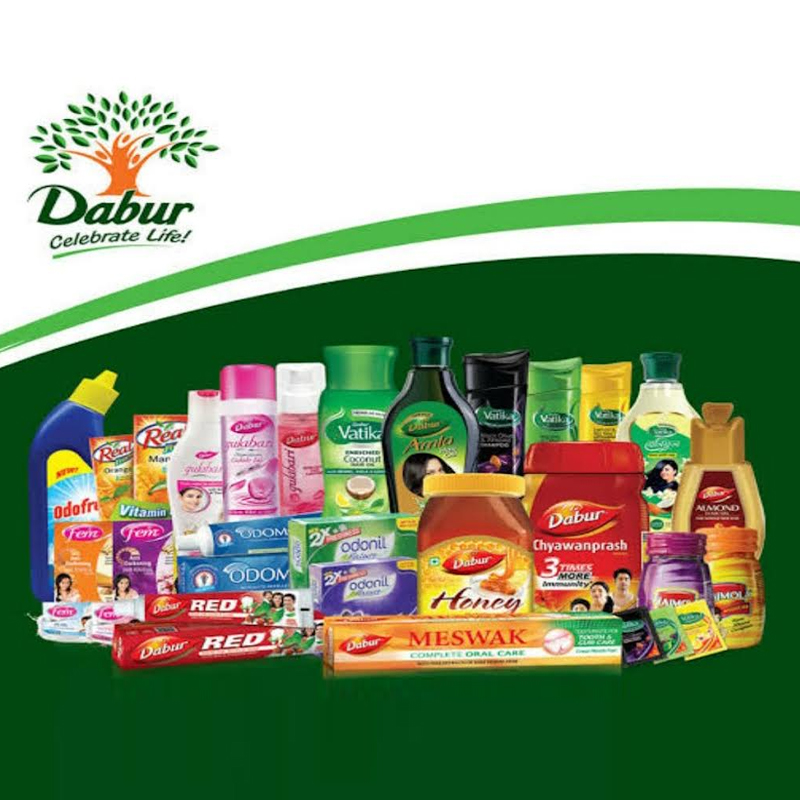
    Mumbai: Science-based Ayurveda company Dabur India, has reported a 6 per cent increase in consolidated revenue for Q2 FY’ 23. On a constant currency basis, revenue increased by 8.5 per cent in Q2 FY’ 23.

    Dabur India Ltd’s  (DIL) board of directors met to review the company’s unaudited financial results for the quarter ended 30 September 2022.

    The board of directors of Dabur India Ltd declared an interim dividend of 250 per cent for 2022-23.

    Dabur India chairman Mohit Burman said, “Continuing with our payout policy, the board has declared an interim dividend of Rs 2.50 per share, aggregating to a total payout of Rs 442.94 crore.”  

    Dabur demonstrated agility and resilience in delivering consistent organic growth in a challenging environment marked by unprecedented inflation and its impact on consumption. Despite the significant headwinds, Dabur reported consolidated revenue of Rs 2,986.5 crore in Q2 FY’ 23, up from Rs 2,817.6 crore in the same quarter the previous year.

    Dabur was able to mitigate the impact of unprecedented inflationary pressures through disciplined cost control, operational efficiencies, and prudent price increases across key product categories. Dabur reported a net profit of Rs 490.1 crore at the end of the second quarter.

    Dabur India CEO Mohit Malhotra said, “While the challenging economic environment continued to be a concern and impacted the purchasing power, we are seeing green shoots of recovery with the onset of the festive season. The impact of inflationary pressures was more pronounced in the rural markets with demand growth in hinterland lagging urban markets for the first time in five quarters. However, we are hopeful of rural demand reporting a smart recovery in the coming quarters and we are investing ahead of the curve to ride this demand recovery by expanding our rural footprint by adding nearly 9,000 villages in Q2 FY’ 23 to take our total coverage to over 100,000 villages,”

    Dabur is focused on creating shared value and is increasing capital expenditure, digitalization, and sustainability investments. Dabur has made rapid progress on the ESG front and has set ambitious goals for the future. In 2021-22, Dabur became the first Indian consumer goods company to become 100 per cent plastic waste neutral.

    “Not one to rest on our past laurels, this year we have targeted to become Plastic Waste Positive, by collecting, processing and recycling 35,000 MT of post-consumer plastic waste pan-India. We are committed to creating circularity in the value chain to achieve a positive balance by 2030, besides becoming water positive by 2030 and carbon neutral by 2040,” Malhotra said.

    Dabur’s brands have continued to outperform the market, gaining market share across 95 per cent of product portfolio. Dabur increased its market share in the juices & nectars category by 410 basis points, while share in the digestives category increased by 270 basis points.

    Chyawanprash market share increased by 120 basis points, and shampoo category share increased by 40 basis points. Dabur’s market share in hair oils increased by 20 basis points. Dabur’s strategy remains centred on innovation, with new product launches accounting for approximately 4 per cent of total sales.

    Dabur’s foods & beverages business reported a strong 30 per cent growth. The beverages business ended the quarter with a jump of over 30 per cent while the foods business reported a 21 per cent growth.

    The home care business was up nearly 21 per cent, while the toothpaste category, riding on strong performance of our flagship Dabur red paste, ended the quarter with an over 11 per cent growth.

    The shampoo & post-wash business ended the quarter up 9 per cent. Dabur’s Ayurvedic OTC business also reported a growth of over 9 per cent during the quarter.

    Dabur’s international business reported a 12.3 per cent jump in constant currency terms, led by strong constant currency growths in Turkey (86 per cent), Nepal (25 per cent ) and Egypt (23 per cent ).

  • Madison Media Alpha wins the integrated media AOR of Godrej & Boyce

    Madison Media Alpha wins the integrated media AOR of Godrej & Boyce

    Mumbai: Madison Media Alpha, a unit of Madison World, has just announced the win of Godrej & Boyce integrated media AOR.

    The account was won in a multi- agency pitch and the agency will handle the entire gamut of media including TV, print, social media, digital, performance marketing, OOH and activations.

    Speaking about the agency’s appointment, Mehernosh Pithawalla, senior vice president and head – brand and strategic insights, Godrej & Boyce said, “Madison World has been an industry leader in the realm of communications for several years, now. During the pitch, we observed a lot of synergies, brand resonance and a strong intent by the Madison team to work on Godrej & Boyce. We couldn’t have thought of a better ally to further business metrics and propel brand growth.”

    Commenting on this development Madison World chairman Sam Balsara said, “My association with Godrej goes back to 1985, even before Madison came into being and I am delighted that Madison World has won this business in a competitive pitch and G&B has found our expertise and capabilities a cut above the rest and handed over the media AOR of this much respected company to us. We look forward to growing their brands with our innovative and client first approach.”

    For the record, Godrej & Boyce Manufacturing Co Ltd (G&B) was set-up way back in 1897 by Ardeshir Godrej. Since its inception the company has played a pioneering and crucial role in India’s economic growth and created sustainable value for all its stakeholders through its products and services across ten industries. The company right from its inception has launched new and innovative products and consistently contributed to the country’s journey of self-reliance.

    G&B is a highly diversified company operating across as many as 10 industries and 14 businesses ranging from critical industries like aerospace, defense, clean energy, railway and automotive to a range of consumer products. The company offers a range of high quality modern furniture under the brand name of Interio, appliances, like washing machines, refrigerators, microwaves, and air-conditioners, security systems, safes, CCTV cameras, locks and now digital locks too.

    G&B was the first to patent a springless lock, build a fire and burglar resistant safe in the early 1900s and the same spirit of innovation has remained with the company all through.

  • Dabur acquires majority stake in Badshah Masala

    Dabur acquires majority stake in Badshah Masala

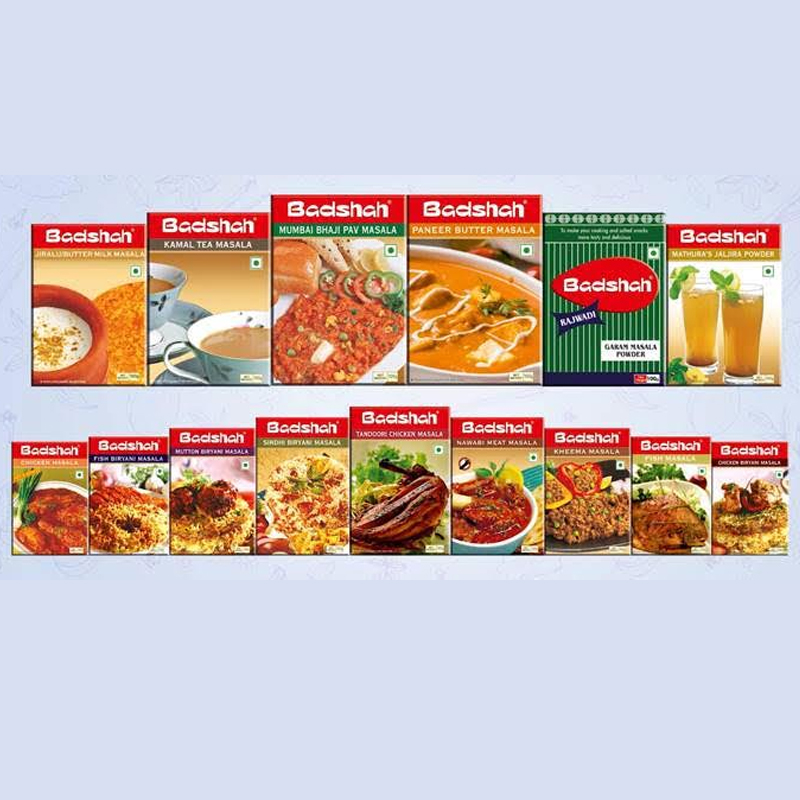
    Mumbai: Dabur India has announced that it has signed definitive transaction agreements to acquire 51 per cent shareholding of Badshah Masala,which is engaged in the business of manufacturing, marketing and export of ground spices, blended spices and seasonings.

    This acquisition is in line with Dabur’s strategic intent to expand its foods business to Rs 500 crore in three years and expand into new adjacent categories. This also marks Dabur’s entry into the over Rs 25K crore branded spices and seasoning market in India.

    Dabur has acquired 51 per cent stake in Badshah for Rs 587.52 crore, less proportionate debt as on the closing date, with Badshah being valued at Rs 1,152 crore. This translates to a revenue multiple of around 4.5x and EBIDTA multiple of around 19.6x of FY’ 22-23 estimated financials.

    Announcing the acquisition, Dabur India chairman Mohit Burman said, “The Indian spices and seasoning category is a large and attractive market. Badshah Masala is one of the key players in this space. Our investment in Badshah Masala will help expand this business and continue to provide unmatched quality products. This acquisition will accelerate our growth strategy as we continue to build our Foods business. We intend to leverage our international market presence to grow this business globally.”

    “The transaction is expected to be Cash EPS neutral in the first year and accretive thereafter. The acquisition is expected to be completed within this fiscal. As per our agreement, we will acquire the balance 49% shareholding after 5 years,” Dabur India group director P. D. Narang said.

    Dabur India CEO Mohit Malhotra said, “Branded Spices market in India is growing at healthy double digits, led by increasing consumption, upgradation from unbranded to branded and growing preference for regional flavours across states. The market is dominated by regional players and holds significant potential for growth in the future. Dabur has an existing Foods portfolio and views ground and blended spices as a good addition to this portfolio. Badshah portfolio will gain from Dabur’s extensive distribution reach. We look forward to unlocking further synergies and market opportunities to capture the full potential of Badshah Masala.”

    Badshah Masala Private Limited Managing Director Mr. Hemant Jhaveri said, “We are delighted to enter into a strategic partnership with Dabur. Dabur stands for Trust and Heritage and joining hands with Dabur will help drive the future growth potential of Badshah on a stronger trajectory. Our companies are a great fit. This transaction will enable us to accelerate our growth by adding our products to Dabur’s broad portfolio to meet the needs of consumers across geographies.”

    Ajay Shah, advisor to Badshah Masala said, “This strategic investment of Dabur brings together two strong Indian brands. This deal is growth oriented, mutually complementary, value accretive and beneficial for both the companies.”

  • Lights, lamps and food this festive season

    Lights, lamps and food this festive season

    Mumbai: The festive season brings along with it a basket full of hope, happiness, smiles, lights, and, of course, food! We Indians have a fetish for scrumptious food, and for us, any occasion is incomplete without good food—the festive season, therefore, isn’t any different. Just like most of the other product categories, the food category also saw a slump during the pandemic but has obviously risen from it. With the onset of the festive season, I tried to get a glimpse of how the festival of lights has turned out to be for food brands, the trends and innovations that we witness in this category and much more.

    Discussing the revival of the food category this festive season, Greendot Health Foods (manufacturers of the snack brand, Cornitos) managing director Vikram Agarwal is of the opinion that the last two years have been crucial for the food industry. Due to the pandemic, consumers were spending less because they had fewer options. “Now, the spending has increased, which has further increased the demand. The growth is expected for festive season gifting due to the rise in digitisation and an increase in socialisation among individuals as well as corporates,” he brings out.

    Consumers’ spending on food

    Agarwal is positive about the consumer spending this festive season. “The Cornitos’ product portfolio encompasses a whole range of gift packs for people across all demographics, and this festive season we are expecting an increase in sales by 15 to 20 per cent,” he reveals.

    4700BC’s (the gourmet popcorn brand) founder, Chirag Gupta, quips that the season has been phenomenal for them. In comparison to the previous two years’ holiday seasons, they are seeing a 60-70 per cent increase in 2022.

    “Usually, the average order value (AOV) is Rs 600 – Rs 700. But during Diwali, since a lot of bulk gifting happens, the AOV is about Rs 1,400. Other than this, 25 per cent of all our sales came from the B2B sector, with partners like Google, Microsoft, Discovery Network, Lufthansa, Amazon, and Samsung. So, we can proudly say that the country has been looking at us as a clutter-breaking gift,” he exclaims.

    Who are these consumers?

    Agarwal points out that the youth love Cornitos. “We assure our consumers that their health and taste are not compromised. Consumers have adopted a more health-conscious lifestyle post-pandemic and are also interested in healthy snacking. Cornitos stands out among its competitors in terms of its unique flavours and healthy ingredients. It is a gluten-free snack that is cooked in healthy corn oil and is cholesterol-free,” he says. Cornitos’ reach was previously only in the metropolitan cities, but now the demand in tier II and III cities has also increased.

    Gupta mentions that the consumers for 4700BC range from the age group of 18 to 40 years. There is an equal proportion of males and females. Purchases come from tier I locations and the rest of the country in equal proportions. They segment their customers into netizens, early adopters, and hedonistic shoppers.

    The netizens are the constant scrollers and brand advocates. The early adopters are experimenters, who are always the first group of consumers to cross the chasm and try new offerings. They also include connoisseurs—they believe that food is not just an essential need but an element of pleasure—and, thirdly, trendsetters.

    The hedonistic shoppers include, firstly, self-pamperers—it has always been about pleasure attainment for them and the ones who know how to celebrate themselves. Secondly, affluent achievers—they keep looking for a new form of expression to motivate and appreciate their team; and thirdly, blue-bloods.

    Although the number of consumers has increased, the purchasing audience of 4700BC has remained the same.

    Show me the money!

    Talking about the growth in numbers as compared to the festive season of the last two years, Agarwal explains that companies are motivating employees by offering them gifts to celebrate the festivities. He is expecting a 20 per cent rise in demand for corporate gifting over 2021.

    Gupta of 4700BC brings out that their revenue growth in the gifting segment was at Rs 21 million and had been increasing. FY’ 22 saw a 1.6x YOY growth to Rs 67 million. He expects a similar trend for FY’ 23, that is, the revenue should reach about Rs 120 million.

    “We usually see a jump of 40 per cent in festive sales, and we expect a similar jump this year as well at the minimum level. Last year was also good, but the number of orders was relatively lower in relative growth. This year we are expecting and clocking a lot more,” he says.

    He goes on, “As per the current data, since the last two years were relatively low due to covid, we are seeing 60-70 per cent growth this year. All we can say is that we are overwhelmed by the response this gifting season and all the efforts in building a distinct tone and narrative have paid off.”

    Advertising and marketing spends and strategy

    Gupta reveals that 15-20 per cent of their revenue is targeted to be spent on marketing during festive times. “The spending has always been defined based on the sales and offtake of the year. We are always known to be wise spenders. We are very mindful of our growth, and we frugally spend to always keep the top line healthy,” he adds.

    This year, 4700BC wanted to build its long-term narrative of how Mr. BC makes the most of the present. A character whose madcap personality could carry this gifting narrative for many more years to come. “We intended to create a distinct space in the entire gifting culture of the country. Over the years, the advertisements we saw across festive seasons became monotonous and non-experimental. So, we were like, we want to start a new narrative,” Gupta says.

    However, he is quick to say that they did not want to be specific to Diwali or any festive occasion and wanted to create something that could have longevity all year round. “Essentially, cost optimization. Those intriguing content building blocks were the gangster party and then the divorce party. Also, it helps us stay true to our core—international,” he states.

    Over the last two years, 4700BC has built its gifting range. Even for Diwali, they had beautiful packaging for The Pataka. Over the last few years, they have shared information about the products and built awareness about them.

    Agarwal of Greendot Health Foods elucidates that they have a media plan in place and marketing spend is going on during the festive season. They have utilised social media, print ads, in-store branding, and festive exhibitions to reach their consumers.

    Trends and innovations

    The challenge this season, according to Gupta, is clutter—the number of product options available to consumers and the amount of communication each brand uses. These are the innovations that we will see this festive season. Brands should develop new and unique products and communicate to get the consumer’s attention. The gifting market’s size from FY’ 22 to FY’ 25 is expected to grow at a compound annual growth rate (CAGR) of 20 per cent, from Rs 12 billion to Rs 21 billion.

    This year, with the return of the festivities and the pandemic receding to a great degree, the ceremonial festival exchange of gifts in larger numbers has been anticipated, says Agarwal. Consumers have adopted a healthy lifestyle in the past two years. Cornitos offer healthy and flavourful festive packs that are always in demand.

    With the rise in digital usage, our everyday life starts with our phones and ends with them too. Everything has become so much easier with e-commerce sites, through which customers can explore and shop for their favourite products without leaving their houses. Cornitos also launched their own shopping website in 2020—https://shop.cornitos.in/—for the convenience of our consumers and are getting festive packs ordered through it.

    Cornitos has launched festive packs called “boxes of joy,” themed specially crafted gourmet selections. The brand differentiators are attractive packaging and combinations of exciting flavours and products for delightful munching moments in the festive season.

    Agarwal wraps up, “This festive season we see innovative food products. More healthy products will be on the retail shelves. Easy-to-cook/packaged food is more preferred these days due to a busy and active lifestyle.”

  • Guest article:  Here’s how to create an impact on your millennial customers

    Guest article: Here’s how to create an impact on your millennial customers

    Mumbai: The first generation to surf the internet was the millennials. Those people, who were born between 1981 and 1996, rely primarily on search engines to find the information they need. In fact, a survey reveals that Google searches are the origin of almost 90 per cent of millennials’ online experiences. Therefore, millennials are a fantastic demographic to target with search engine optimisation (SEO). Millennials should be perceived in the following ways:

        They are keyword-driven, meaning they search for specific, brief terms.
        More inclined to think that a highly ranked website indicates a company’s reliability and dependability.
        Frequently access internet information on mobile devices, such as aesthetically pleasing web designs.
        Use email frequently.
        Utilise social media often.
        Frequently look for video content.

    Though less dependent on technology than Gen Z, this generation nonetheless prioritises technology. Millennials place a great deal of attention on SEO because they frequently use search engine results to locate the information they’re looking for.

    Like prior generations, they also use email and social media sites more frequently. Although not as frequently as Gen Z, millennials were the first generation to utilise mobile phones to access the web and watch videos.

    You need a plan that binds several marketing channels and content types together in order to promote them. Develop your social media presence, publish videos, send marketing emails, and make sure your website is mobile-friendly.

    Why use SEO to reach millennials?

    Following statistics reveal typical millennials traits and consumer behaviour:

        A study showed that more than 90% of internet experiences begin with a Google search.
        More than nine out of ten Millennials (93% of those aged 23 to 38 this year) own a smartphone.

    The “go-to” place for practically everything for millennials is search engines:

        Between 5 and 10 hours of information are read online each week by 23% of millennials.
        When it comes to connecting with millennial consumers, SEO is without a doubt the best option for brands. 65% of smartphone users, regardless of the brand or business that offers them, look for the most pertinent information when conducting Internet searches.
        The most effective way to increase brand awareness for millennials is through SEO.
        A higher search engine ranking increases credibility, trust, and brand recall.
        Users of search engines convert more frequently than users of social media. 61% of local searches result in purchases, and 72% of those who do them go to the local businesses.

    Creating effective SEO strategies for millennials

    Be present in both places at once:

    You must be present everywhere you may be in order to be found and remembered, including both online and offline platforms. Engage millennials by posting SEO-optimised material on well-known channels including Twitter, Instagram, Facebook, desktop, emails, blogs, and more. To develop a better content strategy, find out which platform is preferred by each age group.

    For instance, millennials are big on Facebook and Instagram. According to studies, these should be the top two social media sites to employ when marketing to those under 35. Additionally, studies show that LinkedIn might help you reach more male millennials than Twitter because LinkedIn makes creative use of short hashtags and phrases.

    The millennial generation can be attracted to you by achieving top rankings on Google or other search engine pages by default, and constant branding and link development can draw attention to your brand website.

    Focus on high-quality content:

    Visibility is crucial, but so is the quality of the content. Millennials will be interested in rich content that is combined with clever SEO. Since research demonstrates that most purchasing decisions are driven more by an emotional connection than by rationality, it must be both educational and motivating.

    Furthermore, information must not be preachy, protracted, or boring because millennials strongly dislike all of these things. Another strict no-no is traditional hard selling or push marketing. Make sure to produce original content that speaks to their liberal and empathetic viewpoints. Ultimately, you need to provide content that reflects the ideals that your audience can relate to.

    Be mobile-friendly:

    For millennials, smartphones are a way of life. One of the most crucial SEO advices for millennials is to focus on SEO while creating content that is mobile-friendly.

    Focus on voice searches:

    Use voice searches; they are growing significantly thanks to Siri, Cortana, Echo, and Google Home. Instead of the more conventional writing style of typed sentences, voice searches require a more relaxed, conversational approach. Additionally, voice search terms may be longer on average because speaking is simpler than typing, giving you more room for content. Get a plan for voice search going that is based on natural language phrases since it’s an excellent SEO trend for millennials.

    Final Thoughts

    The bottom line is that effective SEO techniques increase brand recognition and sales. It’s critical to understand both what to do and what not to do when creating SEO content for millennials. Avoiding an autocratic style and working to personalise the content as much as you can are the keys to capturing the attention of millennials.

    The author of this article is Auburn Digital Solutions co-founder & managing director Ashish K Tripathi.

  • Ipsos appoints new APAC CEO and chief client officer

    Ipsos appoints new APAC CEO and chief client officer

    Mumbai: Ipsos, one of the world’s largest research companies, has announced the appointment of long-time Ipsos global executive Hamish Munro as its new APAC CEO, and current South-East Asia CEO, Suresh Ramalingam, as its new chief client officer for the APAC region. Both appointments are effective immediately.

    Munro moves into his new remit after three years as Ipsos’ global head of interactive services. Since joining the company in 2013, Munro has also had stints as CEO of Australia and New Zealand (2013– 2015), CEO of South-East Asia (2016 – 2017) and CEO of APAC operations (2017 – 2019).

    Having worked and lived across Australia, Indonesia, Singapore, Hong Kong and Taiwan, Munro is set to bring broad international operational and research management experience to his new role, along with more than two decades of diverse market research and leadership.

    Munro will replace current Ipsos APEC CEO, Christophe Cambournac, who will move into a global role with the business.

    Ramalingam moves into his new role after four years as CEO for Ipsos’ South-East Asian markets. Prior to joining Ipsos, Ramalingam spent more than 20 years at Nielsen, working across its emerging markets in various leadership roles and the most recent one as managing director of consumer insights across LATAM, EMEA and South-East Asia, based in Dubai.

    In his new remit, Ramalingam will lead the client organization for Ipsos’ APAC region and will be based in Kuala Lumpur.

    Ipsos CEO Ben Page said Munro and Ramalingam were set to bring a wealth of industry experience and corporate knowledge to their new roles.

    “Munro has been an integral part of the global Ipsos team since 2013, sharing his 25-plus years’ experience in market research, marketing, communications and account management roles,” Page said.

    “Munro is an exceptional leader, with proven experience in managing large teams and complex businesses in competitive markets. He is well-known in the industry and across the business for his collaborative and decisive management style, with a focus on professional development. Munro is also committed to building and maintaining strong relationships with clients and will be an asset to our broad client base across the APEC region,” he added.

    “Ramalingam has already shown his ability to grow and manage client relationships across South-East Asia, delivering on our long-term growth plans for the region. In his new role, I’m confident that his client and people focused leadership style coupled with his extensive research and management experience will help in leading the client organization successfully in our APAC region.”

    Commenting on his new role, Munro said, “I am excited to collaborate with my colleagues across Asia Pacific and continue to build on our strong client partnerships, building and strengthening our talent and deploying many of our new services to help our clients grow.”

    Ramalingam said, “As the home of researchers, we have an amazing suite of research solutions and services led by experienced teams. Our strong client organization teams help drive engagement with our key clients in Asia Pacific collaborating across our services to provide the best possible research outcomes catering to their business needs. I am very excited to continue to focus on building client relationships across Asia Pacific.”

  • Kinder Joy introduces ‘Kinder Joy Diwali Wonder Box’

    Kinder Joy introduces ‘Kinder Joy Diwali Wonder Box’

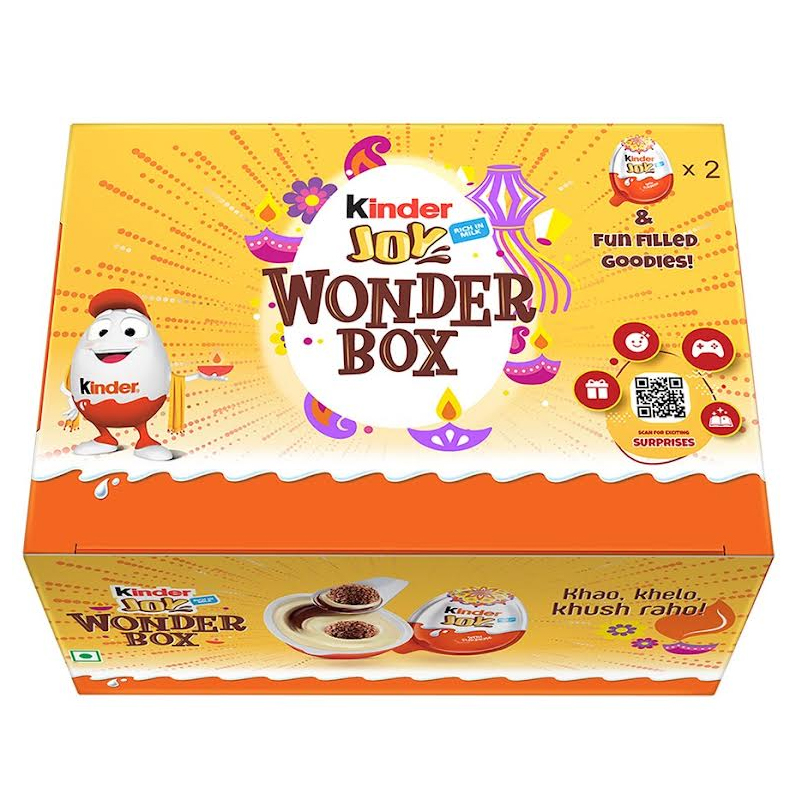
    Mumbai: As Diwali approaches, Ferrero India has launched a new campaign to introduce the “Kinder Joy Diwali Wonder Box” as a premium gifting option, especially for kids. The new offering revolves around the concept of kids’ gifting during festivals.

    The campaign continues to build on the tagline of ‘#KhaokheloKhushRaho.’ The TVC aims to showcase the moments of happiness in the lives of kids during the festive season.

    Kinder Joy’s limited edition Diwali Wonder Box packs will have multiple inclusions ranging from kinder eggs to engaging puzzles to Diwali merchandise. On scanning the QR code on the exclusive Diwali share pack or logging on tokinder.com, children will have access to the Kinder digital hub that will unravel the magical world of Kinder.

    Through the entire edutainment journey, the kids will be able to navigate through an exciting new world of stories, comic books, DIY activities, and filters-all inspired by the traditions based on Diwali. To keep up with the festive spirit, the Wonder Box would also include DIY kinder toran, Diya, a Diwali greeting card, and a lantern.  

    Commenting on the launch of Diwali Wonder Box, Kinder India brand head Amedeo Aragona said, “Festivals are equally exciting for kids as much as for adults. Taking this thought into consideration, we aim to spread happiness by highlighting kids’ gifting during the festive season. This time, with the special Diwali packs, we seek to create wonderful memories for the kids and aim to make sure they also have fun while understanding the significance of the festival with Kinder Digital Hub.”

  • Niva Bupa adds a fresh perspective to Diwali gifting with new campaign

    Niva Bupa adds a fresh perspective to Diwali gifting with new campaign

    Mumbai: Niva Bupa Health Insurance, formerly known as Max Bupa Health Insurance, has launched a digital campaign to kickstart the Diwali festivities. The campaign, conceptualised and executed by Leo Burnett, has been designed to celebrate the festival of lights with more enthusiasm and joy this year by giving a token of good health to our loved ones to enable them to live life to the fullest, without any financial constraints.

    Since the tradition of gifting is synonymous with Diwali, on this occasion, Niva Bupa is introducing a new concept of gifting this festive season and urging everyone to light up each other’s lives by gifting a comprehensive health policy to secure the near and dear ones against any kind of medical emergency.

    In the digital film, the protagonist, who is visiting home for his first Diwali since he started working, can be seen exploring Diwali gift options for his parents. He wants to give them something special to make the occasion memorable. He asks his friends for recommendations but is unable to decide on the perfect gift. Just then, a eureka moment strikes him when his mother is urging him to take care of his health. That’s when it occurred to him that the gift of health would be the best gift for his parents. Therefore, on the day of Diwali, he hands over a Niva Bupa health insurance policy to his parents so that they can live their life carefree without worrying about their medical expenses.

    Speaking of this campaign, Niva Bupa Health Insurance senior vice president and head of marketing Nimish Agrawal said, “We are happy to announce the digital campaign this Diwali, in our attempt to light up the lives of everyone around us. Let’s celebrate this festive season by securing the lives of our loved ones and special ones by gifting them health insurance to secure their health and wealth for the future. The campaign has been designed to add a new flavour to Diwali gifting and we hope it nudges everyone to give a gift of good health to the ones who gave us the gift of life. This Diwali, ‘Zindagi Ko Claim Kar Le.’”

    Sharing his thoughts on the creative front, Leo Burnett executive creative director Mayuresh Dubhashi said, “Usually communication around health insurance tends to be grim. With this campaign, we wanted to celebrate good health, and our film brings this forth with a heart-warming story. Gifting your loved ones an insurance plan which helps them live life to the fullest.”

  • GUEST ARTICLE: Marketing innovations being done by alcohol companies to reach consumers and the challenges

    GUEST ARTICLE: Marketing innovations being done by alcohol companies to reach consumers and the challenges

    Mumbai: Allied Blenders and Distillers (ABD) is the largest Indian spirits company and the third largest by size in the country.

    At ABD, we think differently. The category makes you do so, as many avenues open to consumer products marketers are not available, despite being a trending industry with consumers and a very significant revenue generator for governments. We simply can’t advertise in the media, and therefore communicating product benefits or special offers is not part of our plan. However, what it does achieve is to make marketers in alcoholic beverage organisations absorb a lot more human insights, which play a role over time in building brand personalities and positioning. Many successful brands have been able to build their communication skills, albeit over time, to engage with consumers in different ways and create a story.

    A marketer in the alcohol beverage industry must be multi-faceted and equally adept at alcohol marketing as well as other categories critical to creating a surround, such as music, other performing arts, lifestyle, or large and small experiential events. The marketer should be able to join the invisible dots to create a big picture while working on every detail. The person should also be able to wade through a very strong regulatory environment for actual product labels and mandatory requirements as each state has a different set of rules which change almost every year.

    In India, the alcohol consumer does visit the retail and on-premises (bars, pubs, etc.). Engagement in these places is positive. While it’s low on time in traditional retail, modern trade allows for browsing and a better consumer experience. On-premises is great for engagement as the consumer is there for an extended time. Brand visibility, awareness and recall are also achieved through sponsorships, mostly of sports and performing arts, with line extensions, which must be played by a rulebook. Communication has added responsibilities in this category, and all major organisations understand that well.

    The best way to engage consumers is through product innovations. India is primarily a whisky-consuming country, other than a couple of states in the South, which predominantly drink brandy. Limited editions, flavours, low alcohol products, craft spirits and beer are all finding their feet and engaging new consumers. It builds curiosity in a category that is normally close to the hearts of its consumers.

    ABD has just launched some very disruptive products with Srishti Premium Whisky with an infusion of curcumin, the active ingredient of turmeric or haldi. Interestingly, the infusion has no change in the sensorial; that is, in taste, aroma, or colour.

    At ABD, we also launched Sterling Reserve B7 Whisky Cola. We’ve used the award-winning whisky blend and infused it with cola to add a zing to every drinking occasion. The whisky cola mix retains the colour of whisky in the bottle, in a glass with water, soda or when consumed as a shot. It is sure to appeal to the younger audience.

    The ABD MetaBar is the first ever. It’s our presence in the metaverse, and we put out our recent mainline launch of ICONiQ White Whisky first on the MetaBar prior to our physical market launch. It exemplifies how innovative thinking as a marketer can push different routes and position a brand and a company differently while opening our minds to a future that is almost unreal but so very real.

    The author of this article is Allied Blenders and Distillers chief strategy, marketing and business development officer Bikram Basu.

  • realme celebrates Diwali with SOS Children’s Village of India

    realme celebrates Diwali with SOS Children’s Village of India

    Mumbai: Diwali is quickly approaching, and to commemorate the occasion, realme has announced its support for SOS Children’s Village of India.

    As part of the initiative, realme is making technology accessible for the children of SOS Children’s Village of India this Diwali under the NGO’s Basket of Care Solutions programme, with more than 45,000 children involved. The initiative reflects realme’s commitment to providing youth with high-quality technology experiences.

    The brand will aid the NGO’s efforts towards shelter and education of children in need and provide realme Techlife Air Purifiers, realme Pad Mini and realme Buds Wireless for a better and more immersive learning experience along with quality indoor air.

    Speaking of this noble cause, realme presiden, realme India vice president and realme International Business Group president Madhav Sheth said, “realme has always believed in contributing to society and I am elated that we could celebrate Diwali in a meaningful way and further our efforts towards the greater good of society. Our endeavour is to improve lives, and we believe that technology can play a meaningful role in enabling this. We are excited about partnering with SOS Children’s Village of India and providing them with the tools necessary to empower their lives—be it by providing them with better air quality or digitally enhancing their learning experiences.”