Category: MAM

  • Doritos launches newly designed packs in partnership with Call of Duty Mobile

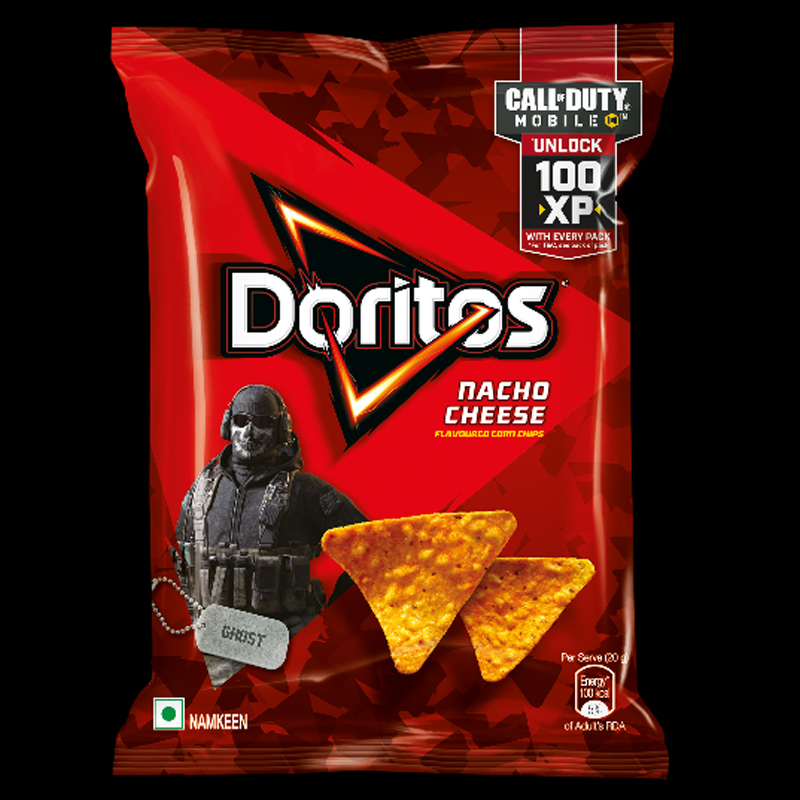
    Doritos launches newly designed packs in partnership with Call of Duty Mobile

    Mumbai: Doritos has collaborated with Call of Duty: Mobile to bring a bold new initiative to consumers and gaming enthusiasts. As a part of this partnership, Doritos has launched newly designed promo packs.

    Doritos-loving gamers across India can unlock 100 Weapon XP (experience points) cards by using the 15-digit code printed inside every newly designed promotional pack of Doritos, which is valid till 31 January 2023.

    Talking about the collaboration, PepsiCo associate director of brand marketing Ankit Agarwal said, “We love bringing new and exciting offers for our consumers, and what’s more exciting than one of the world’s boldest brands meeting one of the world’s most popular game franchises? Gaming is something we really want to develop in India. It’s a means for us to deepen our connection with today’s generation through a highly engaging format that is not only booming in the country but has also been successfully leveraged by Doritos globally.”

  • Deepika Padukone’s 82°E unveils ‘Feels like home’ campaign

    Deepika Padukone’s 82°E unveils ‘Feels like home’ campaign

    Mumbai: Deepika Padukone’s self-care brand, 82°E, has unveiled its inaugural campaign film, “Feels Like Home,” celebrating the joy of practising simple acts of self-care.

    The film brings to life the ethos of 82°E in a visual collage where self-care meets skincare. The visuals capture women practising everyday self-care rituals while also caring for their skin. Real, unfiltered voices of women tell us how these rituals are simple, joyful, and feel like home.

    The 60-second brand film can be viewed on 82°E’s social media channels: Instagram, Facebook, and Youtube.

    The campaign slogan, “Feels like home,” encapsulates the sentiment and emotion associated with self-care while also building a connection with the brand’s name. Inspired by the standard meridian that passes through India, 82°E brings out the geographical aspect of home while the creative interpretation brings to life the feeling of it.

    An extension of Padukone’s beliefs, 82°E supports a holistic approach to self-care. The brand is on a mission to inspire its audience to connect with their truest, most authentic selves through joyful and effective self-care practices.

    Commenting on the campaign film, Padukone said, “Practicing simple acts of self-care consistently helps me stay grounded and enables me to feel my most centred. With 82°E, the hope is to inspire us all to prioritise our well-being by practising acts of self care that are simple, joyful, effective, and evoke the feeling of ‘home.’ Through our inaugural campaign, “Feels like home,” we bring to life the geographical aspect of home, as also captured in our brand name, alongside the creative interpretation of the emotion, all while staying true to the product promise.”

    Spring Marketing Capital founder and creative partner Arun Iyer said, “It has been a privilege to bring alive the world of 82°E. From the beginning, this project pushed us to dream and break the traditions of perfection in the category. Each product, although simple, is exquisite, rooted in Indian ethos with a global outlook. We had to bring the brand to life with the same level of craftsmanship. Our campaign thought, “Feels like home,” is brought to life via authentic, unfiltered voices while building a solid connection with the brand name.”

    IDEO executive director for global beauty Heather Boesch said, “It has been a joy to serve as a global strategic partner for 82°E since its inception. The brand is genuinely committed to elevating self-care as part of overall well-being. And while it is born in India, 82°E is for the world, and we have worked side by side with its co-founders and partners to ensure that every facet of the brand, from its products to its messaging to its aesthetics, reflects the brand’s core philosophy: rooted in India and global in its outlook and appeal. We can’t wait for the whole world to fall in love with 82°E.”

  • Dentsu and Microsoft come together to build a path to the metaverse for brands and business

    Dentsu and Microsoft come together to build a path to the metaverse for brands and business

    Mumbai: dentsu International has announced its collaboration with Microsoft to build a unique collaboration space in the metaverse, designed to excite and inspire brands to innovate and experiment with web3 technologies. Using their combined expertise, the firms have partnered to showcase a range of real-world use-cases that have been reimagined in a virtual setting to drive greater engagement, productivity, and accessibility for business.

    With many brands and businesses still assessing how to take advantage of the huge opportunities presented by web3, dentsu and Microsoft have come together to showcase what can be achieved in critical business areas such as customer service, retail, and learning and development.

    The initiative is underpinned by dentsu’s recently announced Web3 Center of Excellence, which falls within the Creative pillar. This is where clients and dentsu teams have the chance to innovate, test ideas, experiment with hypotheses, and learn how evolving technologies and platforms could be used within integrated campaigns or future business models.

    The new dimension, created by a move into the virtual world, brings a wealth of exciting and engaging opportunities to transform important touch points with customers and employees. The newly built dentsu and Microsoft spaces are located on the dentsu campus, in “Moon Valley,” a digital twin of the moon created by HeadOffice.Space, the metaverse for productivity. The space was designed specifically to be more accessible by more people and through any web-enabled device, as well as VR and mobile.

    Developing a space in the metaverse required the application of some unique technologies, brought together for the very first time by the teams at dentsu and Microsoft:

        Dentsu Metaversity for Microsoft Power Skills: Powerup Power Skills with new starter inductions and employee training, enabling teams anywhere to upskill and gain new competencies through the full suite of Microsoft 365 products, text-to-speech capabilities, and forthcoming Microsoft Designer capabilities.

        Microsoft Retail Education: a space for retailers and brands to learn more about Microsoft Dynamics 365 and dentsu’s ShopNXT retail innovations.

        Lounge: A virtual “room” where brands can connect through their professional LinkedIn identities to recruit, network, and engage with prospective buyers and customers.

        Ecosia Forest: Provides overall education on Ecosia, the search engine that plants trees where they are needed most, with over 160 million trees planted to date, powered by Microsoft.

        AI-Powered Virtual Human: Our full experience will be guided by ‘Neva,’ an AI-powered virtual human created in collaboration with HeadOffice.space. Neva combines the power of Unreal Engine’s MetaHumancreator framework and Microsoft AI-powered text-to-speech, a capability within Azure Cognitive Services, part of the Azure AI platform, that converts text to lifelike speech across 400 neural voices across 140 languages and variants.

        Additional spaces on the dentsu campus include the ShopNXT Showroom, Merkle Virtual Retail Lab, and Intelligence Center.

        The co-space is built on Unreal Engine 5, the world’s most open and advanced real-time 3D creation tool, and features full-body 3D avatars with Ready Player Me Integration.

    dentsu vice president of solutions and innovation Val Vacante said, “We’ve seen a lot of activity around the Metaverse, with some businesses jumping in simply to grab headlines rather than figure out how Web3 can really change perspective on existing business challenges. At dentsu we’d say it’s ‘near but not here’ and that is exactly why we wanted to work with Microsoft to show the world how today’s business problems can be solved in the Metaverse tomorrow. Whether it is overcoming the skills-gap by making accessible and engaging training programs, or building multi-channel customer loyalty solutions using NFTs, or mapping innovation explorations through our NXT Intelligence platform, the opportunities are truly endless!”

    dentsu group vice president of growth & enablement Paul Veltman said, “Microsoft and dentsu have been partners for many years, working hard to push the boundaries of where technology, creativity, and productivity meet brands and the customers we serve. When we come together, though, we always want to do so with a clear focus – whatever we create must help our clients solve problems and stand out, but it also has to drive tangible and sustainable growth. By developing this incredible new virtual space, we’re inviting clients, their people, and partners to discover, experiment, and co-create. From connected e-commerce opportunities to engaging talent solutions and integrated CRM capabilities, we have an exciting new space to partner with you on your journey in the metaverse.”

    Microsoft managing director media & entertainment Simon Crownshaw said, “The media and advertising industries continue to be transformed by digital technology, which now includes the Metaverse. These transformations will continue to require that brands adapt their business models and strategies in real time to take advantage of new creative opportunities. As our collaboration with dentsu evolves, we’re continuing to elevate creativity with the power of the Microsoft Cloud, enabling the future of content creation and collaboration from anywhere in the world.”

  • Mathrubhumi International Festival of Letters to begin from 2 February

    Mathrubhumi International Festival of Letters to begin from 2 February

    Mumbai: The Mathrubhumi International Festival of Letters was started in 2018. After the critically and popularly acclaimed staging of three editions, the pandemic disrupted this signature event in the cultural calendar of India. Now, 2023 will witness a rebirth with renewed vigour and vitality.

    The latest version will be held in Thiruvananthapuram from 2 to 5 February. MBIFL’23 will provide a platform where discussions on the arts, gender, history, media, politics, religion, science, sports, technology, and other contemporary issues will lend a spicy tang to four days and nights.

    “A galaxy of universally renowned writers and speakers will grace this iteration, including last year’s Nobel laureate Abdul Razak Gurna and Booker Prize winner Shehan Karunathilake, from neighbouring Sri Lanka,” revealed festival curator Sabin Iqbal.

    “The theme of ‘Ka’, as it is known locally after the first consonant in our mother tongue Malayalam, is ‘Shadows of history. Lights of the future,’” said festival director Mayura Shreyams Kumar.

    “We chose this particular trope, conflating it with our voyage through a century of rendering yeomen service to society,” added Mathrubhumi, director of digital business.

    MBIFL chairman M. V. Shreyams Kumar explained the rationale behind the festival of letters: “Being at the forefront of all progressive movements in our state, we deemed it incumbent on us to celebrate the role of letters in contributing to the moral arc of a nation, by conceiving the Mathrubhumi International Festival of Letters.”

    Mathrubhumi’s managing director went on to say: “In our centenary year, it is also a tribute to the vision of my late father, the writer M. P. Veerendra Kumar, who guided our corporate fortunes for more than four decades as the chairman and managing director of Mathrubhumi.”

  • How Influencing NFTs Are Modern Business

    How Influencing NFTs Are Modern Business

    Non-fungible tokens (NFTs) have opened up many business opportunities, allowing them to create new markets and sell previously unavailable products. That’s why businessmen and crypto traders visit this website to learn more about the status of NFTs.

    For this blog post, we’ll explore how NFTs influence modern business and how you can take advantage of their unique properties. We’ll also take a look at how NFTs can be used in various businesses and show you some of their benefits. So, if you want to stay ahead of the curve in today’s business world, read on!

    What are NFTs?

    NFTs, or “non-fungible tokens,” are a new type of cryptocurrency that allows for more complex and customizable transactions than traditional coins. They represent digital assets that can be traded, used in smart contracts, stored on a blockchain, or minted.

    Non-fungible tokens have the potential to revolutionize modern business by making it easier to create and trade custom assets. For example, a company might create a tokenized version of its equity (an NFT) that allows investors to buy and sell shares without worrying about transfers between different currencies. This could make it easier for companies to raise money through Initial Coin Offerings (ICOs) and trade their tokens on secondary markets.

    NFTs could also be used in more innovative ways beyond finance. For example, a video game developer might create an NFT called “collectible” that allows players to collect unique items within the game. This could enable gamers to share data across different games using blockchain technology, increasing the incentive for players to engage with the ecosystem as a whole.

    While some development is still required before NFTs become mainstream, their potential marks a significant shift in how cryptocurrencies are used today.

    How NFTs are being Used in Modern Business

    NFTs are quickly becoming a popular way to store and exchange data. They allow for more efficient and secure transactions than traditional methods, such as email and file sharing.

    Today, they are being used in a variety of ways by businesses around the world. For example, Airbnb uses NFTs to manage bookings and payments. Meanwhile, Facebook users may share tokens by linking their cryptocurrency wallets to their accounts.

    These applications demonstrate the many potential uses for NFTs. They can help businesses streamline their operations and make transactions more secure.

    The Benefits of Using NFTs

    NFTs have become increasingly popular in the modern business world to store and manage digital assets safely. Here are some of the benefits of using NFTs:
    ●They provide a secure way to store and manage digital assets.
    ●They allow for easy transactions between parties.
    ●They can be used to track ownership and activity over digital assets.
    ●They can help reduce costs associated with managing digital assets.

    The Challenges of Using NFTs in Modern Business

    Since the advent of blockchain technology, NFTs have been unique in representing any property, including physical items, securities, and intellectual property. Because these assets can be stored on a distributed ledger, they offer several advantages over traditional forms of business ownership.

    Because they are rare, the value of NFT is hugely higher than most tokens. Its price is affected by its utility, link with renowned or famous figures, and optimistic price forecasts.

    Despite that, NFTs have already begun to impact modern business practices. For example, one company is using them to create a decentralized marketplace for art. By creating a platform where artists can sell their work directly to buyers, this company is lowering the barriers to entry and eliminating intermediaries.

    Another use case is insurance. A company is using NFTs to provide Proof-of-Existence for insurance contracts. This provides assurance that the agreement was executed and reduces the chances it will be disputed.

    While there are many benefits to using NFTs in business, some challenges must be addressed. For example, how will companies implement trust mechanisms when dealing with assets that cannot be physically possessed? How will transactions be verified? And what legal issues will arise when using NFTs in commercial settings?

    Despite these challenges, there is no doubt that NFTs significantly impact modern business practices. As companies begin to adopt them more widely, we may see even more innovative ways in which they are used to improve efficiency and transparency across industries.

    Conclusion

    NFTs are quickly becoming an essential part of modern business. They provide a secure way for companies to transfer and manage assets and offer the potential for new revenue streams. This article has explored how NFTs are used in industry today and discusses some potential benefits. So whether you’re looking to increase security and transparency within your business or tap into new revenue opportunities, learning about NFTs is essential.

  • redRail from redBus gets platform naming & brand promotional rights of New Delhi Railway Station

    redRail from redBus gets platform naming & brand promotional rights of New Delhi Railway Station

    Mumbai: redRail, the authorised IRCTC partner and rail ticketing app from redBus, is one of the few brands that have obtained platform naming rights, including other brand promotional rights, at platforms no. 8 and 9 of New Delhi Railway Station.

    The pilot programme launched by the railways is the first of its kind, allowing brands to utilise the vast stretch within platforms of the New Delhi railway station to promote themselves in innovative ways, such as naming a platform after the brand and putting up extensive displays with promotional content, among others.

    The unique engagement approach that offers a high-end experiential connection between brands and customers is poised to garner over 20 million eyeballs monthly, captive for a minimum of 30-45 minutes. This is achieved through the sheer volume of footfalls at New Delhi Railway Station, one of the busiest in the country, elevating brand connection a few notches.

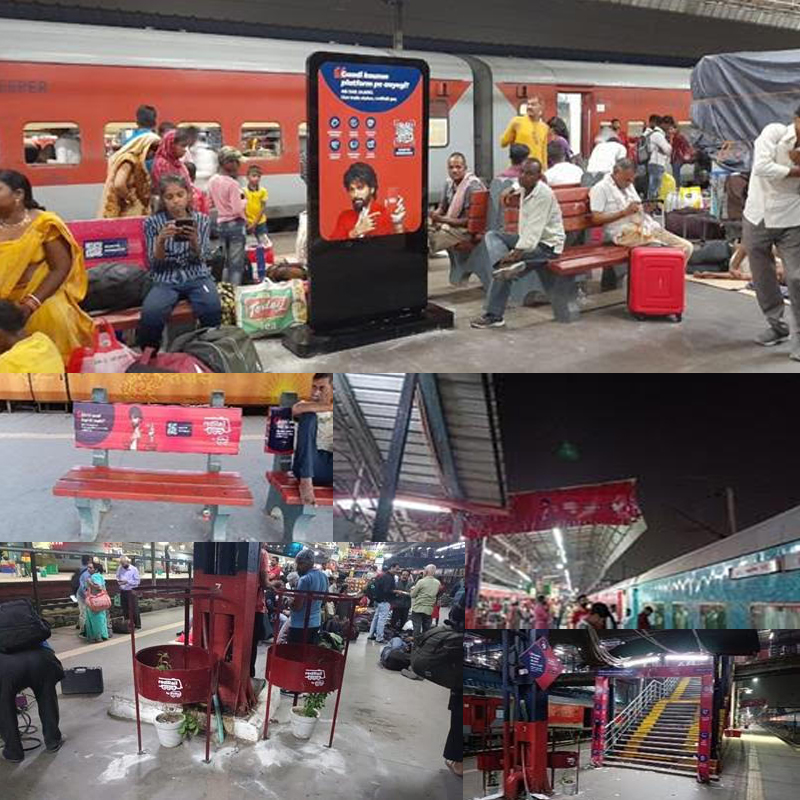
    redRail has obtained the rights to various elements on platforms 8 and 9 at New Delhi Railway Station.

    Brand name on platform signage, platform colour scheme, wrapping or painting on seating benches, branding on the fence of the potted plants, branding on the 3D gantry – exit/entry of foot over bridges or escalators on the platform – and branding on pink cubicles for women seating on each platform and product display are among the key offerings.

    This initiative also comes against the backdrop of redRail successfully completing its first year of operations. To celebrate the anniversary with all rail travellers, the enterprise is rolling out special offers and a contest to make it memorable. The three main offers are free tickets, a coupon for 50 per cent off up to Rs 100 and a flat Rs 50 off for all customers. These offers can be availed of by participating in an exciting “Spin the Wheel” contest, where users spin a wheel on the redRail app between 3 to 17 November.

    Speaking on the new initiative from the Railways and redRail’s participation, redBus senior vice president & head of brand marketing Pallavi Chopra said, “New Delhi Railway Station caters to more than 400+ trains every day, with about five lakh passengers using the facility on a daily basis, allowing us to engage with an audience that matters. We are confident that with extensive brand visibility at the station, we will receive 30 minutes of confirmed attention from travellers. We greatly appreciate this novel approach from the Ministry of Railways, which would allow brands to engage with their audiences in powerful ways and is a win-win for both. We are also celebrating the first anniversary of redRail and are delighted to announce exciting offers on tickets for our travellers.”

  • Mamaearth rolls out new campaign “#IssWinterGlowNaturally” with Shilpa Shetty Kundra

    Mamaearth rolls out new campaign “#IssWinterGlowNaturally” with Shilpa Shetty Kundra

    Mumbai: Mamaearth has launched its latest integrated marketing campaign, “#IssWinterGlowNaturally,” featuring Shilpa Shetty Kundra.

    The campaign film was created by Mamaearth’s internal creative team and produced by Estoot.

    The campaign film highlights the brand ideology of bringing the wisdom and goodness of household DIY recipes into easy-to-use formats with the same goodness of natural ingredients without any toxins. What’s the most frequently used recipe in Indian households for dry and dull winter skin? Of course, it’s honey and malai.

    The film opens with Shilpa Shetty Kundra walking into her friend’s house and unfolding a scenario that leaves her intrigued and confused. To help her friend with a trusted natural solution without all this ‘chip chip’ and ‘jhanjhat’, Shilpa recommends Mamaearth Honey Malai Cold Cream. Crafted with the goodness of natural ingredients like ‘honey’ and ‘malai,’ the cold cream is toxin-free and made safe certified. She is positioning Mamaearth Honey Malai as an easier way of giving one’s skin the moisturization and nourishment it needs this winter.

    The film is a simple yet powerful representation of the brand’s philosophy and product proposition of “goodness inside.”

    Talking about the campaign, Mamaearth co-founder and chief information officer Ghazal Alagh said, “With the growing awareness of the benefits of traditional ingredients and recipes, millennials are increasingly looking for products with natural ingredients that are safe. Mamaearth has been striving to bring together nature’s goodness with science and create a product portfolio inspired by our grandmother’s kitchen recipes and filled with goodness inside. Honey and malai are very common ingredients that we have seen at home for ages; hence, we decided to launch this range and present to our consumers a product that provides the goodness of these ingredients hassle-free. Through this film, we have tried to highlight the latest proposition and offering, and we are certain it will resonate with the millennials, and they will choose nature’s goodness with Mamaearth’s Honey Malai range.”

    “I have always strongly believed in traditional homemade tricks and age-old self-care hacks. One of the reasons for partnering with Mamaearth was their strong foundation in keeping the ethos of Ayurveda alive with ancient recipes innovating and catering to modern consumers today. With the Mamaearth Honey Malai Cold Cream, the brand reiterates its belief in the goodness of nature, not just in caring for your skin but also Mother Earth, and I hope the consumers relate to the film and choose Mamaearth goodness as I did,” says Shilpa Shetty Kundra.

    Estoot founder Navkiran Brar added, “This campaign showcases our shared creative ethos: simple stories that are clutter-breaking. By mixing humour with traditional wisdom – like Honey Malai for dry winter skin – we’ve created an honest communication piece that will resonate with viewers of all ages.”

  • Lodestar UM wins BMW India’s integrated media mandate

    Lodestar UM wins BMW India’s integrated media mandate

    Mumbai: Mediabrands India Network’s Lodestar UM has successfully retained the luxury auto giant, BMW’s integrated media duties. The win came on the heels of a competitive multi-agency pitch held from March to October.

    Lodestar UM’s renewed mandate for BMW spans the entire media spectrum, including mainline, digital, out-of-home, events, and special projects, with an ongoing focus on cementing BMW’s product superiority and attracting newer, more upwardly mobile people to the premium auto segment. The account will continue to be led out of the agency’s Gurugram office.

    Speaking about the momentous development, Lodestar UM CEO Aditi Mishra said, “We are thrilled to be chosen as the integrated media partner for an iconic global brand like BMW. The continuation of our five-year-old journey speaks volumes about how successful the partnership has been in making BMW one of the most desirable brands in the country. The premium auto market in India has witnessed stellar growth in 2022, and there is a growing opportunity to welcome new customers to this segment. The adoption of our proprietary futureproof planning process will continue to unleash maximum value by connecting BMW to its audiences through seamless journeys across touchpoints.”

    Lodestar UM is the India arm of UM, a global media agency committed to future-proofing our clients’ businesses for the now and the future. We leverage the transformational power of rich business analytics and real-time intelligence to maximise growth and activate the full consumer journey across content and connections. Our consultative approach and agile model, rooted in diversity, equity, and belonging, drive better business outcomes for brands.

  • Boosting local market manufacturing will help the Indian M&E industry to become a supplier to the world: CII Big Picture Summit 2022

    Boosting local market manufacturing will help the Indian M&E industry to become a supplier to the world: CII Big Picture Summit 2022

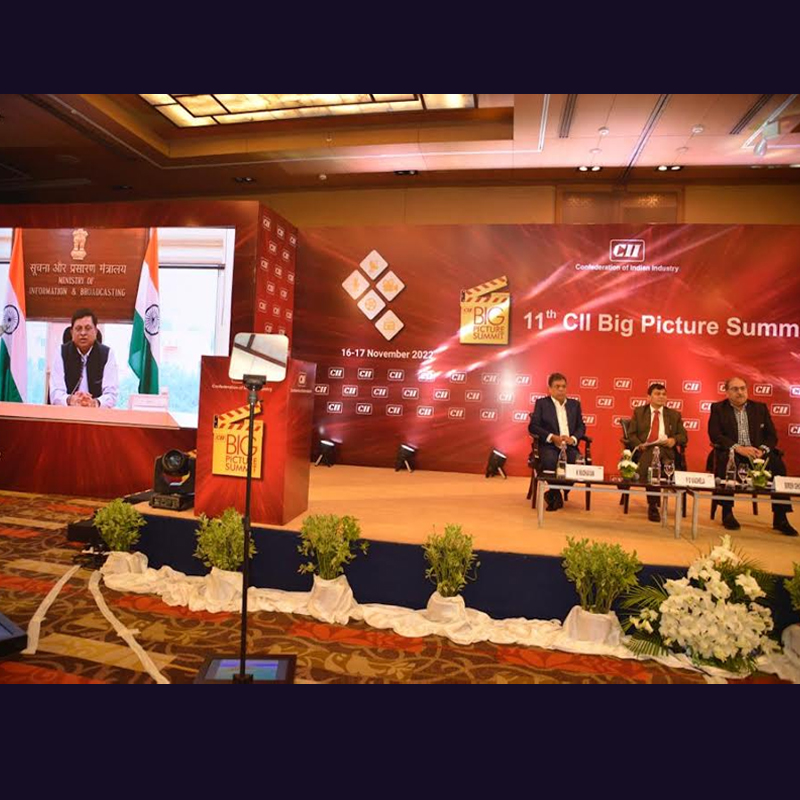
    Mumbai: The 11th edition of the Big Picture Summit 2022, organised by the Confederation of Indian Industry (CII), is a two-day event that is taking place on 16-17 November. The Summit witnessed the participation of various eminent panellists and marked the release of the CII-BCG report on “Shaping the Future of Indian M&E” and the CII-IBDF-KPMG report on “Sports Broadcasting in India.”

    CII Big Picture Summit 2022, with a range of sessions, has participation from content creators, broadcasters, buyers, studios, production companies, publishers, distributors, and developers across the gamut of the Media & Entertainment (M&E) landscape.

    On 16 November, the first day of the event, discussions centred around global trends and opportunities, the bounce-back of revenues to pre-pandemic levels, domestic consumer preferences, and local opportunities for a global audience through digital platforms that have never existed before, especially for the creative industry, storytellers, and technology providers.

    Speaking at the event, the ministry of information and broadcasting (MIB) secretary Apurva Chandra, stated that MIB, along with the Indian M&E industry, has set a goal of making the M&E sector a $100 billion industry by 2030. Chandra acknowledged the announcement by the ministry on the incentive policy for cinema at the Cannes Film Festival this year, out of which many proposals have been accepted for foreign productions in India.

    He further revealed, “The animation, visual graphics, gaming, and comics (AVGC) taskforce, which was launched as a part of the budget 2022, has completed its deliberations and is in the process of finalisation. The government will soon work towards actioning on the recommendations that come out of the report.” As regards the broadcasting sector, Chandra stated that the ministry has recently revised the guidelines for uplinking and downlinking for satellite television channels in India to ease the burden of compliance on channels.

    Telecom Regulatory Authority of India (Trai) chairman Dr. P.D. Vaghela highlighted the significance of the Indian M&E sector in the national growth story and economic prosperity. With about half of the population being young, the Indian demographic dividend presents a huge opportunity for Indian M&E services. Television is the largest and fastest-growing segment, representing around 50 per cent of the total media and entertainment revenue.

    He added that during the last decade, the M&E sector in the country has undergone several radical changes and is experiencing a paradigm shift due to the advancement of technologies and innovations in the creation, distribution, and consumption of media. He stressed that the traditional media would lose ground unless it understands, adopts, and merges its own business models with society 5.0, AI, machine learning, and other technologies that are being unleashed. Vaghela further mentioned, “The government needs to come out with policies that are flexible in nature and allow new players to easily enter the industry while at the same time not strangling the traditional sector with numerous regulations.”

    MIB joint secretary Sanjiv Shankar mentioned the various efforts made by the ministry in the recent past to ensure significant interventions in the regulatory framework, largely based on ease of doing business, Atmanirbhar Bharat, and Make in India. He stressed on the Broadcast Seva portal, which offers a single point facility to various stakeholders and applicants to apply for various permissions, registrations, licences, etc., for the development and integration of the broadcast industry.

    CII National Committee on media & entertainment chairman and Disney Star country manager & president K Madhavan, in his opening remarks commended CII for bringing together key stakeholders and policy makers together to discuss the future of India’s M&E industry and its potential in shaping societies. The M&E sector in India is underpenetrated, with a contribution of 0.9 per cent to the GDP compared to 3-4 per cent for many developed countries.

    He further advocated the potential for growth for the industry, owing to the presence of 300 million households in India, of which about 100 million households still have no access to television headsets. He further urged for timely support by policymakers in the areas of privacy, ensuring a supportive IPR protection measure, and announcing content-related policies while taking note of changing consumer habits and helping the industry to reinvent itself and adapt to creating travelable content.

    CII National Committee on media & entertainment chair & CII sub committee for AVGC & Immersive Media – vice chairman, and Technicolor India country head Biren Ghose in his closing remarks mentioned about the need to evolve in the ways content is being created and urged the stakeholders to look at growth from a different lens, particularly away from a linear vertical growth. Moreover, he mentioned fostering collaboration between government, industry, and academia for the continued growth of the M&E sector.

    Furthermore, Trai advisor Anil Bharadwaj said that while Trai is trying to enable a positive, consultative-based, industry-friendly approach with regards to the new tariff order (NTO), the industry needs to focus on building capacities and centres of excellence.

    CII has been driving several initiatives to take the Indian M&E sector to new heights and expand its global footprint in close collaboration with MIB. These include representing the Indian film and entertainment industries at the prestigious Cannes Film Market for the past 20 years, at the Berlin Film Festival for the past five years, and at the Toronto Film Festival for the past three years. CII’s strength in policy advocacy is acknowledged and accepted by both the government and media industries.

  • Complaints against ads up 14% in half year period in FY23: ASCI report

    Complaints against ads up 14% in half year period in FY23: ASCI report

    Mumbai: The Advertising Standards Council of India (ASCI) released its half-yearly complaints report, which consists of data from April to September 2022.

    During the period, it processed 3,340 complaints against 2,764 advertisements that were in potential violation of the ASCI code. About 55 per cent of these ads were spotted across the digital domain, followed by 39 per cent in print and five per cent on television.

    As compared to 2021-22, ASCI saw a 14 per cent rise in the number of complaints while witnessing a 35 per cent increase in the number of ads processed. Education remained the most violative sector, with 27 per cent of the complaints related to it; 22 per cent belonged to the classical education category, while five per cent were from the ed tech sector.

    These were followed by personal care (14 per cent), food & beverages (13 per cent), healthcare (13 per cent) and gaming (4 per cent). ASCI’s surveillance remains strong, picking up 65 per cent of the ads processed suo motu.

    98 per cent of consumers’ complaints were received by the artificial-intelligence-based complaints management system TARA. The introduction of TARA has given consumers a comprehensive, hassle-free redressal process. About 16 per cent of the total complaints recorded were from consumers, followed by 15 per cent from the government, while intra-industry complaints comprised three per cent. Of the 2,764 potentially objectionable ads processed, 32 per cent were not contested by the advertisers, 59 per cent were found to be in violation of the ASCI code, and eight per cent were found not to be violating the code.

    Speaking about the survey, ASCI CEO and secretary general Manisha Kapoor said: “Looking at the rapid growth of digital advertising, we have invested heavily in ad-surveillance technology. We will continue to upgrade and streamline our processes to provide a more responsive platform to all stakeholders, including consumers, brands, and government bodies. In our constant pursuit of transparency, we have released a comprehensive report about the kinds of complaints and outcomes that ASCI has looked into during the first six months of the financial year.”

    Of the total complaints received by ASCI, 28 per cent of the violations were by influencers. Of the 781 complaints processed against influencers, 34 per cent were from the personal care category, followed by food and beverage at 17 per cent, and virtual digital assets at 10 per cent.

    As part of the report, ASCI also published a list of cases handled as well as non-compliant influencers and brands.

    Check the full report here: