Category: MAM

  • Schindler India and Times OOH join forces to redefine the in-lift advertising landscape

    Schindler India and Times OOH join forces to redefine the in-lift advertising landscape

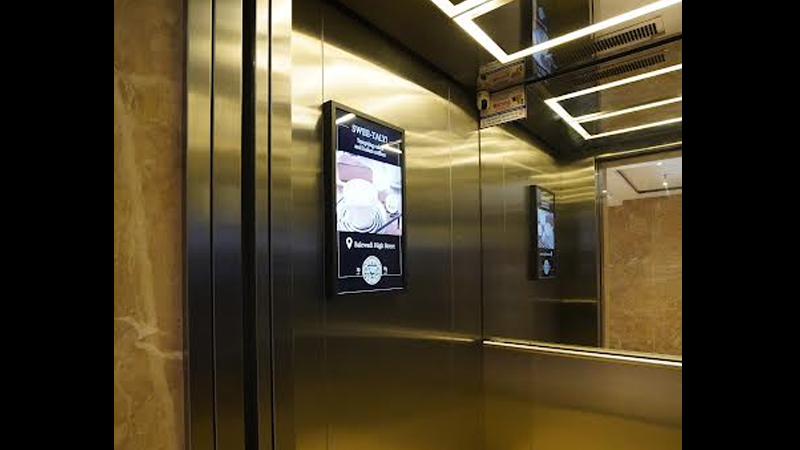
    Mumbai: Schindler India has joined forces with Times Innovative Media Limited (Times OOH) a part of Times of India Group, India’s leading outdoor advertising company, to redefine in-lift advertising.

    This partnership between industry leaders will empower brands to seamlessly convey their messages, offerings, and advertisements through strategically positioned in-lift 24×7 connected screens. These screens present an opportunity for real-time interaction in elevators with a captive audience within residential condominiums, households, and corporate premises. The estimated daily reach is at over 1 million impressions across major cities, including Mumbai, Pune, Bangalore, Hyderabad, Chennai, NCR, Kolkata, and Ahmedabad.  

    Schindler India CEO Nitin Chalke said, “Our elevators are evolving into compelling communication platforms and channels that can be served and managed from a single source, allowing us to share spectacular entertainment and essential information with passengers daily, enhancing in-lift digital advertising experiences.

    Teaming up with Times OOH, a market leader in OOH advertising, we’re poised to revolutionize how brands connect with audiences. This collaboration brings cutting-edge technology and creative prowess to our in-lift digital screens, fostering captivating interactions. Times OOH’s proven track record in the Indian OOH advertising space aligns seamlessly with our commitment to innovation. Together, we’re set to elevate advertising within the confined spaces of elevators, creating memorable moments for viewers and unlocking new avenues for brands to shine.

    With a growing number of residential complexes and office spaces across urban metropolises and tier one and tier two areas, the Indian DOOH advertising space is poised for exponential growth. This trend is further accentuated by the fact that elevators are naturally suited for OOH advertising.  They’re confined spaces where people actively seek distractions, and ads can effortlessly capture their undivided attention.”

    “Regarding our association, Times OOH president Shekhar Narayanaswami stated, ‘At Times OOH, our mission is to revolutionise untapped avenues with the potential to foster direct engagement between brands and their target audience. We find in-lift branding particularly fascinating as it provides an ample opportunity to create high-recall brand value through one-on-one communication. It’s a pleasure to collaborate with Schindler India, a standout player in their industry. With our extensive experience in managing premium spaces like airports, city media, and agency business, we view in-lift branding as another successful addition to our portfolio.”

    “Schindler media network turns elevators into communication platforms. This revolutionary technology captivates an audience with in-lift advertising. Our partnership with Times OOH is an outcome of our shared commitment to keep the viewers and riders entertained and informed in the most impactful way.” said, Existing Installation Business senior vice president Tarunesh Mathur.  

  • Wardwizard embarks on a flavourful journey: Unveiling the QuikShef spice range

    Wardwizard embarks on a flavourful journey: Unveiling the QuikShef spice range

    Mumbai: Wardwizard Foods and Beverages Ltd., one of the leading companies in the food and beverage industry, is delighted to unveil its QuikShef Spice Range during the Navratri festival, signifying a significant expansion in its product portfolio. With a forward-looking approach, the company aims to captivate the market with this innovative offering. This strategic move marks a transformative chapter in the company’s journey as it ventures into an exciting new segment.

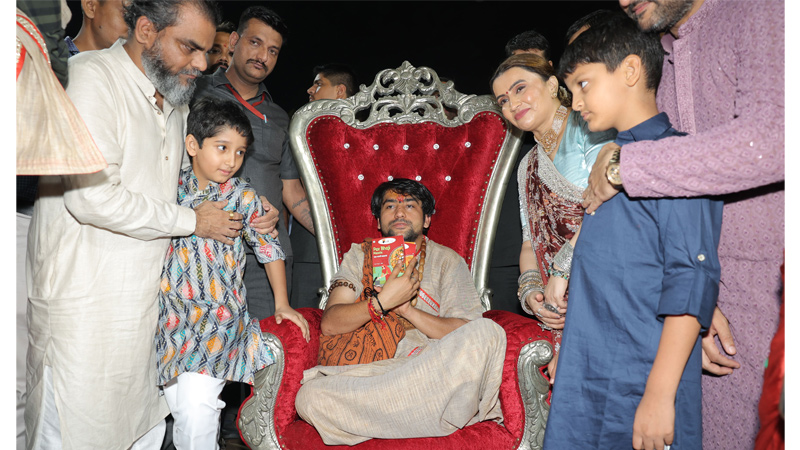
    The unveiling of the QuikShef Spice Range became an unforgettable occasion, elevated by the presence of Param Pujniya Shri Dhirendra Shastriji, and Bageshwar Dham Sarkar. His attendance at the Navratri festival lent a sacred aura to this culinary extravaganza, enriching the event’s spiritual essence.

    Emphasizing the strategic vision behind the move, Wardwizard Foods and Beverages Ltd. chairperson and managing director Sheetal Bhalerao stated, “Our foray into the spices segment represents our commitment to innovation and fulfilling the evolving tastes of our consumers. We comprehend the growing demand for high-quality spices and are determined to offer nothing less than the best. With the QuikShef Spice Range, we aim to bring the rich and authentic flavours of Indian spices to the world, enabling culinary enthusiasts to infuse their dishes with the essence of India. This initiative is just the beginning of our forward-looking approach, and we are excited to bring new and exciting flavours and experiences to our customers.”

    Continuing her statement, Bhalerao mentioned, “We are also deeply honoured to have Param Pujniya Shri Dhirendra Shastriji, Bageshwar Dham Sarkar, join us on this auspicious occasion, and we extend our heartfelt gratitude for his presence, adding a spiritual and blessed dimension to our culinary journey”

    QuikShef Spice Range: Elevating Culinary Experiences

    In response to the increasing demand for high-quality spices, Wardwizard Foods and Beverages launched its QuikShef Spice Range during this Navratri festival. The QuikShef Spice Range boasts a tantalizing selection of 17 distinct varieties, meticulously crafted to elevate dishes to new heights of flavour and aroma. From the aromatic Shahi Biryani Masala to the versatile Garam Masala, and the mouthwatering Panipuri Masala, these spices cater to the preferences of discerning customers. With packaging options in four convenient sizes, Wardwizard ensures that every consumer, from novice cooks to expert chefs, can find the perfect fit for their culinary creations.

    Below is a list showcasing the all-new QuikShef Spice Range along with their available grammage:

    The QuikShef Spice Range is poised to make waves in the respective segment, further establishing Wardwizard Foods and Beverages as a leader in culinary innovation. This exciting introduction aligns with the company’s mission to satisfy not only consumers’ appetite but also their craving for a unique and authentic culinary experience.

  • Adjust and data.ai unveil latest Diwali app trends for marketing 2023

    Adjust and data.ai unveil latest Diwali app trends for marketing 2023

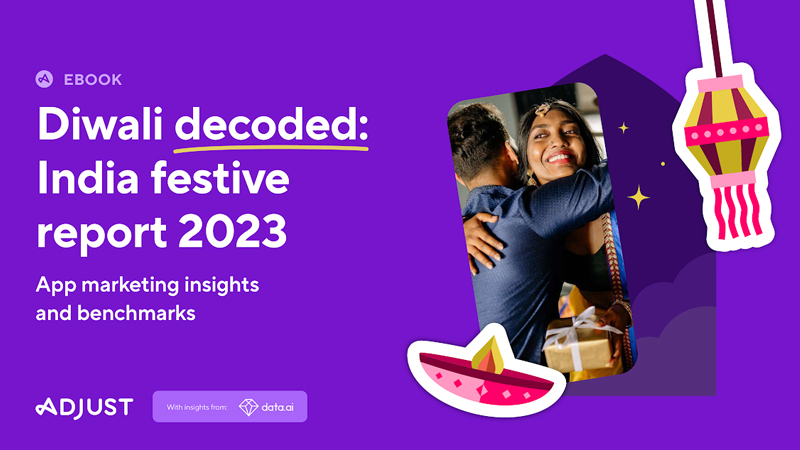
    Mumbai: Leading measurement and analytics company Adjust and leading mobile intelligence platform data.ai, have unveiled Diwali Decoded: India Festive Report 2023, delving into the trends of mobile apps during the Diwali season in India. The report showcases the exponential increases in app installs and session lengths across all verticals that have been analyzed as compared to the previous year. For example, Hotstar, India’s top entertainment apps during the festive season, Oct-Nov 2022. Entertainment app installs and sessions during Diwali were 25 per cent and 13 per cent higher than the year’s average, respectively. Additionally, installs and sessions for this vertical saw impressive growth during the first two days of Diwali, increasing by 24 per cent and 22 per cent on Dhanteras (Oct 22) and 38 per cent and 15 per cent on Choti Diwali (Oct 23), compared to the 2022 average, respectively. Most entertainment app installs and sessions occurred four weeks before Diwali, in which weekdays accounted for 35 per cent of total installs and 34 per cent of total sessions.

    Recent data reveals that mobile apps have become the preferred choice for Indian consumers, with 46 per cent utilizing them for learning, 79 per cent for exploration, and a substantial 78 per cent for making purchases, particularly during this festive period.

    “Analyzing app users’ behavior during Diwali, we’ve seen fascinating app usage trends, across various verticals, that mobile marketers can utilize to inform their upcoming holiday campaign strategies. The Indian mobile app market is on an upward trajectory, and we recommend marketers localize and personalize their messaging to best reach their target audiences during this festive time,” said Adjust regional VP for Southeast Asia, South Asia and ANZ April Tayson.

    India’s rise as a powerhouse in the global mobile app arena is extremely impressive. With a flourishing smartphone user base and booming internet connectivity, the nation generated a staggering US$1.6 billion in revenue in 2022.

    “Demand for mobile apps and games is on the rise in India. In 2022 alone, we saw nearly 29 billion downloads, up 8 per cent year over year. Holiday periods like Diwali can represent powerful times to reach and engage consumers on the device they always have with them: their phones. But it’s a highly competitive time, and brands need to know the lay of the land in order to benchmark and plan effectively for the Diwali 2023 holiday period,” said data.ai corporate marketing director Lexi Sydow.

    The report is based on an in-depth analysis of Adjust’s top 2,500+ apps and the total dataset of all apps tracked by Adjust, with a focus on verticals such as shopping, fintech, entertainment, lifestyle, travel, and food & drink from September 2022 to November 2022. The analysis is based on data.ai’s proprietary App IQ and Game IQ taxonomy – the world’s most comprehensive digital taxonomy for mobile apps with over 250,000 apps classified across 316 subgenres – across the e-commerce, gaming, fintech, social, travel, health & fitness, food and drink, entertainment, OTT, and photo and video editing categories.

  • Get ready to feel the rhythm of ‘Pulse of Storytelling’ with BBC StoryWorks!

    Get ready to feel the rhythm of ‘Pulse of Storytelling’ with BBC StoryWorks!

    Mumbai: BBC StoryWorks has hosted an insightful event with the theme “Pulse of Storytelling”, held on 11 October 2023.

    The objective of this campaign done by BBC StoryWorks was to position HSBC as a forerunner in providing help to those moving to the UK or Canada. Using impactful and innovative infographics, ‘The New Beginning’ addressed key aspects pertaining to relocating abroad.

    In a highly competitive market today, it’s important to provide real value insights and a meaningful perspective across to the audiences, especially when they have your attention. Mining those insights, forming that narrative and choosing a credible brand safe environment to push your message is becoming imperative for advertising and content marketing endeavors. One brand that strongly focuses on the audience and market insights is HSBC.

    When BBC StoryWorks first interacted with HSBC, they realised this is a brand with an appetite for risk. They trusted them with the task of taking their insights to the next level, and presenting it in a brand safe environment. It had to be something which was comprehensive, but not preachy, it has to be eye catching and tasteful for the digital audience

    Given that the campaign was launched during COVID and India was under lockdown, the infographic had received over 42,000 page views with an excellent dwell time of 67.4 seconds. They conducted an online global survey and we saw that 97 per cent of the respondents actually agreed that BBC was the right place for HSBC to advertise. They also saw that the positivity towards the brand experienced an uplift of 14 per cent of brands that already had a positive approach, they still received a 14 per cent uplift specifically amongst the BBC consumers. And that was only because it was evident that being brave at a time where all brands were being very conservative with their messaging really paid off.

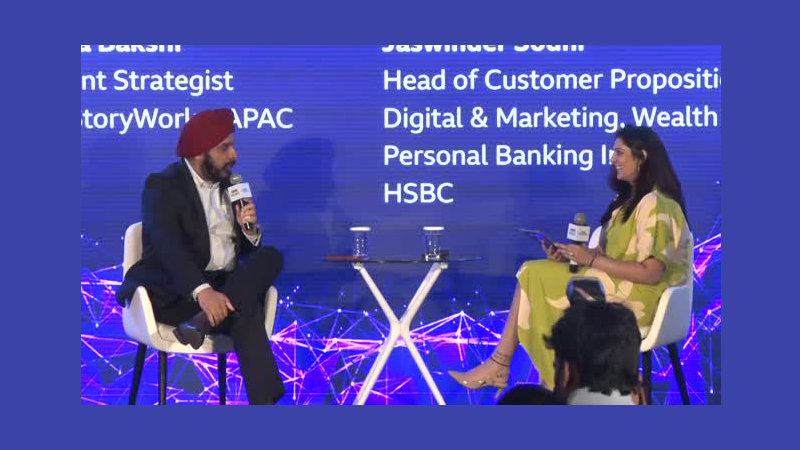
    BBC Story Works content strategist- Asia-Pacific Ankita Bakshi, in conversation with HSBC India head of customer propositions digital and marketing for wealth and personal banking  Jaswinder Sodhi.

    Edited excerpts

    Ankita: We’re going to begin with a question which is actually on top of everybody’s mind because we have the Cricket World Cup on. Tell us a little about your role in the India campaign. I have seen your LinkedIn posts and there are some very fun creatives around we do see Virat Kohli as well in the picture. So, what was the brand’s vision here for this campaign, and also engaging with Virat Kohli, specifically, from a point of view that he is a known face? He is associated with a lot of other brands. So why him? And what’s the thought behind your campaign?

    Sodhi: So, there’ll be a slightly longish answer to this, whatever we are doing there is a knitted story. Today’s topic suggests that it is a storytelling about our story moving across years. The brand revival of HSBC started probably two to three years back when we first did our campaign called India Beyond Boundaries. We have always been a great international bank, connecting boundaries, and making the world borderless. That was the time when did that campaign to clearly say that, there is a borderless world if you work and bank with us. Having said that, having established what we do internationally, there was also a very strong domestic business we used to run and we continue to run, we are a very strong corporate bank. We’ve been in India for almost 170 years there. So there is legacy. There are experiences and customers. So we said why not bring that out? Why not talk about it? But at the same time, why don’t we also say that we are preparing for the future? So, the whole idea was that we are strongly domestically rooted and at the same time, we are strongly globally connected and we wanted to bring this out. That’s where many of you would have seen our campaign with a tiger, walking across the hexagon, which is our brand logo. We had put this up in Asia’s largest hoarding at Bandra. It also ran in many other media and the headline was ‘Roaring with national pride, soaring with global dream’. It summarized our intent of being very proud of our legacy, but at the same time, also very proud of what we have done in India. So the roar comes from there, and the roar continues. There’s a cricket season and we know Virat roars. The story of Virat I will come to but clearly, we believe that 1.21 – 3 billion Indians roaring is the biggest cheer we can provide to our team. It’s topical, it’s content-heavy at this point in time. So, the role of the campaign is basically to kind of echo the sentiments of, all our Indians at this point in time and we want to participate and it’s an embodiment of that. Coming to Virat I think clearly, he is an iconic cricketer, a great human being and has been with the Indian team for such a long time serving the Indian cricket. So, when we were looking at people who can represent us, there were a few qualities we were looking at. They were the values and purpose and we could find a great fit with Virat. His passion, dedication, discipline and willingness to succeed. Look in the face be bold. All those qualities we found truly mesmerizing, and as a brand at some point in time we want to run head-to-head with it. I think he was truly the icon we wanted and that’s where we had him on board. We exactly thought of what’s the story because he’s representing more than 60 brands, and each of those brands has had their narratives out in the market. So which side of Virat do we bring out? That’s where we thought that there are two common things. We chatted with him; we understood his mindset. There was one thing which came out in common. Every match, the score starts from zero for him, right? So while he might have won countless matches, numerous man of the matches and many trophies are in his cabinet. But at the end of it, whenever he steps onto the field, it’s always, zero from where he starts his score. We could resonate that very well. We said that while we are 170 years old, we have the experience and global connectivity. But for our customers, and stakeholders, we want to wipe our record clean, we want to start fresh, and we want to embody that spirit of looking at every day as a fresh start. So that we bring that enthusiasm and energy to our engagements. So that’s where the campaign came out. It was a nice film. It spoke about how he looks at this. And it ended with a very subtle communication talking about my account starts today. So that’s where Virat came into the picture. Now having Virat and not having him on the cricket creative is not fair, so he’s there and part of the fun now. So overall, it’s a great marriage of a person, having a purpose and values, which I think the two iconic brands represent.

    Ankita: That’s actually fantastic. I’m going to lead my next question with the same thought given that Virat Kohli is actually an icon. But brands are actually collaborating with social media influencers in today’s day, and it’s something to pick on Shailaja and Raul said in their previous chat as well, how are you as a brand bringing credibility? And when we’re talking about social media? How do you feel the industry is actually going beyond moment marketing? We’ve seen a lot of that, but how are we bringing that credibility and moving from the moment marketing aspect to bigger campaigns and to bigger thought?

    Sodhi: It is an interesting question; social media has obviously gained prominence. Over the last few years, we have believed social media is a great storytelling platform, there are multiple platforms within social media, Facebook, Twitter now X and LinkedIn, and each one of them have a different audience, and different form of content, which people like. So, for us, when we started, two to three years back, we launched YouTube and Instagram in the midst of a pandemic. We wanted for the first two years, our channels, only to run our brand, vision, purpose and values. I see a lot of effort today to monetize it from day one, or day zero. The customers actually want to hear and connect with your brand. These fantastic platforms provide a great opportunity for storytelling. That’s where I believe social media, if handled in a nice way, can connect very positively with the customers. For us, while we have done that, for the first two years, we are now migrating to more product-centric, Proposition-centric communication. But at the same time, for some of the big messages, like Pride Month we run major campaigns every year and the Virat film when it was launched, it was on Instagram. So social media, of course, has its own pitfalls as well, if I may use that word. We have influencers, a lot has been written about the community, and it’s a matter of debate, which we don’t want to get into. But as a responsible brand, I would suggest that the whole or I would say a great bit of responsibility is on the brands as well. The ones whom you partner with, the ones whom you choose, represent you, your values and purpose. So, I don’t think the selections should be made based on the number of followers. It should not be based on how much virality they bring to the table, but I think it should be based on how they help you connect with the audience whom you have seen, with or you want to target. So that’s where I think, our responsibility towards selecting is as important as how responsible they are in terms of what they talk about. Because that’s where the authenticity part comes in. And, people are very clearly able to see that, and another aspect, which I believe is that even without a brand, does the influencer live the values for which the brand stands for, that’s another metric you can look at. So, we are not very, I would say, aggressive about it. We are careful, we progress with a lot of caution and care. But at the same time, we do acknowledge that it’s a great community because it helps us to connect with lots of people. But I think we all need to tread with a lot of responsibility and care both towards our brand as well as for our customers.

    Ankita: Actually, that’s great, because I think, personally and even with StoryWorks, we also believe that it’s always the quality of content over the number of followers a person has, because it’s that quality, that’s going to matter, that’s going to connect with the audiences. And that’s where we bring in the authenticity of actual storytelling. So, I think that’s, fantastic to know. Now, just going back to the pandemic, what actually made HSBC choose content, like the way they did with StoryWorks, instead of the traditional means to reach your audiences, because a lot of brands were pulling out from doing content at that point in time. And we’re focusing more on performance, we’re focusing more on just being present. So, what made HSBC actually choose a content route?

    Sodhi: See, the pandemic was a great teacher, I would put it that way, it accelerated our learning about lots of things. It made us sit back and kind of look internally as to who we are, and what we stand for. One very interesting piece came out of the research that we did during this, and believe me, every consultancy came and pitched saying what your customers are thinking right now. But I think clearly what we realised that customers want to hear from big brands, during the pandemic or such in times of great despair. They want the big brands to stand up and talk. They don’t want people to shy away. That was a clear message, we heard from our customers. So, we took that challenge, and they were different phases of the pandemic, if I may put it that way. In the initial phase, it was more about empathy. You need not go and talk and say, I’ve got five solutions for you. It was only empathy, which was needed in the initial part, followed by a period when people were like, accustomed to what they are supposed to do. I think that’s where we started our talk about what we do offer. But at the same time, I think engagement with your audience throughout is the key and you can’t shy away. So we used social media to a great benefit. But what we also did at that point in time, there’s an interesting entertainment IP we have called HSBC starstruck, which has been in India for the last two to three years. Nobody would believe that it was born out of a pandemic and it was a very interesting genesis, in one of our internal meetings, we have so many celebrities in our customer base. Why don’t we get their stories out? It’s pandemic time and people want to listen to them. So, we can have a chat show with them every Friday at 5 p.m., we used to get somebody and talk about his life with us on a simple Zoom platform. With no fancy bag around, it was pure content and people loved it. People started waiting every Friday for that one hour and we ran it for almost 28 weeks, it was the longest running for us every week. Finding a celebrity was a task because, by the time the Friday show ended, I had the list for the next week and we had to finalize by Monday. So, it was it was it was, it was like an industry we were running. But that was the kind of engagement, which helped us connect with customers. But indirectly, it created so much content for us, which on YouTube and Instagram had so many views. It started trending over a period of time, as the pandemic has come to an end, we have transformed that format into a physical format, where people have started enjoying it, and it has become a major IP for us. So, the learning is big brands don’t need to shy away, they need to be there when the customers want them. Be engaged and create lots of content. That’s where people want to be there.

    Ankita: That’s actually brilliant and touching on what you said that content became, simply because everything was done over zoom calls, there were no camera crews actually going in and shooting. So, there was a change in strategy and want to understand, what has been a complete shift in thought process ever since we kind of overcame the pandemic or, because we do see there are brands that are still struggling, they’re still trying to figure it out and get their hands back into the content game. So what’s your take on that?

    Sodhi: The closer you are to the customer, you will understand what they want, clearly and life after the pandemic, the world has resumed more experiential marketing, or experiences. Everybody’s taking a holiday, everybody wants to meet lots of people socially, and they want to engage in forums. We realised that right, so we clearly moved on to that zone where we had a lot of physical engagement and that’s continuing, as of now. But I think the bigger change, which has happened is a lot of people are still stuck on digital. A lot of people have moved on to physical depending upon their personality, and as a result, each of the brands has to have a strategy, which is digital as well as physical. Prior to that, it was either digital or physical, it has to be a mix. That’s where you need to understand which audience wants what and that is a big change. Second, I think the experiences, the domain you choose is again, a function of the platform you are in. Third, a lot of our customers are still operating from home. It’s a hybrid working model which the world has settled into. It has its own set of challenges; we have to address all of that. Some of the basic behaviours haven’t changed and the human being is a social animal. So, we want to interact a lot, especially with Indians, we give them what they want. But at the same time, I think some of the digital stuff still continues. So it’s evolving over a period of time.

    Ankita: I think that’s true; it is evolving. This is a question that I am always very, very curious to know. How do you measure the success of any content Lead Campaign? Because a lot of people focus only on the quantitative data in terms of what are the pageviews? How many people did it reach? Or what is the focus more towards the qualitative aspect of it on the emotional aspect of it? How well it resonated with the audience. So what’s your take on that?

    Sodhi: It’s a difficult one. It’s not easy to kind of say no to performance numbers, because that’s what every management wants to hear. Unfortunately, or fortunately, we are in a world which is still commercial. So, all our good leads have to have a commercial outcome. But at the same time, I think what we do is measure engagement in two forms. One does not only like but also the kind of time people have spent on our channels. That’s a good measure. We also do a lot of qualitative research, and surveys and talk with our customers and understand what they like about us. So, it’s a hybrid of measurement, performance, numbers etc to tell a story. But some of those metrics have also evolved over a period of time, talk as engagement, the quality of engagement, etc. So, I think we need to really respect both how much time the customers are giving you and how much time you are investing in the quality of content you’re producing. So, if we do some kind of compromise on one, the other suffers, so you don’t have to miss out on the basic lessons but keep at it.
    Ankita: Thank you so much. I think this is a very interesting topic, and we’re going to continue this conversation in the next session. But thank you so much Jaswinder Singh Sodhi it was a very insightful session. 
  • Makani Creatives’ Dussehra campaign weaves stories of victory

    Makani Creatives’ Dussehra campaign weaves stories of victory

    Mumbai: Makani Creatives, the acclaimed creative design agency, is proud to present a series of captivating creative ideas that seamlessly blend symbolism, innovation, and tradition. These designs, meticulously crafted, capture the essence of the brands they represent and pay tribute to the age-old festival of Dussehra.

    GKB:

    GKB’s Dussehra post artfully communicates the idea that victory is within one’s reach when equipped with a clear vision. A true masterpiece, this creative integrates the product seamlessly into the visual while delivering a powerful message through words. It encapsulates the essence of triumph and the importance of a clear vision, embodying the spirit of the festival.

    Nova:

    Drawing parallels with the epic saga of Rama, who defeated Ravana with strength, vision, clarity, and focus, Makani Creatives presents Nova’s Dussehra creative. Just like Rama, Nova products exhibit these attributes, which is why we seized the opportunity to beautifully intertwine the brand with this significant cultural moment. Nova’s dedication to strength, vision, clarity, and focus is captured in this creative, resonating with the timeless tale of good prevailing over evil.

    Walkway:

    In a breathtaking fusion of symbolism and design, Makani Creatives has harnessed the power of an arrow, reminiscent of the one shot from Rama’s bow, to symbolize triumph. This creative masterpiece seamlessly incorporates the Walkway logo, representing the brand’s commitment to leading with style and precision. Paying homage to courage, design, and heritage, this concept captures the very essence of Walkway’s journey, echoing the triumph of good over evil.

    Makani Creatives takes immense pride in these exquisite designs, celebrating the spirit of Dussehra while paying homage to our client brands. These creatives exemplify the agency’s commitment to blending creativity with tradition and innovation. We believe that each of these designs is a work of art that will resonate with audiences and inspire them with the message of triumph and clarity.

  • Over 80% of CXOs are building omnichannel & connected customer experience to soar high this festive season

    Over 80% of CXOs are building omnichannel & connected customer experience to soar high this festive season

    Mumbai: Exotel, the emerging market’s leading connected customer conversation platform, is excited to introduce its latest survey-driven report titled “Exotel’s CXO Festive Readiness Report.” This comprehensive report provides an in-depth exploration of the strategies and insights of CXOs as they prepare for the upcoming festive season, coupled with the exhilaration of the World Cup. The report offers invaluable perspectives on optimizing sales and prioritizing Customer Experience (CX). It throws light on the essential aspects of their preparations, highlighting the impact of cultural traditions, the significance of discounts, and the challenges they navigate. Additionally, it underscores the growing emphasis on personalization, CX, and the integration of AI in marketing strategies.

    With a resounding 80 per cent of CXOs honing their focus on building omnichannel experiences to soar high this festive season, it’s evident they are well-prepared to harness the incredible opportunities that lie ahead.

    As the festive season beckons, CXOs are orchestrating a diverse array of marketing strategies. These encompass influencer marketing, social media promotions, email and WhatsApp campaigns, alluring festive offers, and strategic brand collaborations. The common thread among these initiatives is the commitment to providing customers with a seamless journey from initial discovery to the final purchase.

    Cultural traditions wield a considerable influence, shaping consumer choices and impacting spending decisions for 39 per cent of survey respondents. In India, where culture and cricket fervor are intertwined, the World Cup isn’t merely a sporting event; it’s a cultural phenomenon dictating consumer behavior and preferences.

    For 37 per cent of CXOs, enticing offers and discounts serve as the driving force behind consumer spending. Discounts effectively leverage price sensitivity, creating a sense of urgency, enhancing perceived value, and providing a competitive edge.

    Personalization emerges as the star of the show, with 64.33 per cent of CXOs giving it a top spot in their marketing strategies. This personalized approach involves aligning marketing efforts with consumer preferences and harnessing data to craft tailored messages and offers, ultimately leading to heightened customer engagement.

    An impressive 86 per cent of businesses are making significant investments in creating a holistic customer journey, recognizing the pivotal role of delivering a positive customer experience during the festive season.

    Technology integration is another critical component, with 84 per cent of businesses seamlessly merging their customer platforms with Martech. This integration not only enhances operational efficiency but also fortifies marketing strategies.

    Furthermore, to foster connected customer conversations, 81.33 per cent of businesses are leveraging multiple communication channels. The overarching goal is to maintain a consistent brand presence across all customer touchpoints, ensuring a unified approach.

    Exotel VP & global head of marketing Udit Agarwal applauds the dynamic spirit of the Indian CXOs, stating, “It’s not merely about readiness; it’s about innovation and placing the customer at the core of strategies, especially in the lead-up to the festive fervor.” He added, “At Exotel, our ‘Like a Friend’ philosophy deeply resonates with the aspirations of CXOs. We’re not just a platform; we’re a trusted ally, guiding businesses to enhance their sales narratives through pioneering customer engagement blueprints. As we stand here, Exotel is not just ready but deeply committed to being that friend, leading CXOs to festive triumphs.”

    However, the path to festive success is not without its challenges. Intense competition, faced by 30.33 per cent of CXOs, underscores the need for innovative, standout strategies. Another substantial challenge takes the form of limited marketing budgets, voiced by 26.33 per cent. This necessitates the judicious allocation of resources, demonstrating a keen focus on efficiency.

    According to a report by Axis My India, a consumer data intelligence company’s India Consumer Sentiment Index (CSI) report, 23 per cent of shoppers plan to shop more during this year’s festive season compared to the previous year, indicating a boost in consumer spending during this period. This positive trend aligns with consumers’ expectations to spend higher amounts during the festive season. And it’s clear that CXOs are prepared to innovate, adapt, and prioritize customer-centric approaches, setting the stage for outstanding sales and memorable customer experiences.

    Methodology

    Exotel received responses from 300 marketers in an online survey conducted in September 2023. CXOs, VP Marketing, and Chief Customer Experience Officers from mid to large organizations across Tech, BFSI, E-commerce, Telecom, and Automotive verticals responded to this survey.


  • Bajaj Allianz Ace unique savings plan, enabling customisation of cash flow as per life goals

    Bajaj Allianz Ace unique savings plan, enabling customisation of cash flow as per life goals

    Mumbai: Participating life insurance plans, commonly known as par policies allow policyholders to share the company’s profits based on the company’s financial performance. These plans have been a valuable investment option, popular amongst customers because of the key attributes: safety, liquidity, and returns. They pay both guaranteed benefits and non-guaranteed bonuses based on the company’s profits. However, conventional par products are rigid, providing predetermined returns and limited opportunities for customers to customize their plans. Bajaj Allianz Life has changed the game by bringing in the power of choice with their new product, Bajaj Allianz Life Ace.

    Bajaj Allianz Life Ace is a is a first-of-its-kind dynamic, non-linked, participating, individual life insurance savings plan. Its key feature is that it offers customers the flexibility to choose the desired income, income start year, income period, adjust maturity benefits as per their goals and much more!

    Bajaj Allianz Life has established the credibility of its par products by consistently delivering substantial returns and bonuses declared by the Company. Through Bajaj Allianz Life Ace, the company has further strengthened this commitment.

    Key Features of Bajaj Allianz Life Ace:

    ●    Dynamic adjustment of income and maturity benefit

    ●    Flexibility of choosing the term and amount of both premium payment and income

    ●    In addition to the life cover, offers life-long income up to the age of 100 years

    ●    Option to receive income as early as the first month of the policy

    ●    Choice to defer income for a certain period, ranging from 1 to 5 years

    ●    Option of Goal Protection Benefit ensuring financial security to the nominee in the unfortunate event of the policyholder’s demise through death benefit, waiver on premium, along with continued income and maturity benefits

    ●    Additional two per cent  income benefit for women policyholders

    Bajaj Allianz Life

  • 2024 VCT season: Focus on Challengers’ pathway

    2024 VCT season: Focus on Challengers’ pathway

    Mumbai: Welcome to the start of our 2024 VCT Season information rollout! Over the next few weeks, we’ll be going through a deep dive into what you can expect from VALORANT Esports next year. In this feature, we’re honing in on Challengers and the pathway it lays out for aspiring professionals in the forthcoming season. Having previously shared some initial details in our Season 2024 Announcement and subsequent deep dive into Challengers, we want to provide a clear roadmap for this layer of the ecosystem.

    The evolution of Challengers and Ascension Tournaments continues with the goal of fostering opportunities for players who aspire to reach the highest levels of the VCT. In tandem, Challengers serves as a regional showcase, offering competitions that identify the best players from the many VALORANT communities around the globe.  

    The ethos of our strategy-inspiration, aspiration, and participation- will further be reinforced with Premier, which will be deeply integrated with Challengers. We’ll be sharing details on premier in early November.

    Cross-Tier Collaboration

    Cross-Tier Collaboration: Affiliate Teams, Two-Way Players, and Player Loans 
    Calendar: A Year-Round Competitive Odyssey

    Focus on Challengers

    For 2024, Challengers competitions will run the entire year, ensuring a steady rate of competition within the Tier 2 framework. Next season will unfold across two distinct stages that will provide consistent opportunities for organized play starting in January and qualifying teams for the Ascension tournament in September.

    For the start of Challengers in January, most Leagues will operate Open Qualifiers while some will welcome back familiar teams from the 2023 season. Each stage will crescendo in a playoff, celebrating the best of the season’s teams. Specific information for each league will be rolled out via regional channels.

    Next year, we will introduce the first Promotion and Relegation event between CL and Premier teams at the end of Stage 1. In the event, Premier teams will fight through a bracket for the chance to compete against CL teams and win a spot in Stage 2 of the CL Season. Teams who aspire to qualify for Challengers should be on the lookout for our upcoming region-specific information in early November.

    Following the 2024 Ascension Tournaments in September, the Challengers 2025 season will kick off in October. This earlier start date will help us minimize gaps in the calendar while giving Ascension winners enough time to prepare for the start of the International  With the 2024 Challenger Season, we’re introducing new policies to build deeper connections and more opportunities across the layers of our ecosystems. Our main goal is to improve talent development by providing more flexibility for where teams can deploy players in competition.

    Affiliate Partnerships will allow teams from the International Leagues to build partnerships with Challenger and Game Changers teams. Teams who establish an affiliate partnership will be unlocked to collaborate more closely on content and other commercial partnerships. Affiliate partnerships with Challenger teams must occur within the same region, however, affiliate partnerships with Game Changers teams have no regional restrictions. These partnerships will also unlock the ability to implement Two-Way players.

    Two-Way Player is an attempt to solve a problem we frequently see within the International Leagues. Last year substitute players signed to IL rosters weren’t receiving play time and thus losing out on building relevant experience within the competition. With the introduction of Two-Way Players, players who may not be seeing full-time play on the starting roster of an International League team may play down on the Affiliate Partner Team’s roster in Challengers and Game Changers, giving those players valuable competitive experience instead of being relegated to the bench.

    Player Loans will also be introduced alongside Two-Way Players to help bolster player developmental opportunities. In 2024, International League Teams will be permitted to loan players on their roster to other teams outside of the International Leagues, such as Challengers or Game Changers teams. Unlike Two-Way Players, these loaned players will not be eligible to compete for their parent team until the loan expires. However, these player loans are not tied to the Affiliate Partnerships system, providing a wider range of destination teams for the loaned player.

    These changes pave the way for new possibilities. Whether you’re a player eager to make a mark, or a fan keen to witness fresh talent in the game, the Affiliate Team Partnerships enrich the 2024 VALORANT season, making it more engaging and open.

    We hope the 2024 Challengers season

    We hope the 2024 Challengers season heralds a period of robust competition, burgeoning opportunities, and a celebration of regional valour. Stay tuned as forthcoming information rollouts with specific regional details and global announcements prepare you for the action awaiting in 2024!

  • Imara unveils new brand positioning campaign centred around ‘You are the celebration’

    Imara unveils new brand positioning campaign centred around ‘You are the celebration’

    Mumbai:  Imara, a GOAT Brand Labs company and a leading fashion label in women’s ethnic wear is thrilled to introduce its Autumn/ Winter ‘23 collection with a brand campaign designed around its new positioning “You are the celebration”. The campaign revolves around the vibrant and multifaceted nature of every woman, emphasizing the role of the Imara protagonist as the life of every celebration.

    During the festive season, every occasion is of a different mood and vibe, each demanding a unique style. Adept at nailing each look to perfection, the woman of today effortlessly transitions from a traditional avatar to an ultra-glam one, with Imara enabling this transformation with its eclectic range of styles.

    Imara’s brand positioning centres around the personality of its target audience, who regardless of their age or background, are all modern, dynamic women who wear their individuality on their sleeves. They are the life of every party, the glue of their families and peer groups. They love having fun and don’t care who is watching. Imara acknowledges their unique charm and their ability to turn even the simplest occasions into larger-than-life than life, filmy moments. Imara’s collection of ethnic and fusion wear, featuring trendy cuts, colours, styles and silhouettes, complements this distinctive personality and becomes a fashion partner in all their shenanigans.

    GOAT Brand Labs chief brand officer Shouvik Roy said, “We are excited to unveil the ‘You are the Celebration’ campaign, which celebrates the unique individuality of every woman. Imara believes that it is ‘You’ who is the real beating heart of every occasion, and our new collection enables you to be your sparkling authentic self during this festive time and beyond. Imara is eager to be your wardrobe favourite and your partner in crime in all your celebratory dos.”

  • One in two urban Indians have access to quality healthcare: Ipsos Global Health Service Monitor 2023

    One in two urban Indians have access to quality healthcare: Ipsos Global Health Service Monitor 2023

    Mumbai: According to the Ipsos Global Health Service Monitor 2023, a global 31 country study conducted among 23,274 adults, at least 1 in 2 urban Indians  (53 per cent) and 48 per cent global citizens polled, claim to have access to good quality of healthcare. Markets where more number of citizens rated their healthcare facilities high and of good quality were Singapore (71 per cent), Switzerland (68 per cent) and Malaysia (66 per cent). On the other hand,  markets where citizens rated their healthcare lowest in quality of healthcare were Poland (14 per cent), Hungary (15 per cent) and Peru (16 per cent).  

    Overstretched Healthcare System

    Interestingly, there was a consensus across markets of their healthcare system being overstretched, with at least 2 in 3 urban Indians (68 per cent) and 6 in 10 global citizens agreeing (62 per cent).  Markets claiming to be more pressured were France (82 per cent), Great Britain (81 per cent), Hungary (79 per cent) and Sweden (79 per cent). The markets that claimed to be least burdened were Japan (24 per cent), South Korea (24 per cent) and Poland (27 per cent).

    Healthcare – how does it stack up

    Interestingly, 71 per cent of Indians polled believe we have Equality of Healthcare (highest globally) while in comparison only 41 per cent of global citizens held this view about their nations. Malaysia (65 per cent), Spain (64 per cent) and Singapore (61 per cent) were the other countries with high ratings on Equality of Healthcare. While Hungary (14 per cent), Poland (23 per cent) and Chile (24 per cent) had low ratings.

    On ease of getting a doctor appointment in the local area, India again was placed at the top at 70 per cent (highest globally), followed by South Korea (64 per cent), Malaysia (61 per cent), South Africa (61 per cent) and Singapore (60 per cent), with their citizens claiming it was easy to get the doctor’s appointment. Only 46 per cent of global citizens polled said it was easy to get a doctor’s appointment in their local area. Markets at the bottom of the heap with least ease of obtaining a doctor’s appointment in their area were France (32 per cent), Peru (32 per cent), Germany (33 per cent) and Canada (33 per cent).  

    For Trust in Healthcare that provides the best treatment, India once again was placed at the top with 75 per cent urban Indians endorsing this view. The other top markets with trust in their healthcare system were Singapore (69 per cent), Spain (69 per cent) and Malaysia (68 per cent).  The markets with least Trust in Healthcare were Hungary (15 per cent), Peru (27 per cent) and Poland (32 per cent).  

    77 per cent urban Indians and 59 per cent global citizens polled believe Vaccinating against serious infectious diseases should be compulsory.

    Areas of discontent in Healthcare

    Waiting time to get an appointment with the doc was seen to be a perpetual problem across most markets polled with at least 67 per cent of global citizens polled agreeing. Even 70 per cent of urban Indians polled seemed miffed with the waiting time taken to see the doctor. The markets most unhappy with the waiting time taken to see the doctor were Hungary (86 per cent), Poland (81 per cent) and Brazil (81 per cent). Markets with least waiting time were Switzerland (38 per cent), South Korea (43 per cent) and the United States (47 per cent).

    Notably, the cost of healthcare was seen to be a sore point across most of the markets polled, with at least 6 in 10 global citizens (61 per cent) and at least three in four urban Indians polled (74 per cent) seemed to be baffled by the enormous cost of healthcare, believing many people cannot afford good healthcare in the country.

    Top health concerns

    Urban Indians say they are most concerned about cancer (59 per cent), heart disease (39 per cent), diabetes (35 per cent), covid19 (27 per cent), alcohol abuse (26 per cent) and smoking (20 per cent).

    Across all markets polled health concern for cancer was the highest in India.  

    Global citizens were seen to be most concerned about mental health (44 per cent), cancer (40 per cent), stress (30 per cent), obesity (25 per cent), drug abuse (22 per cent), diabetes (18 per cent), alcohol abuse (17 per cent), heart disease (15 per cent), covid19 (15 per cent) etc.  

    Challenges facing the healthcare system

    For urban Indians some of the challenges faced in the healthcare sector included, poor quality treatment (30 per cent), cost of accessing treatment (29 per cent), low standards of cleanliness (27 per cent), not enough staff (26 per cent), poor safety (21 per cent), lack of choice (21 per cent) etc.  

    Summarising on the findings of the report, Ipsos India country service line leader, healthcare Gauri Pathak said, “India has world class healthcare systems especially in the private sector thereby making it an attractive destination for medical tourism.The government’s efforts in making healthcare accessible to the lower socio-economic stata through Pradhan Mantri Jan Arogya Yojana (PM-JAY) may be instrumental in driving perceptions around equality. High trust levels healthcare may reflect the confidence in the superior talent pool India has in the medical profession. Healthcare costs continue to be a sore point for Indians, as they do in many other countries, despite the fact that India offers access to high quality affordable pharmaceutical products.”      

    Methodology

    These are the results of a 31-country survey conducted by Ipsos on its Global Advisor online platform and, in India, on its IndiaBus platform, between Friday, July 21 and Friday, August 4, 2023. For this survey, Ipsos interviewed a total of 23,274 adults aged 18 years and older in India, 18-74 in Canada, Republic of Ireland, Malaysia, New Zealand, South Africa, Turkey, and the United States, 20- 74 in Thailand, 21-74 in Indonesia and Singapore, and 16-74 in all other countries. The sample consists of approximately 1,000 individuals each in Australia, Brazil, Canada, France, Germany, Great Britain, Italy, Japan, New Zealand, Singapore, Spain, and the U.S., and 500 individuals each in Argentina, Belgium, Chile, Colombia, Hungary, Indonesia, Ireland, Malaysia, Mexico, the Netherlands, Peru, Poland, South Africa, South Korea, Sweden, Switzerland, Thailand, and Turkey. The sample in India consists of approximately 2,200 individuals, of whom approximately 1,800 were interviewed face-to-face and 400 were interviewed online. Samples in Argentina, Australia, Belgium, Canada, France, Germany, Great Britain, Hungary, Italy, Japan, the Netherlands, New Zealand, Poland, South Korea, Spain, Sweden, Switzerland, and the U.S. can be considered representative of their general adult populations under the age of 75. Samples in Brazil, Chile, Colombia, Indonesia, Ireland, Malaysia, Mexico, Peru, Singapore, South Africa, Thailand, and Turkey are more urban, more educated, and/or more affluent than the general population. The survey results for these countries should be viewed as reflecting the views of the more “connected” segment of their population.

    India’s sample represents a large subset of its urban population — social economic classes A, B and C in metros and tier 1-3 town classes across all four zones. The data is weighted so that the composition of each country’s sample best reflects the demographic profile of the adult population according to the most recent census data. “The Global Country Average” reflects the average result for all the countries and markets in which the survey was conducted. It has not been adjusted to the population size of each country or market and is not intended to suggest a total result. When percentages do not sum up to 100 or the ‘difference’ appears to be +/-1 percentage point more/less than the actual result, this may be due to rounding, multiple responses, or the exclusion of “don’t know” or not stated responses. The precision of Ipsos online polls is calculated using a credibility interval with a poll where N=1,000 being accurate to +/- 3.5 percentage points and of where N=500 being accurate to +/- 5.0 percentage points. For more information on Ipsos’ use of credibility intervals, please visit the Ipsos website. The publication of these findings abides by local rules and regulations.