Category: MAM

  • Nilesh Vaidya moves from Euro RSCG to join Network Advertising

    Nilesh Vaidya moves from Euro RSCG to join Network Advertising

    MUMBAI: A month before he could complete five years of his service at Euro RSCG India, former executive creative director Nilesh Vaidya has quit the organization and will join Network Advertising as executive creative director from 4 April.

    He will be reporting to managing director Vinod Nair. Vaidya, who was executive creative director at Euro RSCG India, had a stint with Network Advertising earlier.

    Says Vaidya, “Network Advertising has been doing pretty well. As a very good opportunity came up at this point, I have decided to join them.”

    Vaidya began his career in 1995 with Spear Advertising. He joined Euro as creative director and then moved up to become executive creative director and was also promoted to head the creative function in Mumbai, in 2009.

    Besides Network Advertising and Euro RSCG, he has also worked with agencies like Lowe Lintas and Triton Communications.

    At Euro RSCG, Vaidya has worked with significant campaigns on brands such as Dainik Bhaskar (Zid Karo campaign), HDFC Bank and Bharat Petroleum.


  • US ad spend up 6.5% to $131.1 bn in 2010: Kantar Media

    US ad spend up 6.5% to $131.1 bn in 2010: Kantar Media

    MUMBAI: Total ad expenditure increased 6.5 per cent in 2010 and finished at $131.1 billion, according to data released by Kantar Media which provides strategic advertising and marketing information.

    Ad spending during the fourth quarter of 2010 was up by seven per cent versus last year, propelled by the long-tail of small advertisers outside the Top 1000.

    Kantar Media US senior VP research Jon Swallen said, “The feel good headline is the ad economy grew by 6.5 per cent in 2010. The more comprehensive assessment is that increased spending has not benefitted all sectors equally. While television media have recouped their losses from the 2009 advertising downturn, several other large segments are still 15 to 20 per cent below their 2008 peaks.”

    Measured Ad Spending By Media : TV ad spending remained robust as spot TV expenditure jumped by 24.2 per cent in 2010 due to the biennial surge in political advertising, a revived automotive category and a pronounced budget allocation shift among retail bank advertisers.

    Spanish language TV spending rose 10.7 per cent, assisted by the World Cup event. Higher sell out levels helped lift cable TV expenditure by 9.8 per cent and healthy demand from CPG marketers and credit card companies pushed Network TV spending ahead by 5.3 per cent.

    Internet display advertising increased 9.9 per cent compared to the prior year, the second largest growth rate among media sectors. Outdoor advertising was close behind with a gain of 9.6 per cent.

    Improvements in radio advertising were tilted towards local markets. National spot radio brought in 18.6 per cent more ad dollars versus 2009 and local radio achieved a 4.9 per cent increase. For each of these, higher spending was driven by the financial service, media and auto dealer categories.

    Growth rates for print media trailed the overall ad market. Expenditure in consumer magazines were up a modest 3.3 per cent while national newspapers rose 2.7 per cent, primarily due to publishing expansion at the Wall Street Journal. Ad spending in local newspapers sank 4.6 per cent versus a year ago despite a small uptick in the volume of space sold. Local newspaper spending has now declined for 21 consecutive quarters.

    Measured Ad Spending By Advertiser: Spending among the ten largest advertisers in 2010 reached $16,345.8 million, a 3.7 per cent increase compared to last year. Among the Top 100 marketers, a diversified group accounted for close to one-half of all measured ad expenditures, and investments climbed 8.8 per cent.

    For the eighth consecutive year, Procter & Gamble was the top advertiser with spending of $3,123.9 million, up 17.7 per cent compared to a year-ago period.

    L’Oreal posted the largest rate of increase among the Top Ten with expenditures soaring 30.6 per cent to $1,112.4 million. The company boosted marketing support broadly across its portfolio of mass market and prestige cosmetics brands.

    Among auto manufacturers, Ford Motor upped its total ad budgets by 11.1 per cent to $1,132.2 million. Rival General Motors reduced spending slightly, down 1.3 per cent to $2,130.7 million. For both companies, exceptionally high levels of ad support in Q4 2009 timed to the leading edge of the auto sales rebound made for difficult comparisons in Q4 2010 and pulled down the full year growth rates.

    AT&T raised expenditures by 12.1 per cent to $2,092.8 million as it continued to expand marketing efforts for its residential and mobile TV services. Verizon Communications trimmed ad spending 15.2 per cent to $1,823.2 million.
    Significant reductions were seen in the ad budgets of Pfizer (down 11.7 per cent to $1,228.7 million) and Johnson & Johnson (down 7.5 per cent to $1,139.7 million).

    2010 vs. 2009

    Rank Company 2010 ($Millions) 2009 ($Millions)% Change

    1 Procter & Gamble Co $3,123.9 $2,653.8 17.7%

    2 General Motors Corp $2,130.7 $2,157.9 -1.3%

    3 AT&T Inc $2,092.8 $1,867.0 12.1%

    4 Verizon Communications $1,823.2 $2,149.7 -15.2%

    5 News Corp $1,368.4 $1,238.8 10.5%

    6 Pfizer $1,228.7 $1,391.5 -11.7%

    7 Time Warner Inc $1,193.6 $1,200.0 -0.5%

    8 Johnson & Johnson $1,139.7 $1,232.6 -7.5%

    9 Ford Motor Co $1,132.2 $1,019.0 11.1%

    10 L’Oreal Sa $1,112.4 $852.0 30.6%

    TOTAL $16,345.8 $15,762.3 3.7%

    Measured Ad Spending By Category: Expenditures for the ten largest advertising categories increased by 6.5 per cent and totaled $74 billion. Automotive was the leading category in both dollar volume and growth rate, finishing 2010 at $13 billion, up 19.8 per cent. Category spending grew almost twice as fast as new vehicle sales (19.8 per cent versus 11.1 per cent), reflecting a fiercely competitive marketing environment for manufacturers and dealers.

    Telecom was the second largest category with 2010 budgets rising a modest foir per cent to $8,751.5 million. Lower spending by wireless carriers and satellite TV companies was offset by higher outlays from cable TV service providers.

    Package goods advertising remained active at year end as a broad range of manufacturers sought to defend market share against value-priced store brands and generics. Expenditures for Personal Care products were up 11.7 per cent to $6,161.0 million and the Food and Candy category rose 7.1 per cent to $6,672.3 million.

    Ad spending for Financial Services increased six per cent to $7 billion. In the aftermath of the financial crisis, marketing activity has picked up noticeably for products related to debt (credit cards, consumer loans) while advertising budgets for savings related segments have lagged (investments, retail banking).

    Only two of the Top Ten categories experienced year-over-year declines. Direct Response budgets fell by 5.8 per cent to $6 billion. Pharmaceutical expenditures dropped 8.2 per cent to $4 billion, the lowest dollar amount for this category since 2003.

    Branded Entertainment: Kantar Media continuously monitors Branded Entertainment within network prime time and late night programming. The tracking identifies brand appearances and measures their duration and attributes. Given the short length of many brand appearances, duration is a more relevant metric than a count of occurrences for quantifying and comparing the gross amount of brand activity that viewers are potentially exposed to in the programme versus the commercial breaks.

    In the fourth quarter of 2010, an average hour of monitored prime time network programming contained six minutes, fifty seven seconds (6:57) of in-show brand appearances and 14:50 of network commercial messages. The combined total of 21:47 of marketing content represents 36 percent of a prime-time hour.

    Unscripted reality programming had an average of 14:19 per hour of brand appearances as compared to just 4:50 per hour for scripted programmes such as sitcoms and dramas. Late night network talk shows had an average of 10:31 per hour. The combined load of brand appearances and network ad messages in these late night shows was 25:22 per hour, or 42 per cent of total content time.

  • Colgate launches “Ask the Dentist” campaign

    Colgate launches “Ask the Dentist” campaign

    MUMBAI: Colgate-Palmolive India, the market leader in oral care, today launched a new “Ask the Dentist” campaign for its flagship brand, Colgate Dental Cream.

    Developed by Bates India, the television commercial has been shot in an interactive talk show format with a dentist providing real information to consumers about prevention of tooth decay and educating consumers about Colgate Dental Cream’s importance in protecting teeth.

    The TV campaign is being amplified across different media touch points.

    The campaign is based on insights that most Indians do not visit a dentist and care little about tooth decay. They visit a dentist only when they have a problem and do not think dental check ups are required on a regular basis. This consumer engagement aims to make the dentist accessible to every Indian.

    Said Colgate-Palmolive (India) VP marketing Rajesh Krishnamurthy, “Our research shows that only 3 per cent people in India visit a dentist regularly. India has a low dentist to population ratio compared to WHO recommended ratios. As market leaders in oral care, we see it as our responsibility to drive oral care awareness in the country. Our new “Ask the Dentist” campaign centers around a friendly approachable dentist who encourages families to ask and get answers to common questions on oral care.”

    The campaign is a marked shift from the previous campaigns as it aims to further enhance consumer engagement on oral hygiene by leveraging an interactive communicative platform.

    “As part of the campaign, we have also set-up a toll-free number and a website, where consumers can call and ask the dentist their own questions related to oral health. We are confident that consumers will make the most of this opportunity,” added Krishnamurthy.

    Consumers can also log on to www.askthedentist.co.in and get oral care queries answered.

  • Pepsi ropes in Sharman Joshi as brand ambassador for 7Up

    Pepsi ropes in Sharman Joshi as brand ambassador for 7Up

    MUMBAI: Food and beverage company, PepsiCo India, has appointed actor Sharman Joshi as brand ambassador for its natural lemon flavoured drink, 7Up.

    The brand has also roped in renowned film director, Rajkumar Hirani, to direct the new on-air campaign around the theme, ‘Gussa Hatao, Chill Machao‘. The campaign that includes two television commercials is expected to go on air by the end of March.

    The on-air campaign will be supported by outdoor, online and on-ground activation.

    Says PepsiCo India Beverages Category Marketing Director (Flavoured Carbonated Drinks) Alpana Titus, “Sharman, with his calm, unruffled and extremely affable personality is a perfect match to highlight the brand‘s positioning of a cool, refreshing drink. With Raju Hirani creating his magic with the ad films, we are confident that our consumers will not only enjoy the campaign but also identify with the theme of ‘Gussa Hatao, Chill Machao‘. We look forward to a great summer season; kick starting with this exciting campaign.”

    The campaign highlights issues of anger management. The TVCs revolve around these instances and Sharman as the new 7UP guy proves to the enraged characters that their anger is misplaced. This is best to douse it with a chilled bottle of 7UP, through a series of witty and offbeat questions.

    Director Hirani said, “I am very selective about the TVCs I direct, but the scripts that I received for 7UP were very interesting. I saw the scope of adding value to the message, since this campaign is not just about giving gyaan. The thought behind the characters‘ self realization of stupidity while getting angry is superb.”

    The first TVC revolves around a man who has been splashed with mud by a speeding truck and gives the truck a chase on his two-wheeler, hell-bent on teaching the driver a lesson. The second film is about a fight that breaks out between two fans of rival soccer teams while they are watching a match. A fight made even more ridiculous by the fact that neither of them has any connection whatsoever with the countries playing. In both TVCs, Sharman appears as the cool voice of reason, diffusing their anger with 7UP.

    “Every minute you spend in anger, you lose 60 seconds of cool! With growing instances of mindless flare-ups that we see around us every day, this philosophy is sure to resonate with the youth,” said BBDO India executive creative director Sandipan Bhattacharya.

  • Grey’s Rohit Malkani and Bhavesh Kosambia to judge New York Festival 2011

    Grey’s Rohit Malkani and Bhavesh Kosambia to judge New York Festival 2011

    MUMBAI: Grey’s executive creative director Rohit Malkani and creative director Bhavesh Kosambia have been appointed on
    the Jury Panel for the New York Festival International Advertising Awards to be held on 5 May in New York.
     
    Malkani says, “New York Festivals is one of the most prestigious advertising shows and being selected for the Jury is a huge honour. I am looking forward to a hectic but stimulating round of judging.”


    This year, each juror will be assigned to 10-person online panels, which will start at different times throughout the online judging process. Each juror will be using a password and an email address, to access the entries to be judged.
     
    Seven days time will be given to complete the online judging session and between 10 to 12 hours to complete a session.


    Kosambia adds, “To be on board as Grand Jury for New York festival design category is undoubtedly an honor, and I am very excited about it. According to me a good design is a medium in itself to communicate and you don’t need to know any particular language to understand or appreciate it.”
     
    This will be the largest gathering of nearly 300 Grand Jury members, consisting of chief creative officers, executive creative directors, creative directors, executive producers, film directors and designers, representing over 55 countries.


    The awards ceremony and conferences will be held on 5 May,in New York.
     

  • English movie channel genre to grow at 20%; Movies Now to up ad rates

    English movie channel genre to grow at 20%; Movies Now to up ad rates

    MUMBAI: The English movie channel genre is sized at Rs 3.25 billion and is expected to grow at 20-25 per cent due to the entry of new players, a senior executive said.

    The competition among the channels has grown the number of advertisers to 340 in 2010, up 21.4 per cent from the year-ago period which had attracted 280 advertisers.

    “Companies advertising more on this genre are the new telecom companies, automobiles, electronics and white goods. FMCG, though, continues to be the largest ad spender on this genre followed by telecom, mobile and consumer electronics,” said Movies Now channel head Ajay Trigunayat.

    Multi Screen Media president network sales, licensing and telephony Rohit Gupta agrees that the genre will grow by at least 20 per cent this year. “There is enough headroom for the genre to grow in revenue size as brands are increasingly targeting upscale audiences. The top four players will have an 80 per cent share. How the others manage in terms of revenue will have to be seen,” he said.

    Barely three months old, Movies Now from the Times TV Network stable is looking at doubling its advertising rates as it claims leadership among a specific upscale young audience group in the metros.

    “We are No. 1 among the metro audiences in the 15-34 demographic, SEC A,B (C&S),” Trigunayat claimed. However, the rates are about half of what the competition is charging. The competition charges between Rs 3500-5000 per 10-second spot. We want to reach Rs 3000 per spot by increasing the effective rates by 100 per cent over the next three months.”

    Movies Now has 40 advertisers and a 70 per cent inventory utilisation rate, added Trigunayat.

  • WC delivers 2.41 TVR for 34 matches in metros

    WC delivers 2.41 TVR for 34 matches in metros

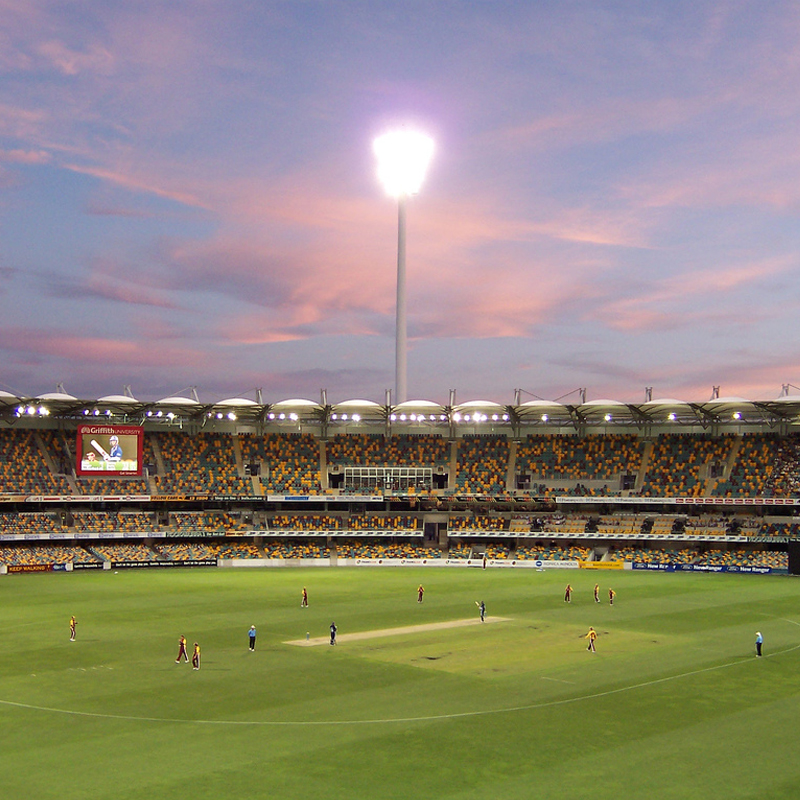
    MUMBAI: The cricket World Cup has delivered an average TVR of 2.41 across six Metros, an improvement compared to 2.12 for the same period in 2007.

    The non India matches have delivered a TVR of 1.20 compared to 1.24 in 2007, according to data from Tam Sports (C&S 4+).

    The increased reach is what is giving value to advertisers this time around. In 2007, a Bangladesh versus South Africa encounter gave a rating of 1.41 and a reach of 10 million. This time around a match between South Africa and Ireland gave a TVR of 1.20 and a reach of 12 million.

    Star Cricket continues to do better than the Hindi feed offered by Star Sports. According to Tam Sports data, 9.8 million people tuned in to the Pakistan versus Zimbabwe match on Star Cricket compared to 4.2 million on Star Sports. Nine million people tuned in to the Australia versus Kenya encounter on Star cricket compared to 3.7 million people on Star Sports.


  • Tyroo splits biz into two units, gets heads

    Tyroo splits biz into two units, gets heads

    BANGALORE: Yahoo’s joint venture and horizontal ad network, Tyroo Media, has announced a few additions in their Sales and Performance team as a part of expansion of its services and clients.

    Tyroo Media sees the need to segregate its business into two broad areas. Given the rapid increase in Internet businesses, Tyroo has created a business unit that will focus on serving the digital marketing needs of these advertisersddharth Puri, who is an old hand at Tyroo, will now be running this newly created, performance business. 
     
    Also, given the rapid increase in adoption of digital media advertising by brands, Tyroo has created a focused team to develop and grow this business. Piyush Rathi, who comes from digital agency and television ad sales background, joins as the national sales head.

    Tyroo Media business head Nitin Chowdhary said, “Tyroo’s business continues to grow strongly with addition of several new capabilities – we announced our partnership with SlideShare recently, we also announced our large format ad product called VooDoo at the start of 2011. We continue to add newer advertisers in all sectors.”

    Tyroo is seeing tremendous growth in the performance services, especially for Internet advertisers in verticals such as jobs, matrimony, travel, e-commerce, classifieds and others. Geetu Ahuja, who has almost a decade of Internet marketing experience, has joined as head of Performance Delivery. 
     
    Puri said, “Given her strong understanding of online marketing and her extensive experience with large clients, she will add immense value to Tyroo.”
    Tyroo Media’s pay for performance contextual advertising network provides a platform for advertisers who want to reach targeted users and for publishers who want to monetise their online inventory to come together and do business.

  • Internet news readership surpasses newspapers in the US for the first time

    MUMBAI: The print media is in serious trouble. For the first time ever in history, more people have said that they got their news from the Internet than a print newspaper, according to an annual report on the news media. 
     
    The study released by the Pew Research Center said the Web is now only behind television among U.S. adults as a mode of getting news – and the gap seems to be closing.


    The report also predicted that in 2010, for the first time, online ad revenue surpassed print newspaper ad revenues. 
     
    One of the challenges facing newspapers is that the largest share of online ad revenue is going to non-news sources, particularly to aggregators, the Washington think tank said.


    Except newspapers, almost every sector from the industry experienced growth after two dreadful years.


    Among the major news industry sectors, only newspapers suffered continued revenue declines last year — an unmistakable sign that the structural economic problems facing newspapers are more severe than those of other media, Pew said. 
     
    The study found that newspapers missed out mainly due to their inability to embrace new media. Also, less progress has been made in charging for news than many in the journalism industry had predicted.


    So far only about three dozen newspapers have moved to some kind of paid content on their websites and only 1 per cent users opted to pay.

  • Alok Lall replaces Debashis Paul at McCann; Paul to head McCann Social

    Alok Lall replaces Debashis Paul at McCann; Paul to head McCann Social

    MUMBAI: McCann Erickson has roped in Alok Lall as executive director McCann Worldgroup to replace Debashis Paul, who moves on to head the newly formed outfit McCann Social.

    Lall, who recently quit as MD Iris India, will now be directly in charge of running the Delhi operations. This will be his second stint at McCann Erickson; he previously worked at McCann as an account director for a year from1996-97. 
     
    Lall started his career as an account executive at FS Advertising in 1989, before moving to DraftFCB Ulka as senior account executive. Then he joined JWT as account supervisor and worked for two years from 1993 to 1995, from where he shifted to McCann for a year with the same profile.

    From McCann, Lall once again moved to JWT, where he worked for about 13 years before joining Saatchi & Saatchi Delhi as branch head and executive vice-president. 
     
    Lall then, co-founded the Indian office of Iris worldwide four years ago in 2007, with Stewart Shanley, the agency‘s global chief operating officer, and Kenneth Augustine, creative director, iris India which provides integrated service to companies such as Sony Ericsson, Dell, Coca-Cola, Microsoft, Shell, Alpha G Corp and adidas.

    Says McCann Worldgroup executive chairman Prasoon Joshi, “In our changing media landscape, Lall‘s drive towards new age media solutions will immensely value add to our offering and expertise.” 
     
    Lall‘s responsibility at McCann will be also to drive a broader integrated approach for all McCann clients.

    About Paul‘s movement, Joshi says that Paul was keen to explore the social media for some time now. “Socially relevant advertising is an emerging need in the rapidly evolving development sector of our country. And I can see no one better to be at the helm of this,” says Joshi.

    Paul has spent more than a decade with the agency and has been heading the Delhi branch since 2007.