Category: MAM

  • New Trends in Eligibility for Loan Against Property Applications Revealed

    New Trends in Eligibility for Loan Against Property Applications Revealed

    In today’s evolving financial ecosystem, a loan against property (LAP) has become one of the most reliable instruments for accessing large sums of money. Whether it is for expanding a business, funding higher education, meeting medical emergencies, or consolidating debts, property-backed loans provide borrowers with high-value financing at relatively lower interest rates compared to unsecured loans. However, just as financial institutions continue to innovate their offerings, they are also redefining the way they assess and approve applications. The eligibility for loan against property is no longer confined to traditional metrics like income and property value alone. New trends are reshaping the approval landscape, giving more individuals and businesses an opportunity to secure funding. This article delves into the latest changes in eligibility criteria, what borrowers should prepare for, and how these evolving trends can impact loan approval in the future.

    Traditional Eligibility Framework: A Quick Recap

    Traditionally, lenders considered a few fundamental aspects when evaluating a borrower’s eligibility:

    1.    Age of the Applicant – Salaried individuals typically had to fall within the age bracket of 25–60 years, while self-employed professionals could go up to 65 years.  
    2.    Income Stability – Proof of steady income through salary slips, bank statements, or audited financials for self-employed individuals.  
    3.    Property Valuation – The loan amount was primarily linked to the property’s current market value, usually allowing borrowers to avail 50–70% of its worth when applying for a property loan.  
    4.    Credit Score – A healthy CIBIL score above 700 was considered essential for approval.

    While these parameters remain important, lenders today are incorporating additional considerations to provide a more holistic assessment.

    New Trends in Eligibility for Loan Against Property

    1. Digital Footprint Consideration  
    Financial institutions are increasingly analyzing digital financial behavior to assess creditworthiness. Online transaction patterns, timely payment of utility bills, and digital credit records are being factored in alongside traditional credit scores. This trend benefits applicants with limited credit history but strong digital financial discipline.

    2. Expanded Age Limits  
    Many lenders are becoming more flexible with age restrictions. For instance, older self-employed applicants beyond 65 are being considered, especially if they have a strong business cash flow or adequate property value. This inclusivity reflects the reality of longer working lives and entrepreneurship beyond retirement age.

    3. Inclusion of Non-Salaried Income Sources  
    Previously, income from part-time work, rental earnings, or freelance engagements was often ignored. Today, lenders are accepting diverse income streams, acknowledging the gig economy and multiple-income households. This shift broadens the pool of eligible applicants significantly.

    4. Higher Loan-to-Value (LTV) Ratios  
    Some financial institutions are now willing to sanction loans of up to 75–80% of a property’s value, especially in urban areas with high real estate demand. This helps borrowers unlock greater liquidity from their assets.

    5. Customized Eligibility for Women Borrowers  
    To encourage financial independence, lenders are introducing relaxed terms for women applicants. These may include lower interest rates, flexible repayment options, and quicker approval timelines.

    6. Focus on Business Potential for Self-Employed Individuals  
    Instead of just looking at past income records, lenders are increasingly evaluating the future potential of businesses. For example, start-ups or MSMEs with strong growth prospects and healthy order books may find it easier to secure loans even without long financial histories.

    7. Use of Alternate Data for Credit Assessment  
    Lenders are gradually embracing alternative data, such as rental payment history, insurance premium payments, or mobile wallet usage. This trend especially benefits first-time borrowers or those with thin credit profiles.

    8. Green Property Preference  
    Sustainability trends are making their way into financial services too. Borrowers pledging eco-friendly or energy-efficient properties are being rewarded with better terms, reflecting a global push toward sustainable finance.

    What Borrowers Should Keep in Mind

    As eligibility norms diversify, borrowers should proactively prepare to enhance their chances of approval:

    ●    Maintain a Clean Financial Record: Pay EMIs, credit card dues, and utility bills on time to build a positive financial footprint.  
    ●    Document All Income Sources: Whether rental, freelance, or part-time, having verifiable documentation for all streams strengthens your application.  
    ●    Leverage Technology: Use digital payment methods and maintain transparent financial transactions, as these are now being tracked by lenders.  
    ●    Choose the Right Property: If your property is in a prime location or adheres to green-building standards, it may help you negotiate better terms.  
    ●    Check Your LTV Ratio: Be aware of the current market value of your property and how much of it you can realistically expect as a loan.

    The Future of Loan Against Property Eligibility

    The landscape of eligibility for loan against property is expected to evolve even further with the adoption of Artificial Intelligence (AI) and Machine Learning (ML) in credit assessment. Predictive analytics will allow lenders to forecast repayment capacity with greater precision, reducing risks and enabling faster approvals. Additionally, blockchain technology could bring unprecedented transparency in property valuation and ownership verification, making the process smoother for borrowers and lenders alike.

    Financial inclusion is at the heart of these changes. By moving beyond rigid eligibility norms, lenders are ensuring that more individuals and businesses—especially those in the unorganized sector or with unconventional income structures—gain access to much-needed financing.

    Conclusion

    The changing trends in eligibility for loan against property applications signify a broader shift in the financial industry toward inclusivity, innovation, and customer-centric approaches. From recognizing non-traditional income sources to considering digital footprints and even the eco-friendliness of pledged properties, lenders are adapting to the realities of modern financial life.

    For borrowers, this means greater opportunities—but also a greater responsibility to maintain transparency, financial discipline, and proper documentation. By staying informed about these evolving trends, individuals and businesses can better position themselves to secure property-backed loans with favorable terms, unlocking the full potential of their assets in the process.  

     

  • How to Compare Best Health Insurance Policies Using Online Tools

    How to Compare Best Health Insurance Policies Using Online Tools

    When you choose a health insurance plan or renew an existing one, how do you determine that it’s the right one for you? You might rely on an agent’s advice or ask a family member or friend. But are these insurance policies truly the right fit for you?

    A health insurance premium calculator can help you choose the best health insurance plan for your needs. It can show you which plans cover hospitals near you, which ones offer maternity coverage, and which ones won’t break the bank. So, using this tool correctly can be very helpful, but you need to know how to use it effectively. Let’s see how to do that.

    Why Comparing Health Insurance Online is Smarter?

    Back in the day, if you wanted medical insurance, you had to meet agents, read brochures full of technical words, and then hope you didn’t miss a hidden clause. Today, you can sit on your couch, open your laptop, and see ten different health insurance plans lined up like products in an online store. So, why is this better? Because:

    ● You don’t rely only on what an agent tells you.

    ● You can compare premiums and benefits side by side.

    ● You see exclusions clearly instead of in fine print.

    It’s just like shopping online or booking a hotel. Nobody calls ten airlines anymore, although we check online. Health insurance should work the same way.

    What Really Matters While Comparing Plans

    The truth is that not every shiny feature matters. A good policy is one that actually protects you when something goes wrong. While browsing online tools, you should be focused on:

    ●    Coverage (Sum Insured): Does it cover realistic hospital bills in your city?

    ●    Cashless hospitals: If your go-to hospital isn’t on the list, it’s a headache later.

    ●    Claim settlement ratio: Higher numbers mean fewer claim rejections.

    ●    Add-ons: Maternity, critical illness, room rent flexibility, if you really need them.

    ●    Premium vs Benefits: Cheapest is not always best.

    If you only remember one thing, it’s this balance cost with coverage. Don’t be tempted by low premiums if it means compromising on actual protection.

    A Quick Walkthrough Using an Online Tool

    Let’s say you’re 32, married, with one child. You open a comparison website. It asks for details like age, city, and number of family members. You fill that in, and within seconds, you see multiple mediclaim policy options.

    Now you notice something interesting:

    Feature Policy 1 Policy 2 Policy 3
    Sum Insured ₹5 lakh ₹10 lakh ₹10 lakh
    Cashless Network 4,200+ 6,000+ 5,800+
    Maternity Cover No Yes Yes
    Premium (Yearly) ₹6,800 ₹9,500 ₹10,200

    At first glance, Policy 1 looks attractive because it’s cheap. But then you realise it doesn’t cover maternity or have as many cashless hospitals. If your family is expanding, that’s a red flag. Policy 2 or 3 might be the better choice long term.

    This is precisely why online tools help you to find the best health insurance plans. You’d probably miss these details if you were only talking to one insurance agent.

    Don’t Skip the “Exclusions” Section

    Most people skim through the benefits and ignore exclusions. Big mistake. Some health insurance plans don’t cover pre-existing diseases for the first 2 – 3 years. Others may exclude specific treatments like cataract surgery or joint replacement.

    When you buy health insurance online, every comparison site has an “exclusions” button or tab. Don’t skip it. It may not be exciting to read, but knowing what’s not covered is as important as knowing what is.

    Buying Online After Comparison

    Once you’ve shortlisted, buying health insurance online has its perks:

    ●    Time saving: Instant policy issuance (no waiting for paperwork).

    ●    Discounts: Some insurers give lower premiums if you buy directly online.

    ●    Transparency: you get all details in writing, no half-truths.

    ●    24/7 access: you can compare and buy anytime.

    Many people get a full mediclaim policy issued in less than 15 minutes online, no queues, no files, no hassle.

    So here are some main overview points that you have to keep in mind when comparing before you buy health insurance plans for family by using any online tool:

    ●    Evaluate your personal and family health requirements

    ●    Select a trusted online comparison tool

    ●    Check key features and coverage details of each plan

    ●    Understand what’s covered and what’s not

    ●    Look into claim history and settlement performance

    ●    Consider policy terms and optional add-on benefits

    ●    Directly compare multiple plans to spot differences easily

    Final Thoughts

    Honestly, picking the right health insurance isn’t as scary as it sounds. Many people just renew the same policy every year without even checking if it still works for them, and later regret it when bills pile up. Using an online comparison tool is super simple. You just spend a few minutes, see which plan covers what, check premiums, and figure out if it actually fits your family. That tiny effort can save a lot of stress later.

    When your renewal comes around, don’t just click “pay.” Take a moment, breathe, and see if your plan still makes sense. Look at the coverage, the hospitals included, maybe even check a rider or two. A few minutes now can keep you from scrambling when medical costs hit unexpectedly.

  • Kantar Insights & Airtel bag top honour at MRSI’s 33rd research seminar

    Kantar Insights & Airtel bag top honour at MRSI’s 33rd research seminar

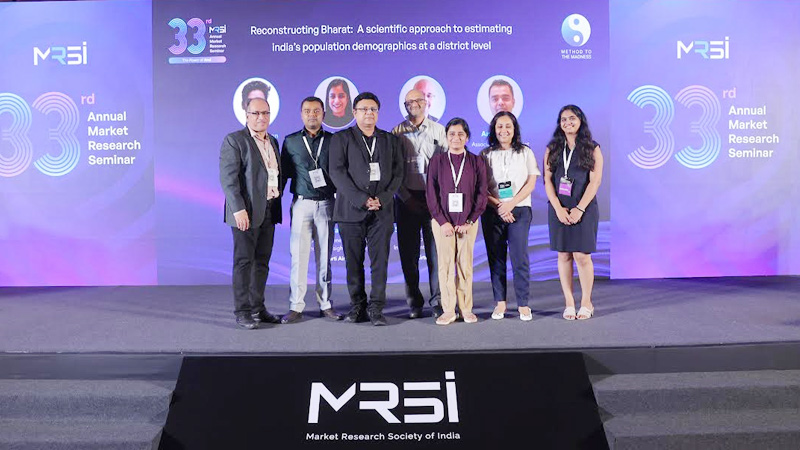
    MUMBAI: Held in Mumbai, the event crowned Kantar Insights and Bharti Airtel Ltd as winners for their paper, ‘Reconstructing Bharat: A scientific approach to estimating India’s population demographics at a district level.’ The research tackled the challenge of building a sharper, district-level picture of India’s vast and varied population.

    The runner-up slots went to Knowledge Excel for ‘Guardians of the survey: Fighting fraud to protect research integrity and data quality benchmarking’ and to Zee Entertainment Enterprises with Third Eye Integrated Services for ‘Streaming the paradox: Gen Z and the intergenerational remix.’

    This year’s theme, ‘The Power of And’ attracted over 100 submissions, with 22 shortlisted papers presented on stage.

    The seminar opened with a keynote by Ministry of statistics & programme implementation, secretary, dr Saurabh Garg, who underlined the importance of data-driven policymaking in India’s journey towards Viksit Bharat. He highlighted innovations in AI, machine learning, and geospatial data as tools that are strengthening decision-making.

    Panels through the day kept conversations lively, from the ‘Joys and dilemmas of insight in the age of technology’ to candid discussions on how brands can authentically connect with India’s cultural and economic diversity.

    MRSI, president, Nitin Kamat set the tone and said, “The industry must embrace integration between technology and creativity, data and human stories, clients and agencies to shape the future of market research.”

    Committee chair Rituparna Dasgupta added, “The diversity of ideas, from academic breakthroughs to brand case studies, reflects the ambition of India’s insights industry.”

    With thought leaders from healthcare, hospitality, FMCG, and media in attendance, the seminar reinforced MRSI’s role as the beating heart of India’s research ecosystem and a champion of ethical, future-ready insights.


  • Studds puts safety in style with new Vogue D1 square helmet series

    Studds puts safety in style with new Vogue D1 square helmet series

    MUMBAI: Studds Accessories Ltd., one of the world’s largest two-wheeler helmet maker by volume in 2024, has launched the Vogue D1 square, its first graphic series under the popular ‘Vogue’ line.

    Known for blending safety, comfort, and value, the ‘Vogue’ range has long been a commuter favourite. The new D1 square edition adds a splash of personality, rolling out six striking colour combinations, from black-and-pastel blue to black-and-pink, while keeping the ISI-certified protection intact.

    Studds, managing director, Sidhartha Bhushan Khurana said the refresh was inspired by riders’ growing appetite for expressive, contemporary designs. “We’re evolving the Vogue series to offer something that’s not only safe and reliable but also visually appealing. This lightweight, open-face helmet lets riders show their individuality without compromising comfort or safety,” he noted.

    The D1 square features regulated-density EPS for protection, a quick-release chin strap for convenience, and a hypoallergenic liner with top air exhausts to keep riders cool, especially handy in India’s sweltering climate. Available in four sizes (xs to l), the helmet is designed for men and women alike, making it a versatile choice for both daily commutes and weekend spins.

    With prices starting at Rs 1,095, the Vogue D1 Square is on sale at Studds exclusive outlets, offline retailers, and the official online store, with availability on major marketplaces coming soon.


  • Banijay Asia shoots for the stars with Thailand’s first space reality show

    Banijay Asia shoots for the stars with Thailand’s first space reality show

    MUMBAI: Space just got a primetime slot. Banijay Asia, in collaboration with SERA (Space Exploration & Research Agency) and Truevisions Now, has unveiled Race to Space Thailand, a genre-bending reality format that will see one Thai citizen catapulted from dreamer to astronaut.

    Produced by Deepak Dhar’s Creasia Studio, the show marks the first time Thailand will select and send a citizen into orbit. SERA, which partners as the backbone of the mission, will work hand in glove with Creasia to turn this ‘out-of-the-planet’ spectacle into a reality.

    “As an Indian creator, it fills me with pride to see our ideas travelling beyond borders,” said Creasia Studio Banijay Asia Endemol Shine India Founder & Group CEO Deepak Dhar. “Thailand is just the beginning. The format will soon resonate in India as well as across South East Asia.”

    For Banijay Asia, the mission goes far beyond entertainment, it’s a milestone in exporting Indian-born creativity to global frontiers. The series blends science, aspiration, and showbiz, democratising space travel and inviting ordinary citizens, regardless of background, to compete for an extraordinary chance.

    Truevisions Now’s Ongard Prapakamol called it “a gateway to global-scale content and a new frontier for Thailand,” highlighting how, for the first time, everyday Thais will be in contention for a shot at space.

    Banijay Asia & Endemol Shine India Group CDO Mrinalini Jain described it as “a landmark concept that embodies aspiration, innovation, and inclusivity.” SERA co-founder Joshua Skurla added that the project would “inspire an entire nation” while confirming India is next in line for lift-off.

    With Season One ready for launch in Thailand and India’s chapter waiting on the launchpad, Banijay Asia’s Race to Space could well be reality TV’s boldest leap yet proof that the sky is no longer the limit.

  • AI storm brews as Studio Blo films fashion in a whole new dimension

    AI storm brews as Studio Blo films fashion in a whole new dimension

    MUMBAI: When fashion meets philosophy in the middle of a sandstorm, you know something otherworldly is at play. Studio Blo, the next-gen content studio pushing the limits of AI-driven filmmaking, has dropped a 100 per cent AI-generated film for the Almost Gods × Fila collection blurring lines between fantasy, sport, and storytelling.

    The high-concept short, live on Youtube and Instagram, unfolds during a rare celestial event where three cloaked figures summon a sweeping sandstorm. Each figure wears pieces from the new collection, which reimagines Fila’s clay-court tennis heritage through Almost Gods’ brutalist aesthetic, laced with mysticism and elemental power.

    In a striking industry first, real fashion models were digitally cloned, with every garment and accessory rendered entirely in AI, no physical shoot, no stitched seams, just crafted pixels with the gravitas of a full-scale cinematic production. Months of prep went into the project, with seasoned cinematographers, creative directors, and AI artists at the helm.

    Studio Blo co-founder & CEO Dipankar Mukherjee set the record straight: “AI films aren’t quick and cheap. This took months, not minutes, because pedigree demands time, talent, and vision. Almost Gods treated us as true creative partners, and that made all the difference.”

    Studio Blo Co-Founder & CCO Rishabh Suri added: “AI gave us the canvas to make a metaphysical thriller in fashion form. Traditional production would’ve struggled with the sheer scale and spectacle. Here, we created something immersive and emotionally resonant, where philosophy and symbolism flow seamlessly into couture.”

    Studio Blo, staffed by veterans from VFX giants like Dneg and MPC, has already delivered showstoppers for Warner Music, YRF Films, Dentsu, and Nykaa. This film cements its mission: AI is not a shortcut, but a collaborator expanding fashion’s stage into realms once thought impossible.

    With the Almost Gods × Fila collection, sport-luxury isn’t just walking the runway; it’s conjuring storms.

  • The Essential Guide to Third-Party Car Insurance for Vehicle Owners

    The Essential Guide to Third-Party Car Insurance for Vehicle Owners

    Owning a vehicle comes with more than just the freedom to travel at will—it also comes with legal responsibilities. One of the most important is having an active and valid car insurance policy. Among the various options available in India, third-party car insurance remains the most widely mandated and crucial form of cover for vehicle owners. But what makes it so essential, and how does it actually work?

    Understanding Third-Party Car Insurance in India

    Third-party car insurance is a legal necessity under the Motor Vehicles Act of 1988. This policy covers you against any liability that arises due to damage or injury caused to a third person, their vehicle, or property in an accident where you are at fault. Essentially, it ensures that you don’t bear the financial burden for harm caused to others while using your car.

    This type of insurance does not extend coverage to your own car or personal injuries, but rather acts as a safety net for everyone else affected by the incident. It is the most basic and compulsory form of motor insurance you must have to operate your vehicle legally on Indian roads.

    How Does Third-Party Insurance Protect You?

    Imagine being involved in a road mishap where your car damages another vehicle or causes injury to someone. Without the right insurance, you could be liable for paying medical bills, legal costs, or property repair expenses out of your own pocket. This is where third-party insurance steps in, covering all such costs within the limits set by regulatory authorities.

    Not only does this shield you from sudden financial stress, but it also ensures that the affected parties receive the compensation they deserve. By shifting this liability to the insurer, you avoid the emotional and monetary distress that could arise in such unfortunate events.

    Why It’s Mandatory—and Rightly So

    The law mandates at least third-party cover because it supports the wider safety net of road users. Accidents can be unpredictable and sometimes involve people or properties that are completely unrelated to the driver. By enforcing minimum coverage, the government ensures that victims in road incidents receive due compensation without unnecessary disputes or delays.

    From a governance standpoint, this also reduces the burden on public systems, such as hospitals or civil courts, by routing settlements through insurers. It contributes to a more structured and predictable system of accountability.

    What’s Actually Covered in a Third-Party Plan?

    The scope of third-party insurance is straightforward yet effective. It covers:

    ●    Property damage caused to third parties, including vehicles, walls, fences, etc.

    ●    Bodily injury or death of another person caused by your insured car.

    ●    Legal liabilities, including expenses involved in defending you in court if a claim is raised.

    While the sum insured for property damage may have certain limits, coverage for bodily injury or death is typically unlimited as per the law. This ensures victims of serious accidents are adequately compensated.

    Where It Falls Short: Key Exclusions To Know

    Although a third-party plan covers external damages, it excludes coverage for the policyholder’s own vehicle damage or personal medical expenses. So, if your car is badly dented in an accident, you would need to bear those repair costs unless you have a more comprehensive policy.

    It also doesn’t cover incidents where the policyholder was driving under the influence, without a valid license, or using the vehicle for unauthorised purposes like racing or commercial transport if the policy does not include those terms.

    How the Claim Process Works

    Once an accident occurs, the injured third party (or their representative) can file a claim under your insurance policy. The insurer, in turn, will assess the claim, verify documentation, and facilitate the settlement—whether through repair costs, hospital expenses, or legal support. Some insurers may even assist in court proceedings if a lawsuit is filed.

    Insurers like TATA AIG often handle these claims with a dedicated support system that helps you through documentation, estimation, and final settlement. This makes the process relatively smooth and much less stressful than going at it alone.

    Premiums and How They Are Calculated

    In India, premiums for third-party insurance are regulated by the Insurance Regulatory and Development Authority of India (IRDAI). The amount is mainly based on your vehicle’s engine capacity (in cc). A car with a smaller engine pays a lower premium, while a larger engine commands a higher rate. This system ensures fair pricing while keeping the policy affordable for the masses.

    These rates are revised periodically and applied uniformly across all insurers. This means there’s not much room for variation when it comes to premium costs for third-party coverage.

    Why More People Are Buying Third-Party Car Insurance Online

    In the age of digitisation, more and more consumers are turning to digital platforms to handle their car insurance needs. Buying third party car insurance online offers a number of advantages, such as quick policy issuance, ease of comparing multiple options, and convenient claim tracking—all without the need for an agent or paperwork.

    Moreover, most insurers now offer mobile apps or web portals that let you download your policy instantly, raise a claim, or renew your policy with minimal effort. This shift towards online insurance makes it easier to stay compliant with legal requirements while enjoying round-the-clock service.

    When Should You Upgrade From Just Third-Party Coverage?

    While third-party insurance is a legal must-have, it may not be enough if you’re looking for complete financial protection. If your car is new or you frequently drive in high-traffic areas, you might want to consider upgrading to a comprehensive plan. This would not only include third-party liabilities but also offer coverage for damages to your own vehicle due to accidents, theft, or natural disasters.

    Think of it as upgrading your basic safety net to a complete financial shield—one that takes care of both your liabilities and your assets.

    Conclusion

    Third-party car insurance is more than just a box to tick for legal compliance. It’s a fundamental form of protection that ensures your responsibilities as a car owner don’t turn into financial burdens. From compensating accident victims to shielding you against costly legal claims, this policy offers peace of mind every time you hit the road. Whether you’re a new driver or a seasoned commuter, understanding how this insurance works is the first step towards driving smarter and safer. 
     

  • Candyman turns kids into storybook stars with ‘Once Upon a Time’

    Candyman turns kids into storybook stars with ‘Once Upon a Time’

    MUMBAI: Bedtime stories just got a sugar rush. ITC Candyman, the confectionery brand known for its vibrant flavours and cheeky charm, has launched a new initiative ‘once upon a time by Candyman’ that turns children into the heroes of their very own storybooks.

    In a world where digital distractions often steal reading time, the brand is reimagining storytelling as a personalised, interactive experience for families. Parents can now log onto the Candymanclub website, pick from a range of whimsical tales, and with just a few clicks seamlessly weave their child’s name and photograph into the storyline. The result? A printed or digital book where the child doesn’t just read the adventure, they live it.

    The stories, brimming with mischief, magic, and epic little quests, are designed to keep young readers engaged on every page. The idea is simple but powerful: instead of watching others play the hero, children see themselves centre stage.

    “With Once Upon a Time by Candyman, our goal is to spark kids’ imagination and make reading a delightful family ritual,” said ITC Limited vice president and head of marketing for chocolates, coffee and confectionery, foods division Anuj Bansal. “When children see themselves as the heroes of their own adventures, it builds confidence, joy, and memories that last.”

    The platform is secure, easy-to-use, and family-friendly, blending creativity with digital innovation. Parents can personalise multiple stories, creating keepsakes that combine entertainment with bonding.

    For Candyman, a brand rooted in fun and flavour, this initiative is more than playful mischief, it’s about making reading irresistible in the swipe-and-scroll age. By giving children the spotlight in their own tales, the brand is not just sweetening storytime but fostering a love of storytelling that could last well beyond childhood.

  • Sanya Malhotra takes Flite forward with style in new Saatchi campaign

    Sanya Malhotra takes Flite forward with style in new Saatchi campaign

    MUMBAI: Bollywood’s Sanya Malhotra is putting her best foot forward, literally as the new face of Flite, India’s leading family fashion footwear brand from Relaxo. In a fresh campaign by Saatchi & Saatchi India, the actor breathes life into Flite’s iconic tagline, “Sar Utha, Kadam Badha”, repositioning the brand as more than everyday comfort, it’s a stride of confidence, ambition, and style.

    The campaign’s heart beats for the everyday achievers people who rise above modest beginnings and keep walking tall despite challenges. Sanya embodies this journey herself, reflecting the grit and determination of millions across India. The campaign film concludes with the rallying call of “Sar Utha, Kadam Badha”, positioning Flite as the stylish companion on this onward march.

    “It’s been a whirlwind journey down several new roads,” said Saatchi & Saatchi India chief creative officer Rohit Malkani. “From finding the right celebrity to creating a contemporary visual language, this narrative builds on the ethos but evolves it showcasing not just struggles, but Sanya’s grit and fashionable flair.”

    For Relaxo, the association signals more than celebrity endorsement. Relaxo Footwears Ltd VP for marketing Manoj Lalwani called it “the start of an exciting new chapter,” with a 360° campaign spanning digital, retail, and television to ensure deep consumer connect. “With ‘Har Kadam Stylish’ as your way of life and ‘Sar Utha Kadam Badha’ as your way forward, we’re confident this will spark strong resonance,” he added.

    Since winning the business in 2021, Saatchi has consistently evolved Flite’s brand language. Saatchi & Saatchi India head for North & East Hindol Purkayastha, noted that the new film leverages the strong recall of the tagline to reach younger audiences while cementing Flite as a design-led lifestyle choice.

    The campaign blends Flite’s comfort, durability, and contemporary design into a narrative of ambition. Rolling out across television and digital platforms, it reinforces the footwear’s role as a stylish partner in resilience and progress urging Indians everywhere to keep their heads high and steps bold.

  • IndIAA Awards toast 10 years of creativity with grand Mumbai celebration

    IndIAA Awards toast 10 years of creativity with grand Mumbai celebration

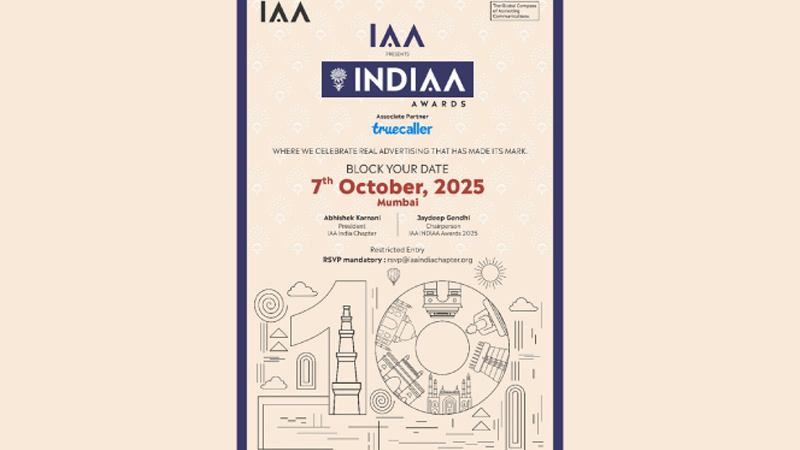
    MUMBAI: Advertising rarely gets a standing ovation outside boardrooms, but the Indiaa Awards have spent a decade proving that creativity deserves the spotlight. On 7 October in Mumbai, the International Advertising Association (IAA) will host the 10th edition of its flagship celebration of creative excellence.

    The milestone year brings together a distinguished jury, chaired by Meta managing director & country head Arun Srinivas and featuring heavyweights including Mohit Malhotra (CEO, Dabur India Limited), Kalpen Parekh (MD & CEO, DSP Mutual Fund), Anindita Veluri (director of marketing, Adobe India), Neil George (former MD, Nivea India / Abbott Nutrition India), and Promeet Ghosh (MD & CEO, Crompton Greaves Consumer Electricals Ltd). Their task: to evaluate work that has already proven its mettle in the marketplace.

    That’s the IndIAA difference. As IndIAA Awards vice president IAA and chairperson Jaydeep Gandhi explains, entries aren’t submitted by agencies or brands at all. Instead, a panel of senior editors from the marcom trade media handpicks the campaigns that have stood out in the clutter, ensuring that only the most impactful work makes it before the jury. From there, deliberations identify the winners campaigns that didn’t just win awards, but won over consumers first.

    “This year marks a significant milestone as we celebrate the 10th edition of the awards for creative excellence,” said IAA president Abhishek Karnani, underscoring the spirit of the event.

    Winners will be unveiled at the grand IndIAA Awards Nite, where not just agencies and brands, but all co-creators of the winning campaigns will be felicitated. It’s a nod to the industry’s collaborative DNA, where strategists, storytellers, directors, and designers together craft work that resonates.

    With ten years behind it and countless campaigns celebrated, the IndIAA Awards remain a rare show where the applause is as authentic as the advertising it honours.