Category: Brands

  • Q1 FY26: Reliance Retail charges ahead with Rs 84,171 crore revenue blitz as profit surges 28 per cent

    Q1 FY26: Reliance Retail charges ahead with Rs 84,171 crore revenue blitz as profit surges 28 per cent

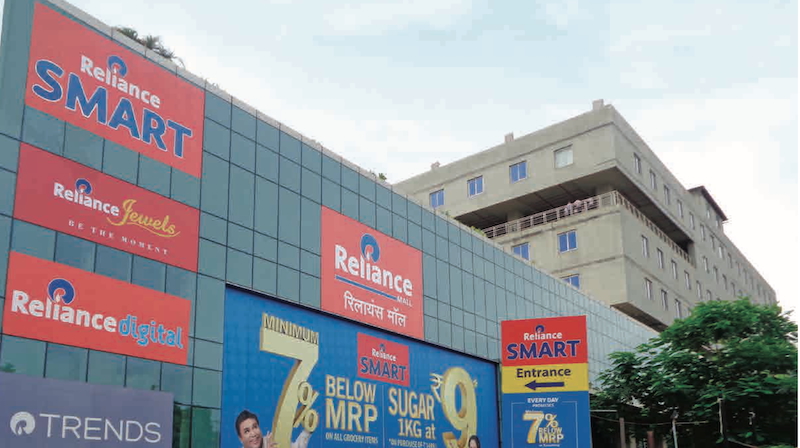
    MUMBAI: Reliance Retail has delivered a commanding first quarter performance, posting revenues of Rs 84,171 crore—an 11.3 per cent year-on-year surge—whilst profits catapulted 28.3 per cent to Rs 3,271 crore as the retail behemoth continued its relentless expansion across India’s consumer landscape.

    The company’s earnings before interest, taxes, depreciation and amortisation climbed 12.7 per cent to Rs 6,381 crore, with margins expanding 20 basis points to an industry-leading 8.7 per cent—cementing its position as India’s most profitable large-scale retailer.

    Reliance Retail’s physical footprint swelled with 388 new store openings during the quarter, taking the total count to 19,592 stores spanning 77.6 million square feet. The registered customer base hit 358 million, reinforcing the company’s claim as one of India’s most preferred retailers.

    The star performer was JioMart, which the company  described as “India’s fastest scaling digital grocery platform.” The hyperlocal delivery service registered explosive growth with daily orders surging 175 per cent year-on-year and 68 per cent quarter-on-quarter, now serving 4,290 pin codes through 2,200-plus stores across 1,000-plus cities.

    JioMart’s rapid-fire expansion included launching AJio Rush, a four-hour delivery service now live in six cities with 130,000-plus options. The initiative is delivering superior unit economics driven by higher average bill values and lower returns, according to the company.

    Fashion and lifestyle delivered robust growth, with emerging formats Gap, Azorte and Yousta registering 59 per cent year-on-year growth across 170 stores. Ajio’s new customer revenue share reached 18 per cent, up 150 basis points year-on-year, whilst average bill values jumped 17 per cent. The platform expanded its catalogue to 2.6 million options—44 per cent growth year-on-year.

    Consumer electronics faced headwinds from early monsoon onset impacting air conditioner sales, though average bill values surged 26 per cent with conversions up 200 basis points. The company bolstered its own-brand strategy by acquiring Kelvinator brand intellectual property for India.

    Grocery maintained its market leadership with broad-based growth across categories. Home and personal care grew 15 per cent year-on-year, as did fruits and vegetables, whilst packaged foods expanded 13 per cent. The Metro format delivered standout performance with home and personal care categories growing 25 per cent year-on-year.

    The quarter also saw strategic brand expansions including Shein crossing two million app downloads with 20,000 live options, whilst AJio Luxe grew its portfolio to 875 brands. Premium brands continued segment leadership with Hamleys expanding geographically and launching its Green Club sustainability programme.

    “Reliance Retail delivered resilient performance during this quarter driven by our relentless focus on operational excellence, geographical expansion and sharper product portfolio,” said executive director Isha M. Ambani “Our continued investments in cutting-edge technologies and differentiated product offerings have enabled us to serve our customers better and scale with agility.”

    The results underscore Reliance Retail’s dominance in India’s Rs 70 trillion retail market, with the company now processing 389 million transactions quarterly—a 16.5 per cent year-on-year increase—as it continues reshaping India’s retail landscape through aggressive digitisation and expansion.


  • Reliance hits record Q1 FY26  EBITDA as Jio and retail fire on all cylinders

    Reliance hits record Q1 FY26 EBITDA as Jio and retail fire on all cylinders

    MUMBAI: Reliance Industries has kicked off FY26 with a blockbuster first quarter, posting its highest-ever consolidated quarterly EBITDA of Rs 58,024 crore ($ $6.8 billion), a sharp 35.7 per cent leap over last year, fuelled by robust performances across digital, retail and energy verticals.

    Group net profit soared 76.5 per cent year-on-year to Rs 30,783 crore ($3.6 billion), aided by operational gains and a Rs 8,924 crore windfall from its stake sale in Asian Paints. Total revenue rose 6 per cent to Rs 2.73 lakh crore ($31.9 billion), with EBITDA margins improving by a stellar 460 basis points to 21.2 per cent.

    Reliance Jio continued to dominate the digital landscape, crossing a jaw-dropping 200 million 5G subscriber milestone and 20 million home broadband connections. Jio Platforms’ revenue jumped 19 per cent to Rs 35,032 crore, while EBITDA climbed 24 per cent to Rs 18,135 crore, with margins expanding 210 basis points to a best-in-class 51.8 per cent.

    ARPU rose to Rs 208.8, driven by premium subscriber additions and deepening data consumption, which reached 54.7 billion GB this quarter. Jio also unveiled its next-gen tech stack—JioGames Cloud, JioPC, and the proprietary UBR fixed wireless platform—taking a firm aim at India’s AI and home computing future.

    Reliance Retail cemented its pole position, clocking Rs 84,171 crore in revenue (up 11.3 per cent), and EBITDA of Rs 6,381 crore (up 12.7 per cent), marking an industry-leading margin of 8.7 per cent. The business added 388 new stores, taking the total footprint to 19,592 outlets spanning 77.6 million sq ft.

    JioMart’s hyper-local push paid off with daily order volumes exploding 175 per cent year-on-year. AJIO continued to thrive in the online fashion segment with its new 4-hour delivery service and strong traction for Shein, while the FMCG arm doubled revenue to Rs 4,400 crore.

    Reliance’s Oil-to-Chemicals (O2C) segment, despite a 1.5 per cent drop in revenue due to crude price softness and planned shutdowns, posted a solid 10.8 per cent EBITDA gain at Rs 14,511 crore. Jio-bp’s aggressive retail fuel push contributed significantly, with volumes of petrol and diesel up 38.6 per cent and 34.2 per cent respectively.

    With net debt remaining flat at Rs 1.17 lakh crore and capital expenditure of Rs 29,875 crore this quarter, the group is doubling down on its “golden decade” growth strategy across tech, consumption, and energy. Chairman Mukesh Ambani said, *“Reliance will continue its stellar track record of doubling value every four to five years.”

    From superfast data to doorstep delivery and clean fuels, Reliance is firing on all fronts—and showing no signs of slowing down.

  • Caller of the Wild: Truecaller Rings in Record Growth with 15m New Users

    Caller of the Wild: Truecaller Rings in Record Growth with 15m New Users

    MUMBAI: Truecaller has dialled into another stellar quarter and this time, it’s all about strong signals and even stronger numbers. The Swedish platform, best known for helping users identify who’s calling and block the rest, has reported a 21 per cent surge in net sales (in constant currencies) for Q2 2025, clocking in at SEK 496.4 million which is around 47 million dollars.

    Even in Swedish Krona, which saw a sharp rally, growth was a healthy 9 per cent. The company’s EBITDA margin (excluding incentive costs) rose to a punchy 42.6 per cent, with absolute EBITDA at SEK 211.6 million up 20 per cent year-on-year.

    More than just the money, the momentum was visible in user growth: Truecaller added 15 million monthly active users this quarter alone, pushing its non-iOS MAUs to 426.6 million. That’s a 55.3 million jump from Q2 2024, a clear sign that spam isn’t winning.

    Subscriptions were on a tear too, with paying users now crossing the 3 million mark including 1 million on iOS. Subscription revenues shot up by 48 per cent in constant currency, while Truecaller for Business climbed 53 per cent. Advertising revenue, despite currency drag, held steady with 11 per cent growth in constant terms.

    To boost its ads play, the company launched the Truecaller Masthead and Truecaller Play, expanding its video and display offerings. It also introduced an in-house AI recommendation engine, tested with Uber and Bajaj Auto, which showed promising upticks in click-throughs and conversions.

    India, its biggest market, recorded a 5 per cent growth in Q2 net sales. But the Middle East and Africa (MEA) stole the spotlight with a 23 per cent jump, followed by an 18 per cent rise in the rest of the world.

    Still, it wasn’t all sunshine profit after tax dipped to SEK 118 million (from 123 million), thanks in part to the strong Krona. Yet Truecaller CEO Rishit Jhunjhunwala remains upbeat: “We’re solving everyday communication problems and building long-term value. The future looks bright and spam-free.”

    With AI-fuelled growth, a booming subscriber base and a sharp eye on regional expansion, Truecaller’s trajectory might just be the one call everyone wants to answer.
     

  • Reliance Retail snaps up Kelvinator in bold consumer durables play

    Reliance Retail snaps up Kelvinator in bold consumer durables play

    MUMBAI: Reliance Retail has bagged Kelvinator in a deal that signals its aggressive push into India’s Rs 75,000 crore consumer durables market. The acquisition brings the century-old global refrigeration pioneer under the wing of one of India’s most voracious retailers.

     The details of the acquisition were not revealed at the time of writing, but Reliance Retail, had earlier signed a 10-year deal with Electrolux for brand licensing, manufacturing, marketing, and distributing the Kelvinator brand.  The latter’s consumer cooling products have  been absent from the Indian market for while now

    Kelvinator, a household name in the ’70s and ’80s, was once the epitome of Indian middle-class aspiration with its catchphrase, “The Coolest One.” Reliance now plans to reboot the brand’s nostalgia with cutting-edge appliances, promising mass access to global-quality tech at local prices.

    “Our mission has always been to serve the diverse needs of every Indian by making technology accessible, meaningful, and future-ready,” stated Reliance Retail Ventures executive director Isha M Ambani.”The acquisition of Kelvinator marks a pivotal moment, enabling us to significantly broaden our offering of trusted global innovations to Indian consumers. This is powerfully supported by our unmatched scale, comprehensive service capabilities, and market-leading distribution network.”

    The move aligns neatly with RRVL’s ambition of “democratising aspirational living.” With 19,000+ stores and 3 million merchants in its ecosystem, the company is now eyeing deep penetration of premium appliances into Indian homes.

    Reliance Retail reported Rs 3.3 lakh crore in turnover and Rs 25,053 crore in EBITDA in FY25, maintaining its perch among the world’s fastest-growing retailers, according to Deloitte.

    With Kelvinator’s legacy and Reliance’s distribution muscle, the group is betting big on middle India’s thirst for quality, affordability—and a bit of old-school cool.

  • Jupiter enters insurance with IRDAI nod and mobile-first broker licence

    Jupiter enters insurance with IRDAI nod and mobile-first broker licence

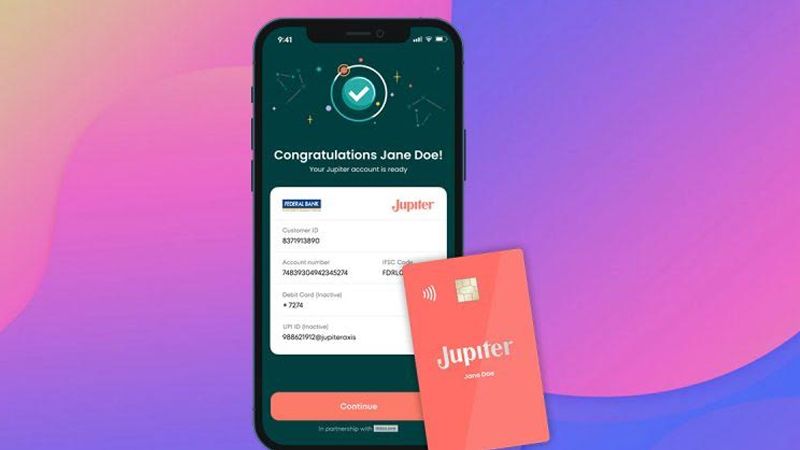
    MUMBAI: From swipe to safeguard, Jupiter’s money app now offers peace of mind on tap. After cracking credit, prepaid, and savings, Jupiter Money is adding a whole new layer to its financial orbit protection. The fintech platform has received the Insurance Regulatory and Development Authority of India’s (IRDAI) approval to operate as a Direct Insurance Broker (Life & General), paving its way into the insurance segment with a decidedly digital twist.

    This approval marks a pivotal milestone in Jupiter’s transformation into a full-stack financial wellness ecosystem. Over the past year, Jupiter secured an NBFC licence and a PPI licence, fuelling its foray into credit and prepaid services. Now, with insurance in its basket, Jupiter is going all in on the promise of a 360-degree money experience.

    The insurance rollout will begin with curated offerings in term life and health partnering with top-tier insurers and later expand into smart, embedded options. Think: travel insurance triggered by credit card swipes, cyber fraud cover linked to digital transactions, or device protection tailored to e-commerce behaviour. All policies will be issued digitally and managed within the Jupiter app, ensuring zero paperwork and minimal jargon.

    “Insurance is a critical but overlooked layer in the financial stack especially among younger users,” said Jupiter Money president Rohit Kumar Pandey. “Our goal is to make insurance invisible and intuitive, not an intimidating chore.”

    Jupiter Money director of insurance & PPI Chinmay Jain added, “With the Broker licence in place, we’re embedding insurance into real life, not just into product tabs. This is about timing, awareness, and contextual value not just another menu item.”

    Jupiter, which boasts over three million users, sees this move as more than just product expansion. It’s a shift toward making insurance a seamless, proactive part of users’ everyday money behaviour turning a typically reactive category into one driven by life’s natural rhythms.

    As IRDAI nudges the industry towards higher digital penetration, Jupiter joins a growing band of fintechs rewriting the rules of insurance distribution mobile-first, moment-driven, and mindfully minimalist. And in Jupiter’s case, it’s not just about protection, it’s about simplifying the chaos of financial choices, one smart patch at a time.

  • Rashmika Mandanna named brand ambassador for Isopure in India

    Rashmika Mandanna named brand ambassador for Isopure in India

    MUMBAI: She’s got the moves and now the macros to match. Rashmika Mandanna has been unveiled as Isopure’s first-ever brand ambassador in India, bringing star power to the brand’s stripped-down, zero-fluff approach to fitness. The global Zero/Low-Carb protein supplement brand has launched its new campaign, “Everything You Need, Nothing You Don’t,” putting the spotlight on clean-label nutrition and mindful wellness. And with 25g of protein per serving, zero carbs, zero sugar, zero fat, and no artificial additives, Isopure’s unflavoured whey isolate is walking the talk.

    Loved for her vibrant energy and grounded approach, Rashmika isn’t just the face of the campaign, she’s the poster girl for clean choices. “Fitness, to me, is not about extremes, it’s about consistency,” she said. “Isopure fits effortlessly into my life, no gimmicks, no excess.”

    Glanbia Performance Nutrition, general manager, south Asia Sumit Mathur said Rashmika embodies Isopure’s ethos of purity, simplicity, and quality. “She’s focused, mindful, and uncompromising just like an Isopure consumer,” he added.

    To drive home its point, Ispore is rolling out the ‘Purity Challenge’, featuring two demo tests ISOFOAM and ISOMIX designed to highlight the product’s superior formulation and unmatched solubility.

    The association aims to connect with a new generation of conscious consumers who are done with overhyped nutrition and ready to embrace ingredient integrity. As Rashmika puts it, “Wellness isn’t about excess, it’s about clarity.”

    With this campaign, Isopure is challenging Indian consumers to read the label, trust the science, and choose quality over clutter, one scoop at a time.

    (If you are an Anime fan and love Anime like Demon Slayer, Spy X Family, Hunter X Hunter, Tokyo Revengers, Dan Da Dan and Slime, Buy your favourite Anime merchandise on AnimeOriginals.com.)

  • Kantar unpacks ‘The Indian Masculinity Maze’ in new report

    Kantar unpacks ‘The Indian Masculinity Maze’ in new report

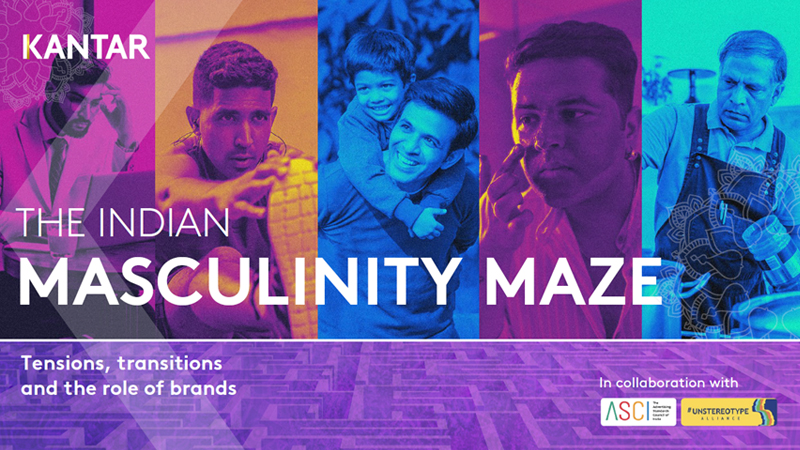
    MUMBAI: The age-old Marlboro Man is losing relevance and Kantar has the receipts to prove it. In its latest study, The Indian Masculinity Maze, launched in partnership with the Advertising Standards Council of India (ASCI) and UN Women’s Unstereotype Alliance, Kantar dives into the complicated, contradictory world of Indian manhood and how badly advertising is getting it wrong.

    The research surveyed 880 urban men aged 18–45 across eight Indian cities and dissected over 450 TV ads in 12 languages. The results paint a jarring picture of what happens when marketing lags behind culture.

    Commenting on the report, Kantar executive vice president, Insights Division, and co-author of the report, Prasanna Kumar said, “This report isn’t about rewriting masculinity overnight. It’s about recognising where men are today, often caught between tradition and transition and helping brands engage with that complexity in a way that’s both commercially smart and culturally sensitive.”

    Masculinity misfired: what ads keep botching

    It’s 2025, but the ‘macho man’ stereotype still dominates Indian adland. According to Kantar:

    1.    71 per cent of men agree that “real men don’t cry”—but increasingly find the idea limiting.

    2.    Only 6 per cent of male characters in ads show emotional care or respect towards women.

    3.    A staggering 94 per cent of ads don’t challenge traditional male roles.

    4.    Voiceovers still scream patriarchy: 43 per cent male vs just 31 per cent female.

    5.    Household and caregiving roles for men? Featured in a measly 1 per cent of ads.

    Gen Z men, in particular, are left out in the cold. While they’re more open to emotional expression and shared domestic responsibilities, ads seem stuck in the past—showing them as overly confident, immaculately groomed, and little else.

    Soumya Mohanty, Kantar managing director & chief client officer- South Asia, Insights Division, added, “Most ads still rely on outdated male stereotypes, rarely showing men as emotionally present or involved at home. This widens the gap between reality and representation. But this isn’t just a cultural miss; it’s a commercial one. Our LINK data shows that ads breaking these norms deliver significantly stronger brand equity and sales impact.”

    Here’s the kicker: ads that portray emotionally nuanced men perform better. Kantar’s LINK database shows a 63-point lift in brand equity and a 44-point bump in short-term sales when brands ditch the stoic-provider trope and embrace complexity.

    Brands that test their ads with inclusive male samples, particularly in personal care and household categories, see markedly better cross-gender performance.

    ASCI CEO and secretary general Manisha Kapoor said, “ASCI is committed to fostering progressive advertising representations. Earlier this year, we launched the ‘Manifest: Masculinities Beyond the Mask’ study, in collaboration with the Unstereotype Alliance (convened by UN Women). We are now pleased to associate with Kantar on ‘The Indian Masculinity Maze’ to take this conversation forward. The Kantar report will help the industry move beyond superficial portrayals to understand not just the diverse realities of men today, but also to create positive representations of men that are in sync with reality.”

    Gen Z men are open to vulnerability, fluid identity, and nurturing roles—but advertising hasn’t caught up. Over 60 per cent feel ads obsess over confidence and looks, and 32 per cent say fatherhood and caregiving are glaringly underrepresented.

    “They’re navigating a cultural identity crisis, and advertising is just adding to the noise,” notes the report.

    Kantar outlines a clear six-point plan for brands ready to break the bro-code:

    1.    Portray real lives – Men don’t live in protein shake commercials. Show them as they are—stressed, caring, flawed, and figuring it out.

    2.    Represent shared roles – Normalize dads doing dishes and men expressing emotion.

    3.    Focus on the emotional journey – Confidence is earned, not assumed.

    4.    Test inclusively – Male perspectives matter—especially in products they use but don’t see themselves in.

    5.    Model modern masculinity – Let men be soft, uncertain, nurturing and human.

    6.    Colour the whitespace – Health, identity, mental well-being—these aren’t side plots, they’re main stories waiting to be told.    

    “Kantar has been a founding member of the Unstereotype Alliance India Chapter. We value our collaboration with Kantar and ASCI on this important initiative to develop the study on masculinities in Indian advertising. Achieving gender equality and inclusion requires the meaningful engagement of all genders, including men and boys. It is important that marketers and content creators better understand evolving perspectives and aspirations to help challenge gender stereotypes and promote more inclusive narratives” said UN Women India Country Office  Country Representative, ad interim, Kanta Singh.

    So the bottom line is real men do cry and real brands should pay attention.

    (If you are an Anime fan and love Anime like Demon Slayer, Spy X Family, Hunter X Hunter, Tokyo Revengers, Dan Da Dan and Slime, Buy your favourite Anime merchandise on AnimeOriginals.com.)

  • Hemant Rupani to head Hindustan Coca-Cola Beverages as CEO

    Hemant Rupani to head Hindustan Coca-Cola Beverages as CEO

    BENGALURU:  Hindustan Coca-Cola Beverages (HCCB), India’s largest Coca-Cola bottler, has named Hemant Rupani as its new chief executive, effective 8 September. Rupani takes over from Juan Pablo Rodriguez, who is moving on to a new role within the global Coca-Cola system.

    Rupani, a seasoned operator with stints across FMCG, telecom, and tech, currently serves as Mondelez’s business unit president for southeast Asia, overseeing operations in Indonesia, the Philippines, Vietnam, Malaysia, Singapore and Thailand. He joined Mondelez in 2016 and has held leadership roles in India and Vietnam, rising to his current post in 2022.

    The appointment comes at a pivotal time for HCCB, following Coca-Cola’s move in December 2024 to sell a 40 per cent stake in Hindustan Coca-Cola Holdings Pvt Ltd—the parent company of HCCB—to the Jubilant Bhartia group.

    A mechanical engineering graduate from Regional Engineering College, Jaipur, with an MBA in marketing from FMS Delhi, Rupani began his career in 1997 at ICI India. He has since worked with PepsiCo, Infosys, Vodafone, and Britannia, steadily climbing the leadership ladder across sectors.

    He will report to the HCCB board and is expected to steer the company’s next phase of growth, amid rising investment in India and intensifying competition in the beverage market.

    The Coca-Cola Co, listed on NYSE as KO, operates in over 200 markets and employs more than 700,000 people through its global bottling partners.

  • Rohit Roy patches in as investor in wellness disruptor Bigme

    Rohit Roy patches in as investor in wellness disruptor Bigme

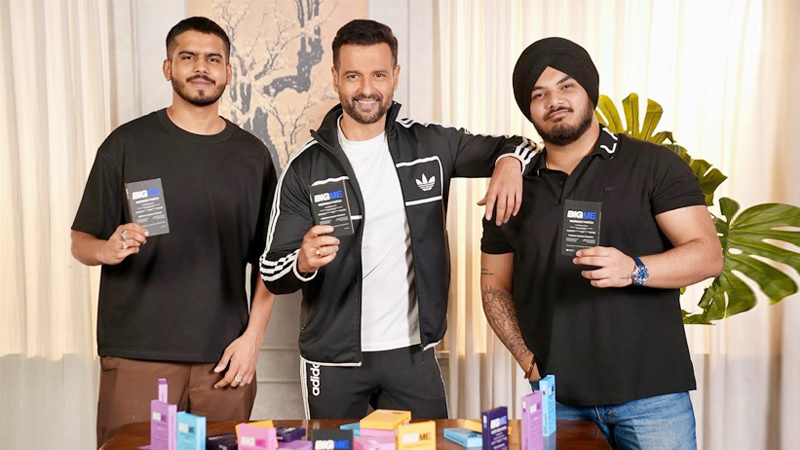
    MUMBAI: It’s out with the pills and in with the patch. Bigme, a new-age health-tech brand reimagining wellness, has brought actor Rohit Roy onboard as strategic growth advisor and investor, adding star power to its science-backed mission of delivering wellness quite literally through the skin.

    Bigme is among India’s first movers in transdermal wellness, a delivery format that skips the gut entirely and releases clinically backed ingredients directly into the bloodstream. The result? Faster absorption, longer-lasting effects, and no need to gulp down pills or mix up messy powders.

    Built for modern, always-on lifestyles, Bigme’s patches use timed-release technology to address real-world concerns like stress, PMS, energy crashes, and poor sleep no water required. Just peel, slap, feel.

    “I started out as a curious customer,” said Rohit Roy, explaining what drew him to the brand. “The patches fit seamlessly into my workouts and routine. It’s rare to find something that’s so rooted in science but still incredibly simple. I’m not just endorsing it, I’m investing in what I truly believe is the future of wellness.”

    Co-founders Arjit Jain and Gurman Bhatia see Roy’s involvement as more than a celebrity tie-in. “This isn’t trend-chasing, it’s transformation,” they said. “Rohit joining the journey after experiencing the product first-hand adds authenticity and momentum to a format that’s set to change how India approaches self-care.”

    Each Bigme patch is formulated with targeted functional ingredients by experts in nutraceuticals and wellness, designed for specific needs: calming anxiety, boosting energy, aiding post-workout recovery, supporting hormonal balance, and improving sleep.

    With no pills, no powders, no guesswork, Bigme aims to make wellness minimal, effective, and mobile like slapping on a solution and moving on with your day.

    As of now, Bigme’s transdermal patches are live and available online, marking the beginning of what could be a major mindset shift in India’s Rs 50,000 crore plus wellness market. This isn’t just a supplement. It’s self-care, simplified and wearable.
     

  • William Grant & Sons brings in Pernod Ricard veteran to head India ops

    William Grant & Sons brings in Pernod Ricard veteran to head India ops

    MUMBAI: William Grant & Sons (WG & S) has snapped up spirits industry veteran Kartik Mohindra as managing director for India, eyeing a bigger slice of one of the world’s fastest-growing whisky markets. The former chief marketing officer and head of global business development at Pernod Ricard India takes charge on 30 September.

    The move signals a sharp play by the Scottish distiller, best known for brands like Glenfiddich and Monkey Shoulder, as it doubles down on India’s premium spirits surge. Mohindra brings over 20 years of experience across alcohol, beverages and FMCG – a seasoned hand to scale up WG&S’ ambitions.

    His appointment follows the elevation of outgoing India MD Sachin Mehta, who steps into the role of managing director for Canada – another priority market for the group.

    “These appointments reflect our continued investment in key growth markets,” said WG&S chief commercial officer Doug Bagley. “We’re thrilled to have Kartik join us in India – a critical market where Sachin and the team have already laid strong foundations.”

    As global booze giants race to tap rising affluence and shifting tastes in developing economies, India has emerged as a battleground for premium spirits – and WG&S is clearly in no mood to play catch-up.