Category: Brands

  • Generali Group and Central Bank of India unveil new brand identity for joint venture

    Generali Group and Central Bank of India unveil new brand identity for joint venture

    MUMBAI: Generali Group and the Central Bank of India announced a revamped brand identity for their life and general insurance joint venture, now unified under the name Generali Central. This strategic rebranding introduces new names for the individual businesses: Generali Central Life Insurance Company Ltd for the life insurance arm and Generali Central Insurance Company Ltd for the general insurance business. The updated brand, along with a new logo, aims to further solidify Generali’s ‘Lifetime Partner’ proposition in India.

    The shareholding structure of the joint venture remains unchanged, with Generali Group holding a 74 per cent stake and the Central Bank of India retaining up to 26 per cent.

    The new Generali Central brand identity signifies the powerful convergence of Generali Group’s global expertise and the Central Bank of India’s long-standing trusted heritage. This collaboration is dedicated to protecting what customers value most: their families, health, assets, and future.

    Generali Asia regional officer, Rob Leonardi emphasised India’s strategic importance: “India has long been a strategic market for Generali and our joint venture with the Central Bank of India reflects the potential we see today and for the future. The synergies between our two organisations are clear and I have every confidence that we’ll be able to deliver on our joint vision to provide accessible solutions that reflect the real needs of Indian families and businesses across the country. This collaboration supports us in fulfilling our Lifetime Partner ambition in the country, as we lay the groundwork for future innovation and growth.”

    Generali Central Life Insurance Company Ltd MD and CEO, Alok Rungta highlighted the transformative potential, “With our new brand identity, Generali Central Life Insurance marks a defining moment in our journey to becoming a future-ready, customer-first life insurer. Our strategic partnership with Central Bank of India unlocks transformative potential to reshape the landscape of protection and insurance in India. By combining Generali Group’s global heritage and insurance expertise across 50+ countries with the Central Bank of India’s deep-rooted trust and expansive network of over 4,500 branches, we are poised to democratise access to life insurance like never before. Our joint focus is clear: to deepen protection in underserved and rural segments through innovative, accessible, and inclusive products. This new identity reflects our shared commitment to transparency, sustainability, and disciplined execution—anchored in strong governance and a purpose-driven approach.”

    Generali Central Insurance Company Ltd MD and CEO, Anup Rau underscored the synergistic alliance: “Our new brand identity reflects the powerful synergy between two iconic institutions—Generali Group, with nearly 200 years of global insurance expertise, and the Central Bank of India, with over a century of deep-rooted presence in India’s financial and geographical landscape. This is more than a collaboration; it’s a strategic alliance aimed at redefining general insurance in India. By harnessing the Bank’s extensive branch network and community trust, we are uniquely positioned to bridge the protection gap, enhance insurance awareness, and deliver comprehensive, customer-centric solutions. This transformation is not just visual—it’s a reaffirmation of our purpose: to be a Lifetime Partner, empowering individuals with confidence and security at every stage of life.”
     

  • House of Bindu’s new film celebrates legacy of Bindu Fizz Jeera Masala as it readies for Pan India launch

    House of Bindu’s new film celebrates legacy of Bindu Fizz Jeera Masala as it readies for Pan India launch

    MUMBAI: House of Bindu announced the launch of its new corporate film, which celebrates the vision of its founder, Sathya Shankar, the impact it has had on the society and other stakeholders, and their successful business journey towards becoming a Rs 800-crore enterprise today nurturing a dream to be a pan-India food and beverage company.

    Rooted in the entrepreneurial vision of Sathya Shankar, SG Corporates has evolved from humble beginnings in 1987 to a diversified FMCG powerhouse. From starting as an auto rickshaw driver to launching Bindu Mineral Water in 2000, the brand’s journey mirrors India’s own consumer evolution—where trust, tradition, and taste drive loyalty.

    By setting up his first plant in the town of Puttur, in southern Karnataka, in 2000, Mr Sathya Shankar, the Chairman and Managing Director of SG Corporates, aspired to create jobs for the local community and improve their lives.

    “We are one of the first brands to introduce ethnic flavours where there are far too many foreign flavours,” says Megha Shankar, director-marketing and strategy, SG Corporates which has House of Bindu as the FMCG arm. The company started with Bindu Fizz Jeera Masala, which has become the most loved carbonated ethnic beverage in the South. The brand now includes a range of beverages with ethnic flavours and fruit-based drinks in its portfolio.”

    Building on this success, House of Bindu is now targeting the national market, with a high-impact rollout across Uttar Pradesh, Bihar, West Bengal, Maharashtra, Gujarat, Rajasthan, Punjab, and the Delhi-NCR region. House of Bindu has set itself an ambitious revenue goal of Rs 1,000 crore over the next 3 years, by leveraging more than 5 lakh retailers. “We are now set to expand nationwide, introducing our much-loved Bindu Fizz Jeera Masala to a wider audience while staying true to our roots. Our focus is bridging tradition with innovation to make the brand relevant for today’s Gen Z and millennial consumers”, Megha added.

    The company has two more production units in Sangareddy, Telangana, and a state-of-the-art manufacturing unit in Visakhapatnam to cater to its nation-wide customer base, and a digital-first approach is important to raise awareness about the brand’s legacy.

    PivotRoots co-founder & CCO, Hetal Khalsa, maker of the film mentioned, “We are excited to collaborate with Bindu and bring its legacy to a larger audience through strategic storytelling and digital innovation. Our goal is to reshape perceptions, deepen consumer engagement, and position Bindu not just as a beverage but as an essential part of everyday moments across India and this film is the 1st step towards that.”

    Having started with just 15 employees, who continue to work even today, they now have 2,500 direct employees, and 7,000 to 8,000 indirect employees. The positive impact that the company has had on the local community, especially by providing equal opportunities for women, has enabled it to strengthen its brand and position in the beverage market, and will continue to be critical in its national growth journey.”

  • Maruti clocks Rs 4,943 crore Q1 profit on strong sales and margins

    Maruti clocks Rs 4,943 crore Q1 profit on strong sales and margins

    MUMBAI: India’s favourite carmaker isn’t just fuelling roads, it’s firing up the financials too. Maruti Suzuki India cruised through the first quarter of FY26 with a consolidated net profit of Rs 37,924 million, accelerating past last year’s Rs 37,597 million.

    Total consolidated income hit Rs 404,934 million in the quarter ended 30 June 2025, driven by Rs 386,052 million in revenue from operations marking a healthy bump from Rs 357,794 million a year ago. Other income also revved up to Rs 18,882 million from Rs 10,605 million.

    The company’s consolidated profit before tax reached Rs 49,435 million, with a tax outgo of Rs 11,511 million. What truly put Maruti in overdrive was its tight grip on costs. Material consumption stood at Rs 219,368 million, while purchases of stock-in-trade clocked in at Rs 57,038 million. A modest Rs 2,794 million gain from inventory changes also helped balance the books.

    Employee costs rose to Rs 20,483 million, and depreciation nudged up to Rs 15,560 million, but overall expense discipline kept total costs at Rs 355,854 million leaving room for a tidy operating margin.

    While the company didn’t pull any handbrakes this quarter, its joint ventures and associates chipped in too, contributing Rs 296 million and Rs 59 million respectively.

    On a standalone basis, the picture looked equally polished. Standalone profit came in at Rs 37,117 million, up from Rs 36,499 million a year ago, with revenue from operations at Rs 384,136 million. The basic and diluted earnings per share stood at Rs 118.06.

    Maruti’s quarterly detour into comprehensive income saw a gain of Rs 3,465 million from re-measurements and fair value adjustments despite a minor speed bump from actuarial losses on pension liabilities.

    For a company with Rs 960,827 million in other equity and a paid-up capital of just Rs 1,572 million, Maruti continues to steer shareholder value with turbocharged confidence. If Q1 is any indicator, the full-year drive promises more pit stops of profit.

  • Dabur dishes out growth with a healthy Q1 dose of profits

    Dabur dishes out growth with a healthy Q1 dose of profits

    MUMBAI: Dabur’s Q1 results are proof that nature’s remedies still pack a punch on the balance sheet. The homegrown FMCG major reported a consolidated net profit of Rs 508 crore for the quarter ended 30 June 2025, registering a robust year-on-year jump from Rs 494 crore in Q1 last year and Rs 313 crore in the preceding quarter.

    Riding on a wave of resilient demand and smart cost management, Dabur clocked Rs 3,405 crore in consolidated revenue from operations up from Rs 3,349 crore in the same period last year and a sharp rise from Rs 2,830 crore in the March quarter.

    The company’s profit before tax stood at Rs 663 crore, up from Rs 642 crore in Q1FY25 and Rs 412 crore in Q4FY25. Total expenses were contained at Rs 2,886 crore for the June quarter. Of this, Rs 1,424 crore went into raw materials, Rs 344 crore into stock-in-trade, and Rs 338 crore into employee benefits.

    Advertising and publicity remained a priority with Rs 394 crore spent, even as other operating costs totalled Rs 202 crore. Dabur’s focus on product innovation and brand-building clearly continues at pace.

    From a segmental perspective, the Consumer Care division led the pack, raking in Rs 2,705 crore in revenue, followed by the Foods segment at Rs 621 crore. Retail and other businesses brought in Rs 26 crore and Rs 44 crore respectively. Segment profit from Consumer Care alone stood at Rs 644 crore.

    On the balance sheet, Dabur reported total consolidated assets of Rs 17,244 crore, with liabilities at Rs 5,493 crore. Debt remained in check, with the debt-to-equity ratio at 0.13 and current ratio at 1.74. Net worth stood at Rs 11,230 crore.

    Meanwhile, the company continues to back its global playbook, with subsidiaries ranging from Dabur Egypt and Naturelle LLC to Dermoviva in the US and Namaste Laboratories. The international business continues to be a strategic growth engine.

    In terms of shareholder return, Dabur’s basic and diluted earnings per share for Q1 stood at Rs 2.90, a notable jump from Rs 1.81 in Q4FY25.

    With the monsoon season known to fuel demand for healthcare and personal care items, Dabur’s green shoots are likely to blossom further in the quarters ahead.

  • Swiggy feels the pinch as losses deepen despite revenue rise

    Swiggy feels the pinch as losses deepen despite revenue rise

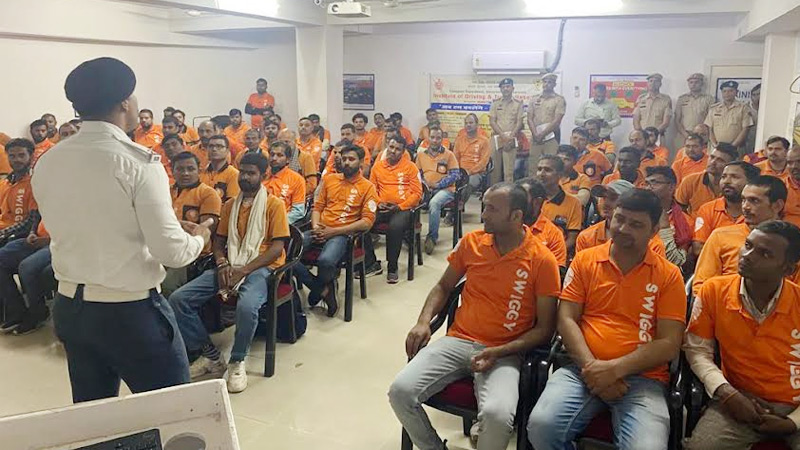
    MUMBAI: Swiggy may be whipping up record revenues, but it’s still nursing a sizeable financial hangover. The food delivery giant reported a consolidated net loss of Rs 1,197 crore for the quarter ended 30 June 2025, widening from Rs 611 crore in the same quarter last year even as its operating revenue jumped 54 per cent year-on-year to Rs 4,961 crore.

    This comes just a quarter after its IPO, which fetched fresh proceeds of Rs 4,359 crore. The company, now publicly listed on both NSE and BSE, seems to be in no mood to tighten the purse strings yet.

    Swiggy’s quick commerce and supply chain businesses were the biggest revenue drivers this quarter, clocking Rs 806 crore and Rs 2,259 crore respectively. Its core food delivery vertical followed at Rs 1,799 crore. However, not all lines were profitable in fact, far from it. Quick commerce alone posted a loss of Rs 797 crore, and the supply chain and distribution business added another Rs 47 crore to the red. Platform Innovations, including experiments like Swiggy Sports, Genie and Minis, lost Rs 52 crore.

    Even the bright spot food delivery wasn’t enough to offset expenses across the board. Swiggy spent Rs 1,036 crore on advertising and promotions, Rs 1,313 crore on delivery and related charges, and Rs 816 crore on other operating costs. Employee expenses stood at Rs 686 crore, while depreciation and amortisation costs rose to Rs 288 crore.

    Total expenses for the quarter reached Rs 6,244 crore more than Rs 1,280 crore higher than total income, which came in at Rs 5,048 crore (including Rs 87 crore in other income). No tax was recorded for the quarter.

    Swiggy also booked an additional Rs 1 crore loss from its associate company and reported Rs 2 crore in other comprehensive loss, resulting in a total comprehensive loss of Rs 1,199 crore for the quarter.

    The company’s paid-up share capital stood at Rs 230 crore. Earnings per share for the quarter came in at a negative Rs 5.04.

    Swiggy’s consolidated results include wholly owned subsidiaries like Scootsy Logistics, Supr Infotech, Lynks Logistics, and Swiggy Sports, along with the Swiggy Employee Stock Option Trust and associate Loyal Hospitality.

    While the company continues to spend big across verticals, investors and analysts will be watching closely to see if Swiggy’s scale can eventually serve up a path to profitability or if it’s still biting off more than it can chew.

  • Cigarettes and Surplus: ITC lights up with Rs 4912 crore Q1 profit

    Cigarettes and Surplus: ITC lights up with Rs 4912 crore Q1 profit

    MUMBAI: No smoke without earnings and this quarter, ITC puffed its way to a Rs 4,912 crore net profit. The diversified conglomerate reported a strong start to FY26, with standalone net profit from continuing operations hitting Rs 4,912.36 crore in Q1 (ended June 2025), slightly ahead of last year’s Rs 4,819.93 crore. There were no exceptional items this time, making the growth all the more clean-cut unlike Q4 FY25’s massive Rs 15,179 crore gain from discontinued operations (read: the hotel demerger windfall).

    Revenue from operations stood at Rs 21,058.98 crore, up 20 per cent from Rs 17,593 crore in the same quarter last year. Total income, including other income, touched Rs 21,721 crore. Operating margins remained strong with profit before tax (PBT) at Rs 6,545 crore, while tax expenses stood at Rs 1,633 crore.

    The star of the pack? FMCG – Cigarettes, contributing Rs 8,520 crore in revenue, up from Rs 7,918 crore in Q1 FY25. Agri business shot up impressively too, clocking Rs 9,685 crore compared to Rs 6,973 crore a year ago, partly due to favourable trade opportunities. Meanwhile, FMCG – Others (staples, snacks, personal care) delivered Rs 5,777 crore. The segment’s EBITDA for the quarter came in at Rs 546 crore, down from Rs 619 crore in Q1 FY25.

    Despite facing inflationary pressure, employee costs remained stable at Rs 915 crore, and excise duty inched up slightly to Rs 1,309 crore. The company’s cost of materials consumed rose to Rs 6,171 crore, up from Rs 5,351 crore in Q1 FY25 reflecting both volume and price hikes.

    On a consolidated basis, the picture was equally robust. ITC posted a net profit of Rs 5,343 crore (continuing operations), with group revenues touching Rs 23,129 crore. The discontinued hotel business (now housed in ITC Hotels Ltd post-demerger) reported nil operations for the quarter, closing the chapter on an era that brought Rs 15,016 crore profit in FY25.

    Segment-wise, consolidated FMCG revenues totalled Rs 15,354 crore, with cigarettes delivering Rs 9,554 crore. Paperboards, paper and packaging clocked Rs 2,117 crore, while agri continued its sharp rise.

    The group also onboarded subsidiaries such as Sresta Natural Bioproducts, making room in its books for future-ready green growth.

    Earnings per share for the quarter stood at Rs 3.93 (basic), with reserves at Rs 66,649 crore. Total assets stood at Rs 90,513 crore, with liabilities under check at Rs 17,385 crore.

    With no hotel baggage and a consistent run across core verticals, ITC appears to be in cruise control mode puffing profits, planting purpose, and packing numbers that speak for themselves.

  • Mobikwik sees Rs 419 million Q1 loss despite revenue crossing Rs 2,700M

    Mobikwik sees Rs 419 million Q1 loss despite revenue crossing Rs 2,700M

    MUMBAI: Wallet lightens despite wallet biz boom Mobikwik’s Q1 balance isn’t adding up just yet. One Mobikwik Systems posted a consolidated net loss of Rs 419.2 million for the quarter ended 30 June 2025, nearly doubling its loss from the same quarter last year (Rs 66.15 million), despite generating revenues of Rs 2,713.63 million from operations. While revenue held steady quarter-on-quarter, rising marginally from Rs 2,677.84 million in Q4 FY25, expenses continued to outpace topline growth.

    The company’s total income stood at Rs 2,816.16 million in Q1 FY26, including Rs 102.53 million in other income. However, total expenses surged to Rs 3,128.17 million, driven by high payment gateway costs (Rs 1,427.82 million) and financial guarantee expenses (Rs 213.88 million), the latter jumping over 700 per cent from the Rs 25.27 million reported in Q1 FY25. Operational expenses for the lending business also remained significant at Rs 291.82 million.

    Earnings before interest, tax, depreciation and amortisation (EBITDA) came in at a negative Rs 312.01 million, narrowing the loss from Rs 457.61 million in the previous quarter but falling sharply from a positive Rs 22.3 million a year ago.

    Finance costs rose to Rs 78.27 million, while depreciation and amortisation were at Rs 28.57 million for the quarter. Loss before tax stood at Rs 418.85 million.

    MobiKwik’s initial public offering (IPO), completed in December 2024, raised Rs 5,305.17 million (net of expenses). Of this, only Rs 2,140 million has been utilised so far, leaving Rs 3,165.17 million unspent. Key deployment areas included Rs 459.5 million for financial services growth and Rs 699 million for the payments vertical. Investments in R&D (Rs 307.6 million), capex for payment devices (Rs 23.9 million), and general corporate purposes (Rs 650 million) accounted for the rest.

    Employee benefit expenses remained flat at Rs 419.55 million, while other expenses (Rs 775.1 million) included brand, tech, and operational overheads.

    Diluted earnings per share (EPS) stood at negative Rs 5.39, compared to negative Rs 8.88 in Q4 and negative Rs 1.16 in Q1 FY25.

    Mobikwik granted 3,27,688 new stock options in the quarter under its 2014 ESOP plan and saw 4,65,873 options exercised. The company’s paid-up equity share capital rose to Rs 156.38 million post IPO.

    Despite widening losses, the company said it continues to operate as a single segment player across digital financial and payment services, and remains focused on sustainable growth and technology investments. With Rs 1,040.5 million still earmarked for financial services and Rs 762.4 million for R&D, MobiKwik appears to be playing the long game even if short-term results are deep in the red.

  • HUL Posts Rs 2,768 Crore Profit in Q1, Boosted by Minimalist Buy

    HUL Posts Rs 2,768 Crore Profit in Q1, Boosted by Minimalist Buy

    MUMBAI: Hindustan Unilever Limited (HUL) has kicked off FY26 with a frothy performance in Q1, brewing Rs 2,768 crore in net profit up 6 per cent from the same quarter last year despite flat volume growth and a mild lather of margin pressure. Total revenue stood at Rs 16,323 crore, a 5 per cent rise from the previous year’s Rs 15,547 crore, driven by modest gains across key verticals including Home Care (Rs 5,815 crore), Beauty & Wellbeing (Rs 3,265 crore), Foods (Rs 3,896 crore), and Personal Care (Rs 2,126 crore). The company’s EBITDA for the quarter clocked in at Rs 3,718 crore with a margin of 22.8 per cent, a dip of 130 basis points versus the previous year.

    But what added extra glow to the balance sheet this quarter was the inclusion of Uprising Science Private Limited makers of the cult-favourite skincare and haircare brand *Minimalist*. HUL completed a 90.5 per cent stake acquisition in April 2025 for Rs 2,706 crore, and the brand’s contribution from April to June has already been factored into the consolidated earnings.

    While profit before tax stood at Rs 3,362 crore, a Rs 138 crore exceptional item mostly restructuring expenses and adjustments to legacy tax provisions shaved off some sheen. However, a re-estimation of tax expenses added a 12 per cent boost to PAT growth, softening the blow.

    Interestingly, despite a slight dip in operating margins, HUL managed to grow its bottom line due to disciplined cost controls and a diversified category strategy. Foods and Beverages continues to be the tastiest pie, contributing Rs 3,896 crore in revenue, while Home Care kept the household engine running with Rs 5,815 crore.

    On the segment results side, Home Care led the pack with Rs 1,093 crore in profits, followed closely by Beauty & Wellbeing (Rs 1,046 crore) and Foods (Rs 627 crore). Personal Care, however, saw a relative slide, reporting Rs 398 crore for the quarter.

    With this quarterly update, HUL’s CEO Rohit Jawa seems to have set a confident tone for the year. The acquisition of *Minimalist* hints at a sharper pivot towards premium and digitally native brands, while its core continues to be driven by daily-use essentials.

    Even as rural demand remains patchy, and discretionary consumption cautious, HUL is leaning into a “more for less” strategy revamping portfolios while keeping margins lean and marketing sharp.

    A minimalist acquisition, a maximalist balance sheet HUL might just be setting the tone for the FMCG playbook in FY26.

  • TTK Prestige’s ‘Deep Lid’ makes a splash on Carter Road

    TTK Prestige’s ‘Deep Lid’ makes a splash on Carter Road

    MUMBAI : Forget your average umbrella, TTK Prestige, India’s trusted kitchen whiz, has truly spilled the beans on innovation. They’ve erected a colossal replica of their Prestige Svachh Pressure Cooker’s Deep Lid on Mumbai’s bustling Carter Road. And it’s not just for show; this monumental lid is doubling as a rain shelter, keeping pedestrians as clean and dry as your kitchen counter after a Svachh-cooked curry.

    Conceptualised by the clever clogs at DDB Mudra, this installation isn’t just turning heads; it’s a stroke of genius in brand storytelling. It lets the public literally walk through and stand under the very feature that promises no more messy boil-overs. The installation perfectly encapsulates the Svachh range’s philosophy: making daily life cleaner, simpler, and more conscious – a real boon for the Indian homemaker. It’s a bold statement that tidiness isn’t just a chore, but a thoughtful practice that elevates everyday living.

    The site also played host to a collective pledge, inviting passers-by to commit to safer and more hygienic cooking habits. Visitors were encouraged to snap selfies and share their vows on social media using #SvachhNoSpillShelter, spreading the “Clean Kitchen Promise” far and wide. Participants even bagged vouchers, a neat little reinforcement of the brand’s belief in empowering Indian kitchens.

    TTK Prestige senior general manager & head – marketing, Akila Chandrasekar shared the journey behind the Svachh deep lid innovation, “At TTK Prestige, we believe that innovation should serve a purpose beyond the product. The SVACHH Deep Lid was developed to solve a real issue in Indian kitchens — the mess and inconvenience caused by spillage during pressure cooking. This installation takes that simple idea — one that has quietly improved daily cooking for millions — and magnifies its impact in a public space. It’s a way for us to show how much thought goes into even the smallest design detail and how those details make everyday lives easier. At a time when attention is hard-won, this initiative allows us to engage people meaningfully, without needing to sell to them. It’s visibility with value, a reflection of the brand we aspire to be: intelligent, purposeful, and deeply rooted in consumer insight.”

    The installation will remain open for public viewing at Carter Road for the week, serving as both a talking point and a visual reminder that even the most functional products can have cultural flair.

    DDB Mudra Creative Head – South, Priya Shivakumar said, “At the heart of this idea is a simple yet strong belief, that thoughtful innovation can solve everyday problems. The Prestige spillage-control lid is one such product born of this belief, and we wanted to dramatize its function in a way that felt both meaningful and memorable. So, we took it out of the kitchen and into the streets — right in the middle of India’s monsoon. With ‘Prestige Svachh No Spill Shelter’, we transformed the lid into a life-size shelter that not only protects people from the rain but also collects and recycles the rainwater it captures. It’s a real-world metaphor for what the product does in homes every day. The idea is functional, sustainable, and a bit unexpected, staying true to the spirit of the brand.”

    To top it all off, the launch featured a live performance by indie band Symphony Rush, whose lively set ensured the event was anything but flat, drawing in families, joggers, and the simply curious. Looks like TTK Prestige has cooked up a storm – in the best possible way!

  • Stay fit come rain as playR launches monsoon-ready workout gear

    Stay fit come rain as playR launches monsoon-ready workout gear

    MUMBAI: Rain, rain, don’t go away, just bring the gym indoors today. As the monsoon hits with all its splash and swagger, fitness routines often find themselves washed away in puddles of procrastination. But playR, India’s top performance sportswear brand, is refusing to let weather rain on anyone’s gains.

    Best known for its bold, performance-first approach and official IPL merch cred, playR has launched a monsoon-focused activewear range that’s designed to help urban Indians keep sweating even when the skies won’t stop. Their latest offering includes anti-odour socks, ultra-breathable jerseys, quick-dry shorts, and best-in-class no-slip yoga mats, engineered to make home workouts safer and slicker.

    Because let’s face it: the commute from sofa to squat mat is the only kind of cardio most of us can guarantee during a downpour.

    “Monsoons can often be a reason to skip workouts—not because you lack motivation, but because the weather can be so unpredictable,” shares Ravi Kukreja, the Founder of playR and Director at iCOREts Private Limited. “That’s why we’ve created a range of indoor-friendly workout gear to help you stay on track and feel great about moving your body, no matter what the weather throws at you.”

    The brand’s moisture-wicking fabrics and grip-enhanced accessories aim to make living room workouts just as effective as a gym session. Whether you’re flowing through a morning yoga practice, smashing an HIIT circuit, or sweating it out on a virtual Zumba class, playR’s performance-led designs promise to keep you dry, balanced and stylish.

    And it’s all built with India in mind both in terms of climate resilience and affordability. Unlike premium international brands that don’t always get Indian weather (or wallet sizes), playR is leaning into local insights. Its products combine high-tech features like odour control and sweat management with street-smart design.

    The monsoon-ready line is already available on playR’s website and partner platforms, with prices starting from Rs 499 for accessories and Rs 999 for apparel making it a solid investment for those looking to weatherproof their willpower.

    So this season, forget soggy excuses and slippery starts. Whether it’s yoga at dawn or burpees before bed, playR’s got you covered, literally.