Category: Brands

  • Ravichandran Ashwin turns brand ambassador for CavinKare

    Ravichandran Ashwin turns brand ambassador for CavinKare

     MUMBAI: Indian right–arm off break spinner Ravichandran Ashwin has been roped in as a brand ambassador by CavinKare for its diary
    division Cavin’s Milkshakes.

    The cricketer will also endorse the entire range of Cavin’s dairy products.

    The tagline of the product will be ‘So tasty, so healthy’.

    Speaking on the association, CavinKare joint managing director T.D. Mohan said, “We are extremely glad to have Ravichandran Ashwin represent Cavin’s Milkshake. He personifies the brand, its core values and we have recognized a great synergy between him and our brand. The ideal blend of energy and spirit makes Ashwin the right choice of being the face for Cavin’s Milkshakes.”

    “Mothers today have immense trust in Cavin’s range of products. Mother’s would love a product like Cavin’s Milkshakes as it is both healthy and tasty. Thus it is a win-win situation for both the mother and her family”, added Mohan.

    Talking about the product Ashwin said, “Within a short period of time, Cavin’s Milkshakes have become an immediate hit amongst many including me! It is extremely refreshing and energising especially after a tiring game in the hot sun and the good thing is, it is being made from milk which is healthy. I am so happy to be endorsing a brand I enjoy and like very much and I look forward to an exciting association with Cavin’s.”

  • Madhuri Dixit-Nene bags lucrative deal with a tea brand

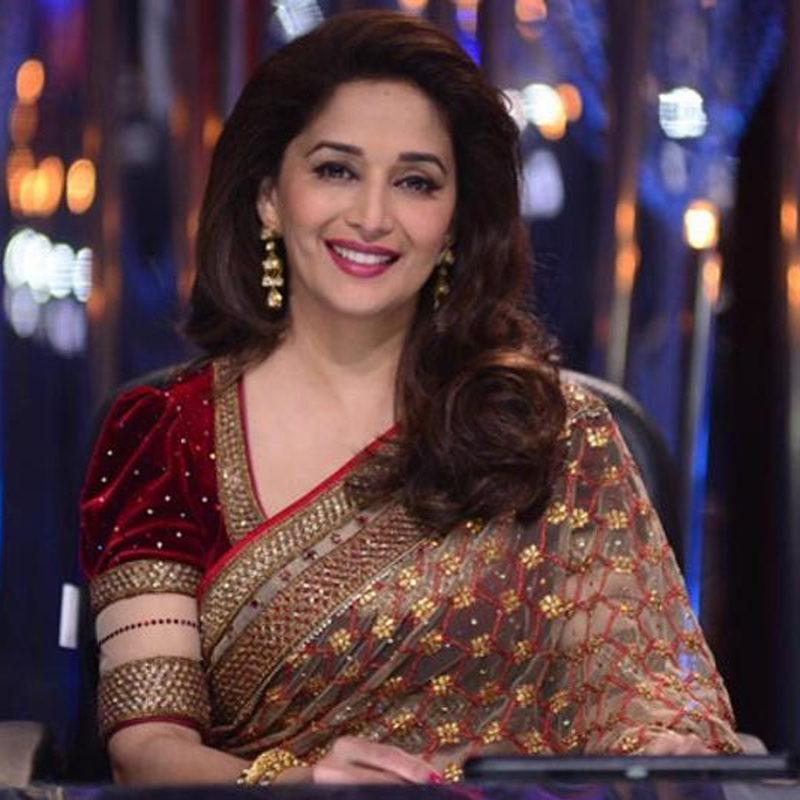
    Madhuri Dixit-Nene bags lucrative deal with a tea brand

    MUMBAI: Ever since she shifted to Mumbai with bag and baggage, Madhuri Dixit-Nene has been making frantic bids to make a comeback in Bollywood but without any substantial result.

    However, there are reports that the actress has gone ahead and bagged an apparently lucrative deal with a tea brand.

    According to sources, the actress has become the new face of the tea company that was previously endorsed by Saif Ali Khan. The deal is estimated to be in crores.

    A source said that it was a while that Madhuri has been trying to make a comeback in the industry. It began with dance reality shows to a couple of films. And she has also been signing brand endorsement deals in the meanwhile.

    It is also being rumoured that legendary dancer Birju Maharaj could be choreographing her moves in the ad.

  • ‘We need to get India more established within the Interbrand network’: Interbrand London CEO Graham Hales

    ‘We need to get India more established within the Interbrand network’: Interbrand London CEO Graham Hales

    Months after Omnicom‘s buyout of DDB Mudra Group, brand consultancy Water Interbrand has been renamed Interbrand India from 1 January.

    Interbrand, known for its annual report on Best Global Brands, will provide to India its list of Most Valuable Indian Brands in this quarter.

    Interbrand London CEO Graham Hales says the world has seen a complete digital revolution taking place across markets. This means that most customers’ first interactions with a brand will now take place digitally.

    He feels this has added democracy to marketplaces. This wasn’t there previously and adds pressure on organisations to deliver on their promise to customers.

    Hales spoke to Indiantelevision.com‘s Ashwin Pinto about the best brands list, the plans for India, the challenges that brands face in a fast changing environment and how a brand like McDonald‘s repositioned to appeal to a broader customer base.

    Excerpts:

    Q. How important is India for Interbrand vis-?-vis the rest of Asia?

    A. As an international business we need to have a presence in India. India offers tremendous potential. While there are some strong Indian brands, they have international marketplaces where they can prosper more deeply.

    Q. How is the integration of Water with Interbrand working out?

    A. It is going smoothly. We hope to welcome them to the Interbrand family next year. Processes are taking place to get them on board more deeply.

    Interbrand has a way of doing things. We have basic toolkits that people need to have greater fluency in to operate comfortably. It means consistency in terms of services that we offer clients.

    Q. What is the gameplan for India?

    A. We need to get India more established within the Interbrand network. Then we have to grow the business given the opportunities in India‘s economic environment. If the pace grows, it will be determined by the commerciality of the business.

    Q. Which are your top three markets?

    A. The US is the biggest. After that it tends to follow the patterns of global commerce. In Asia, we have two offices in China, one in Singapore, Japan, Korea. 


     ‘In the last couple of years, some changes have taken place in the branding space. One of the things is the tightening of the economy. We also have had a complete digital revolution taking place across markets. This means that most customers’ first interactions with a brand will now take place digitally. You have social media attached to that now where people are able to give their opinions about brands. This has added democracy to marketplaces’


    Q. In India people think of a brand as just a name and fancy logo. What are the other elements in creating successful brands?

    A. A brand has many touchpoints where it may spring to life. While a logo might be a point of identifying one organisation from another, there are opportunities in terms of how an organisation uses its people, its behaviours, its products and services. The channels it uses and the way it communicates is also important. All this should be directed by the brand. Metrics allow you to understand a brand from an internal and external perspective.

    Q. Does having local offices make it easier to handle differences in culture and attitudes towards global brands?

    A. We offer international benchmarks of best practices for our management. But we also have local people who understand the culture, placement of the brand within a particular market, and fluency over the consumers in that market. Local talent represents consumers.

    Q. What strategy has Interbrand followed in the past couple of years to grow its presence globally?

    A. We continue to advise and help organisations create and maintain brand value. Our services are linked to how a brand drives value into an organisation. We have 40 offices in 36 countries. We are the only consultancy that has brand valuation sitting at the heart of the business. Everything that we do links back to helping organisations create brand value. We have created processes that help organisations manage their brands.

    Q. What are the challenges Interbrand faces due to economic slowdown?

    A. Markets are moving faster than they have before despite the economic slowdown. Consumer‘s attitudes are moving quickly. So brands also have to move fast. They have to make sure that they are changing at the pace of their markets.

    One of the interesting things of the slowdown is that organisations have focussed on the supply side of their business in terms of keeping costs down as low as possible. But they also should look at managing the demand side of their business where brands have a role to play.

    That is where customer loyalty comes from. That is what gives the security to a big company to make investments in the future. The opportunities lie in the strength of brands giving a competitive edge to organisations. These opportunities are deep and significant.

    Q. Over the past couple of years what changes have happened in the branding space?

    A. One of the things is the tightening of the economy. We also have a complete digital revolution taking place across markets. This means that most customers‘ first interactions with a brand will now take place digitally. You have social media attached to that now where people are able to give their opinions about brands.

    This has added democracy to marketplaces. This wasn‘t there previously and adds pressure on organisations to deliver on their promise to customers.

    Q. Is flexibility in terms of how Interbrand serves clients more important given the difficult economic climate?

    A. You have to be able to have agility to move in the way that the market wants you to move. You have to listen very carefully to your clients to understand how you can best help them. Any effective consultancy has to be agile to the marketplace.

    Q. Could you give me a few examples in the past couple of years of working with clients to create identification, differentiation and value?

    A. We have worked extensively with Hyundai to make them understand how their brand drives its value. You can link that back to what you should be doing more as a business to enable yourself to become a stronger brand to continue to compete across the marketplace.

    Hyundai has become a bigger and a more significant brand globally. A few years ago Hyundai was not present in some markets and did not necessarily drive consumer choice. We help organisations understand where the value of their brand comes from. We help them understand the strategy that they should pursue to get their brand to be stronger and apply more competitor advantage to give the brand a better opportunity to drive consumer choice in the marketplace.

    Q. With offline and online brand experiences constantly intertwining, brands need to stay actively engaged with consumers. How does Interbrand ensure that its clients do this?

    A. One of the fundamental shifts that has changed is that purchase used to feel like a linear device. People had a disposition to shop for a brand in a particular category. They would go to a retail store to experience brands and decide which brand they wanted to buy.

    Now it is a more dynamic and chaotic process. People will consider a purchase and go online. This adds brands in and takes brands out before they arrive at the point of purchase. So the whole process has become more chaotic and more exciting. There are different routes to go to market now.

    We help organisations understand how their brand should come to life within markets. Therefore we decide on the digital strategy that they should have to maximise the role of their brand.

    Q. Do brands like Apple follow a common trajectory to become powerful?

    A. All these things are idiosyncratic. Any brand that has a clear idea of its own personality will understand how it should use opportunities in a market to help navigate decisions. So if a brand just tries to replicate what competitors do, it is not going to end up being distinctive or differentiated. Great brands are business strategy brought to life. They deliver a seamless experience across products and services, physical spaces and places, internal culture and communications.

    Apple in its history has succeeded in innovating. They have thought very deeply about that. They have humanised their technology very effectively and so it does not feel like another technology. It feels like a brand in its own right that happens to be in the technology market. They have a number of things growing right.

    Q. In terms of managing a brand‘s reputation that has been built over the years ,what are the key things to keep in mind?

    A. You to have to be clear about what the brand idea is. You have to show that commitment to the brand idea so that the organisation can respond to it. It can then feel authentic inside the business. You have to protect the brand zealously which is what Samsung did in its patent fight against Apple. You have to move responsibly in the market.

    You have to understand what is different about the organisation. This has to be driven so that it is understood. There are 10 brand strength factors that we monitor to find out about the health of a brand and find opportunities for its continued growth.

    Q. Coca-Cola has been number one in your list for a long time. Technology companies have also grown. What separates them from the rest of the pack?

    A. Coca-Cola has a 126 year history. That provides an opportunity for them. There are 3500 products within the Coca-Cola portfolio. Around 1.8 billion Coca-Cola products are consumed on a daily basis. Can it keep pace with challenges is the question.

    Google has moved beyond its core product offering into more diverse offerings. These will give greater revenues in the future. The financial performance of a brand will depend on its ability to create brand value.

    Q. Yahoo! no longer has the presence that it once did. Where do you see it going from here?

    A. Yahoo has been on the decline for the past 10 years. Although the web portal pioneer is the fourth-largest site on the internet and has an audience of millions, it has been making news not for its achievements, but for its missteps.

    Yahoo struggles to compete in search, email, and data sharing. Acquisitions such as Flickr have been underutilised. Without fully developing social elements, Flickr ceded ground to Facebook and Instagram. On top of that, Yahoo‘s revenues have been waning for years and its content, while a dominant force in online news, needs to evolve.

    Potential buyers have been circling the troubled company for the past two years and, so far, no one has been able to revive the ailing brand. Enter Marissa Mayer – a former Google executive, now Yahoo‘s CEO. A bold hire by anyone‘s estimation, there is now more hope than ever for a turnaround at Yahoo.

    Q. So you see Yahoo! possibly being able to become more competitive?

    A. Yes! The company has potential to make a comeback: it has strong brand recognition, a vast audience, and despite challenges, revenues are up. Yahoo must realise that the content it‘s now developing will come to define it as a brand and that, in a world overflowing with information, differentiation has never been more important.

    Q. Nokia has struggled and has fallen in the list. Is that because they failed to see changes in market dynamics?

    A. Nokia has struggled to innovate at a pace and parity with the likes of Apple and Samsung. It has fallen behind from where it was in ascendancy some years ago. It has struggled to keep pace with the market and keep its technology working in tune with consumers demands.

    Q. What is your take on Disney?

    A. Disney is still a much loved brand and has great opportunities in the future. It is just a question of whether it can keep pace and maintain relevance in the market that it is serving. It needs to create great movies that work for kids and contemporary audiences. It shouldn‘t only rely on the warmth of yesteryear.

    Q. Is it a question of a company just living on legacy?

    A. Legacy is good for a brand. It is a question of how they are using that legacy to project themselves into the future. To thrive in the long term, Disney must rediscover its core as a global entertainment powerhouse — and reclaim its standing as one of the world‘s great innovators. Few companies have a heritage so rich, meaningful and worthwhile to millions of people of all ages and backgrounds around the world. That is not something to be squandered; it is something to build upon.

    Q. Finance brands like Barclays were hit by the Libor scandal. What do they need to do to regain lost ground?

    A. These brands have struggled since the 2008 downturn. They should be significant to us. With an aging population globally, we need to get better financial planning into our lives. But they need to create products and services that we feel a proximity towards. They have a lot of work to do to bring trust back into them.

    Q. Auto has been going through a tough time. How is this segment faring?

    A. Automotive brands are becoming more attuned to the emotional connection consumers have with their cars. This has caused many automakers to develop more effective, technologically savvy ways to reach target markets and help prospective buyers better relate to car brands.

    Audi‘s digital showroom, Audi City, is revolutionizing the future of retailing by combining digital product presentations and personal contact with dealers. Similarly, Ford is working hard to improve MyTouch, its in-car communications and entertainment system. Brands like BMW and Hyundai are investing in global brand campaigns and are becoming more digitally connected and tailored to narrower target groups. For the most part, the entire industry appears to be focussed on engaging customers and prospects in a more relevant and personalised manner throughout the entire purchase cycle.

    Q. Luxury brands have proven resilient despite the slowdown. What is the reason for this?

    A. Despite the current economic landscape, all of the luxury brands in this year‘s report increased their brand value. As the meaning of luxury shifts, this year‘s top luxury brands reflect a changing global consciousness – with success dependent not only upon a portfolio of superior products and superb quality of service, but also a strong cohesive brand, a formidable digital presence, and reputation that is timeless, elevated, and refined. The 2012 Best Global Brand report includes seven luxury brands: Louis Vuitton, Gucci, Hermes, Cartier, Tiffany and Co., Burberry and Prada.

    Q. Where do you see Sony moving as a brand?

    A. Sony remains a leader when it comes to innovation and creativity, but even with a strong portfolio of sub-brands such as Bravia, Vaio, Cybershot, Playstation and Xperia, Sony continues to see challenges.

    The silo structure of the brand inhibits its ability to build brand value across platforms and products. Disruptions following last year‘s disasters in Japan, financial distress globally, and a loss of leadership in key categories have put pressure on the brand. Determined to revitalise the business, Sony has unveiled an array of new products: three new Xperia smartphones, a new splash-proof Tablet, a hybrid laptop VAIO PC, a new NEX camera with built in Wi-Fi and enhanced NFC enabled headphones and audio devices.

    Additionally, Sony unveiled its first 4K TV, an 84″ showstopper promising a totally immersive experience. Building on the impact of this “product offensive,” Sony‘s “Make.Believe” message is reigniting the brand and inspiring people to rediscover this once-dominant leader. With a unified brand message, plans to increase its marketing spend by 30 per cent, and a ‘laser-focused‘ new CEO, Sony looks like it‘s serious about a comeback.

    Q. How do you see Facebook evolving?

    A. The forthcoming year poses some major hurdles for Facebook. The migration of users to its mobile platform is surging by 67 per cent year-on-year, a good sign that Facebook remains relevant. The migration to mobile has resulted in one-third of Facebook users spending less time on the traditional site than they were just six months ago. Facebook must determine how to make mobile profitable very soon and without alienating users. But if there‘s a service that can combine relevant content with an ad model, Facebook seems more than up for the challenge.

    Q. How has McDonald‘s benefitted from more focus on brand management?

    A. McDonald‘s, the leading global foodservice retailer, stands out because of its exceptional brand management, significant global presence, leadership in sustainable practices and admirable approach to consumer engagement. McDonald‘s has more than 33,500 restaurants in 119 countries and the Golden Arches continue to expand, most notably in Asia.

    The company deftly manages its franchise model, delivering a remarkably consistent customer experience while still allowing for locally relevant menu and service variations (such as home delivery in India and China). The company is also working to respond to critics by increasing the number of healthy menu options and effectively communicating its sustainability efforts to both customers and employees, building energy saving and waste reduction into staff incentives.

    Demonstrating its commitment to brand development, McDonald‘s is repositioning itself to appeal to a broader audience, particularly by redesigning its outlets and making them more modern, comfortable, and upscale. The McCafé experience is another example of McDonald‘s flexibility and its efforts to appeal to a broader group of customers.

    On the digital front, McDonald‘s “Make Your Own Burger” campaign in Germany and the Netherlands used crowdsourcing to generate new recipes and promotions. The campaign created significant digital buzz and positioned the brand as a digital innovator, helping to further build the brand‘s strength.

  • ‘Our marketing spends will stay flat at Rs 6 bn’ :  LG India VP marketing LK Gupta

    ‘Our marketing spends will stay flat at Rs 6 bn’ : LG India VP marketing LK Gupta


    A sluggish market and depressed consumer demand is not deterring consumer electronic major LG India to reduce its marketing spend this year. The drive will be to reallocate spends with print seeing a marginal dip. Television will stay flat while digital ad spends will jump 50%.


    The South Korean conglomerate will cut back its marketing spend on cricket, from Rs 1 billion in 2011. But it is still bullish on the game and believes addresses a wider consumer base compared to music or Bollywood.

    In an interview with Indiantelevision.com‘s Ashwin Pinto, LG India VP marketing LK Gupta talks about the company‘s thrust in pushing new technology products like 3D and the marketing strategy it is following to drive growth in sales.


    Excerpts:

    So far year 2012 has been difficult for LG and the consumer electronics sector. What are the reasons behind this slow growth?
    The market is looking sluggish because consumers are feeling less than confident about the situation – the economy, food and fuel inflation, interest rates and rising prices across categories. So, some consumers are postponing purchases of discretionary high-ticket items. We‘ve still had growth in AC and Appliances this summer while the rest of the industry has struggled.


    However, even though it has been a year of challenges so far due to difficult macroeconomic environment like inflation, dollar appreciation and constant hike in input prices, the good news for us is that LG has grown by 15 per cent in its core business of Home Entertainment and Home Appliances. There has been a growth of 30 per cent in Home Appliances business and 25 per cent growth in Flat panel business.

    By when do you see the situation turning around and what corrective measures are being taken by LG?
    This is an industry wide situation and a lot of things at a macro level have to improve. So it’s tough to say by when the situation will turn around. We do expect the festival season in the second half to improve the growth somewhat.

    At this point LG is launching flagship products across categories which will help in strengthening our product leadership via strong marketing campaigns. This includes LED, LCD TV, refrigerators, washing machines, Split ACs and microwave ovens.


    We are looking at a 25 per cent growth in sales overall this year.

    Could you talk about the impact of rising input costs due to the declining rupee value and how is it affecting the business?
    Input cost is certainly a concern and rupee depreciation is also alarming due to which prices were hiked across all product categories by 15 per cent in the past year and a half. This was not only in television segment but all categories.

    On a more positive note, there is increasing adoption and acceptance of new technologies like HD and 3D by consumers. How is LG tapping into this with new products?
    LG is expanding the 3D market in a big way with Cinema 3D Smart TV range and is now poised to offer the widest range of 3D entertainment products – 3D LED, 3D Ultra Slim LED, 3D Home theater systems and 3D Blu-ray players.


    Technology and design are key factors behind LG Home entertainment products. With our 2012 3D Smart TV line-up, we have been able to take a significant step forward, thanks to a series of new and upgraded 3D features led by the Cinema Screen Design.


    With the 2012 Olympic Games to be broadcast in 3D and more than 30 English and Hindi 3D movies to hit the Indian Cinema theatres, 3D entertainment is set to explode in India at a steady growth of 500 per cent. We are targeting business worth Rs 10 billion from 3D TVs and aim to consolidate our position in the Flat Panel TV segment with 30 per cent market share.


    To ensure the numbers we have an aggressive marketing strategy with a target investment of Rs 1 billion in Flagship product communication. This will be accompanied by experiential marketing campaigns.

    ‘This year we will spend slightly less on print and focus more on digital. Our spend on television will be similar to last year. We always look at efficiency for our marketing spends and digital platform is one where we can see good response. We have increased our digital spends by 50 per cent‘

    LED TVs are growing fast in sales. Is this technology superior to LCD TVs?
    The LED segment is growing at a faster pace with 500 per cent year on year growth (2011 versus 2010). The consumer preference is shifting to LED’s as CCFL and LED price gap is reducing. LED is perceived to be the latest, modern and eco-friendly technology. The LED segment contribution in sales was 35 per cent (in value) in 2011 and is targeting around 60 per cent in 2012.

    Will the slowdown affect your marketing spends?
    Our marketing spends will be Rs 6 billion, the same as last year. We are not reducing spends. We are only re-allocating spends to an extent.


    A slowdown scenario indicates that fewer consumers are willing to buy in the current time and many consumers, due to the prevailing market mood, start postponing their discretionary purchases.


    In such a situation marketing has to be focussed on converting the customers who are willing to buy. Accordingly, marketing spending will focus in the short term on in-store excellence.


    Investments will be geared to give consumers a better in-store experience via display, demonstration and branding visibility for flagship products. At the same time, advertising will be more streamlined to deliver higher efficiency within the same budget. This will impact the media choices in print and TV media. Digital media, which plays a very important role in the consumer decision journey of searching and evaluating products, will be given a bigger share to have an early influence on potential customers.

    In terms of LG’s marketing spend how does it split between TV, print, and radio? Will the slowdown force a change in the platforms that you use?
    This year we will spend slightly less on print and focus more on digital. Our spend on television will be similar to last year. We always look at efficiency for our marketing spends and digital platform is one where we can see good response. We have increased our digital spends by 50 per cent.

    Which medium is more impactful in terms of reach and brand recall?
    All mediums have their own role to play. Some work better to create awareness, while others are important to drive consideration and even comparison with other brands.

    But isn‘t it true that when consumers are hesitant companies need to be more aggressive in marketing? Does LG agree with this?
    Yes! We have an aggressive marketing strategy in our flagship product communication so that we achieve our goals within the set budget.

    A couple of years ago LG aimed to change its brand perception from a mass to an aspirational brand. Did this work?
    We have managed to grab a bigger share in categories across the product portfolio. We are leading the market in side by side refrigerator, Front load washing machines, convection microwaves. Our image is much better compared to five years back. This effort to change and improve brand perception, though, is an on-going process. Our products are more modern and more high-tech, which has helped improve brand perception. We have single-handedly carved out a premium LED 3D segment where we sell the most TVs.

    Have any new campaigns been lined up and could you talk about the thrust?
    We have rolled out two campaigns. The first one is for our flagship product LG Cinema 3D smart TV and second is Eco health campaign for Home Appliances. We have started out Home Appliances Above The Line campaign Eco friendly which showcases eco friendly technology in LG HA products.


    Simultaneously we announced a digital interactive campaign on Facebook called My Eco Home which will allow Facebook fans around the world to create and share their own personalised, virtual dream homes. An industry first, LG’s My Eco Home Facebook app reflects the company’s effort to interact with today’s customers in new, innovative ways. We also rolled our new TVC for the latest range of Cinema 3D Smart TV. LG Electronics India is betting big on Flat panel category and you will see a 360 degree campaign across to strengthen this portfolio.

    When LG partnered the ICC and then renewed the deal what were the objectives? To what extent have these objectives been met?
    We have a long association being the Global Partners of ICC, promoting cricket among its billions of passionate followers. We are proud to be associated with this great sport and with ICC. Through the global platform provided by ICC events, we will enhance the joys of cricket with our own innovative programmes and campaigns. Lead 11 is one such initiative to celebrate the national spirit by giving platform to our young future generation to lead the Cricket Stars in ICC World Cup.

    What role has the ICC relationship played in giving you leg up on competition?
    The association has helped us in establishing a strong relationship with the consumers. With our unique consumer engagement programmes, we have actively established the brand as a young, sporty today‘s brand.

    How much of your marketing spend goes towards cricket and has this been rising year on year?
    Last year almost Rs 1 billion of our marketing budget was spent on cricket. This number is lower this year since there is a smaller ICC tournament and also we didn’t participate in IPL broadcast advertising this year.

    Why did you stay away from the IPL? 
    This was a wise decision, given the decline in viewership. We felt that under the circumstances this year, the IPL would not have been cost effective given that rates have increased every year. So, our decision was the right one.

    As a platform how does cricket compare to other avenues like music and Bollywood?
    Certainly cricket is a far bigger platform and it addresses a far bigger consumer base as compared to music or Bollywood.
    Will the monies that cricket gets this year from advertising be affected as it requires high expenditure by companies who are fighting a slowdown?
    Not really! In India cricket fortunes swing with Indian team’s fortune. If the team does well, advertisers will continue to invest behind cricket.
    Apart from cricket, which other sports is LG involved with?
    At present LG is associated with cricket and at the global level with Formula 1. In cricket, we like to develop innovative consumer engagement programmes.
  • ‘India is one of the few markets where making positive impact is possible’ : Wolff Olins MD Charles Wright

    ‘India is one of the few markets where making positive impact is possible’ : Wolff Olins MD Charles Wright


    Q. Why has Wolff Olins not set up shop in the rapidly growing market of India when it has caught the attention of every big global agency?
    We have no such plans to enter India soon as Mumbai is a very expensive real estate city. We do work for a lot of clients in India. But we have created Dubai as a hub from where we serve a much wider region. We service India from Dubai as a base.


    Q. So how do you get a feel of the local needs of the Indian clients?
    In our Dubai office, we have Westerners, Indians and Arabs working together. The mix is very important. If we only have an American or European team, there would have been huge cultural misunderstandings. So what we are offering clients is the best of both worlds. The benefit from this is that clients can be assured that while we are adding an international flavour, we are also taking into account the local needs.

    Q. Isn’t India a difficult market from a brand perspective as it is very price sensitive?
    I think we have now figured out a model for working in India. You have to, if you are to do business here. Everyone here likes to negotiate. People will bargain even if they don’t need to. I have seen people haggle when you think “why are you even bothering?” But I guess it’s a cultural thing.

    Q. So how do you deal with this?
    Initially, it was irritating but now I enjoy it. That is, perhaps, because Indian businesses do not have the luxury of money. The idea of everything being done frugally is something I have learnt from here. If you were working for a big corporation in America, you would be accustomed to spending large amounts of money. So you could do all sorts of things which here would be considered to be frivolous. It’s something like an athelete that has trained hard and we have now become fitter at running the race the Indian way.

    ‘We have no such plans to enter India soon as Mumbai is a very expensive real estate city. We have created Dubai as a hub from where we serve a much wider region‘

    Q. What other lessons have you learnt from here?
    Having Indians on the team have helped because people are direct even with me and say, “Don’t do that!” What I have learnt working here is that while in Europe modesty is a virtue, here modesty is a weakness. We have to be more forceful. As a foreigner, one might mistake forcefulness for rudeness, but it’s not so! It’s being just honest. I am still learning to be much more direct. There is a big positivity that comes from working in India.

    Q. What about growth?
    There are a number of clients that are super ambitious. Here more than most of the countries I have worked in, making positive impact is possible. It’s not easy, but it’s possible.

    Q. Do Indians value brands as much as the matured consumer markets?
    The word brand identity has been devalued today to mean logo – not just in India but everywhere. Having said that, I find there is a lot of interest in branding in India. You have special supplements and shows about advertising and branding. In the US, which is the most developed market, there are no TV shows on this topic. There are columns in the newspapers and trade magazines like Advertising Age, etc. Perhaps the reason behind this is that the stuff is fairly new here following liberalisation. More people can afford more things, so there is that interest in the topic. There is a curiosity about lots of things. India is like a sponge soaking up stuff not just about branding but a lot of things.

    Q. Isn’t that good news for a branding company?
    Being a branding company, we create or refresh brands. What makes us special is that first of all we try to work for companies that are ambitious and want to do something important. From our point of view, we also want that the work has a big impact. Our internal line is that we are optimistic and ambitious for our clients. So we are looking for clients that are looking at doing good for the world rather than just making money.

    Q. Are Indian brands receptive to this? 
    Hero is a company we have worked with and if you see the ads, they all tell a story or sing a song about how each of us is a hero. I think where we got to our work is that the motor bike isn’t the point. The point is what the two-wheeler or the bike can do for the guy. This ad is a dramatic example of what I am talking about; it reflects the optimism and the ‘doing good for the world’ concept. When you give a young guy or a young couple a bike when they get married, their life takes a different shape. And that, in a small way, is about celebrating the common man as opposed to the high fancy stuff, which to my mind is brilliant.


    In a similar way but in a different segment, Tata Docomo talks about enabling ordinary people to do stuff that they couldn’t do before. The common thread in these two brands is the positive impact we are trying to create.


    I would love to do work in the healthcare sector and financial services. Why is there no big financial group from India like in America and Europe? How come so many families do not have access to clean water? We would love to work with companies that are addressing the big issues of our times. We want to do stuff which has positive impact.

    Q. How do you select brands?
    We want to work with ambitious Indian clients. It could be a small company of designers or it could be companies that know about digital stuff. But they should allow us to do interesting stuff in tune with our philosophy.

    Q. Doesn’t this sound like you were born in a different age and era?
    The company is a child of the 60s. It was the decade of the Beatles in England. In fact, they were one of the first clients of the company. That was the time when the mood was for optimism, equality and freedom. One of the characteristics of the 60s was a desire to do good. There is a sense that the culture from back then has still lived on. These kind of things get us excited – and the good news is that there is lots of such work to do in India.

    Q. With such independent thinking, wouldn’t you have been better off staying separate rather than selling to Omnicom?
    A small group of us actually bought out the company in the mid 90s from the founders. We had an office in London and were active in Europe. We had another office in Spain and one in Portugal. But we had the dream of going fully international. We, thus, set shop in New York and started doing business in Japan because we thought that Asia would be the future.


    America, however, was a very tough market. So we approached Omnicom and told them that we needed their help to go international. We were willing to be acquired but wouldn’t want to be bulldozed because it’s the way that we work that makes us successful and not the size of what we do. So if we get acquired, it is on the understanding that the culture is what makes us successful and Omnicom has to trust us on this one.


    Omnicom agreed to our terms. The way it works is that at the start of the year we tell them what we are going to achieve and as long as you do that, they leave you alone. It is a very fertile environment for us.

  • ‘Market research biz in India is Rs 10 bn’


    Market research biz in India is Rs 10 bn
    Posted on 15 February 2012
     

    Majestic MRSS has launched in India, hoping to fill in the gap of a quality independent local market research agency. Its cutting edge: supplementing research with technology.

    For the multi-country market research agency and business intelligence firm, the key verticals are media, packaged goods, finance, pharma, auto, IT and telecom.

    The market research business in India is worth Rs 10 billion and growing at 15 per cent. Majestic MRSS feels that with its entry, the growth will be faster.

    In an interview with Indiantelevision.com‘s Ashwin Pinto, MRSS co-founder Sarang Panchal talks about the key challenges that market research companies face and how people are willing to pay big for quality research.


    Excerpts:


    Q. Do you think this is the right time for you to enter the Indian market or you are late ?
    Clients used to ask us why we weren’t here.We feel that the Indian market is ready for us. The Indian market
    wants a quality independent local market research agency to meet its needs. We have become a large company globally as we are up to date on technology and are also quality conscious.

    We will formally launch our service next month. Some of the technologies that we have used in the last decade is being brought to India. We are supplementing research with technology. This way the kind of information that you get is faster and richer.


    Q. How will your outfit stand out against other established market research organizations in India?
    Our USP is that we are leveraging the use of appropriate technology – whether it is to collect better information or use information. Everywhere there will be technology which market research agencies do not use.

    We believe Indian market research companies have not been able to use appropiate technology. Our cycle time to do research will be less. Through technology our people will be able to go anywhere.


    Q. Could you talk about the new technologies you have?
    The Focus Vision camera streams sessions. P&G in the US, for instance, can understand why an Indian housewife uses a particular detergent. Perception Analyser allows you to do research in any language. You can also use it on an illiterate person. It is a statistical tool and television channels among other companies use it.

    Then there is the tablet. It is more effective than paper and pencil. Capi helps reduce time needed for fieldwork. Cati is a telephone surveying technique in which the interviewer follows a script provided by a software application. You can use this to go to posh houses to sell products like a Mercedes. Meanwhile, Eyetracker measures visual attention and emotional response. It tells you the impact of an ad. We come out with a new technological product every month.


    Q. What is the business strategy?
    Our aim is to build deep, meaningful relationships with clients. We are not a run of the mill agency. If a company like Accenture or McKinsey was to do market research, then their approach would be similar to us. The client comes first. Our aim is to make sure that clients achieve their targets. Many companies are not happy with the non customised factory-based approach that other agencies offer.

    Our whole agency will revolve around the client. This means making all our tools available to the client. Clients will get cutting edge tools, research to help them launch new products, improve existing products. We will also help them understand the extension lines they can have.

     
    “Sri Lanka is the cheapest priced market research place in the world, followed by India. The price needs to go up. It will go up only when clients see value”
     

    Q. How does technology improve accuracy in terms of results?
    Technology is about helping clients understand a different dimension. For instance, Eyetracker will tell a client what a consumer is drawn to. Is the logo, the writing or the brand endorser? Software helps the client understand better how a consumer behaves. One difference between us and the other agencies is that we have our own offices in the countries we operate in.


    Q. Which are the key industry verticals that you focus on?
    We will be doing media, packaged goods, finance, pharma, auto, IT and telecom. In media, we have done things like testing TV programmes. The Perception Analyser will tell channels what viewers liked in a particular show. Did they like the angle of the story or a particular star? This has been very successful abroad.


    Q. Which are some of the clients you work with?
    Tata Motors, Pepsi, Unilever, Sony, Kelloggs and Nissan are some of the companies that we work with. We have a strong presence in pharma.


    Q. Which sector is the hardest to deal with as far as doing market research goes?
    Packaged goods is the simplest. But I don’t think there is a sector that is very difficult. The challenge is when you talk to very high end consumers, but we are probably the only agency which can handle it due to technologies at our disposal.


    Q. What potential do you see in India as a market?
    The Indian market is developed. There are people who understand market research and who are willing to pay top dollars for people who supply good quality research. The market research business in India is worth Rs 10 billion. It is growing at 15 per cent but we think that we can make this grow faster.


    Q. Has the definition and scope of market research expanded in recent years?
    Yes! We include things like social media. We include technology that earlier was not available. We partner with other affiliates to introduce products that are not available here.


    Q. Could you talk about how Majestic MRSS is expanding its presence globally?
    We are looking at India first. We have six fully serviced offices in the country. We want to be the biggest independent local agency by the end of the decade. This is why we are focussing on long term relationships with big spenders. I would rather work with a few people and do a really good job of it than have 500 clients.


    Q. What separates good market research from a mediocre offering?
    The ability to give clients what they need to know rather than what you want to sell makes a big difference. We want to help clients grow their business by helping them understand their customers better.


    Q. You have been in market research for over two decades. What are the two biggest changes you have noticed in this field?
    Technology is certainly one. You can now do online and telephonic research. From a methodology perspective, life has changed. The second change is that the top layer of echelon is there across the country. I did not see this earlier. The same guys are buying jaguars and BMWs whether in the big cities or in smaller towns.


    Q. What are the key challenges that market research companies face at this point?
    The challenge is to offer quality research that people are willing to pay top dollars for. This has always been the challenge. Anybody can do inexpensive research. The effort should be to offer international quality research at incremental price points.

    HR is also a challenge but that issue is there in any industry. Market research compensation is not as high as it should be but you can say the same thing for advertising. Anybody who joins us can go abroad as well. From a client perspective, the aim of our research is to expand their business. That is very clear.


    Q. Is the economic downturn affecting the monies that companies are willing to spend on market research?
    Not really! What we find is that people use this time to try and understand consumers better. They will do more research. Also research is not that expensive to do. India is one the lowest priced market research places in the world. Sri Lanka is the cheapest and India is the second cheapest. The price needs to go up. It will go up only when clients see value. Companies see value in market research but not enough. People cut expensive items, not inexpensive ones.


    Q. In general how much of a client’s marketing spend goes towards research and are there sectors that spend more than others on research in order to understand consumers?
    Around six per cent of a client’s revenue goes towards market research. Packaged goods spend the most on market research as they are used to it. Financial services are beginning to spend quite a bit. Telecom companies also spend. Media companies will soon begin to spend more. The aim is to understand the market, consumer, distributor, sales people, etc.


    Q. Is the consumer more evolved and savvy compared to five years earlier?
    Yes! Now with their exposure to social media, they will be even more evolved in the next five years. They will be even more demanding. People expect world class products and service from Indian manufacturers as they travel abroad.

    People are exposed to those products and services and that lifestyle. Exposure to media, the ease of traveling abroad and the fact that people have relatives abroad in countries like Dubai, US Singapore is getting consumers more familiar with the outside world. This is fuelling demand for products and services.


    Q. Could you shed light on how you will approach rural India?
    With technologies, we can collate data easily. We are in a position to do research better than others in the tier three, four, five towns as we leverage technology. While we do work in the Metros, we can expand. Doing research in the smaller towns will be more manageable for clients when they use us. It will not be as cumbersome as earlier.


    Q. In terms of companies using mediums as vehicles to reach consumers how is TV faring vis-?-vis radio, print etc?
    Television is still there in the US, though online has overtaken print. TV has become big in India. Online is the market of the future in India. Right now penetration is not that high. Radio will still be there in rural markets. But print will have an issue as online grows.


    Q. How is social media impacting market research?
    Social media allows consumers to directly talk to brands. If a consumers are upset about pampers not being there in their area, they can put up the information on Facebook. In social media the task of market research is different; the job becomes analytical and technical. It is about using data to create a business opportunity; it is not about asking questions and getting information.

    Social media has made traditional market research redundant. Our aim in social media is to make intelligent recommendations to clients. People express their views in a social media environment which is rich information. Everyone is underestimating the power of social media. Social media is developed but not many research companies service it in India. Abroad market research companies have been working in this space for four to five years to seek opportunities for businesses. We will be bringing products to India which will help clients leverage social media.

     
  • ‘India’s diversity makes distribution a big challenge’ : Brandscapes CMD Pranesh Misra

    ‘India’s diversity makes distribution a big challenge’ : Brandscapes CMD Pranesh Misra

    In a rapidly changing business environment where brands need to be constantly rejuvenated, it is not only important to analyse but also interpret data from a marketing agenda perspective.


    The most significant change that has happened in India is the growth of the services over the consumer products sector. Mobile is also emerging as a strong personal medium, which marketers and advertisers have not fully exploited yet.


    In an interview with Indiantelevision.com’s Ashwin Pinto, Brandscapes Worldwide chairman & managing director Pranesh Misra talks about how there is need for a marketing data centric company to build profitable growth strategies.


    Excerpts:

    When you started Brandscapes Worldwide in 2008, what was the aim?
    The vision was to be a marketing data centric company. Our difference would be to not only analyse but also interpret data from a marketing agenda perspective.

    What progress has been made so far?
    We have got success with global clients. We work with clients across different markets like Carlsberg, Citibank and Coca-Cola. They employ us in different geographies across the world. We work with their issues in over 40 markets and we do projects there. In India, we get clients who are not only interested in the analytics part of it but also want us to advise in the marketing and brand strategy.

    How are you addressing this need?
    We have announced five different practices that we will focus our attention on. These are market research, data mining, marketing science, involving advanced statistics modelling to project the future. The fourth practice is dashboards which is putting all the information together in an easy-to-digest manner. The fifth strategy is the strategy planning dimension.

    What are the challenges that you face?
    The primary challenge is that when you start with data analytics, there is not enough good quality data available. In international markets it is easily available as people have invested a lot of money behind it. We have worked with clients in the SME sector here who have not done any research. This is where we felt that doing customised research for these clients would be useful. We set up our own discipline in the area of research.


    The second challenge is finding the right caliber of people. This is a people driven business. It is about understand marketing and how data can be applied to it. I have been able to put together a solid team of 10 leadership team members. Each member has 20-30 years of experience in fields like research, marketing, media strategy, sales and distribution. It is this eclectic mix of talent that I have gotten together. These are the leaders who recruit the next generation of talent and create an organisation.

    What is the advantage you offer to clients vis-a-vis competitive services?
    We are trying to create a new area. I don’t think that marketing consulting is being offered the way that we offer it. Many companies offer brand consulting which is more into the brand strategy area. Then there are large companies like McKinsey and PriceWaterHouse Coopers who are management consultants and who also do marketing consulting. Our focus is on marketing and we have people with experience in this domain. We have holistic knowledge of all areas and so play in market research, data mining.


    We are trying to carve out a niche for ourselves between the bigger consulting houses and narrow focussed marketing consulting players. We give holistic solutions around marketing problems. We are not general consultants nor are we very specific. We are not just analytics focussed or market research focussed.

    “The biggest mistake that has riddled many big companies is that their
    thinking moves slower than the consumers”

    Could you give me some examples where clients have benefited?
    As a consultant I cannot give specific examples; I can give broad ideas. There was a global FMCG client looking at a particular category. They wanted to do 20/20 planning on this category. This involved looking at 60 countries, collecting data of different natures like demographics, category penetration, competitive strength and weakness data and category development index data. Then we created a model around which data could be simplified and synthesised. On this basis we created clusters of countries. Then we did deep dive analysis in these clusters to see a common link. This was a macro level solution.


    On a micro level there was an FMCG whose brand was not doing well. We got access to retail data. We had to find an insight to take the brand further. One big pack size was not doing well while the others were growing. This size accounted for 25 -30 per cent of sales and was declining. This was the first clue and we dug deeper. Competition was coming with a slightly smaller pack size at a much cheaper price while this company had pushed the price up. We did price sensitivity testing which led to the right price point being found.


    A Marketing Dashboard was developed for a shopping mall. This helps it keep track of Key Performance Indicators relating to its tenants – and take strategic and tactical action on an ongoing basis. Strategy Maps were used to guide a global NGO on how to change its branding approach for better success in some countries.

    How have you grown over the past couple of years?
    We started with 15 people. Now we have around 85 people. We have grown at an average of 45 per cent in terms of revenues. The client roster has grown from three cornerstone clients to around 12.

    Which sector is the most challenging to deal with?
    No sector is particularly more challenging than another. It comes down to your domain knowledge. Since we have domain knowledge on consumer goods and services, banking and financial, retail and in healthcare, we are focusing in these segments. We have knowledge there. If you tell us to look at an industrial sector, it would be a challenge,. We don’t understand the topography of that sector.

    What mistakes do companies make when they go about their marketing?
    The biggest mistake I would say that has riddled many big companies is that their thinking moves slower than the consumers. Consumers move ahead very fast in terms of their attitudes. Companies sometimes focus on the unchanging consumer and lose ground. You fail to move with the consumer in this scenario. Information availability is so much that consumers accept new information very quickly. This is a big challenge.

    What other obstacles do companies face?
    In a country like India, sales and distribution is a challenge, especially for new companies. How do you reach out to big markets? When multinationals come in, the challenge is about pricing. They believe that the same prices that are in the developed markets should work here. They get a shock when nobody picks up their product. This is a pitfall that you have to work around.

    Which categories will spend the most on advertising and marketing this year?
    It would be the service sector. Telecom will be one of the biggest drivers in terms of mobile telephony, followed by consumer durables and financial products.


    During the downturn did the spends of clients on research get affected?
    We didn’t feel the pinch as we are still a young organisation. But I know that a downturn does not mean that research spending will fall. In fact research happens more as people want to be more careful about spending more ad money and marketing money. Research takes place more in downturns.

    How is India different as a market from other countries?
    In India, distribution is a big challenge. There is a lot of diversity compared to a country like the UK which is fairly homogeneous. It is not about where do you enter in India but about how do you get going. India’s complexity is a challenge in terms of distribution, pricing, target segmentation. You have to be careful in terms of deciding which markets do you go to and which audience do you address.

    You have a JV with Design Bridge. How has this worked for you?
    It has worked out well. We have worked for several clients together. They bring the actual design part of it. We don’t have any creative resource here. So what we do is the first part that is strategy planning. Then you have to create a look and feel, logo design for a product. They do that creative part of it.


    In the healthcare category we have a JV with Healthy Marketing Team. They are focussed on helping clients quickly zoom into the brand positioning strategy in the healthcare segment. We partnered with them, have trained our people on their system and have brought that to
    our clients here.

    What marketing strategies work well for alcohol companies in India, given that direct advertising on television and print is not allowed?
    Associating with a sporting event like Golf works. Spirit brands want to have a lifestyle association; they want to project a certain lifestyle and be in a premium space. Alcohol companies also take space in retail outlets. Besides, a lot of attention is spent on packaging of the product, which works towards effective brand building.
    In the financial and insurance sector a lot of companies follow a guilty tag to get parents to buy products. Is that a wrong way to go about selling products like insurance?
    It depends on the situation. Too much of guilt can be counter productive. In some situations, guilt might work. But from my perspective, a positive outlook is better than guilt. Consumers after a while do not want to receive too many negative messages.
    Which marketing avenue is most effective in terms of ROI – print, television, radio, online?
    It differs from category to category and brand to brand. This is what our marketing modeling mix practice estimates. We are able to pinpoint for a market which element gives higher ROIs.
    Is new media becoming more important?
    Yes! It is credible as a medium as people share their opinions and experiences here. It is becoming a credible source of information. A lot of companies, especially international, go to new media first to get answers about consumers.

    But are companies tapping into this medium properly in India?
    It is still a new medium here. Some companies are doing it well while others are experimenting. Mobile is about SMS at the moment. I think that as rich media comes in through 3G, marketers will use it a lot more.


    As far as online is oncerned, Indian consumers are already using that medium in categories like hotels and airlines. They want to find out what others feel about a particular brand. This is an area where a dramatic change will happen in the next three to four years. Companies have to understand that the Internet will play a critical step in the decision making process. Companies will need to have a larger presence online.


    They can be a part of the online conversation, at least in terms of keeping track of what consumers are saying, and then take corrective action if there is negative feedback. They can also find out what consumers feel works for the brand and why they choose it over competition.

    When you look at the marketing and advertising scenario what are the two biggest changes that have happened over the past five years?
    The growth of the services over the consumer products sector is a big change that has happened in India. Also, the emergence of mobile as a personal medium is a change. This has not been totally exploited by marketers and advertisers, but I think that this is a life changer today. Younger consumers have evolved.
  • ‘Break-even year for first eight IPL teams” : GroupM ESP managing partner Hiren Pandit

    ‘Break-even year for first eight IPL teams” : GroupM ESP managing partner Hiren Pandit

    The Indian Premier League (IPL) has seen an erosion in brand value due to governance issues. Two franchises got termination notice from India‘s cricket board but are still alive in IPL 4.0 as the court has come to their rescue.

    In an interview with Indiantelevision.com‘s Ashwin Pinto, GroupM ESP managing partner Hiren Pandit talks about how the IPL can still be a revenue earner for the franchises as new advertisers take to the sport.

    Excerpts:

    Will there be revenue pressure for the IPL franchisees to break even now that two teams have been added?
    The first eight teams that came in have done well for themselves – and will continue to do so. They will operationally break-even this year.

    The two new franchises, however, will have to have a serious ace up their sleeves to achieve their numbers. It is a tight situation and will take at least eight to nine years for them to break-even.

    Is it a good time for a franchise to sell a stake?
    At any point in time, people will be in the market trying to find the value that they can get. The question is whether they need the money or if they can hang on. Now a lot of feelers have been in the market. Kings XI Punjab was nearly sold at one of time, but then issues came out.

    Deccan Chargers were in the market after the first year, but now they have Saina Nehwal with them. They seem to have a sports strategy in place. They are trying to have a play in sports by building sporting properties and icons.

    What about Sahara?
    Sahara picked up Pune and it could be related to Amby Valley. They might try to make each property feed of each other. Otherwise, they should have chosen Lucknow. Obviously, the play goes beyond owning a cricket team. It makes sense for them to leverage the IPL across other properties.

    Can Kochi run a smooth ship given that there are so many owners?
    My first take has been that the strength of a team is as good or bad as the strength of a franchise. If the people who are there cannot run and act like a team, then the players will not fare well. This could be an internal problem and if they have resolved it then good for them. Team owners buy a team and give to a professional body or a professional set of people to run.

    They are responsible to deliver for the team. In Kochi‘s case it is the team owners who are trying to run it. The scary part here is that the glamour element that is so huge and you can‘t hobnob with the team. If this is not managed properly, then it can become a problem. I have a feeling that Kochi still has to get its act together.

    They came into the market with serious sponsorship numbers which they are not getting. This is going to have an impact on their cash flows.

    How has off-the-field controversies impacted the IPL?
    The off-the-field activities affected the IPL itself. It impacted when the auction was held. All this is behind us. However, certain issues will have to be addressed after IPL 4 is over. It is not that the off-the-field issues have disappeared; it is just that they are on the backburner.

    With India lifting the World Cup, what viewership gains do you expect?
    IPL should get a boost from the World Cup. Viewers will want to see more of the Indian players. But I don‘t see a dramatic change in viewership. Keep in mind the fact that team compositions have changed drastically – except for Mumbai and Chennai.

    How is GroupM ESP involved with the IPL this time around?
    Maxus is the agency of IPL. In the first year, we did the deal with Citibank, which continues this year. GroupM ESP has got in Volkswagen as car partner for the IPL.

    We also went outside GroupM and did deals with outside clients who wanted to be associated with the IPL franchises. It could be awareness tracks, helping a client taking on competition or helping them form an association. We have also done licensing and merchandising deals that help the brand.
    ‘The Champions Twenty20 League is a great initiative that happened may be a little too early. It will become serious five years from now. But I am not so sure if it will be as big as the IPL‘

    What growth in revenue will franchises see this time around?
    Two new teams coming in means that the central kitty will be distributed among eight to 10 teams. The franchises will see growth from stadium income.

    Some franchises went to the market with high sponsorship price points. They then had to reduce their prices. Good marketing and good performances have helped.

    Mumbai and Chennai have done well and will see substantial revenue growth. Then you have Kolkata and Delhi in the middle. I have a feeling that Pune will pull through while Kerala will struggle.

    In terms of ticket revenues, the Wankhede Stadium will make a big difference to Mumbai. It is in the heart of the city. It is also possible that Mumbai will make more money on licensing and merchandising than any other team.

    The key to success is to reduce the heavy dependence on the central pool. Do you this happening this year?
    While some franchises may manage to up their local revenues, the Central pool may stay stagnant. But Chennai and Mumbai, and perhaps Kolkata, may manage to change the percentage ratio between central and local revenue in favour of the latter.

    The World Cup meant that franchises could not carry out activation with sponsors in the lead up to the IPL. What has been the impact?
    Every sponsor was aware of this problem. But if sponsors are smart enough, they will look at it from the longevity point of view so that they can build an association. Some companies like Luminous are doing activities. It is a tight situation, though, with players not being available. Sponsors will do such things during the IPL.

    Also, with the team structure changing, the task of building a fan base becomes that much more harder. Chennai and Mumbai are, of course, better positioned to strengthen their existing fan base.

    Rajasthan brought in Floriana which is a company that has never advertised in cricket. Are we going to see more of new advertisers taking to the sport?
    You will see a lot of newcomers as there is a churn happening. Some sponsors got in due to the glamour of the IPL without understanding what their objectives were; their relationship with the franchise owner may not have been good.

    In years four and five, you will see this settling down. Sponsors now have a clearer idea of what they want; franchises also realise that you cannot have a revolving door policy where you take money and not do anything.

    Which brands have done a good job?
    Nokia and Aircel are some of the companies that have stayed on with the franchise. Vodafone has benefited with the Zoozoos as its idea. Those sponsors who only looked at it as a piece of real estate for a logo are the ones who got screwed.
     

    Will we see more advertisers this year?
    The number of advertising opportunities on clothing will stay the same. This year, though, we will see advertisers coming in as partners and doing on-ground activation. An entrepreneur in a city like Hyderabad could decide to open two restaurants and bars named after the Deccan Chargers. The logo part is static, but the number of partners can increase.

    You will see more people moving in to the licensing and merchandising space. The franchises also have to look at this more seriously. At the same time, it is a slow burner.

    Wearing the team colour is the starting point; you will see clothes, watches, etc. But a pub or a shop like what Manchester United has is still a long way off. However, licensing and merchandising will still be a small part of a team‘s revenue.

    Two more teams mean more ad clutter. Is this going to be a major challenge for brands?
    Clutter was there with eight teams. Anybody who wants to break this, must do something different.

    Of all the brands that were associated with the ICC World Cup, the one that stands out is Pepsi. The whole creative concept that they did like the ‘helicopter shot‘ gave it a different flavour. The viewers saw something different, which stood out.
     

    Some feel that having two groups was the BCCI‘s way of trying to solve a problem of 10 teams. Do you agree?
    This is a format issue. You would have had 94 games. This is a lot of games. I remember traveling the first year with the Deccan Chargers. I wasn‘t even playing, but I was still tired. If you expect people to play so many games, it is unfair.

    The BCCI has tried to fit things in the best possible manner. They will review the current situation. But the window available is 45 days; this is not going to increase.
     

    What we have seen so far over three years is loyalty to the IPL and not so much for teams. Will this situation change this year?
    This has changed. In the Mumbai versus Chennai match, the yellow and blue colours were very dominant. People were talking about teams. This time it might get affected due to a new team structure. But over a period of time, the relationship will build. Team loyalty should grow for certain franchises.
     

    Some franchises were thinking of forming alliances with clubs globally. Will this concept work?
    It is great to have a relationship. The question is what is that relationship built on? Rajasthan went abroad to play matches in the first year. It cannot just be a piece of paper, though; both parties must benefit. How many franchises have built a school to develop cricket and build a base that will feed into their team? These things need to happen. Just tying up with a foreign club is not the solution. Not enough has been done during the ‘off season‘. At the same time, money must make money.
     

    Can the Champions Twenty20 League be declared a dud?
    It is a great initiative that happened may be a little too early. It will become serious five years from now. But I am not so sure if the Champions Twenty20 League will be as big as the IPL.

  • ‘IPL franchise ownership seems to be driven by celebrity rather than commercial reality’ : Intangible Businesses valuation director Richard Yoxon

    ‘IPL franchise ownership seems to be driven by celebrity rather than commercial reality’ : Intangible Businesses valuation director Richard Yoxon

    The Indian Premier League (IPL) defied financial gravity at a time when the world was struggling to fight the menace of recession. Even as capital became scarce, the world’s hottest cricket property managed to renegotiate a nine-year broadcast deal in 2009 for a whopping $1.6 billion. The earlier agreement, signed a year ago, had valued the TV rights for $1.03 billion over 10 years.


    The temporary refuge in South Africa was a welcome aberration, establishing the IPL as a global property. In 2010, the IPL became bigger and better as it attracted larger audiences, costlier sponsorship deals and fatter franchise bids, growing the cricket economy.


    Then came the Lalit Modi saga and charges of match-fixing, rigging of bids, financial irregularities and betting. The architect of the IPL is now suspended and a clean-up exercise has begun.


    A parallel has often been drawn between the IPL and the English Premiere League (EPL) that houses some of the world’s iconic soccer clubs including Manchester United.


    The IPL, however, has a big mountain to climb. Its TV rights, the main revenue supply for the entire structure including the teams, went for much less. Last year the EPL‘s TV rights bundles were acquired for $2.6 billion for 3 years. And it‘s not just a big difference in value. More importantly, the EPL‘s TV rights will be renegotiated twice before the IPL‘s current deal expires.


    But the IPL is just three years old and has seen a stupendous growth. It can learn important lessons from the EPL as it scales up, including doing shorter term TV deals in future as the property gets well established.


    The IPL team owners should also be cautious in not repeating the mistakes committed by their EPL counterparts. Some of the EPL club owners have funded their acquisitions through huge debt and have gone on to pay unrealistic amounts to purchase players. In fact, the EPL clubs are popularly known as the ‘rich boys‘ toys‘ that appeal to the owner‘s ego and vanity.


    In an interview with Indiantelevision.com‘s Sibabrata Das, Intangible Businesses valuation director Richard Yoxon talks about the challenges that sports properties face as they grow up to be run like big commercial businesses.


    Excerpts:
     
     
    Will it be right to compare the IPL as a potential sports property that can grow to the scale of the EPL in future?

    I think the IPL has more in common with the American franchise sports such as NBA and NFL than with the EPL. The success of English football was built on interest from local communities and commercialisation came a lot later. American sports and the IPL, on the other hand, were created and driven by commercial objectives.


    Football is the major sport in most countries. NBA, NFL and baseball are only major sports in the US while India is the only major economy where cricket is the number one sport.


    Can the IPL leapfrog?

    On the basis of global appeal, the IPL will never come close to the EPL. Commercially it‘s possible due to the size and growth of the Indian economy, but I think it‘s unlikely except in the very long-term as in a global context cricket is small beer compared to football.


    In a renegotiated deal in 2009, the IPL‘s TV rights went for $1.6 billion for 9 years. In contrast, last year the EPL‘s TV rights bundles were acquired for ?1.7 billion ($2.6 billion) for 3 years. A very big difference. More importantly, the EPL‘s TV rights will be renegotiated twice before the IPL‘s current deal expires.


    England has 3 professional leagues below the EPL and over 90 professional clubs!


    The Indian economy (2009 GDP $1,235 billion) will need to be multiple times bigger than the UK economy (2009 GDP $2,184 billion) for the IPL to leapfrog the EPL.


    Several EPL clubs are sunk in debt while the IPL has run into controversies very early in life. Do you see sports businesses being in trouble across the world?

     Not many football clubs currently or historically make a profit. It is often suggested that the clubs are ‘rich boys‘ toys‘ that appeal to the owner‘s ego and vanity. Football clubs are trophy assets rather than profit centres. This is a key similarity as I think IPL franchise ownership seems to be driven by celebrity rather than commercial reality.


    Are the allegations of match-fixing, rigging of bids and betting going to impact the IPL as a brand?

    The events are certainly not helpful but the impact will be minimal in the long-term if the BCCI acts promptly and transparently to address the problems. The Indian public loves Twenty20 cricket and the competition‘s format. This love affair with the game is not going to change as long as the game is cleaned up commercially. What‘s the alternative? I can‘t imagine the Indian public switching to football, hockey, kabaddi or even test cricket with equal fervour and enthusiasm.


    What is the IPL worth in value after 3 years of existence and how does it compare with the EPL?

    I think there is nothing wrong with the progress made to date by the IPL. I think the BCCI / IPL has done amazingly well in a short space of time.


    But we haven‘t valued either brand. Brand Finance valued the IPL brand at $4.13 billion, but I struggle to understand how the brand of a business whose main source of income is a 9-year TV deal for $1.63 billion can be worth so much.
     

    ‘IPL franchises certainly do need to scale up to justify the high franchise fees. The amount they need to scale up in the time available appears unrealistic‘


    But you have valued the IPL franchises and they are much below that of Brand Finance‘s estimates. Why?

    Brand Finance is, perhaps, more optimistic than us. Regarding the IPL, they have more ambitious growth rate projections and are less conservative in discounting.


    But if you look at our valuations, the top four teams are almost having similar values (Royal Challengers Bangalore at $37.7 million to Chennai Super Kings‘ $36.1 million). There can‘t be any particular team breaking too far ahead at this stage because there is no big difference among them. The difference is mainly due to the size and level of interest in the IPL franchise‘s catchment areas. Rajasthan Royals ($27.5 million) is distinctly disadvantaged compared to Royal Challengers Bangalore and Mumbai Indians (5th at $32.7 million).


    Do you see revenue streams a big problem with the IPL teams?

    They certainly do need to scale up to justify the high franchise fees. The amount they need to scale up in the time available appears unrealistic.


    As far as licensing and merchandising revenues go, the IPL franchises can tap their growing fan base. There will be a limitation, though, if you compare it with EPL clubs like the Manchester United where the shirts are even bought by the Japanese or the Chinese. The IPL team merchandise will find it difficult to cross the global boundaries and communities outside the Indian diaspora.


    What are the lessons the IPL needs to learn from the EPL?

    The IPL needs to negotiate shorter TV deals. I suspect that the IPL‘s 10-year deal (renegotiated deal after a year is for 9 years) was driven by necessity as the concept was unproven at the time of the negotiation. A longer deal was probably needed to get to potential franchise owners on-board by providing the assurance of guaranteed revenues and media coverage over a sufficient period to justify the initial franchise setup costs.


    The IPL is a closed shop. There‘s no promotion or relegation. Teams should earn the right to play in the IPL rather than buy their way in. The British public loves an underdog (hence I follow Rajasthan Royals in the IPL) and it is great for the sport when a small team gains promotion to the EPL on a shoestring budget and even beats one of the big names (Burnley won promotion to the EPL last year and beat Manchester United in their first home game).


    It is equally interesting when the big teams face the threat of relegation despite significant investment in players (Newcastle relegated last year). Relegation also maintains interest for longer; once teams are out of contention to win the IPL there‘s little to play for. It would be good to see the IPL develop feeder leagues to give smaller cities the opportunity to develop teams and aspire getting a sniff of the big time.


    When did the EPL commercialise?

    Football is a fabric of British society; it has been developed over 120 years. But the first big step towards commercialisation was when TV deals were renegotiated in 1992. Twenty top clubs separately negotiated for TV rights, which became the main driver for their increase in revenues. Previously, the TV rights were negotiated collectively for all the 90 clubs.


    Merchandising is a huge income for certain big clubs like the Manchester United. But for most of the clubs, the main income is from TV. Portsmouth, for instance, reported a total income of $60 million last season, out of which $40 million came from TV.


    Why has the enterprise value of the EPL come down recently?

    The same reason as any other market or business. Recession! Leisure and entertainment expenditure is cyclical. It‘s to be expected that consumers spend less on leisure and entertainment during recessionary times. In the medium and long-term, leisure and entertainment is a fast growing but highly competitive market.


    Why have the EPL clubs amassed huge debt?

    Two reasons. First, leveraged buyouts. Manchester United and Liverpool were bought by Americans using debt finance which was pushed onto the club‘s balance sheets. The clubs did not create these debts.


    The second reason is bad management – spending more than the club can afford in the hope that any resulting success will pay for the gamble.


    Is there a current crisis?

    What crises? The EPL is as popular as ever. Football clubs going bust is nothing new. The fans suffer in the short-term but the club survives.


    There are no major threats to the EPL. It‘s been going on since 1888 (rebranded in 1992); it‘s survived two world wars and hooliganism in the late 1970‘s / 1980‘s. The current exchange rate and increased income tax rates make playing in England less appealing financially for the world‘s top footballers. This has yet to have an effect but this summer I expect we‘ll see less big name players than usual moving the EPL in favour of Spanish, Italian and German leagues. This will not affect popularity in the UK but may have an impact on global interest in the medium term.


    Have foreign owners contributed to the financial mess?

    International investors have actually made the EPL economy much bigger. The problem has been with the buyouts being funded by debt and the purchase of players at a very high price. 
     

    Does the EPL need a restructuring?

    No. Some clubs need probably restructuring but the EPL is a profitable business. The supporters of several clubs would like new owners (Manchester United, Liverpool). Overtime, I suspect and hope that we will see more clubs owned by supporter‘s trusts, similar to the Barcelona model.

  • ‘One individual is not capable of running IPL’s complex business ecosystem’ : Brand Finance India managing director Unni Krishnan

    ‘One individual is not capable of running IPL’s complex business ecosystem’ : Brand Finance India managing director Unni Krishnan


    The Indian Premier League (IPL) is caught in the midst of a storm with dark clouds hovering over team ownership issues, sources of funding, corruption and match-fixing charges.


    Lalit Modi, the architect of the IPL, is being accused of holding hidden stakes in some of the franchises. Income-Tax sleuths have broadened their probe into the financial details of the IPL by conducting nationwide raids cut across Multi Screen Media (MSM), World Sport Group and the franchise owners.


    So how will these chain of events affect the brand value of the IPL pegged at $4.13 billion?


    In an interview with Indiantelevision.com‘s Sibabrata Das, Brand Finance India managing director Unni Krishnan says the risks for brand value erosion are significant if the IPL does not quickly put in place proper management systems and processes.


    Excerpts:


    With controversy swirling around the IPL, is there a need now to downgrade the brand?

    It is too early to take a call on this. The probe has started and we will have to wait for the government to come out with a final report on the investigations before we can comment on whether the IPL brand is fractured.


    But in our February report, we had cautioned that the IPL branded ecosystem is rapidly approaching an inflexion point. We had predicted this to happen in the next 6-10 months. This has come sooner than that.


    Surely, there are definite weaknesses regarding brand value governance and transparency, management systems and processes. But have we got a revised value of the IPL brand? Not yet.


    Does this mean that there is no brand erosion at this stage?

    The risks for brand value erosion are significant if things are not managed swiftly and the stakeholder relationships start weakening. But the truth is that the IPL is a very valuable brand created in a very short period of time. The wealth that can be created by the brand is going to be substantially significant for many stakeholders. A conducive ecosystem has to be created to move the brand to the next level.


    But will it be safe to say that the IPL brand has got tainted?

    The fault is not with the IPL brand. Some people are commenting that the property be nationalised. That is not how you run a global commercial property like the IPL. Iconic brands such as the IPL are national assets and a source of wealth creation. The question is whether we have the capability and determination to put systems and processes in place to manage one of the best brands we have produced. If we fail to do so, and all the allegations also turn out to be true, the brand will take a big knock.


    Enough dirt is thrown on Lalit Modi, the architect of the IPL. Now it looks like the man who created and built the IPL property would be thrown out. Will that not damage the IPL brand?

    Let us not confuse the individual called Modi with the business and the brand. One individual is not capable of running such a complex business ecosystem like the IPL. The need is to fix the weaknesses.


    Are you suggesting a proper balance of power system?

    As the architect of IPL, Modi has done a great job. But for such a large-scale property, we need 10-12 key members. We are not sure if the IPL governing council acts as a rubber stamp. We need to go through these questions urgently if are to create a sustainable brand property.


    The IPL brand is a set of complex relationships with fans, franchises, sponsors, business houses and players. This can create huge value in future if properly managed – not by one individual but by a system.

      
    ‘The IPL is a global commercial property produced from India. The unfortunate part is that if we don‘t do a clean-up action, we would be destroying it not due to any competition but because of our own action‘


    A fundamental problem being raised is that the revenues do not match the sudden flood of investments that have gone into the IPL. Are you worried about a possible nexus between the IPL organisers, the politicians, the big corporates and the Bollywood celebrities?

    There is an entry price to every business. Substantial investments are required and the revenue potential is huge. If there are misconducts like match-fixing and betting, then obviously the guy watching the game will turn off. So will sponsors. Years ago, when the first match-fixing charges were made, there was a brief period of lull. But that does not mean that cricket has died in India. The key question is governance and transparency.


    Is there inherent strength at the IPL franchise level?

    There has to be transparency at the ownership level too. Media reports are suggesting murkier deals. We don‘t know at this stage what is the truth. But sporting properties have to be run like proper businesses. Look at how the English Premiere League (EPL) has hurt itself. The club owners chased iconic players and made unrealistic purchases through a huge load of debt. Sports businesses can be lucrative but proper regulations have to be in place.
     

     Is the IPL an overheated economy?

    Is there value to be created? Yes. There are strong revenue and marketing opportunities.


    Most of the clubs, however, have not yet put the systems and processes in place to manage these opportunities. Take the licensing and merchandising (L&M) business which is pegged globally at $108 billion. This is not a Mickey Mouse number. Manchester United has 25-30 per cent of its revenues coming from L&M. But in India, this revenue stream is not visible in many of the clubs. We have to build the requisite bandwidth to monetise these opportunities.

     
    Is this a struggle between the old and the new India?

    As a country, we need to move away from intrigues and corrupt systems to a phase where we develop international properties. We can‘t run these properties with the same baggage as we move from a developing to a developed country. The tussle between the old and the new India will lead to pain and tribulations. But the fact is that we have created a positive property in the IPL which can provide sustainability in the long run for various stakeholders.


    People are seeing a new India through the IPL. This goes much more than cricketing business; it is about brand India. On a much broader level, IPL has demonstrated the coming of age of India‘s commercial prowess on a global stage.

     
    Does this remain as a dream at this stage?

    The developed world is looking at the IPL as a global property produced from India. The IPL has changed the very perception of India in the global stage. The unfortunate part is that if we don‘t do a clean-up action, we would be destroying IPL not due to any competition but because of our own action. The moment of truth has arrived for us. We have to face it with independence and courage. Can we live up to the expectations that we have created? It will be a sad essay if we don‘t deliver.

     
    How do we move the IPL up from one-third its value ($4.13 billion) to a level that it can sit along with the EPL ($12 billion)?


    That is only an indicative figure we have given to compare a property developed in one part of the world with another that has achieved maturity status. The IPL has hardly scratched the surface. It has a long way to go and a considerable value to realise before it lives up to its full revenue and brand potential.

     
    Brand Finance has more than doubled the brand value of the IPL from its first evaluation. What are the reasons for this?

    We are seeing a remarkable increase in revenues from broadcasting (as deal was renegotiated) and sponsorship. We have also considered the IPL‘s capability to draw in fans and viewership.

     
    Why have you upgraded Chennai Super Kings (CSK) to the top as the most valued IPL franchise (Rs 2.24 billion, up 35.5%)?

    There are 3-4 breakaway clubs. We have looked at teams who have managed cricket as a product and blended this with marketing and commercial excellence. The two performances have to be done simultaneously.


    CSK is beginning to put the various pieces together, synergising between their enterprise (India Cements) and their IPL business. We are also seeing Mumbai Indians show a remarkable revival this year, both in performance on the field and in their commercial activities.

     
     Why has Kolkata Knight Riders (KKR) slipped in your latest brand value estimate (Rs 2.13 billion, up 20.6%)?

    KKR topped in our first round as it has an iconic brand like Shah Rukh Khan. This gives it an undue advantage. But they are not able to exploit this to the maximum. Their performance as a cricket team has also been bad. If this trend continues over the next few seasons, then it will seriously erode the brand value of KKR.