Category: Brands

  • Emami urges men to be interesting with ‘He’

    Emami urges men to be interesting with ‘He’

    MUMBAI: Metrosexuals have busted what was once a predominantly female bastion – cosmetics. Reason why more and more such companies are entering the Indian market; deodorant manufacturers being one of them.


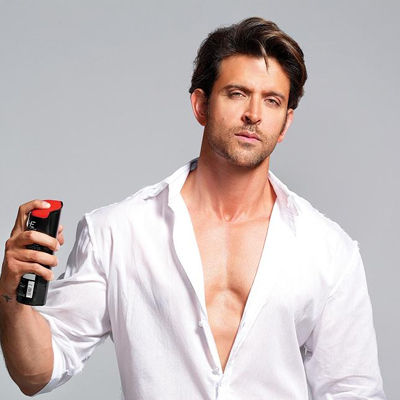
    Joining comparatively new entrants like ITC’s Engage and Vini Cosmetics’ Fogg and veterans including Axe and Park Avenue is the Rs 1821 crore FMCG major Emami’s brand new deodorant ‘He’.  With the pan-India rollout of ‘He’ currently underway, in the initial phase, the deodorant will  be available across all markets with a special focus on 23 top cities including metros, mini metros and tier I and tier II cities in the north, west and east. ‘He’ will be introduced in Hyderabad and Bangalore in the second phase.


    So what made Emami enter an already crowded turf? “It is a big and growing category and hence, has the potential for differentiated offerings. We don’t believe in entering any category or launching any product just for being there. We only enter a category when we are able to get the right mix for the launch of any product and have the strategy in place to attain success,” says Emami director Harsha V Agarwal.


    Agarwal argues that the deodorant segment has dynamic prospects as the level of penetration is very low. Also, in this category, not too much brand loyalty is exhibited by consumers as there is a multitude of me-too brands to choose from. Importantly, ‘He’ makes a differentiated promise to the customer of ‘being interesting’ as opposed to ‘being normal’ which is ‘boring’. Adding to the appeal is an unique fibre mould packaging which is sure to attract customers’ attention.


    ‘He’ will be launched in six variants—Smart, Confident, Extrovert, Recharge, Ruler and Magician. What’s more, actor Hrithik Roshan has been roped in as brand ambassador. “Hrithik is the youth icon, popular amongst the youth and teenagers both.  He is different from the run-of-the mill actors and has never hesitated to take up interesting and challenging roles, resulting in many blockbuster films,” says Agarwal about the choice of ambassador. As for the name ‘He’, he says, “It is short, synonymous to masculine, so an apt name.”


    Emami is undertaking an extensive social media marketing campaign #WhoisHe in the pre-launch phase. The launch is supported by 360 degree integrated communication including digital media. The campaign featuring Hrithik has been conceived and developed by Leo Burnett.


    According to a brand consultant, there is enough space in the market. Pricing will play a factor if people will pick it up from the shelf.

  • Garnier Fructis announces Alia Bhatt as its brand ambassador

    Garnier Fructis announces Alia Bhatt as its brand ambassador

    MUMBAI: Garnier Fructis, a hair care brand, has named actor Alia Bhatt as the new face of Garnier Fructis in India. This is the first time that Garnier Fructis has signed on a brand ambassador in India. Alia Bhatt will feature in exciting Garnier Fructis campaigns this year.


    Garnier GM Rupika Raman said, “We’re very happy to welcome Alia on board as the face of Garnier Fructis. Her personality and energy finds great synergies with Garnier Fructis. No other brand is as synonymous with youth and vitality as Garnier Fructis. Alia brings both these qualities to the table with her talent and individuality.”


    Alia garnered nationwide praise for her performances in films Highway and 2 States.


    Bhatt said, “My hair is very important to me and I only trust Garnier Fructis which has always been my favorite shampoo. I love it’s fruity, long lasting fragrance and the way it leaves my hair feeling nourished and strong. The new Garnier Fructis shampoos & conditioners have been specially developed for Indian Hair. I hope every girl using Garnier Fructis benefits from it the way I have.”


    She also endorses the Pure Active range of face washes from Garnier.

  • After IPL, it’s FIFA time for broadcasters, advertisers

    After IPL, it’s FIFA time for broadcasters, advertisers

    MUMBAI: It’s been a busy year so far for broadcasters and advertisers. First came the election campaign of major political parties in the fray followed by that annual extravaganza called the Indian Premiere League (IPL) and now comes the mother of all sports tournaments, the FIFA World Cup 2014.


    If Multi Screen Media’s (MSM) Sony Six hit a six with the recently concluded IPL, it will most likely score a goal with FIFA as well.


    As MSM president Rohit Gupta says, “FIFA is clearly getting bigger and bigger in the country. In 2010, the tournament attracted almost 65 million viewers while this year, we expect the reach to touch 100 million.” Gupta feels football in India is touching T20 World Cricket levels when it comes to popularity. Even when it comes to revenue, Sony Six sold 10 second ad spots for Rs 4.9 to Rs 5 lakh and the final IPL match for Rs 18 lakh to Rs 20 lakh, for FIFA, it is selling 10-seconders for Rs 2 to Rs 2.50 lakh. (Media planners, however, said that the spot rates for the IPL final were between Rs 14 lakh to Rs 16 lakh).


    The channel has already got on board big advertisers, with Hero MotoCorp as the presenting sponsor and Xolo Mobile and Microsoft as powered by sponsors. Sony Six is also in talks with e-commerce sites that bombarded the online space during IPL.


    Media planners however are doubtful about how many brands will shell out the kind of money demanded by the channel. “If we compare last year’s IPL with the just concluded one, we can see that there were a lot of new advertisers. Online retailers leveraged the sporting event well. However, the same cannot be said about FIFA. Yes, it is true that the sport is gaining viewership and hence, increase in ad rates but we cannot be sure how many will be ready to shell out so much money,” says one media planner on condition of anonymity.


    Another media planner believes that while big advertisers and sports brands for whom, the tournament is a perfect occasion to advertise, may shell out big money for ads, but there won’t be much increase towards the end. “The rates are already too high and with the Indian Super League (ISL) too coming up, I wonder how much brands will be ready to spend with such exorbitant rates,” he says.


    Moreover, they feel that football, unlike cricket, is not an advertiser friendly game where a break comes not before half time i.e. 45 minutes into the game. Therefore, there is only so much an advertiser can do on television.


    Keeping this in mind, a lot of brands will be taking the virtual route to connect with the audiences.


    All ‘out’ on social


    In an official statement early last week, FIFA director of communications and public affairs, Walter De Gregorio said, “We aim to provide an all-round digital companion so that billions of fans can join in and share their excitement. Only the World Cup and digital can create this worldwide conversation.”


    FIFA officials have launched Global Stadium, a social, online and mobile hub for the event, which will help football fans across the world stay connected and updated. FIFA’s website has also been redesigned in the run-up to the tourney with football fans in mind and this is complemented by a strong presence on social media. The website has been optimized for mobile and the official World Cup app that went live early this month.


    In April alone, FIFA’s Facebook page reached over 280 million users, the World Cup page currently has more than 18 million fans, and there are over seven million FIFA followers on Twitter, who frequently re-tweet and engage in conversation across six language accounts. All these efforts have been undertaken after understanding the changing consumption habits and the “second screen” assuming prime importance in viewers’ lives.


    Similarly, MSM too has announced the launch of ‘LIV Sports’, a digital sports entertainment destination called www.LIVSports.in. LIV Sports will be the official mobile and internet broadcaster of the tournament. The platform will show both live and video-on-demand match content, with informative statistics and analysis.


    In a statement, MSM CEO NP Singh commented, “The idea was to create a premier digital sports entertainment destination where we will offer quality content which is mass inclusive and not designed to cater only to ardent sports fans. We have attempted to redefine the way sporting content is presented and consumed. With LIV Sports we will attempt to keep every cross section of our consumers actively engagement through high quality interactive sports content with informative data and analytics.”


    The official beer partner, Budweiser, has revealed ‘Rise As One’, the brand’s global creative campaign, to celebrate the moments that unite and inspire fans of the beautiful game around the world.


    “Most football fans come under a certain age group and hence, are very active online. So, it will be good if brands take that route to connect with them,” says a digital creative head of an agency. “And cheaper as well,” he laughs and signs off.

  • Inox FY-2014 PAT doubles FY-2013 PAT

    Inox FY-2014 PAT doubles FY-2013 PAT

    BENGALURU: Indian Theatrical film exhibitor Inox Leisure Limited (Inox) reported FY-2014 PAT of Rs 36.93 crore (4.3 per cent of Total Income from operations of Tot Op Inc), 100.2 per cent more than the Rs 18.45 crore (2.4 per cent of Tot op Inc) in FY-2013.


    The company reported Tot Op Inc of Rs 868.83 crore in FY-2014, which was 13.5 per cent higher than the Rs 765.29 crore in the previous fiscal. Tot Op Inc of Rs 188.30 crore, was 12.1 per cent less than the Rs 214.27 crore in Q3-2014 and 10.4 per cent more than the Rs 170.59 crore in Q4-2013.


    Note :  (1)100,00,000=100 lakh = 1 crore = 10 million.


    PAT in Q4-2014 was just Rs 1.43 crore (0.8 per cent of Tot Op Inc) and less than a fourth (1/4.23 times) the Rs 6.47 crore in Q3-2014. The company had reported loss of Rs 9.94 crore in Q4-2013.


    Let us look at the other Q4-2014 and FTY-2014 numbers reported by Inox


    Inox reported 12.3 per cent higher total expenditure (Tot Exp) in FY-2014 at Rs 797.56 crore (91.8 per cent of Tot Op Inc) as compared to the Rs 710.35 crore (92.8 per cent of Tot Op Inc) in FY-2013. Inox reported Tot Exp of Rs 184.78 crore (98.1 per cent of Tot Op Inc) in Q4-2014, which was 7.8 per cent less than the Rs 200.36 crore (93.5 per cent of Tot Op Inc) in Q3-2014 and 4.9 per cent more than the Rs 176.18 crore (103.3 per cent of Tot op Exp) in Q4-2013.


    The company paid Rs 106.07 crore (12.2 per cent of Tot Op Inc) in FY-2014 towards Entertainment Tax, which was 3.9 per cent more than the Rs 102.04 crore (13.3 per cent of Tot Op Inc) in FY-2013. Entertainment Tax in Q4-2014 at Rs 221.2 crore (11.7 per cent of Tot Op Inc) was 12.6 per cent less than the Rs 253.1 crore (11.8 per cent of Tot Op Inc) in Q3-2014 and 2 per cent more than the Rs 216.9 crore (12.7 per cent of Tot Op Inc) in Q4-2013.


    Inox incurred a cost of Rs 223.49 crore (25.7 per cent of Tot Op Inc) in FY-2014 towards Exhibition Cost, which was 6.5 per cent more than the Rs 209.94 crore (27.4 per cent of Tot Op Inc) in the previous fiscal. Exhibition cost in Q4-2014 was less by 14.9 per cent at Rs 46.36 crore (24.6 per cent of Tot Op Inc) as compared to the Rs 54.48 crore (25.4 per cent of Tot Op Inc) in the immediate trailing quarter and 2.5 per cent more than the Rs 45.23 crore (26.5 per cent of Tot Op Inc) in Q4-2013.


    Inox paid Rs 137.22 crore (15.8 per cent of Tot Op Inc) towards property rent, conducting fees and common facility charges (rent and other charges) in FY-2014, which was 16.4 per cent more than the Rs 117.9 crore (16.8 per cent of Tot Op Inc) in FY-2013. The company paid Rs 35.64 crore (18.9 per cent of Tot Op Inc) in Q4-2014 towards rent and other charges, which was 3.1 per cent more than the Rs 34.58 crore (16.1 per cent of Tot Op Inc) in Q3-2014 and 13.4 per cent more than the Rs 31.42 crore (18.4 per cent of Tot Op Inc) in Q4-2013.


    The company paid 3.5 per cent more towards finance cost in FY-2014 at Rs 27.63 crore (3.2 per cent of Tot Op Inc) as compared to the Rs 26.7o crore (3.5 per cent of Tot Op Inc) in FY-2013. Finance cost in Q4-2014 at Rs 6.20 crore (3.3 per cent of Tot Op Inc) was 6.3 per cent less than the Rs 6.62 crore (3.1 per cent of Tot Op Inc) in Q3-2014 and 13.2 per cent lower than the Rs 7.14 crore (4.2 per cent of Tot Op Inc) in Q4-2013.


    Inox currently operates 79 multiplexes and 310 screens in 43 cities. Since its inception in 1999, Inox has been active in exploring acquisition and / or expansion opportunities on continuous basis with a view to consolidate its position in the multiplex industry. In 2007, Calcutta Cinema Private Ltd (CCPL), a multiplex cinema theatre company based in West Bengal was merged with Inox. In May 2013, Fame India Limited, another multiplex cinema theatre company having nationwide presence, was merged with Inox.

  • KKR and e-commerce sites win IPL 7

    KKR and e-commerce sites win IPL 7

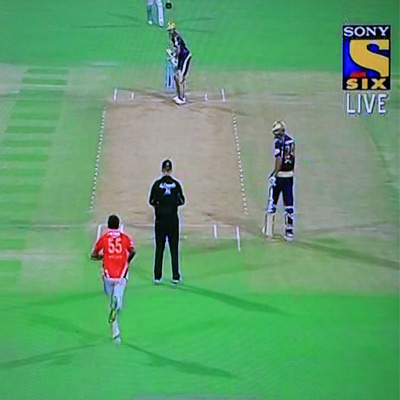
    MUMBAI: As fans chanted Korbo Lorbo Jitbo (We will do, we will fight, we will win ), Manish Pandey’s 94 off 50 balls not only ensured Kolkata Knight Riders (KKR) putting up a brave fight, it saw them seize the IPL cup from Kings XI Punjab in a nail-biting finish.


    However, this IPL not only brought smiles to the Knight Riders but also to broadcasters Multi Screen Media-owned Sony Max and Sony Six that aired the tournament.


    Before the seventh edition started, naysayers said not many advertisers would be interested in the property since India was going through the mother of all elections. To make things worse, the first phase of IPL was held outside India. And when Sony Entertainment Television president Rohit Gupta said that the broadcaster would charge Rs 4.9-5 lakh for a 10-second slot, a 20 per cent jump from last year’s Rs 4.25 lakh, eyebrows were raised.


    However, the story went in the other direction. Despite the T20 tourney being played in the UAE and the ninth phase of the polls coinciding with the matches back home, the popularity of the tournament wasn’t affected and the broadcaster charged as much as Rs18-20 lakh for a 10 seconder for the final match. “Last year, we had charged around Rs 15 lakh for the final match. So, the ad revenue has only gone up. One must understand that IPL is a mature property and shouldn’t talk about not attracting advertisers,” says Gupta.


    He went on to say, “Take a look at the English Premier League (EPL); it has been on for more than 20 years and it still attracts audiences and advertisers. Wonder why in India, people don’t understand that IPL is a yearly phenomenon and is here to stay for a long period.”


    The television viewership too went up by five per cent for the first 54 matches, from 175 million during IPL-6 to 184 million this year.


    “There is no risk to any advertiser,” said Gupta, while highlighting the fact that a big chunk of broadcasters’ revenues would be contributed by e-commerce companies.


    Apart from the big advertisers – Vodafone, Karbonn, Havells, Perfetti and Marico – this year saw many e-commerce companies, especially Amazon, which launched its first TVC during IPL and others like Flipkart, Myntra, Quikr and Snapdeal piggybacked on the tournament.


    Says GroupM ESP national director – Entertainment, Sports & Live Events Vinit Karnik, “A lot of e-commerce sites associated themselves with various teams. Also, there were a lot of on ground and on air activations so it won’t be wrong to say that this time one product category did leverage the league.”


    The reason behind the phenomenon is the intense competition in the online retail segment. And as every player tries to pitch something different be it in terms of product line or delivery model, the mass media property – IPL – becomes the perfect battle ground.


    “The IPL has got the reach and so it has delivered eyeballs to the brands. And the result has been achieved. With sites fighting tooth and nail what will be a better platform than IPL to reach out to as many as people?” says MEC national planning director Zubin Tatna.


    Havas Media India MD Mohit Joshi agrees on the fact that with booming online retail sector competition is only going to increase. “IPL as a format doesn’t let one innovate much but the brands always get what they want from it, if used appropriately.”


    “E commerce sites did dominate the advertisements this time as well as offline enough buzz was created. So, one shouldn’t be surprised if around 40 per cent of the revenue comes from this category,” he adds.


    However, Tatna feels otherwise. “You see a Quikr or an OLX ad on television anyhow so I wouldn’t agree with the fact e-commerce sites dominated only IPL.”


    The nerve-wrenching battle


    The tourney’s star cricketer this year, Glen Maxwell, along with his Punjab teammates David Miller, Virendar Sehwag and George Bailey managed to score a paltry nine runs between the four in an edge-of-the-seat finale. For KKR, it’s been smooth sailing with the final being their ninth win a row. This puts them in the league of Chennai Super Kings (whom they had defeated in the final two years ago) as multiple IPL winners.


    However, to their credit, Punjab were neck and neck with KKR so much so it could have been anyone’s match till the very end. Wriddihan Saha’s innings was a fitting precursor to the well fought finish. 


    Apart from Maxwell’s disappointing performance, this season’s highest run scorer Robin Utthappa too did not match expectations as Piyush Chawla was left to win the game for KKR. But Utthappa did win the Orange Cap. Man of the match Pandey said that winning the IPL was like the “icing on the cake” after winning the Ranji trophy, Irani trophy and Vijay Hazare trophy.


    KKR captain Gautam Gambhir said they never thought they would win this IPL. He also went on to add that winning at the Chinnaswamy Stadium was what the team fancied, considering the fact that it is a small ground. Incidentally, the stadium also hosted the very first IPL game in 2008. Gambhir told indiatoday.in, “This is a ground where it is very difficult to defend. We wanted to get it down to five overs, 50 or 60 to get. Manish played a fantastic innings.” Finally, Punjab’s late strikes could not dither KKR from taking the trophy home a second time with 200 runs.


    As for KKR, Kolkata Chief Minister Mamata Banerjee congratulated the team on Facebook. A post she put up on the social networking site said: “Congratulations…. KKR….Congratulations…Sharukh.” She also congratulated Saha for his “brilliant performance.”


    In 2012, the Banerjee government had come under sharp criticism for showering expensive gold chains and gold medals as part of the grand felicitation programme held in honour of KKR’s IPL win. But this time around, as Eden Gardens prepares for another such programme, it will be interesting to see what ‘Didi’ has to offer the boys in purple.

  • Brands need to get inspired, innovate & then transform: Kendrick Reid

    Brands need to get inspired, innovate & then transform: Kendrick Reid

    MUMBAI: “How often have you asked yourself, who you want to be?” asked BET Networks’ Kendrick Reid to creative minds present at the Mumbai edition of promoaxbda. Reid went ahead to mention that just like human minds need a good dosage of inspiration to innovate and thereby transform, brands too need to take the same route.


    The first thing that brands need to keep in mind while rejuvenating its communication strategies is to hit on emotional chords. Only an emotional connect brands can help consumers to be with it at various stages of its transformation. Reid mentioned about how Steve Madden for 12 years didn’t believe in mainstream advertising. When they actually rolled an ad film it fell flat. After much introspection Steve Madden weaved perfect style in its communication. Steve Madden splashed communication messages at strategic locations recently. Interestingly it worked well for the brand in the retail space where the brand needs to captivate its audiences well.


    While digital evolution has stormed the television business across the world content consumption has drastically changed. Reid explained how Comdey Central revolutionised its brand identity. Comedy Central wanted to cater to multi screens and revised its marketing outlook. The channel not only changed its look and feel but garnered much more attention of viewers. Another channel that refreshed its creative outlook was VML, a commercial channel in Belgium.


    VML involves its target audience in its various communication packages. As the channel targets families at various occasions it is creating strong impressions with every communication that it makes personalised. Reid emphasised on the fact that for marketers the challenge that they have ahead in front of them is to deal with the millennials. Brands need to break free with traditional thought processes if they are targeting the millennials. Reid gave the example Fuse TV which took a risk and started communicating in the lingo that its audiences speak. Along with this the channel also has started integrating content across different platform where the channel has presence. This was welcomed with open arms by the viewers of Fuse TV.


    Reid is of the opinion that brands need to be wise even if the collaboration is to target mass audience or a niche set of audience. According to him what Samsung did with the popular music artist JayZ was impressive and one of its kind of music releases in modern culture. Creativity is just about the right time. While brands should keep the TG at the core in its communication strategies, it is necessary that these brands also should think about the cultural influence that it will as in the long run. 


    When a brand is ready to reform itself then there is no looking back for it. It will set an example for others in the space irrespective of way it gets inspired, innovate & transforms itself.

  • Google overtakes Apple to become world’s most valuable brand

    Google overtakes Apple to become world’s most valuable brand

    MUMBAI: After three years at the top, Apple slipped to number two position as Google overtook it to become the world’s most valuable global brand in the ‘2014 BrandZ Top 100 Most Valuable Global Brand’ ranking.

    Google worth $159 billion saw an increase of 40 per cent year on year whereas Apple slipped on the back of a 20 per cent decline in brand value, to $148 billion. Whilst Apple remains a top performing brand, there is a growing perception that it is no longer redefining technology for consumers, reflected by a lack of dramatic new product launches. The world’s leading B2B brand, IBM, held onto its number three position with a brand value of $108 billion.

    Millward Brown Optimor MD Nick Cooper said, “Google has been hugely innovative in the last year with Google Glass, investments in artificial intelligence and a multitude of partnerships that see its Android operating system becoming embedded in other goods such as cars. All of this activity sends a very strong signal to consumers about what Google is about and it has coincided with a slowdown at Apple.”

    “This year’s index highlights the end of the recession, with a strong recovery in valuations and, for the first time, real growth across every category and the Top 100 as a whole,” said WPP’s The Store CEO David Roth. “What’s remarkable is the way that strong brands have led the recovery. Seventy-one of the brands listed in our 2014 Top 100 were there in 2008. Despite the financial turmoil and the digital disruption that have decimated many businesses during the last few years, these brands have remained in the ranking, proving the durability of strong brands.”

    The BrandZ Top 100 Most Valuable Global Brands study, commissioned by WPP and conducted by Millward Brown Optimor, is now in its ninth year.

    The combined value of the Global Top 100 has nearly doubled since the first ranking was produced in 2006. The Top 100 today are worth $2.9 trillion, an increase of 49 per cent compared with the 2008 valuation, which marked the start of the banking and currency crisis.

    The BrandZ Top 10 Most Valuable Global Brands 2014


  • Unilever calls for businesses to fight against climate change

    Unilever calls for businesses to fight against climate change

    MUMBAI: Keeping true to its commitment of a better tomorrow, Unilever has issued a call for all companies affected by the growing costs of climate change, and in particular the food industry, to step up their commitment to tackling the issue. 


    The risk to the food industry from climate change is severe, with some analysts predicting that the external environmental costs of climate change could exceed the earnings of the entire food industry by 2030 unless an action is taken.  The call coincides with a report released by Oxfam International arguing that the ‘Top 10’ food companies, including Unilever, should be among those leading the charge to address climate change both in their own operations, in their supply chains, and in the wider public policy arena.


     Sustainability strategy and global advocacy vice president Miguel Veiga-Pestana commented, “Unilever has been at the forefront of industry efforts to tackle climate change since the mid 1990s. We were the first to establish the Unilever Sustainable Agriculture Programme to address carbon emissions from agriculture and deforestation, and more recently we were the first to launch a comprehensive plan with time-bound targets reported on annually to drive progress towards sustainable sourcing. The Unilever Sustainable Living Plan, was launched in November 2010. We are currently ahead of our self imposed target on sustainable sourcing and broader CO2 emissions from energy in our operations – down by 32 per cent since 2008.”


     Unilever has also sought to improve its footprint along the full breadth of the value chain, and to play a catalytic role within the industry and the wider private sector.


     For example:


    ·Committing to sourcing 100 per cent of agricultural raw materials sustainably by 2020, including tropical commodities, such as palm, soy and the paper and board used in its packaging.


    · Working with the United Nations Environment Programme and Greenpeace to eliminate highly damaging HFCs from commercial refrigeration


    · Actively contributing to the work of HRH The Prince of Wales’ Corporate Leaders Group on Climate Change, which has made the case for progressive public policy to bring down emissions and accelerate the deployment of renewable energy.


    · Sourcing 100 per cent renewable electricity for sites in Europe and North America


    ·Co-Chairing the Sustainability Committee of the Global Consumer Goods Forum (CGF), an industry group with combined turnover of $3 trillion, with specific programmes now in place on deforestation and refrigeration.


    ·Unilever also led the process which resulted in the creation of the Tropical Forest Alliance (TFA)  a public-private partnership between the 400 companies of the CGF, the governments of the USA, UK, Norway, the Netherlands, Indonesia and Liberia and a large number of international NGOs.  The principal goal of the TFA is to eliminate any trace of deforestation from the supply chains of consumer goods companies.


     None of this could come too soon.  With less than 20 months until world leaders meet in Paris to agree a global climate change agreement, Unilever has also stepped up its advocacy efforts, with Unilever CEO Paul Polman recently addressing the Abu Dhabi Ascent meeting – a preparatory meeting convened by the United Nations Secretary General, Ban Ki-moon, to build momentum towards an ambitious intergovernmental deal.  At the event, Unilever CEO Paul Polman called for joint efforts to scale up action to tackle climate change, urging politicians to lead with “clarity, confidence and courage” in the international climate change negotiations. 


     “If every major company affected by climate change – not only in the food and beverage sector, but other impacted sectors such as tourism, insurance and transport – were to address the issue as one of business survival, and step change their efforts for delivery, we could together make a significant impact. We hope that Oxfam’s report will encourage other businesses to recognise the urgent need to future proof their operations, provide for the long term needs of their consumers, step off the sidelines and move into action.” concludes Miguel Veiga-Pestana.

  • Suzuki Motorcycle launches Let’s in Karnartaka

    Suzuki Motorcycle launches Let’s in Karnartaka

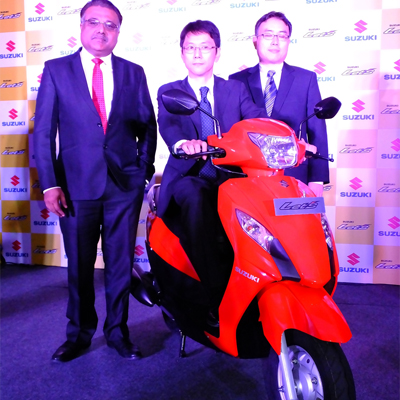
    BENGALURU: Suzuki Motorcycles India (SMIL) announced the third leg of the south India launch of its new personal scooter “Let’s” in Bengaluru.


    The scooter was earlier launched on 6 May in Chennai and on 12 May in Kochi. Next on the agenda is Andhra Pradesh, to be followed by Pune and Ahmedabad, and, later on the north and the eastern parts of the country.


    The company reveals that for Karnataka, it has booked 52,360 seconds and over 2,200 spots across leading television channels and 108,000 seconds and 4,320 spots across leading radio stations of major cities in the state. Besides, SMIL has planned over 50 insertions across leading newspapers in the state and advertisement play outs in 150 cinema theaters across key cities in Karnataka. The 360 degree advertising plan also includes hoardings, ads on bus shelters, demo vans and presence across social media platforms like facebook, titter, youtube, etc.


     “The media plan has been chalked out with our media buying agency, Brand Serve. The new creative commercial with Parineeti Chopra has been done by Publicis Capital, the creative agency for the brand,” says SMIL’s national marketing head Anu Anamika.


    “Typically, our marketing spends are around 20 per cent of revenues, this includes advertising budgets as well as other marketing activities, and we will also be doing 360 advertising pan-India once the product launch is rolled out across the nation,” further informs Anamika.


    The company plans to target university students in cities, beginners who have just got their license and young professionals in urban areas with Let’s, and plans to sell around 100,000 of them this fiscal. SMIL national head – marketing Atul Gupta says, “We have 12 per cent market share in India and a 16 per cent market share in Karnataka in the scooters segment. With the Let’s launch, we envisage it to grow to 15 per cent in India and 22 per cent in Karnataka.”

  • Microsoft launches Nokia XL in India

    Microsoft launches Nokia XL in India

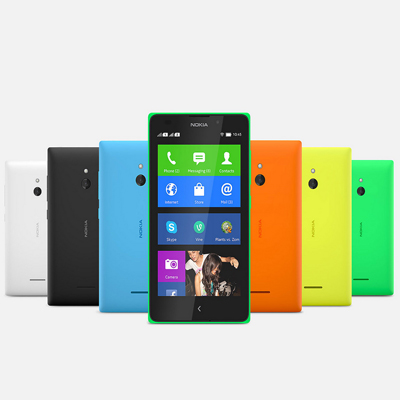
    MUMBAI: Last week after launching Nokia 630 in the affordable category, Microsoft Devices today announced that Nokia XL. Nokia XL is considered to be the flagship large screen offering under the Nokia X family of affordable smartphones that run Android apps, will begin selling in India soon. The device is priced at Rs 11,489.


    Commenting on the launch of the product, Nokia India Sales (subsidiary of Microsoft Mobile Oy) Director Marketing Viral Oza said, “With the Nokia X Family we look to offer a variety of choices to our consumers at different price points.  After receiving a great response with the Nokia X, which introduced the category to this market, we are now bringing the much awaited Nokia XL and X+ to our consumers. Nokia XL, our flagship offering within the Nokia X family, comes packed with a large screen experience with a superlative front camera and a wide array of apps, offering a great Smartphone experience at an affordable price point. This will be further amplified through the X+ which will be simultaneously launched with the XL completing the Nokia X family serving as the perfect introduction to the world of Android apps, coupled with signature Nokia experiences, and the most popular Microsoft services.”


    To allow consumers to enjoy apps on Nokia XL, Microsoft Devices has tied up with Airtel to give users free unlimited download of Android Apps for six months. The plan allows upto 500MB of free usage through which consumers can download the apps via the Nokia Store and the 1Mobile store.


    The Nokia XL device is the next offering in the Nokia X family which includes Nokia X, launched earlier this year in India, and the Nokia X+  launched simultaneously  comes armed with an enhanced RAM (768MB) for even faster multitasking and is  priced at Rs. 8,399. The new Nokia X family is the perfect introduction to the world of Android apps, coupled with signature Nokia experiences, and the most popular Microsoft services. 


    Consumers can access and download a wide array of Android apps, which can be side loaded as well as downloaded through Nokia’s own store and several popular third-party apps. Leading global apps will be available at launch for the Nokia X family of devices, including Facebook, LINE Free Voice and Messages, LINE Camera, LINE Bubble, Picsart, Plants vs. Zombies 2, Real Football 2014, Skype, Spotify, Swift key, Twitter, Viber, Vine and WeChat, among others. Additionally, as a first for Nokia customers around the world, BBM, a premier mobile messaging platform, will also be available on the Nokia X family of devices.