Category: Brands

  • Adidas the ‘sole’ winner of 2014 FIFA World Cup?

    Adidas the ‘sole’ winner of 2014 FIFA World Cup?

    If you thought FIFA was all about the game then you are highly mistaken. While Brazil was spending millions to prepare for the world’s biggest extravaganza, the two brands which rule the football merchandise market, had been busy playing their own matches.

    Even before the tournament began, the two giants with their marketing strategies were all set for FIFA 2014.

    It was in the month of May that Adidas, which has sponsored FIFA, the world football’s governing body, since 1970, launched its ?50million plus global World Cup campaign featuring Lionel Messi. Titled ‘Leo Messi’s World Cup Dream,’ the campaign also included Luis Suarez and Dani Alves and associated with Kanye West.

    The $1.9 billion Nike’s ‘The Last Game’ animated short film was launched a month later. To keep the buzz alive, the brand also opened its first pop-up store in Brazil. The five-minute World Cup film featured animated versions of the sport’s best players, from Portugal’s Cristiano Ronaldo to Brazil’s Neymar Jr., under the Nike Football campaign tagline, ‘Risk Everything’.

    Overall, Nike with $25 billion revenue has 17 per cent market share worldwide while Adidas with $20 billion revenue owns 12 per cent of the market share.

    Nonetheless, Adidas which has signed an agreement with FIFA until 2030 for $70 million for every four-year cycle, created the colourful WC ball – known as the Brazuca – which surpassed sales of the 2010 World Cup ball.

    Although eight different companies provide jerseys to the 32 participating teams, as the tournament entered the nail-biting semi-finals, the fight was no longer between Argentina, Brazil, Germany and Netherlands, but was all about Nike versus Adidas.

    The two companies with a combined market share of 70 per cent of the world football merchandise market sponsored two teams each: Argentina and Germany wore Adidas while Brazil and Netherlands wore Nike.

    But one can note that though Adidas provided the German kit, about nine of the country’s top players wore Nike boots. This WC Nike made a shoe statement with its new Magista and Mercurial boots.

    The marketing war at its highest saw the two in a tightly-cornered match. Social and digital media was conquered by both as fan base increased manifold. So much so that in the last five months or so Nike grew its Facebook fan base by approximately 14 million users, largely due to growth in markets like Indonesia, Turkey and India and thanks to ‘Risk Everything.’

    The last year has been volatile for the companies on the Wall Street index as well. Over the past year, Nike shares have trounced those of Adidas.


    If one goes by the numbers and strategic marketing, the competition between Nike’s and Adidas’ battle for the hearts and minds of soccer fanatics would have made the Goddess of Victory (Nike) take the trophy home.

    However, as Brazil and Netherland crashed out of the tournament, it was Adidas vs Adidas at the finals.

    Even though Adidas and Germans took the Golden trophy home, Nike the unofficial partner created enough buzz and revenue throughout the tournament.

    The companies are sure that even though the tournament is over, the momentum will remain the entire year. And keeping in mind that today the competition has moved beyond the pitch; with brand ambassadors and innovative marketing strategies, there is no longer but one winner.

    It was a win-win situation for both sport giants.
  • Philips India adds celebrity quotient to its male grooming category

    Philips India adds celebrity quotient to its male grooming category

    MUMBAI: Macho man is passé; metrosexual is the current breed of men who with a high disposable income is the most promising consumer today.


    They don’t mind filling their shopping carts with make-me-look-good goodies. And this is the reason why a bunch of male grooming products have sprung up in the last few years.


    The male grooming segment which was projected to be Rs 1,500 crore market in 2012 is expected to reach Rs 5,300 crore by 2016.


    According to a Nielsen study on the Indian male grooming segment, there is a rising aspiration among Indian men to look groomed, which has led to the Indian men’s grooming market’s rapid growth of more than 34 per cent.


    The Nielsen study further stated that this growth is faster than the growth rate of the total personal care and beauty industry in India. The research company believes time is ripe for beauty and grooming brands to make the most of this growing male attention.


    The segment can be divided into sub categories: beauty range of products and grooming gadgets (manual and electronic).


    As per a report by Euromonitor International on male grooming sector in India, Gillette India lead men’s grooming with a value share of 28 per cent in 2012. The company has a strong horizontally diversified portfolio of razors and blades, with brands such as Mach, Vector, 7’O clock and many more, enhancing its long term sustainability. Hindustan Unilever was second, accounting for a 15 per cent share. These products fall in to the manual sub category.


    On the other hand, in the electronic sub-category, Philips with a range of grooming gadgets for men including trimmers, shavers and stylers, is ruling the market share, claims the company.


    To take a step further, the brand is set to roll out an extensive marketing campaign.


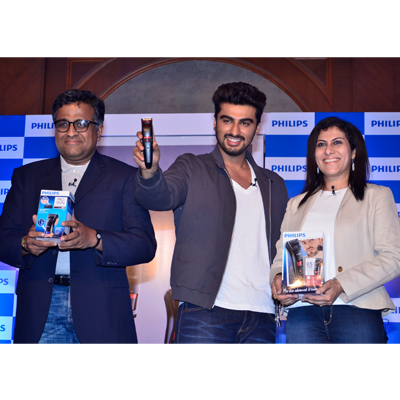
    The brand has decided to add celebrity quotient to its communication and has roped in actor Arjun Kapoor to be its face in the country. It can be noted that earlier John Abraham was its brand ambassador.


    The TVC which went on air on 10 July has been conceptualised and created by Ogilvy & Mather. The brand will also splash its communication on other media platforms. About 15-20 per cent of its marketing budget is expected to be invested on digital.


    The business of electronic brands of this segment is growing at 30-40 per cent year on year, mentions Philips India director marketing-personal care Anurita Chopra.


     “The Indian market is fast adopting this particular category. The reason to bring Arjun on board is mainly because he brings in positivity which we as a brand are trying to promote through our communication,” says Philips India president consumer lifestyle ADA Ratnam.


    However, the pricing strategy of the brand is to make it affordable.

  • Amul bets high on sports marketing

    Amul bets high on sports marketing

    NEW DELHI: Amul which claims to be India’s largest food products marketing organization is all set to sponsor the Indian contingent for the upcoming Glasgow 2014 Commonwealth Games and the Asian Games to be held later this year in South Korea.


    A Memorandum of Understanding in this regard was signed by Indian Olympic Association Secretary General Rajeev Mehta and Gujarat Amul Milk Marketing Federation Managing Director R S Sodhi in a function graced by Rakesh Gupta, Joint Secretary, and Anil Khanna, Treasurer, Indian Olympic Association. Amul has become the official sponsor of the Indian team in the category of dairy products.


    Announcing Amul’s support for the Indian contingent to both these prestigious sporting events, Sodhi said, “Amul is committed to strengthening the support to sports in various forms and encourage young generation from all corners of the country to take up sports. I take great pleasure and pride in announcing our sponsorship of the Indian contingent to the XX Commonwealth Games and the XVII Asian Games.” 


    Explaining the rationale of this association, he said milk is nature’s original energy drink and plays a pivotal role in building the physical and mental strength of the athletes. Amul has embarked upon an ‘Eat Milk with Every Meal’ campaign to highlight the importance of milk and dairy products like cheese, yogurt, butter, ghee, paneer etc. in the daily diet.


    It can be noted that Amul has associated with sports events like football, Cricket World Cup and Formula 1 to engage the youth. Sodhi mentioned that the Amul had sponsored the Indian contingent to the London Olympic Games in 2012 which was India’s most successful Olympics.


    “With the kind of investments made by our country to select, nurture and train the best athletes, we are confident that Indian contingents  to the forthcoming Commonwealth and Asian Games will deliver their best ever performances and make our country proud,” said Sodhi.


    Lauding Amul’s support to the Indian Olympic contingent, Mehta said “This support to the Indian sports will go a long way and further strengthen the bond between Amul and IOA and leave a longer lasting impact on the sports lovers and sports persons”.


    Amul will launch a series of advertising campaigns for milk and various dairy products to promote this association in the coming months.


    The XX Commonwealth Games will be held at Glasgow, Scotland from July 23 to August 3 and the XVII Asian Games scheduled to be held at Incheon, South Korea from 19 September– 4 October, 2014.

  • Taste of India available at Sony’s ‘Cafe Rio’

    Taste of India available at Sony’s ‘Cafe Rio’

    MUMBAI: It was almost 65 years ago that a revolution started from a small village in Gujarat, and since then Amul has been a part and parcel of our lives, everyday.


    The company, which saw Rs 18,150 crore turnover last year, has become a part of our lives like its products. From just sarcastic hoardings on topical issues, Amul has now ventured into the television screens through its limited advertisements, but what has caught more attention is its association with various sporting events.


    The year 2011 saw the Anand-based Gujarat Cooperative Milk Marketing Federation (GCMMF) sponsoring the cricket team of Netherlands in the ICC Cricket World Cup and Switzerland-headquartered Sauber F1 team at the inaugural Indian Grand Prix. It took a step further when it decided to sponsor the Indian contingent at the London 2012 Olympic Games.


    And now with the football fever gripping the entire world, the ‘Taste of India’ can be seen on our screens every day before the game begins. Amul is the main sponsors of the shows – Cafe Rio and Football Extraa – on Sony Six.


    “Our sponsorship of Cafe Rio and Football Extraa was a good option as it gave an opportunity to cover the entire event very comprehensively right from pre-match discussion to post-match wrap up during the breakfast show next day,” says the company’s MD RS Sodhi.


    When asked why this sudden interest in sports, he says, “Milk is nature’s original energy drink and plays a pivotal role in building the physical and mental strength of the sportsmen. Nutritious dairy diet comprising milk, cheese, yogurt etc. is an important part in the diets of athletes around the world. India is the largest producer of milk in the world and Amul is not only India’s but Asia’s largest milk brand.  This association with sports and activities around it will help us in engaging with the youth so that they can enjoy a healthy life and strive to become more competitive in their endeavours.”


    It also believes that sporting events are now getting increasingly popular amongst all age groups, both men and women and hence, live sporting events provide a good opportunity for the brand. So much so, that it has become an integral part of its media plans. “We do not treat this as an additional spend,” points out Sodhi.


    The cherry-picking begins well in advance since the schedule of most of the sporting events is available much in advance. So far, it has associated itself with events like F1, Olympics, IPL, EPL and now the 2014 FIFA World Cup. Many more such associations with other events is on cards.


    The brand’s marketing strategy has changed as well. The girl in the polka-dot frock is inseparable from the brand’s identity, but through its recently launched digital campaign ‘Har ghar Amul ghar’, because it wanted a longer format that went beyond 40 seconds followed by a humorous campaign featuring a person with a milk moustache who ‘Eats Milk with Every Meal’, it has (finally) moved on with time.


    The audience plays the key role when it comes to media selection. “If a large number of our youth are on social media, we cannot ignore it. We have a very high traction on social media – be it Facebook or Twitter. Our topicals are first released on social media, then on hoardings, TV and print. The topicals are published in 35 newspapers every Wednesday with a print run of over 35 million copies,” informs Sodhi.


    At the recently concluded World Dairy Innovation Awards 2014 during the eight Global Dairy Congress, Amul bagged the ‘Best Marketing Campaign’ award for the ‘Eat Milk with Every Meal’ campaign. The full-page format across leading dailies like the Times of India, Hindustan Times, The Hindu, The Telegraph, Deccan Chronicle etc. highlighted the importance of milk and dairy products in every one’s diet. “We are happy that our efforts have got recognised at the global level,” says Sodhi humbly.


    FY14 was extremely good for Amul and with its expansion plans the brand is optimistic about 2015 as well. “Amul has been growing at a CAGR of 22 per cent since last five years. Our last year’s growth was 32 per cent. And we plan to grow by 20-25 per cent this year too,” concludes Sodhi.

  • Bacardi’s survival ingredient: Localisation

    Bacardi’s survival ingredient: Localisation

    MUMBAI: Localisation is the key factor to survive, today. As more and more brands, channels and groups enter different markets in the globalised world, they need to adapt according to the local flavour.


    The reason behind it is simple: give people what they can easily relate to.


    And keeping this in mind, Bacardi has launched two falvours for the Indian palate – Aam Panna and Nimbu Paani – for its low-alcohol ready-to-drink brand, Breezer.


    The company which believes in leading the way in innovation; be it in product formulation, packaging or creation of unique concepts and brand properties, with Breezer Indi Mix, it continues the trend. This also makes it the first example of a global spirits brand introducing local flavours in India. “Indi Mix was created based on our research which showed that Indian consumers love our current flavour range but at the same time are also keenly interested in new variants based on familiar flavours. Aam Panna and Nimbu Paani are well-known and well-loved coolers which tap into consumer experiences and memories, and therefore, we have chosen them as the first two flavours,” says director sales & marketing Manish Seth while elaborating that it will continue to innovate and beguile the customers by launching unique properties and flavours.


    India is among the key emerging markets for the company and is going to be an important source of volume growth in the coming years. By 2020, India will have the youngest population in the world with an average age of 29. Low per capita consumption compared to other countries is also expected to help. According to IWSR India is also the third fastest-growing market for international brands.


    The two new flavours are currently available across Haryana, Maharashtra, West Bengal, Goa and Karnataka. Rest of the cities can expect to have these summer coolers available very soon with another eight locations launching in the coming month.


    Apart from this, to mix with its TG, the company which recently introduced ‘BACARDI Untamable Since 1862’, a massive global identity shift, a tribute to Bacardi’s remarkable history hailing across 152 years, will integrate with its flagship musical property Bacardi NH7 Weekender.


    Recently, it also tied up with MTV in conjunction with the launch of MTV Splitsvilla. “We look forward to announcing exciting activations across India as well unique digital innovations this year. We will also be releasing the new series of the cult brand property ‘The Dewarists’ as well as hosting season 3 of Grey Goose Style Du Jour (India’s only style forecasting event),” says Seth adding that digital marketing for Bacardi remains to be the staple feature across all properties.


    As per various media reports, Bacardi enjoys 97 per cent monopoly in the low alcohol RTD. Many came and went. Take United Breweries’ Shotz and Cruiser, for instance, launched a decade back got a tepid response from the 2.5 million sized market and hence, had to be withdrawn.


    This only proves the old-ad adage, when in Rome, do what the Romans do!

  • We have ingrained agility and speed in our work culture: Harish Manwani

    We have ingrained agility and speed in our work culture: Harish Manwani

    MUMBAI: Hindustan Unilever Limited (HUL) and its parent company Unilever has never shied away from corporate social responsibility (CSR) and has launched umpteen number of programs from a better tomorrow.


    The company believes in a better tomorrow and for that it has to be dynamic. HUL chairman Harish Manwani at the 81st annual meeting highlighted up on how change is ‘the new normal’ and the need for companies to constantly reinvent themselves in order to thrive.


    In the speech titled ‘Building a future ready organisation’, Manwani spoke about Unilever’s five-pronged approach to remain future ready – first, embracing technology and inclusive innovation that meets the needs of consumers across the socio-economic pyramid; second, committing to sustainable and responsible growth; third, building future ready talent and capabilities; fourth, values-led and purpose-driven leadership; fifth, creating an agile and inclusive work culture.


    He underlined that to succeed in this world one has to develop a high capacity for responsiveness. Organisations will have to adapt to rapidly changing situations and priorities, tolerate ambiguity, and develop new ways of working in order to succeed. He said, “While technology and innovation will be the hardware that drives future ready organisations, it is a values-led and purpose-driven leadership that is the software that must drive sustainable and responsible growth. It is this combination of hardware and software that will shape the corporate winners of tomorrow.”


    India at the Forefront of Change


    In the last couple of decades, developing countries like India have been marked by a momentous change. Speaking about these advances, he said, “Technology and easier access to information and knowledge have opened up employment opportunities resulting in a new wave of people entering the consumption cycle. We are witnessing a significant increase in the earning power of consumers at the bottom-of-the-pyramid as they join the increasing middle class population in India. The traditional socio-economic pyramid is rapidly transforming itself into a diamond with a burgeoning middle class and


    He elaborated on how we live in an increasingly interconnected world that is changing faster than ever before. He spoke about the need for companies to be able to seize the opportunities these changes present, and also protect themselves from the challenges of the VUCA (Volatile, Uncertain, Complex and Ambiguous) world.


    Building a Future Ready Organisation


    Manwani advised that to be future ready, business must have the vision and the capabilities to compete in the world of tomorrow, and have a larger purpose to remain relevant to society.


    He went on to underline that at Unilever, the approach of developing innovations with consumer price as the starting point was at the heart of company’s inclusive innovation strategy. “HUL had institutionalised a ‘challenge cost’ mindset where the target price for consumers drives innovation in each segment and category,” he said.


    He also spoke about HUL’s focus on addressing the needs and aspirations of consumers as well as social and environmental challenges in its journey to being a future ready organisation. Manwani spoke about how the Unilever Sustainable Living Plan which was launched in November 2010 was the guiding light in this journey.


    It is import to nurture the continuous learning environment that builds talent and new organisational capabilities. He reiterated that the most important asset of any organisation is its reputation. “For future ready organisations, leaders need to not only build the organisational capabilities to harness technology and new ways of working, but also instil the values to build sustainable and responsible models of growth,” Manwani said.


    He argued that in a world with easy access to information and rapid changes, companies need to move fast to keep up. Manwani said, “At Unilever, we have ingrained agility and speed in our work culture.”


    “Equally, diversity and inclusion is an important aspect of our sustainable business growth agenda and a key to building a future ready organisation. In HUL, we refer to this as ‘Winning Balance’,” he added.

  • Viber India to help young footballers

    Viber India to help young footballers

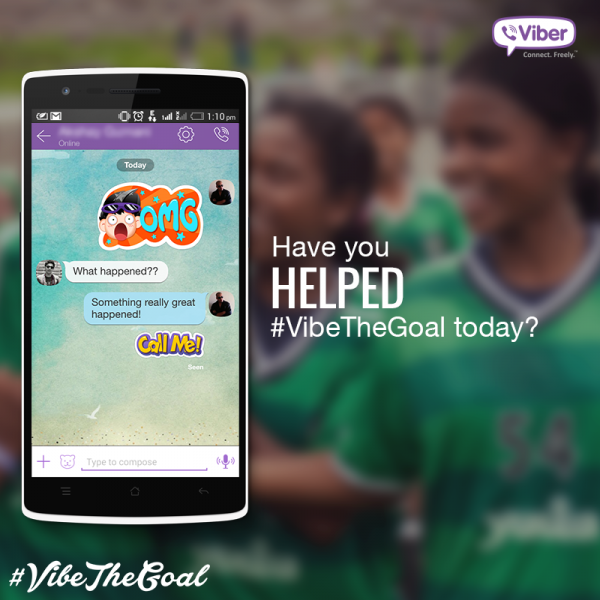
    MUMBAI: With FIFA fever gripping the world, Viber India has initiated a corporate social responsibility (CSR) activity to support a home grown football team. 

    Every conversation made through Viber India contributes to the campaign titled ‘Vibe The Goal’ that will support the girls of the YUWA football team in Jharkand.

    Founded in 2009, Yuwa is a girls’ football programs in India, with 250 players. The Yuwa Foundation uses football as a platform to combat child marriage and human trafficking in the poorest of communities in Jharkhand.

    Through this activity Viber is giving its users a change to be a part of a movement to ensure there are football equipments and education facilities for these girls who have succeeded at the national and international levels.

    The campaign is conceptualised and executed by FoxyMoron.

    “Viber India aimed to engage with their target audience interested in football. The idea is to leverage the football madness that has taken over everyone. With India nowhere close to participating in the World Cup, it only seemed fitting to have the youth identify with an Indian team through an emotional yet inspiring message,” said FoxyMoron business head – north Akshay Gurnani.

    The inspiring story of girls of the YUWA football is encapsulated in a short digital film. The campaign was launched on 17 June. The film has received over 2.9 Lakh views., so far.

    Click here to watch the film:

    The campaigned has garnered 18.6 million impressions on Twitter with 24,300 tweets generated in support of the #VibeTheGoal initiative and close to 9.5 lakh fans have engaged on Facebook.

    “Viber is proud to partner with YUWA team. Through our association with YUWA we are aiming to generate maximum awareness about the NGO which has championed the social cause of combating issues such as child marriage and human trafficking in India. Everyone can be a part of the conversation on Viber to support the team. Every message exchanged on Viber will go a long way in contributing towards uplifting the social and economic conditions for these girls who have earned great reputation for India at national and international levels,” mentioned Viber country head Anubhav Nayyar.

    Through every conversation happening on Viber various monetary levels of contributions will be displayed on a meter on the campaign microsite which is also an aggregator of the support the girls are receiving.

    YUWA India founder Franz Gastler said, “Society teaches girls to fit in. Yuwa coaches girls to stand out.  In Jharkhand, 6 in 10 girls drop out of school and become child brides. Yuwa is using football and education to combat child marriage, illiteracy and human trafficking.  We are thrilled to join hands with Viber India to build support for Yuwa’s programs and a center of excellence to educate, nourish and sustain the girls of Yuwa.  Join the cause, make some noise.”

  • ‘Blogging’ on brand’s mind

    ‘Blogging’ on brand’s mind

    MUMBAI: If you are a blogger then you will definitely relate with Nora Ephron’s Julie and Julia.  As portrayed in the film, blogging which was once upon a time considered as just a hobby is today the most sought-after platform.


    The bloggers’ community has got its due recognition with social media becoming an integral part of our lives. What is interesting to note is that bloggers today are on priority list of many brand managers when it comes to drawing an online marketing strategy.


    “Brands today are engaging with bloggers because they want to talk about experiences and the brand with their readers. Bloggers are respected for the various topics they write about and no one questions their credibility as well. Most importantly, blog posts are permanent advertisements. With search being an important function on the internet today, blogs become extremely useful for a consumer. Consumers are always searching for information, products, brands and services. And, if bloggers are not writing about you; you won’t figure in the consumer selection subsets,” elaborates IndiBlogger spokesperson.


    Brands and blogging


    According to the Business World-IndiBlogger report on the Indian blogosphere, 56 per cent bloggers claim that they influence buying decisions of their readers.


    In the last few months, Indiablogger has hosted blogger events for brands across travel, consumer electronics, FMCG, education, finance, personal care and most recently entertainment sectors. SkyScanner, Nokia, Dove, Tata Capital, Asus, Kissan, Racold, Sunsilk, British Airways and British Council are a few popular brands that often associate with bloggers.


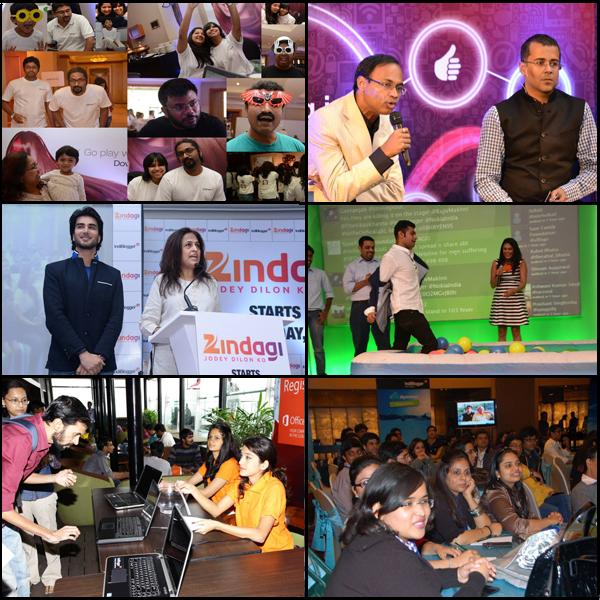
    Recently, ahead of the new entertainment channel Zindagi’s launch, Zeel invited almost 500 bloggers from Mumbai and Delhi. The reason behind the exercise was simple: though it gave bloggers an opportunity to interact with scriptwriters, directors and actors of the show, it also helped the channel create enough buzz on the digital world.


    Similarly, Imagica, the theme park from the house of Adlabs Entertainment, invited close to 30 blogging mothers to spend a day at the venue.


    When asked how the activity helped the brand, Adlabs Entertainment CMO Harjeet Chhabra says, “If we have to measure the response through the excitement amongst bloggers and their experience at Imagica, then we can surely say that we had 30 happy women bloggers and their families at the end of the day. Such initiatives are not carried out for immediate results. They are done from a long term viewpoint as opposed to being tactical or promotional. These activities help drive conversations on the digital platform and builds social content with a long term standpoint. We believe that one of the key parameters for measuring success of activities such as these is the scale of engagement and involvement. Being an experiential destination, it is imperative that the influencers are provided the right experience and engagement platform which Imagica provides.”


    The byproduct of these activities is the impact and reflection on social media. For example the number of tweets sent out by these influencers, the number of shares and eventually the number of people the message reaches out to. “We have also seen tremendous success in terms of the number of images being shared, including the trendy new fad of selfies. Such are the moments that actually define the success of any activity; however small or big. We are inspired to do more and more such events and are very soon going to be back with a food blogger’s event too,” adds Chhabra.


    One of the biggest trends in the blogger’s space is the increased usage of video content on YouTube in the form of tutorials and reviews. When Maybelline New York India launched the Colossal Kohl Turquoise, popular blogger Rati Tehri Singh created videos that showcased different styling technique using the product. These video tutorials were then shared on the brand’s social platforms.  


    The shifting trend


    While most brands have celebrities with a huge fan following as brand ambassadors, the rise of the influence of bloggers and their marketing strategies have helped brands in many ways.


    “Blogs reach out to a wide range of audience and have a diverse group of fans. A blog entry related to your brand will be seen by a larger fan base whom you may have not targeted earlier thereby expanding the reach of your brand. Bloggers and influencer marketing strategies have truly transformed the decision-making process of consumers while purchasing products and services,” says FoxyMoron co-founder Harshil Karia.  


    Over time, brands are also realising that it is important to cherry-pick the bloggers so that relevant content is created for your brand. “A large fan base is not enough to amplify the brand’s message. Content that is relevant to the target audience and in sync with the brand’s philosophy increases engagement.  In fact, bloggers are now entrenched in the larger community of fans and followers. Brands are not only reaching out to bloggers before a campaign begins but also establishing and maintaining long-term relationships with them irrespective of a campaign launch,” adds Karia.


    With the blogger community getting popular in the online marketing business, it will be interesting to see how brands go ahead and engage them uniquely in the coming days.

  • Samsung Mobile partners with Sunstrike for mobile trade-up programme

    Samsung Mobile partners with Sunstrike for mobile trade-up programme

    NEW DELHI: Sunstrike Telecom India has joined hands with Samsung Mobile for its pan-India trade-up programme under which customers can trade-in their existing mobile devices in exchange for select Samsung Mobile handsets at a special price.


    Sunstrike will provide the end-to-end solution for this ambitious Samsung Mobile trade up plan.


    Sunstrike’s role involves large scale on-ground implementation along with seamless back-end logistics to power the programme in India.


    The telecom provider has put in well-structured, customised, multi-point criteria for determining the customer handsets’ trade-in valuation. The appraised value is honoured on the spot against the new purchase.  Sunstrike will buy these handsets at the appraised price.


    The programme rides on the intricate back-end verification process and attached logistics for the physical transfer of handsets. The programme will augment Samsung Mobile’s customer retention and acquisition initiatives in the highly competitive Indian market.


    Sunstrike Telecom head of global buyback Parm Dhillon said, “Though India has its own huge infrastructure challenges, our global extensive experience in this field, gave Samsung complete confidence to partner with us to drive this programme and make it a success. Not only did we turn this around in record time, we also underscored our position as a global leader in buy-back industry.”


    “Our mobile device trade-up team has successfully launched previous schemes in under three weeks enabling our partners to quickly deliver unbudgeted growth as part of new customer activations and existing customer retention strategies,” he added.


    Sunstrike India MD Chanpreet Singh concluded, “We know that besides being extremely challenging, India is a huge market for this business. We have put in a fantastic team in India to lead this exclusive deal with Samsung.”

  • Tata Global Beverages ad and sales charges in FY-2014 up 13.2 per cent; PAT up 29 per cent

    Tata Global Beverages ad and sales charges in FY-2014 up 13.2 per cent; PAT up 29 per cent

    BENGALURU: Tata Global Beverages (TGBL) advertisement and sales charges (ASP) in FY-2014 was up 13.2 per cent to Rs 1402.26 crore (18.1 per cent of Total Operating Income or Tot Inc) from Rs 1238.96 crore (16.9 per cent of Tot Inc) in FY-2013.

    However, the company’s Q4-2014 ASP at Rs 347.51 crore (18.2 per cent of Tot Inc) was 13.3 per cent lower than the Rs 400.71 crore (19.3 per cent of Tot Inc) in the immediate trailing quarter and 13.6 per cent more than the Rs 305.99 crore (16.5 per cent of Tot Inc) in the year ago quarter Q4-2013.

    Note: 100,00,000 = 1 crore = 100 lakh = 10 million.

    TGBL PAT in FY-2014 at Rs 480.51 crore (6.2 per cent of Tot Inc) was 28.9 per cent more than the Rs 372.75 crore (5.1 per cent of Tot Inc) in FY-2013. In Q4-2014, the company’s PAT at Rs 69.30 crore (3.6 per cent of Tot Inc) was 42 per cent less than the Rs 119.55 crore (5.7 per cent of Tot Inc) in Q3-2014 and 27.6 per cent less than the Rs 95.76 crore (5.2 per cent of Tot Inc) in Q4-2013.

    Over the nine quarter period starting Q4-2012 until Q4-2014, TGBL’s ASP shows an upward linear trend, both in terms of rupee value as well as in terms of percentage of Tot Inc. A similar linear trend is observed in the five year period starting FY-2010 until FY-2014. Please refer to Fig. 1 below.

    The company’s Tot Inc in FY-2014 was 5.3 per cent more at Rs 7737.61 crore as compared to the Rs 7350.98 crore in FY-2013. In Q4-2014 TGBL’s Tot Inc at Rs 1909.93 crore was 8.2 per cent lower than the Rs 2080.74 crore in Q3-2014 and 3.3 per cent more than the Rs 1849.50 crore in Q4-2013. Figure 2 below indicates a linear upward trend acorss the above mentioned nine quarter period as well as the five year period.

    While the linear trend across the five years from FY-2010 till FY-2014 in Fig 3 below seems to indicate that PAT seems to have flattened at about 6.2 per cent of Tot Inc, the linear trend across the nine quarters indicates an upward trend.

    So of the points of note in an investors’ presentation for performance in FY-2014 and a TGBL press release are:

    (1)    The company claims a 15 per cent top line growth across the portfolio with volume and value increases.

    (2)     It says that TGBL has maintained market volume and value leadership at 20.1 per cent and 22.3 per cent respectively. Tata Tea Gold restaged with primary TV campaign – Tata Tea Gold Power of 49 campaign and IIFA integration.

    (3)    Iconic Power of 49 ‘Jaago Re’ campaign integrating brand messaging with social cause.

    (4)    Chakra Gold and Kanan Devan restage in Q4-2014.

    (5)     Tetley Green tea re-launched in January with an impactful campaign with Kareena Kapoor.

    (6)     Various consumer promotions were undertaken to drive sales growth. Competition has launched aggressive promotions.

    The company’s press release says:

    The ‘Power of 49’ campaign for Tata Tea Gold in India, which encouraged women to exercise the power of their franchise, saw strong momentum and consumer participation last quarter with a mix of elements spanning advertising, on ground activation and digital marketing. TGBL says the campaign touched over 10 crore women across India and sparked over 50 lakh interactions through its communication channels.

    Tata Starbucks – a joint venture between Tata Global Beverages and Starbucks- now has 46 Starbucks stores across the cities of Mumbai, Delhi, Bangalore and Pune.  The stores continue to see excellent consumer response.  Tata Water Plus- India’s first nutrient water, now has a presence in the states of Tamil Nadu, Andhra Pradesh and Gujarat in PET bottle as well as pouch formats. Tata Gluco Plus launched a new flavor variant- Apple Cinnamon last quarter, which was been very well received in the market. With this launch, the brand now has five delicious flavours available.

    TGBL managing director and CEO Ajoy Misra said, “In a challenging market environment, we continue to invest strongly behind our brands. We have made good progress on category expansion into coffee and the single serve business in Australia with the acquisition of the MAP brand. By leveraging key consumer trends like wellness, convenience and indulgence, Tata Global Beverages continues to create many magical beverage moments for consumers across the globe. Our strategic alliances with PepsiCo and Starbucks are making good progress and seeing steady growth.”