Category: Brands

  • Entertainment One’s So So Happy adds new fashion partners

    Entertainment One’s So So Happy adds new fashion partners

    MUMBAI: Entertainment One (eOne) continues to bolster the US licensing programme of its popular teen/young adult lifestyle brand So So Happy with addition of a new roster of category-leading apparel and accessory partners.


    The announcement follows close behind the recent signing of Kelly Teegarden Organics as the brand’s cosmetics partner.


    The company is excited to announce a new collaboration with legendary alternative fashion company Iron Fist, known for its edgy, contemporary styles inspired by street art and underground culture.  “We are thrilled to be working with the Iron Fist team,” said eOne Licensing’s pop culture and lifestyle division president Cindy Bailey.  “Its distinctive style and our shared creative vision for the brand will translate into amazing and unique offerings for So So Happy enthusiasts as well as devotees of the Iron Fist brand.”  


    The licensed collection will include fashion tops and bottoms, blouses, sweaters and coats, dresses, jumpsuits, and footwear.  “We are thrilled to be working with Cindy and her team at eOne,” said Iron Fist CEO Travis Anderson. “We share the same creative vision and we love the brand so it just made sense to collaborate.”


    Leading pop-culture fashion companies Loungefly and Goodie Two Sleeves are also on board to produce a collection of So So Happy apparel and accessories for the US market.These companies are known for producing quality, fashion-forward items for independent boutiques and specialty chains.


    Licensee Goodie Two Sleeves has uniquely positioned itself as a provider of tees, hoodies and related separates, often with funny but positive sayings, making it a natural choice for eOne’s upscale teen brand.“Goodie is committed to serving boutique and specialty customers, and their mantra of combining fashion with ‘clean’ humour is very much in line with So So Happy’s message,” said Bailey.


    “We are thrilled to be working with the entire eOne team, and look forward to creating unique and fashion-forward items that will keep our customers coming back for more,” said Goodie Two Sleeves VP Robert Arce.


    The Loungefly collection will include fashion bags, wallets, coin purses, lanyards, lunch boxes, plush bags, backpack clips and novelties featuring So So Happy’s distinctive characters and designs.   The line will be previewed at MAGIC and available in fall at price points ranging from $6.50 – $65.00.  


    “Loungefly is the premier maker of contemporary junior accessories for our specialty market,” said Bailey.  “Our consumers absolutely covet their products and we’re very excited to have them on board as a key So So Happy partner.” 


    “It feels good to work with a property like So So Happy and we are committed to designing accessories that will allow for the positive messaging to shine through,” said Loungefly operations director Jason Hoffman.

  • Q1-2015: Marico reports double q-o-q PAT; Ad exp up 58 per cent

    Q1-2015: Marico reports double q-o-q PAT; Ad exp up 58 per cent

    BENGALURU:  Indian consumer products in beauty and wellness space company Marico Limited (Marico) reported more than double (2.09 times) the PAT in Q1-2015 at Rs 185.28 crore (11.4 per cent of Total Income from Operations or TIO) as compared to the Rs 88.77 crore (8.3 per cent of TIO) in Q4-2014 and 17.5 per cent more than the Rs 157.73 crore (11.4 per cent of TIO) in Q1-2014.

    Notes: 100,00,000=100 lakh = 1 crore = 10 million

    Marico spent Rs 192.18 crore (11.8 per cent of TIO) in Q1-2015 towards advertising and sales promotion (ASP), which was 57.6 per cent more than the Rs 121.90 crore (11.4 per cent of TIO) in the immediate trailing quarter and 9.1 per cent more the Rs 176.13 crore (12.7 per cent of TIO) in the year ago quarter Q1-2014.

    The company’s ASP shows a linear downward trend across 10 quarters starting Q4-2012 until Q1-2015 in terms of percentage of TIO, but in absolute rupee terms the company’s ASP shows an upward linear trend. Please refer to fig 1 below.

    Click here to enlarge the image

    Marico’s TIO in Q1-2015 at Rs 1623.13 crore was 51.4 per cent more than the Rs 1072.06 crore in Q4-2014 and 17.4 per cent more than the Rs 1382.37 crore in Q1-2014. The company’s TIO shows an upward linear trend during the 10 quarters under consideration, with its TIO during the current quarter being the highest so far.

    The company’s PAT also shows an upward linear trend.  Details of PAT have been indicated above. Please refer to Fig 2 below.

    Click here to enlarge the image

    Marico claims that it touches the lives of one out of every three Indians, through its portfolio of brands such as Parachute, Parachute Advansed, Saffola, Hair and Care, Nihar, Nina-r Naturals, Livon, Set Wet, Zatak, Mediker, Revive and Manjal. The company says that its international consumer products portfolio contributes to about 25 per cent of the group’s revenue, with brands like Parachute, HairCode, Fiancée, Caivil, Hercules, Black Chic, Code 10, Ingwe, X-Men, L‘Ovite and Thuan Phat.

    Click here to read the standalone financial result

  • Q1-2015: Bajaj Corp ad and sales promo spend up 7 per cent

    Q1-2015: Bajaj Corp ad and sales promo spend up 7 per cent

    BENGALURU:  Note: (1) Bajaj Corp’s  Advertisement and Sales Promotion (ASP) expense comprises  two parts – Advertisement (AdSp) and Sales Promotion (SPSp). The ASP figures have been obtained from the Company’s investors’ presentations over various quarters and the Ad Exp from its financial results. SP results have been obtained by deducting the Ad Exp from the ASP Exp. The figures in the investors’ presentations have been rounded off by the company and hence are assumed as approximate. Consequently the SP figures are assumed to be approximate.

    (2) Bajaj Corp Limited is a subsidiary of Bajaj Resources Limited (BRL) and is an exclusive licensee of the brands owned by BRL for a period of 99 years starting 2008.

    (3) Rs 100 lakh = Rs 100,00,000 = Rs 1 crore = Rs 10 million.

    Bajaj Corp spent Rs 30.53 crore (15.8 per cent of total income from operations or TIO) towards advertising and sales promotion (ASP) in Q1-2015, which was 7 per cent more than the Rs 28.54 crore (15.5 per cent of TIO) in the immediate trailing quarter and also 7 per cent more than the year ago quarter Q1-2015’s Rs 28.53 crore (16.8 per cent of TIO). Over 10 quarters starting Q4-2012 until Q1-2015, Baja Corp’s ASP shows an upward linear trend in rupee terms, with Q1-2015 registering the highest amount of ASP spend.

    In terms of percentage of TIO also, Bajaj Corp’s ASP shows a linear upward trend over the 10 quarters under consideration.  However, the highest ASP in percentage of TIO terms was in Q3-2014 at 17.9 per cent. Please refer to

    In terms of percentage of TIO as well as rupee terms, the company’s AdSp in Q1-2015 at Rs 13.17 crore (6.9 per cent of TIO) was 28.7 per cent more than the Rs 10.23 crore (5.5 per cent of TIO) in Q4-2014, but was 12.1 per cent lower than the Rs 14.98 crore (8.8 per cent of TIO) in Q1-2014.

    Bajaj Corp’s SPSp in Q1-2015 at Rs 17.36 crore (8.9 per cent of TIO) was 5.2 per cent lower than the Rs 18.31 crore (9.9 per cent of TIO) in Q4-2014 and was 28.2 per cent more than the Rs 13.55 crore (8 per cent of TIO) in Q1-2014.

    Bajaj Corp’s Q1-2015 TIO at Rs 191.32 crore is the highest reported across the 10 quarters under consideration. Q1-2015 TIO was 3.7 per cent more than the Rs 184.13 crore in Q4-2014 and was 12.4 per cent more than the Rs 170.23 crore in Q1-2014.

    Since Q1-2014, Bajaj Corp’s PAT has shown a downward trend, from a peak value of Rs 49.16 crore (26.7 per cent of TIO) in Q4-2013. In Q1-2014, the company’s PAT at Rs 47.01 crore though lower was higher in terms of percentage of TIO at 27.6 per cent because of lower TIO in that quarter.

    However, the downward PAT trend across the three quarters – Q1-2014, Q2-2014 and Q3-2014 seems to have reversed. In Q4-2014, the company’s PAT was Rs 38.31 crore (20.8 per cent of TIO). In the current quarter Q1-2015, PAT was higher by 3.4 per cent at Rs 39.62 crore (20.7 per cent of TIO) as compared to Q4-2014, was 15.7 per cent lower than the year ago Q1-2014 PAT of Rs 47.01 crore (27.6 per cent of TIO).

    Bajaj Corp’s mother brand is Bajaj with sub brands/products such as Bajaj Almond Drops Hair Oil, Bajaj Kailash Parbhat Cooling Oil, Bajaj Brahmi Amla Hair Oil, Bajaj Amla Shikakai, Bajaj Jasmine Hair Oil, Bajaj Kala Dant Manjan, and creams, soaps, face washes and face scrubs under the brand name Nomarks.

    The company had earlier announced that it was focussing on rural penetration to tap the increase in disposable income of rural India and to convert rural consumers from unbranded to branded products by providing them with an appropriate value proposition. The initiative seems to be working.  In its investor presentation for Q1-2015, Bajaj Corp says that in Q1 FY 15 its Bajaj Almond Drops Hair Oil got 39.9 per cent of its sales from rural India.  The company reports volume growth in rural India by 4.4 per cent (Urban + Rural = {-2.7} per cent, hence showing a decline in the urban market) and claims a market share in rural India of 63.5 per cent (urban + rural = 58.5 per cent).

    Click here to read investor presentation

    Click here to read full financial report

  • Is there a market for advertising on feature phones?

    Is there a market for advertising on feature phones?

    MUMBAI: When HUL’s ‘Kan Khajura Tesan’ campaign came back home with a Gold Lion in the mobile category from Cannes this year, it took the whole industry by surprise.


    The campaign rolled out by the FMCG giant was an effort to reach out to the media dark areas. ‘The Kan Khajura Station’ a 15 minute free, on-demand, entertainment channel was a service where people could give a missed call and then get entertained for free.


    The brand created a new media through a rudimentary mobile phone that brought people out of media darkness and connected them with the world. According to the brand, the activity was done at a cost of Rs 6 per person. This campaign was executed in Bihar and Jharkhand.


    This is not the first time that the country’s largest consumer good company had executed a campaign for people with feature phones in the country. It can be recalled, couple of years back the company’s detergent brand Active Wheel had also used missed call as an advertising inventory to catch the attention of consumers in UP and Bihar.


    Further to this, the company is now collaborating with local grocery shops and is working on making custom-made caller tune as part of a new marketing initiative. This means that when a consumer calls up the shop to place an order he/she will be informed about various promotions and offers on the various brands from the house of HUL. According to economic times, HUL has piloted this initiated in Mumbai and Delhi.


    If studies by International Data Corporation (IDC) are to be believed feature phones still hold over 70 per cent of the Indian mobile market. Experts in the space are optimistic that the scenario will change the game. A recent IDC report mentions that India is the fastest-growing market in Asia-Pacific, with a year-on-year smartphone shipment growth of over 186 per cent in 1Q 2014.


    Is there still a market for advertising on feature phones in country where smartphones are growing exponentially?


    Digital Quotient COO Vinish Kathuria believes there is a lot of scope of exploring this market. According to him, advertising opportunities on feature phones revolve around text and banner ads on WAP sites, IVR based outreach and SMS and missed call strategies which are being used interestingly even today by many big brands.


    Out these advertising options, missed call as tool looks to be promising to many other experts. In a recent development, Facebook announced that it has introduced missed call inventory to boost its advertising revenues in India that counts for the second largest user base for it.


    This advertising tool will allow mobile phone users to click a button that calls an advertiser, immediately hangs up and then receives a return call. The return call delivers pre-recorded audio messages about everything from sponsored cricket scores to information about shopping discounts, minimizing data charges for the user.


    The social networking site has partnered with ZipDial for this. In early tests of the missed call ads by L’Oreal-owned haircare product Garnier Men, the ads led to a 2.5 times year-on-year increase in online sales, according to Facebook.


    When asked how different is it to execute an advertising campaign on feature phone than on a smartphone, ZipDial founder and CEO Valerie R Wagoner mentions, “We don’t believe in thinking of it as advertising on feature phones but rather advertising to consumers who have feature phones.”


    Wagoner thinks media activations with these set of mobiles can deliver great results.  She is of the opinion that every media whether print, television, outdoor, or even digital ads should have a mobile call-to-action to make it interactive and to drive ongoing engagement with consumers in a targeted and personalised way.


    “While a QR Code is relevant to less than 1 per cent of mobile consumers in India, a missed call is the easiest thing that anyone could do from any phone,” adds Wagoner.


    She informs that ZipDial is collaborating with Unilever to work on expanding this success globally across emerging markets.


    Apart from this the cost is minimalistic. Running a campaign on feature phones might cost a brand anywhere between Rs 3 to 6 lakhs mentions a senior media planner.


    The Roadblocks


    Having said that, thought there is a huge opportunity in using mobile as a broadcast channel to directly reach consumers, it has to be done very carefully, especially for consumers on feature phones.


    “Advertising potential is significantly lower on feature phones because of two main reasons. One is the limited screen size and phone’s processing makes it harder to offer plethora of multi media advertising options. Two, availability of apps and usage of it are significantly lower. So, in-app advertising, one of the biggest mobile advertising categories, is almost non-existent,” says Kathuria.


    Brands should never spam users. Wagoner states, “Blasting SMS or voice calls can be extremely intrusive. However, SMS and voice Calls are a very powerful tool when you use them in combination with protecting consumer privacy. For example, standard industry response rates to generic push SMS blasts are around 0.1-0.2 per cent. However, response rates to SMS sent to ZipDial followers are between 9-56 per cent because users give permission and are in control of the content they receive.”


    It is extremely necessary to have personalised experience which targets the right message to the right consumer at the right time that will successfully lead to behavioural change, conversions and business impact across this segment.


    ”The difference is that there are thousands of companies designing for smartphones (especially companies in the West and developed markets), and there are very few innovative companies designing and building good advertising technology for emerging markets,” concludes Wagoner.


     

  • INOX makes third acquisition in a decade as it takes over Satyam chain of multiplexes

    INOX makes third acquisition in a decade as it takes over Satyam chain of multiplexes

    NEW DELHI: The total number of screens under the INOX umbrella has gone up to 514 screens in 127 properties in 64 cities after the acquisition of Satyam Cineplex for Rs 182 crore.


    INOX Leisure executed the transaction documents for acquisition of the New Delhi headquartered Satyam chain by way of acquiring 100 per cent equity share capital of Satyam from its existing shareholders, subject to closing.


    The proposed acquisition of one of the industry’s prime assets is a part of INOX’s strategy to expand its footprint across the country and gives INOX a significant foothold in the north Indian region.


    This marks the third acquisition for INOX in less than a decade. “Earlier, the company acquired Calcutta Cine in 2007, which triggered the consolidation phase in the multiplex industry. This was followed by the acquisition of Fame India in 2010,” INOX CEO Alok Tandon told indiantelevision.com.


    “The current acquisition would add 38 screens to INOX’s property,” he said.


    As INOX would be paying Rs 182 crore towards acquisition of these properties, the valuation of each screen works out to Rs 4.79 crore.


    He strongly denied charges that all multiplexes are highly priced, thus making them inaccessible to the average cinegoer. He said his group adopted what he called ‘flexi-pricing’ which allowed them to fix different rates for different days. Thus, the weekend may be expensive, but the price of the ticket on week-days starts from as low as Rs 55.


    Asked about creating a buzz about the new acquisitions, he said apart from press meets, print and social media would also be used to publicise the new takeover. 


    Earlier, Tandon said at a press meet, “We are looking forward to make this integration work positively for our stakeholders, INOX and Satyam employees as well as our guests. We look forward to a smooth merger of best practices of both the companies. We are excited and ready to bring in the best movie viewing experience to our guests in these multiplexes,” he added.


    INOX group director Deepak Asher said, “It has been our strategy to expand our multiplex business both organically and inorganically over the years. With this acquisition, we will strengthen our position further in the Industry as well as in the country, especially north India.”


    Sounding optimistic about the current acquisition, he went on to add, “Over the next few months, we will evaluate the full benefits of integration and consolidation, to drive competitive advantage across the value chain, and consider our strategic options in accordance with regulatory guidelines.”


    Satyam MD Deven Chachra said, “We have painstakingly built this business, and while it is hard to see that one has built with one’s own hands go, I have confidence and faith that INOX will nurture it and take it to greater heights.”


    Grant Thornton Advisory acted as sole financial advisors and Khaitan & Co acted as legal advisors to INOX Leisure. BMR Advisors acted as sole financial advisors and Luthra & Luthra Law Offices acted as legal advisors to the shareholders of Satyam Cineplexes.

  • Q1-2015: Sony Corp reports 5.8 per cent top line, mobile communications segment disappoints

    Q1-2015: Sony Corp reports 5.8 per cent top line, mobile communications segment disappoints

    BENGALURU: Global behemoth Sony Corporation reported a growth of 5.8 per cent in its sales and operating revenue to JPY1.8909 billion (USD 17,920 million) for the quarter ended 30 June  2014 (Q1-2015) as compared to the year ago quarter’s  (Q-2014) JPY 1,711.40 billion.


    Note: (1) Rs 100 lakh = Rs100,00,000 = Rs 1 crore = Rs 10 million.


    (2) JPY = Japanese Yen


    (3) 31 Jul 2014 02:40 UTC – 1 Aug 2014 02:44 UTC


    JPY/INR close:0.59061 low:0.58542, high:0.59272


    The company’s operating income before taxes went up by 50.6 per cent to JPY68.4 billion in Q1-2015 as compared to the JPY 45.4 billion in Q1-2014. Sony’s net income attributable to its stockholders in Q1-2015 increased over seven fold (7.6 times) to JPY 26.8 billion in Q1-2015 as compared to the JPY 3.1 billion reported for the quarter ended 30 June 2014.


    One of the biggest disappointments for the company this quarter is the performance of its Mobile Communications (MC) segment which reported an operating loss of JPY2.7 billion as compared to an Op Inc of JPY12.6 billion in Q1-2014. (Please refer to Additional notes 1 and 2 below). The company attributes the loss primarily to an increase in marketing and R&D expenses which did not yield the expected increase in unit sales, primarily in the midrange handsets. For the full year, Sony has lowered unit sales forecast from 50 million units to 43 million units. 


    Of the nine segments that add to Sony’s numbers, major contributions to its bottomline in Q1-2015 were made by Financial Services (Operating Income or Op Inc of JPY 43.8 billion) followed by  Imaging Products and Solutions (Op Inc JPY 17.4 billion) Devices (Op Inc JPY 12.5 billion), and Music (Op Inc JPY 11.4 billion). Of note is the turnaround of the company’s Game and Network Services (GNS) segment which returned an Op Inc of JPY 4.3 billion in Q1-2015 as compared to an operating loss reported in Q1-2014 of JPY 16.4 billion.


    The company’s Home Entertainment & Sound (HE&S) segment reported improved Op Inc of JPY 7.7 billion from JPY 3.4 billion in Q1-2014. Sony’s Pictures segment also reported an improvement in its Op Inc in Q1-2015 to JPY 7.8 billion, which was more than double the JPY 3.7 billion in the corresponding quarter of last fiscal.


    The recently realigned All Other segment reported operating loss of JPY 18.4 billion in Q1-2015 (JPY 16.9 billion in Q1-2014). Sales of the All Other segment decreased 33.8 per cent year-on-year (a 39 per cent decrease on a constant currency basis) to JPY 128.8 billion. Sony says this decrease was primarily due to a significant decrease year-on-year in unit sales of PCs reflecting Sony’s exit from the PC business.  The operating loss of this segment increased primarily due to the recording of PC exit costs, partially offset by an improvement in equity in net income (loss) for Intertrust Technologies Corporation.


    Additional notes:


    (1) Sony realigned its business segments from the first quarter of the fiscal year ending 31 March 2015 (the current quarter) to reflect modifications to its organisational structure as of 1 April 2014, primarily repositioning the operations of the previously reported Game and Mobile Products & Communications (MP&C) segments.


    (2) In connection with this realignment, the previously-reported operations of the  network business which were included in All Other have been integrated with the previously-reported Game segment and are now reported  as the Game & Network Services  “G&NS”) segment. The previously reported Mobile Communications category which was included in the MP&C segment has been reclassified as the newly established Mobile Communications (MC) segment, while the other categories in the previously reported MP&C segment are now included in All Other. This includes the reclassification of the PC business into All Other.


    (3) In addition, as of the current quarter, the power supply business, which was previously included in the Devices segment, has been integrated into All Other to reflect modifications Sony made to its organisational structure as of 1 June 2014.


    (4) In connection with these realignments, the sales and operating revenue (sales) and operating income (loss) of each segment in the fiscal year ended 31 March 2014 have been reclassified to conform to the presentation of the fiscal year ending 31 March 2015.

  • Q1-2015: PVR posts higher q-o-q revenue: F&B grows 20%: Board moots Rs 500 crore issue

    Q1-2015: PVR posts higher q-o-q revenue: F&B grows 20%: Board moots Rs 500 crore issue

    BENGALURU:  Last fiscal (FY-2014), Indian motion picture exhibition, production and distribution house PVR Limited (PVR) entered the Rs 1000 crore club by posting operating income (TIO) of Rs 1351.23 crore for the year. In Q1-2015, the company posted an 8.1 per cent increase in consolidated TIO at Rs 362.26 crore as compared to the year ago TIO of Rs 335.19 crore and 15.3 per cent more than the Rs 314.23 crore in the immediate trailing quarter (Q4-2014).


    Note: Rs 100 lakh = Rs100,00,000 = Rs 1 crore = Rs 10 million.


    Though the company reported a more than 10-fold (10.35 times) PAT in Q1-2015 at Rs 7.66 crore as compared to the Rs 0.74 crore in Q4-2014, PVR’s Q1-2015 PAT was 43.7 per cent lower than the Rs 13.6 crore in Q1-2014.


    PVR reported just 0.4 per cent q-o-q increase in footfalls in its cinemas in Q1-2015 at 1.52 crore, because it says that there were no big releases during the quarter. It however says that food & beverages (F&B) revenues showed a strong growth of 20 per cent over corresponding quarter of previous year on account of success of the various strategic initiatives taken by the company.


    The company has also informed the bourses that the board of directors of the company at its meeting held on 31 July 2014, inter alia, has approved the issue of securities up to Rs 500 crore through Qualified Institutional Placement (QIP) subject to approval of the members in forthcoming Annual General Meeting of the Company.


    PVR chairman Ajay Bijli said, “Early Q2 industry box office results have been very strong with movies Ek Villain & Kick, we are optimistic regarding box office prospects for the remaining part of the year which underpins our confidence that we are on track with our plans for the full year. Our differentiated strategy, heightened brand awareness, and guest engagement tactics will further enhance the customer experience in 2014 & beyond.”

  • HUL q-o-q ad spend up 12.4 per cent in Q1-2015; PAT 21.2 per cent

    HUL q-o-q ad spend up 12.4 per cent in Q1-2015; PAT 21.2 per cent

    BENGALURU: Indian FMCG giant Hindustan Unilever Limited’s (HUL) Advertisement and Promotions expense (ASP) in Q1-2015 at Rs 948.88 crore (12.2 per cent of Total Income from Operations or TIO) was up 12.4 per cent as compared to the immediate trailing quarter Q4-2014’s Rs 830.34 crore (11.8 per cent of TIO). HUL’s above mentioned ASP in Q1-2015 was 6.2 per cent more than the Rs 889.78 crore (13.1 per cent of TIO).

    Note: (1) Rs 100 lakh = Rs100,00,000 = Rs 1 crore = Rs 10 million.

    (2) All figures in this report are standalone figures filed by the company.

    The company has reported an 8.8 per cent jump in TIO in Q1-2015 to Rs 7716.34 crore from Rs 7094.1 crore in Q4-2014, and 13.3 per cent more than the Rs 6809.04 crore in Q1-2014.

    Fig 1 below shows the PAT trend of the company over a nine quarter period starting Q1-2013 until Q1-2015. The ASP expense in terms of rupee value shows an upward linear trend, while in terms of percentage of TIO, ASP shows a downward linear trend. The company’s ASP in terms of rupees spent and also in terms of percentage of TIO was in Q2-2014, during which HUL spent Rs 954.02 crore (13.8 per cent of TIO).

    As per Fig 2 below, HUL’s PAT has been showing a downward trend, both in rupee terms and percentage of TIO during the nine quarter period under consideration.  In Q1-2015, the company reported PAT of Rs 1056.85 crore (13.7 per cent of TIO), which was 21.2 per cent more q-o-q and 3.7 per cent more y-o-y. In Q4-2014, the company had reported PAT of Rs 872.13 crore (12.3 per cent of TIO) and in Q1-2014 its PAT was 1019.25 crore (15 per cent of TIO). HUL’s highest reported PAT during the above mentioned nine quarter period was in Q1-2013 at Rs 1331.19 crore and 20.9 per cent of TIO.

    Here’s what the company has to say about Q1-2015 results:

    NOTES:

    1. Net sales grew by 13.2 per cent during the quarter. Domestic Consumer Business (FMCG + Water) grew by 13.3 per cent with a 13.3 per cent growth in HPC and 13.4 per cent growth in food businesses.

    2. Operating Profit (Profit from Operations before Other Income, Finance costs and Exceptional Items) for the quarter at Rs 124,982 lakh (Q1-2014: Rs 101,916 lakh) grew by 22.6 per cent.

    3. Profit after tax from ordinary activities before Exceptional Items net of tax and prior period tax adjustments (refer note 6 and 7 below) for the quarter at Rs 101,968 lakh (Q1-2014: Rs 88,513 lakh) grew by 15.2 per cent.

    4. Employee benefit expense for the quarter includes a one-time credit of an amount of Rs 3,244 lakh on account of adjustments for un-utilised pension corpus relating to earlier years. (Q1-2014: Nil)

    5. Other income includes interest income, dividend income and net gain on sale of other non trade current investments aggregating to Rs 8,810 lakh (Q1-2014: Rs 7,974 lakh) and net gain on sale of non current investments Rs 10,622 lakh (Q1-2014 : Rs. 7,275 lakhs) and interest on income tax refunds of Rs 779 lakh (Q1-2014: Rs. 2,426 lakhs).

    6. Exceptional items, net credit in Q1-2015 include profit on sale of surplus properties Rs  4,015 lakh (Q1-2014: Rs 10,625 lakh) and restructuring expenses Rs  51 lakh (Q1-2014: Rs Nil).

    7. Taxation for the quarter includes net write back of excess tax provisions of earlier years amounting to Rs 1,056 lakh (Q1-2014: Rs 6,421 lakh).

    8. Previous period figures have been re-grouped/reclassified wherever necessary, to conform to this period’s classification.

    9. The text of the above statement was approved by the Board of Directors at their meeting held on 28 July 2014.

    Click here to read financial statement

    Click here to read financial result

  • Sachin Tendulkar launches ‘ShuddhPaani, Swastha Bharat’

    Sachin Tendulkar launches ‘ShuddhPaani, Swastha Bharat’

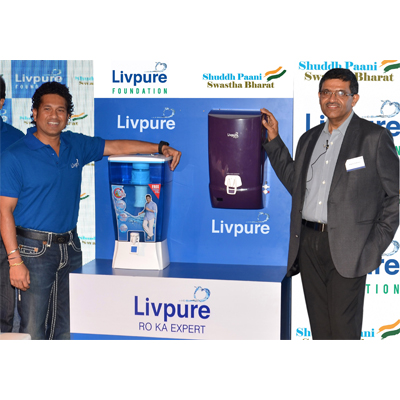
    MUMBAI: “According to national healthcare survey 2013, less than one-third of households in India drink purified water which is disturbing given the progress India has made otherwise since Independence,” said cricketer Sachin Tendulkar while launching ‘ShuddhPaani, Swastha Bharat’, a Livpure Foundation initiative.


    The cricketer has joined hands with Livpure Foundation, which works as a catalyst in policy advocacy, technological innovations and mobilisation of health providers and communities on clean drinking water and launched CSR campaign ‘Shuddh Paani, Swastha Bharat’.


    “Since worldwide infectious diseases such as waterborne diseases are the number one killer of children under five years of age, I feel proud to be associated with this initiative to safeguard children’s health to the best of my abilities for the wellbeing of every child in order to reduce/ eradicate child mortality in India,” added the cricketer.


    Livpure Foundation also helps develop partnerships that pool competencies and resources, particularly in its role as advocate, facilitator and coordinator, helping stem the spread of water-borne diseases.


    SAR Group founder Rakesh Malhotra said, “Access to safe drinking water on sustainable basis constitutes a fundamental and inalienable human right for everyone in India. Livpure Foundation has been established to bring into focus this critical problem facing a large population globally and especially India since as per WHO more people die from unsafe water than from all forms of violence including war.”


    According to WHO, an estimated 5,02,000 Indians are affected by waterborne diseases annually. 3,61,000 children under the age of five die each year from diarrhea. Clean drinking water is the only solution to this epidemic problem.


    “There is an immediate need for more such movements/ initiatives/ campaigns because of consequential water contamination in the country.  Inadequate drinking water is an important risk factor, particularly in low-income settings. ‘ShuddhPaani, Swastha Bharat’ will restore the cleanliness of the water bodies and will help in maintaining the ecological balance of the environment and we can look forward to a clean and green country,” Tendulkar further added.


    The Livpure Foundation endeavours for a pan India presence with thrust in urban slums and the selected states which confront acute water crisis or water pollution. The focused states are; Bengal, Bihar, Odisha, Madhya Pradesh, Uttar Pradesh, Uttarakhand, Chhattisgarh, Punjab, Rajasthan and Haryana.

  • Alia Bhatt goes digital with Maybelline New York

    Alia Bhatt goes digital with Maybelline New York

    MUMBAI: Alia Bhatt loves her fans and this time around she put together an innovative method to spend a fun evening with them talking about the things she loves most – make-up and her films!


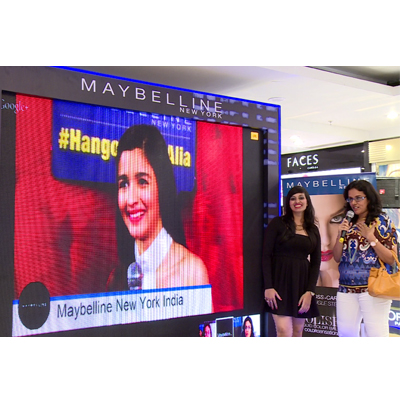
    Staying true to its core values of being fun, edgy and fashionable, Maybelline New York, the world’s No. #1 make-up brand hosted India’s first multi-city integrated Google Hangout with the Bollywood diva and brand ambassador, Alia Bhatt. Pioneering the digital space with groundbreaking initiatives and launches, Maybelline New York once again proved itself to be a front runner in innovation, beauty and youth connect.


    Visitors at Shoppers Stop in Delhi and Mumbai were in for a treat as they got the chance to interact with Alia Bhatt LIVE via a Google Hangout. Since Alia’s latest make-up favorites from Maybelline are the new Color Show nail colors, she quizzed her fans on the names of the shades and had a fun session with them sharing make-up and beauty tips. In addition to this, a few lucky shoppers were handpicked by Alia Bhatt from the crowd and received nail art tutorials from an artist present during the Hangout.


    Commenting on this fun way to interact with her fans, Alia Bhatt, brand ambassador of Maybelline New York, said, “I’ve always loved Maybelline New York not only for the innovative products they launch, but also for the initiatives they take up to engage with their consumers and fans. The experience of talking to so many fans in two different cities at the same time and sharing some of my thoughts on beauty was fantastic. It was such an interesting way to brighten up a regular Friday evening and at the same time get some amazing feedback from the fans on my work and Maybelline’s new launches.”


    Leena Shoor, Marketing Manager, Maybelline New York India, said, “As a tech savvy make-up brand, Maybelline New York has always aimed to engage with its consumers and fans in a very innovative manner. In order to continue representing the essence of the brand of being fun, edgy and fashionable, Maybelline introduces various novel initiatives with new product launches. Taking the brand to a next level of engagement, Maybelline decided to host India’s first multi-city integrated Google Hangout with Alia Bhatt who is the face of the brand and represents the brands core values.”


    Across India, over 92,121 fans tuned-in LIVE to the Hangout which received an overwhelming 92 Million impressions across Facebook, Twitter, Google+ and Instagram. The popular make-up brand represents the young, contemporary cosmopolitan girl who is attuned to fashion and loves to experiment with make-up products. Hence, all of its campaigns have been clutter breaking in the cosmetics industry. Over the years, Maybelline New York has pioneered various brand engagement strategies through innovative use of the digital platforms to get fans and consumers to sit and take notice, get educated and eventually use the unique products on offer by the brand.