Category: Brands

  • UC Browser appoints Yuvraj Singh as brand ambassador

    UC Browser appoints Yuvraj Singh as brand ambassador

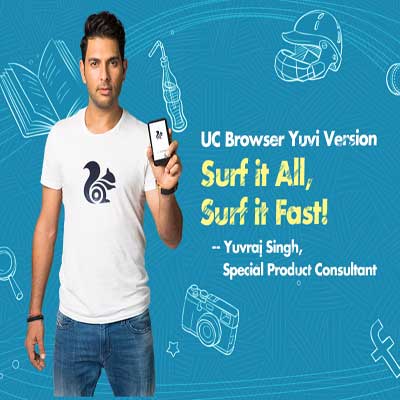
    MUMBAI: Sports icon and cricketer Yuvraj Singh has been appointed as UC Browser’s product and brand ambassador.


    Singh and UC Browser jointly released a special version of UC Browser for cricket fans called, “UC Browser Yuvi Version.”


    UCWeb India managing director Kenny Ye said, “Yuvraj Singh is an exceptional sportsperson and we are inspired by his dedication and passion for his sport. He has led India to innumerable victories, combining top-notch performances with power and speed. These are precisely the qualities embedded in our browser. We are confident that his expertise will add immense value to our product.”


    Singh has been a regular user of UC Browser and its related apps. Early this week, the cricketer took to a popular micro-blogging site to give suggestions to UCWeb on ways to improve its cricketing app, UC Cricket. It was followed by a quick revert from the company and a meeting which culminated to him coming on board as a product specialist. The browser, for its part, will host Yuvraj-themed wallpapers on its homepage and give out memorabilia to millions of cricket fans across the country.


    “I am happy to be associated with a young and popular brand like UC Browser. It’s fresh, it’s fast and it has everything I look for while browsing on my mobile. I have been a regular user of cricketing apps – I am happy to provide my input as a user and make the product even more consumer friendly,” Singh said.


    The special UC Browser Yuvi version allows users to share photos with a Yuvi doodle or sticker on it via the popular SNS platforms. UC Browser provides an array of expressive stickers of Singh, so that users can share emotions with friends in funny or emotional ways. UC Browser Special Yuvi Version can be downloaded from ucweb.com and 9apps.com from 18 May, 2015 onwards.

  • FY-2015: DB Corp revenue up 8%; My FM op profit up 52%

    FY-2015: DB Corp revenue up 8%; My FM op profit up 52%

    BENGALURU: DB Corp Limited, home to flagship newspapers Dainik Bhaskar, Divya Bhaskar, Dainik Divya Marathi and Saurashtra Samachar reported an 8.1 per cent increase in Total Income from Operations (TIO) at Rs 2009.57 crore in FY-2015 (year ended 31 March, 2015, current quarter) as compared to the Rs 1859.76 crore in FY-2014.


    In Q4-2015, DB Corp TIO at Rs 455.6 crore was 6.9 per cent more than the Rs 454.17 crore in the corresponding quarter of the previous year, but was 12.4 per cent lower than the Rs 554.57 crore in the immediate trailing quarter.


    Note: 100,00,000 = 100 lakh = 10 million = 1 crore


    The company’s radio segment – My FM, which contributes less than five per cent (4.77 per cent in FY-2015) to its overall revenue, reported 20.7 per cent increase in revenue in FY-2015 to Rs 95.87 crore from Rs 79.45 crore in the previous year. My FM operating profit improved 51.9 per cent in FY-2015 to Rs 31.23 crore from Rs 20.56 reported in the previous year.


    My FM revenue in Q4-2015 at Rs 26.68 crore was 24.8 per cent more than Rs 21.37 crore in Q4-2014 and 3.9 per cent more than the Rs 25.69 crore in Q3-2015. The segment reported 38.4 per cent growth in operating profit to Rs 9.95 crore in the current quarter as compared to the Rs 7.19 crore in Q4-2014 and 5.4 per cent more than the Rs 9.44 crore in Q3-2015.


    Advertising revenues


    In its earnings release, DB Corp says that revenue from print advertisement grew 1.3 per cent y-o-y to Rs 319.1 crore in Q4-2014 from Rs 315.1 in Q4-2014, while q-o-q, print advertisement revenue declined 18.9 per cent from Rs 393.4 crore in Q3-2015.


    Radio advertisement in Q4-2015 grew 24.8 per cent to Rs 26.8 crore as compared to the Rs 21.5 crore in Q4-2015 and grew 4.3 per cent as compared to the Rs 25.7 crore in Q3-2015.


    Digital advertising revenue grew 107.8 per cent in the current quarter to Rs 9 crore from Rs 4.3 crore in Q4-2014, but fell 1.2 per cent as compared to the Rs 9.2 crore in Q3-2015.


    Company speak


    DB Corp managing director Sudhir Agarwal said, “Going forward, our focus on managing growth will continue to be the key to healthy financials. In addition to market expansion, we are working hard to ensure a healthy bottom line through stronger internal operating efficiencies, tighter billing structures and better expense management. Over the past few months the government has put in process several initiatives to boost economic growth and we expect to observe its visible on-ground impact over the coming quarters. Our business fundamentals continue to be strong and we are confident of our business strategies that have positioned us as India’s largest print media company amongst national dailies.”


    Let us look at the other results reported by DB Corp:


    DB Corp reported 3.2 per cent higher PAT (Profit after Tax) at Rs 316.34 crore in FY-2015 as compared to the PAT of Rs 306.65 crore in FY-2014. PAT for Q4-2015 at Rs 64 crore declined 15.7 per cent from Rs 75.92 crore in Q4-2014 and declined 39.1 per cent as compared to the Rs 105.11 crore in Q3-2015.


    The company’s total expenditure (TE) in FY-2015 at Rs 1535.46 crore was 11.9 per cent more than the Rs 1423.72 crore in FY-2014. TE in Q4-2015 at Rs 390.74 crore was 6.8 per cent more than the Rs 366.02 crore in Q4-2014 and almost flat (lower by 0.4 per cent) that the Q3-2015 TE at Rs 392.19 crore.


    Raw material consumption (RMC) in FY-2015 at Rs 647.57 crore was 2.3 per cent more than the Rs 632.95 crore in FY-2014. Q4-2015 RMC at Rs 151.7 crore was 2.6 per cent lower than the Rs 166.59 crore in Q4-2014 and 9.6 per cent lower than the Rs 167.9 crore in Q3-2015.


    Segment Revenue


    The company’s radio segment (My FM) results have been mentioned above.


    Printing and publishing of newspaper and periodicals (Printing segment) revenue at Rs 1877.7 crore in FY-2015 was 6.6 per cent higher than the Rs 1762.16 crore in the previous year. Q4-2015 revenue from this segment at Rs 448.41 crore was 4.7 per cent more than the Rs 428.21 crore in Q4-2014, but 13.6 per cent lower than the Rs 518.9 crore in Q3-2015.


    Printing segment reported operating result of Rs 490.23 crore in FY-2015, which was 6.8 per cent more than the Rs 458.9 crore in FY-2014. In Q4-2015, the segment reported operating result of Rs 112.21 crore, which was 17.5 per cent more than the Rs 95.5 crore but 28.8 per cent lower than the Rs 157.76 crore in Q3-2015.

  • MQ-2015: P&G Healthcare y-o-y marketing spends down 20%

    MQ-2015: P&G Healthcare y-o-y marketing spends down 20%

    BENGALURU: Consumer goods company Procter & Gamble Hygiene and Health Care Limited (P&G Healthcare) reduced its ad and sales promotion spends (ASP, marketing spends) by 20 per cent in the quarter ended 31 March, 2015 (MQ-2015, current quarter) to Rs 66.50 crore (12 per cent of net Total Income from Operations or TIO) from Rs 81.6 crore (16.6 per cent of TIO) in the year ago quarter (MQ-2014) and reduced by 24.3 per cent as compared to the Rs 87.85 crore (13.6 per cent of TIO) in the immediate trailing quarter DQ-2014.

    Notes: (1) The company’s financial year ends on June 30, hence results for the quarter ended 30 June, 2014 are JQ-2014, for the quarter ended 30 September, 2013 are SQ-2014; for the quarter ended 31 December, 2013 are DQ-2014 and for the quarter ended 31 March, 2014 are MQ-2014. Similar nomenclature is applicable for other years.

    (2) 100,00,000 = 100 Lakhs = 10 million = 1 crore.

    Over the 13 quarter period starting MQ-2012 until the current quarter (MQ-2015), P&G Healthcare’s ASP spends both in terms of absolute rupees and as percentage of TIO were the lowest at Rs 37.99 crore and 7.8 per cent of TIO respectively in JQ-2014.

    Though in terms of absolute rupees, P&G Health’s ASP shows an upward linear trend, in terms of percentage of TIO, the linear trend is downwards. The company’s highest ASP in absolute rupees was in SQ-2014 at Rs 104.88 crore (18.2 per cent of TIO), while the highest in terms of percentage of TIO was in DQ-2012 at 20.1 per cent of TIO (Rs 94.58 crore). Although in terms of absolute rupees, P&G Healthcare’s ASP shows an upward linear trend, in terms of percentage of TIO, the linear trend is downwards.

    Please refer to Fig-1 below. The company spent far less on ASP than the numbers indicated by thelinear trend lines in the figure. The slope of the black broken trend line intercepts MQ-2015 at 13.18 per cent of TIO, as compared to the 12 per cent actually spent by the company in the quarter. In absolute rupees also, actual ASP spend in the MQ-2015 at Rs 66.50 crore was far lower than the Rs 82.38 crore indicated by the slope of the broken maroon line.

    P&G Healthcare’s ASP is made up of two components – advertisement (ad) and trade incentives (incentive) spends. From FY-2008 (year ended 30 June, 2008) until FY-2013, the company’s ASP is split has shifted towards increasing incentive spends – the company’s incentive spend has moved from about 20 per cent of ASP to 44 per cent in FY-2013, with a slight dip to 42.1 per cent in FY-2014.

    Ad spends proportionately moved downwards from 80 per cent in FY-2008 to 56 per cent in FY-2013, moving upwards slightly to 57.9 per cent of ASP in FY-2014. This does not mean that the company has been spending lower amount of money towards ad spends, it’s just that with higher budgets, the skew is more towards spending more on trade incentives. The upper small chart’s trend seems to indicate that at the end of P&G Healthcare current accounting year, ASP could be split almost equally between ad spends and incentive spends.

    The company’s TIO in MQ-2015 at Rs 555.23 crore was also far lower than the slope of the dotted blue trend line, which indicates a TIO of Rs 611.56 crore. P&G Healthcare’s TIO in MQ-2015 was 10.9 per cent more than the Rs 500.67 crore in MQ-2014, but was 13.9 per cent lower than the Rs 644.51 crore in the previous quarter (DQ-2014). P&G Healthcare’s TIO shows a linear increasing trend across the 13 quarter period under consideration.

    The company’s PAT in MQ-2015 at Rs 86.89 crore (15.6 per cent of TIO) was 7.6 per cent more than the Rs 80.76 crore (16.1 per cent of TIO) in the corresponding quarter of last year, but was 4.2 per cent lower than the Rs 90.66 crore (14.1 per cent of TIO) in DQ-2014. Please refer to Fig-2 below.

    During the 13 quarter period under consideration in this report, the company’s highest PAT in absolute rupees has been during the immediate trailing quarter (DQ-2014) at Rs 90.66 crore, while in terms of percentage of TIO, the highest was in JQ-2014 at 18.5 per cent (Rs 89.92 crore). While PAT shows an upward linear trend in terms of absolute rupees and percentage of TIO during the past 13 quarters, over the past seven years starting FY-2008 until FY-2014, PAT in terms of percentage of TIO shows a declining linear trend.

  • ‘Piku’ piques brands’ interest for product placement

    ‘Piku’ piques brands’ interest for product placement

    MUMBAI: As many as six brands, a couple of them first timers, have inked a product placement deal with Multi Screen Media’s (MSM) recently released film Piku, which is directed by ShoojitSircar and stars Amitabh Bachchan, Deepika Padukone and Irrfan Khan.


    The six brands namely Amul, Syska, Himalayan Water, PriyagoldSnakker, Jaypee Greens, and Mitashi have been placed it in the movie without disrupting the flow of the story. Of these, Syska and Himalyan Water are debutants in the space of product placement in movies.


    Each of these brands communicates and highlights different aspects of the film. While Amul takes up the family space with its sub-brands Amul Milk and Amul Ice-cream, Syska talks about how gadgets help in keep us going in our busy lives via their Bluetooth and Power Bank Range. Himalayan Water, on the other hand, talks about the mantra of living natural in our ever so busy life, whereas PriyagoldSnakker talks about relishing the small and sweet moments of life.


    The brands have also extended their partnership into a marketing tie-up on the ATL & BTL mediums. Brands like Amul, Syska, Priyagold Snakker and Mitashi have created co-branded TV spots and played it across various music, news, sports and general entertainment channels (GECs).


    PriyagoldSnakker also created special Piku Chocolate Packs, which are being sold in the market. Himalayan Water supported the film via BTL promotions across their retail chains and also created special Piku Neck Tags for their bottles.


    Gujarat Cooperative Milk Marketing Federation (GCMMF) managing director R S Sodhisaid, “We are happy to have associated with this fantastic, slice-of-life, family based, fun film. The association of the film with our most popular milk and ice-cream brand will appeal to all audiences across the nation. We have had several appropriate film associations in the past, which helped us connect with the audience in a better manner. We wish the movie all success.”


    SSK Group of Companies director Rajesh Uttamchandani added, “Tie-ip with multi-starrer movie Pikuhas taken our brand to the next level and with Irrfan Khan as our brand ambassador and a leading protagonist in the movie, it makes this an apt choice. Aww! Entertainment has played a phenomenal role in making this journey successful.”


    MSM motion pictures senior vice president revenues and marketing Vivek Krishnani said “Piku is uniquely positioned because it has appeal across different age groups, therefore it is important for the film to travel to diverse audiences across the country. The film has garnered interest across a cross section of brands who have found Piku to be an ideal platform to reach out to their consumers, who are also movie going audiences. We are glad to have Aww! Entertainment as one of our key agencies that have led some of our critical brand associations.”

  • FY-2015: HUL marketing spends up 7.2%; Q4-2015 marketing spends cross Rs 1000 crore

    FY-2015: HUL marketing spends up 7.2%; Q4-2015 marketing spends cross Rs 1000 crore

    BENGALURU: Indian FMCG giant Hindustan Unilever Limited (HUL) Advertisement and Promotions expense (marketing spends, ASP) in FY-2015 was 7.2 per cent more at Rs 3874.94 crore (12.6 per cent of Total Income from operations or TIO, approximately $590 million) than the Rs 3613.609 crore in FY-2014.

    For the fourth quarter ended 31 March, 2015 (Q4-2015, current quarter), the company exceeded the Rs 1000 crore (approx. $156 million) mark to clock Rs 1027.89 crore (13.4 per cent of TIO, approx. $160 million). ASP in the current quarter was 22.3 per cent more than the Rs 840.34 crore (11.8 per cent of TIO) in the corresponding year ago quarter and was 5.2 per cent more than the Rs 977.12 crore (12.6 per cent of TIO) in Q3-2015.

    Note: (1) 100 lakh = 100,00,000 = 1 crore = 10 million.

    (2) All figures in this report are standalone figures filed by the company. The trends are based on the numbers submitted by the company or picked up from the company’s website. For performance of HUL’s various product lines please refer to the attached earnings release for Q4-2015 and FY-2015.

    (3) The US dollar figures are approximately based on a conversion rate of 1$= Rs 64.The converted numbers have been rounded off.

    HUL chairman Harish Manwani said, “We have delivered another year of strong performance with broad based growth ahead of the market and sustained margin improvement. Our strategy remains focused on strengthening the core of our business through innovation, leading market development and continuous improvement of our executional capabilities. Despite market challenges, our strategic agenda remains unchanged as we continue to manage our business even more dynamically for growth that is consistent, competitive, profitable and responsible.”

    As a matter of fact, HUL’s ASP in Q4-2015 is the highest over a 12 quarter period starting Q1-2013 until the current quarter in terms of absolute rupee spends at Rs 1027.89 crore. In terms of percentage of TIO, during the period under consideration, ASP was 13.8 per cent of TIO in Q2-2014 at Rs 954.02 crore. Please refer to Fig A below.

    HUL’s ASP in absolute rupees shows a linear increasing trend during the 12 quarter period under consideration. The blue broken trend line intercepts Q4-2015 at Rs 995.876 crore, showing that the company has spent Rs 32.014 crore more than indicated by the trend line’s slope.

    HUL’s ASP in terms of percentage of TIO in Q4-2015 at 13.4 per cent is in excess of the 12.6839per cent represented by the slope of the orange broken trend line during the period under consideration.

    HUL TIO in FY-2015 at Rs 30805.62 crore (approx. $4.8 billion) was 9.9 per cent more than the Rs 28019.13 crore in the previous year. In Q4-2015, TIO at Rs 7675.63 crore was 8.2 per cent more than the Rs 7094.10 crore in Q4-2014, but was 1.3 per cent lower than the Rs 7774.32 crore in the immediate trailing quarter. Please refer to Fig B below. The orange broken trend line indicates that TIO has a linear increasing trend during the 12 quarter period under consideration in this report.The slope of the line indicates that HUL should have had a higher TIO of Rs 7856.14 crore and hence underperformed by Rs 180.51 crore (about $28 million).

    HUL PAT in FY-2015 at Rs 4315.26 crore (14 per cent of TIO, approx. $675 million) was 11.6 per cent more than the Rs 3867.49 crore in FY-2014. For Q4-2015, PAT at Rs 1018.08 crore (13.3 per cent of TIO) was 16.7 per cent more than the Rs 873.13 crore (12.3 per cent of TIO) in Q4-2014, but was 18.7 per cent less than the Rs 1252.17 crore(16.1 per cent of TIO) in Q3-2015.

    In Fig B below, the maroon broken line indicates that PAT in absolute rupees shows a linear increasing trend during the period under consideration. The slope of the line indicates that the HUL should had have had a higher PAT of Rs 1131.504 crore in Q4-2015 and hence underperformed by Rs 113.42 million ($18 million)

    In terms of percentage of TIO, the green broken line indicates a linear decreasing trend. The slope of the line indicates that HUL’s actual PAT as percentage of TIO of Q4-2015 at 13.3 per cent is higher than the calculated 13.12 per cent.

    HUL’s board of directors at its meeting held on Monday, 8 May, 2015 recommended a final dividend of Rs 9 per share of Re1 each, for the financial year ended 31 March, 2015. Together with the interimdividend of Rs 6 per share paid on 3 November, 2014, the total dividend for the financial year ended 31 March, 2015 works out to Rs 15 per share of Re 1 each. Final dividend, subject to approval of shareholders, will be paid on or after Friday, 3 July, 2015.
  • MobiKwik to pump Rs 100 crore in brand campaign

    MobiKwik to pump Rs 100 crore in brand campaign

    MUMBAI: With an aim to become India’s default mobile wallet service, MobiKwik has armed itself with a corpus of Rs 100 crore for a new brand campaign aimed to catalyze the booming market for wallet services that currently stands at around 35 million users.


    The company has launched a 360-degree multi-media brand campaign, which will include exposure across television, out of home, radio and digital mediums, with the first leg kicking off in May 2015.


    The company has chosen Happy Creative Services and given its media duties to XPosure Mass Media.


    Happy Creative Services CEO and co-founder Kartik Iyer said, “There are many brands who operate in the payment space but yet don’t operate like a true wallet. MobiKwik is actually the one true player in the digital payments space. In a scenario where the country is quickly changing its behaviour due to tech interventions at various touch points, it is an exciting time for a brand like MobiKwik. We see immense possibility of the brand to rise as a true leader in the space.”


    The Out Of Home campaign for the brand, which will be handled by Havas, has 1000 units across six cities in India, which include Delhi, Mumbai, Bangalore, Pune, Hyderabad, Chennai and Kolkata. The first campaign will run for a duration of three months, followed by another campaign that will be launched during the festive season.


    In the first leg, the brand’s TV campaign will follow close on the heels of its radio and OOH campaigns. Already a market leader in India, Mobikwik plans to reach out the masses and be their top choice as a product.


    “With our brand campaign, we aim to make MobiKwik a household name across the country and ensure many more consumer interactions with the brand. The campaign also aims to fuel the adoption of mobile wallet as the preferred mode of payment amongst a host of new customers who are as yet unaware of its benefits. With this campaign, we are confident of increasing our user base from 17 million to 30 million in the next three months and achieve a user base of 100 million users by the end of the year,” said MobiKwik chief marketing officer Saurabh Srivastava.

  • FY-2015: Dabur’s Real becomes Rs 1000 crore brand; PAT crosses Rs 1000 crore

    FY-2015: Dabur’s Real becomes Rs 1000 crore brand; PAT crosses Rs 1000 crore

    BENGALURU: Dabur India Limited’s brand ‘Real’ fruit juice crossed sales of Rs 1000 crore in FY-2015 in India, Nepal and a few other markets, the company revealed in its investor presentation.

    Dabur spent 12.5 per cent more towards advertising and publicity expenses (ASP) in FY-2015 at Rs 1124.38 crore (14.4 per cent of Total Income from Operations or TIO) as compared to the Rs 999.67 crore (14.1 per cent of IO) in FY-2014. Also, for the first time, the company has crossed the Rs 1000 crore mark by clocking profit after tax (PAT) of Rs 1068.47 crore (13.7 per cent of TIO) in FY-2015. In FY-2014, Dabur had reported PAT of Rs 916.45 crore (13 per cent of TIO).

    Note: 100,00,000 = 100 lakh = 10 million = 1 crore

    Dabur’s products

    Dabur’s products include health supplements like Chyawanprash, Ratnaprash, Honey, Glucose; digestives like Hamjola – Hajmola Chuzkara and Natkhat Amrud, Pudin hara fizz; OTC and ethicals such as Lal Tail, Honitus Syrup; haircare products like Vatika, Vatika Brave and Beautiful digital, Anmol Jasmine marks; toothpaste brands like Dabur Red, Babool and Meswak; skincare products like Fem natural fairness, Gold Bleach, Gulabari; homecare brands such as Odomos, Odonil and Sanifresh; food brands such as Real and Real Active.

    “The gradual improvement in the consumption environment has helped our business perform well on all operating parameters. Our robust business model and our ability to efficiently manage the external challenges have helped us report a strong and consistent performance even in the face of intensifying competitive pressures. Our India FMCG business ended the fourth quarter with a 12 per cent growth, led by 8.1 per cent volume growth. Our EBIDTA margin saw a 17 per cent growth during the quarter,” Dabur India CEO Sunil Duggal said. 

    “Going forward too, our focus will be on pursuing an aggressive and profitable growth strategy. We will continue to invest behind our brands and on market expansion programmes while stepping up on innovation with a series of new product launches in the coming quarter,” Duggal added.

    Trends

    The company’s ASP in the quarter ended 31 March, 2015 (Q4-2015, current quarter) at Rs 265.39 crore (13.6 per cent of TIO) was 16.2 per cent more than the Rs 228.38 crore (12.9 per cent of TIO) in the corresponding quarter of last year, but was 16.9 per cent lower than the Rs 319.38 crore (15.362 per cent of TIO) in the immediate trailing quarter. Over the ten quarter period starting Q3-2014, Dabur’s ASP in absolute rupees and ASP in terms of percentage of TIO  both show a linear increasing trend.

    Please refer to Fig 1 below. It may be noted that when calculated, the brown trend line for ASP in terms of percentage of TIO actually shows a figure of 14.25 per cent of TIO (Rs 277.838 crore), and the blue trend line for ASP in absolute rupees shows a figure of Rs 289.902 crores (14.9 per cent of TIO) for Q4-2015.

    During the ten quarter period under consideration, Dabur‘s ASP was highest in absolute rupees in immediate trailing quarter at Rs 319.38 (15.362 per cent), while and in terms of percentage of TIO, it was highest in Q1-2014 at 15.385 per cent (Rs 254.22 crore).

    Dabur TIO in FY-2015 at Rs 7827.20 crore was 10.6 per cent more than the Rs 7075.31 crore in FY-2014. In Q4-2015, the company reported TIO of Rs 1949.74 crore, which was 9.9 per cent more than the Rs 1774.41 crore in Q4-2014, but 6.2 per cent lower than the Rs 2079.02 crore in Q3-2015. The company’s TIO shows a linear increasing trend during the ten quarter period under consideration in this report.

    Dabur PAT for Q4-2015 at Rs 284.86 crore (14.6 per cent of TIO) was 21.1 per cent more than the Rs 235.29 crore (13.3 per cent of TIO) and 0.7 per cent more than the Rs 282.78 crore (13.6 per cent of TIO) in Q4-2014. PAT in abslute rupees as well as in terms of percentage of TIO show linear increasing trends.

    The company in its earnings release says that the Foods category for Dabur – riding on strong demand for its packaged juices – posted a near 20 per cent growth during the fourth quarter of 2014-15, while the Skin Care business ended with a near 17 per cent growth. The Toothpaste business, led by strong demand for Dabur Red Paste and Meswak, reported an over 14 per cent growth. The Health Supplements Business grew by 13 per cent, while the Home Care category grew by over 12 per cent.

  • FY-2015: Titan revenue up 9%, ad spends down 5.5%

    FY-2015: Titan revenue up 9%, ad spends down 5.5%

    BENGALURU: Titan Company Limited reported nine per cent increase in Total Income from Operations (TIO, revenue) in FY-2015 to Rs 11913.41 crore as compared to the Rs 10927.39 crore in FY-2014. The company’s profit after tax (PAT) for the year increased 11.1 per cent to Rs 816.26 crore from Rs 734.94 crore in the previous year.

    The company spent 5.5 per cent lower amount at Rs 382.13 crore (3.21 per cent of TIO) towards advertising in FY-2015 as compared to the Rs 404.43 crore in FY-2014.

    Note: 100,00,000 = 100 lakh = 10 million = 1 crore

    Businesses and Brands

    Titan has three revenue segments – watches comprising brands namely Titan, Xylus, Nebula, Sonata and Fastrack and Zoop; Jewellery with Tanishq, Zoya, Gold Plus from Tata, Mia and Fq teen diamonds; and ‘Other’ such as eyewear under the Titan EYE+ brand, apparel and eyewear also under Fastrack brand and precision engineering among others.

    During the current quarter, sales value of World of Titan grew 11 per cent; Tansihq sales value declined 21 per cent, Goldplus declined 4 per cent, Helios declined 3 per cent, Fastrack grew 1 per cent, LFS and Titan Eye+ grew 10 and 14 per cent respectively.

    Watches

    The watch segment saw an increment of two per cent in volumes in FY-2015 as compared to FY-2014. Net sales for the segment grew 7.3 per cent to Rs 1921 crore in the current year from Rs 1791 crore in FY-2014.

    Though Q4-2015 saw a fall of six per cent in volume as compared to Q4-2014, revenue increased 1.8 per cent to Rs 511 crore from Rs 502 crore in the corresponding year ago quarter on the back of increment of prices.

    Jewellery

    Titan’s jewellery distribution brands are Tanishq and Goldplus from Tata. Jewellery contributes about 80 per cent to Titan’s TIO. The segment’s sales grew eight per cent (excluding coins) in volumes in FY-2015 as compared to FY-2014. Sales revenue grew 9.2 per cent to Rs 9240 crore in FY-2015 from Rs 8632 crore in FY-2014. During the year the company witnessed a grammage growth of eight per cent, (including coins) and six per cent excluding coins. Also, the share of studded jewellery increased to 32 per cent from 30 per cent in FY-2015. The company says that it saw a customer growth of 13 per cent in the jewellery segment during the year.

    Q4-2014 was a quarter of falls for Titan’s jewellery segment. For Q4-2015, volumes witnessed a fall of 16 per cent as compared to Q4-2014, while sales of jewellery fell 15.3 per cent to RS 1828 crore from Rs 2157 crore in Q4-2014. Customers declined seven per cent in the quarter. While studded jewellery witnessed an 18 per cent decline during the quarter, it retained the same share of 37 per cent as last year.

    Others

    The ‘Others’ segment reported 12.9 per cent revenue growth to Rs 565 crore in FY-2015 from Rs 500 crore in Q4-2014. Eyeware witnessed a growth of 24 per cent and returned an operating profit of Rs 4 crore. For Q4-2015, the segment reported 12.8 per cent increase in revenue to Rs 165 crore from Rs 146 crore in Q4-2014.

    Trends

    Titan’s ASP declined 8.1 per cent in Q4-2015 to Rs 80.30 crore (3.22 per cent of TIO) from Rs 87.37 crore (3.12 per cent of TIO) in Q4-2014 and was 17 per cent lower than the Rs 96.75 crore (3.31 per cent of TIO) in Q3-2015. Please refer Fig A below. During a 13 quarter period starting Q4-2012, Titan’s ASP was highest in terms of absolute rupees in Q3-2014 at Rs 118.04 crore (4.41 per cent of TIO). It was highest in terms of per centage of TIO in Q1-2013 at 4.69 per cent of TIO (Rs 103.44 crore).

    Though ASP shows a declining trend both in terms absolute rupees and in terms of per centage of TIO, on calculation, the brown trend line actually indicates ASP as 3.15 per cent of TIO, while the actual amount spent by the company was 0.07 per cent more as mentioned above for Q4-2015. On calculation, the blue trend line indicates ASP in absolute rupees as Rs 96.48 crore as opposed to the actual Rs 80.30 crore spent by the company in Q4-2015.

    TIO and PAT

    Please refer to Figure B below. The company’s TIO in Q4-2015 fell 11 per cent to Rs 2496.19 crore from Rs 2803.38 crore in Q4-2014 and was 14.6 per cent lower than the Rs 2922.51 crore in the immediate trailing quarter. During the thirteen quarter period under consideration in this report, TIO shows a linear increasing trend.

    PAT in Q4-2015 at Rs 215.09 crore (9.6 per cent of TIO) was 4.3 per cent more than the Rs 190.73 crore (7.4 per cent of TIO) in Q4-2014 and was 12.8 per cent more than the Rs 190.73 crore (7.1 per cent of TIO) in Q3-2015. PAT shows a linear increasing trend during the 13 month period under consideration.

    Company speak

    Titan managing director Bhaskar Bhat said, “The economic outlook for the year 2014-15 was quite good but improvement in consumer demand has been quite lukewarm. Our jewellery business was also adversely impacted due to regulatory changes and termination of the consumer friendly Golden Harvest Scheme. All our brands witnessed good growth during the first half but post Diwali season we have seen tapering of growths. The Company will however continue to invest in strategic initiatives taking into account our long term and sustainable growth plans.”

  • Marico q-o-q marketing costs down 10.4% in Q4-2015, but up 15.8% in FY-2015

    Marico q-o-q marketing costs down 10.4% in Q4-2015, but up 15.8% in FY-2015

    BENGALURU: Indian consumer products in beauty and wellness space company Marico Limited spent 10.4 per cent less towards advertisement and sales promotion (ASP, marketing) in the fourth quarter ended 31 March, 2015 (Q4-2015, current quarter) at Rs 137.15 crore (11.2 per cent of net Total Income from Operations or TIO) as compared to the Rs 153.02 crore (10.5 per cent of TIO) in the immediate trailing quarter, but 12.5 per cent more as compared to the Rs 121.91 crore (11.4 per cent of TIO) corresponding year ago quarter (Q4-2014). During FY-2015, the company’s ASP at Rs 649.82 crore(11.3 per cent of TIO) was 15.8 per cent more than the Rs 561.17 crore (12 per cent of TIO) in FY-2014.

    Notes: 100,00,000=100 Lakhs = 1 crore = 10 million

    During the 13 quarter period starting Q4-2014 until the current quarter, the highest amount spent by the company towards ASP was in Q1-2015 at Rs 192.18 crore (11.8 per cent of TIO). The company’s highest ASP spend in terms of per centage of TIO was in Q3-2013 at 14.1 per cent (Rs 152.82 crore). While in absolute rupees, ASP shows a linearly increasing trend during the 13 quarters under consideration, in terms of per centage TIO, the trend declines linearly during the same period. Please refer to Figs. A and A-1 below.


    Marico’s TIO in Q4-2015 at Rs 1226,25 crore was 15.6 per cent less than the Q3-2015 TIO of Rs 1452.23 crore but was 14.4 per cent higher than the Rs 1072.76 crore in the year ago quarter. The highest TIO reported by the company during the 13 quarters under consideration was in Q1-2015 at Rs 1623.13 crore. TIO shows an increasing linear trend during this period. Please refer to Fig B below.

    For FY-2015, Marico reported 22.3 per cent growth in TIO at Rs 5732.98 crore as compared to the Rs 4686.52 crore in the previous year – refer Fig A-1 above.

    PAT in FY-2015 at Rs 573.46 crore (10 per cent TIO) was 18.1 per cent more than the Rs 485.38 crore (10.4 per cent of TIO) in FY-2014.

    PAT in Q4-2014 at Rs 110.04 crore (nine per cent of TIO) was 31.2 per cent lower than the Rs 159.88 crore (11 per cent of TIO) and was 24 per cent more than the Rs 88.77 crore (8.3 per cent of TIO) in Q4-2014. During the 13 quarters under consideration, PAT shows an increasing linear trend both in terms of absolute rupees and in terms of per centage of TIO. Please refer to Fig B below:


    Marico claims that it touches the lives of one out of every three Indians, through its portfolio of brands such as Parachute, Parachute Advansed, Saffola, Hair and Care, Nihar, Nina-r Naturals, Livon, Set Wet, Zatak, Mediker, Revive and Manjal. The company says that its international consumer products portfolio contributes to about 25 per cent of the group’s revenue, with brands like Parachute, HairCode, Fiancée, Caivil, Hercules, Black Chic, Code 10, Ingwe, X-Men, L‘Ovite and Thuan Phat.

    Marico MD and CEO Saugata Gupta said, “We continued our journey of delivering sustainable profitable growth this quarter. Simultaneously we are taking definitive long term steps in creating the organization of the future especially in our identified areas of transformation. We are confident of a gradual improvement of the sector growth in the coming quarters especially in the urban markets while the rural consumption trends will depend a bit on the performance of the monsoon.”