Category: Brands

  • Hindware adopts unique strategy to launch TVC with Shah Rukh Khan

    Hindware adopts unique strategy to launch TVC with Shah Rukh Khan

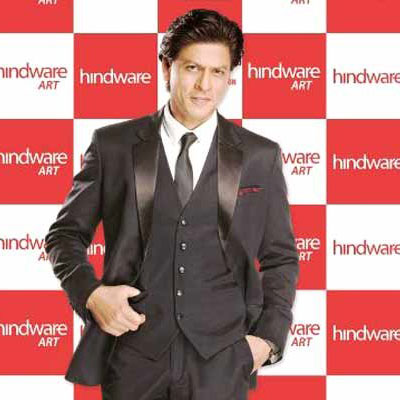
    NEW DELHI: Bathroom products brand hindware has launched a new TV commercial starring brand ambassador Shah Rukh Khan for its premium collection hindware Italian Collection in an innovative fashion.


    Bringing in Bollywood flavour, hindware launched a teaser campaign starring Khan two days prior to the final airing of the TVC that ran across a range of television channels without revealing the product range. This generated excitement for viewers to watch the movie that premiered on Star Plus on 7 June.


    The final TVC was unveiled by Nach Baliye’s anchor on Star Plus during the airing of the dance reality show. Before taking the commercial break, the host ran the teaser, discussed SRK’s new obsession and asked the viewers to stay-on to find out the whole story. Then the full 75 seconds long TVC was played out. The host continued discussing with the judges about bathroom inspirations and said in conclusion, “Not only SRK, but the whole country could keep admiring bathrooms so stylish.”


    Hindware’s shift from product centric focus to becoming a complete bathroom solution provider brand is captured in this new TVC, which highlights the brand’s vision and approach of revolutionising the bathroom space.


    HSIL Ltd vice president marketing V Krishnamurthy said, “This was our first campaign after signing on SRK and we wanted to ensure the launch of the TVC is conceptualized differently. Working closely with our media agency, Vizeum, we managed to pull off something very different. In this interesting TVC, we have aimed to reinforce the message how hindware Italian Collection leaves even superstar Shah Rukh Khan awestruck. The bathroom in itself becomes the centre of attraction, mesmerizing SRK to find new ways to revel in its beauty and beautiful products.”


    Vizeum managing director – Indian Subcontinent S Yesudas added, “It took a lot of coordination and efforts to pull this through. Without an ever-supportive client this would not have been possible. I’m also thankful to the Star TV management for making this happen. Congratulations to the entire Vizeum Team for making this project a reality.” 

  • PVR snaps up DT Cinemas for Rs 500 crore

    PVR snaps up DT Cinemas for Rs 500 crore

    MUMBAI: PVR has entered into definitive agreements to acquire the cinema exhibition business of DLF Utilities Ltd, which is operated under the brand name DT Cinemas for Rs 500 crore.


    Sold to PVR on a slump sale basis, DT Cinemas operates 29 screens with approximately 6,000 seats across eight properties in the National Capital Region (NCR) and Chandigarh. Over the next 12 months, DT Cinemas has plans to add 10 new screens at two properties in NCR.


    Currently, PVR has 467 screens across 105 locations in 43 cities. As a result of the proposed acquisition, PVR’s presence will span across 44 cities with 506 screens and 115 multiplexes.


    The proposed transaction will be subject to approval of applicable statutory and regulatory approvals and satisfaction of customary conditions precedent.


    PVR chairman cum managing director Ajay Bijli said, “It has been our strategy to expand our film exhibition business both organically and inorganically over the years. This acquisition is in pursuance of our core strategy to offer a world class cinema experience to the discerning Indian consumer.”


    DLF Rental Business CEO Sriram Khattar added, “We are pleased to sell DT Cinemas to PVR, which is a high quality provider of cinema experience. Combining our unrelenting focus on providing a ·wholesome experience at our malls with PVR ‘s deep knowledge of the cinema business, we look forward to continue enhancing our best in class offerings for the customers.”


    Shardul Amarchand Mangaldas & Co was the legal advisor to PVR and EY India and Luthra & Luthra were financial and legal advisors respectively to DLF.

  • After Maggi, other fast good products under govt’s scanner

    After Maggi, other fast good products under govt’s scanner

    NEW DELHI: After axing Nestle’s Maggi, the government has ordered quality testing for noodles, pasta and macaroni brands manufactured by seven other companies including Nestle, ITC and GlaxoSmithkline (GSK) amongst others across the country to check for health hazards.

    The 32 such brands listed by the Food Safety and Standards Authority of India (FSSAI) are Maggi, Top Ramen, Wai Wai, Yummy and Foodles.


    It has directed immediate recall of all other such instant food products, which did not have any product approval and were being sold in the market in an ‘unauthorised and illegal manner.

    In its order for quality testing by all states and union territories, FSSAI said, “Various test results on Maggi and some other similar products have raised serious health concerns” and therefore it was necessary to test other similar products.

    “It would be advisable to draw regulatory samples for similar products for which product approvals have been granted by FSSAI,” it said, while asking the samples to be sent to the authorised labs for testing.

    “The safety of all other such products in these categories has not been assessed as per the Product Approval procedures. As such, the same are unauthorised and illegal and cannot be intended for human consumption,” the food regulator said.


    All states and Union Territories have been asked to submit their reports by 19 June.


    “You are advised to ensure that such products are recalled, removed from the market and destroyed,” FSSAI CEO YS Malik said in a circular to the Commissioners of Food Safety of all States and UTs.

    In the circular, the FSSAI has also listed out the detailed parameters on which such tests would need to be conducted for noodles, pastas and macaroni with tastemaker of all makes and brands present in the market.

    Cakes and masala or tastemaker would need to be tested separately, Malik said.

    The circular follows FSSAI order on Friday for recall of all variants of Nestle India’s Maggi noodles terming them as “unsafe and hazardous” for human consumption.

    Nestle India recalled Maggi from the markets after several states banned the famous ‘2-minute’ instant food brand as tests showed that it contained taste enhancer MSG (Monosodium glutamate) and lead in excess of the permissible limits. 

    Companies under the scanner also include Indo Nissin Food Ltd, CG Foods India, Ruchi International and AA Nutrition Ltd.

    The products to be tested include Wai Wai noodles and bhujiya chicken snacks by CG Foods; Koka instant noodles from Ruchi International and Foodles by GSK Consumer Healthcare.

    Nestle’s Maggi instant noodles with nine variants as well as four variants of “Maggi Nutilicious Pazzta with tastemakers” would also be tested.

    Besides general parameters like test for preservatives and synthetic colours, the food regulator has asked all the state food safety commissioners to test for metal contaminants including lead, copper, arsenic and cadmium.


    Tests for certain quality parameters and naturally occurring toxic substances would also be conducted by the States/UTs.

  • Skybags appoints Varun Dhawan as brand ambassador

    Skybags appoints Varun Dhawan as brand ambassador

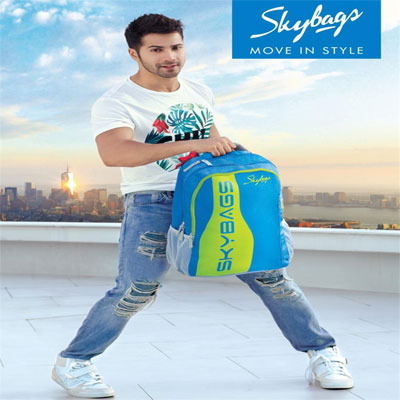
    MUMBAI: Skybags – the youth centric stylish luggage and backpacks brand from V.I.P Industries’ – has appointed actor Varun Dhawan as its new brand ambassador.


    Launched as an independent brand in 2011, Skybags makes trendy and contemporary bags for the youth.


    V.I.P Industries managing director Radhika Piramal said, “Skybags is the brand for today’s youth who are always on the go. The brand is full of energy and style hence Varun Dhawan’s association is perfect for the brand as he brings out the above promise perfectly. We are happy to be associating with Varun and look forward to a fruitful relationship with him.”


    V.I.P Industries vice president – marketing Sudip Ghose added, “With more young customers travelling at an early age, styling in the bags has become a necessity. And hence, newer categories like Polycarbonate luggage, backpacks and rucksacks are increasingly gaining popularity. From ‘Travel gear’ bags are moving to become ‘Travel wear’ today. Varun Dhawan, with his ‘real’ and ‘reel’ life image perfectly fits the brand. The idea is to make it brand appeal right from a 15 year old student for backpack to a 25 year old first time luggage buyer.”


    Dhawan, who will be the new face of the brand across all their communication, said, “I am thrilled to be associated with Skybags as the new face for the brand. The bag you carry is like an accessory; the style and the brand both are important to stay in vogue today! I am confident that this new association, I’ll help the brand go younger and more relevant for youth.”

  • You’ve got trolled: Brands wars unleash on Twitter

    You’ve got trolled: Brands wars unleash on Twitter

    MUMBAI: With the social media explosion, everyone has access to everyone today and freedom of speech has taken on a completely different meaning. Not so long ago, there was no way you and I could tell an Amitabh Bachchan or a Shah Rukh Khan what we thought of their performance in a particular movie. Today, each one of us is a self-proclaimed critic thanks to social media.

    While we’ve witnessed squabbles galore on social media… some big, some small… between celebrities or politicians, now even brands have taken to this medium to poke fun at rivals.

    Surely gone are the days when brand wars happened on television. Twitter has now become the new battlefield for interesting and hilarious episodes of mudslinging between brands.

    Trolling amongst brands is unique and hadn’t been witnessed much in India until recently. Such banter is open in markets like the US and the UK where TV ads show competition brands and demean them or for that matter verbal war on Twitter or on social media. However, the Indian market is slowly warming up to Twitter wars.

    Here’s a look at how some giants picked on and trolled their competitors on Twitter:

    Amazon vs. Zomato

    In April this year Amazon sarcastically picked on Zomato saying, “Zomato loved all the logos you used in the last 6 months. Was #AurDikhao the brief to your designer? :)”

    To which Zomato wittily replied “@amazonIN you should’ve seen the ones that didn’t make the cut ;)” Attached with the tweet was a mock Zomato logo with an arrow pointing from Z to A, clearly mimicking the arrow from A to Z that features in the Amazon logo.

    What’s more other brands like Flatchat and Urban Ladder too joined in it banter, which made for some witty and cheeky reading.

    The repartee between Amazon and Zomato also led to a lot of Twitter interactions among fans and followers of both the brands.

    Snapdeal vs. Flipkart

    India’s e-commerce giants, Snapdeal and Flipkart have also entered into a war of words on Twitter. Following Snapdeal founder Rohit Bansal’s interview with a US publication, the war broke open on Twitter about the talent India has and doesn’t.

    It all began with Rohit, who said that India didn’t have the programmers it needed. To this, Flipkart’s Sachin Bansal reacted by tweeting, “Don’t blame India for your failure to hire great engineers. They join for culture and challenge.”

    The statement was indeed misunderstood by Flipkart. Rohit clarified the attack in a blog post last week where he said that he had been quoted out of context. He clarified that while India has “some of the smartest engineers on the planet,” building large technology product firms is a more recent phenomenon.

    He said Snapdeal would continue to hire technology talent locally and bring on board “some select folks from around the world who have had the experience of building technology at scale.”

    He signed off saying, “An Indian engineer who’s trying to make the country a better place with a rock star team.”

    Asus vs. Apple

    In case you thought that only BlackBerry picked on Apple, think again! This time it’s Asus and how? In an attempt to mock Apple (which is really lame), Asus has picked on Apple’s Mac Book by sticking two pen drives in a real apple.

    Apple’s recently launched new Mac Book has only one USB port, which has restricted users. Asus is trying to strike at the Mac Book’s armour by giving consumer a host of ports ranging from a microphone-in jack to three USB 3.0 ports to card readers in its recently launched Zen book UX305.

    Kotak vs. ICICI Bank

    Not all brands appreciate that competition is healthy. In February this year, Kotak and ICICI Bank picked on each other on Twitter. Kotak Mahindra Bank started the Kotak Jifi saver campaign #hashtagbanking in February. Soon after the launch of the social media banking service, ICICI Bank came up with their #icicibankpay on Twitter.

    Gone are the days when brands used to pick on each other with their television commercials. In modern times like today, Twitter seems to be the platform for brands that are open about criticizing and also appreciating sarcasm. In the end, it all boils down to being a sport and taking bouquets and brickbats from competitors with a pinch of salt and dollops of humour.

    Speaking to Indiantelevision.com about brand wars on Twitter, Ogilvy and Mather executive creative officer Sumanto Chattopadhyay says, “It’s interesting how brands engage in the war of words with each other on social media. In the US it is a common thing as brands openly criticize other brands in their TVCs and otherwise. India is slowly going that way. As a consumer, it is interesting as we enjoy how brands have silly wars. Not only that, Twitter is a medium that is more public and hence gets noticed a lot more than any other media, so it might be to grab more eyeballs as well.”

    An industry veteran tells us on condition of anonymity that it depends on the aggression of the brand as to where to take the war. “Yes, probably Twitter is the new war place,” she adds.

    Opining on the same, Leo Burnett chief creative officer Rajdeepak Das says, “It’s fun to see brands pick on each other in a very healthy manner on Twitter. Earlier it used to happen on television and due to restrictions of the medium, it is now happening on social media.”

    Das further says that because Twitter is a public platform, a large number of engagements happen. Additionally, the medium doesn’t have restrictions. Hence it is fun to see brands pick on each other. Another point is that both brands understand the sarcasm and take it sportingly.

    Shop CJ marketing head Donald Kwag said that with “Twitter wars” breaking out left, right and centre, it’s hard to ignore the growing trend – and lately, more and more brands are joining in on the fun. “Given the time and effort dedicated to defining a brand’s social tone of voice, it makes sense for marketers to use that voice effectively – and one way to do this is to make the most of opportunities to engage other brands across social communities. By capitalizing on borrowed equity – when appropriate – brands will be able to showcase an authentic, playful side and, by doing so, reach entirely new audiences online,” Kwag says.

    There’s a thin line between healthy banter and below the belt slugging. When it comes to brands, reputation, values and perception matters more than anything especially when battle lines are drawn publicly on a free-to-all platform.

    In the end, there’s no love lost as long as they can get away by simply saying, “No hard feelings bro.”

  • FY-2015: Godrej Consumer Products marketing expense up 9.2%; Good Knight is Rs 1500 crore brand

    FY-2015: Godrej Consumer Products marketing expense up 9.2%; Good Knight is Rs 1500 crore brand

    BENGALURU: Godrej Consumer Products Limited (GCPL) reported a 9.2 per cent increment in advertisement and publicity expenses (ad) in FY-2015 (year ended 31 March, 2015) at Rs 909.96 crore (11 per cent of net Total Income from Operations or TIO) as compared to the Rs 832.97 crore (11 per cent of TIO) last year. The company in its earnings release says that its household insecticides brand ‘Good Knight’ has crossed the Rs 1500 crore mark. Further, amongst GPCL’s soap brands, Godrej No. 1 has crossed the Rs 1,000 crore and Cinthol, the Rs 500 crore milestone.

    Note: 100,00,000 = 100 lakhs = 10 million = 1 crore

    Godrej group chairman Adi Godrej said, “Our performance in the second half of fiscal year 2015 has been much better than that in the first half. Our strong performance is on the back of a gradual recovery we are seeing in FMCG growth in India, aided by our continued focus on innovations and brand building, and supported by competitive marketing investments and enhancements in our go-to-market infrastructure. We have continued to consistently grow ahead of the market and have gained share in our core categories.”

    “Our India branded net sales grew by 12 per cent led by volume growth of around eight per cent. Our international business grew by a healthy 14 per cent (in constant currency terms), in spite of the temporary challenges in our Indonesian business.In this quarter, we also increased our marketing investments significantly to capitalise on the recovery seen in the Indian FMCG market. We believe that this investment will strengthen our brands and enable us to drive further growth in the quarters ahead,” added Godrej.

    In Q4-2015, GCPL ad spends at Rs 230.18 crore (11 per cent of TIO) was 57.9 per cent more than the Rs 145.8 crore (7.5 per cent of TIO) n Q4-2014 and 5.6 per cent more than the Rs 217.89 crore (9.7 per cent of TIO) in the immediate trailing quarter.

    Please refer to Fig A below. During the twelve quarter period starting Q1-2013 until Q4-2015, the company’s ad spends shows a linear increasing trend in terms of absolute rupee spends as is obvious from the broken blue trend line in Fig A below. However, in terms of percentage of TIO, ad spends show a slight declining trend with a very small negative slope of the broken brown trend line because of the lower ad spend by the company in percentage of TIO(9.7 per cent of TIO, Rs 217.89 crore) in the previous quarter. The slope of brown line until Q2-2015 was upwards and positive, and had predicted ad spends of 11.05 per cent and 11.08 per cent of TIO for Q3-2015 and Q4-2015 respectively. As a matter of fact, considering the 9.7 per cent of TIO in Q3-2015, the Q4-2015 intercept of the broken brown tend line indicates lower ad expense of 10.8 per cent of TIO as opposed to the 11.003 per cent of TIO actually spent by the company.

    GCPL’s lowest ad expense both in terms of absolute rupees and percentage of TIO during the period under consideration was in Q4-2015 at Rs 145.78 crore and 7.5 per cent respectively. The company’s highest ad spend in terms of absolute rupees and percentage of TIO during the period in this report was in Q1-2014 at Rs 239.06 crore and 13.8 per cent of TIO respectively.

    GCPL reported 8.9 per cent growth in TIO in FY-2015 at Rs 8276.36 crore as compared to the Rs 7602.41 crore in FY-2014. Please refer to Fig B below. TIO in Q4-2015 at Rs 2092.02 crore was 8.3 per cent more than the Rs 1931.52 crore in the corresponding year ago quarter, but declined 6.4 per cent as compared to the Rs 2235.71 crore in Q3-2015. During the twelve quarter period under consideration in this report, TIO shows a linear increasing trend as indicated by the broken green trend line.

    Profit after tax (PAT) in FY-2015 at Rs 907.12 crore (10 per cent of TIO) was 19.4 per cent more than the Rs 759.73 crore (12.3 per cent of TIO) in FY-2014. PAT in Q4-2015 at Rs 265.57 crore (12.7 per cent of TIO) increased 12.4 per cent as compared to the Rs 236.28 crore (12.2 per cent of TIO) and was almost flat (up 0.8 per cent) as compared to the Rs 263.57 crore (11.8 per cent of TIO) in the preceding quarter. During the twelve quarter period in this report, PAT shows a linear increasing trend both in terms of absolute rupees and percentage of TIO as in obvious from the broken red and black trend lines in Fig B below.

    Segment Performance

    Household Insecticides

    GCPL says that Household Insecticides continued its strong momentum with a growth of 11 per cent and continued to gain market share across formats and exited Q4-2015 with highest ever market share. Good knight Fast Card continues to see strong demand and add new customers, while expanding its category reach, especially in rural.

    Soaps

    The company says that its Soaps business delivered another strong quarter, with a healthy volume and mix led value growth of 15 per cent. Its Godrej No. 1 and Cinthol portfolios delivered double-digit growth, backed by well executed tactical strategies involving focused activation programmes, consumer offers and marketing campaigns.

    Hair Colours

    Hair Colours maintained its competitive performance and delivered a volume led sales growth of 12 per cent and continues to outperform the category and gain further market share. The salience of the cr?me segment in the overall Hair Colour category continues to increase. Godrej Expert Rich Cr?me is the fastest growing brand in this segment informs the company.

    Air Fresheners

    Aer, GPCL’s air freshener brand, continues its strong sales and distribution ramp up. This has been aided by the company’s innovative gel format technology and consumer engagement initiatives. Aer is now the number three player in home sprays and the number two player in car air care claims the company.

    Health and Wellness

    GPCL says that its recently launched Health and Wellness portfolio of hand washes, a hand sanitiser and anti-mosquito spray, under Godrej Protekt, is being well received in modern trade.

    “With four consecutive quarters of improvement in growth rates in the Indian FMCG sector, we are seeing a gradual improvement in demand. We remain optimistic that as the economy gathers pace in FY-2016, FMCG growth in FY-2016 will be better than that in FY-2015. While the macro-economic environment in some of our international markets remains challenging, we are confident of continuing to grow ahead of the market and improve our market share. We will continue to focus on sustaining and extending leadership in our core categories. We will also accelerate the pace of new product launches as the macro-economic environment improves and capitalise on the uptick in demand. Overall, we will strive to deliver a stronger operating performance in the fiscal year 2016,”Godrej concluded.

    Click here for the Performance Update, press release and full result.

  • Nestle India recalls Maggi from shelves; maintains it’s safe

    Nestle India recalls Maggi from shelves; maintains it’s safe

    MUMBAI: It comes as no surprise that Nestle Global CEO Paul Bulcke is in India for damage control and takes stock of the situation here. Having reduced production by a third, sales halved for the brand with a 75 per cent market share and market price plunging by nine per cent in a day, Nestle India’s Maggi is indeed seeing a slow boil.


    In a statement, the MNC said that it had decided to withdraw the product from shelves across India.


    Addressing the media in a press conference held in Delhi today, Bulcke said that the company applied the same quality standards everywhere in the world. “We do not add MSG in Maggi noodles and it is safe for consumption in India,” he said.


    Speaking about recalling the product from the market, Bulcke said, “What we do here is only with the consumer in mind. I don’t feel this is the right environment to have the product on shelves.”


    Additionally, India’s central food safety regulator Food Safety and Standards Authority of India (FSSAI) has now ordered Nestle India to recall nine Maggi variants from the market.


    Justifying its stance Nestle has said in an earlier statement that the batch in which the UP government found lead was an expired batch. The company’s reasoning remains restricted to testing the product in their labs and some external labs as well. However, as many as six Indian state governments have not accepted their testing and have called for a ban for the noodles brand.


    “We are aware of media reports that say a case has been filed against us by the authorities in Uttar Pradesh. On receipt of the official notice we will take appropriate action under the guidance of our legal advisors. We cannot comment any further at this stage,” the company had said.


    The company, like its CEO Bulcke, has maintained that there was no added flavour to its product. “We do not add the flavour enhancer MSG (E621) to Maggi Noodles in India. However, the product contains glutamate from hydrolysed groundnut protein, onion powder and wheat flour. Glutamate produces a positive result in a test for MSG,” said Nestle India.


    In light of the trust of its consumers and the safety of its products being Nestle’s first priority, recent developments and unfounded concerns about the product has led to an environment of confusion for the consumer, to such an extent that the product has been withdraw from the shelves, despite the company claiming it to be safe.


    While it is unlikely that this controversy will die down in “2 Minutes,” Maggi Noodles nonetheless promises to come back in the market as soon as Nestle India takes corrective measures in order to get out of this imbroglio.


    After all the hullabaloo about Nestle withdrawing nine variants of its noodle brand from the shelves, the latest development in the Maggi controversy is that the government has asked the company to stop further production, processing, import, distribution and sale of the product. 


    The FMCG major was also asked to withdraw and recall the food product “Maggi Oats Masala Noodles with Tastemaker” and any other product for which risk assessment has not been undertaken and product approval granted.


    The FSSAI did not find a satisfactory response from Nestle India’s representatives, who were given a hearing on 4 June by FSSAI chairman and CEO to seek their response in the matter and hence this decision was taken.

  • Nestled in controversy, brand Maggi in a soup

    Nestled in controversy, brand Maggi in a soup

    MUMBAI: Nestled in controversy over the presence of lead beyond permissible limits in its popular noodle brand Maggi, Nestle India has found itself in a soup. As Barkha Dutt tweeted, it could well be “The Two Minute death of a brand #Maggi.”


    What’s more, a domino effect followed immediately with the recent detection of creepy-crawlies in Nestle’s other food product Nan Pro-3.


    A brand being embroiled in controversy is not something new with the likes of Cadburys and cola companies having faced similar problems in the not so distant past. About a decade ago, there was uproar over worms being found in Cadbury chocolates. On that note, the company said that most stores in India at that time didn’t have refrigerators and that had affected the product. Similarly cola brands were hit with the pesticide crisis in early 2000, which wiped off their growth for over two years.


    In testing times like these for brand Maggi, the big question on everyone’s lips is… could this hullabaloo well sound the death knell for the brand, which has been around in India for decades?


    Speaking to Indiantelevision.com about the controversy, Kwan Entertainment & Marketing Solutions COO Indranil Das Blah strongly believed that if Maggi is being held accountable, so should the government, for the simple reason that it has been approved by the Food Safety and Standards Authority of India (FSSAI), which is a government body.


    “I don’t think it’s the death of the brand in India. They’ve been around for about two decades now. A lot of brands have faced similar controversies, be it the cola brands or various food companies. Having said that, it has been approved by the FSSAI, which is why it is available in the market in the first place. Maybe a certain batch had certain excess content of lead and that is something that the judiciary should decide,” Blah said.


    Harish Bijoor Consultants CEO Harish Bijoor opined, “It’s a big shock for Maggi. The trauma is for the consumers as well because they love the brand so much.”


    According to Blah, while the controversy will definitely cause immediate damage to the brand, in the long run the brand is strong enough to survive if the allegations are proven false. “Unless there is firm evidence and a court order is passed, which is not in favour of Maggi, I don’t think it’s the death of the brand,” he added.


    Pertinent to note here is that all FMCG products especially food items go through stringent manufacturing processes as well as government approvals. Blah is of the opinion that it never hurts to be extra careful and hence the Maggi fiasco should serve as a wakeup call for other FMCG giants.


    While there have been discussions about the nutrition value of Maggi for years now, it hasn’t really hurt the brand and Nestle India has gone about producing it without a hitch riding on its taste quotient.


    What’s more, with the involvement of big celebrities like Amitabh Bachchan and Madhuri Dixit as brand endorsers, the matter has been highlighted even more. It is a well-known fact that celebrities are soft targets whenever there is a controversy brewing.


    When queried about whether it was fair to drag celebrities into the controversy, renowned photographer and founder of celebrity management firm Bling! Entertainment Solutions, Atul Kasbekar said, “I believe it’s an irrational act to go after the endorsers. While stars and their managers question the brand fits and ask relevant questions at the beginning of any relationship, it’s unreasonable to hold an endorser responsible for episodes like this. Already contracts have strong two way indemnity clauses in place; I guess they’d be stronger now and spend more billable legal hours in the process. I cannot imagine that there’s a single celeb out there who would’ve declined a Nestle brand to be honest. I don’t imagine that’s going to change very much.”


    Concurring with Kasbekar, Blah said, “When a celebrity is endorsing a product, he is lending his name and his image to it. He is not involved in any other activity of the product. All he is doing is attracting eyeballs for the brand. If he were involved in the making of the product, then it would have been justified. But after they endorse a finished product, one can’t hold them responsible. If one batch goes wrong then it is not the celebrity’s responsibility, it is the company’s and the government’s responsibility as they have approved the product. It’s not fair to drag celebrities in this,” he said.


    Bijoor is of the opinion that the first thing that Nestle India will do is sort out the issue with the regulators and various states. “After that they will start addressing the consumer and that is when a lot of credibility building advertising will come from Maggi. Maggi is a highly evolved brand in India. They need to communicate with a different degree of tenacity with the consumers and they will do that,” he voiced.


    While celebs have been a part of the controversy, Bijoor thinks that the first thing celebs will do and have done in the past is to indemnify themselves from any collateral damage that the brand faces. “Without doubt they will be more careful and diligent henceforth,” he added.


    Will this one controversy also open doors to other and put other brands under the scanner? To this, Bijoor said, “This is just one category. If you look at the other categories like tea, frozen food, fresh vegetables, fish, poultry and meat that we eat; you will be shocked to find that the content of chemicals and metals is much higher than permissible limits across the world. So this is a major reaction on Maggi. This paints the entire industry with the same brush.”


    Sharing her thoughts on the controversy, PromaxBDA Africa and Asia Pacific country head Rajika Mitra said, “For the brand Maggi, it has created a huge setback and for Nestle, the brand integrity has been hugely impacted. The brand image of Maggi has witnessed a major dent in its popularity.”


    Mitra further added that Nestle would have an uphill task to build customer confidence and re-launch the brand in a completely new avatar, which might take years.


    “Celebs have been drawn into this controversy in a big way. Big brands and celebrity associations have always been a popular feature and they do feel responsible for the brands that they accept and endorse. Henceforth, they will be more cautious when accepting such brands in future,” she said.


    It may be recalled that as part of its damage control exercise after the worm controversy, Cadburys India came up with new packaging, which would keep the product fresh and intact without refrigeration. However, it is a known fact that chocolates need to be refrigerated, the question is: Why did Cadbury wait for the worm controversy to change its packaging?


    While Kasbekar believes that this controversy will be a blip in the progress of this superbrand, the fact remains that the communication path that Nestle India will have to take for brand Maggi following this unprecedented controversial blaze will no doubt have to be powerful enough to dowse the flames.

  • Askme inks exclusive partnership with Rocky & Mayur for food reviews

    Askme inks exclusive partnership with Rocky & Mayur for food reviews

    MUMBAI: Askme has signed an exclusive deal with Indian food experts Rocky and Mayur.


    The alliance strengthens Askme’s position as a premiere destination for its customers who want to explore the best eating out options.


    The partnership aims to generate video reviews for 1000 places to eat in India. Askme customers will be able to evaluate restaurants and food joints reviewed and recommended by Rocky and Mayur.


    Rocky and Mayur have eaten at over 5000 restaurants across India and in its new series of video reviews at Askme, consumers will no longer have to navigate in order to get relevant experience. The reviews will host meals from Mumbai’s Pav Bhaji to Delhi’s Chole Bhature to Goa’s Pomfret Recheado. Rocky and Mayur travel across cities and crown some of India’s legendary food joints to reveal what lies behind their tasty super powers.


    Askme group CMO Manav Sethi said, “Rocky and Mayur have been the most trusted source for local food review and we are pleased to partner with them. The first-of-its kind partnership has combined technology with food that enables a richer and more valuable user experience.”


    Askme has also added a new user-generated element to its website allowing consumers to contribute and write their own reviews.

  • Panasonic wins Dentsu Advertising Grand Award

    Panasonic wins Dentsu Advertising Grand Award

    MUMBAI: Panasonic Corporation has been named as the winner of the Dentsu Advertising Grand Award, taking the highest honor in the Japanese advertising industry.


    The independent body – Dentsu Advertising Awards Screening Committee, announced the recipients of the 68th Dentsu Advertising Awards.


    This was the 31st time that Panasonic has received the Dentsu Advertising Grand Award, but the first time since the company changed its name from Matsushita Electric Industrial Co., Ltd. to Panasonic Corporation on 1 October, 2008. The last time that the company won the award was in May 2008.


    The winners of the top awards at the 68th Dentsu Advertising Awards are as follows:

    Dentsu Advertising Awards:

    Newspaper: IHI Corporation

    Magazine: Suntory Holdings Limited

    Radio: Panasonic Corporation

    Television: POLA INC.

    Outdoor: Panasonic Corporation

    Digital: 3M Japan Limited

    Sales Promotion: Fuji Xerox Co., Ltd.

    Integrated Campaign Award: Kirin Beverage Company, Limited / EZAKI GLICO CO., LTD. collaboration


    The final selections were made at the general meeting of the Dentsu Advertising Awards Screening Committee, which convened on 29 May, 2015 at the Imperial Hotel in Tokyo.


    Winners were selected in the seven categories of newspaper advertising, magazine advertising, radio advertising, television advertising, outdoor advertising, digital advertising and sales promotion advertising for the Dentsu Advertising Awards, Excellence Awards and Outstanding Awards. Also announced were the joint recipients of the Integrated Campaign Award.


    Outstanding work in advertising in the three regions of Nagoya, Kyushu and Hokkaido was recognized through the Area Advertising Award and Area Advertising Associate Award.


    The winners were selected from among advertisements that ran between 1 April, 2014 and 31 March, 2015. A total of 1,467 entries were submitted to the Screening Committee, with 363 of these being considered during the final selection phase.


    Regional screenings were conducted in the five areas of Tokyo, Osaka, Nagoya, Kyushu and Hokkaido beginning in April 2015. The works selected during this initial process were then narrowed down at a meeting of the National Final Selection Committee held in Tokyo from 25 to 28 May, and these were then presented at the General Meeting of the Dentsu Advertising Awards Screening Committee for determination of the final award winners. A total of 61 prizes were awarded.


    The awards will be presented at the 68th Dentsu Advertising Awards Ceremony, to be held on 1 July, 2015 in Tokyo.


    All of the award-winning advertising works will be exhibited at the Advertising Museum Tokyo in Shiodome, Tokyo from 6 August to 26 September.