Category: Brands

  • Yes Bank’s Kapoor is CEO of the Year: Sabre Awards

    Yes Bank’s Kapoor is CEO of the Year: Sabre Awards

    MUMBAI: Yes Bank MD and CEO Rana Kapoor is the CEO of the Year as per Asia-Pacific Sabre Awards 2016 organised by the The Holmes Group in Hong Kong. The award was conferred on Kapoor for his exemplary vision and leadership as an Entrepreneur, Industry captain and Global thought leader.

    “It is a privilege and honour to be adjudged ‘CEO of the Year’ by The Holmes Group; such global recognitions motivate us to raise the bar in our collective pursuit to consistently deliver on our Vision to ‘Build the Finest Quality Bank of the World in India,” Kapoor said while receiving the award.

    “India remains a bright spot on the global economic horizon at a time when the global economy is still sluggish. I am confident that with the right mix of innovative ideas, access to risk capital and large consumption demand, India is well positioned to emerge as the global hub for entrepreneurship & innovation with the potential to fuel not only national, but also global aspirations in the 21st century,” Kapoor added.

    The SABRE Awards recognizes superior achievement in branding and deputation in north America, EMEA and the Asia-Pacific region.

  • Yes Bank’s Kapoor is CEO of the Year: Sabre Awards

    Yes Bank’s Kapoor is CEO of the Year: Sabre Awards

    MUMBAI: Yes Bank MD and CEO Rana Kapoor is the CEO of the Year as per Asia-Pacific Sabre Awards 2016 organised by the The Holmes Group in Hong Kong. The award was conferred on Kapoor for his exemplary vision and leadership as an Entrepreneur, Industry captain and Global thought leader.

    “It is a privilege and honour to be adjudged ‘CEO of the Year’ by The Holmes Group; such global recognitions motivate us to raise the bar in our collective pursuit to consistently deliver on our Vision to ‘Build the Finest Quality Bank of the World in India,” Kapoor said while receiving the award.

    “India remains a bright spot on the global economic horizon at a time when the global economy is still sluggish. I am confident that with the right mix of innovative ideas, access to risk capital and large consumption demand, India is well positioned to emerge as the global hub for entrepreneurship & innovation with the potential to fuel not only national, but also global aspirations in the 21st century,” Kapoor added.

    The SABRE Awards recognizes superior achievement in branding and deputation in north America, EMEA and the Asia-Pacific region.

  • Budweiser brings ‘What’s Brewing’ to India

    Budweiser brings ‘What’s Brewing’ to India

    MUMBAI: Budweiser’s latest campaign ‘Always Brewing’ derives its genesis from the brand’s core principles of freedom, authenticity and ambition, and engages with today’s generation- who, like the brand, are infused with the drive of constant progress and perfection.

    Kickstarting this campaign will be the launch of ‘What’s Brewing’, Budweiser’s global music property for the first time in India. This event will demonstrate how music and Budweiser are constantly brewing, showcasing three different music genre stages at a single venue, with simultaneous performances by 11 hot electronic musical acts of the country.

    AB InBev, India South East Asia MD Kartikeya Sharma said, “Electronic music culture in India is very dynamic and millennials are extremely keen to explore newer music experiences. ‘Always Brewing’ is an attempt to strengthen our relationship with our target audience by introducing them to newer experiences in the evolving world of music.”

    Budweiser is bringing the first-ever Indian edition of one of the leading global electronic music festival ‘Electric Daisy Carnival’ on 12-13 November 2016 at Buddh International Circuit in Noida. The Vegas-style festival will see mesmerizing performances from over 40 international and Indian artistes combined with a unique carnival like atmosphere.

    Completing the on-ground experience would be ‘Budweiser Unknown’ – Budweiser’s interactive office outreach program that targets millennials in multiple cities of India. The programme will offer an innovative Virtual Reality (VR) introduction of Electric Daisy Carnival. The ‘Always Brewing’ campaign will also see an extensive on-ground promotion in key outlets and heavy promotion on digital platforms.

  • Budweiser brings ‘What’s Brewing’ to India

    Budweiser brings ‘What’s Brewing’ to India

    MUMBAI: Budweiser’s latest campaign ‘Always Brewing’ derives its genesis from the brand’s core principles of freedom, authenticity and ambition, and engages with today’s generation- who, like the brand, are infused with the drive of constant progress and perfection.

    Kickstarting this campaign will be the launch of ‘What’s Brewing’, Budweiser’s global music property for the first time in India. This event will demonstrate how music and Budweiser are constantly brewing, showcasing three different music genre stages at a single venue, with simultaneous performances by 11 hot electronic musical acts of the country.

    AB InBev, India South East Asia MD Kartikeya Sharma said, “Electronic music culture in India is very dynamic and millennials are extremely keen to explore newer music experiences. ‘Always Brewing’ is an attempt to strengthen our relationship with our target audience by introducing them to newer experiences in the evolving world of music.”

    Budweiser is bringing the first-ever Indian edition of one of the leading global electronic music festival ‘Electric Daisy Carnival’ on 12-13 November 2016 at Buddh International Circuit in Noida. The Vegas-style festival will see mesmerizing performances from over 40 international and Indian artistes combined with a unique carnival like atmosphere.

    Completing the on-ground experience would be ‘Budweiser Unknown’ – Budweiser’s interactive office outreach program that targets millennials in multiple cities of India. The programme will offer an innovative Virtual Reality (VR) introduction of Electric Daisy Carnival. The ‘Always Brewing’ campaign will also see an extensive on-ground promotion in key outlets and heavy promotion on digital platforms.

  • Nestlé supports ‘Nanhi Kali’; changes packaging

    Nestlé supports ‘Nanhi Kali’; changes packaging

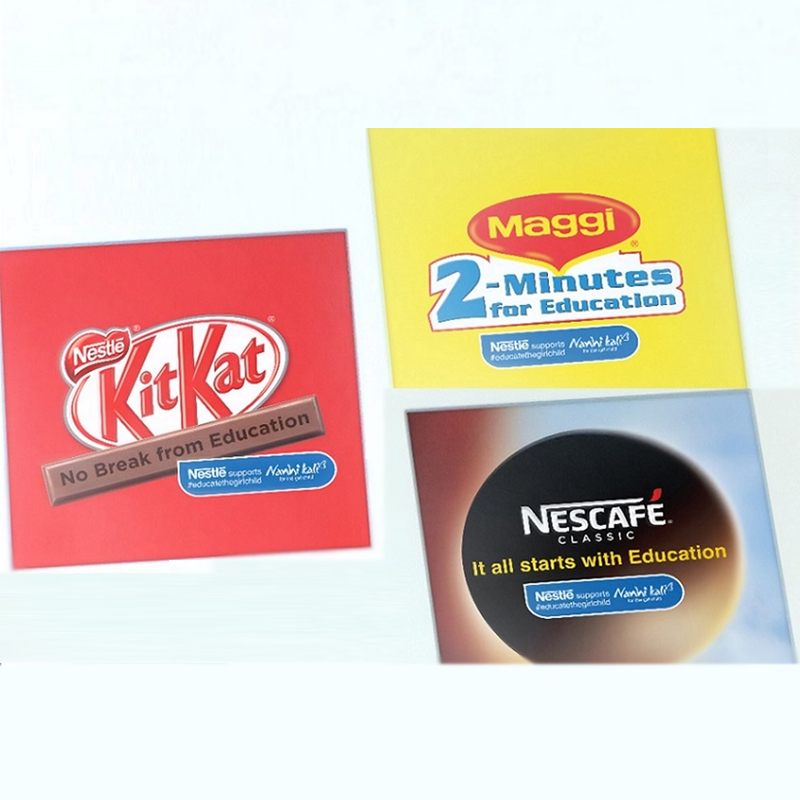
    MUMBAI: Nestlé India has changed the packaging of its iconic brands, Maggi, Nescafe and Kitkat to support girl child education in association with Nanhi Kali, an NGOs imparting education to underprivileged girl children across India.

    In an attempt to spread awareness about this crucial issue, Nestlé has changed packaging of 100 million packs available on shelves till September-end.

    Project Nanhi Kali was initiated in 1996 by the K. C. Mahindra Education Trust (KCMET) with the aim of providing primary education to underprivileged girl children in India.

    The changes include, Maggi’s tagline going from ‘2 minute noodles’ to ‘2 minutes for education,’ Kitkat’ to ‘No break from education’, and Nescafe changed the tagline to ‘It all starts with education.’ This has been further reinforced with a blue band which carries more information on the association with ‘Nanhi Kali.’

    Nestlé India MD and chairman Suresh Narayanan said, “Each time a consumer picks a pack, the visual properties of the brand serve as symbols of the promise the brand has made to the consumers. We are changing the packaging of three of our most iconic brands to sensitize and draw attention to the crucial need for society.”

    Mahindra Group chairman Anand Mahindra added, “This is a path-breaking and innovative partnership between Nestlé India and a non-profit organisation.”

    The partnership with Nanhi Kali further strengthens the Nestlé Healthy Kids Programme which has already reached out to about 1,00,000 beneficiaries. Project Nanhi Kali, jointly managed by K. C. Mahindra Education Trust and Naandi Foundation, has been a credible programme.

  • Nestlé supports ‘Nanhi Kali’; changes packaging

    Nestlé supports ‘Nanhi Kali’; changes packaging

    MUMBAI: Nestlé India has changed the packaging of its iconic brands, Maggi, Nescafe and Kitkat to support girl child education in association with Nanhi Kali, an NGOs imparting education to underprivileged girl children across India.

    In an attempt to spread awareness about this crucial issue, Nestlé has changed packaging of 100 million packs available on shelves till September-end.

    Project Nanhi Kali was initiated in 1996 by the K. C. Mahindra Education Trust (KCMET) with the aim of providing primary education to underprivileged girl children in India.

    The changes include, Maggi’s tagline going from ‘2 minute noodles’ to ‘2 minutes for education,’ Kitkat’ to ‘No break from education’, and Nescafe changed the tagline to ‘It all starts with education.’ This has been further reinforced with a blue band which carries more information on the association with ‘Nanhi Kali.’

    Nestlé India MD and chairman Suresh Narayanan said, “Each time a consumer picks a pack, the visual properties of the brand serve as symbols of the promise the brand has made to the consumers. We are changing the packaging of three of our most iconic brands to sensitize and draw attention to the crucial need for society.”

    Mahindra Group chairman Anand Mahindra added, “This is a path-breaking and innovative partnership between Nestlé India and a non-profit organisation.”

    The partnership with Nanhi Kali further strengthens the Nestlé Healthy Kids Programme which has already reached out to about 1,00,000 beneficiaries. Project Nanhi Kali, jointly managed by K. C. Mahindra Education Trust and Naandi Foundation, has been a credible programme.

  • Five steps to build a strong brand: Kantar Millward Brown

    Five steps to build a strong brand: Kantar Millward Brown

    MUMBAI: Curating the top 50 most valuable brands list in India was an eye-opener in many ways, said Kantar Millward Brown MD Dinesh Kapoor, referring to the valuable insights that brands can gather from the data available to the agency.

    Studying the multiple variables that determined on what spectrum of the Top 50 chart it would rank, or whether it qualified at all, revealed the need of the hour for CMOs across categories to build a valuable brand.

    This brought Kapoor  to enlist the ‘must dos’ of building a strong brand in India. While the core principles echoes what gurus have passed down to the generation next for decades, it’s been adjusted to suit the current socio-economic and political flavour of the country, and how consumers are reacting to it.

    Meaningful: With a fast paced economy, some marketers may forget the simplest and essential rule in the book, i.e, to build a meaningful brand that meets the consumer’s need and makes their life better. 

    http://www.indiantelevision.com/sites/drupal7.indiantelevision.co.in/files/styles/large/public/graph1.jpg?itok=e490aph9

    Differentiate: When there is competition, and several new products are being launched in every category, it is essential to have a USP, or point of difference. Brands that improved on differentiator grew by 81% higher than brands which failed to differentiate, read a report by Kantar. 

    http://www.indiantelevision.com/sites/drupal7.indiantelevision.co.in/files/styles/large/public/graph2.jpg?itok=Gcb8sQEv

    Innovation: Citing examples of Bajaj Auto, Kotak, and Airtel, Kapoor  explained how differentiation made on top of innovation adds more value to the brands. While Bajaj V launch was a differentiation based on creativity, Kotak tried a unique proposition with its revised interest rates. On the other hand, Airtel has stayed ahead of the curve by setting trends. It is noteworthy that the emphasis to be different is far greater in the Indian market than the global or other Asian markets. 86 per cent of brands that grew on innovation also grew on differentiation, informed Kapoor.

    http://www.indiantelevision.com/sites/drupal7.indiantelevision.co.in/files/styles/large/public/graph3.jpg?itok=QNQ4vUqg

    Advertising: Appealing communication is a pillar of brand-building that helps the brand stay salient in the minds of the consumers, says Kapoor. Brand value growth is even greater when meaningfully different brands build salience with great creative advertising.

    http://www.indiantelevision.com/sites/drupal7.indiantelevision.co.in/files/styles/large/public/graph4.jpg?itok=mRULWR2y

    Brand Love: What comes out of the heady mix of the above mentioned variables is an increase in the brand love index that further helps to multiply a brand’s value.

    http://www.indiantelevision.com/sites/drupal7.indiantelevision.co.in/files/styles/large/public/graph5.jpg?itok=i_WgUqnS

    What makes brand value an important trait to vie for is its direct relation to how the brand performs on the stock market.

    “It’s not an assumption that a highly valuable brand is more likely to do well on the stock market. We have substantial data to back up the statement that strong brands generate superior shareholders’ return,” shared  Kapoor, adding that a stronger brand is more likely to withstand a tough market situation, and augment revenue growth during favourable times. 

    http://www.indiantelevision.com/sites/drupal7.indiantelevision.co.in/files/styles/large/public/graph6.jpg?itok=B_AIatXf

  • Five steps to build a strong brand: Kantar Millward Brown

    Five steps to build a strong brand: Kantar Millward Brown

    MUMBAI: Curating the top 50 most valuable brands list in India was an eye-opener in many ways, said Kantar Millward Brown MD Dinesh Kapoor, referring to the valuable insights that brands can gather from the data available to the agency.

    Studying the multiple variables that determined on what spectrum of the Top 50 chart it would rank, or whether it qualified at all, revealed the need of the hour for CMOs across categories to build a valuable brand.

    This brought Kapoor  to enlist the ‘must dos’ of building a strong brand in India. While the core principles echoes what gurus have passed down to the generation next for decades, it’s been adjusted to suit the current socio-economic and political flavour of the country, and how consumers are reacting to it.

    Meaningful: With a fast paced economy, some marketers may forget the simplest and essential rule in the book, i.e, to build a meaningful brand that meets the consumer’s need and makes their life better. 

    http://www.indiantelevision.com/sites/drupal7.indiantelevision.co.in/files/styles/large/public/graph1.jpg?itok=e490aph9

    Differentiate: When there is competition, and several new products are being launched in every category, it is essential to have a USP, or point of difference. Brands that improved on differentiator grew by 81% higher than brands which failed to differentiate, read a report by Kantar. 

    http://www.indiantelevision.com/sites/drupal7.indiantelevision.co.in/files/styles/large/public/graph2.jpg?itok=Gcb8sQEv

    Innovation: Citing examples of Bajaj Auto, Kotak, and Airtel, Kapoor  explained how differentiation made on top of innovation adds more value to the brands. While Bajaj V launch was a differentiation based on creativity, Kotak tried a unique proposition with its revised interest rates. On the other hand, Airtel has stayed ahead of the curve by setting trends. It is noteworthy that the emphasis to be different is far greater in the Indian market than the global or other Asian markets. 86 per cent of brands that grew on innovation also grew on differentiation, informed Kapoor.

    http://www.indiantelevision.com/sites/drupal7.indiantelevision.co.in/files/styles/large/public/graph3.jpg?itok=QNQ4vUqg

    Advertising: Appealing communication is a pillar of brand-building that helps the brand stay salient in the minds of the consumers, says Kapoor. Brand value growth is even greater when meaningfully different brands build salience with great creative advertising.

    http://www.indiantelevision.com/sites/drupal7.indiantelevision.co.in/files/styles/large/public/graph4.jpg?itok=mRULWR2y

    Brand Love: What comes out of the heady mix of the above mentioned variables is an increase in the brand love index that further helps to multiply a brand’s value.

    http://www.indiantelevision.com/sites/drupal7.indiantelevision.co.in/files/styles/large/public/graph5.jpg?itok=i_WgUqnS

    What makes brand value an important trait to vie for is its direct relation to how the brand performs on the stock market.

    “It’s not an assumption that a highly valuable brand is more likely to do well on the stock market. We have substantial data to back up the statement that strong brands generate superior shareholders’ return,” shared  Kapoor, adding that a stronger brand is more likely to withstand a tough market situation, and augment revenue growth during favourable times. 

    http://www.indiantelevision.com/sites/drupal7.indiantelevision.co.in/files/styles/large/public/graph6.jpg?itok=B_AIatXf

  • HDFC is India’s most valuable brand: Brandz India top 50 (2016)

    HDFC is India’s most valuable brand: Brandz India top 50 (2016)

    MUMBAI: The third annual BrandZ™ Top 50 Most Valuable Indian Brands ranking released by WPP and Kantar Millward Brown has lot of good and something bad for the marketing industry.

    On the positive side, the total value of India’s most valuable brands has risen by 30 per cent over the last three years, with the top 50 brands now worth $ 90.5 billion from $ 69.6 billion in 2014. But, unlike 2015, which saw an unprecedented growth in terms of brand equity that pushed  the brand value of top 50 brands to USD 92.2billion, 2016 saw a dip of 2 per cent, mostly owing to a decline in brand value of state-owned banks.

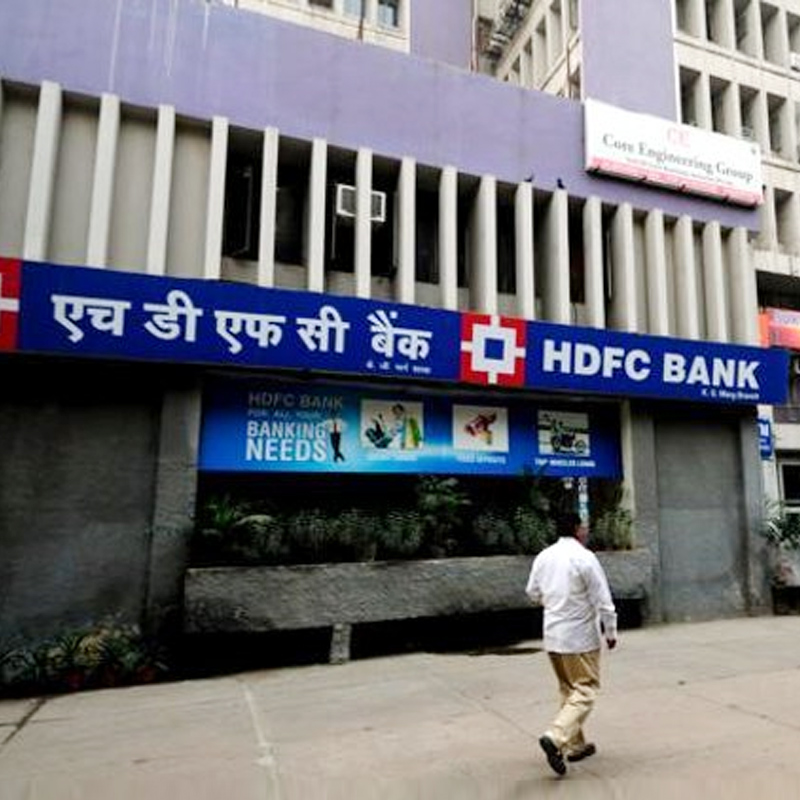
    Like last year, the financial sector dominated the top 10 spots accounting for 38 per cent of the top 50s brand value ($ 34.28 billion). HDFC maintained its number one position for the 3rd consecutive year with a brand value of USD 14.4 billion following a 15 per cent growth over the past year. It was followed by Airtel from the telecom sector with a brand value of USD 9.98 billion. State Bank Of India with a brand value of USD 6.352 billion stood at number three. “A brand cannot be built unless each one of us at HDFC Bank believes in it. Fundamentally, a brand is what we stand for in terms of the emotional value and the real value that we want to deliver to the customer. The emotional value is a combination of honesty, trust, integrity and being able to deliver the product at all times to the satisfaction of the customer. The real value is to deliver a differentiated product which changes the life of the customer which we have tried to do in financial services by making it more convenient, ” said HDFC Bank  managing director Aditya Puri.

    Among the new entrants in the top 50 list are airlines Indigo and Jet Airways at 26 and 36 positions respectively, followed by TVS and Reliance at 48 and 50, respectively.

    Top 10 most valuable brands here:

    Rank 2016

    Brand

    Category

    Brand value 2016 ($m)

    Rank 2015

    1

    HDFC Bank

    Banks

    14,438

    1

    2

    Airtel

    Telecom Providers

    9,978

    2

    3

    State Bank of India

    Banks

    6,352

    3

    4

    Asian Paints

    Paints

    4,089

    5

    5

    ICICI Bank

    Banks

    3,957

    4

    6

    Bajaj Auto

    Automobiles

    3,403

    6

    7

    Kotak Mahindra Bank

    Banks

    3,333

    9

    8

    Maruti Suzuki

    Automobiles

    2,850

    10

    9

    Hero

    Automobiles

    2,807

    7

    10

    Axis Bank

    Banks

    2,377

    8

    Interestingly, the top four ranks remained unchanged from 2015 rankings, something which The Store WPP, EMEA & Asia CEO David Roth calls an anomaly when juxtaposed against other mature markets or the global ranks.

    “Until recently in China, the top most valuable brand list was dominated by the state-owned Chinese companies, but now they are being taken over by technology and entrepreneurial companies. The global top 100 brands list has also seen some major changes. So yes, India is a bit of an anomaly as a developing state to see the same brands maintaining their positions for the last three years. But, I think it’s a matter of India’s growth and development cycle.”

    But, that says little about the immense competition that each brand faced to retain its position. According to Kantar Millward Brown managing director for south Asia, Dinesh Kapoor, 27 brands had slipped from its last year’s position while seven more brands dropped off the top 50 margin. “Brands required maintaining at least 35 per cent growth in its brand value to be able to hold on to its position,” shared Kapoor.

    Another way in which India drastically differs from the global markets is the absence of the technology brands from the top 50 list. 

    “Be it Global 100 or Asian market giant like China, technology brands have a huge presence in the top most valuable brands list. We see a clear absence of technology brands when it comes to India’s top 50 brands. Although India has been behind the scene of some of the major global technological innovations, it has been more from a service stand point rather than doing it in a branded way. I think there is a lesson to learn in this,” opined Roth. 

    Kapoor feels that the clear absence of Indian tech giants from the list is largely due to the companies not being listed. “You have to consider the methodology that goes into making this ranking. In order for a brand to be eligible for consideration for the list, it needs to be owned by a company listed on a stock exchange in India.  But, most of the tech companies that we speak of aren’t listed. The other big difference from global trends is the retail brands which have a strong presence in the more mature markets, whereas in India, only one retail brand — Reliance Retail —  has made it to the top 50 list.

    The report also warns marketers of the weakened brand loyalty among consumers. Internet penetration has risen sharply as the number of people living in rural areas accessing internet almost doubled over the past year, with almost 69% of urban internet users using the internet every day. This access educates consumers while providing them access to larger diaspora of premium brands available at affordable prices.

    While marketers have a lot to take away from the insight behind BrandZ India top 50 brands report, GroupM south Asia CEO CVL Srinivas shared what agencies can learn from this. “Reports like BrandZ are very useful for us who are in the business of media management for clients. In this age when competition is increasing and consumer’s attention span is decreasing, along with number of policy changes, a consolidated study like this helps us map a better strategy for our clients.  For example, the need for a brand to be present in multiple touch points with a singular communication idea and what it does to the brand’s value is the learning.”

  • HDFC is India’s most valuable brand: Brandz India top 50 (2016)

    HDFC is India’s most valuable brand: Brandz India top 50 (2016)

    MUMBAI: The third annual BrandZ™ Top 50 Most Valuable Indian Brands ranking released by WPP and Kantar Millward Brown has lot of good and something bad for the marketing industry.

    On the positive side, the total value of India’s most valuable brands has risen by 30 per cent over the last three years, with the top 50 brands now worth $ 90.5 billion from $ 69.6 billion in 2014. But, unlike 2015, which saw an unprecedented growth in terms of brand equity that pushed  the brand value of top 50 brands to USD 92.2billion, 2016 saw a dip of 2 per cent, mostly owing to a decline in brand value of state-owned banks.

    Like last year, the financial sector dominated the top 10 spots accounting for 38 per cent of the top 50s brand value ($ 34.28 billion). HDFC maintained its number one position for the 3rd consecutive year with a brand value of USD 14.4 billion following a 15 per cent growth over the past year. It was followed by Airtel from the telecom sector with a brand value of USD 9.98 billion. State Bank Of India with a brand value of USD 6.352 billion stood at number three. “A brand cannot be built unless each one of us at HDFC Bank believes in it. Fundamentally, a brand is what we stand for in terms of the emotional value and the real value that we want to deliver to the customer. The emotional value is a combination of honesty, trust, integrity and being able to deliver the product at all times to the satisfaction of the customer. The real value is to deliver a differentiated product which changes the life of the customer which we have tried to do in financial services by making it more convenient, ” said HDFC Bank  managing director Aditya Puri.

    Among the new entrants in the top 50 list are airlines Indigo and Jet Airways at 26 and 36 positions respectively, followed by TVS and Reliance at 48 and 50, respectively.

    Top 10 most valuable brands here:

    Rank 2016

    Brand

    Category

    Brand value 2016 ($m)

    Rank 2015

    1

    HDFC Bank

    Banks

    14,438

    1

    2

    Airtel

    Telecom Providers

    9,978

    2

    3

    State Bank of India

    Banks

    6,352

    3

    4

    Asian Paints

    Paints

    4,089

    5

    5

    ICICI Bank

    Banks

    3,957

    4

    6

    Bajaj Auto

    Automobiles

    3,403

    6

    7

    Kotak Mahindra Bank

    Banks

    3,333

    9

    8

    Maruti Suzuki

    Automobiles

    2,850

    10

    9

    Hero

    Automobiles

    2,807

    7

    10

    Axis Bank

    Banks

    2,377

    8

    Interestingly, the top four ranks remained unchanged from 2015 rankings, something which The Store WPP, EMEA & Asia CEO David Roth calls an anomaly when juxtaposed against other mature markets or the global ranks.

    “Until recently in China, the top most valuable brand list was dominated by the state-owned Chinese companies, but now they are being taken over by technology and entrepreneurial companies. The global top 100 brands list has also seen some major changes. So yes, India is a bit of an anomaly as a developing state to see the same brands maintaining their positions for the last three years. But, I think it’s a matter of India’s growth and development cycle.”

    But, that says little about the immense competition that each brand faced to retain its position. According to Kantar Millward Brown managing director for south Asia, Dinesh Kapoor, 27 brands had slipped from its last year’s position while seven more brands dropped off the top 50 margin. “Brands required maintaining at least 35 per cent growth in its brand value to be able to hold on to its position,” shared Kapoor.

    Another way in which India drastically differs from the global markets is the absence of the technology brands from the top 50 list. 

    “Be it Global 100 or Asian market giant like China, technology brands have a huge presence in the top most valuable brands list. We see a clear absence of technology brands when it comes to India’s top 50 brands. Although India has been behind the scene of some of the major global technological innovations, it has been more from a service stand point rather than doing it in a branded way. I think there is a lesson to learn in this,” opined Roth. 

    Kapoor feels that the clear absence of Indian tech giants from the list is largely due to the companies not being listed. “You have to consider the methodology that goes into making this ranking. In order for a brand to be eligible for consideration for the list, it needs to be owned by a company listed on a stock exchange in India.  But, most of the tech companies that we speak of aren’t listed. The other big difference from global trends is the retail brands which have a strong presence in the more mature markets, whereas in India, only one retail brand — Reliance Retail —  has made it to the top 50 list.

    The report also warns marketers of the weakened brand loyalty among consumers. Internet penetration has risen sharply as the number of people living in rural areas accessing internet almost doubled over the past year, with almost 69% of urban internet users using the internet every day. This access educates consumers while providing them access to larger diaspora of premium brands available at affordable prices.

    While marketers have a lot to take away from the insight behind BrandZ India top 50 brands report, GroupM south Asia CEO CVL Srinivas shared what agencies can learn from this. “Reports like BrandZ are very useful for us who are in the business of media management for clients. In this age when competition is increasing and consumer’s attention span is decreasing, along with number of policy changes, a consolidated study like this helps us map a better strategy for our clients.  For example, the need for a brand to be present in multiple touch points with a singular communication idea and what it does to the brand’s value is the learning.”