Category: Brands

  • Twitter expt jury is out: Snappy brand message or more user insights vs noise

    Twitter expt jury is out: Snappy brand message or more user insights vs noise

    MUMBAI: We have all tried to cram our thoughts into a single tweet, and it’s a pain! You have so much to write about, but the 140-character limit becomes an obstruction.

    You just aren’t interested, and go and use Facebook, instead.

    Twitter has been debating about the increase in the character limit for a long time, and the social media company is now finally testing tweets as long as 280 characters, double the previous limit. However, the feature is only available to a select few at the moment, and is not available in Japanese, Chinese and Korean languages.

    But, the move could backfire as much on Twitter as on brands that market on the platform. The 140-character limit ensures that messages on Twitter are concise and put forth the point in the snappiest and the most distilled way. At present, the platform’s biggest problem is its reputation for unpleasant tweets. This gives the ‘Trolls of Twitter’ an undue advantage, one that may take ‘mean tweets’ to a new level.

    We saw a synergy in the industry on increased word count, and the experts seem to agree that it was a welcome move. Mindshare’s Venkat Shankarnarayan asserts, “The move was essential for Twitter as it has been seeing a declining trend in the number of its followers owing to the popularity of Instagram and Snapchat that have grown exponentially in the last year. “The revenue from ads generated on Instagram and Snapchat is much higher than on Twitter,” he adds.

    All major brands today understand the importance of connecting with the consumer, and creating content on social media platforms. Those witty and compelling branded Tweets that we read are nothing but the products of carefully planned strategies that involve the tone of a brand, relevant content, among other factors. Twitter, as a platform, has always been known for the impact it creates through the crisp content.

    iProspect India national head – social and creative Muddassar Memon adds, “Increase in the character limit for each tweet enables people and brands to interact on the platform with more content per tweet, leading to an increase in the traffic and, in turn, an increase in the effectiveness of brand communication.”

    Twitter has always been more of a conversational platform. EveryMedia Technologies CEO Gautam B. Thakker believes the move will have a 50-50 impact on brands and has its pros and cons. It has come at a time when consumption of content on digital has become more visual in nature and, as a marketing strategy, brands and marketers are putting more thought into writing less and showing more engaging and enticing content. “While for some users expressing themselves will become easier, the 280-character limit is big enough to open up a channel for lot of unnecessary noise,” he adds.

    On a similar note, Dentsu Webchutney creative strategist – general management Pranav Sabhaney mentions that, “Users and brands will make a lot of noise about the upgrade, but that has been the case with all previous updates of Twitter when they decided to add photos and videos. There will be some rants but it will all work out well for the brands in the end.”

    Facebook and Instagram today are largely commercialised with great brand presence and spends on these platforms. According to a report by Pulp Strategy earlier this year, Twitter has been rated the best platform in B2B marketing with nearly 63 per cent of marketers choosing the platform to share the photos videos. Though, each social media platform has its own purpose, the bottomline from a brand perspective is — effective communication.

    Twitter no doubt is known for its crisp posts, brands trying to communicate with their target audience often face a roadblock in terms of lack of expression, which may no longer be the case with the increased character cap. However, on the flip side, “online reputation management on Twitter might get trickier. Instead of warranting precise information, your news feed might become a playground for clutter,” affirms Thakker.

    Muddassar is of the opinion that longer tweets will also improve search within the platform as well as SEO potential. Furthermore, brands will now be able to derive more insights on user behaviour and target them efficiently due to longer tweets.

    Mindshare India senior director – digital Venkat Shankarnarayan says, “The move will impact brands in India as they choose to communicate only in the English language, and so far everything has been crammed on Twitter. This will help brands put their message across clearly and get more innovative.”

    Although the move is still in beta version and only available to a select few, it will be interesting to see how it shapes up the marketing and communication of brands in India whenever it becomes available here.
  • MTV India to aid Airbnb break away from commoditised travel, says exec Bajaj

    MTV India to aid Airbnb break away from commoditised travel, says exec Bajaj

    MUMBAI: Airbnb, a community-driven hospitality company, announced the launch of its #LiveThere online contest, which appeals to spirited travelers who seek unique travel experiences whether it’s via music, adventure, culture or fashion.

    Airbnb has partnered with Viacom 18’s entertainment channel MTV India to host the online #LiveThere contest, which is part of Airbnb’s Live There campaign, designed to encourage people to change the way they experience the world around them. Live There gives aspiring travelers the chance to experience popular destinations through the Airbnb lens, with a refreshing perspective of popular destination through curated experiences which break away from standard itineraries.

    Contest winners will have the chance to head to their favorite destination accompanied by popular celebrities – DJ Nikhil Chinapa in Thailand; fashion icon VJ Anusha Dandekar in Milan; and Bollywood actress Radhika Apte in London. These celebrities will share insights corresponding to their respective areas of interest in order to curate unique experiences for winners in any of these cities.

    The #LiveThere contest requires participants to log onto their Instagram or Twitter and submit image/video entries which best capture their ‘Live There’ moments. Along with this, participants will need to use a creative caption along with their choice of destination in the following format – #InThailand, #InMilan or #InLondon.

    Throughout the contest, there will be a daily selection of the Best Entry of the Day. Each winning entry stands the chance to receive Airbnb vouchers worth up to US$ 200 in the form of a prize. Finally, the top creative entries per destination will be declared Grand Winners and they will have the chance to visit their chosen destination with the corresponding celebrity.

    Airbnb India country manager Amanpreet Bajaj said, “Milan, Bangkok and London are a few of the most famous travel destinations in the world with stock lists of to-do’s available for reference. However, urban youth today, want to break away from commoditised travel, and discover a place on their own terms. With Airbnb’s #LiveThere experience, we want travelers who are seeking a new approach to travel, to discover these places through a local’s eyes/ perspective. Collaborating with popular icons like Nikhil Chinappa, Anusha Dandekar and Radhika Apte, is our way of establishing greater relevance with the young Indian traveler, based on their unique passion points. We want travelers to feel like they can belong anywhere in the world, even if it is just for a night.”

    While trained Scuba instructor Nikhil Chinappa shares insights on how to best experience music and adventure in Thailand, Anusha Dandekar will offer an insider’s view into the hidden fashion hubs in Milan, while Radhika Apte suggests the best way to experience art and theatre in London.

    One winner each for Bangkok, Milan, and London will receive a three nights / four days-stay for the winner and one friend along with arrangements for unique, local experiences so they can truly live there.

  • Oppo  to go full steam ahead this festive season

    Oppo to go full steam ahead this festive season

    MUMBAI: Chinese smart phone maker Oppo Mobiles is getting into overdrive mode this festive season.

    The brand, which has tapped into the tendency of Indian youth (18-35 years) to take selfies and positioned itself as the selfie expert, commands a 24.2 per cent market share of the Rs 15,000 – Rs 30,000 segment category (as per Counterpoint Q2 2017 data). And, it is hoping to up that share further in Q3 2017.

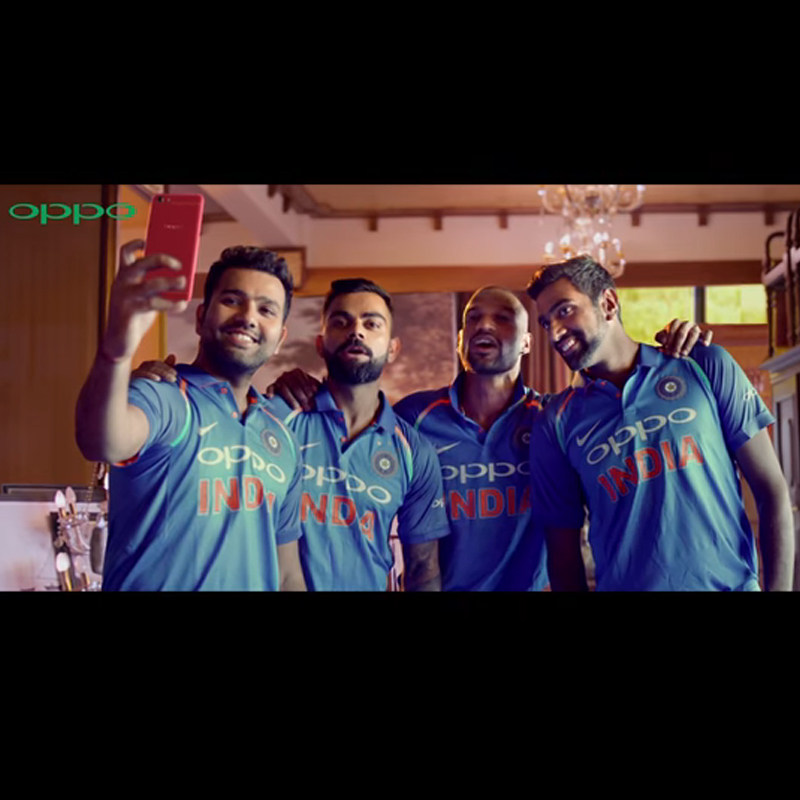
    It is introducing a new phone, dropping prices of an earlier version, launching a new TVC featuring Indian cricketers, and continuing its massive media investment in Colors marquee shows like Big Boss and Kaun Banega Crorepati in its latest season.

    First the launch. In an Amazon online exclusive, Oppo is unveiling a Oppo F3 Diwali limited edition phone in festive red color with a sticker price of Rs 18,990 on 29 September. The phone will also be available on all Oppo offline stores across India and comes preloaded with festive themes and wallpapers.

    Says Oppo India brand director Will Yang: “This customised red phone, a colour that signifies the auspicious festivities, aims to help our consumers click perfect moments with their families and make this a preferred Diwali gift.”

    The brand has positioned the product as the best Diwali gift one can gift or buy. In order to lure more consumers into snapping up the new handset, Oppo will give away exclusive cricket bats signed by the Indian cricket team with each purchase of the F3. Oppo says it will also be announcing a price cut for its earlier model F3 Plus in the coming weeks.

    Yang believes that the new offering very much resonates with Oppo’s target audience: young people who are always looking for a fashionable smartphone. Says he: “In order to connect with today’s digital savvy generation or millennials as we call them, we continue to invest heavily in non-fiction shows, web series and cricket which is a religion in India.”

    The new TVC features Team India cricket players – Virat Kohli, Rohit Sharma, Shikhar Dhawan and R. Ashwin, along with a Bollywood Diva – Elli AvrRam. It shows the festivities that surround the festival and the importance of the perfect gift which helps you capture your memorable Diwali moments.

    Oppo, says it, leverages all platforms to connect with its consumers and uses a 360-degree marketing campaign for all its products and service but television continues to command the highest advertising investment.

    About 350 million people out of the country’s 1.2 billion population currently own a smartphone. To expand its presence to tier II and tier III cities, which are still relatively untapped regions in the country, Oppo is looking to tie up with local merchants to rebrand their stores as Oppo stores. Although the brand enjoys a healthy mix of sales from urban and rural areas, 55-60 per cent of its offtake comes from mini metros and rural.

    The company at present has 25,000 point of sales in India and aims to open 550 plus after sales service centres by the end of 2017. “Our key focus is on offline sales and that is why we are constantly exploring more retailers to get on board,” Yang concluded.

  • Gionee’s #GoForGold campaign for partners

    Gionee’s #GoForGold campaign for partners

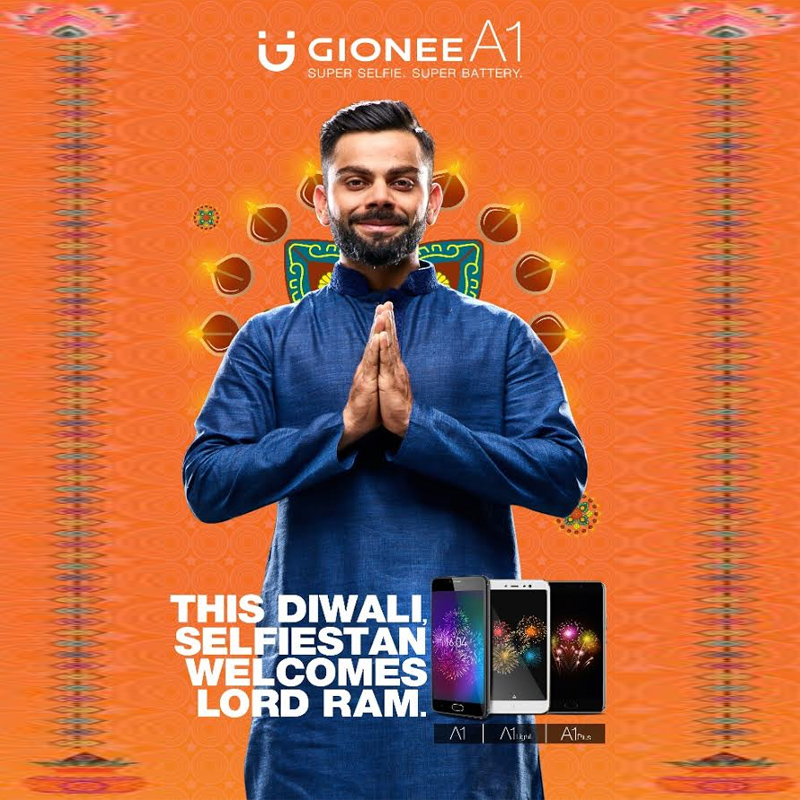
    MUMBAI: Smartphone major Gionee India known to acquaint prominent campaigns from time to time to enhance its engagement with partners has announced exciting rewards and offers for Gionee Sales Champions (GSC), retailers and partners as part of its country-wide campaign ‘#GoForGold’.

    Selling a smartphone from the A Series will get the GSC points in the proportionate order as per the range of the device. The A Series has been monumental in Gionee’s growth in the current year. Following the soaring sales for the flagship device A1, Gionee launched two more propeller devices in the series – A1 Plus and A1 Lite, emerging as one of the top players, with 15 per cent market share in the price range of Rs. 15,000 – Rs. 25,000.

    The winners of the campaign will be rewarded by the HO team by 25 November. There will be three categories of awards, for top 50 GSCs, top 10 retailers and top 10 BDMs across India. These will be given prizes ranging from Gold Coin – 20gm, Gold Coin – 10gm, Gionee A1 Plus and Gionee A1 smartphones.

    Gionee India director of business intelligence and planning Alok Shrivastava said, “#GoForGold is open for the majority of our business representatives including GSC, retailers and BDM; with the goal that together we can accomplish the objective of boosting our sales.”

  • Brands bullish this festive season but not for Navratri

    Brands bullish this festive season but not for Navratri

    MUMBAI: Marketing mavens are aware that a majority of brand spending in India takes place between August and December every year because of a range of festivals that dot this period. It begins with Raksha Bandhan and chugs ahead with Ganesh Chaturthi and gathers steam in September with Navratri, Durga Pooja and Dussehra, only to move at a superfast speed during Diwali, until the calendar year ends. Indian consumers are in a celebratory mood, flush with cash, courtesy employment bonuses.

    The past 10 months have, however, been different. The reason: the double whammy of demonetisation and the rollout of goods and services tax (GST) put the brakes on optimism. Both forced brand custodians to zip up their ad purses and postpone any spends until customers had money to splurge and the entire GST process – which commenced on 1 July 2017 – panned out.

    Net result: even the months of August 2017 and early September 2017 have seen sedate brand activity. Questions are being asked whether marketers are ready to let their hair down during Navratri 2017 to get consumers back to spending on goodies ostentatiously?

    Indiantelevision.com got in touch with a clutch of marketers and agency heads and the consensus was that a majority of national brands are going to go easy on both, Navratri and Dussehra, but they are going to go hell for leather during Durga Pooja and Diwali, allocating a large chunk of their ad and promotional budgets during these two periods.

    Even in Gujarat, which normally goes into marketing overdrive during Navratri,  there will be some amount of softness this year between 21-29 September.

    “Navratri is clearly the biggest festival in Gujarat which is bigger than Diwali in terms of activations and promotions. It is a big period for Gujarati channels (national and local) as all major FMCG brands, automobile brands and local retailers want to make the most of this season but the spends will be soft this year because of GST and demonetisation,” says a media expert.

    Navratri event organisers in Mumbai and Gujarat had to struggle this year to find sponsors mainly due to the fact that real estate and telecom categories, which otherwise are heavy advertisers during the nine-day festival, shied away, unlike previous years.  The real estate sector was relatively cold as a majority of the developers are busy getting their houses in order to comply with the stringent requirements that new real estate regulations that have been thrust on them by RERA. Adding to developers’ relative lack of enthusiasm is the GST rollout.

    Says a media buyer from a leading agency: “Navratri this year will see a lot of local and retail advertising rather than multinational players. This is a great opportunity for local and small brands to promote themselves on the venue or via various BTL activations at a reasonable cost which otherwise would be priced very high.”

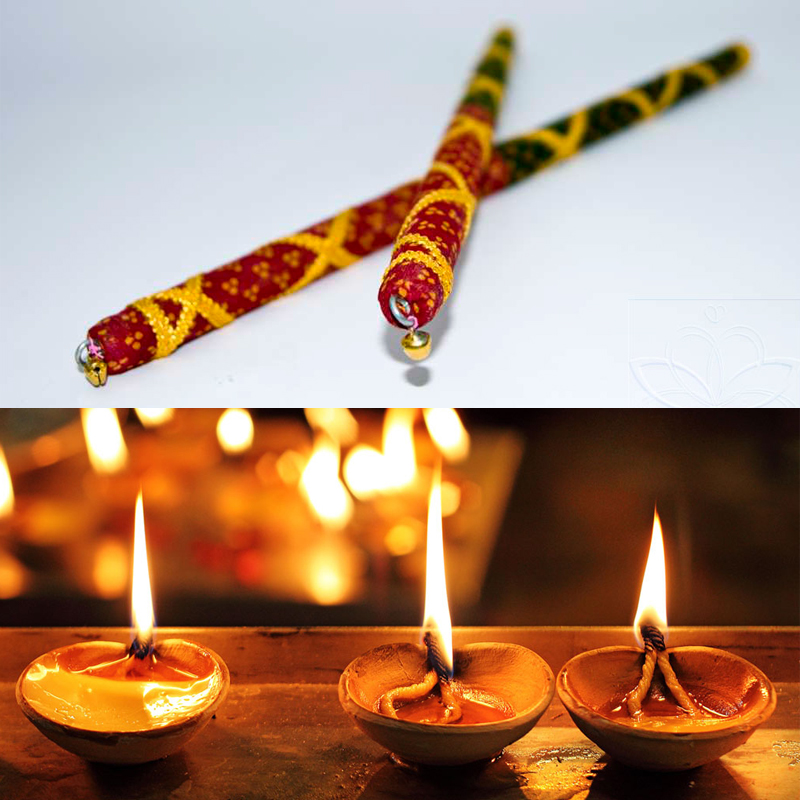
    Indeed, some savvy companies are stepping in to take advantage of the opportunity and spend on the various garba events that have been organised across Mumbai and Gujarat. Thousands gather on various grounds in these two states to dance to the rhythms of dandiya stars — Falguni Pathak, Parthiv Gohil, Preeti Pinky, among other. These events are normally aired on the local cable TV channels as well as on some of the handful Gujarati language channels.

    Consider:

    * ONE Broadband, Hinduja Group’s Flagship Company for Telecom Data Services for Consumer & Enterprise Segments will be offering unlimited 10mbs free Wi-Fi service to the devotees during Navratri season across Maharashtra and Gujarat.

    * Residential, commercial and real estate company Ruparel Realty is the title sponsor for Mumbai’s Navratri Mahotsav 2017 while Colors Gujarati is the television partner for the event. Gujarati queen Falguni Pathak will be seen performing at the event for nine days.

    * Ride hailing app Uber will provide lucky customers with a free gift hamper which consists of free passes for Radio Mirchi Rock n Dhol garba event in Gujarat along with two dandiya sticks.

    * Online e-commerce platforms  Flipkart, Amazon and Ebay have also announced their big sales to commence the festive season encouraging people to buy more products online. The sale on these platforms began yesterday and will go on for a week.

    Dentsu Aegis Network chairman and CEO – South Asia Ashish Bhasin told Indiantelevision.com that there’s no reason to worry, however, as overall he sees the festive season spends this year growing 20 per cent over the last year even as the advertising budgets for the whole year will expand 10-12 per cent. What this means is that the last quarters of this year should contribute heavily, and help make up for the losses during the previous quarters.

    Bhasin notes that consumer goods, automobiles and FMCG  sector are going to go all-out with campaigns to seduce India’s fast-burgeoning middle class.

    A media planner adds that brands are actually drawing up massive plans and there’s actually going to be a shower of spending (mainly by categories like automobiles, real estate, jewelry, electronics along with e-commerce)  this festive season as most of them have got over the demonetisation and GST issues.

    That should be music to most media and TV ad sales professionals who have been toiling away, struggling to meet their ad sales targets.

  • eCommerce, jewellery brands among most advertised on television

    eCommerce, jewellery brands among most advertised on television

    BENGALURU: The annual ‘Big Billion Day’ and ‘Great Indian Festival sale’ will be back soon – and the respective players are quite noisy about them on television. Innovative creatives, rehashes of previous creatives are back to announce the big great deals that will be on offer. Flipkart’s annual Big Billion Day television communication has newer stories from kids acting as adults while Amazon.in speaks of getting big discounts without the effort of having to check out the best deals in the market to promote its Great Indian Festival sale.

    The festival season in India is approaching, and, along with it offers from eCommerce players and jewellers. As decibels increase for attracting eyeballs and consumers, brands from these two genres are amongst the most advertised on television during the recent weeks according to Broadcast Audience Research Council of India (BARC) weekly data.

    In week 35 of 2017, (Saturday, 26th August 2017 to Friday, 1 September 2017), Amazon.in was the most advertised brand on television with 14,985 insertions and LalithaJewelly was the second most advertised brand with 13,856 insertions according to BARC’s weekly list ofTop 10 Brands Across Genre: All India (U+R) : 2+ Individuals. In week 36 (Saturday, 2 September 2017 to Friday, 8 September 2017), Lalitha Jewellery was the most advertised brand on television with a jaw-dropping 16,301 insertions followed by Amazon.in with 11,329 insertions at second place. Not far behind these two at rank 3 was Indian eCommerce player Flipkart.com with 11,900 and 10,130 insertions in weeks 35 and 36 respectively.

    Both Amazon.in and Lalitha Jewellery have been present 15 times each during the first 36 weeks of 2017 in BARC’s weekly top 10 brands list. Of these, Amazon.in has been the most advertised brand for eight weeks, including during the first three weeks of 2017. Lalitha Jewellers has been the most advertised brand on television in terms of insertions for five of the first 36 weeks of 2017. Flipkart.com found itself in BARC’s weekly top 10 brands list for the first time in week 35 of 2017 and again in week 36 of 2017, as the third most advertised brand in terms of insertions during both the weeks.

    Please refer to the chart below for the BARC’s list of most advertised brands in week 35 and 36 of 2017

    public://F_3.jpg

    While FMCG brands are the most advertised brands in general, as September 20 approaches viewers are likely to be bombarded with more and more eCommere ads.The period of Navratra’s and Diwali are considered as auspicious days for buying gold, automobiles, apparel, consumer durables, etc., by many Indians. Data for the most advertised brands over the next few weeksshould be quite interesting.


  • Colors-Bajaj Pinkathon raises awareness for women’s lifestyle

    Colors-Bajaj Pinkathon raises awareness for women’s lifestyle

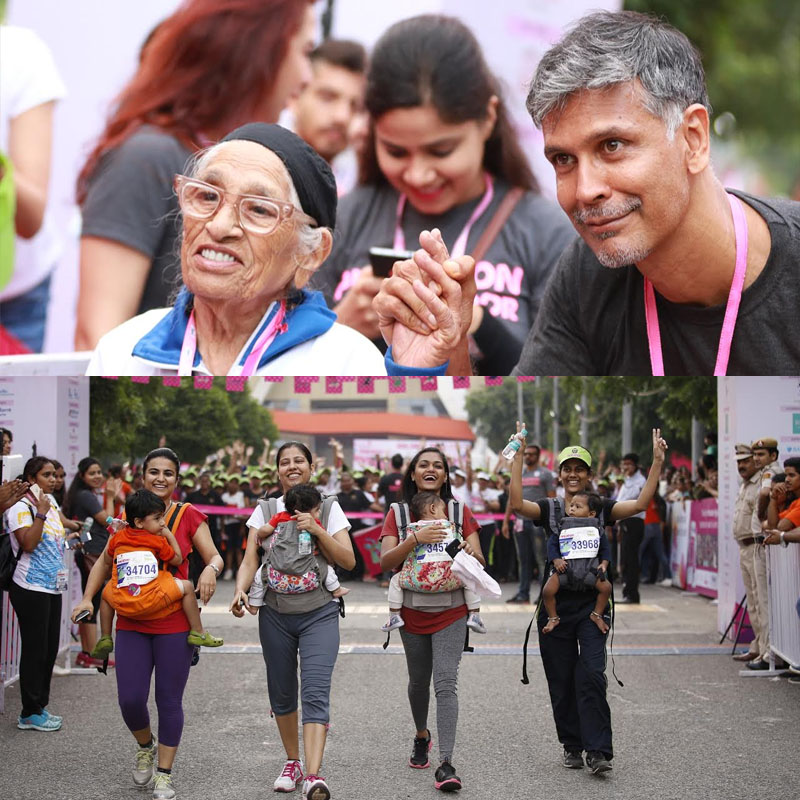
    MUMBAI: Colors Delhi Pinkathon, empowering Indian Women, an initiative to raise awareness about the importance of a healthy lifestyle for women and issues like breast cancer, concluded its fifth edition in Delhi on Sunday.

    Colors Delhi Pinkathon has received response from corporate sponsors such as Colors, Bajaj Electricals, Tata Salt Lite, VWash Plus, Optum, Reebok, Apollo Hospitals, Red FM, Bisleri, ICICI Home Loans, US Polo, Enthusionz, and Bajaj CSR.

    Around 10,500 women across age-groups and from different segments of the society participated in the VWash plus 3km, Optum 5km and Tata Salt Lite 10km multi-category run and 21 km categories. Flagging off the run was super-model, actor, fitness enthusiast avid barefoot runner and Pinkathon founder Milind Soman along with prominent women personalities like Mann Kaur, a 101-year old woman athlete, and RJ Swati from RED FM who expressed their wholehearted support for the cause.

    Maximus Events MD and co-founder Reema Sanghavi said: “Besides Delhi, Pinkathon has already been held in various cities like Hyderabad, Kolkata, Pune, Chennai, Guwahati, and Mumbai this year. The campaign will be supported by an integrated communication plan.”

    Viacom18 CEO – Hindi mass entertainment Raj Nayak said: “Women empowerment is also a core philosophy that we maintain even in our bouquet of offerings to our viewers.”

  • Uber launches premier and Delhi UberEATS

    Uber launches premier and Delhi UberEATS

    MUMBAI: Uber has made two moves — launched premier service in Mumbai and Pune, and started UberEATS in Delhi.

    Uber, an on-demand ride-sharing company, announced the launch of Premier, a superior ride option at everyday, affordable fares. With a pilot rollout in Mumbai and Pune, select riders will be offered Premier as an in-app product option that serves as an upgrade to their current uberX experience.

    Uber India GM – west Shailesh Sawlani said, “As we work towards reducing private car ownership in India, Uber is focused on building products that will go further in replacing the need for personal mobility options.

    UberEATS meantime has expanded its operations to Delhi, bringing food to consumers in a convenient manner. Partnering with over 200 restaurants in South Delhi, Delhiites can now order their local favorites from restaurants like Barista, Moti Mahal, Pita Pit, and Dimcha.

    UberEATS Delhi GM Faiz Abdulla said, “Hitting the ground gives us a chance to experience the magic we want to deliver firsthand.”

    UberEATS will now be available in South Extension, Defence Colony, Kalkaji, Nehru Place, East of Kailash, GK I & II, Safdarjung, Green Park, Hauz Khas, Gulmohar Park, Asiad Village, Malviya Nagar, Saket and Mehrauli.

  • DataWind leads tablet market, iBall and Samsung follow

    DataWind leads tablet market, iBall and Samsung follow

    NEW DELHI: Internet provider DataWind Inc. (owned by a Canada-based Indian) holds 68.5 per cent market share in the below-Rs 5000 tablet category — the largest growing segment for Q2, 2017 constituting 39 per cent.

    A report by CyberMedia Research shows DataWind, for the seventh successive quarter, continues to retain the top slot with 26.7 per cent market share in 2Q CY 2017, followed by iBall and Samsung at 15.8 per cent and 14.3 per cent, respectively.

    Devices bundled with free internet browsing, local manufacturing, patented technology and strong and committed team were the key factors which worked for DataWind.

    DataWind founder-president and CEO Suneet Singh Tuli said, “Our focus is to enable Indians with their first computer at an affordable price.”

    Tuli added “In fiscal 2018, we foresee introduction of exciting data plans. We are focused on driving the cost downward to a level where access to technology becomes ‘universally affordable’.”

  • Jio, Sun Direct, Dish TV among top 50 as HDFC retains BrandZ crown

    Jio, Sun Direct, Dish TV among top 50 as HDFC retains BrandZ crown

    MUMBAI: HDFC Bank has continued to maintain its leadership position in fourth consecutive year, according to the BrandZ Top 50 Most Valuable Indian Brands 2017 report released by WPP and Kantar Millward Brown.

    HDFC Bank (24 per cent) is the India’s most valuable brand, almost doubling its brand value since the ranking started in 2014 from $ 9.4bn to $ 18.0bn.

    “It has a strong purpose – to improve lives by bringing world class financial services to all sections of India – and demonstrates it through increased access to banking in rural areas, an expanded digital presence and leveraging the latest technology to simplify its offering for customers. BrandZ data shows that consumers perceive the bank as increasingly innovative,” the report stated.

    India’s most valuable brands have increased their brand value by 21 per cent to US$ 109.3 billion in the last year. This compares with a two per cent decline in 2016, and is well ahead of the eight per cent value increase of the BrandZ Top 100 Most Valuable Global Brands 2017.

    There are seven newcomers in the overall ranking. Telecom provider Jio ranks at number 11 — only months after its launch, having disrupted its category with free-data promotions. The others are newly-listed retailer D-Mart (no.24), appliance brand Whirlpool (no.45), insurance brand Bajaj Allianz (no.49), Canara Bank (no.50) and entertainment brands Sun Direct (no.27) and Dish TV (no.47)

    The Store WPP CEO EMEA and Asia David Roth said, “Indian consumers seek authenticity and value for money, and the meaning of those things is being constantly redefined. As consumers become wealthier, they look beyond price to factors such as extra features, innovation and a personalised experience. As reflected in this year’s ranking the most agile Indian brands have recognised the complexity in the market, and achieved just the right balance between aspirational and affordable.”

    The automobile category, which also includes tyres, lubricants and motor fuels, grew 23 per cent in value. Brands responded to the changing market with new models that combined smart pricing and functionality with style and power. Royal Enfield, Maruti Suzuki and TVS were among the Top 10 overall fastest risers. Royal Enfield (no.40, 59 per cent) engaged with biker  groups on social media, and marketed a range of accessories. Maruti Suzuki (no.7, 56 per cent) extended the brand beyond its traditional appeal to the value segment of the market, while introducing new showrooms called NEXA to reach premium customers.

    India’s Top 50 faced successive disruptions in the last year, some global, some created by fast-growing competitors and others strategically imposed by the government – including demonetisation.

    The FMCG category, which includes alcohol, food and dairy, personal care and soft drinks, was significantly affected by these challenges but still managed to grow 6 per cent in total value. Some brands achieved impressive value increases by accurately understanding and responding to Indian sensibilities. Noodle brand Maggi (no.32; 66 per cent), the overall second-fastest riser, aligned itself with the trend for nostalgia. This helped it bounce back after a difficult couple of years; its rapid regrowth demonstrating how a strong brand can help a company weather a crisis and recover faster, although it is still some way below its peak brand value of $1.1bn in 2014. Health food brand Saffola (no.36; 24 per cent), meanwhile, introduced oats in new localised flavours and expanded its range of oils into a new super premium sub-segment.

    The financial services category increased its value by 26 per cent. The fastest rising banks were Punjab National Bank (no.39; 43 per cent), which is highly customer-focused and more agile than some of its competitors, and Kotak Mahindra Bank (no.6; 36 per cent), which has innovated in areas including digital banking. Both of these brands still have significant catching up to do, however, if they are to reach the top of the leader board.

    The BrandZ™ Top 10 Most Valuable Indian Brands 2017

    Rank 2017

    Brand

    Category

    Brand value 2017 (US$M)

    Change

    1 (-)

    HDFC Bank

    Banks

    17,965

    +24%

    2 (-)

    Airtel

    Telecom providers

    10,233

    +3%

    3 (-)

    State Bank of India

    Banks

    8,334

    +31%

    4 (-)

    Asian Paints

    Paints

    4,717

    +15%

    5 (-)

    ICICI Bank

    Banks

    4,697

    +19%

    6 (+1)

    Kotak Mahindra Bank

    Banks

    4,522

    +36%

    7 (+1)

    Maruti Suzuki

    Automobiles

    4,449

    +56%

    8 (-2)

    Bajaj Auto

    Automobiles

    3,564

    +5%

    9 (-)

    Hero

    Automobiles

    3,295

    +17%

    10 (-)

    Axis Bank

    Banks

    2,428

    +2%

    Other trends highlighted in this year’s BrandZ Top 50 Most Valuable Indian Brands include: The long-term growth curve of the Top 50 is positive, with the total brand value of the ranking up 57 per cent  since the study was first carried out in 2014, when it amounted to $69.6bn

    India experienced a resurgence in national pride, while also embracing globalization. This manifested in a desire for products and brands that best reflect Indian heritage, sensibilities and tastes, which benefited local brands and put pressure on multinationals to follow suit. Colgate (no 28; two per cent) launched a toothpaste with Ayurvedic properties to meet this demand.

    The top riser is insurance brand ICICI Prudential (no.35; 89%). It benefited from the ‘halo effect’ of other brands’ successful responses to rising consumer affluence, which led to an increase in sales of assets such as cars that need insurance protection

    Kantar Millward Brown MD — South Asia Vishikh Talwar said, “There are now ‘multiple Indias’. Consumers continue to love the brands they’ve loved for generations, while equally embracing the brands of the future. Brands must be completely in rhythm with the pulse of the market. Those that can accurately interpret Indian sensibilities, while ensuring smart pricing, are likely to be most successful. This is easier for local brands, but people will relate just as positively to a global brand if it uses insight to understand and meet their needs, and communicate in a way that builds trust.”

    For the first time, this year’s BrandZ Top 50 Most Valuable Indian Brands 2017 study incorporates new research from Y&R’s BAV Group into what it takes to build powerful nation brands. According to the 2017 Best Countries report, India stands out for its history, cultural influence, distinction and reputation for entrepreneurship; especially among the world’s business decision-makers.