MUMBAI: US food and beverage giant Kraft Heinz is looking to sell its children’s energy drink brand Complan in India. The sale could help Heinz in fetching about $1 billion.
Kraft Heinz is said to be working with an adviser to gauge interest in the brand from potential buyers. These buyers could be local Indian companies and private equity firms. According to media reports, the company may also decide to keep the brand.
In India, Heinz offers Complan, Glucon-D, Heinz tomato ketchup and cheese. Internationally, the brand is also into selling baked beans, vinegar, mayonnaise and sauces.
Rumour has it, that three companies in India are expected to bid for GlaxoSmithKline’s Horlicks, which is a health nutrition company that competes directly with Complan. Heinz is one of the bidders for Horlicks.
Horlicks decided to move out of children’s energy drink business after GSK started a review of several businesses to support its $13 billion bill for a 36.5 per cent stake of Novartis in their customer healthcare joint venture.
MUMBAI: Everyone loves a little vacation once a year. They say, Travel makes one modest, you see what a tiny place you occupy in the world. The tourism industry today is booming with the number of people travelling to foreign destinations witnessing a three-fold rise.
Travel and tourism is one of the world’s fastest-growing sectors today, with close to $1.6 trillion clocked in bookings in 2017. A strengthening global economy lies at the heart of industry growth. Each year, the global traveler pool is flooded with millions of new consumers from both emerging and developed markets, many with rising disposable incomes and a newfound ability to experience the world.
According to 2017 report by TripAdvisor, for globetrotting Indians preferred traveling to Dubai, Singapore, Bangkok and Pattaya, while the evolved and well-heeled Indians sought relatively unexplored destinations such as Genoa in Italy, Corsica in France, Bora Bora and Iceland.
As many as 2.8 crore Indians travel to international destinations every year. Places like Dubai, Switzerland, Maldives, Maccau, Bali, Singapore, Thailand among few others, have always been popular among Indians.
At a time when the travel industry is booming with tourists pouring in from all parts of the world, Switzerland, a destination once every Indian wanted to travel to (thanks to Yash Raj and Bollywood movies), now seems to have lost its appeal. The situation was dire that the revenue from tourism remained stagnant at 15.7 billion CHF between 2013-15. To increase the footfall of Indian travelers, Switzerland appointed Bollywood actor Ranveer Singh as its brand ambassador with a hope to attract Indians and Bollywood fans from across the globe.
Earlier this month, Switzerland tourism launched its second campaign with Ranveer. The tourism board this time, wants to promote Switzerland as a destination for everyone, especially those who are single. Switzerland Tourism India Director Claudio Zemp said, “We wanted to promote Switzerland as a year long destination rather than the preconceived image that everyone has about the place that its only a romantic destination. Hence, we decided to target the younger generation in the campaign to come and explore the place for its adventures.”
According to Zemp, ever since they’ve signed Ranveer as the brand ambassador, Switzerland tourism has seen an increase of 23.4 per cent Indians staying over night.
Overall, the tourism industry has grown by 119 per cent in the last 10 years with an average of 8 per cent per year.
The second campaign with Ranveer was also not created by any ad agency and was instead executed in-house by the tourism board along with the actor’s team.
Although the campaign was launched in the first half of June, most of the schools and colleges start by this time of the year in India. Therefore, it would have made much more sense for the tourism board to launch the campaign between November-February, as that is when most Indians decide on their summer travel plans. Since the final product of the campaign became ready quite late, Zemp said that they are targeting the next peak season with this campaign.
Travel ads are usually targeted at those with enough funds to spare for travel. Hence, it makes more sense for them to advertise on lifestyle and infotainment channels along with B2B marketing. And that’s exactly what most tourism companies imply. However, Zemp mentioned that they had no plan of launching the campaign on television due to budget constraints and it will only be digital led.
“We don’t have enough budget to do television advertising as we are not the Coca-Colas of the world. Our advertising budget on mainstream media In India is limited.”
For Switzerland, 5 per cent of its visitors come from India, 71 per cent of whom travel between April-August. To promote the tourism, Switzerland has various offers on its rail passes and other tickets. For this, Zemp mentioned that 45 per cent their annual budget goes into digital marketing as it is cheap, efficient and quick.
Ever since the brand signed Singh, in 2017, the total of overnights spent in Switzerland grew by +5.2% to 37’392’740. The source market India, along with South Korea, South East Asia, Brazil, and Taiwan, reported record results highlighting the big allure of Switzerland in Asia.
Though Switzerland tourism is now spending big bucks to promote its agenda, the country continues to face stiff competition from other emerging travel destinations that have become a favorite with the Indian travelers of late. The challenge for Switzerland now is not just to market itself better than others but also regenerate interest among Indians.
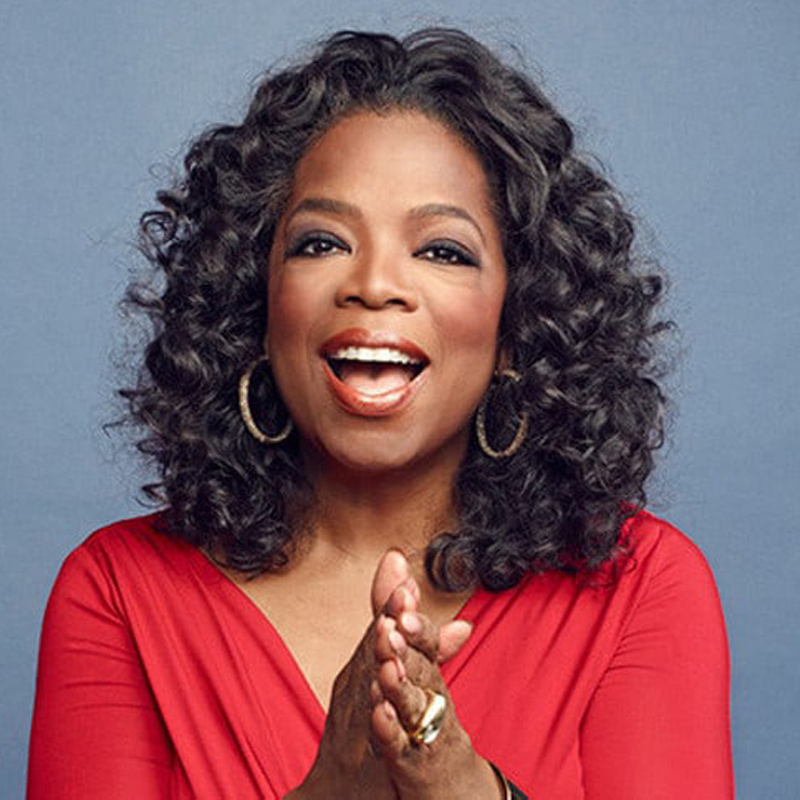
MUMBAI: Remember the Oprah Winfrey show? The unstoppable business woman behind the show has now signed a multi-year content partnership with technology company Apple. Winfrey will work with the iPhone maker to produce TV shows for its forthcoming streaming service.
Winfrey is a renowned media proprietor, talk show host, actress, producer, and philanthropist.
Together, Winfrey and Apple will create original programs that embrace her incomparable ability to connect with audiences around the world. The deal includes making of a film, tv, applications, books and other content that could easily be distributed on Apple’s platform.
Winfrey’s projects will be released as part of a lineup of original content from Apple.
Winfrey’s Harpo Films will own any and all content produced under the Apple partnership, in line with Winfrey’s longtime business model. However, she will continue in her role as chairman and CEO of Discovery Communications-backed cable network OWN.
Apple has stepped up against other OTT giants Netflix and Amazon Prime who have signed multiple celebrities and personalities in the last year. Apart form Winfrey, Apple recently also signed Jennifer Aniston, Reese Witherspoon and Steven Spielberg to reboot its original content plans.
Earlier last week, Nicole Kidman joined hands with Amazon for a first-look film and TV deal.
While Apple’s $1 billion push in original programming is big money, Netflix spent $6.3 billion while Amazon splurged $4.5 billion in 2017.
MUMBAI: American multinational technology company, Google, is all set to invest $550 million in China’s second largest e-commerce company JD.com. The move comes as part of the technology giant’s effort to expand its presence in fast growing Asian market.
Under the agreement, Google will receive 27,106,948 newly issued JD.com Class A ordinary shares at an issue price of $20.29 per share, equivalent to $40.58 per ADS, based on the volume-weighted average trading price over the prior 10 trading days.
With this partnership, Google will own less than a per cent stake in the company. Beyond the cash investment, the deal will also include promotion of JD goods on Google’s shopping service. This will also help JD.com expand its base beyond China and Southeast Asia to establish a string presence in U.S. and European markets.
By applying JD’s supply chain and logistics expertise and Google’s technology strengths, the two companies aim to explore the creation of next generation retail infrastructure solutions, with the goal of offering helpful, personalised and frictionless shopping experiences.
In a blog post, Google president of Asia-Pacific Karim Temsamani said, “We want to accelerate how retail ecosystems deliver consumer experiences that are helpful, personalised and offer high quality service in a range of countries around the world, including in Southeast Asia.”
“By applying JD.com’s supply chain and logistics expertise and our technology strengths, we’re going to explore new ways retailers can make shopping effortless for their consumers, giving them the power to shop wherever and however they want,” Karim added.
It is noteworthy that Google’s main services are essentially blocked in China ver its refusal to censor search results in line with local laws. For this, Google announced that the agreement initially would not involve any major new Google initiatives in China.
JD.com chief strategy officer Jianwen Liao in an official statement said, “This partnership with Google opens up a broad range of possibilities to offer a superior retail experience to consumers throughout the world. This marks an important step in the process of modernising global retail. As we celebrate our June 18 anniversary sale, this partnership opens a new chapter in our history.”
The Asia-Pacific region is one of the largest and fastest growing e-commerce marketplaces in the world. People in Southeast Asia alone are expected to spend $88.1 billion online by 2025. These consumers in Asia-Pacific are ready to buy, but hard to please. The growth of access to the internet and online retail has led to rising expectations for top-notch experiences at every step of the shopper’s journey.
MUMBAI: While brands continue to engage in paid promotions through influencer marketing, consumer goods giant Unilever’s had enough. The world’s second biggest advertiser has decided to stop this practice to promote its products. Companies tend to rely on influencers to generate a buzz around their products on social media. But more often than not, followers of these influencers aren’t real people but fake accounts and bots.
Hence, Unilever, maker of Sunsilk shampoo, Dove and Lipton tea, wants to help make advertising more transparent and will cut ties with all digital influencers. Unilever spent US $8.9 billion on marketing last year.
The company’s chief marketing officer Keith Weed is said to pledge today at the on-going Cannes Lions that Unilever will never buy followers or work with influencers who buy followers.
“Trust comes on foot and leaves on horseback, and we could very quickly see the whole influencer space be undermined. There are lots of great influencers out there, but there are a few bad apples spoiling the barrel and the trouble is, everyone goes down once the trust is undermined,” Weed told Reuters.
It was only recently that Unilever threatened Facebook and Google that it will withdraw its advertising on the social media platforms if they fail to remove content that creates division in the society and promotes hate. Weed had said at the time, “As one of the largest advertisers in the world, we cannot have an environment where our consumers don’t trust what they see online.”
The move also comes as Unilever and Procter & Gamble are in the process of auditing their ad spends and agency relationship to function more efficiently as the industry sale for consumer packed goods has witnessed a drop. To cut down on the advertising and marketing costs, these multinational brands are now working with fewer agencies while creating some of the campaigns in-house rather than spending millions on an ad agency.
According to a report by Rakuten Marketing, some UK advertisers were willing to pay US$100,000 to celebrity influencers for a single Facebook post whereas a micro influencer with followers as low as 10,0000 earns as much as 15000 pounds for a single post.
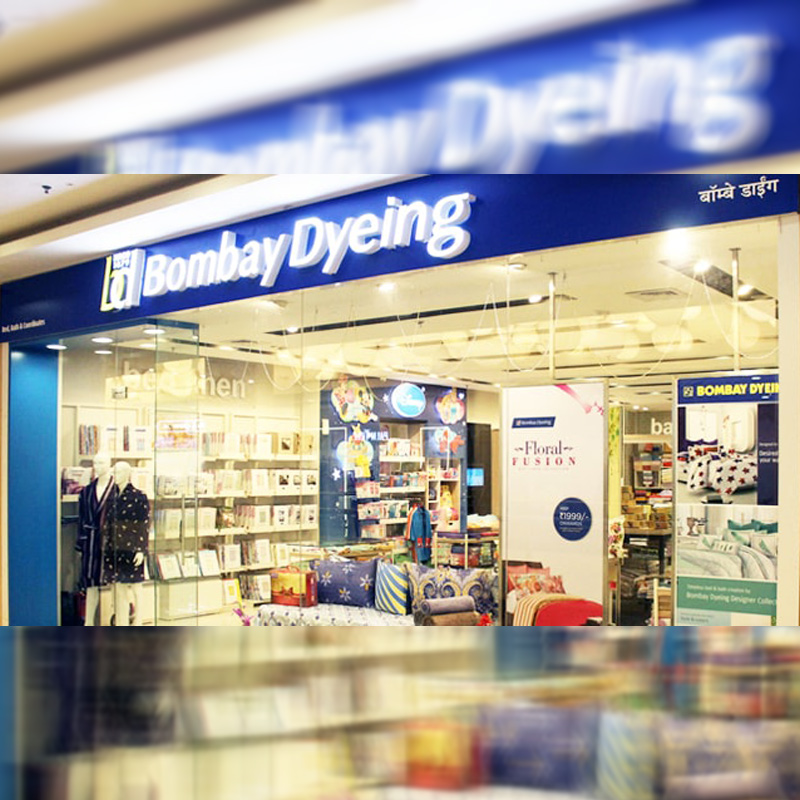
MUMBAI: A customised bed sheet with an image of your favourite travel destination, family or just a picture that you clicked. Sounds fancy? Well, bath and bedding company Bombay Dyeing has launched a new campaign to target the millennial consumer where they can upload an image on the company’s website and the customised bed sheet is delivered to their doorstep.
Launched only last week, the company has received a phenomenal response with orders for customised bedsheets coming in from across the country. Interestingly, people showing an interest in the new, customisable bed sheets are not restricted to the creamy layer of the society.
According to the company, it is the B class segment where most of the orders are pouring in from. Despite being priced at a premium amount of Rs. 1999, people in rural and small towns haven’t been deterred from going for a pair of these bed sheets.
Designed by the creative agency L&K Saatchi & Saatchi, the company has launched three films in total to promote the latest initiative, two 10 seconds ads for television along with a digital film. While they are betting big on TVC and outdoor for the campaign, the company will stay away from print for this particular campaign.
Established in 1879, Bombay Dyeing today stands as the oldest flagship brand of the Wadia Group in India. The brand that is primarily into bath and bedding, has seen a fair share of highs and lows in its 137-year history.
Today, bath and bedding category has become a cluttered sector with newer players entering the market and increasing imports from Taiwan, Bangladesh and China. However, there are limited players in organised sector that cater to the premium consumer. These include D’Decor, SPACES, Portico, Bombay Dyeing and Welpsun among other small and local players.
It is a challenge for most brands to communicate and connect with the audience of today, which is digital savvy and spends more time on their personal devices and far less sitting in front of a television set.
On the advertising front, the company usually spends 40 per cent of its allocated ad budget on television and a mere 10-15 per cent on digital platforms, which is on par with what most brands in this category spend. However, it is interesting to note that Bombay Dyeing did not spend a dime on digital advertising two years ago. Bombay Dyeing CEO for retail category Aloke Banerjee states that the company’s digital spend will increase to 30 per cent by year 2020.
On television, they advertise on GEC, movies, lifestyle and regional channels. They refrain from using print and resort to the medium only for big campaigns, sale and festive announcements.
As of May 2018, the company’s revenue has grown by 44 per cent YoY and 22.2 per cent QoQ to Rs757.8 crore as compared to 692.2 crore in November 2017. Although the company’s growth was static in 2017 due to the after effects of demonetisation, roll out of GST and other factors, Banerjee is expecting a 34-45 per cent of jump in revenue by the end of 2018.
Considered a premium brand, Bombay Dyeing’s bedsheets start at as low as Rs. 600. The demand for these mostly comes from rural areas and B class towns. However, the company’s rural penetration still continues to remain weak. To improve this, Bombay Dyeing is set to open 100 exclusive franchisee stores in smaller segments of India.
E-commerce has now become the go-to favourite for every retailer as they don’t have to spend lakhs of rupees for a brick and mortar store. This ideally means they can showcase their products with minimum investment. Today, Bombay Dyeing is among the top three preferred brands in the bed and beyond category along with SPACES and D’Decor.
“E-commerce contributes to 5-7 per cent of out current revenue but we want to increase it to 20-30 per cent in the next 3 years. We are eyeing a triple jump in sale this year through e-commerce,” said Banerjee.
While the organisation has stopped its exports business for the last 3 years, it intends to re-enter the Middle East market actively again by the end of 2018.
Most of the Bombay Dyeing consumers swear by its quality of fabric and print, but not everyone knows that the company no longer manufactures its bedsheets and rather outsources them to other vendors. How has that fared for them? Great, apparently, because they are eyeing a revenue of Rs 1000 crore by year 2020.
It is a general belief that when a brand signs a Bollywood celebrity to endorse a product, it is bound to generate buzz and increase the demand. Bombay Dyeing however has no brand ambassador at the moment Although, the company has collaborated with John Abraham, Karan Kapoor, Lisa Ray among other celebrities in the past.
What started off as a suits and shirting company has today transformed into a primarily bed, linen and upholstery business. But the company is bringing back its readymade shirts and suiting business and foraying into the rugs and curtains’ segments.
The challenge for the company lies from local vendors and brands along with international players stepping in the market. It will be interesting to see how the company adapts to the changing consumer needs and whether it still continues to be relevant to a generation that already considers the brand “fuddy duddy”
MUMBAI: Decorative paint manufacturers, Indigo Paints, has signed MS Dhoni as brand ambassador.
The company has inked a deal with MSD for the next several years and plans to launch the advertising campaign on television, print and digital by August.
Cricketer and brand ambassador MS Dhoni says, “Very happy to be associated with a young and vibrant brand like Indigo Paints, which is emerging as a challenger to the established players. Reminds me of my early days, and would be glad to help the brand reach great heights.”
Indigo Paints MD Hemant Jalan adds, “Dhoni’s journey from a small town boy to a global icon is inspiring. Indigo’s journey is also similar to that of MSD. Hence we feel that MSD’s persona is an excellent fit for our brand. His appointment has been received with unprecedented enthusiasm within our sales team and the paint dealer community. We are confident of creating clutter-breaking ads using MSD, and getting a similar reaction from the end-consumers too.”
Indigo Paints has been in business since 2000 and has emphasised on launching new paint concepts for the consumer and invented paint categories which never existed before like Floor paints, Ceiling paints, PU Enamel, etc. This differentiation has helped Indigo Paints clock a CAGR of over 40 per cent over the last 10 years.
MUMBAI: Procter & Gamble (P&G) Indiaalong with its partner WEConnect International recently concluded the Women Business Empowerment Programin India. 20women entrepreneurs, who were selected via an application processgraduated fromthe four-week program aimed at developing capability of women entrepreneurs. As part of the program, P&G conducted training andworkshops with real-time case studies covering various aspects of building a sustainable business including professional skillslike consumer engagement, digital marketing, legal and tax system, effective communication etc.Taking this a step further, the holistic program also provided women entrepreneurs access to business opportunities with P&G and its partners. Through the holistic Women Business Empowerment program, 25% of participants secured business opportunities with P&G and its partners.
The training sessions and workshops were mentored by senior leaders from P&G and prominent women leaders and entrepreneurs from across industries includingRicha Arora, COO, Consumer Business, TATA Chemicals; Simran Hoon, Executive Vice President – Viacom18; Poorvi Chothani, Founding and Managing Partner, LawQuest; Prof. Vineeta Dwivedi from SP Jain Institute of Management and Research (SPJIMR); Richa Pai,FMCG Merchandising head, Aditya Birla Retail Limited; Aarti Bindra, Managing Director, ACPL Systems Pvt Ltd.; Kalpana Anantraman, CEO, Avion Systems and Gauri Sawant, transgender activist and Managing Trustee, Sai Savli Foundation and Founder ‘Aaji Cha Ghar’.
Procter & Gamble (P&G) India has committed itself to sourcing US$30 million from women-owned businesses across India over the next three years. This initiative to support women entrepreneurs is built on P&G’s global commitment to promote greater gender equality in line with the United Nation’s Sustainable Development Goals.
P&G India Sub Continent,CEO, Madhusudan Gopalan said, “We are delighted to conclude the first edition of the Women Business Empowerment program (WBEP). Through this initiative, we conceiveda holistic capabilityplatform which will help women entrepreneurs build their businesses sustainably. This initiative is in line with our global commitment to empower women-owned businesses which is an important aspect of our citizenship efforts. We are committed tosource US$30 million from women-owned businesses across India over the next three years. Through this commitment, we believe, we will not only be able to stimulate economic growth but also bring about a social change via empowering women entrepreneurs.”
Gender Equality is a priority focus area of P&G’s Citizenship efforts. P&G has been steadily working to improve gender equality by leveraging its unique strengths in partnership and collaboration with industry stakeholders. P&G has also announced a series of measures designed to support a push towards gender equality across the Indian Subcontinent, Middle East and Africa region and the recent initiative in India is another strong statement in that direction.
MUMBAI: Flipkart-owned UPI-based payment platform PhonePe has partnered with taxi aggregator Ola. With this tie-up, users will be able to book an Ola cab using the PhonePe app.
With both the companies already catering to a large user base, this also becomes the first large scale implementation of AutoPay (through standing instructions) for ride bookings in India.
Phone Pe co-founder and CTO Rahul Chari says, “With this partnership our users can enjoy the ease of using their preferred ride sharing app from within PhonePe while being assured of the reliability and integrity of their payments. Ola’s scale and reach, topped with our Auto-pay feature will enable greater convenience and control to our users while making payments seamless.”
Ola co-founder and CTO Ankit Bhati thinks that duch partnerships drive the vision of Digital India, getting more users to experience the benefits of online services.
The Ola micro-app is also a big technology milestone for PhonePe as it has been built ground-up by the PhonePe team using the Ola developer platform. It is the first of its kind mapping application using react native that provides not just location but navigation with directionality, matching the experience of native iOS and Android maps.
This partnership is part of PhonePe’s vision of being an open payments ecosystem, enabling businesses of all sizes to build and deploy apps on its platform with a unified login and payments experience for its users.
PhonePe is also adding partners in the travel, hospitality, ticketing and food segments to its micro-app platform.
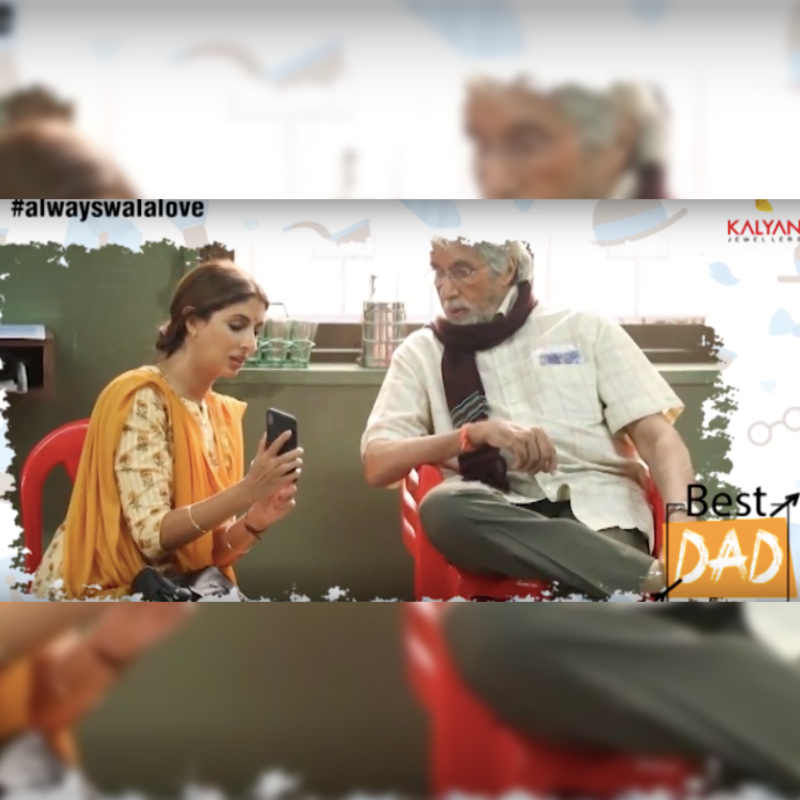
MUMBAI: Kalyan Jewellers, one of India’s leading jewellery brands, has kick started its Father’s Day campaign with an interesting video chat between Amitabh Bachchan and Shweta Bachchan.
The video story captures a candid conversation between the two where Shweta speaks about her happiness in spending a day with her father, while Big B reveals an anecdotal story from when his daughter was a toddler.
Using this video as the launch pad to their Father’s Day campaign, Kalyan Jewellers has partnered with social media influencers from around the country, to take this conversation further. The idea is involve a larger audience and get them to speak about the #AlwaysWalaLove that they share with their father.
Kalyan Jewellers is parallelly running a contest on the sidelines of their #AlwaysWalaLove campaign wherein the brand has urged its customers and followers to share their father-child story and stand a chance to win exclusive gifts from Kalyan Jewellers.
Headquartered in Thrissur in the state of Kerala, Kalyan Jewellers is one of the largest jewellery manufacturer distributors in India. Starting with the first jewellery showroom in 1993, Kalyan Jewellers has enjoyed a long-standing presence in India for over two decades.
Kalyan has been present in the GCC since 2013 and has operations in the UAE, Qatar, Oman and Kuwait. It has set industry benchmarks in quality, transparent pricing and innovation. Kalyan offers an array of traditional and contemporary jewellery designs in gold, diamonds and precious stones catering to the distinct needs of the customers.
Kalyan Jewellers has 122 showrooms across India and West Asia. Kalyan Jewellers continues to adhere to the founding principles of its forefathers of pursuing fair and ethical business practices.