Category: Brands

  • Sony increases its stake in Sony Financial

    Sony increases its stake in Sony Financial

    MUMBAI: Sony Corporation has raised its stake in Sony Financial Holdings from 63 per cent. The latter is the holding company for Sony’s financial services business. However, the total per cent of stake that Sony will now hold in its financial department is still unknown. 

    The company bought 9 million shares on Tuesday for 2,144 yen each in an off-market transaction. Sony Corporation already holds 274,050,000 shares in the company.

    The ¥19.3 billion (around 170 Million) acquisition will boost net income for Sony’s shareholders with the goal of raising corporate value for both the Sony Group and Sony Financial.

    The company also said that it’s desirable for Sony Financial to maintain its listed status, and secure transparent management and independent financing

    The Financial division which was founded in 2004 is headquartered in Tokyo, Japan, and owns and oversees the operation of Sony Life Insurance, AEGON Sony Life Insurance (50 per cent joint venture with Aegon N.V.), SA Reinsurance Ltd. (50 per cent joint venture with Aegon; British Bermuda), Sony Life Singapore, Sony Assurance, Sony Bank, Sony Payment Services, SmartLink Network Hong Kong Limited, Sony Lifecare and Lifecare Design. 
     

  • Diageo enters e-alcohol space with Rs 270 mn investment in HipBar

    Diageo enters e-alcohol space with Rs 270 mn investment in HipBar

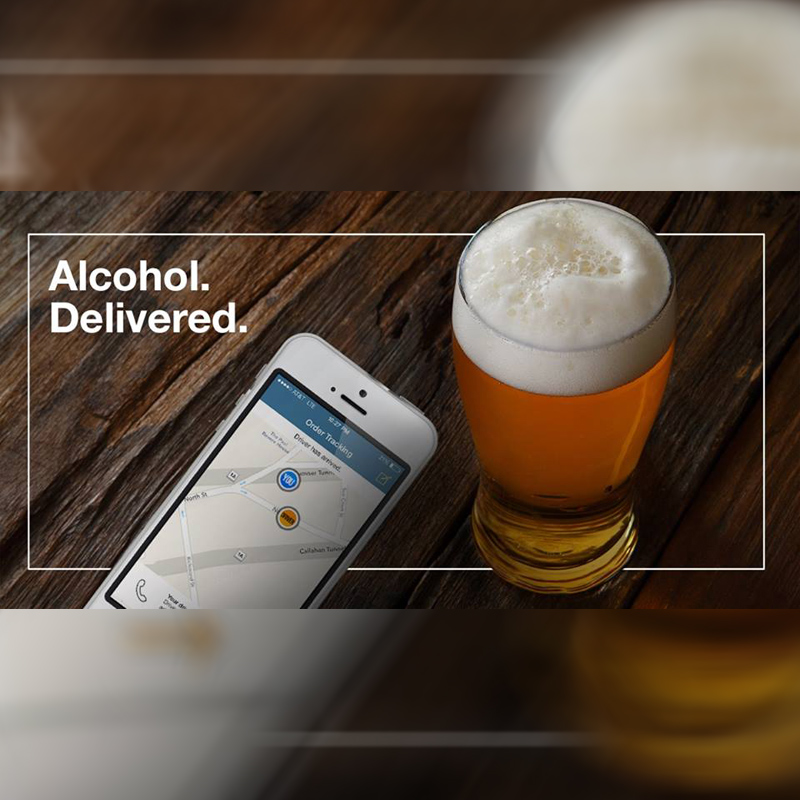
    MUMBAI: Diageo India, the country’s leading beverage alcohol group, through its legal entity United Spirits has made an equity investment in HipBar, a payment technology start-up that serves the needs of the beverage alcohol industry and its consumers, through a mobile wallet and delivery app.

    Diageo has acquired a 26 per cent equity stake in HipBar for Rs 270 million.

    Diageo India is committed to transforming the beverage alcohol industry and with this investment, the company will support HipBar’s digital ambition and help expand its footprint across more markets. HipBar unlocks the industry’s need to provide better experiences, promote responsible consumption and digitally connect brands, retail stores and consumers through a common digital platform.

    https://www.hipbardelivery.com

    With the HipBar app, age verified consumers can browse a range of alcoholic beverages, select a brand of their choice and pay through the mobile wallet to have the product delivered at their doorstep (where permitted) or pick it up from a retail store at their convenience.

    HipBar has developed a stringent age verification process as well as highly compliant standard operating procedures to ensure that the company’s delivery service fosters a safe drinking environment in India.

    On the B2B front, HipBar works closely with the beverage alcohol industry and the government to custom build software and deploy technology projects that will help the category to move forward in a compliant and sustainable manner. 

    Some of these digital initiatives include last mile alcohol delivery platform, SaaS based e-governance module for use by governments, HipBar point-of-sale for standalone licenced retail stores and HipBar Pay for government controlled retail stores. 

    Founded in 2015, HipBar operates in Bengaluru and Chennai.

    Diageo India CEO and managing director Anand Kripalu says, “E-commerce is making an impact on just about every industry imaginable, and the beverage alcohol industry is set to be the next sector to be disrupted by the continued shift to digital. This investment allows us to discover ideas that anticipate shifts in consumer behaviour and enables us to remain at the forefront of trends.”

    HipBar will continue to run as an independent enterprise driven by its founding team.

    HipBar founder Prasanna Natarajan mentions that the company’s interest will always be subservient to how HipBar is performing in the social sphere and if it is indeed bringing the intended benefits of technology to help people drink more responsibly.

  • Dineout launches FIFA contest for fans

    Dineout launches FIFA contest for fans

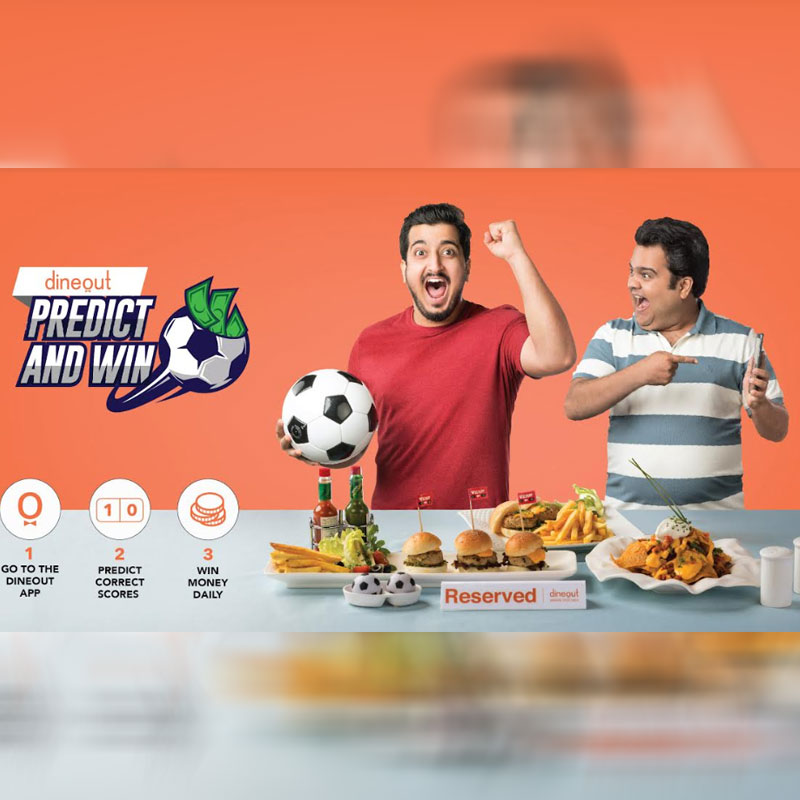
    MUMBAI: India’s premier table reservation platform, Dineout, has just made the 2018 FIFA World Cup more exciting for football fans in India who couldn’t make it to Russia for the games by presenting the ‘Dineout Predict and Win’ contest.

    It requires users to simply download the Dineout app, make their daily score predictions and win daily Dineout Earnings. Instead of points and coupons with fine print, a user can win Dineout Earnings of up to Rs 1500 every single day during the World Cup. For the uninitiated, Dineout Earnings can be used to pay your restaurant bill at top restaurants in any city where Dineout’s services are available.

    To add more, Dineout Earnings can be used to pay up to 50 per cent of your restaurant bill. Besides this, it can also be used to earn your entry to watch the World Cup matches at top restaurants in the cities where Dineout’s services are available. Dineout will have a special listing of top restaurants screening the FIFA World Cup matches in the cities where Dineout is present.

    To participate in ‘Dineout Predict and Win’ contest, users need to download the Dineout App and click on the Football icon to start playing. Users win even if their team loses despite their prediction.

    To top it all, the user with the most number of accurate predictions and the highest earnings stands to win a ‘free trip to Spain for two – powered by Paytm Travel.’

  • Vivel celebrates freedom of choice in new campaign

    Vivel celebrates freedom of choice in new campaign

    MUMBAI: ITC’s personal care brand, Vivel, has launched its impactful TVC integrating the brand’s philosophy of ‘Ab Samjhauta Nahin’. Vivel believes that being empowered is about having the freedom to make a choice. A choice to be yourself, the way you think, behave or even dress.

    The new Aloe Vera soap film tells a story of one such choice. A lot of women feel the pressure to behave or dress like men in order to be successful and accepted in workplaces as equals. 

    The 30-second story encourages women to retain their softness and empathy while being assertive. She rather believes that softness is not her weakness but rather her identity and strength.

    The TVC features veteran TV actor Supriya Pilgaonkar and her daughter Shriya Pilgaonkar. The narrative opens with Shriya Pilgaonkar being depicted as the daughter, who is confident of her choices and expresses it in her soft yet assertive way irrespective of circumstances or individuals. She believes in her strengths and is unwilling to dress like men just to fit in.

    The film introduces a fresh and a more meaningful understanding of confidence that is aimed to make a positive and an emotional connection and resonates with the product promise of softness in Vivel Aloe Vera soap. The ad showcases the strength of identity in a woman’s inherent values.

    Brand David executive vice-president Ajay Menon says, “We are thrilled to have partnered with ITC to bring alive a campaign that is creating a platform for the brand to engage with its consumers in a much more authentic and deeper level.”

  • Yardley launches new range of floral perfumes

    Yardley launches new range of floral perfumes

    MUMBAI: Yardley, a heritage personal care brand from Wipro Consumer Care and Lighting has launched an array of daily wear perfumes. The Modern Indian Woman, who is a perfect amalgamation of beauty, confidence, and elegance, inspires this contemporary range of Eau De Cologne from The House of Yardley. 

    These perfumes are a unique blend of finest floral fragrances crafted to last through the day. The colour palette sets the tone for the season in elegant purple, yellow, pink and aqua blue.

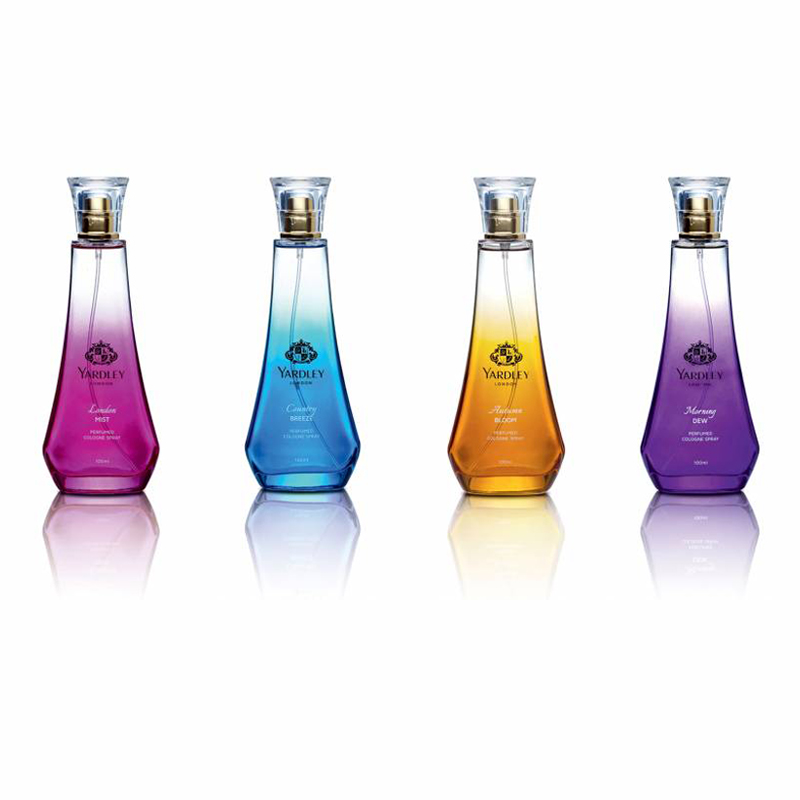
    This new range has four floral fragrances priced at Rs 499 for 100ml.

    The Daily wear perfumes come in Morning Dew, London Mist, Autumn Bloom and Country Breeze variants.

    Yardley India vice president and business head consumer care Manish Vyas says,  “Over the years, Yardley of London is loved and admired for its beautiful floral fragrances that are timeless classics worn by women of all ages. We are delighted to introduce Yardley Daily Wear Perfumes. This range aims at making daily usage of perfumes a habit in India. It is targeted at discerning users who seek products with a high effectiveness, unique image and an original concept. We are confident that this newly introduced range will further enhance the Yardley brand in India.”

    Established in 1770, Yardley is one of the world’s oldest living brands in the personal care category with fragrance, bath & shower and skin care products. It is a premium priced brand and is one of the few personal care brands, which has been bestowed with the honour of six prestigious Royal Warrants over the past 245 years.


  • Need for condom brands to target the rural audience

    Need for condom brands to target the rural audience

    MUMBAI: Sex is perhaps the most rampant taboo in India. Despite the economic and technological advancements, sexual discourse in the country is yet to witness a significant evolution. From sex education in school to conversations at home, the country in a sense continues to avoid addressing the elephant in the room. The cultural conditioning, especially in a country as large and diverse as ours, tends to have major implications on industry and market economics. Marketers and advertisers tend to feel handicapped when operating around no-go-zones. That's the space India's condom companies find themselves in.

    In India, Condoms advertising continues to be a tug of war between advertisers and the regulatory authorities. Companies create an advertisement, spend millions on marketing, only to find out that ASCI and MIB have slapped them with charges to withdraw or modify the ad. There is no running away from the fact that Indians have a conservative approach to sex. And When condom brands try to titillate and opt for sleazy advertising, they compound the problem.

    This rather 'controversial' category has always had its challenges and limitations when it comes to product marketing. The ‘Sanskaari’ Indians don't want to see condom ads on television, hoardings or radio. Maybe, that’s the reason we tend to notice fewer condom brands around us. 

    While the situation is still better in urban and metro cities, one wonders what the scenario is like in rural pockets of the nation where topics like condom and sex are considered 'impure' and 'grubby'. 

    The overall condom penetration in India is only six per cent. According to several studies and surveys, the Indian condom market is projected to reach $180 million by 2022. This is on account of rising consumer awareness about HIV, STI and other sexually transmitted diseases. The booming e-commerce business, rising young population and an increase in the average marriageable age are other contributing factors that have played a role in effecting this change.

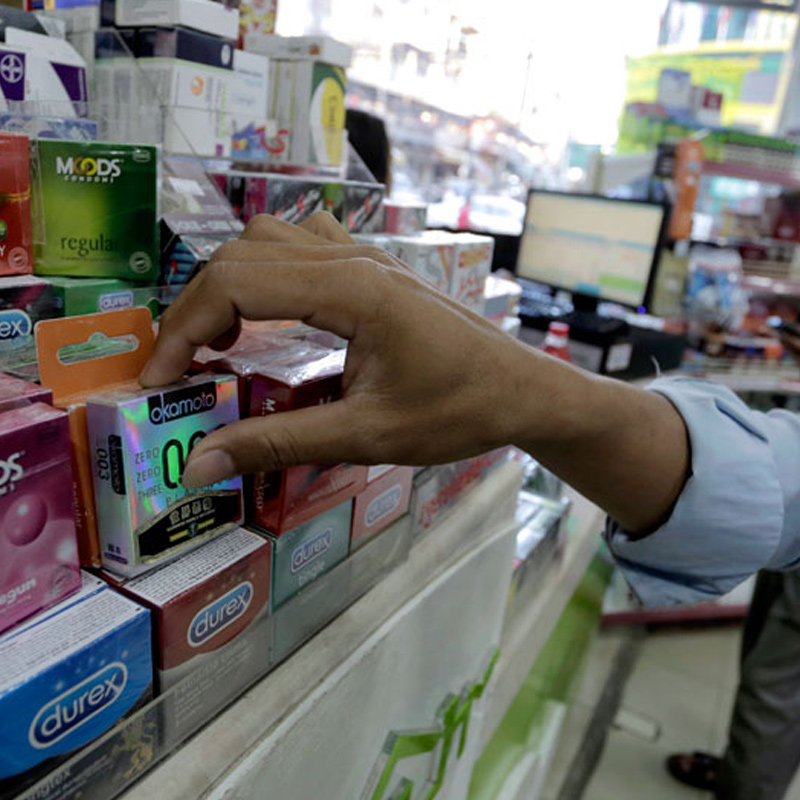
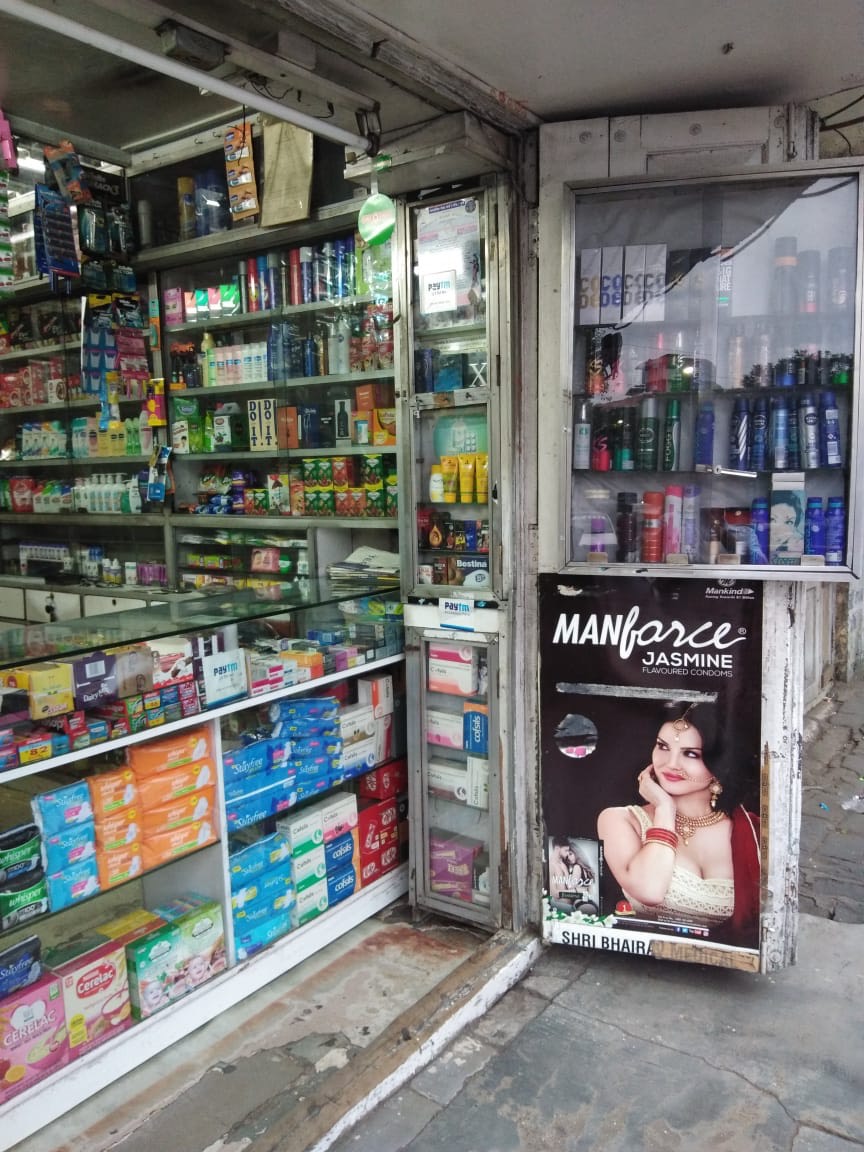
    The market is primarily dominated by Manforce with a 32 per cent share, followed by Moods at 12 per cent, Skore at 10 per cent, Kamasutra at eight per cent, Kohinoor at eight per cent and Durex at around three per cent along with local brands. 

    The National Family Health Survey in its 2015-16 survey revealed that the knowledge of contraceptive methods is almost 100 per cent in India and 99 per cent of married women and men aged between 15-49 know of at least one such method. Sounds like a good number, right? However, the condom penetration (usage) in India is extremely low, with the urban sector clocking around six per cent and the rural a mere four per cent.
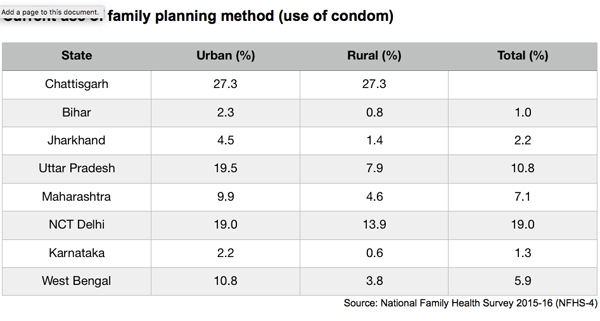
    GRAPH.jpg

    The rural market is still small in India and contributes to about 27 per cent of the 1073 crore condom market in India as per a Nielsen report. But the good news is, it has grown by 16 per cent in terms of value in 2017. Usage of condom in smaller pockets has increased in the last five years due to modernisation, digital penetration and availability of low cost smartphones and data.

    The segment is still unorganised with major private players taking the lead in developed regions. They spend millions on advertising and marketing themselves in the eyes of modern consumers. Case in point: Manforce signed pornstar-tuned-Bollywood actor Sunny Leone, Durex snapped up Bollywood actor Ranveer Singh after he admitted that he was ‘addicted to sex’, SKORE condoms went international and signed cricketers Chris Gayle and Dwayne Bravo. The result? These brands are now at the top of brand recall in the eyes of consumers.

    But the rural scene is majorly dominated by local players. Retailers often take advantage of the consumer discomfort and display brands that allow them good margins, which in most cases are local companies.

    At such a point, it is crucial for national brands to create brand visibility for the audience that isn't really big on television or digital. In order to increase the penetration in smaller segments of India, JK Ansell has launched low value products under the portfolio of KamaSutra brand. Interestingly, Kamasutra currently does not advertise or market its product in rural regions, as 95 per cent its sale comes from the developed cities.

    Brands such as Durex, KamaSutra, Moods and SKORE prefer staying away from rural marketing and undertaking any awareness campaigns. But maybe its time they look into these markets as the next phase of growth is bound to stem from tier two and three towns.
    c20204cb-952a-4b9a-94c7-3eaaf22b798f.jpg

    Most condom brands look at targeting the younger generation in rural areas aged between 20-24 in the hinterland, where condom usage is greater. JK Ansell GM for marketing Ajay Rawal said, “Condom consumption is generally in the age group of 18-30 years. Beyond this, owing to sterilisation and IUD post marriage, the condom usage generally dips. So, the younger generation is where the future lies and hence we want to effectively tap into this segment.”

    Durex's pack of three condoms costs around Rs 55 whereas Skore, Manforce and KamaSutra are priced at Rs 25. Among local brands, Cobra condoms are sold at Rs 14, KIK at Rs 15 and Invigra's pack of 4 at Rs 30. 

    All said and done, distribution and social awareness still remains a challenge in the rural segment for major players as it is still serviced by low price condoms and free condoms (NIRODH) distributed by the Government of India. 

    Sales through modern trade outlets and the digital media are further driving the off take in the category, giving consumers more time during the transactions.The good news is that the rural consumers have taken a step towards accepting quality products rather than settling down with basic low value cheap condoms. 

    But that's not enough. The need of the hour, for condom companies and India as a country, remains the challenge of permeating social awareness down to the last mile.

    Also Read :

    I&B tightens up on condom ads on TV

    Time for condom brands to review their storytelling

    'Sanskari' India wants condom ads off primetime

    MIB recants, says only explicit condom ads banned during the day
  • Taco Bell wants to make potato great again with new campaign

    Taco Bell wants to make potato great again with new campaign

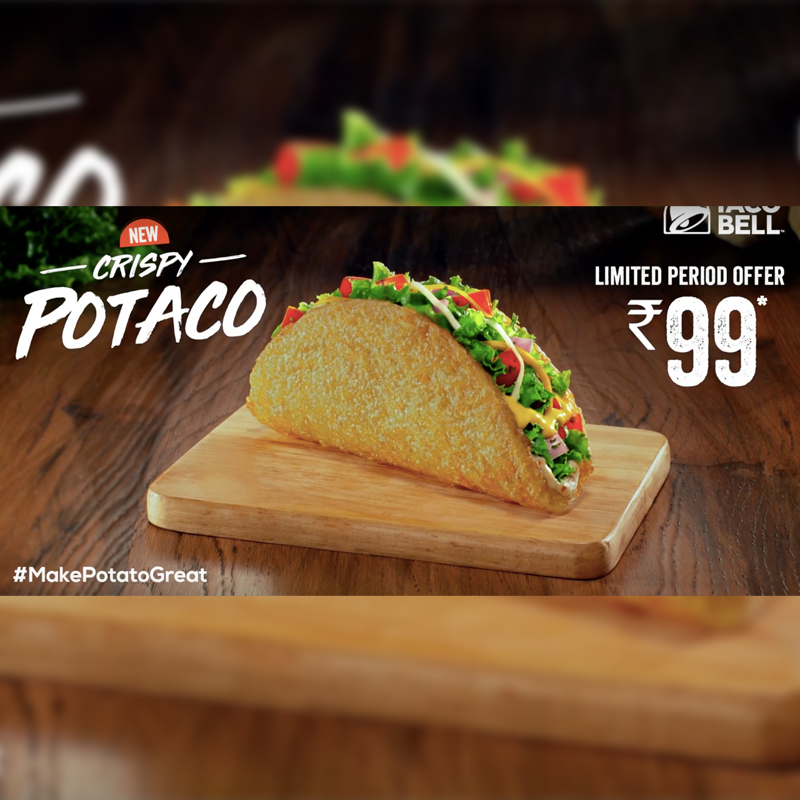
    MUMBAI: Taco Bell is set to make its way into the hearts of potato lovers across India. The brand has just launched a unique potato centric take on the traditional taco. The all new Crispy Potaco will give this much-loved vegetable a new identity where it will no longer play the sidekick in most meals.

    The potato has been discriminated against for far too long. The mighty spud suffers silently as it is crushed between burger buns, forced into a samosa, drowned in ketchup. The potato is oppressed. Why isn’t anyone speaking up? Because frankly, we’ve taken the potato for granted.

    When Taco Bell presented a product which has the potential to make potato great, Ogilvy stepped up to the challenge. The Crispy Potaco from Taco Bell has been promoted in a digital film starring Tanmay Bhat, an Indian comedian.

    Tanmay pitches the product to investors, who are floored by the novelty of the product. With the potato being on the outside, the Crispy Potaco lets the potato really shine through, so much so, that you will want to put your money behind it.

    Ogilvy Delhi vice president and head of digital Sidharth Shukla says, “Everyone was geared up, all set to break previous milestones that we had established on both the creative and the business front. And for a product variety that we eat so much of, but barely give it a second thought.”

    The brand’s first choice for this campaign was Tanmay, because of his ability to capture audiences through his humorous and entertaining content.

    https://www.facebook.com/tanmaycomedy/videos/1764059127008578

  • Oyo expands footprint in China

    Oyo expands footprint in China

    MUMBAI: Indian budget hotel company Oyo Rooms has forayed into China to cater to the country’s burgeoning hospitality industry. Oyo Rooms.

    The Softbank-backed Oyo in China will have 11,000 exclusive-franchise or merchandised rooms across 26 cities. The service will be available in Xiamen, Kunming, Shenzhen, Chengdu, Nanjing, Xian among others.

    The company will compete with already established players in the market including Home Inns, GreenTree and Motel 168.

    Oyo founder and CEO Ritesh Agarwal says, “The country’s tourism industry is on the cusp of booming and flourishing wherein it enjoys a strong influx of both domestic and international tourists; also the market is as fragmented as the Indian hotel market. With our expertise in managing chain of hotels backed by technological innovations, we will further continue to strengthen our footprint while empowering neighbourhood hotels to emerge in the same league as the big boys of hospitality.”

    The company is looking at expanding its footprint in international markets, with Dubai and Indonesia being high on its priority. Agarwal is also said to be exploring opportunities in the UK and US markets.

  • Team ITC makes India proud ,Wins a Silver Lion at the Young Lions Marketers Competition at Cannes

    Team ITC makes India proud ,Wins a Silver Lion at the Young Lions Marketers Competition at Cannes

    MUMBAI: Two young women managers from ITC made India proud by winning the Silver Lion at the  very competitive & prestigious Young Lions Competition at Cannes. The team comprised Raisa Chakravarty and Anupama Sharma from ITC’s Personal Care Products Business. They had earlier won the India Challenge. Their achievement at Cannes is a testimony to ITC’s commitment and focus to develop and nurture young talent as some of the best minds and professional managers in the corporate sector in the country.

    The Young Marketers competition champions the world’s best young client marketers. Over an intense 24 hour period, teams were to design a concise, direct and effective brief. This year’s competition challenged global teams of young, in-house marketers from around the world to develop a creative brief for a product or service that would benefit the Movember Foundation, the only global charity focused solely on men’s health. Competitors presented their communication plans to a panel of industry leaders, which was led by Ruth Yearley, partner and director of insights and strategy at Ketchum.

    The teams were judged on the clarity of brief, the knowledge about the product or service, client organisation and its aims and the specific goals it needs to achieve.

  • Walmart sells $16 billion worth of bonds for Flipkart acquisition

    Walmart sells $16 billion worth of bonds for Flipkart acquisition

    MUMBAI: American multinational retail corporation, Walmart, has decided to sell $16 billion worth of bonds to help finance its investment in Indian e-commerce giant Flipkart. 

    Walmart offered fixed- and floating-rate notes in nine parts to Flipkart. The longest bond, a 30-year security, yields 1.05 per cent points above Treasuries, less than the initial 1.2 per cent points that was being pitched earlier in the day. According to a report by Bloomberg, the deal edged out an offering Bayer AG completed two days ago.

    The American giant announced in June that it will acquire 77 per cent stake in the Flipkart Group for $16 billion. This will leave Binny Bansal and other shareholders with 33 per cent of the stake in the company.

    India is the most active and favourite playing field for most e-commerce giants today. With Walmart and Flipkart coming together as one, it will directly compete with Amazon in India. The international e-commerce website has the biggest market share in India which is the fastest growing e-commerce market today.

    Walmart and Flipkart’s deal was led by JPMorgan, Barclays and Citigroup.