Category: Brands

  • Why does Dairy Milk continue to remain India’s favourite chocolate?

    Why does Dairy Milk continue to remain India’s favourite chocolate?

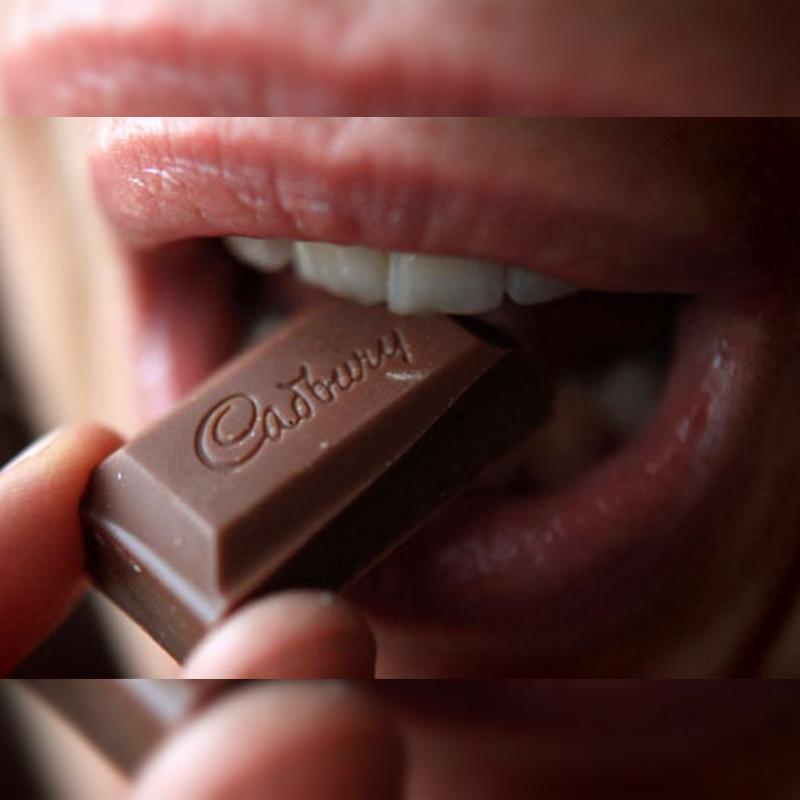
    MUMBAI: Go to any store in India and ask the person to hand you a Cadbury. You are for sure to get a bar of Dairy Milk, wrapped in purple cover, in your hand. Such has been the company’s branding that chocolate has become synonymous with Cadbury, although it is a brand with many candies.

    Cadbury Dairy Milk (CDM) was the first chocolate bar to have higher milk content than earlier ones when it was launched in the UK in 1905. By 1914, it had become Cadbury’s bestseller. But how did it become India’s favourite?

    Cadbury India, now known as Mondelez India, began its operations here right after independence, in 1948, by importing chocolates.

    In the land of gulab jamun and rasgulla, chocolate was an alien and expensive. Dairy Milk turned out to be a rather failed launch for the company. None but the crème de la crème could afford to buy an imported chocolate. Also, in the 70’s and 80’s, the brand was only available in certain areas and its ads usually showcased a working man coming back home with a chocolate bar in his pocket for his child. Dairy Milk was relegated as a product for children only.

    In the 80’s, Cadbury decided to manufacture Dairy Milk in India just to ensure that the production cost comes down and it’s available at a cheaper price point for Indians. But, other chocolate makers were still selling at lower prices. With sales dipping, the team was desperate for a communication strategy.

    India’s ad-man Piyush Pandey from Ogilvy & Mather came to the brand’s rescue in 1991. He suggested that the brand needed a revamped identity and target the younger generation and adults. Ogilvy created the first iconic campaign for Cadbury titled, “Kuch meetha ho jaaye” in 1993 which continues to remain the favourite jingle of every 90s kid.

    The campaign worked like a charm and Dairy Milk soon became every youth’s favourite chocolate. Suddenly, all these grownups — these responsible, serious grownups — had CDM bars in their hands. Batsmen, referees, grandfathers, policemen, teachers, pregnant women, college friends, lovers— the target group for Cadbury had changed and it was okay for adults to indulge now and that too in public.

    There was no looking back. Since then, Dairy Milk has continued to remain every Indian’s go-to chocolate.

    Through the years, Dairy Milk has been known for its loveable advertisements that make you want to sing along and do a little jig yourself. In the last decade, Dairy Milk has been positioned as something ‘meetha’ (sweet) — a strategy to counter traditional Indian sweets and the reach of local sweet shops. It comes as no surprise that Cadbury Dairy Milk is the most sold chocolate during festivals and special occasions.

    Mondelez attributes the company’s strategy of constant innovation and evolving with Indian consumers as reasons for its growth. “In the beginning, we were just trying to say that chocolate is a nice treat for kids but today Dairy Milk is a mass brand and it is a part of everyone’s heart. We have made a huge change in communication right from talking to kids to being occasion specific to now a casual consumption product,” says Mondelez International associate director for chocolate equity, India and South East Asia Nitin Saini.

    According to a recent market research report titled Branded Chocolate Market in India, the chocolate market is projected to grow at a CAGR of 17.8 per cent between FY 2017 to FY 2022. In the branded chocolate segment, Mondelez India has a whopping 65 per cent market share and its closest competitor is Nestle with 20 per cent market share.

    Another aspect that works in favour of CDM is that it has few competitors in its category. Mars Inc’s Galaxy is the closest you can get but while CDM is available for Rs 10, Galaxy starts at Rs 25. The product’s success has even spawned cheap imitation chocolates at lower prices.

    In the early 2000s, the company roped in star Amitabh Bachchan to promote it. Very soon, news about worms in CDM packets started leaking out and the company saw a 30 per cent dip in sales. The company lost no time in launching an aggressive campaign for its new tighter packaging which cost 10-15 per cent higher but did not hike the rates. It didn’t take long for consumer confidence to be back.

    Mondelez has a strong distribution network in India and it is only growing every year. You visit a chemist shop, a drug store, a general store, supermarket, airport or a small pan-bidi shop, they all have a dedicated set of CDM bars to offer. In 2017, the chocolate giant had over 1000 distributors and 7000 sub-stockists who distributed products to small general stores and other retailers. Rural sales contributed about one-fifth of Mondelez’s sales in the same year which was 10 per cent higher than a year before. Mondelez currently has 350,000 outlets in 40,000 villages and sees the next phase of growth coming from hinterlands.

    Though Dairy Milk cuts across all age groups and class, that seems to be changing now as chocolate and hazelnut confectionery, Ferrero Rocher, has come to be the latest favourite of the young and elite. Priced at Rs 430 for 12 pieces, the company faces a stiff competition from Dairy Milk that is India’s favourite festive gifting option. Come Diwali or Raksha Bandhan, and we see television and digital screens filled with Cadbury ads about making relationships stronger with something ‘meetha’.

    Not only has CDM managed to break into a difficult market but has even maintained its lead. Riding on the back of extensive marketing, communication and distribution networks, it will take a gigantic effort to dethrone it.


  • Flipkart, Hotstar announce new ad platform ‘Shopper Audience Network’

    Flipkart, Hotstar announce new ad platform ‘Shopper Audience Network’

    MUMBAI: Flipkart and Hotstar recently announced the launch of Shopper Audience Network, Flipkart’s new ads platform that allows brands to connect with customers through personalised TrueIntent video ads on Hotstar.

    Developed by Flipkart, Shopper Audience Network uses deterministic audience based insights to help brands connect with users by leveraging Flipkart’s understanding of users’ purchase journey and the massive scale of TrueIntent video ads. It will help serve personalised advertising to over 150 million users across hundreds of categories.

    Speaking on the partnership, Flipkart senior director Prakash Sikaria said, “Understanding our customers better than anyone else has always been one of Flipkart’s core strengths, and these insights help marketers in their ad journey, on our platform. This partnership further leverages the intent-based understanding and couples it with Hotstar’s platform to create an unparalleled offering in the ads industry in India.”

    Commenting on the development Hotstar EVP Prabh Singh said, “In Hotstar, marketers today have access to a large scale audience that is deeply engaged and paying attention. Brands that advertise on Hotstar are seeing the power of that engagement. The partnership with Flipkart will build on this proposition and provide marketers an opportunity to connect the dots to hundreds of product categories on Flipkart.”

    This partnership ties in with Flipkart’s ambition to be a leading digital ads platform in India and the partnership leverages Hotstar’s huge momentum in the video ads market.

    The three key components  of Hotstar video platform’s canvas of high quality content, innovative ad formats and a sticky and affluent audience when powered via Flipkart’s customer insights come together to create a compelling platform for any brand to talk to its consumers.

  • Secret Temptation revamped; McNROE eyes growth from deodorant segment

    Secret Temptation revamped; McNROE eyes growth from deodorant segment

    MUMBAI: Who doesn’t like to smell amazing and beautiful all the time! While perfumes and deodorants have been available for men for the longest time, it is only recently that Indian brands have begun experimenting with female deodorants and perfumes. The female perfume business has grown at 30 per cent CAGR in the last three years. The industry is seeing an increased demand for deo and perfumes from teenagers, young adults and middle-aged women.

    The deodorant and perfume category in India has grown rapidly in the last five years with Vini Cosmetics’ Fogg leading the market with 16 per cent share followed by McNROE which has a share of 14 per cent with Wild Stone and Secret Temptation products in its kitty. It is followed by ITC’s Engage, and Nivea, according to a Nielsen report.

    McNROE is the second-biggest deodorant maker in India after Vini Cosmetics. The company has now announced its new brand identity for its female grooming segment, Secret Temptation. The category includes products ranging from perfumes, deodorants, talcum powder and wet wipes for women. The tagline has now been changed to “Own Your Temptation” where the brand now boldly encourages women to pursue their desires with conviction. It also launched a new fragrance to Secret Temptation’s deodorant portfolio called Desire.

    The revamp will be promoted through a 360-degree marketing campaign that includes television, digital, print and outdoor. The company has also planned an extensive BTL activity across India which includes mass rallies and multi-city tours. Additionally, Secret Temptation has designed comprehensive digital campaigns to identify and recognise real-time instances of women who have seriously adopted their dreams. The TVC for the campaign is scheduled to launch in the first week of August whereas the digital activity will begin from 15 August.

    McNROE MD Narendra Kumar Daga aims to fuel consumer’s desire, increase brand loyalty and acquire new consumer base with the new launch. The renewed brand portfolio includes aesthetically designed deodorant cans of 150 ml configurations which will be available from 19 July 2018 in the Mumbai market. It will be made available across the country by mid-August.

    Currently, the brand occupies a 1.6 per cent market share in Maharashtra while Secret Temptation holds 1.3 per cent of market share in Mumbai.

    Lately, male grooming has been a growing market in India. While deodorant and fragrances have seen the highest traction, hair grooming solutions are seen as the next most popular category. Widstone has been another star product for McNROE that caters to men and young boys. Wild Stone product portfolio currently includes deodorants, perfumes, after-shave lotions, talcum powders, soaps, shaving creams and shaving brushes. It has grown at 38 per cent since last year and the company is looking at launching new variants in the category. The reception for men’s grooming segment has however been weak in rural due to distribution challenge.

    The company currently has 3.4 lakh distributors in India for its deodorant category and wants to increase it to 6 lakh by the end of this financial year. Daga says his focus in the second half of 2018 will on deodorant and perfume category where he wants to launch new products and variants.

    The perfume category has become extremely cluttered due to new entrants in the market and international players selling their products at an affordable price for Indians. Daga, however, does not see this as a challenge and rather confidently says, “While everyone is selling fragrances, we try to sell experiences.”

    The overall advertising for McNROE is led by television which accounts for 75 per cent of the marketing budget followed by print at 15 per cent and digital by 7 per cent. The company usually advertises its female product Secret Temptation on General Entertainment Channels and Lifestyle channels whereas Wild Stone is advertised on sports, music, movies and news channels.

    Being the second largest manufacturer in India, McNROE outsources 70 per cent of its products that fall in the deodorant category and manufactures talcum powder, shaving cream and other non deo products in-house at its Manufacturing unit in Uttarakhand. Daga confirmed that the company is all set to launch its second plant in Haridwar and it should be functional soon.

    Deodorants account for 70 per cent of the company’s revenue while non-deo products contribute to a mere 30 per cent. While we see a lot of ads and campaigns for the brand’s perfumes and deodorant category, the company hasn’t really invested any money on promoting talcum powder, shaving products and wet wipes. Daga is of the opinion that he will increase the investment in non-deo products only when the consumption increases as it makes no sense to invest in something which yields low ROI.

    While the corporate office in based out of Kolkata, the company boasts of an expansive outreach across India, Bangladesh, Nepal, Pakistan and Sri Lanka. Exports currently account for 4 per cent of its turnover.

    Daga believes the brand’s secret mantra has been following the passion for perfume and he encourages everyone to follow their temptation and passion as well. “McNROE came into existence because I didn’t shy away from my love for fragrances. It’s possible to convert ideas to reality if dreams are chased with faith and conviction.”

  • LinkedIn crosses 50 million user mark in India

    LinkedIn crosses 50 million user mark in India

    MUMBAI: For all the tech giants, India is becoming a high potential market very fast. Microsoft-owned professional networking platform LinkedIn has crossed the 50 million user mark in the country. The company which rolled out in 2009 had only 3.4 million users then, whereas now India is the second largest market globally.

    “Our members-first, localised approach has helped us cross the 50-million mark in India. We are at the beginning of an exciting journey, as we democratise opportunity for every member of the Indian workforce,” LinkedIn country manager and international product head Akshay Kothari said.

    The company has doubled its user base in the last four years on the platform. In future, the company will continue to focus on students, career starters, and professionals, beyond knowledge workers.

    For localisation of the platform, the company took several initiatives. In 2016, it launched the LinkedIn Lite website targeted for areas where internet connection is slow. The company has come up with an app version of LinkedIn Lite for Android users also.  

  • Understanding the design industry in India

    Understanding the design industry in India

    MUMBAI: Often, brands have less than a second to make a first impression. Even the best campaign will only get noticed if it’s able to stand out in the first few seconds. A good design helps a brand differentiate itself from all the noise of competing messages.

    Design can make or break a brand’s strategy. Clients often expect design teams to be able to interpret their brand’s strategy but don’t really believe that designs are capable of creating a staggering effect. Maybe that’s why they hold back from investing on a great design team.

    Design is to business what evolution is to nature: it helps companies to change and survive. With digital revolution, shorter attention span of the audience and shortening life cycles, brands need to break through with increased dimension and vitality.

    However, technology, consulting and financial companies are taking note of design and acquiring design agencies at an unprecedented rate. Albeit design being huge in the western world, it has only started to catch up in the world’s fastest growing economy, India. Back here, clients are now opening up to have a conversation about design, its importance for the brand and how it can help them in connecting with Gen Z. One such design and digital agency in India that’s helping shape up the design industry is, The Minimalist. Founded in 2015 and run by two alumni from IIT Bombay, the agency has worked for Coca-Cola, Minute Maid drink, Flyrobe, ICICI, Airtel, Xiaomi among others.

    Contrary to how most business for advertising or media agencies comes from retainer clients, design agencies can only work on project basis. Once the agency has created a design for a brand, it tends to work/maintain it in-house thereafter.

    But what are the key things to look at while rebranding or creating a design across all mediums – UI/UX, web interfaces, products, etc.? The Minimalist co-founder Chirag Gander lists down his key pointers:

    •    Brands need to have design guidelines as per recent trend. They have to keep up with the changing trend.

    •    The logo/design should be scalable. The design and logo should be made in such a way that it fits into a mobile screen as well as a desktop screen without pixelating or give different user experience.

    •    Identity should appeal to target audience. The revamped brand identity should resonate with the brand’s core target audience.

    •    Brands should be very consistent. They need to regularly monitor the design and change it if and when required.

    Gander says, “It was difficult earlier but clients have now started to appreciate design. Though design was considered a first world thing, its everywhere you see now.”

    Brands should not underestimate the value of a good design for their business and promotion as good design is not optional but critical for success. Whether a viewer is looking at a brochure, website, graphic or the full brand identity, if the design is not professional, a brand may loose the reputation that it has worked so hard to build.


  • Grofers forays into FMCG segment; targets Rs 2500 cr by FY 2019

    Grofers forays into FMCG segment; targets Rs 2500 cr by FY 2019

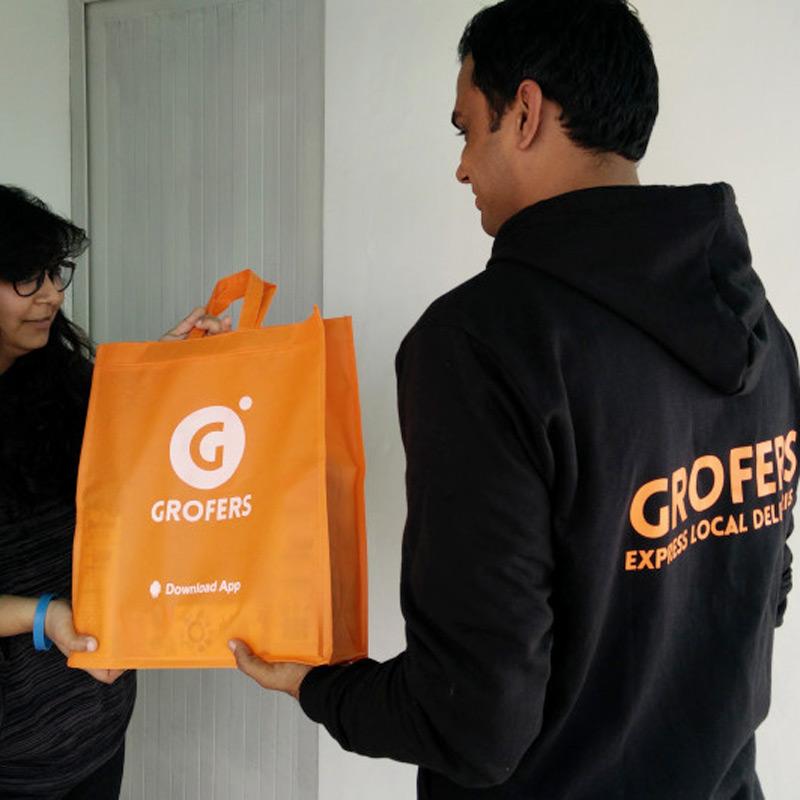
    MUMBAI: With an aim to disrupt the online retail market space, Grofers, the low price online supermarket, has announced its foray into the FMCG segment with the launch of seven new brands under two categories – Budget and Popular G-Brands. 

    With this, Grofers’ private labels expands to 250 food and non-food products for its consumers. Grofers aims to drive the next wave of growth for e-commerce sector by bringing the next 100 million customers to its platform. The brand is bullish on growth with a revenue target of Rs 2500 crore and roll out of 500+ SKUs for FY 2019. 

    The Popular G-Brands category offers premium quality products under brands including G Mother’s Choice, G Happy Day and G Happy Home. Labelled under the Budget category, the brands include HaveMore and SaveMore to cater to price sensitive consumers by offering entry level quality products. 

    The G Happy Day and HaveMore brands include an array of food products like tea, fruit jam, muesli, tomato ketchup, corn flakes, rose shahi sharbat , etc., whereas the G Happy Home and SaveMore brands address household needs with products in the categories of  detergents, household care, oral care, tissues and disposables, kitchen tools and accessories, furniture and storage and many more. 

    G Mother’s Choice is the flagship brand of the e-grocer that enlists a wide range of quality staples at the lowest price in the market. All the products under both G-Brands and Budget category are an assortment of great best quality offerings which will further enhance consumers’ savings in their everyday purchases. Grofers’ range of private label is priced approximately five per cent to 50 per cent lower than the market price for popular brands in these categories. 

    Grofers co-founder and CEO Albinder Dhindsa says, “Our foray into the FMCG segment uniquely differentiates and positions us in the e-grocery business. This vertical expansion is key to drive our next phase of growth in India. Our focus is to service what we call the ‘Real Bharat’ – the two wheeler families of India who are yet to experience the world of e-commerce and our target is to bring the next 100 million new customers to e-commerce industry through our platform.”

    Grofers founder Saurabh Kumar adds, “Grofers’ market disruption game plan includes providing great quality products at lowest possible prices. Towards this, our private labels under the two new categories allow us to offer high quality products at various price points to serve varied needs of our customers. We are taking our promise of Every Day Low Prices (EDLP), which remains unchallenged, to a whole new level through this move. The expansion marks yet another milestone in our success story as a home-grown brand and will significantly contribute towards shaping the overall e-commerce trajectory in the country.”

    Underlining its commitment to great consumer experience, the brand has significantly channeled its investment into building capabilities in the domains of product quality control, data sciences, inventory forecasting, consumer behaviour, manpower training and building supply chain efficiencies apart from building infrastructure to provide necessary support for inventory stock. Grofers successfully closed FY 2018 with Rs 950 crore of sales and is targeting for a stronger growth trajectory in 2019, with a 50 per cent contribution from its private brands.

    Delivering on its promise of everyday low prices, Grofers offers unique properties including Smart Bachat Club and Housefull Sale which have received tremendous response from consumers. Smart Bachat Club is India’s largest grocery loyalty program with a member base of over 2,00,000 customers, achieved within five months of introduction.

  • PhonePe acquires PoS platform Zopper

    PhonePe acquires PoS platform Zopper

    MUMBAI: Flipkart-owned digital payments platform PhonePe, yesterday, announced that it has acquired Zopper Retail, a hyperlocal point-of-sale platform for small and medium businesses. As part of the acquisition, Neeraj Jain, founder-CEO, Zopper will join the PhonePe team as head of product, offline merchant solutions.

    The acquisition of Zopper is part of PhonePe’s aggressive strategy to build its offline payments business and thereby expand its customer base. With this acquisition, the Flipkart-owned digital payments company will hope to merge the value-added service capabilities of Zopper into its platform, thereby strengthening its offline proposition for merchants.

    “Zopper has a very strong technology and innovation DNA, and Neeraj and team are also a great culture fit for PhonePe. Zopper Retail is specifically designed to meet the needs of millions of small retailers in India, and their strategy ties in very well with our overall vision of making digital payments universally accepted across the country,” said PhonePe CEO Sameer Nigam as quoted by Inc 42.

    Flipkart’s co-founders Binny Bansal and Sachin Bansal had also made angel investments in Zopper in 2012. Founded in 2010, Zopper was initially a community-based product review site which then pivoted into a hyperlocal e-commerce site. In 2015-16, Zopper pivoted again and split its business into two distinct divisions – a Point of Sale (Pos) platform for offline merchants (Zopper Retail) and an extended warranty solutions unit for electronics purchased at offline outlets (Zopper Assure).

    Last year, Flipkart made a commitment that it will invest $500 million in PhonePe to fight off competition. The acquisition will help the firm in the intensely competitive payments platform segment. Amongst its biggest competitors are India’s biggest payment company Paytm and Google’s Tez.

  • Flipkart, Amazon reduce ad spends on Google

    Flipkart, Amazon reduce ad spends on Google

    MUMBAI: With Google launching an e-commerce platform in the near future, the country’s largest online retail stores, Flipkart and Amazon India, have slashed advertising spends on the web-search company. Both the players see this as a serious threat, as a Mint report quoted two people, familiar with the matter.

    According to a person quoted above, Flipkart and Amazon have reduced spending on Google by more than 30 per cent in the previous three months compared to months before and shifted some of that ad spending to other platforms. Until last year, the two online retailers used to spend hundreds of crores of rupees buying ads on Google.

    Google’s interest in e-commerce stems from its worry that some shoppers are going straight to Amazon to search for products rather than using Google. If this trend continues, it could threaten Google’s core business of digital advertising. Amazon is already generating billions of dollars in ad revenues in the US.

    The people added that, Google was keen on investing in Flipkart because it wanted a strategic partner to help it with its e-commerce push. However, Google wanted a much closer collaboration than Flipkart and its new owner, Walmart, were willing to offer.

    Google’s e-commerce push and the rising importance of Flipkart and Amazon in digital ads are the latest examples of how intertwined the tech business has become and how internet firms are increasingly encroaching on each other’s turf.

    Google’s retail entry may result in higher losses for existing e-commerce firms. The e-commerce market grew 23 per cent to $18 billion in 2017, according to RedSeer Consulting. India’s e-commerce market is a fraction of the size of China’s or the US. Yet, Flipkart, Amazon India and Paytm Mall bear huge losses while specialty e-commerce firms are struggling to grow sales quickly.

    A new serious entrant with deep pockets like Google will strengthen the view that India’s e-commerce market is overcrowded.

  • Kohler partners Manchester United for shirt branding

    Kohler partners Manchester United for shirt branding

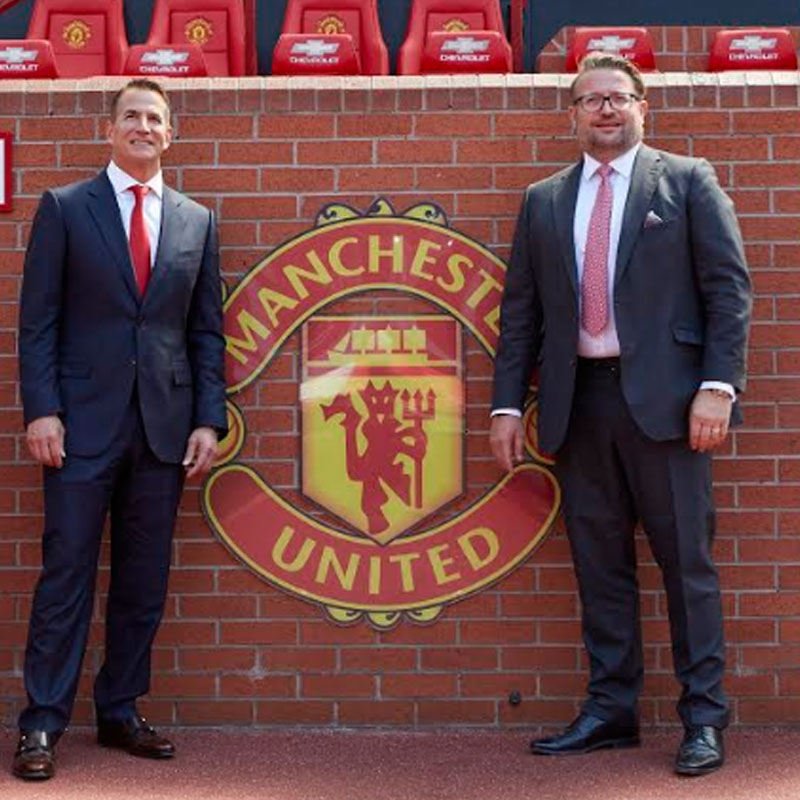
    MUMBAI: Kohler, a lifestyle brand based in Wisconsin USA, has recently agreed to a global partnership with Manchester United. The brand logo will feature on the sleeve of the most iconic and best-selling club shirt, for both the men’s and women’s teams.

    Kohler Co. is a leader in the design and innovation of kitchen and bath products and one of the largest manufacturers of power systems in the world. Founded in 1873, the two organisations have been in existence for over 140 years, sharing a long history steeped in tradition, excellence and innovation, as well as a common vision to make a positive impact on the world.

    Manchester United and Kohler will be celebrating the partnership with United fans around the world on 19 July when the new 2018/19 home shirt, to be unveiled next week, is worn for the first time by the men’s team in the opening fixture of its Tour 2018 against Club America in Phoenix, Arizona.  

    Manchester United’s Group managing director, Richard Arnold said, “It is a pleasure to welcome Kohler to the Manchester United family as a principal partner and our first shirt sleeve sponsor for both the men’s and women’s teams. Our shirt is much more than what we wear, it embodies the passion of our fans and their allegiance to the club.”  

    “Kohler is known around the world not only for its cutting-edge design and luxury products but also a genuine commitment to stewardship and sustainability and is an exciting addition to our family of commercial partners,” he added.   

    Commenting on the same Kohler Co president and CEO David Kohler says, “Our partnership with Manchester United provides new opportunities to showcase the quality of Kohler products and services with passionate fans of the most far-reaching and revered sports team on the planet. We are excited to help build our global brand among people who align themselves and their lifestyles, with leading edge innovation and a desire to make the world a better place.”

    “An essential component of the relationship is our support of the new professional women’s team, and we look forward to their debut and our ongoing support. Manchester United embodies sustained excellence in everything they do and our shared values are a perfect match as we expand our fast-growing international presence into new regions with purpose and a meaningful presence.”  

    The partnership also includes joint participation on game day activities, innovative improvements to club facilities, global sustainability and social responsibility projects and other partner collaborations with Manchester United fans and Kohler customers and associates.

  • PrettySecrets accelerates growth with Myntra

    PrettySecrets accelerates growth with Myntra

    MUMBAI : Apparel brand PrettySecrets will now be available across Myntra, Filpkart and Jabong. The brand has recently tied up with Myntra to be a part of Myntra’s Brands Accelerator Program.

    Last year’s End of reason sale on Myntra saw that PrettySecrets has a month on month growth of over 80 per cent on Myntra. This year PrettySecrets has grown by 110 per cent. It has done sale worth Rs 4 crore in the month of June on Myntra alone.

    PrettySecrets’ growth chart over the past one year has had a very positive influence over Myntra which in turn is one of the biggest fashion ecommerce brand. With both the big brands coming in together it definitely makes a win –win situation for both the parties as well as the customers.

    PrettySecrets CEO and founder Karan Behal says, “The overall online marketplace distribution channel for PrettySecrets has grown 70 per cent over last year (2017) and has achieved a growth rate of Rs 30 crore which is 1/3rd of the overall brand revenue. This association has already catapulted the brand into the offline space with higher recognition and growth. We hope this association helps in reaching higher heights.”

    Myntra head category business and chief strategy officer Ananya Tripathi said, “The vision of the Brand Accelerator program at Myntra and Jabong is to help shape the journey of emerging Indian fashion brands with unique customer proposition and take them to the top 10 national spot in three years.”

    “The success and growth trajectory of Pretty Secrets goes on to show the kind of impetus the program offers to brands. We see great potential in the women’s innerwear category in the coming years and will continue to support the brand with deeper consumer insights and marketing support through technology,” he added.

    The Myntra Accelerator Program has helped the brand in getting increased visibility through complimentary access to Myntra’s visibility tools such as banners and brand days etc which is promoted to over 50 million unique customers.  Myntra and PrettySecrets’ collaborated machine learning tools will help strengthen the customer analytics capabilities and increase sell through rates for PrettySecrets on Myntra’s platform which will help build PrettySecrets’ brand positioning.