Category: Brands

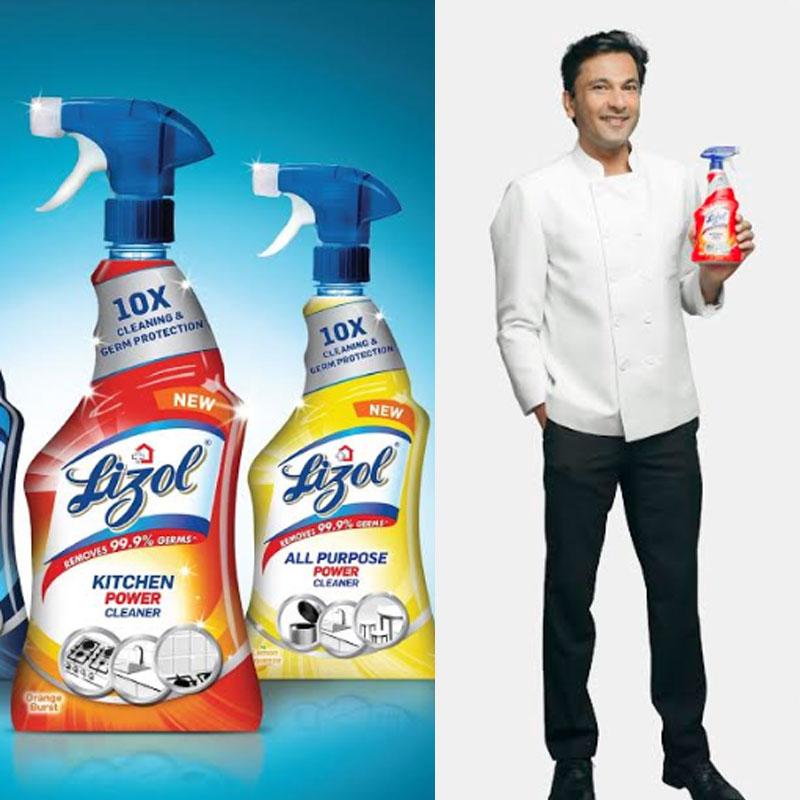
  • Lizol partners Vikas Khanna for healthy and germ-free kitchens

    Lizol partners Vikas Khanna for healthy and germ-free kitchens

    MUMBAI:  Lizol from Reckitt Benckiser recently announced its campaign “Lizol Kitchen Healthy Kitchen” with Vikas Khanna an internationally acclaimed Indian chef as the face for its new Kitchen Power cleaner. The campaign aims to create awareness around the importance of having a germ-free kitchen and get India to make the right choice for a truly healthy life.

    In a survey conducted by Incite, a strategic research consultancy, it was found that 98 per cent Indians are aware of the presence of germs throughout their homes along with the many threats they pose, however, 62 per cent who are concerned about these germs do not seek germ removal solutions to protect their families.

    Out of those who chose to do something about it, 42 per cent use phenyl and detergents as general cleaning agents to deal with germs across different surfaces in the house.

    Reckitt Benckiser South Asia Hygiene Home CMO marketing director Sukhleen Aneja said, “Women spend a lot of their time in the kitchen making sure they prepare a healthy meal for their family but are unaware of the invisible illness causing germs that lie around. Kitchen hygiene is a major concern in India and interestingly, research found that 100 per cent of kitchen cloths in India are heavily contaminated and was found to be the dirtiest item in Indian households. This encouraged us to develop a solution that gives 10 times better germ-protection against ordinary dish bar to ensure a healthier kitchen.”

    “Vikas Khanna has been a key influencer in driving conversations around nutritious and healthy food around the globe and in India he is an epitome of culinary versatility with a huge fan following. We are delighted to have him as our partner in driving ‘Lizol Kitchen. Healthy Kitchen.’ campaign and ensuring a healthier living across all households,” he added.

    Commenting on his association with the brand, Vikas Khanna said, “In India, we are seeing a major shift in people’s perception about nutrition intake and healthy food. While they are making healthier choices with their diet, enough attention is not being paid to the germs that exist on kitchen slabs, stoves, tiles, etc., which unintentionally find a way into the food we cook. Even the smallest oil stains are hotbeds of germs because of their sticky nature and a wet cloth wipe is not enough to protect your family from them.”

    Lizol Kitchen Power Cleaner in its easy to use trigger format, will assist consumers to maintain a germ-free kitchen. With its strong degreasing abilities, that will enable today’s consumer to clean multiple surfaces including gas stove, tiles, kitchen slab and sink, chimney, shelves etc., conveniently with one easy swipe and no hard scrubbing.

    Being a passionate and committed advocate of nutrition, Vikas Khanna, an internationally acclaimed chef has been constantly encouraging people to make healthier food choices. With this association, he will not only sensitise modern homemakers about the importance of a clean and healthy kitchen but also help them evaluate the cleanliness of their kitchens. 

  • Why is BFSI betting big on sports marketing?

    Why is BFSI betting big on sports marketing?

    MUMBAI: Raise your hand if you know who sponsored the last Mumbai Marathon? Sure everyone knows it was Standard Chartered Bank! Now, do you also know the main sponsor for the upcoming India England tour 2018? Not really, right? Advertisers in India have realised that they don’t have to rely on cricket to connect with their consumers anymore. And BFSI (banking, financial services and insurance) sector is the latest to have joined the bandwagon of sports marketing.

    Generally, BFSI is promoted with a serious tone that is often depressing and rather boring. Life insurance in particular rides on the fear factor. It was only a few years ago that the BFSI sector began injecting humour into its brand communication.

    The BFSI sector in India is shifting its focus to sports marketing and sponsorship from traditional events like festivals and occasions, to build its appeal with the new generation of consumers. The sector that has always endorsed and associated with individual sports personalities, is now looking at leveraging the popularity of sports by supporting smaller sporting events, especially city-based, non-cricket events.

    While banks have always endorsed individual sports personalities, they are now looking at leveraging on the popularity of sports events such as marathons, football, wrestling and badminton among other sports.

    YES Bank undertakes various health and fitness activities during yoga day and is also engaged with leading sporting leagues, management companies and sports clubs, PNB MetLife undertakes the PNB MetLife Junior Badminton Championship, IndusInd Bank organises the World Champions Programme – Cricket for the Blind while IDBI Federal Life Insurance has several leagues and sports of its own.

    The popularity of sports in India is so high that even The Reserve Bank of India has partnered with cricketers Ishan Kishan, Umesh Yadav, KL Rahul, Deepak Hooda to promote banking services and its benefits. This is the first time that RBI has partnered with any sports personality to advertise and create awareness about the banking system and the importance of a bank account. In fact, in the recent FIFA 2018 World Cup, RBI ads were present throughout the tournament.

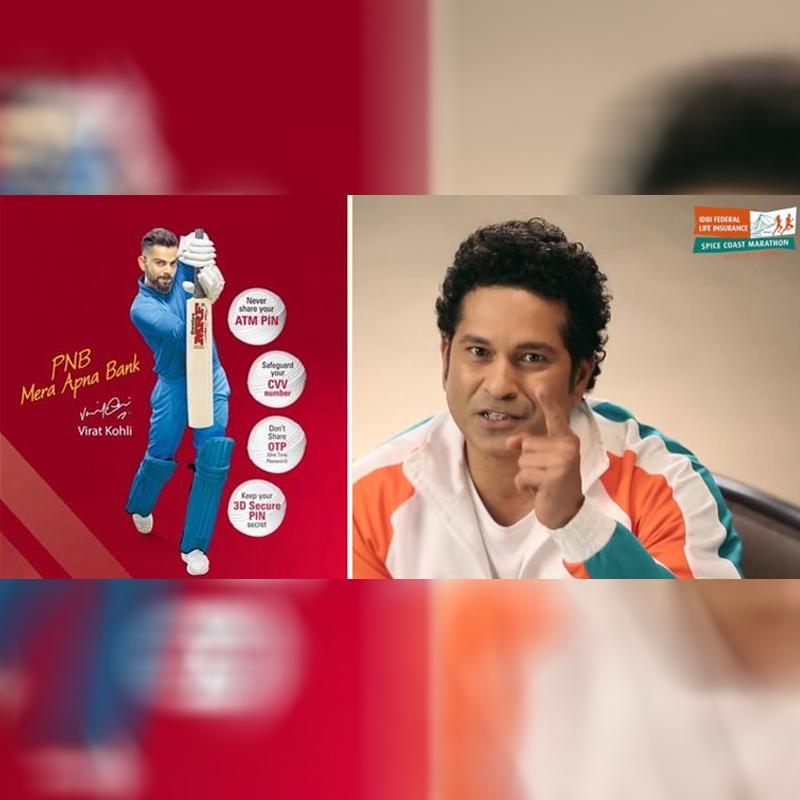
    Earlier this year, State-owned Punjab National Bank roped in Indian cricket team’s captain Virat Kohli as brand ambassador to improve its image, which took a hit due to rising bad loans.

    But what is it that attracts the BFSI sector to sports and athletes? Why is there an increasing trend of sports marketing by BFSI rather than having a celebrity on board? IDBI Federal life insurance CMO and head of products and strategy Karthik Raman thinks that sports helps to build a brand’s character and portray life insurance and banking service in a positive light rather than the depressing and boring sector.

    IDBI Federal Life Insurance utilises the platform of sport as the mainstay of the marketing efforts to grow the brand. With a strong emphasis on sports and fitness, the company is title sponsors of four city marathons in Mumbai, Kochi, Kolkata and New Delhi. Master Blaster, Sachin Tendulkar is the face of all its four marathons. In addition to the mass participation sport of distance running, IDBI Federal also puts a strong focus on talent development and grassroots sports.

    But what we are also observing is that banks are now unexcited about India’s most favourite sport cricket and rather moving towards badminton, marathon, tennis, football or kabaddi? It seems that badminton is becoming the most favourite game among banks to bet on followed by city run marathon and football. For IDBI, cricket is an expensive medium to invest in and is only for brands that have deep pockets. Raman says, “We didn’t want to do cricket because it’s been done to death and there are people with very deep pockets in the sport.”

    According to a recent report by GroupM and SportzPower, the sports sponsorship in India grew at 14 per cent in 2017 where media investments contributed to 55 per cent of overall spends, followed by ground sponsorships. In the same year, GroupM’s This Year, Next Year advertising investment forecast revealed that Indian advertising expenses were at Rs 61263 crore, of which sports sponsorships contributed to 12 per cent of the overall ad spends. The sponsorship of non-cricketing events grew in 2017 where football grew by a considerable 64 per cent.

    The future for sports marketing looks interesting but has its own challenges. Consumer engagement is one of the biggest challenges for brands and banks. With millennials switching to new platforms to access sports, the role of traditional media and sports marketing is changing. New and accessible ways to view sports, from mobile to social to VR, mean there is less incentive for fans to attend events in person, while more expectation is placed on sports stars to pull off an authentic natural voice for their brands.

    The environment is extremely tough for small athletics events that rely on fan attendance for revenue generation to keep their sports afloat — requiring communicators and marketers to become more creative in the ways they promote sports to their target audiences.

    Some banking institutes have now set up specialised sports vertical to aid sponsorships which can range anywhere between Rs 5 crore to Rs 25 crore depending on the association. The last six to eight years have been the most strenuous for the sports industry in India.

    Increasing viewership for sports, participation and sponsorship in sports other than cricket, growth in rural viewership numbers and rising number of sports start-ups are the key trends driving the growth of sports marketing in India.

    It sure is a lucrative business for banks as it gives them high visibility with minimal cost. What will be interesting however is if banks experiment with getting niche sports and international leagues and events in India.

  • Isobar white paper champions headless commerce as the future for brands

    Isobar white paper champions headless commerce as the future for brands

    MUMBAI:  Isobar, the global digital marketing agency from the house of Dentsu Aegis Network, has recently launched a white paper which elaborates on how ‘headlesscommerce’, an approach to technology architecture, is more important than ever before.

    The report, titled ‘Headless Commerce : Differentiating your approach To experience commerce strategy’, shares how headless commerce is an opportunity for brands. It argues that the reconfiguration of legacy systems can support the functional, emotional and tangible needs of a customer experience. It also explains how the headless commerce approach provides brands with greater control over the UX, giving them a consistent identity across an entire ecosystem of touchpoints and a foundation to create long-term customer relationships that can deliver sustainable business growth.

    Isobar Global chief technology officer Vikalp Tandon said, “One of the biggest challenges in the experience economy for brands is to engage consumers at every touchpoint across an ecosystem. This goes beyond serving the right content at the right time. It originates in the brand’s technology infrastructure that powers their digital presence. The headlesscommerce approach allows brands to deliver a truly customer-centric experience at speed and scale which is key in today’s landscape and is needed to move forward.”

    Isobar India EVP and head Isobar Commerce, India Shekhar Mhaskar added “In this day and age, the consumer demands and desires a seamless, homogenous and uninterrupted experience that is agnostic of devices and media channels. And this is even more imperative in the realm of online commerce. Headless commerce, as a practice, helps to solve all the above, continuously and at speed. It also empowers the brands to simultaneously innovate and improve on two important fronts front-end customer experience and back-end technology.”

    The white paper provides C-Suite brand leaders an overview of:

    ·  The context behind the emergence of unified commerce experiences

    ·  The opportunities of the headless commerce architecture approach

    ·  A Customer Experience Framework

    ·  The limitations of conventional or legacy architecture approaches (Monolithic architecture)

    ·  The opportunity for immersive experiences through rich content approaches

    ·  How headless commerce provides brands with a centralised view of customer data

    ·  The requirements of a headless commerce strategy and what the future holds

  • Paytm Payments Bank CEO Renu Satti quits

    Paytm Payments Bank CEO Renu Satti quits

    MUMBAI: Paytm Payments Bank CEO Renu Satti has resigned from her post after serving the responsibility for one year and two months. Now, she will head the new retail initiative of the firm as chief operating officer. The company has not found her replacement yet.

    “Renu Satti will be leading the charge as COO of this new (retail) initiative…She has already resigned from Paytm Payments Bank CEO position and the bank will soon be recruiting a new CEO,” Paytm said in a statement as quoted by the Press Trust of India.

    Satti has been recognised for making its marketplace, movie-ticketing and payments bank businesses from the ground-up. “She has been a champion of new business launches and her acumen makes her a perfect candidate for leading this important launch,” the company said.

    Under the ‘New Retail’ model, consumers will able to discover nearby pharmacies, groceries and other shops to place an order and get instant deliveries.

    The company started the business as a mobile recharge platform and later expanded into digital payment solutions and e-commerce (Paytm Mall).

  • Parle’s bid to overthrow Britannia’s Nutrichoice

    Parle’s bid to overthrow Britannia’s Nutrichoice

    MUMBAI: The digestive cookies range in India is dominated by Britannia Nutrichoice range of biscuits. The market is huge and every brand now sees opportunity in the segment due to increased awareness and healthy eating choices of the consumers.

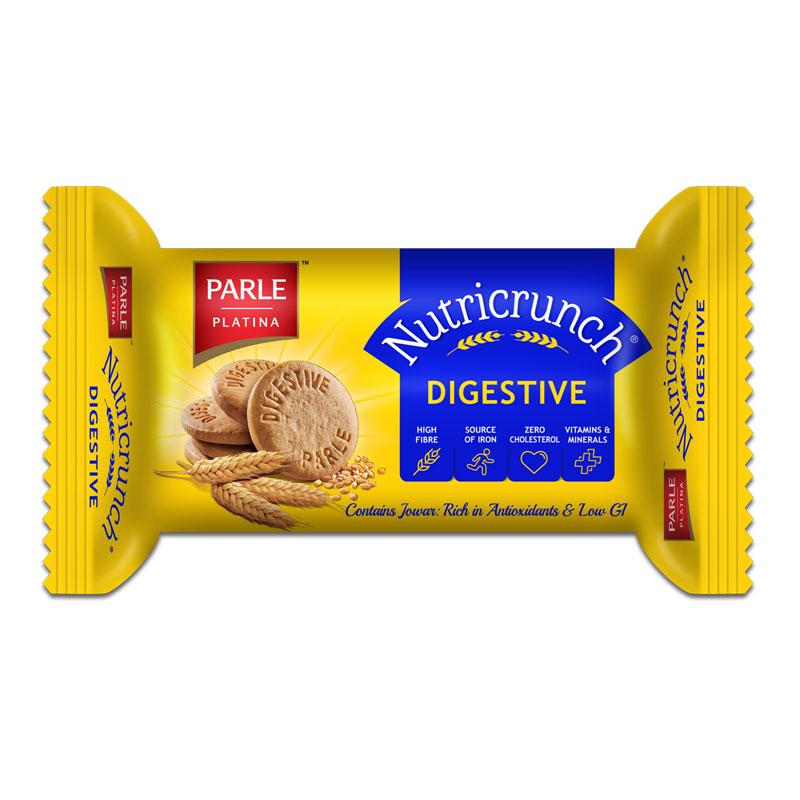
    In a bid to compete and make its mark in this sector, home grown brand Parle Products has launched its own range of digestive biscuits under the umbrella of NutriCrunch. The launch of the healthy range of biscuits  is inspired by the growing demand for healthy snacking options among Indian consumers and will include products like Nutricrunch Digestive, Nutricrunch Honey & Oats, Nutricrunch Digestive Marie and Nutricrunch Lite Cracker.

    This is the second innings for brand Parle in the health category. The company has decide to phase out its older health biscuit offerings that was sold under the Simply Good brand name. While the production of Simply Good has been completely stopped, Parle Products now wants to complete switch and focus on NutriCrunch. The sheer reason for Simply Good not being so “simply good” was due to lack of effort and focus on the product’s marketing as a healthy alternative to regular biscuits and Parle Products does not want to repeat the same again.

    Priced at a sweet spot of Rs 20, the confectionary and biscuit giant wants to capture a sizeable share of 15 per cent in the 1200 crore health segment in India. The company, however, faces stiff completion from Britannia Nutrichoice that occupies a major 70 per cent premium health biscuit category followed by ITC’s Sunfeast range of Famlite biscuits and McVitties Digestive biscuits.

    For Parle Products, it’s important to diversify its portfolio into more premium products as a majority of its revenue – both in value and volume terms – still comes from its mass market brand Parle G. While that segment is growing steadily, premium offerings will bring in better margins and faster growth in future. The Platina division is just a year old but is already growing in the high double-digits.

    Indiantelevision.com spoke to Parle Products category head for biscuits Mayank Shah to understand insights into launching the product, competition with Britannia, scope in the market and much more.  

    Why did you decide on launching health products at this point in time?

    It was the right time for us to enter the market as we see huge potential in this category. Consumers of health category are divided into those who are actively seeking healthier options and those that passively consumer healthy products once in a while to reduce the guilt of leading an unhealthy lifestyle. A primary reason why we didn’t want to get into health segment was because a larger pool of consumers were passive health-conscious but that is increasingly changing. The active health conscious consumers will not consider the price of a product while purchasing a product, whereas passive consumers only tend to buy when there are offers or the products are available at a cheaper price.

    But why did you decide on launching NutriCrunch? What happens to Simply Good then?

    We were already present in the health category but we didn’t really focus on those products and rather focused on our other products. We didn’t really see a huge value in Simply Good products as well. That why our focus was limited. However, we have seen an increasing traction in the health category. Soon after we launched the Platina category last year, health segment was always going to be our next focus.

    What kind of consumer research behind the product launch? You much have had a lot of pressure on getting it right the second time?

    We conducted extensive research this time. We reached out to consumers across India and asked them what kind of product would they like to have. Our research revealed that most consumers were looking at healthier alternatives with low sugar and multigrain biscuits.

    What kind of growth opportunity do you see in the sector?

    The health segment in India is growing in double digits. It is growing at the rate of 15-17 per cent per annum. There is a shift in consumer’s trend where they are actively seeking healthier products. There is a large quantum of consumers that seek healthier options out of guilt and we see a large scope there and want to tap those consumers.

    What is your distribution plan like for the new range of products?

    It’s launched under the Platina range and so will be well distributed across metros and mini metros. We are looking at selling it to more than 1 million towns over the next two-three months.

    What about online sales? Will that also be your focus to get the product out in the market?

    Online and modern trade will be an important channel for us. We will be available across all leading e-commerce platforms.

    Why did you launch this new category under Platina umbrella?

    Simply because Platina is skewed towards modern trade and online channels. Also because it has a natural fit with the distribution channel and the consumers. Platina consumers are relatively evolved and modern who don’t mind spending some extra bucks for a quality product.

    What are your revenue expectation with this product?

    There is a huge potential and scope in this segment. The health segment market is currently valued at Rs 1200 crore and we want to corner a 15 per cent share of it by 2019 (by the end of first year of operation for Nutricrunch).

    Don’t you think it is a super competitive market for you to enter in? There are already established players in the market…

    Yes, it is a super competitive market but it is an extremely growing category as well and there is a scope for more players to participate in it. Its because of the entry of multiple players coming in and more buzz around the category.

    What kind of investment went into the launch of this new product line?

    We cant really reveal the numbers but yes, we did invest heavily into the R&D for these products and getting them right. It took us a year and half to design the product.

    What were your biggest barriers while entering into the category? What sort of challenge do you see in the market?

    Our biggest challenge right now is to make the product available across India at the earliest and have a strong distribution muscle. The biggest challenge initially was supplying the products to retailers due to the recent transport strike. We were all ready and geared up for the launch but had to push it due to the transport strike. Our next challenge will be to ensure that we have enough conversions from passive health product custumers to active consumers. We will have to make consumers relatively price insensitive and ready to pay a fair price for these products.

    When will you launch your campaign to advertise and market these products?

    Once we roll out the products entirely, which should be done by mid September, then we will look at launching the campaign in August.

    Will you look at having a brand ambassador for the category since you also have Twinkle Khanna for Platina?

    No, we are not looking at having a brand ambassador at the moment.

    What will be your marketing strategy for product marketing?

    It will definitely be a 360-degree campaign with an increased focus on digital.

    Lately, a lot of brands are looking at cutting down sugar and salt in the products. Will Parle Products also look at going the same route?

    Our new range of products is a step towards cutting down sugar and salt content in products and we will increasingly look at how we can improve the quality of our existing line of products without changing the taste of quality.
  • Kwality launches breakfast cereals

    Kwality launches breakfast cereals

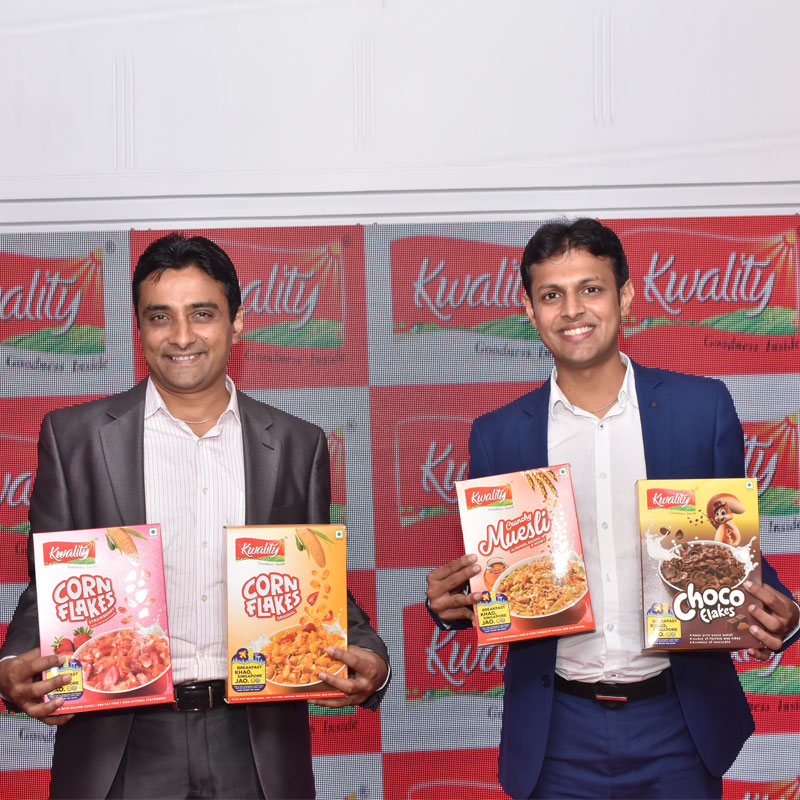
    MUMBAI: Kwality, from the house of Pagariya Food Product Pvt Ltd, recently announced its wide range of healthy cereals. A unique combination of whole grain and multigrain, the range of cereals offers a variety of breakfast choices for all Indian families.

    The adult range has corn flakes, corn flakes almond honey, corn flakes honey, corn flakes strawberry. Under the health range, they have ragi flakes, muesli crunchy, muesli mixed fruit, muesli fruit n nuts, oats and wheat porridge. Each of these is a combination of various grains like wheat, ragi and oats that come in unique flavours and has been specially created keeping in mind the Indian palate.

    Pagariya Food Pvt Ltd managing director Naresh Pagariya said, “We are extremely thrilled to announce our newly packaged cereals which are in line with our vision to introduce products that are rooted in our philosophy of nutrition, wellness, convenience and health. We believe that the consumer’s need for breakfast choices in India is growing exponentially and our range of products is uniquely placed to satisfy this need.”

    The new cereals are available at all big supermarkets such as Big Bazaar, D-Mart, Metro, More, Spar and various other brick and mortar stores. Additionally, they are also available at leading online stores like Amazon, BigBasket and Flipkart.

    Today the size of breakfast cereals in India is Rs 2500 crore and growing at a CAGR of 27-28 per cent. By 2020, the turnover will touch Rs 4000 crore. The company is aiming to grow by over 100 per cent in the next few years and become one of the top five breakfast cereal companies in India.

    The company is aggressively focusing its operational and marketing strategies to capture new markets across India and reach Rs 100 crore mark by 2020 from the current Rs 40 crore. By introducing smaller packs of Rs 5 and Rs 10, the company is ensuring that people in tier 2, tier 3 and rural Indian cities also can now have nutritious and tasty breakfast cereals.

  • YES Bank opts for iCubesWire’s AI solution

    YES Bank opts for iCubesWire’s AI solution

    MUMBAI: In an industry first in the BFSI sector, YES Bank has opted for iCubesWire’s AI enabled solution, Instatalk, which provides an accurate platform for the customers to interact instantly with the brand and seamlessly suits their requirements.

    YES Bank country head Rajat Mehta said, “As a new-age, technology-enabled bank, we are always exploring new opportunities to innovate and tie-up with partners that can help to increase our brand presence digitally. We are happy to explore the possibilities with iCubesWire and incorporate their AI solution Instatalk, a new-gen product which is the quintessential bridge between the user and the brand. The bot engagement integrated with the campaign strategies will elevates the rate of user engagement for our display campaigns”.

    iCubesWire founder and CEO Sahil Chopra added, “YES Bank is a pioneer in the BFSI sector to create a customisable savings account and we are more than excited to have tied-up with them for an AI enabled campaign. It is a great opportunity for us to bank upon and we are certain the integration will prove fruitful for the brand as well as the users thereby strengthening their loyalty towards the bank. We are keen to explore the digital domain with YES Bank.”

    With the rising neck to neck competition in the BFSI sector, it is paramount to keep up with the pace and innovate better means to impart customer experience. This is when Instatalk becomes the ideal fit in the swift digital world. 

    Through this campaign, YES Bank aims to enhance the user engagement and curtails the long process for queries revolving around savings accounts.

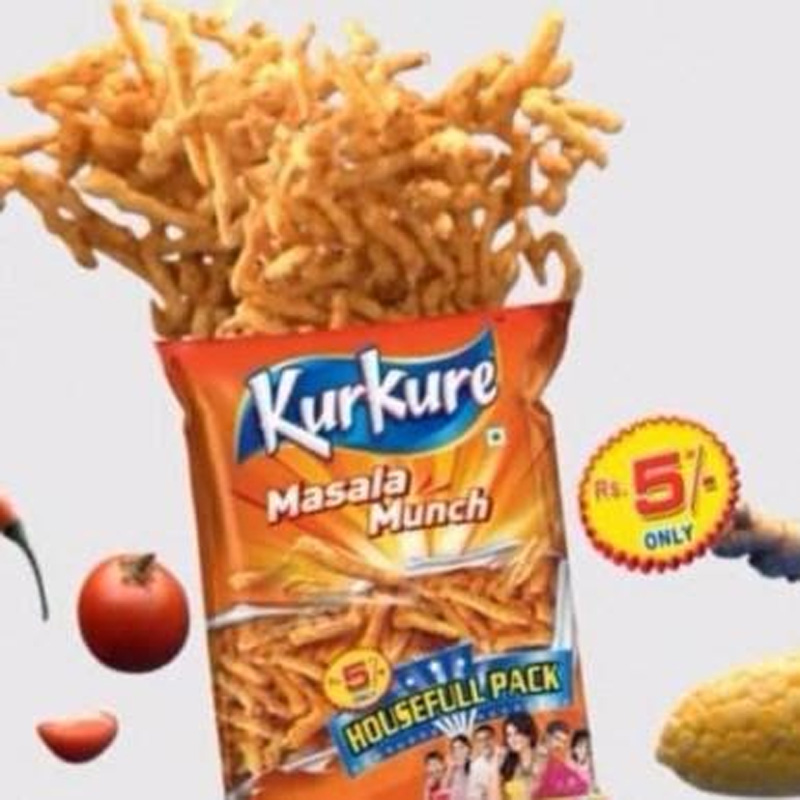
  • Pepsico gets Delhi HC order to delete fake social media posts on Kurkure

    Pepsico gets Delhi HC order to delete fake social media posts on Kurkure

    MUMBAI: Kurkure, one of the favourite snacks of Indian kids, has gone through malign campaigns on social media questioning its food quality. Viral posts said that the snack can catch fire easily, implying it contains plastic. Now PepsiCo is fighting back legally to convince consumers that it isn’t true. Recently, the firm also spent Rs 20 million to curb the rumours, according to media reports.

    It has secured an interim order from the Delhi High Court (HC) which allows PepsiCo to ask to delete hundreds of such maligning posts on Facebook, Twitter, Instagram and YouTube. According to media reports, 20,000 Facebook posts, 3,412 Facebook links, 242 YouTube videos, 6 Instagram links, and 562 tweets about Kurkure have been ordered to be deleted. The order came following a petition moved by the company in May this year.

    “Fake news suggesting that Kurkure has plastic in it has adversely affected brand’s reputation. Due to such fake and defamatory content circulating on the social media, PepsiCo India was constrained to move the Delhi High Court…this step has been taken to protect brand equity, a matter that we take very seriously at PepsiCo,” the company said as quoted by Quartz.

    All the posts harmed brand reputation widely. PepsiCo India was forced to move the Delhi High Court and it issued an interim order on 1 June. The court will next hear the matter on 1 November.

    PepsiCo India claimed in a blog that the snack burns not because it contains plastic, but because one of its main ingredients happens to be starch. “Also the vegetable oil that is used as another primary ingredient, expedites the burning. This holds true for all regular snack items like papads, poppadoms, papdis, that contain carbohydrates, proteins and fat,” the blog said.

  • HUL becomes top advertiser again; Ministry of Health and Family inserts most ads in BARC week 29

    HUL becomes top advertiser again; Ministry of Health and Family inserts most ads in BARC week 29

    MUMBAI: The Broadcast Audience Research Council (BARC) India has released its data for last week’s top advertisers and brands between 14 July to 20 July 2018.

    The data is a reflection of top 10 advertiser across genre on Indian television (U+R) : 2+ Individuals. 

    The data demonstrates ads that were inserted the most in week 29 of 2018. 

    Top Advertisers: 

    Not much has changed in terms of top advertisers this week as Hindustan Unilever Limited continued to lead with 155495 ad insertions on television. HUL’s products include foods, beverages, cleaning agents, personal care products and water purifiers.

    Reckitt Benckiser Limited, maker of Dettol, Veet, Durex condoms, Strepsils, Air Wick, Harpic among others stood at second position with 78728 ad insertions. 

    This was followed by Procter & Gamble with 38356 and ITC Limited with 33238 ad insertions. E-commerce major Amazon India retained fifth position this week with mere 30230 insertions. 

    Top Brands:

    The Indian Ministry of Health and Family Welfare advertised the most and topped the charts with 11504 ad insertions in week 29. 

    Hotel searching website, Trivago, continued to stay the second most advertised brand with startling 11321ad insertions. 

    Internet video on demand service Amazon Prime retained its position and showcased its ads 10489 times while Colgate Dental Cream, a product by Hindustan Unilever Limited inserted its ads 9162 times. 

    Cleaning and disinfecting product Lizol, stood at fifth position with 9132 ad insertions between 14-20 July 2018.

  • Jabong launches ‘out-of-the-world’ ad for upcoming Big Brand Sale

    Jabong launches ‘out-of-the-world’ ad for upcoming Big Brand Sale

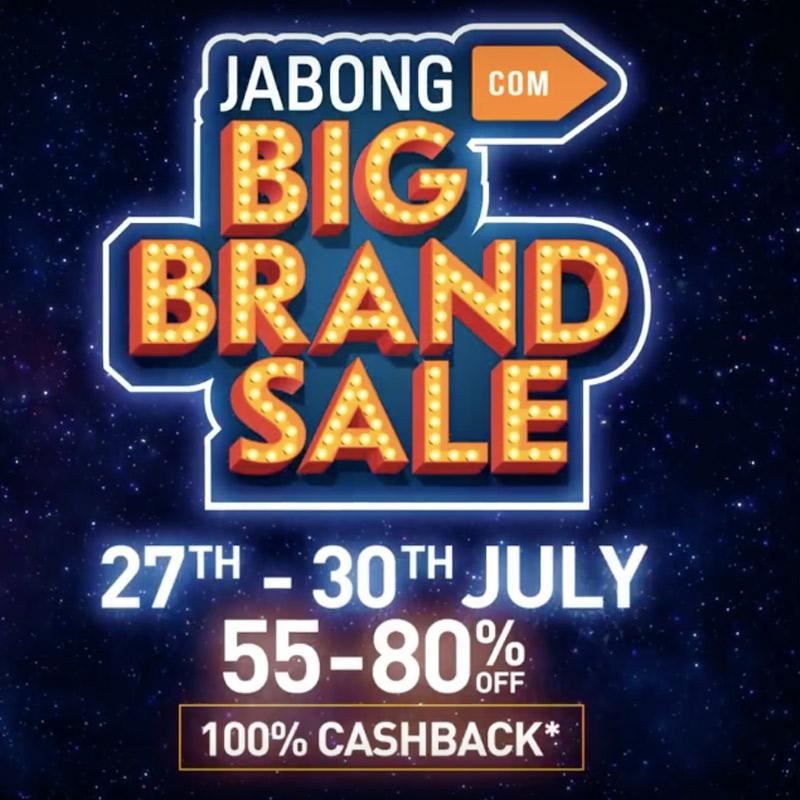
    MUMBAI: Jabong, India’s leading online fashion brand, has launched its new marketing campaign to promote the fourth edition of its biggest sale of the year- the Jabong Big Brand Sale- which will be held from 27 to 30 July.

    Big Brand Sale (BBS) is Jabong’s marquee bi-annual property that is held in January and July to mark the end of the ongoing season.

    As a part of its 360 degree campaign, Jabong released an #OutOfTheWorld themed 30 sec TVC, which is set in a parallel universe and captures the essence of BBS where the World’s Biggest Brands are available at discounts. During BBS, Jabong is offering four lakh styles from premium, international and Indian brands at 55-80 per cent discount, out of which over one lac styles are for the first time on 50 per cent + discounts and more than 15,000 styles are available at above 80 per cent discount.

    The TVC highlights the Jabong consumers who are free from worldly notions of fashion and have their own unique style and identity, staying true to Jabong’s brand philosophy- Be You. Set against a vast, celestial backdrop and a flickering panorama of space, the TVC beautifully uses spatial objects like stars, satellites and shooting stars to creatively bring alive the ‘out-of-the-world’ experience that the Big Brand Sale promises, in terms of, both, products and discounts.

    Conceptualised and scripted by Happy Mcgarrybowen, the creative agency from Dentsu Aegis Network, the TV commercial will be aired across leading channels, GEC, English and Hindi movies, English entertainment, news, lifestyle and music genres. The television commercials will also run in five-second stings across select channels to drive frequency and reach. In addition, the campaign also covers print, radio, outdoor, DTH (Tata Sky) and digital-YouTube, Facebook, Wynk and Truecaller, with OOH across eight cities. Jabong is also collaborating with popular content creators like SIT and leading fashion influencers to amplify the campaign’s consumer reach.

    Jabong head Gunjan Soni says, “The fourth edition of BBS is going to be bigger and better than ever before with innovations like 100 per cent cash back, VIP slots, and lightening deals. The TVC attempts to capture this magic in a uniquely Jabong way. The campaign theme is based on the very essence of BBS which promises an extraordinary experience for our customers by making the biggest global and Indian brands available at out of the world discounts. The TVC beautifully captures this Jabong world where fashion is the way of life.”

    Jabong head of brand Gaurav Kackar adds, “The campaign communication is based on a simple consumer insight that when you dress well, you feel on top of the world. The TVC, set in a spatial backdrop, depicts the Jabong promise to offer an out of the world shopping experience to its customers this BBS. It’s a first-of-its-kind approach to creatively capture the brand essence and highlight the key sale callouts, which we believe will resonate very strongly with our consumers.”

    Happy mcgarrybowen CEO Kartik Iyer mentions, “In a typical situation this would be another opportunity to do another sale ad. But this is Jabong and the team seems to just push the experience of every piece of communication, every single time. A fresh take on what to expect and the excitement around it makes up the experience to be totally out of this world. All credit to the collaboration between client agency and director.”

    Jabong will allot exclusive slots to select shoppers on 26 July to make purchases via wishlisting, coupled with lightening and mystery deals throughout the four days for enhanced consumer engagement. Customers can also earn slots by playing fun games on the Jabong app to buy their favourite products before they go out of stock.